Offered by Jan Muller
REQUEST INFORMATION

Abraham Govaerts (Antwerp, 1589 – 1626)
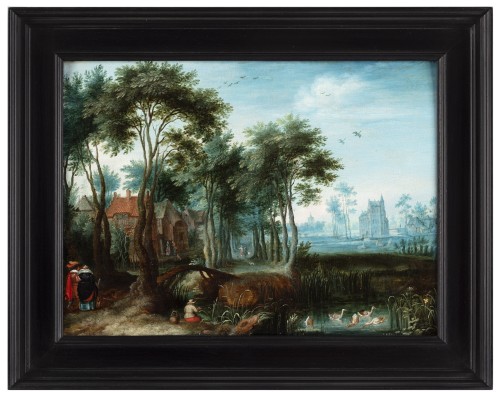
Abraham Govaerts was a Flemish painter who specialised in small, cabinet-sized forest landscapes in the manner of Jan Brueghel the Elder and Gillis van Coninxloo. He was born in Antwerp, the son of an art dealer. Nothing is known about his training. In 1607-1608 he became a master in the Antwerp Guild of Saint Luke, and in 1623 he was its dean. He died in 1626 during an epidemic, not yet forty years old.
His landscapes usually contain a small historical, mythological or biblical scene or a hunting scene. At first they followed the Mannerist three-colour world landscape, with a brown foreground, blue tones in the foliage and figures framed by repoussoir trees. From 1620 this gave way to pure, bright colours, with dramatic, twisting tree trunks in the foreground and strong contrasts of light and dark. He often worked with specialists who painted the figures, animals or still-life elements, among them members of the Francken family, Sebastiaen Vrancx and Hendrick van Balen.
Frans Francken II (Antwerp, 1581 – 1642)
Frans Francken II belonged to the large Francken family of artists and was one of its best-known and most prolific painters. He learned the trade from his father, Frans Francken I, and according to the RKD also from Ambrosius Francken I and Hieronymus Francken I. In 1605 he became a “wijnmeester” in the Antwerp Guild of Saint Luke and later also its dean. He worked in Antwerp all his life.
He ran a large studio, where many versions of his compositions were made. His pupils included Frans Francken III, Hieronymus Francken III, Christoffel van der Lamen and Artus Wolffort. Anthony van Dyck described him on an engraving as an “Antwerp painter of human figures”. Francken accordingly often painted the figures (staffage) in landscapes by Abraham Govaerts and in the church interiors of Pieter Neefs the Elder and the Younger, and also worked with Daniel Seghers.
A Collaboration
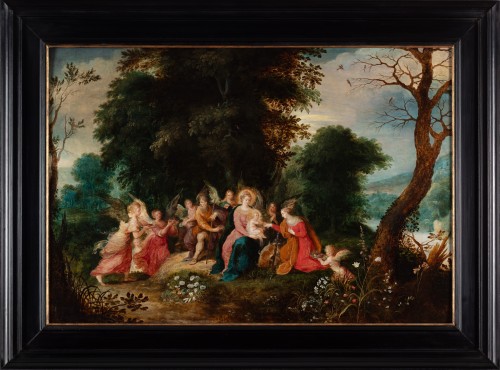
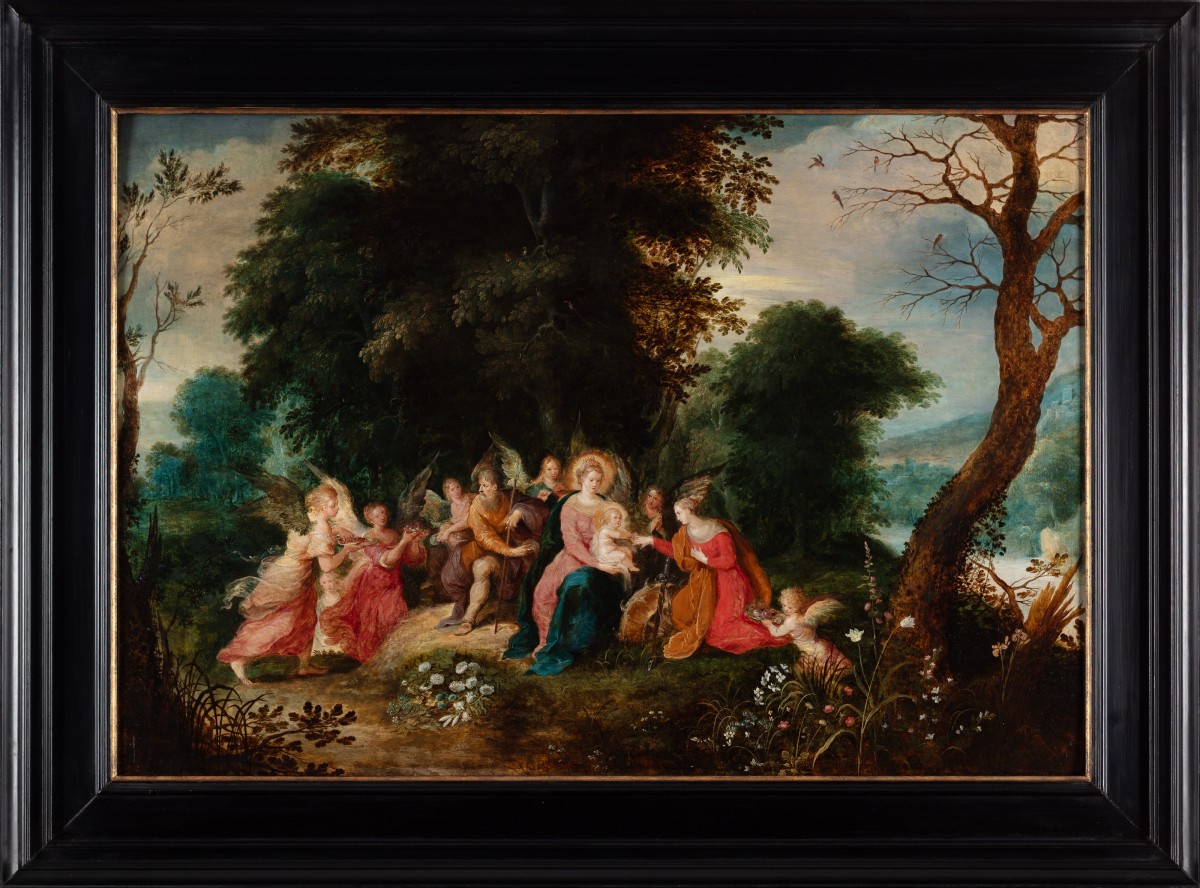
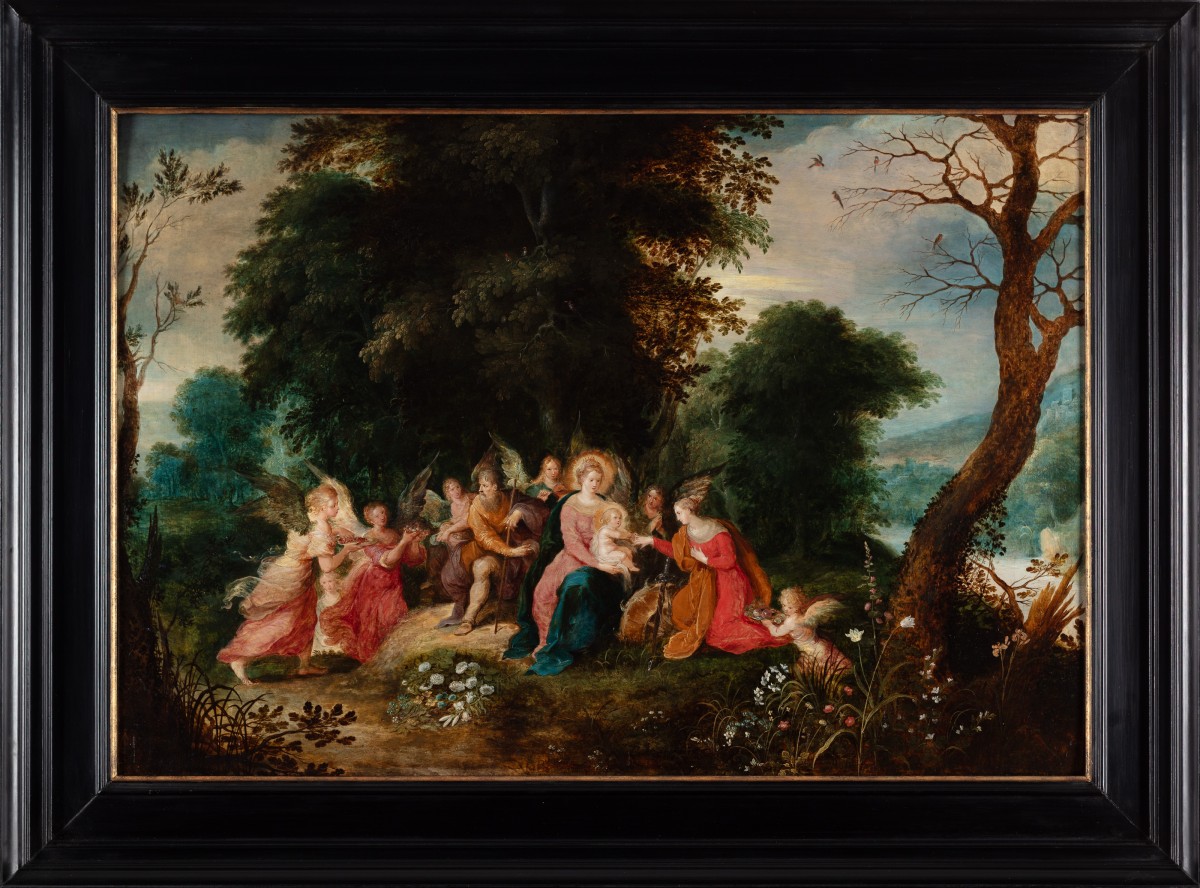
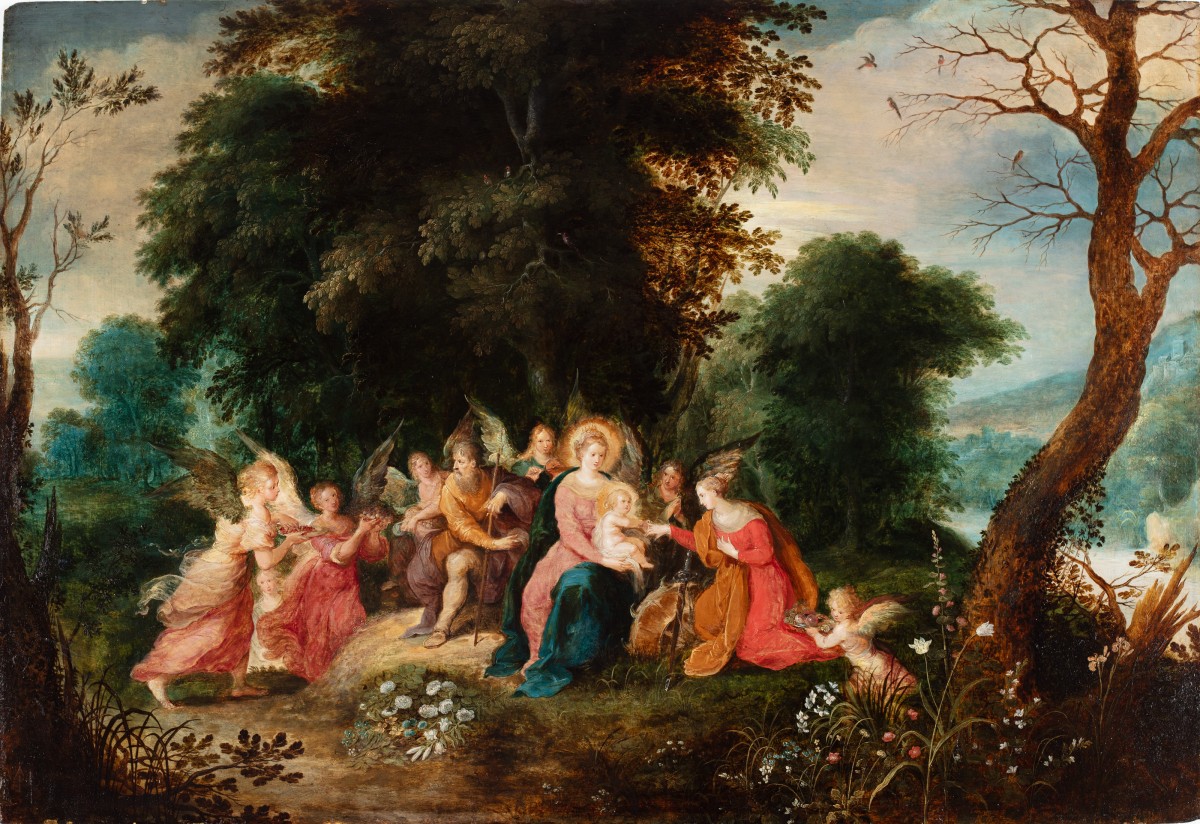
In the Antwerp of that time it was common for specialists to work together. Govaerts would then take care of the landscape and Francken of the figures. In this work, too, the figures are by Francken and the landscape by Govaerts.
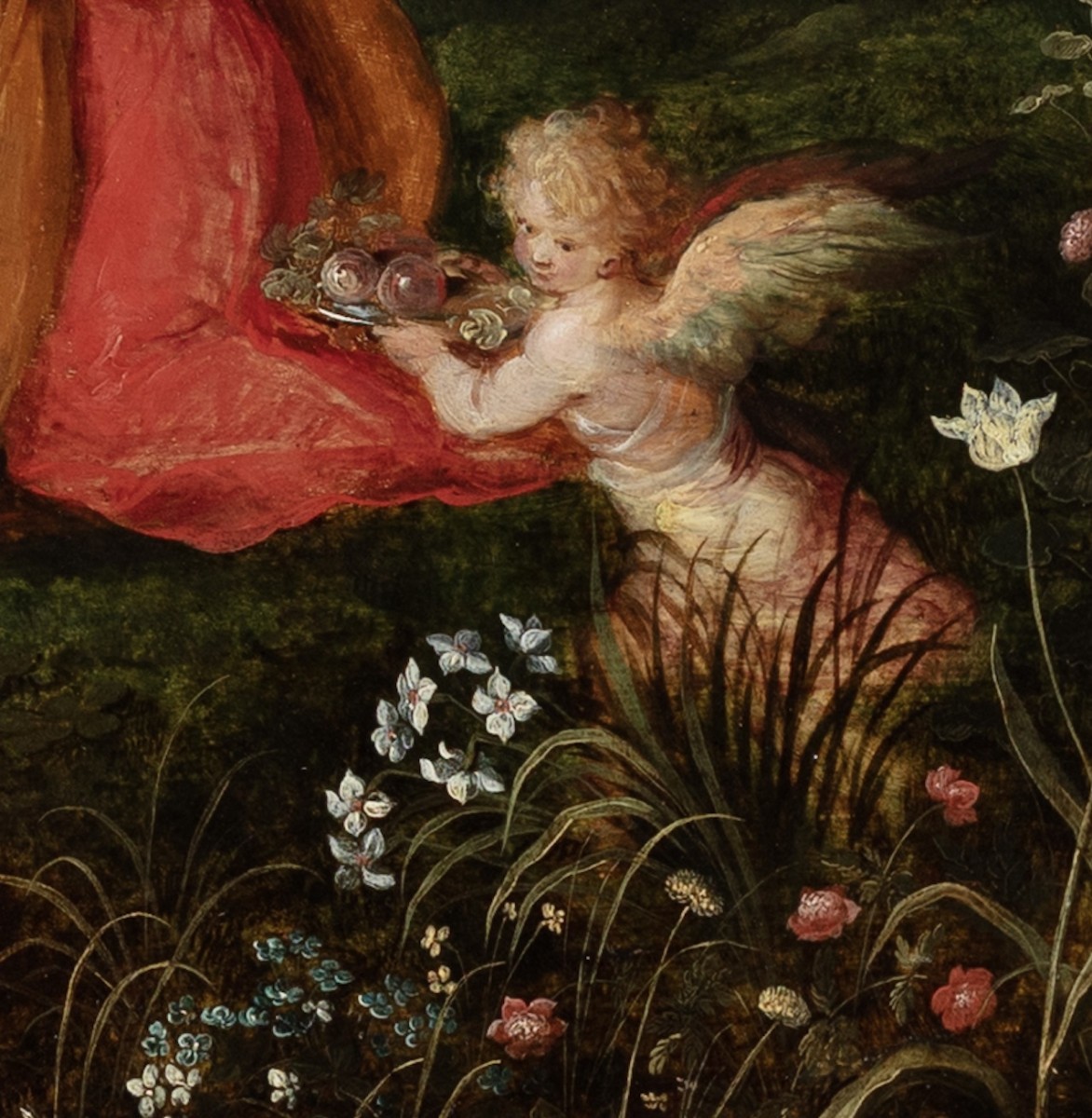
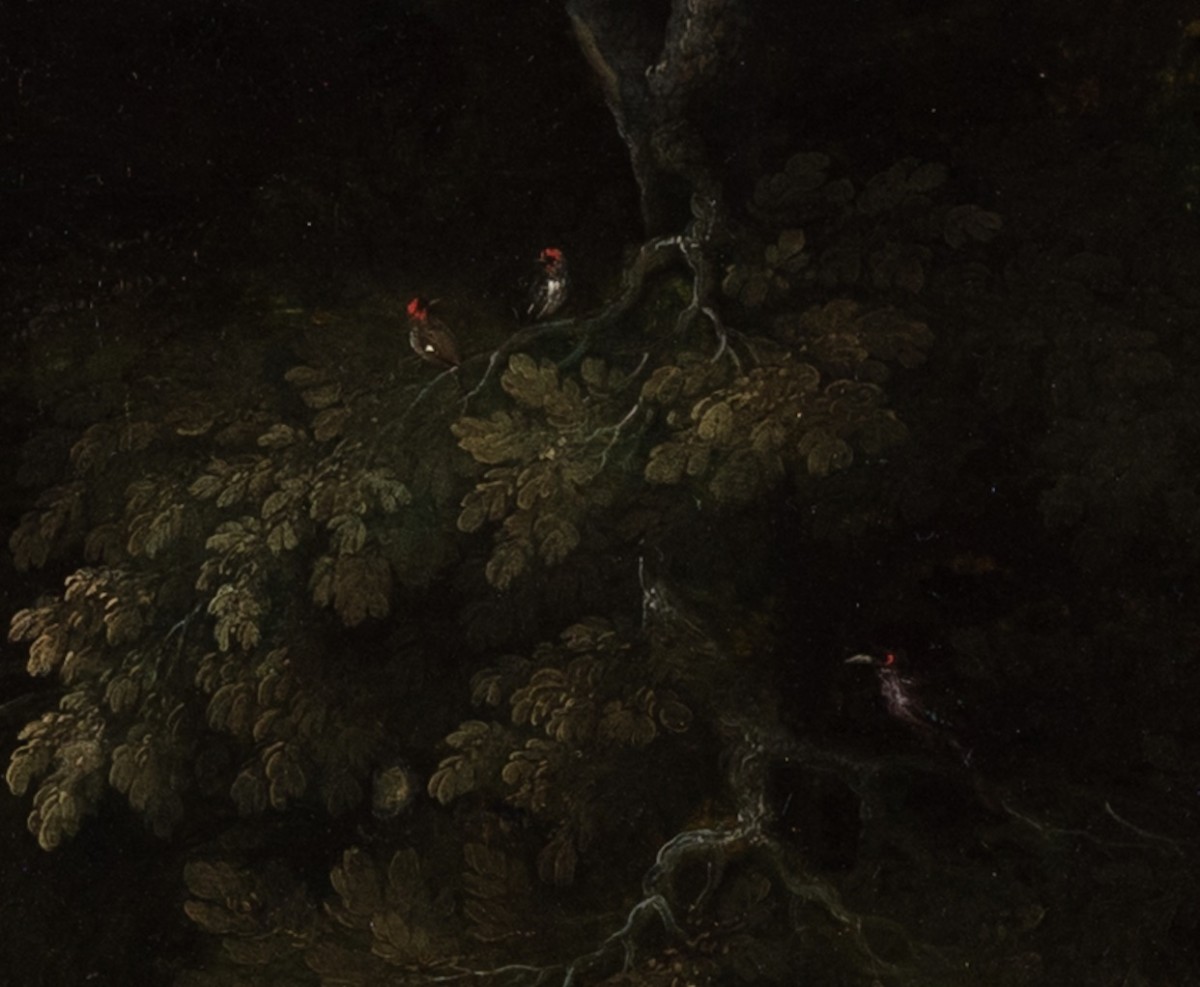
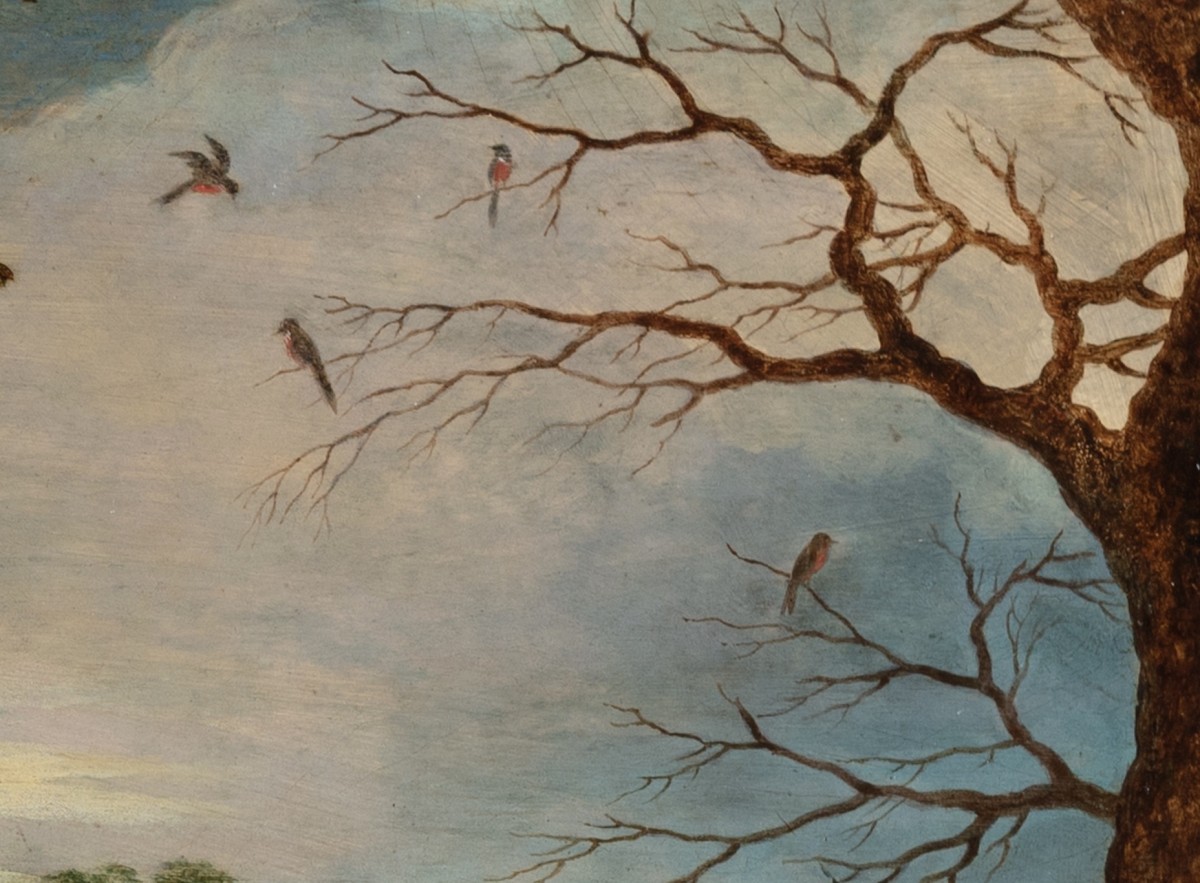
We see a forest landscape with, in the foreground, beautifully blooming flowers, including white and red ones, and trees with birds in them. Such wooded landscapes with a small biblical scene were Govaerts’ speciality. The colours run from brownish green in the foreground to greenish blue in the distance, an example of atmospheric perspective. To the left and right stands a tree that frames the scene and is cut off at the edge. This is called the repoussoir effect: it directs the viewer’s gaze towards the scene. The use of framing elements was also employed in the sets of theatre and opera productions.
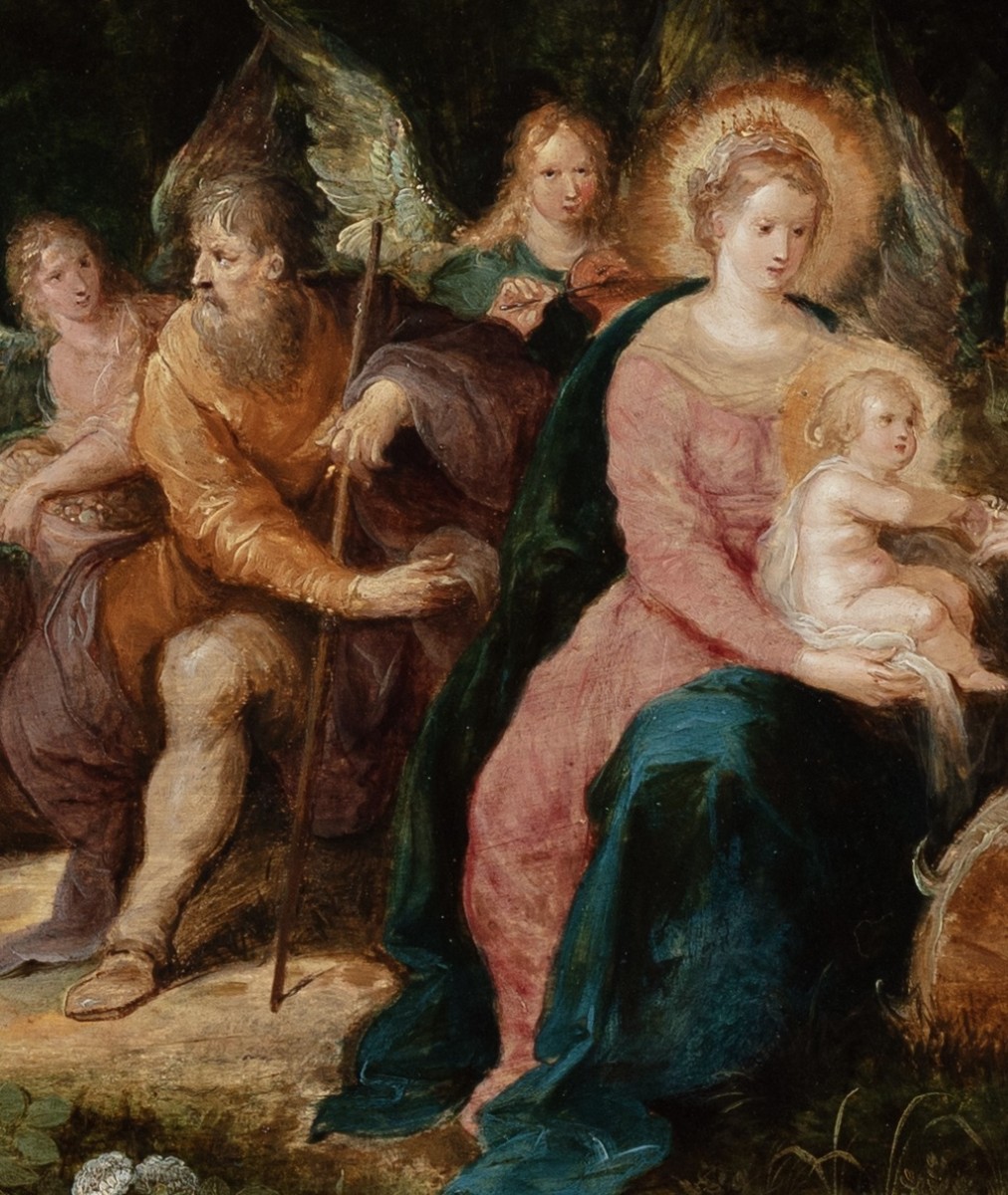
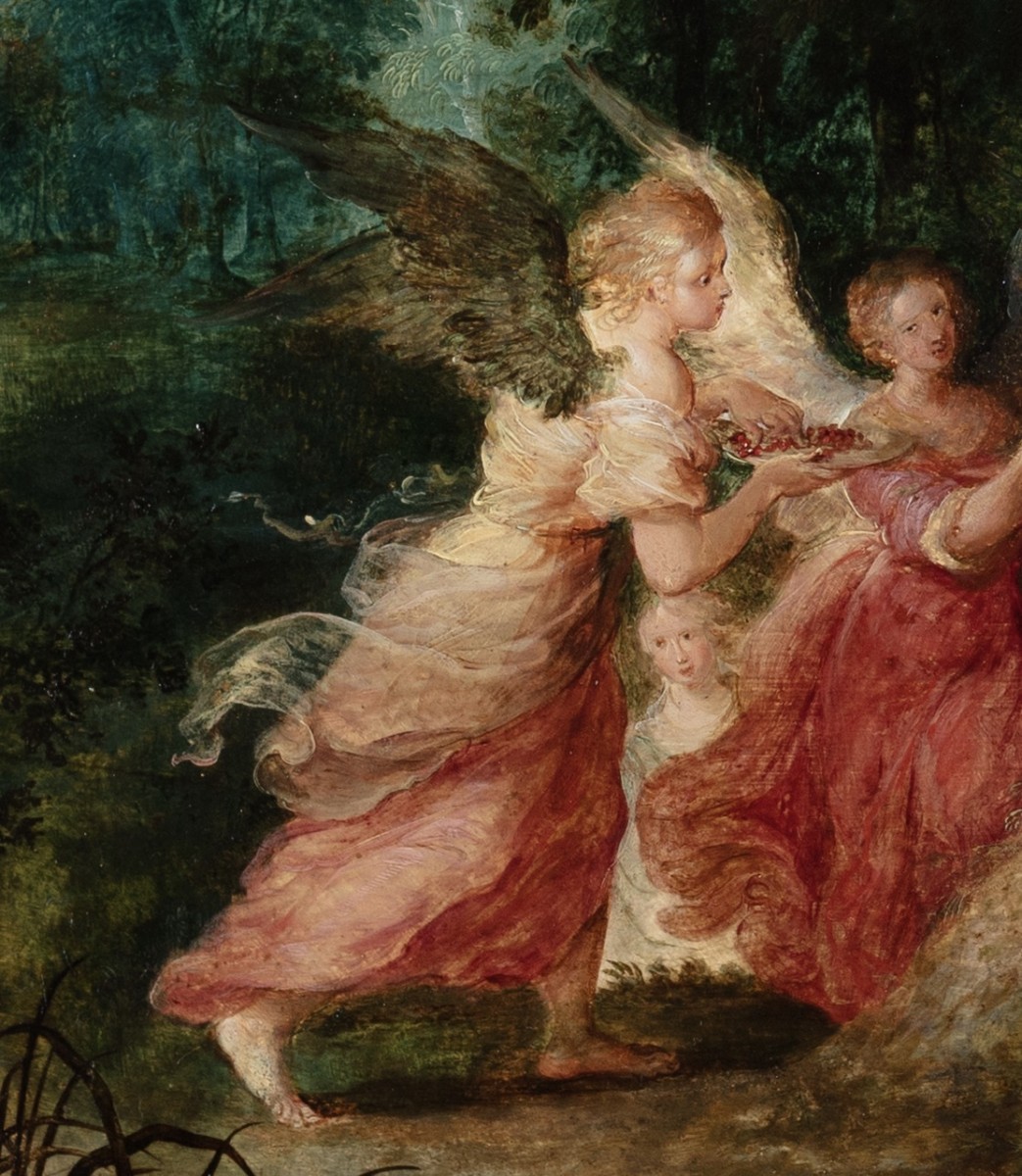
In the centre sit Mary and the infant Christ, a small toddler on her lap. He seems to be accepting something from Saint Catherine, whom we recognise by the fragment of a wheel. According to the legend she was to be tortured on a wheel, but it broke as soon as she touched it. She was then beheaded, to which the sword beside her refers. Behind them we see a whole series of angels bringing fresh fruit and playing music. We also see a man, presumably Joseph, Christ’s foster father.
Oil on panel
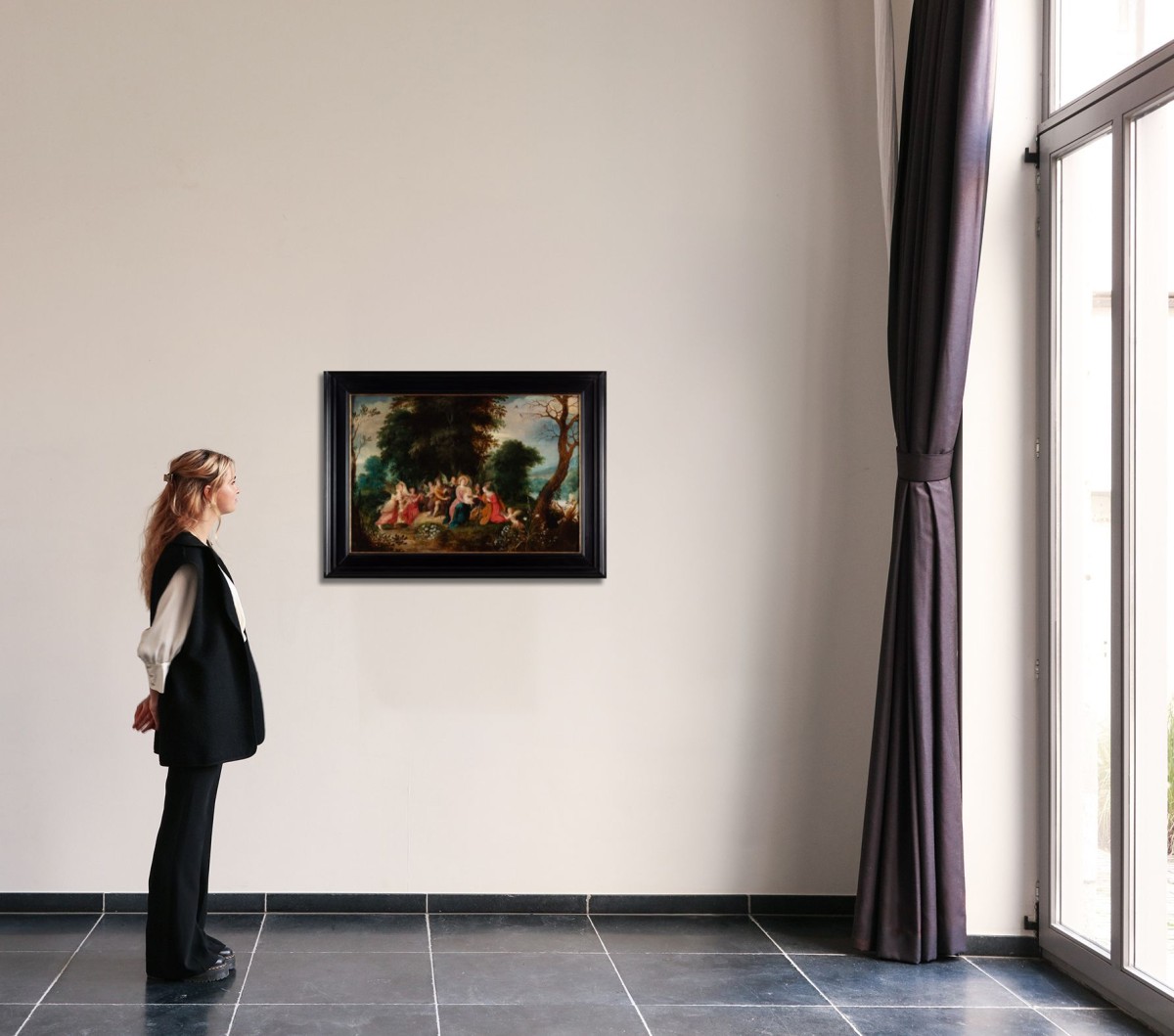
Dimensions: 53,2 x 77,3 cm
Delevery information :
After reception of payment we can box and ship our items all over the world. Estimates of this service can be provided.