Offered by Jan Muller
REQUEST INFORMATION
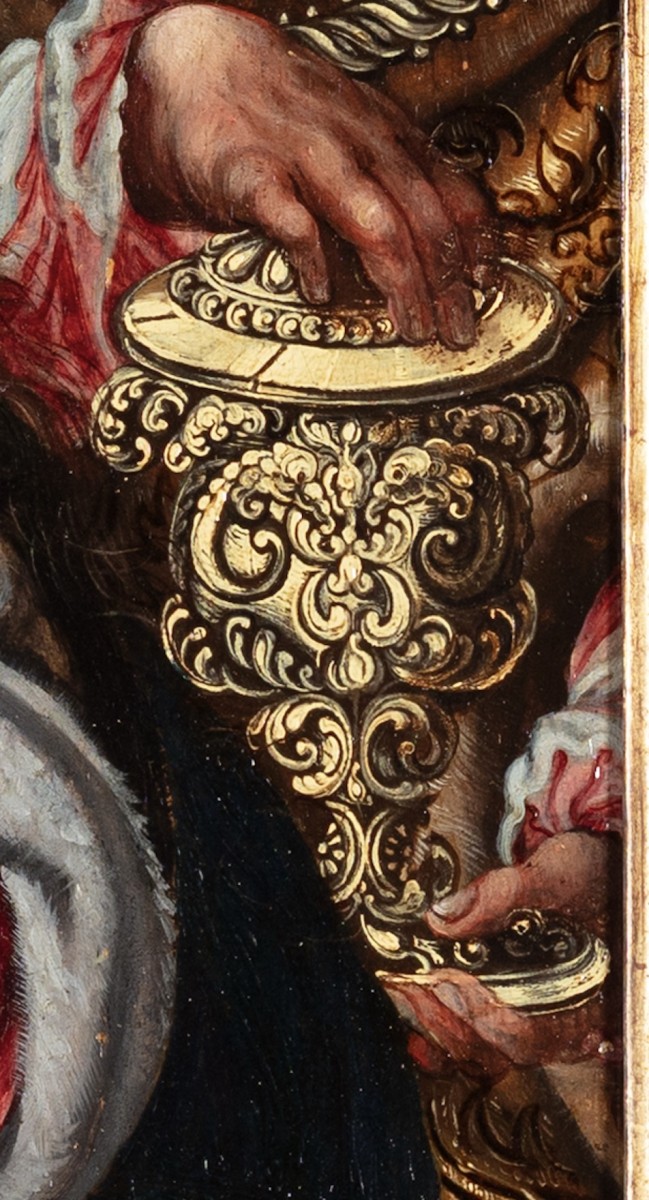
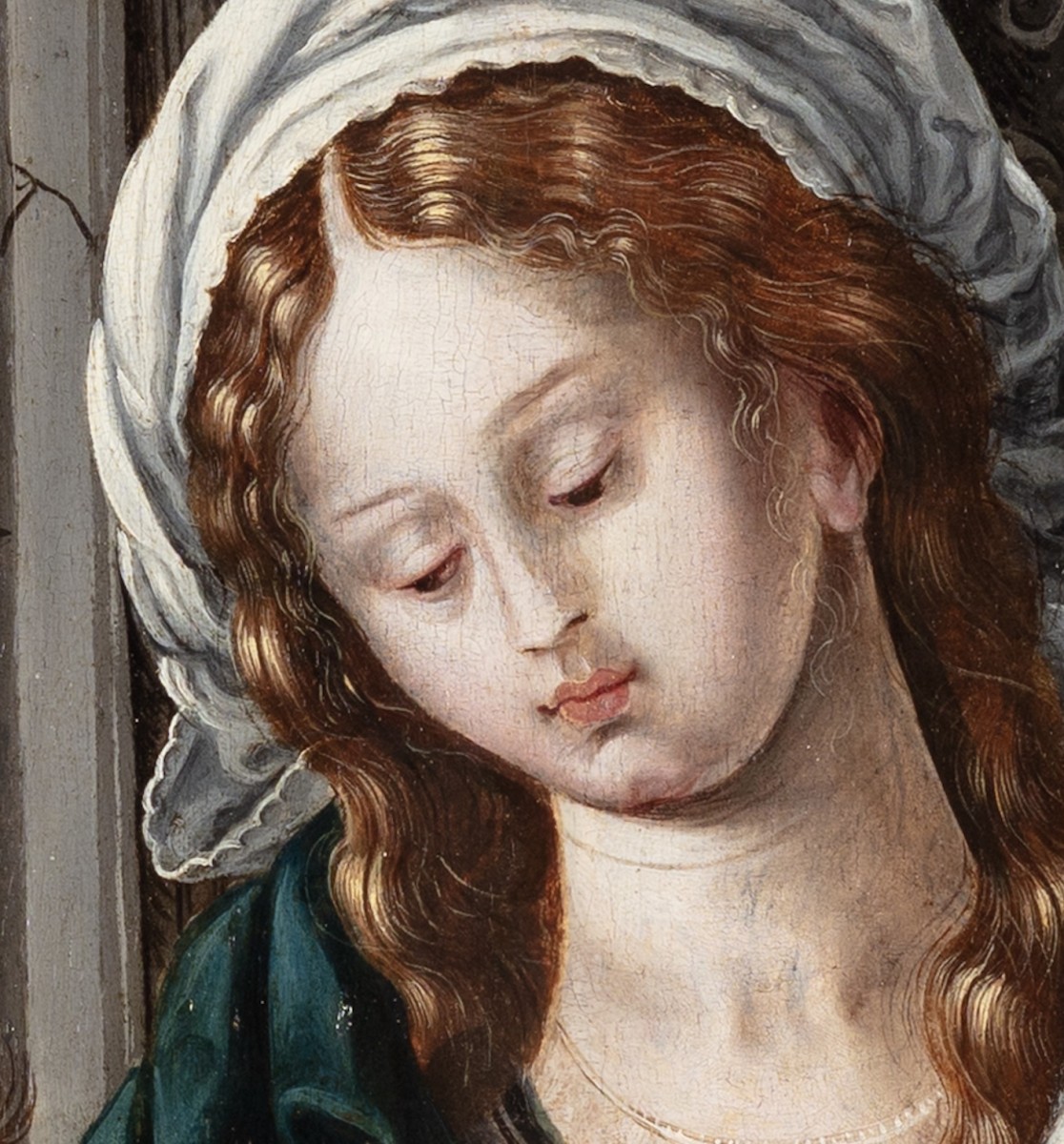
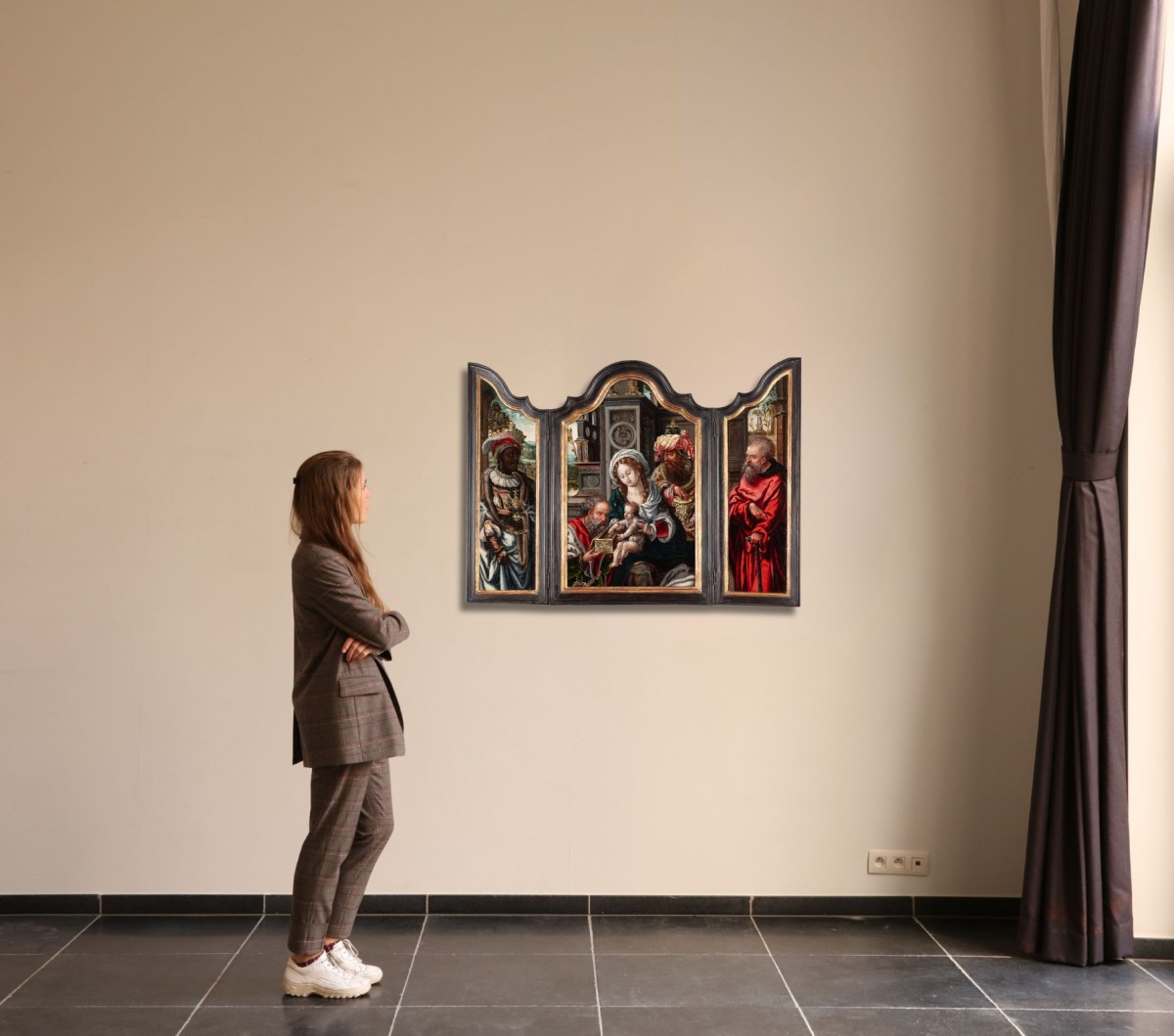

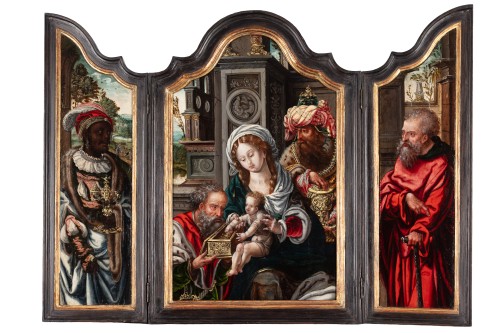
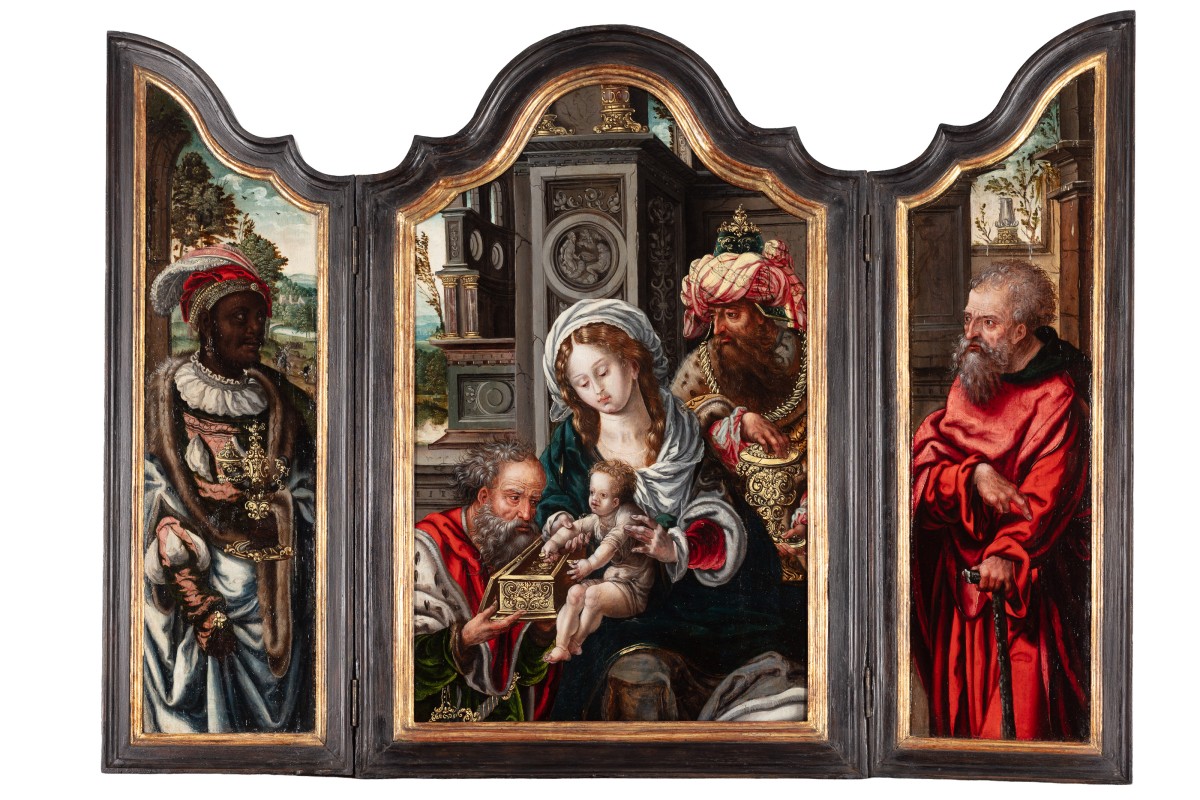
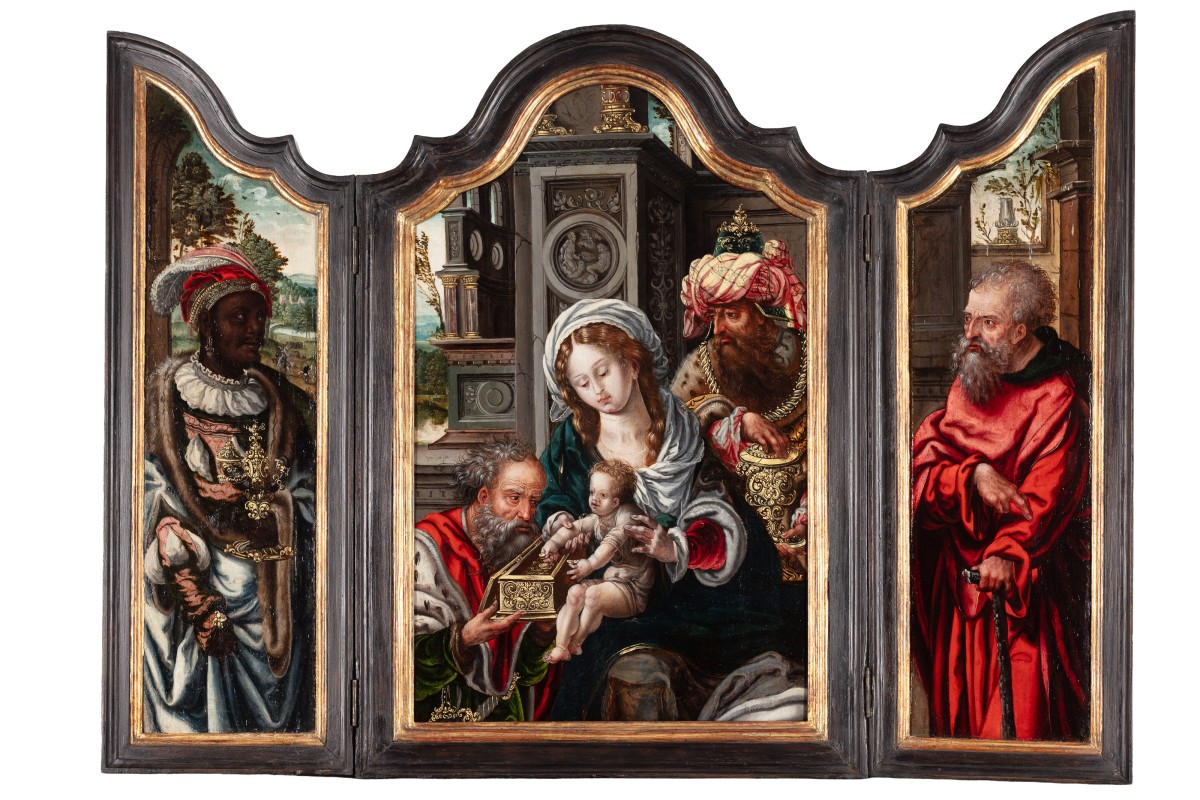
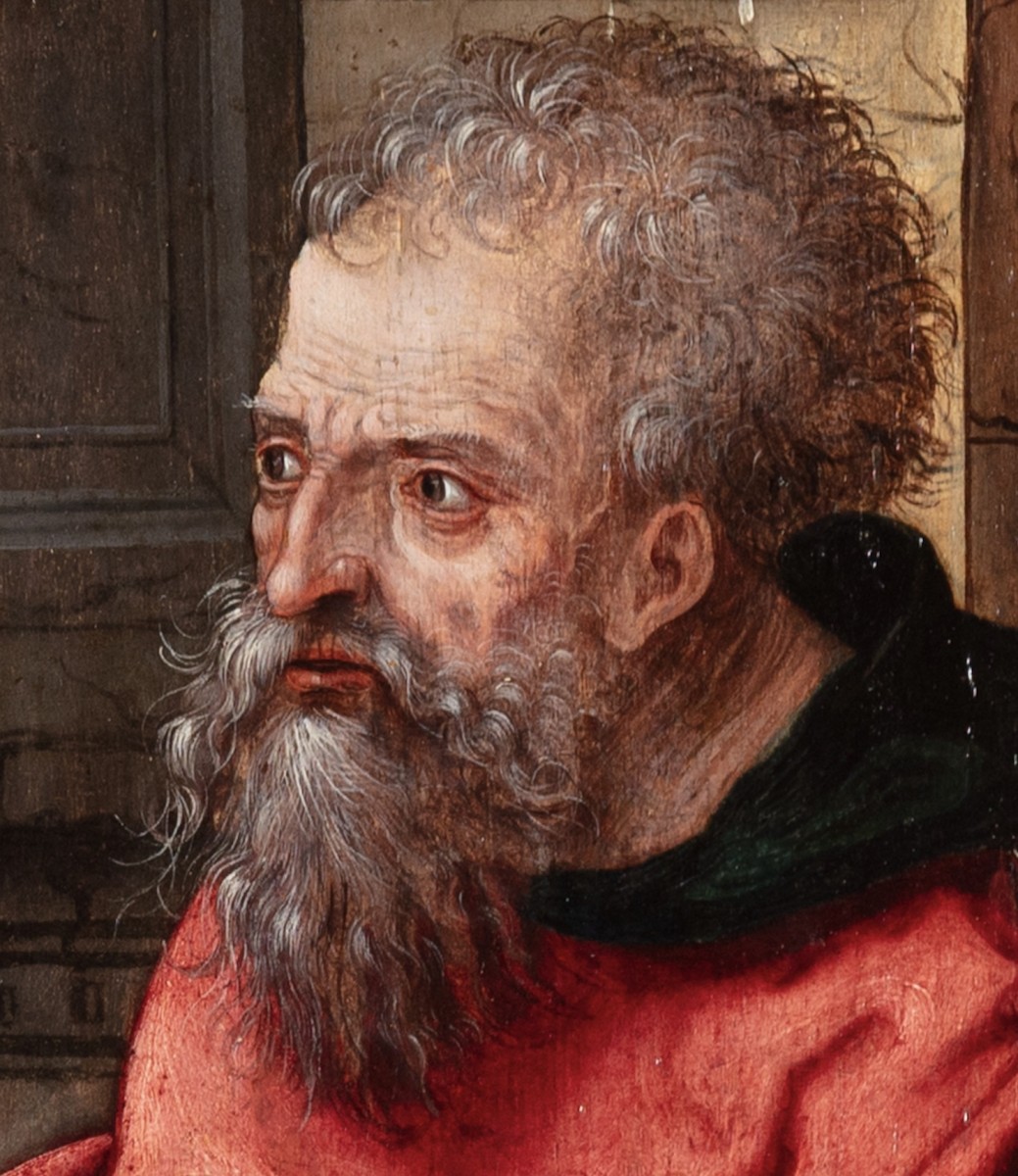
The format and the theme, the triptych of the Adoration, recall Pieter Coecke van Aelst (Aalst, 1502 – Brussels, 1550) and his workshop. He was among the foremost artists of Antwerp at the time and is counted by Max J. Friedländer among the Antwerp Mannerists. He excelled in many art forms, including printmaking, painting, stage sets, stained glass and designs for tapestries and jewellery. His original, dynamic and colourful compositions, above all for altarpieces, were popular with wealthy patrons.
Coecke took over his father-in-law’s workshop, became dean of the Antwerp Guild of Saint Luke in 1537 and, shortly before his death, court painter to Emperor Charles V. According to Karel van Mander he was the teacher of Pieter Bruegel the Elder, who later married his daughter Mayken. Few signed or well-documented paintings by Coecke himself survive. Triptychs of the Adoration of the Magi in a similar arrangement were made by him, his workshop and other Flemish masters, among them Joos van Cleve and the Master of the Antwerp Adoration.
This complete triptych, painted on both sides, is a typical example of sixteenth-century Antwerp art production, with a much-loved subject. The Three Kings surround Mary with her son and bring their traditional gifts: gold, frankincense and myrrh. These stand for royal dignity, divinity, sacrifice and redemption. In the foreground an old king kneels. Behind Mary on the right stands a king in a turban, and on the left wing stands the third king in a golden cloak, possibly Balthasar. On the right wing stands a bearded man in a red robe, perhaps Joseph.
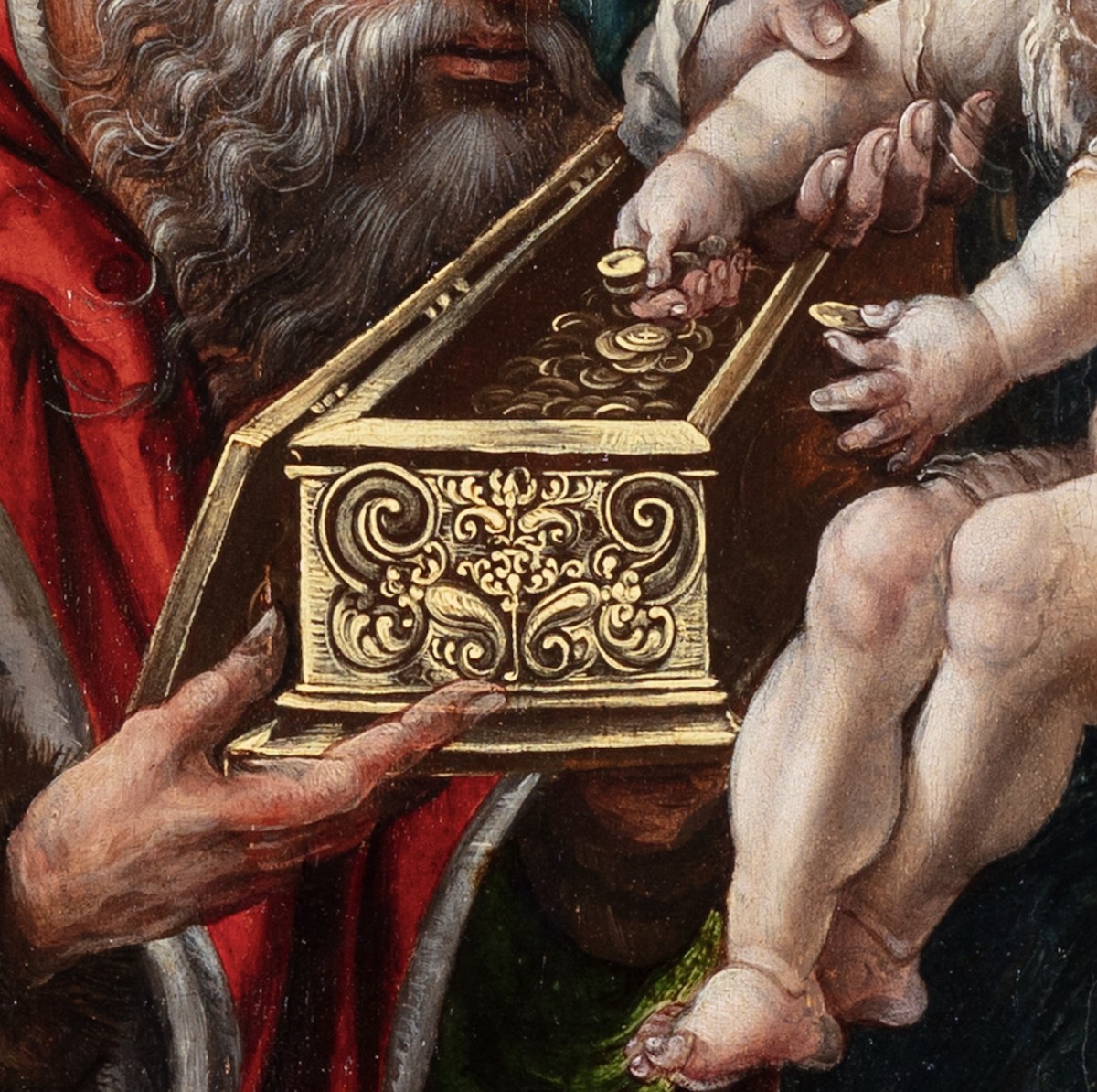
The realistic rendering is impressive, above all in the way the child reaches for the gold coins and his mother tries to hold him back by holding his arm.
A comparable work by Coecke with the same theme is in the Musée des Beaux-Arts in Valenciennes. There the scene unfolds before an idealised landscape with ruins, whereas here it takes place before a monumental architectural backdrop. A similar composition with comparable Renaissance architecture is documented in the RKD (inventory number 38545).
Coats of arms appear on the reverse of the side panels. They refer to the House of Egmont, linked with Arkel, and to the lordships of Hoogwoud and Aartswoud in North Holland. A framed document kept with the work states that the triptych passed to the Boitselaer and Wassenaer Starrenburg families, and that on 12 November 1868 it was acquired by Baron Bieberstein Rogalla Zawadsky, a member of the House of Representatives (Tweede Kamer). Over the centuries the piece was possibly owned by prominent Dutch noble families.
Oil on panel
Dimensions: 72 x 42 cm (center), 73 x 19,5 cm (side panels)
Provenance:
Egmond-Arkel collection (coats of arms on the reverse of a side panel)
Possibly the Van Hoogwoude-Aartswoud collection (coats of arms on the reverse of a side panel)
Boitselaer family, Cleves
Wassenaer Harrenburg family
Lucas Stokbroo (1792–1867), Hoorn
Monchsor de la Haye collection
Charles Antoine, Baron von Bieberstein Rogalla Zawadsky (1796–1880), from 1868 onwards.
Delevery information :
After reception of payment we can box and ship our items all over the world. Estimates of this service can be provided.