Offered by Jan Muller
REQUEST INFORMATION
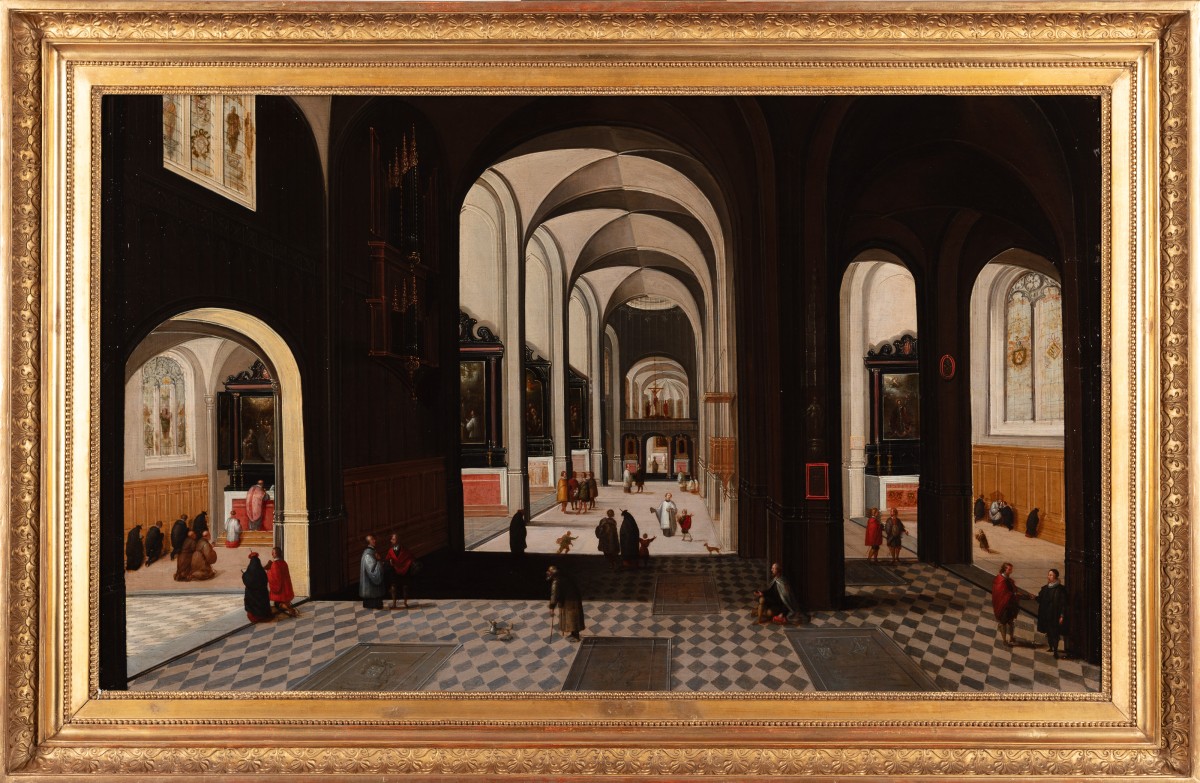

Pieter Neefs the Elder (c. 1578 – after 1656, before 1661, Antwerp) was a Flemish painter who specialised in architectural interiors of churches. He was active in Antwerp and was influenced by painters such as Hendrik van Steenwijk the Elder and the Younger. In 1610 he became a free master of the Antwerp Guild of Saint Luke. Who his teacher was is not known. Painting church views was still relatively new in Flanders at the time, and Neefs established himself as a specialist. He became so successful that leading Antwerp painters painted the figures in his work.
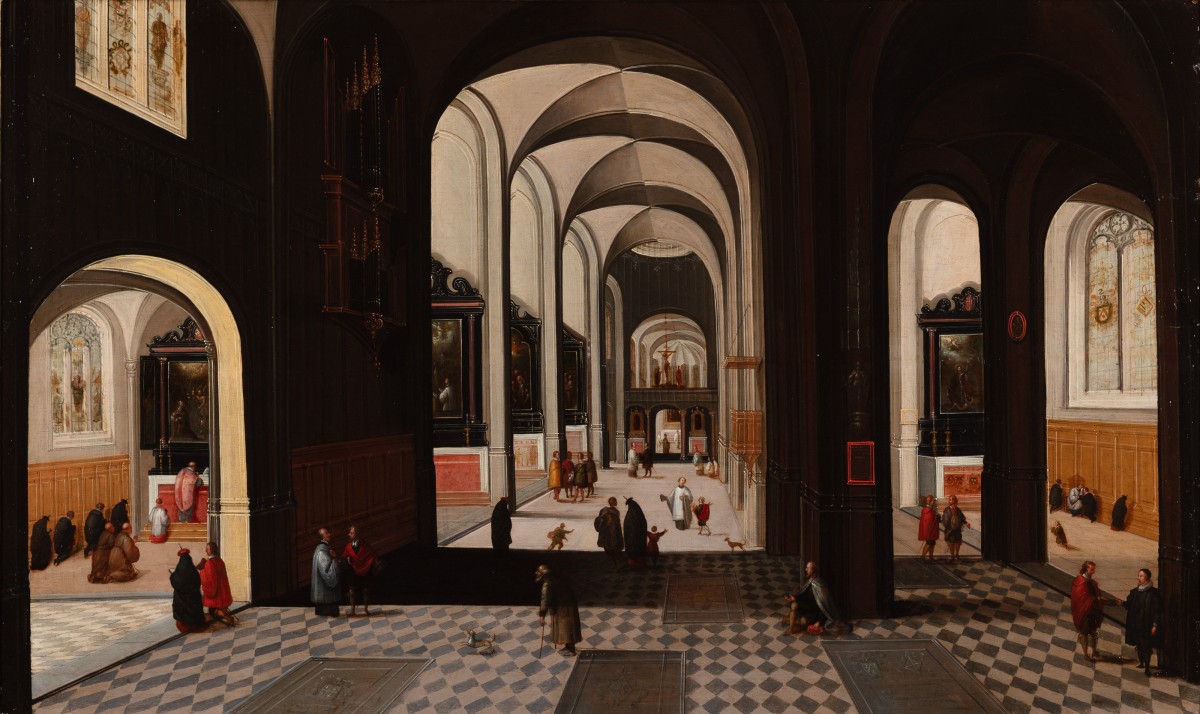
His work shows a clear influence of Steenwijk the Elder and the Younger, especially the latter. Some therefore suspect that he trained with one of them. Neefs also painted several copies of Steenwijk’s compositions. Typical of their style is a rigid linear perspective, which gives the viewer a full and deep view down the nave of the church. His compositions are characterised by deeply receding spaces and effects of light and dark. Many of his churches were inspired by Antwerp Cathedral, parts of which he often borrowed for his imaginary churches. His work shows both existing and imagined churches, but most are imaginary churches loosely based on real examples.
The figures in his works were often painted by artists of the Francken family, such as Frans II and Frans III, but also by Jan Brueghel the Younger, Sebastiaen Vrancx, Adriaen van Stalbemt and David Teniers II.
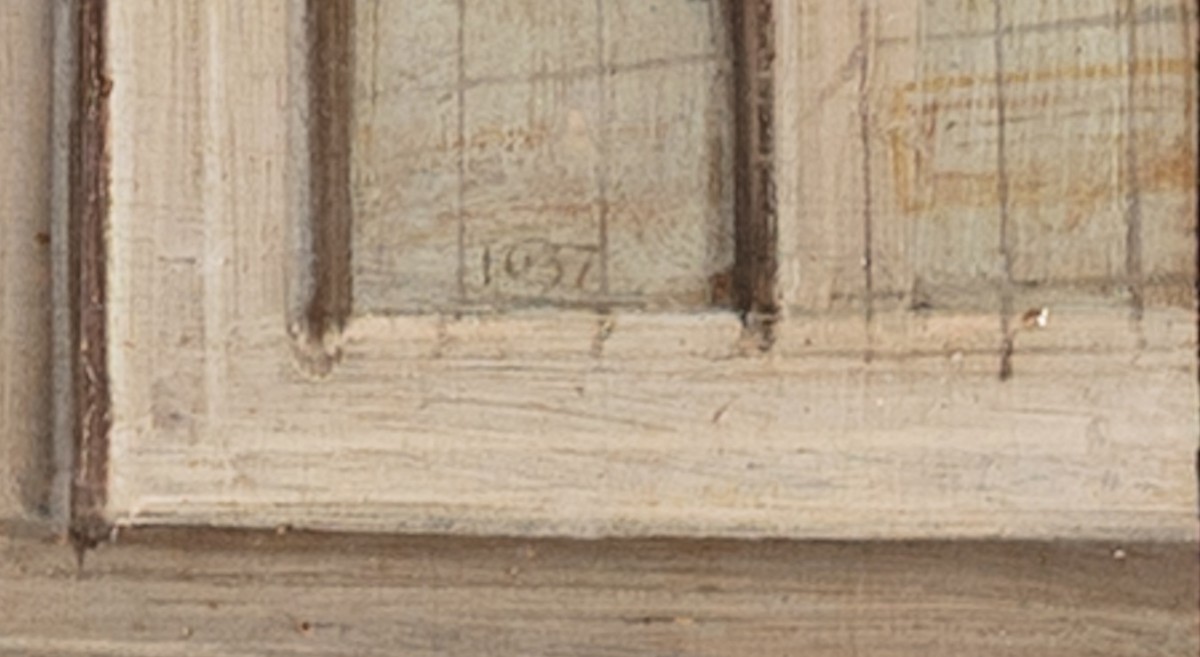
Neefs had five children with his wife, two of whom, Lodewijk and Pieter the Younger, also became painters. Their work is so close to their father’s that it can sometimes be difficult to tell their hands apart. In general, Neefs’ works from before about 1640, when his son Pieter the Younger became involved in the workshop, are of higher quality. This work is dated 1637.
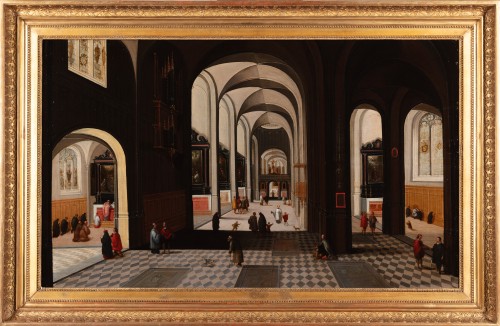
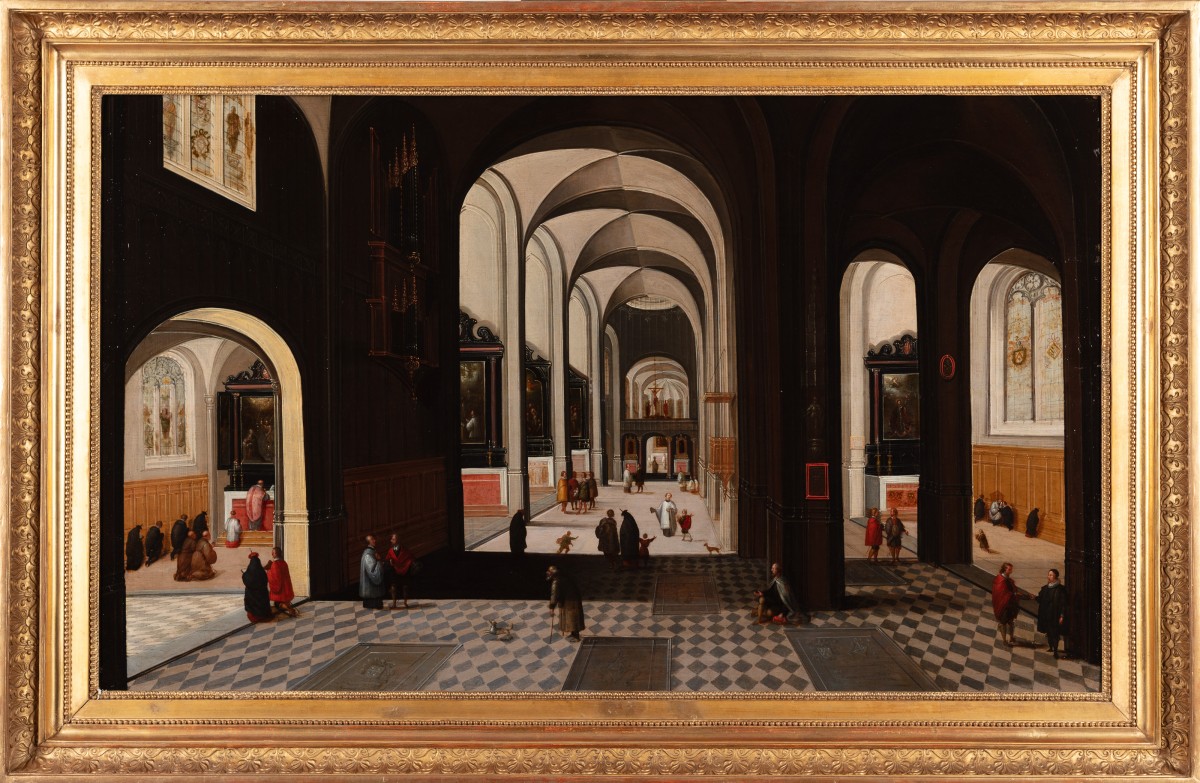
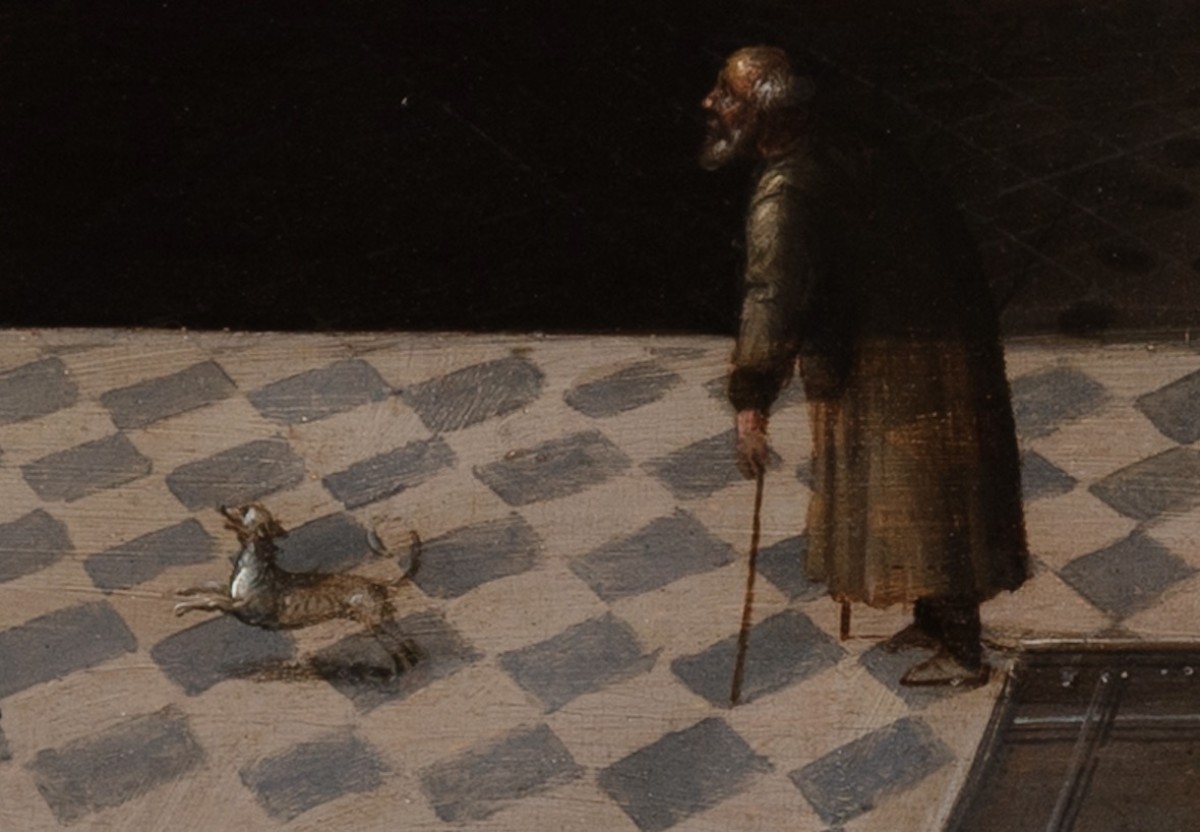
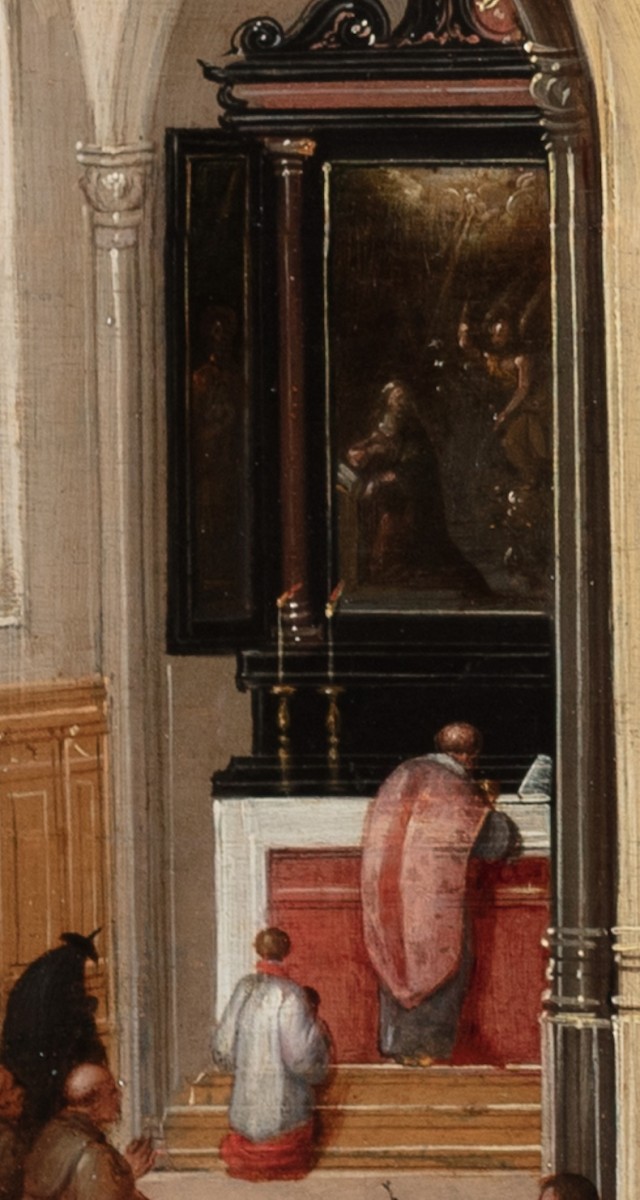
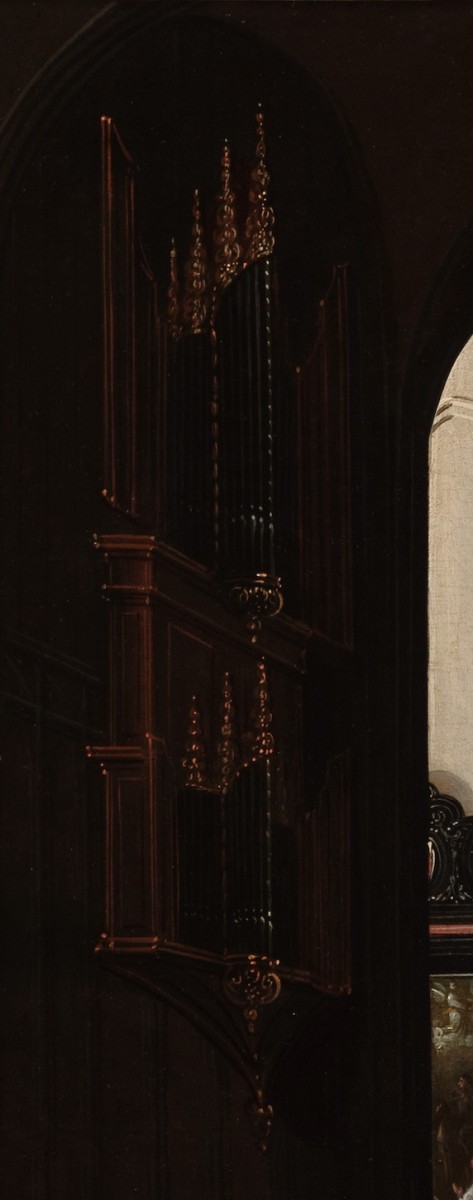
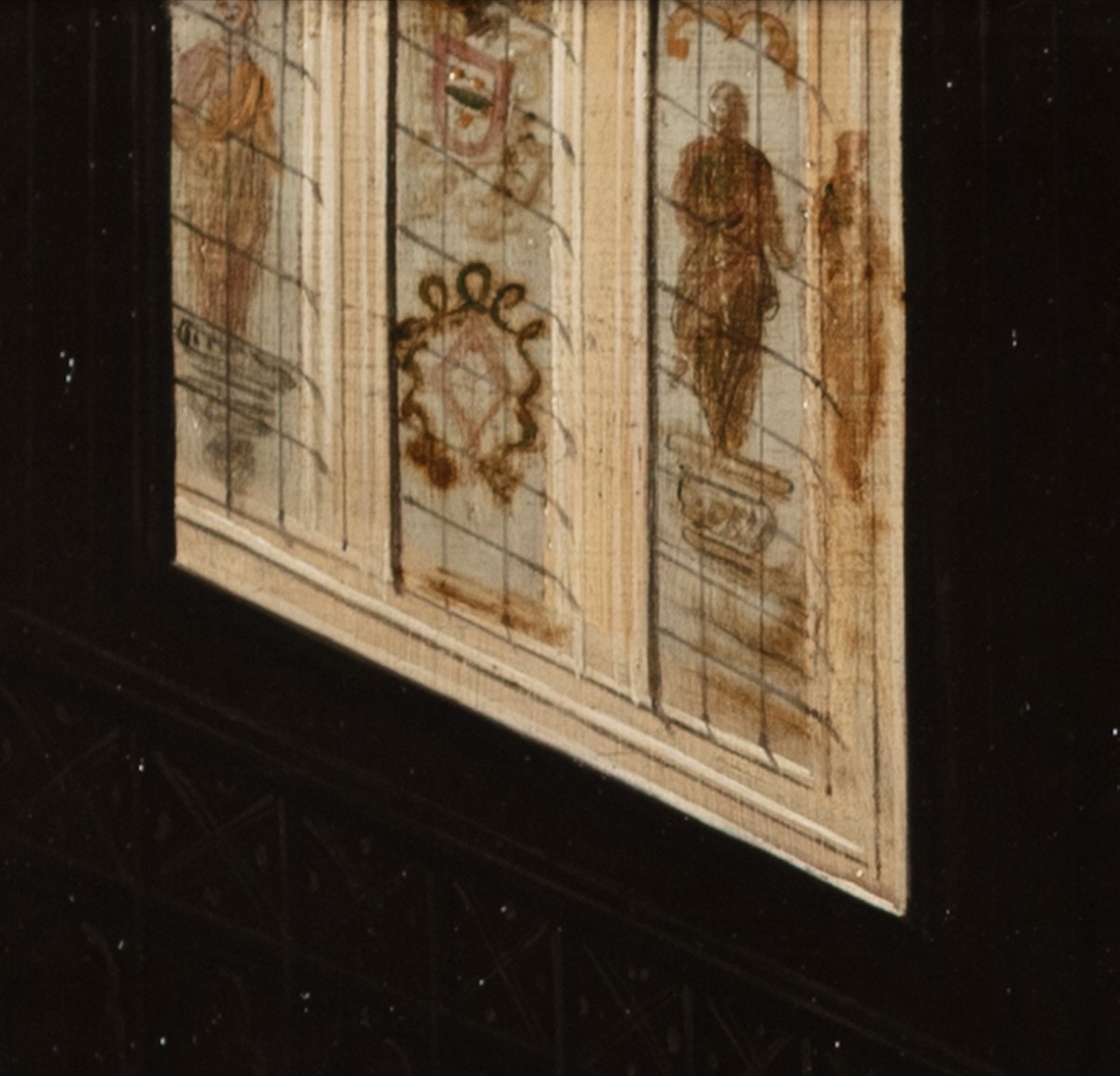
We see a busy church. In the centre of the foreground are two beggars: one walks with a stick and is preceded by a small dog, the other sits by a column. Several people are more richly dressed. Some of them hold a church office and can be recognised by the white garment they wear over their black clothing. On the left we see a whole series of paintings, before which monks and citizens, among others, are praying. In the middle ground children play and well-to-do citizens can be seen. In the rear part of the nave the rest of the church takes shape, where figures are likewise busy. Note also the rich execution of the stained-glass windows and the organ.
Like most of Neefs’ church interiors, this is probably an imaginary church, loosely based on real examples such as Antwerp Cathedral. Neefs’ work is sometimes regarded as propaganda for the Counter-Reformation: his churches show the full range of Catholic activity, such as alms-giving, prayer and the sacraments, in a church full of priests, statues and paintings. The beggars, the praying faithful and the clergy in this work can be read in that light.
Architecture was present early on in paintings and illuminations, but was then used mainly as a background or to structure the image. In the Renaissance, architecture served to emphasise perspective and give depth to the scene, as in Masaccio’s Holy Trinity of the 1420s. In Western art, architectural painting developed into an independent genre in the 16th century and reached its peak in the 16th and 17th centuries. Later it evolved in Romanticism into, among other things, views of ruins. Hans Vredeman de Vries was the first important architectural painter. His pupil Hendrik van Steenwijk I was the first to specialise in church interiors. In doing so he established a tradition in which Neefs later took his own place.
Oil on panel
Dated 1637
Dimensions: 74 x 123 cm, 93 x 143 cm (framed)
Delevery information :
After reception of payment we can box and ship our items all over the world. Estimates of this service can be provided.