Offered by Jan Muller
REQUEST INFORMATION

Abraham Teniers (Antwerp, 1629-1670) was the younger brother of David Teniers II and possibly also his pupil. In 1646 he was admitted to the Antwerp Guild of Saint Luke and, like his brother, became court painter to Archduke Leopold Wilhelm of Austria. He specialised in genre scenes of villages, taverns and monkey scenes.
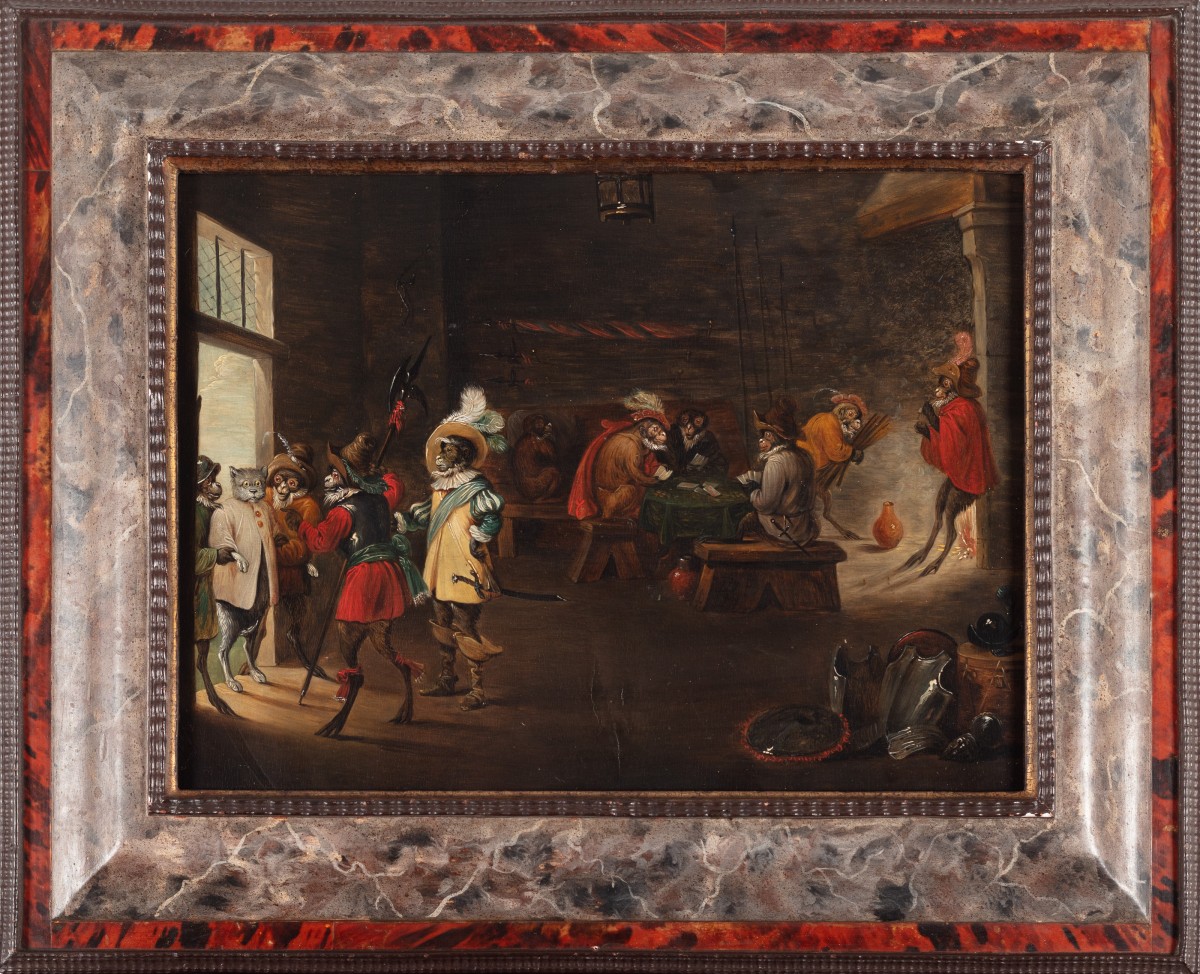
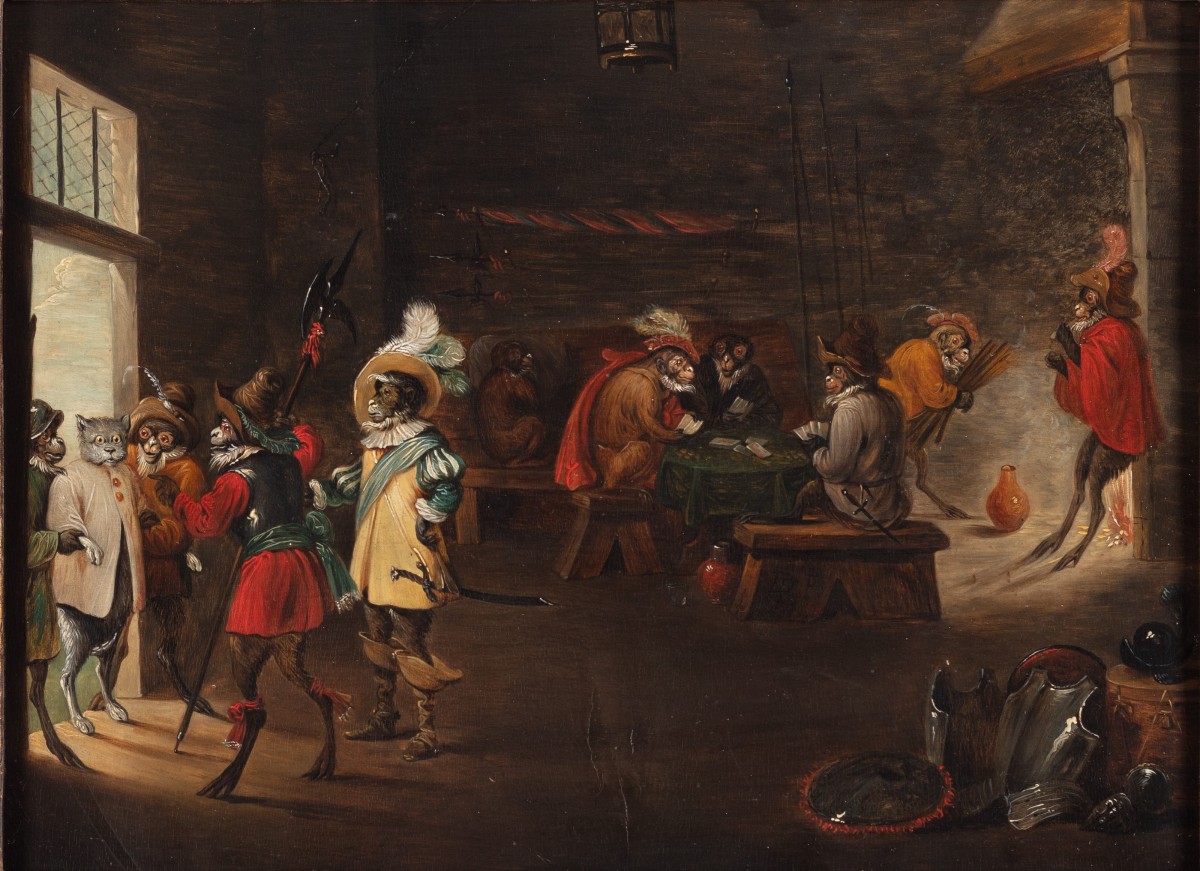
Together with David, Abraham developed the singerie further and helped to spread it beyond Flanders. He also combined the genre with the guardroom scene, notably in the Singerie in a Guardroom in the Royal Museums of Fine Arts of Belgium. That combination also appears in this work.
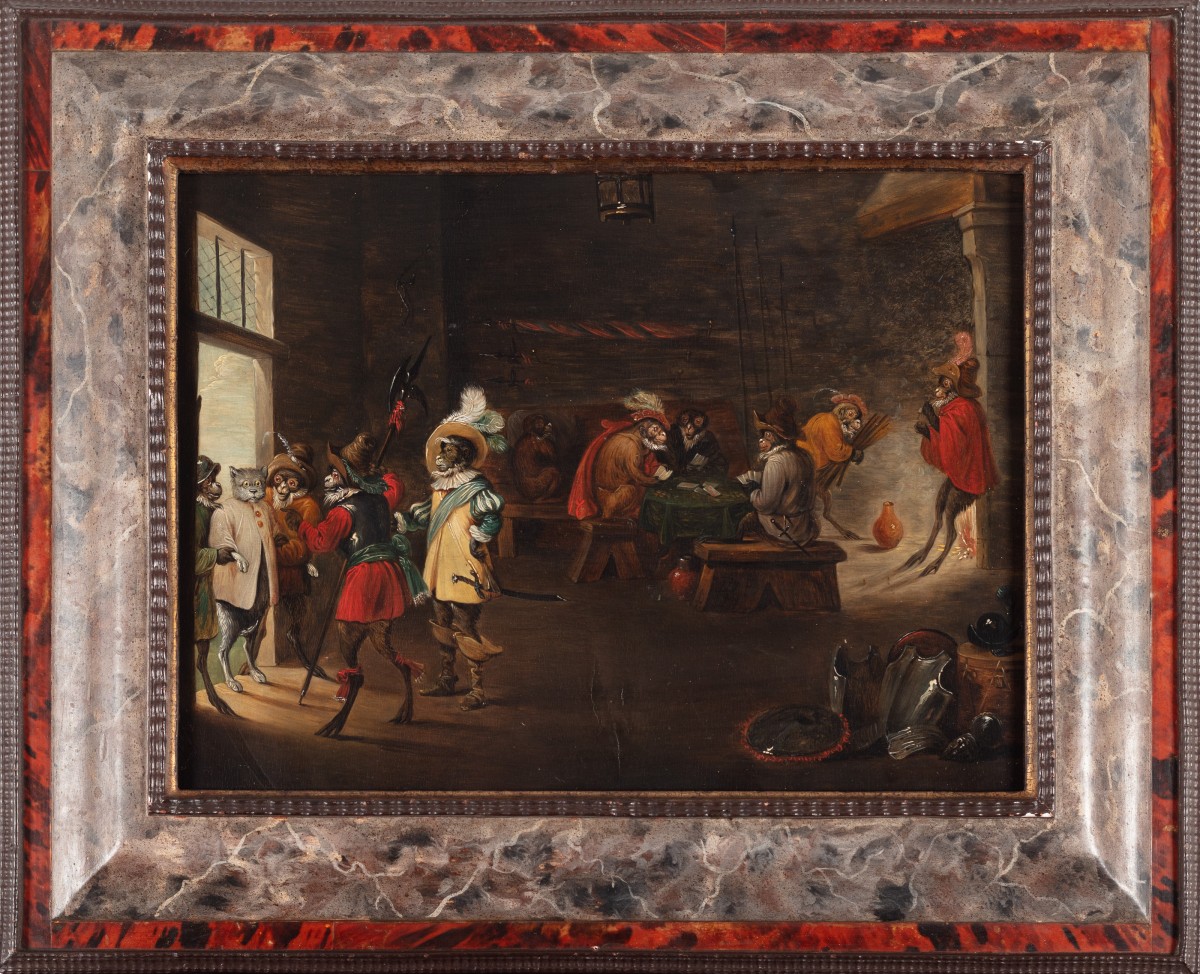
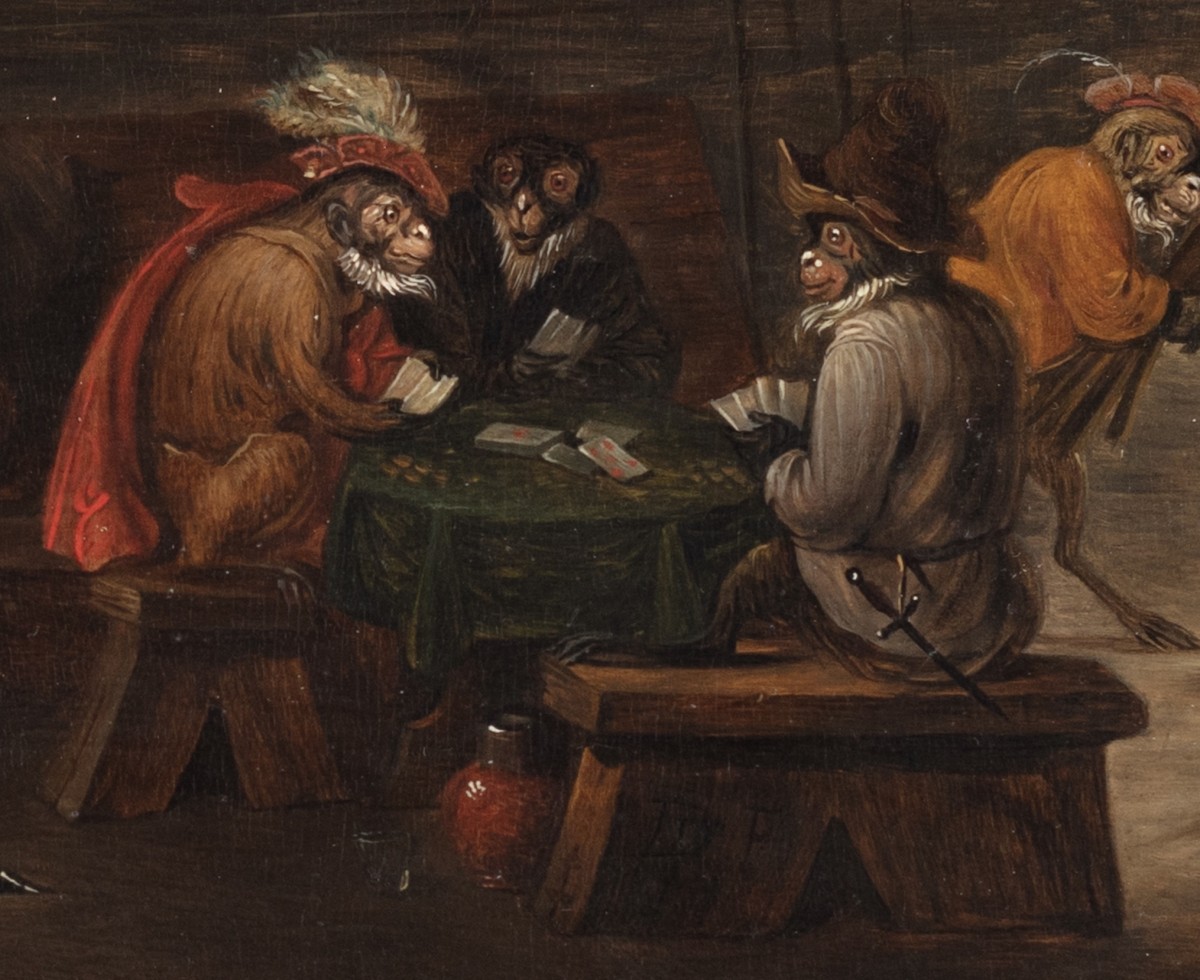
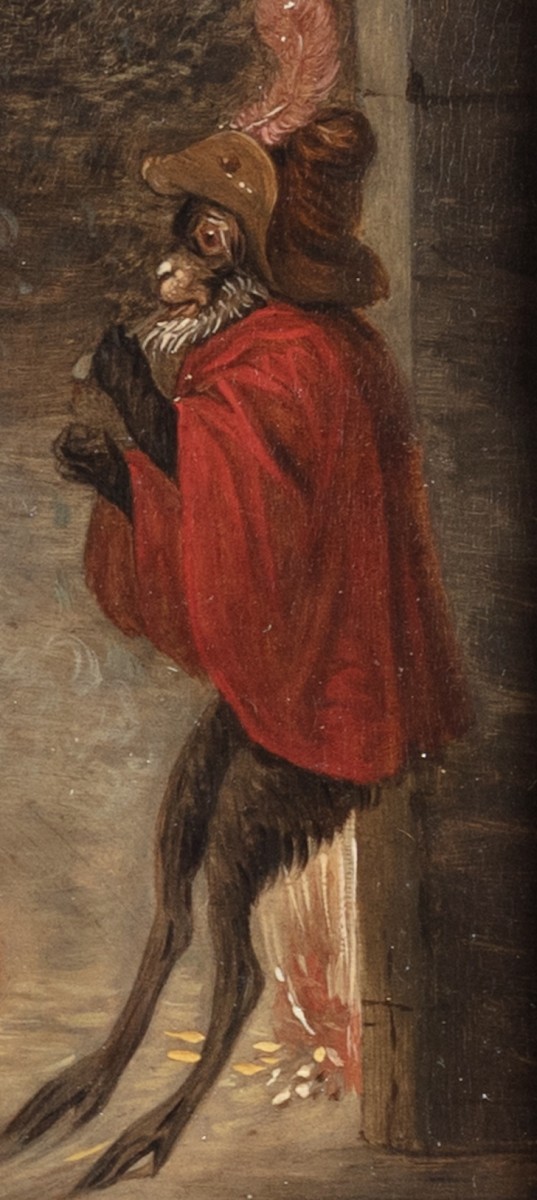
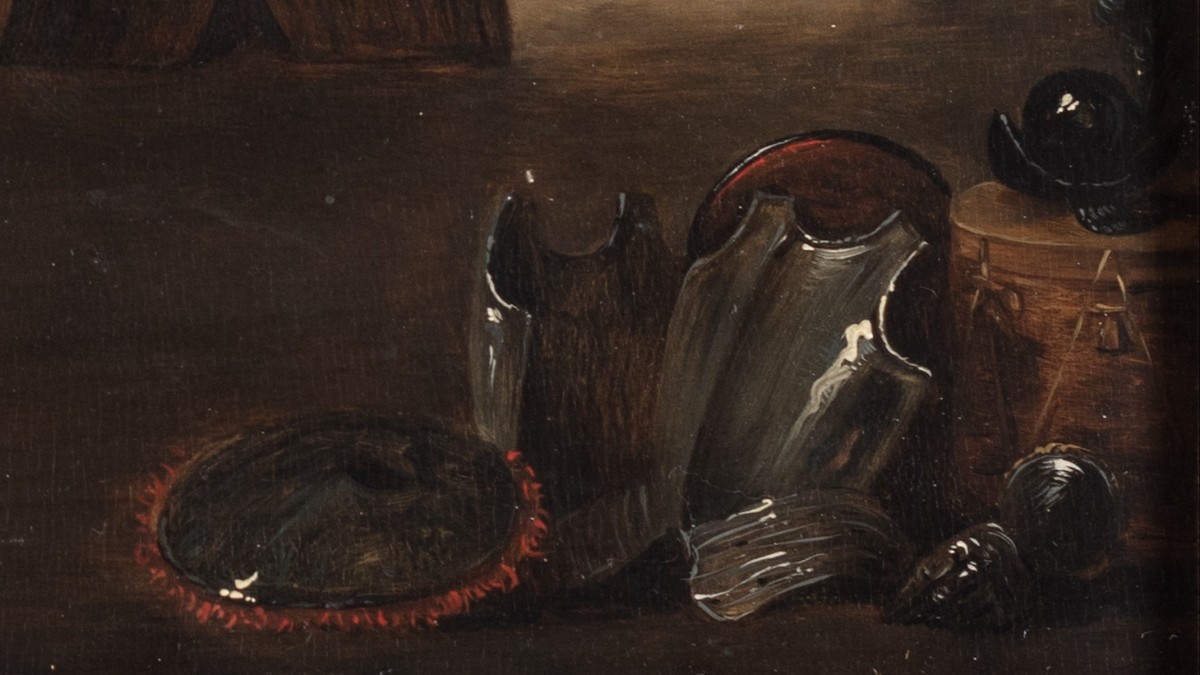
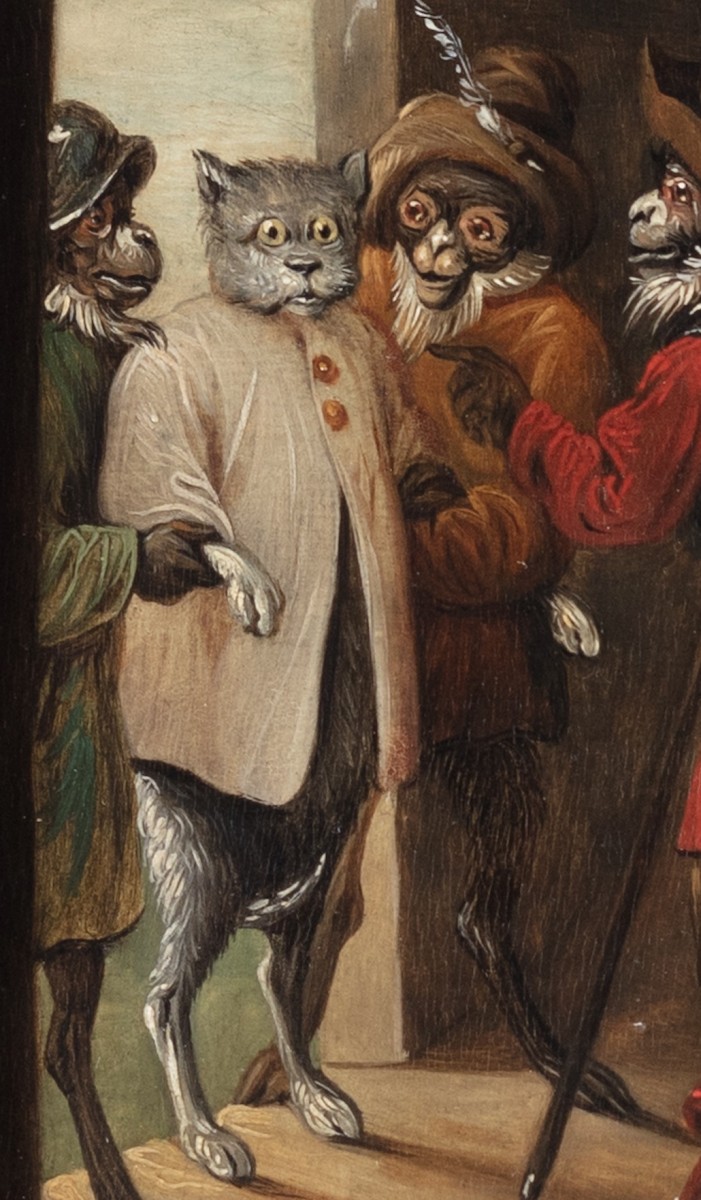
In a guardroom, two monkeys bring in a bewildered grey cat. Two other monkeys are already waiting for him. All the monkeys wear military uniform and keep their weapons close at hand. The cat itself is neatly dressed too. In the background a few more monkeys are playing cards, perhaps during a break. The card game may allude to gambling, one of the themes of the genre. As in other card-player scenes, the viewer knows more than the players themselves: who is winning, who is losing, and is someone cheating?
Singerie is the name given to paintings in which monkeys perform human activities, often stylishly dressed and with a satirical intent. The word comes from French and refers to monkey tricks. The idea is an old one. Monkeys imitating humans can already be found in Ancient Egypt and in the margins of medieval manuscripts, where the monkey was a symbol of downgraded humanity. As a pictorial genre of monkeys in human dress and a human setting, it originated in sixteenth-century Flemish painting and developed further in the seventeenth. Pieter van der Borcht introduced the singerie around 1575 as an independent theme in a series of prints, rooted in the tradition of Pieter Bruegel the Elder, whose Two Monkeys (1562) probably started the craze. These prints were widely disseminated and taken up by Antwerp artists such as Frans Francken the Younger, Jan Brueghel the Elder and the Younger, Sebastiaen Vrancx and Jan van Kessel the Elder. David Teniers the Younger became its best-known practitioner and developed the genre further together with his younger brother Abraham.
That the monkeys are soldiers is no coincidence. Guardroom scenes were popular between 1620 and 1680, a subject not unrelated to the devastating decades of war in Europe up to 1648. The Eighty Years’ War lasted from 1568 to 1648. In such a time soldiers were almost constantly present. They were often foreign mercenaries whose days consisted of periods of violence and periods of boredom. Scenes in this genre therefore often touch on moral themes such as gambling, idleness and drunkenness.
Monkeys and cats were regarded as vain animals, driven by instinct. Why the cat has been arrested, the painting leaves open. The scene may be a satire on how civilians suffered from the behaviour of soldiers.
Oil on panel
Delevery information :
After reception of payment we can box and ship our items all over the world. Estimates of this service can be provided.