Offered by Jan Muller

Jan Anton Garemijn (Bruges, 1712 – 1799) was a Flemish painter and draughtsman. He was also an engraver. He is known for his lighthearted depictions of everyday life. As an art teacher and director of the Bruges academy, he played an important role in the revival of artistic activity in his city. In 1765 he became director of the academy; in 1775 he resigned after a dispute with other teachers.
He was born in Bruges, the son of Frans Garemijn, a cooper who died when Jan Anton was seven, and Magdalena Missiaens (or Messiaens). He was baptised on 15 April 1712 and showed a talent for drawing early on. After his father’s death he spent several years learning from the sculptor Rochus Aerts. He then attended the newly founded academy in Bruges, where he studied under the painter Jozef Vanden Kerckhove. In 1728 he set up his own workshop.
The numerous religious scenes he painted are in the conventional style he had learned from the Baroque masters. He was much more spontaneous in paintings of the picturesque aspects of everyday life. These were often commissioned as decorative panels for salons and dining rooms. His genre scenes arose under the influence of the painter Jacob Beernaert. Matthias de Visch introduced him to Italian painting and taught him the elegant salon art of Watteau and Boucher. His famous Vegetable Market on the Pandreitje (1778, Groeningemuseum) shows his talent for rendering large group scenes in a lively manner.
Garemijn was a hardworking artist whose motto was nulla dies sine linea: no day without a line.
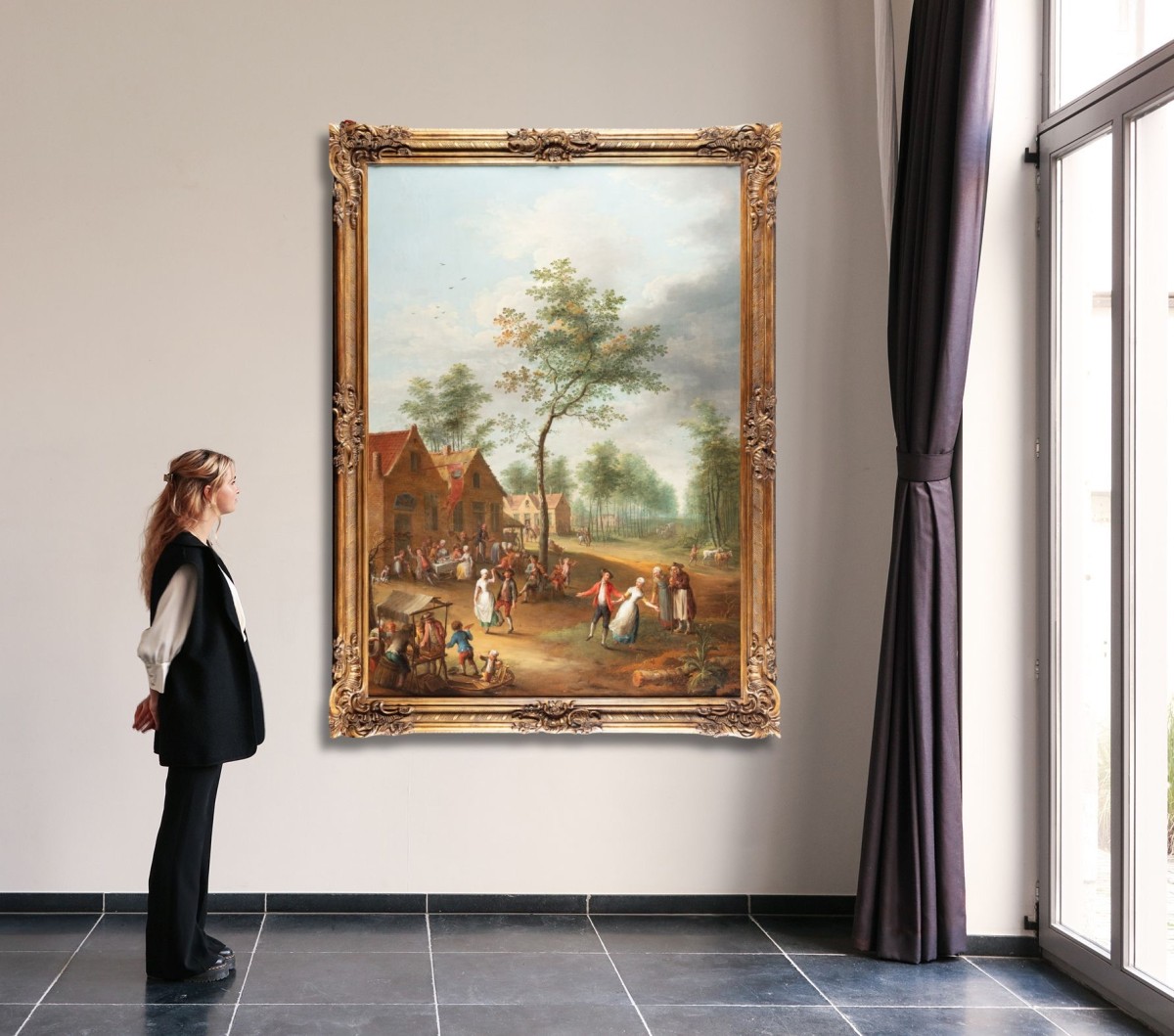
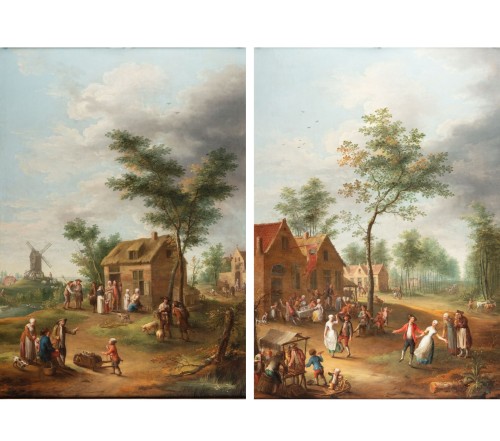
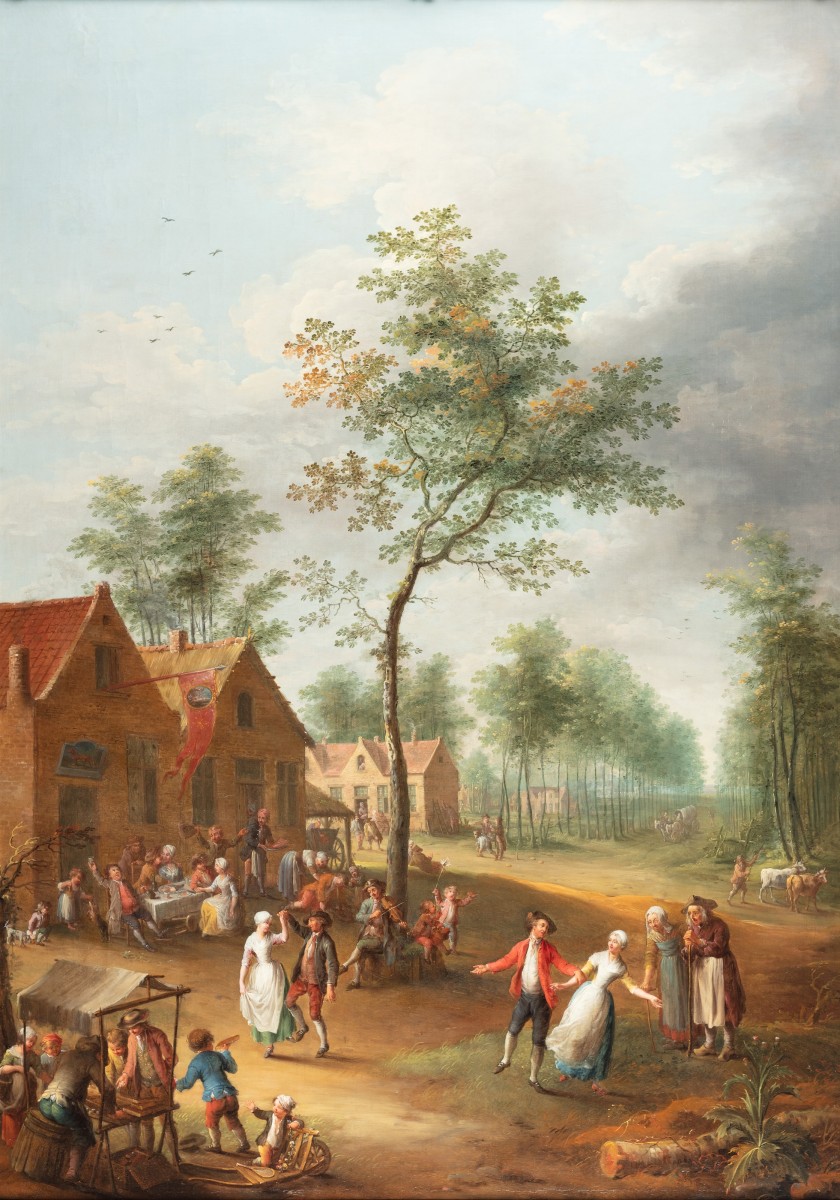
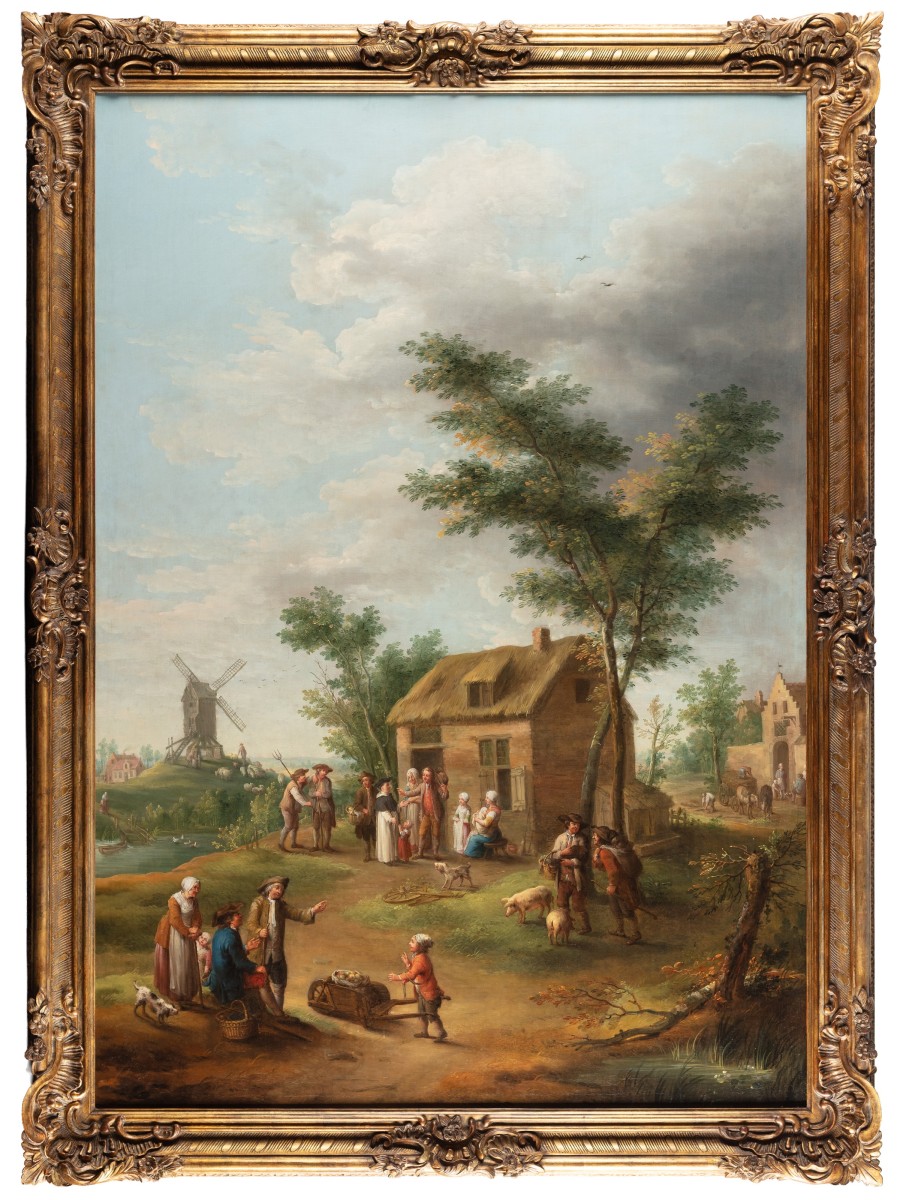
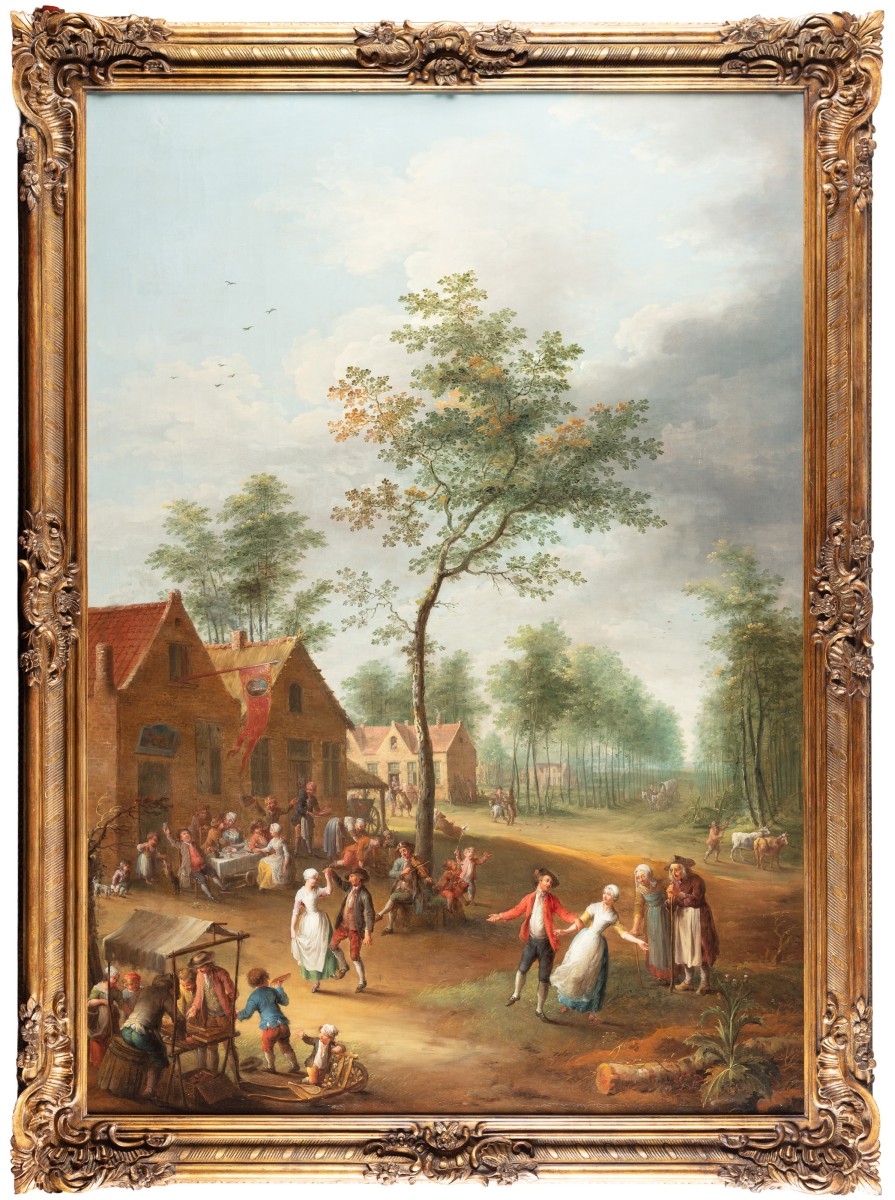
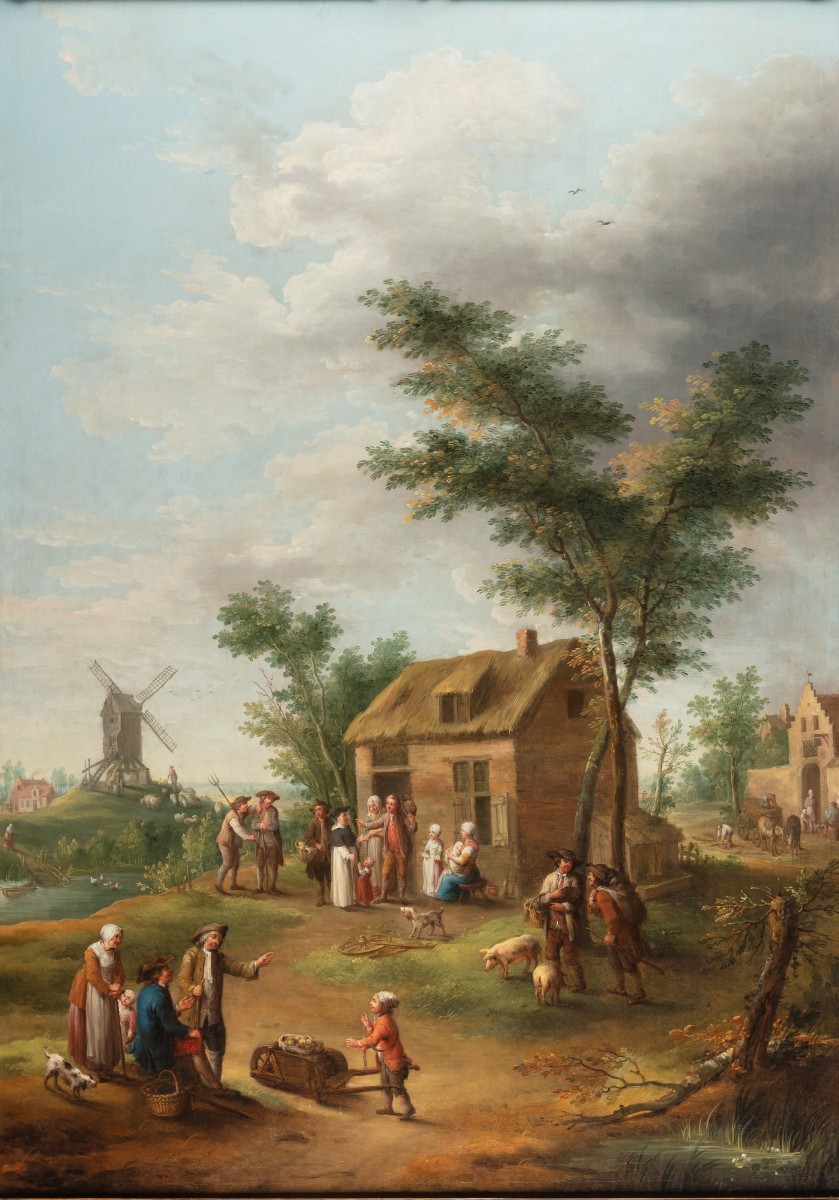
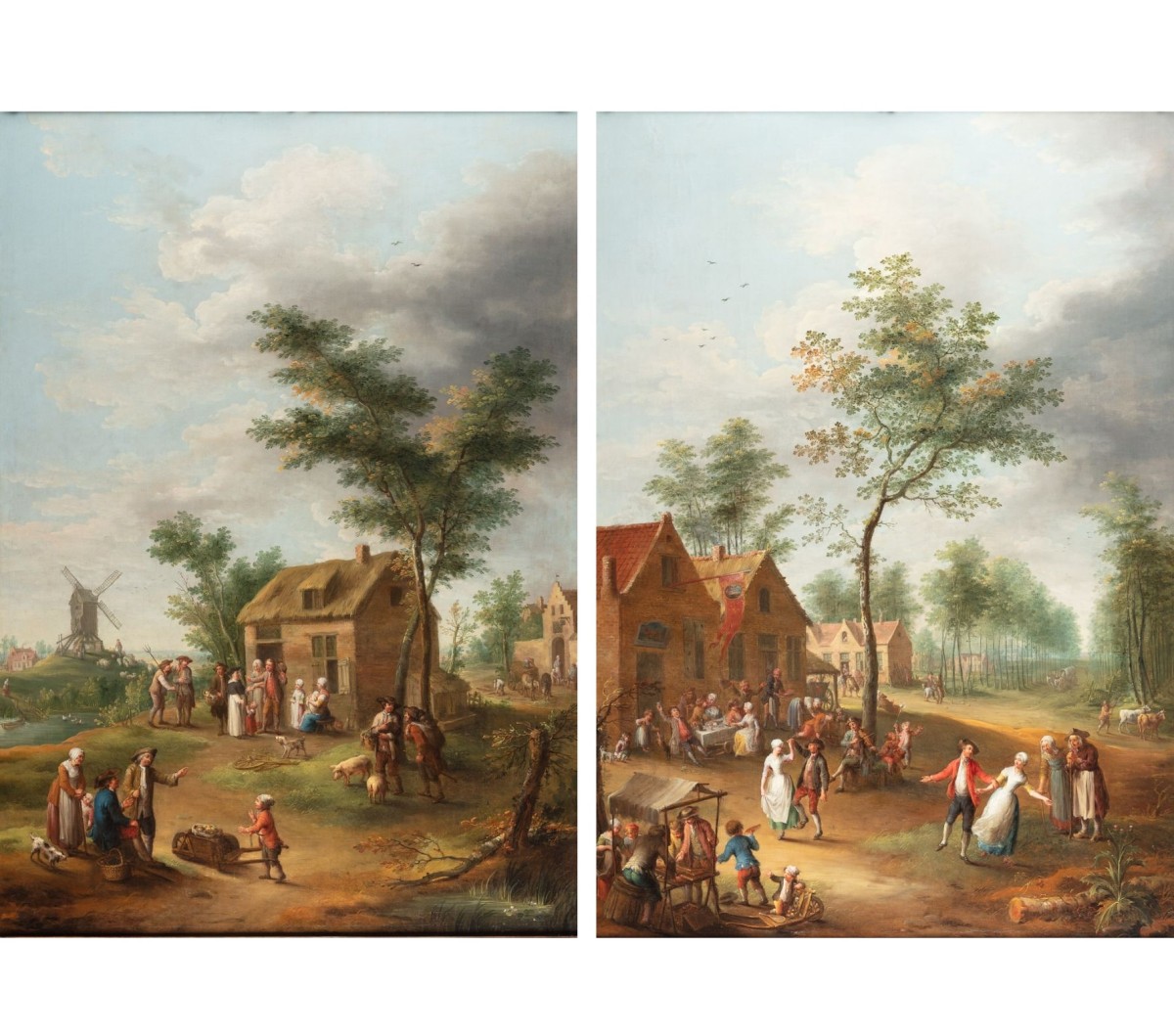
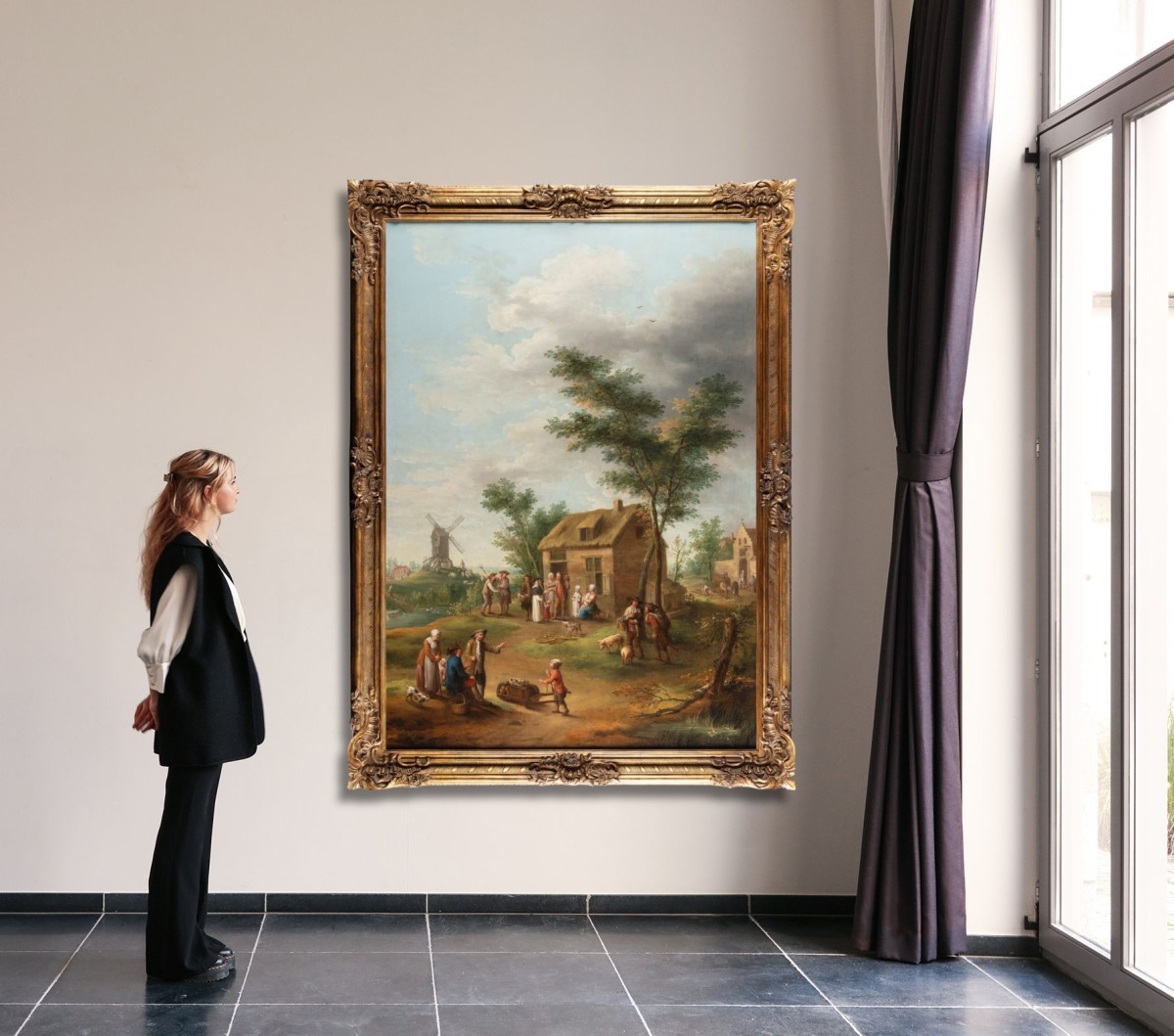
Given the size of this pair, they were part of a decorative ensemble in an interior. That fits Garemijn’s scenes of everyday life, which were often commissioned as decorative panels for salons and dining rooms.
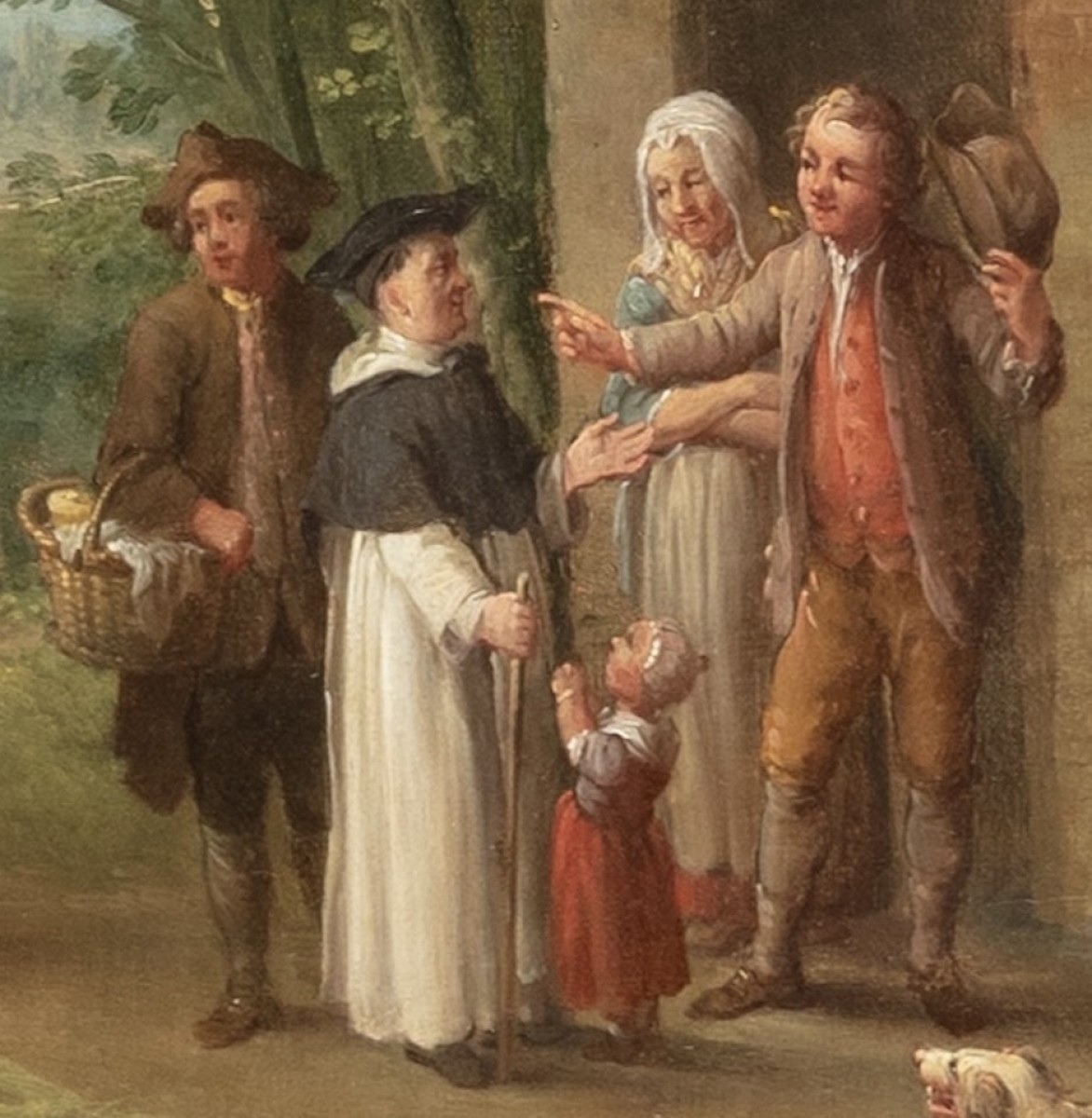
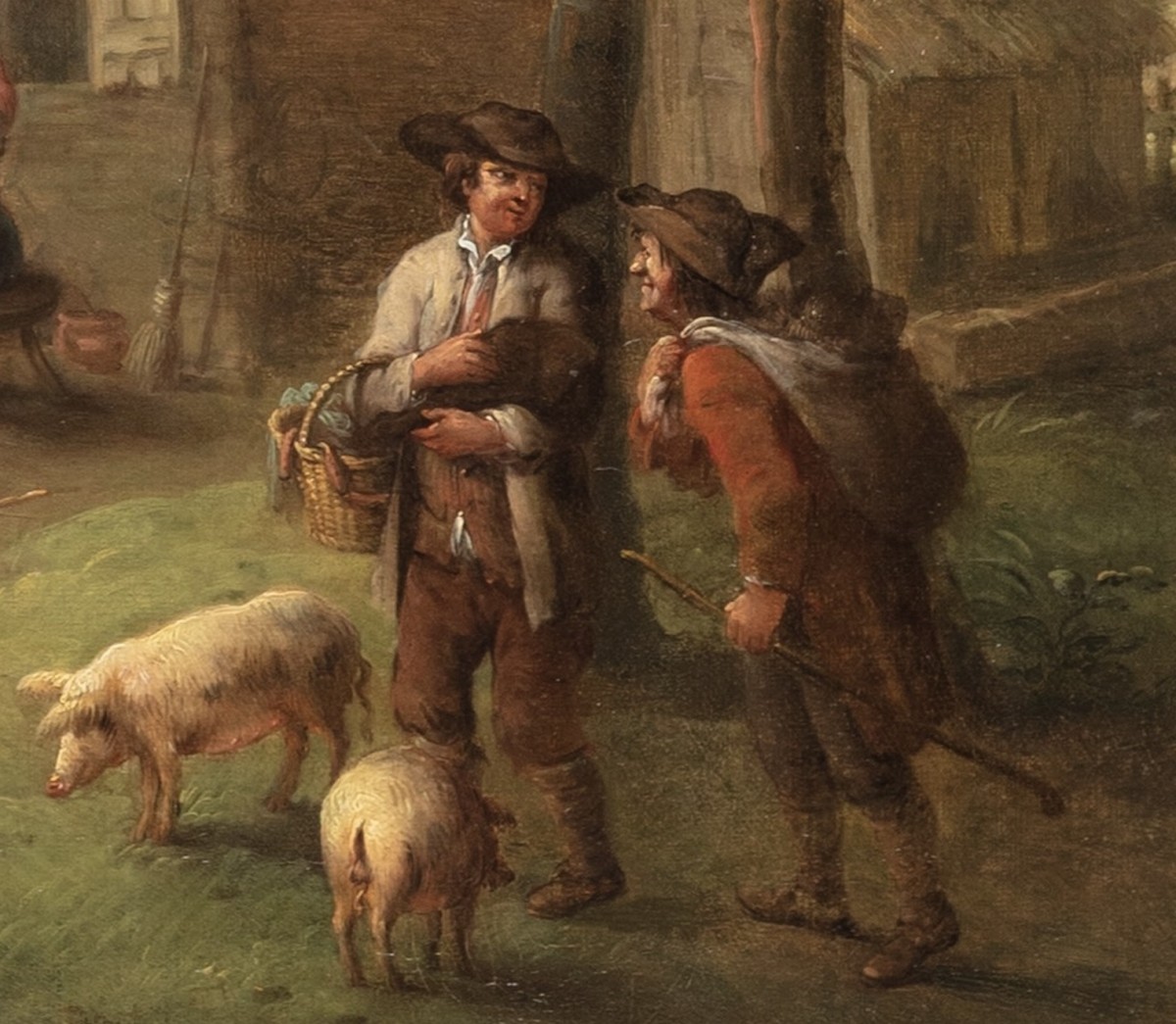
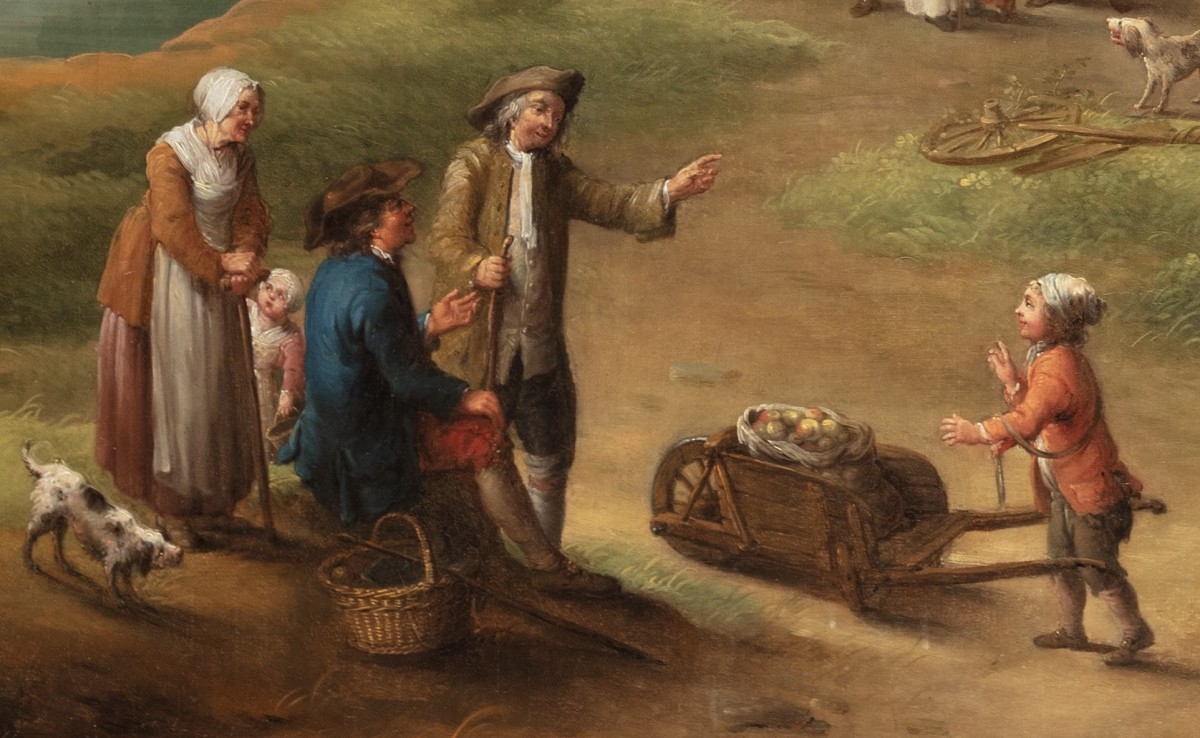
In one scene, several villagers stand outdoors. They greet one another and all seem to know each other well, a fairly idyllic picture of country life. In the distance we see a windmill and a small stream with ducklings. Two piglets stand by a few men, and we see mothers with children. The painting has a clear structure of foreground, middle ground and background.
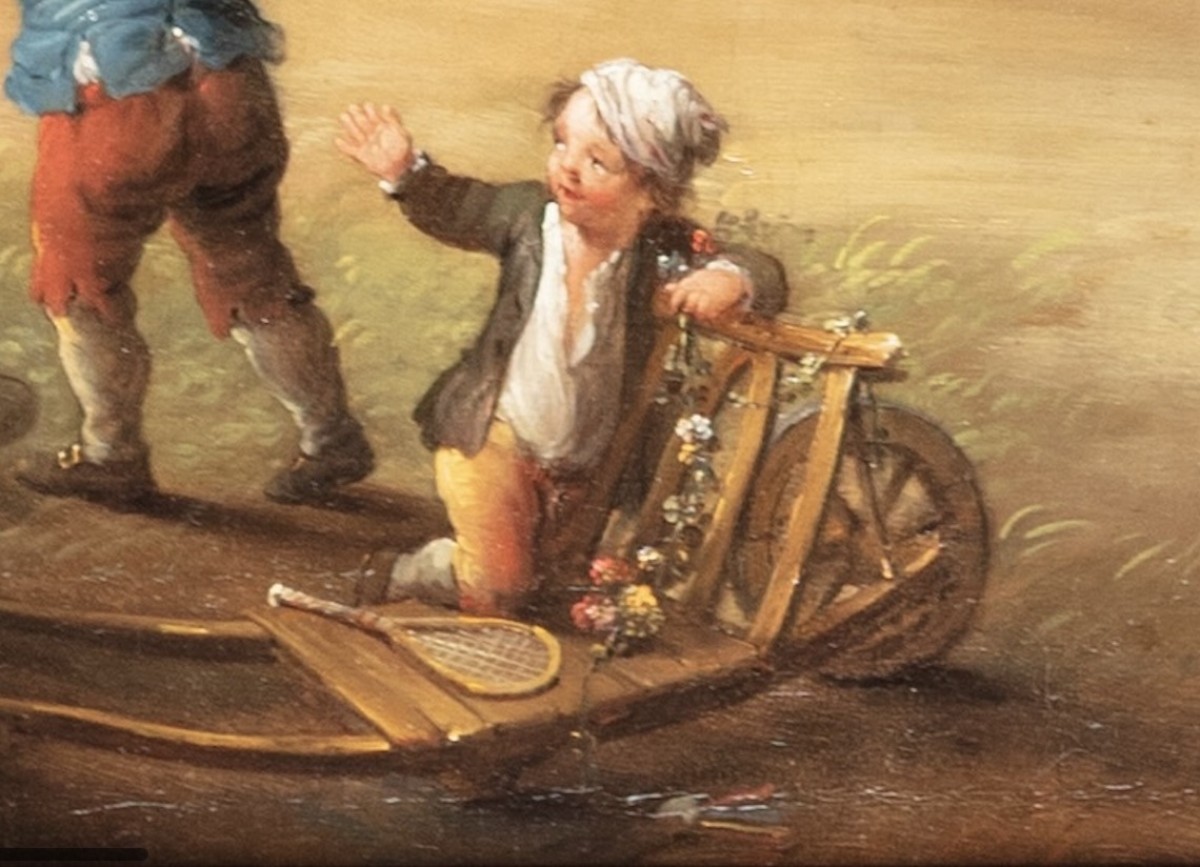
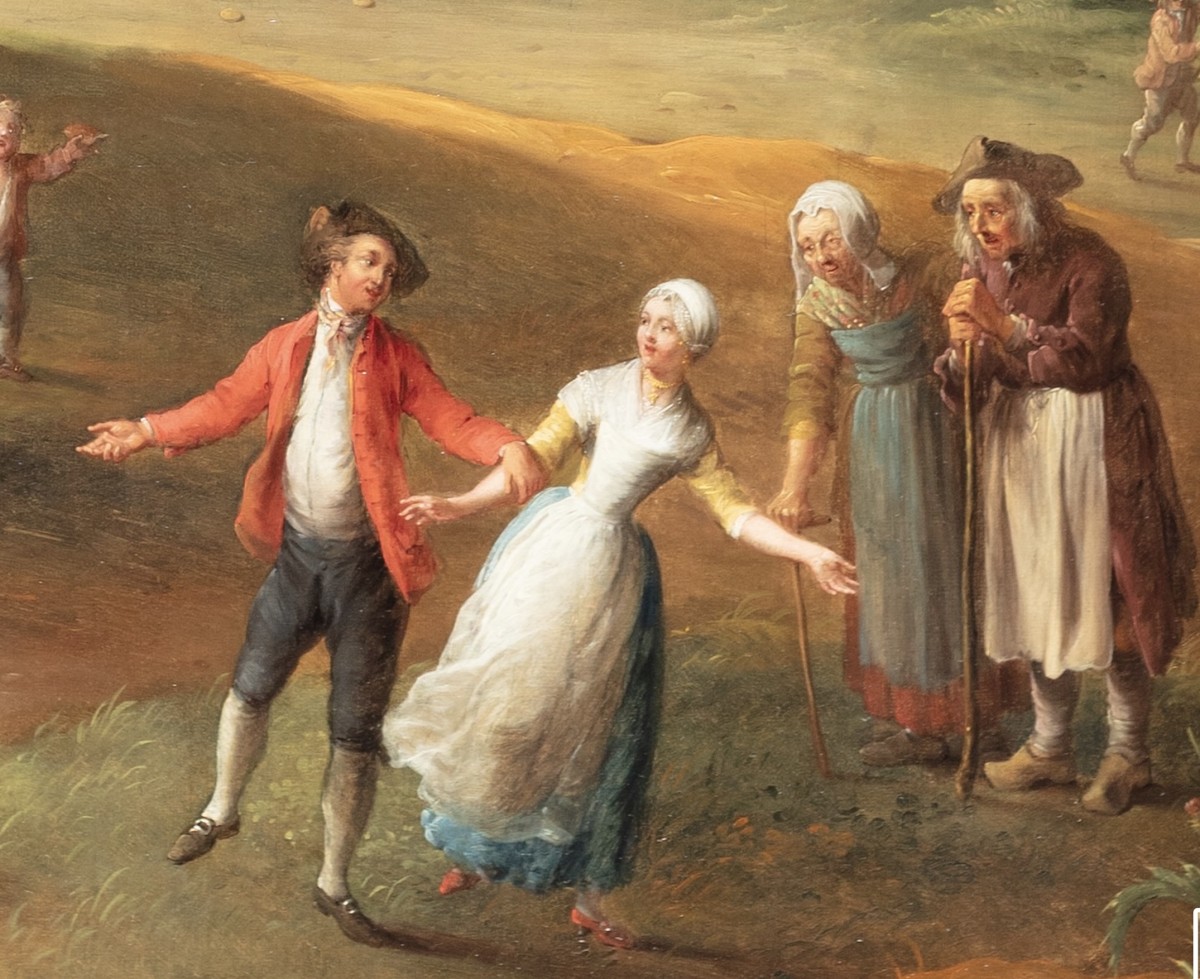
The other scene is more festive. Some villagers look at a seller’s wares at a stall, children play, couples dance and older people look on. The tavern is open, and outside a table is set at which a few people are seated. Two men and two women gaze at one another affectionately, while to their right someone who has had too much to drink is being sick. In the distance, along an avenue, more people are arriving with a horse and cart.
The visual language of these peasant scenes, with villagers gathering, dancing, drinking and trading in a rural setting, strongly recalls the peasant gatherings of David Teniers II and Sebastiaen Vrancx. It is plausible that Garemijn knew their work, and in that sense this pair is indebted to them. Vrancx painted, among other things, village scenes and genre scenes. In the early 1640s Teniers began to make more landscape paintings, in which he developed his own visual language. He turned to the Flemish landscape as a subject in itself, not only as a background for his peasant scenes, and paid particular attention to the varied light of the Flemish countryside in different weather conditions. His work was easily accessible to other artists, as he was one of the most reproduced artists of his time and prints after his work were produced in large quantities. In Flanders he influenced his pupils Gillis van Tilborgh and David Rijckaert III.
Oil on canvas
Dimensions: 175 x 122 cm, 196 x 145 cm (framed)
Possibly with the windmill of Sainte-Anne
Provenance:
Dr. Arndt Kunsthandel Gmbh, 2013.
Castle Ten Poele, Bruges
Delevery information :
After reception of payment we can box and ship our items all over the world. Estimates of this service can be provided.