Offered by GSLR Antiques
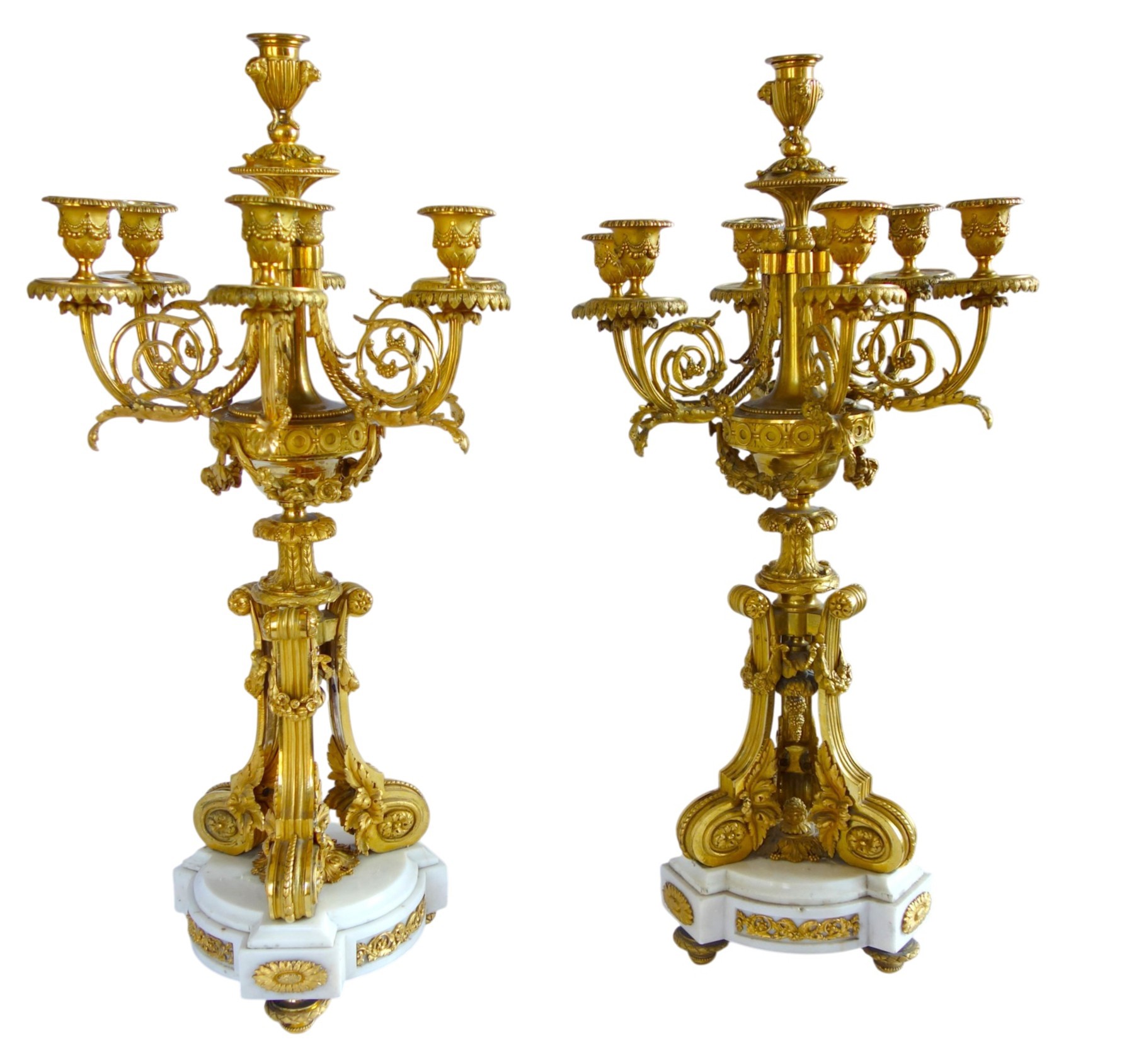
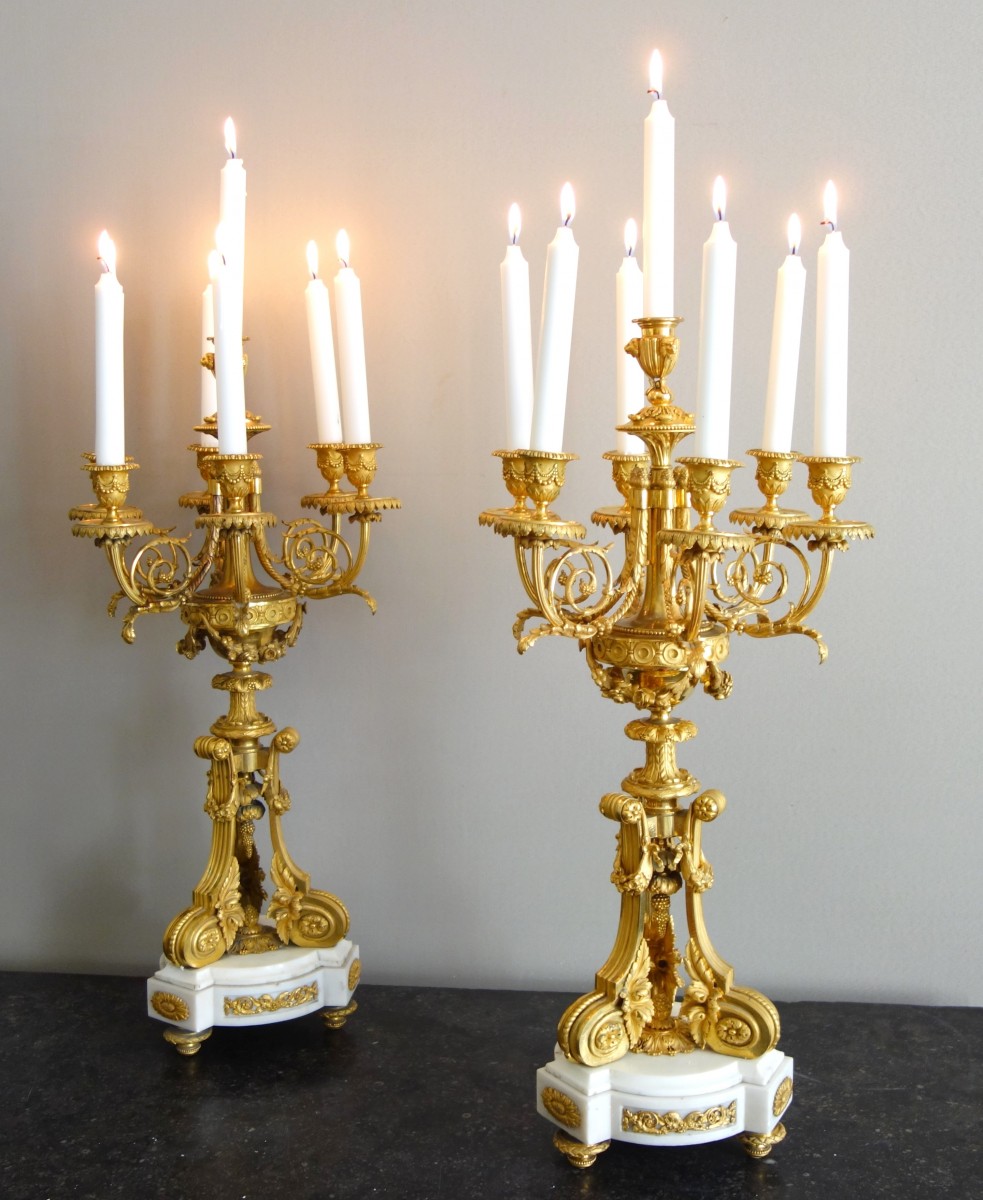
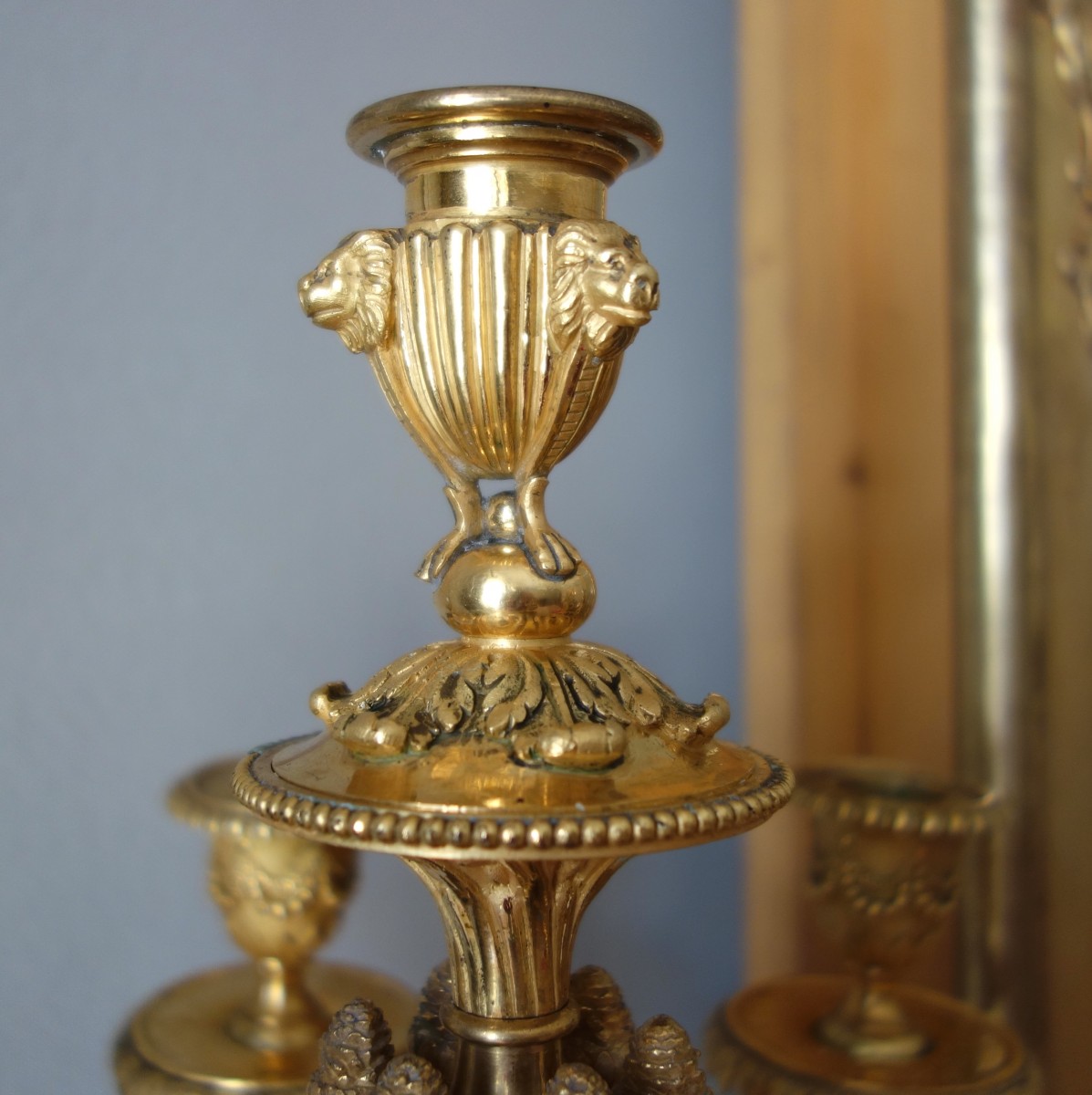
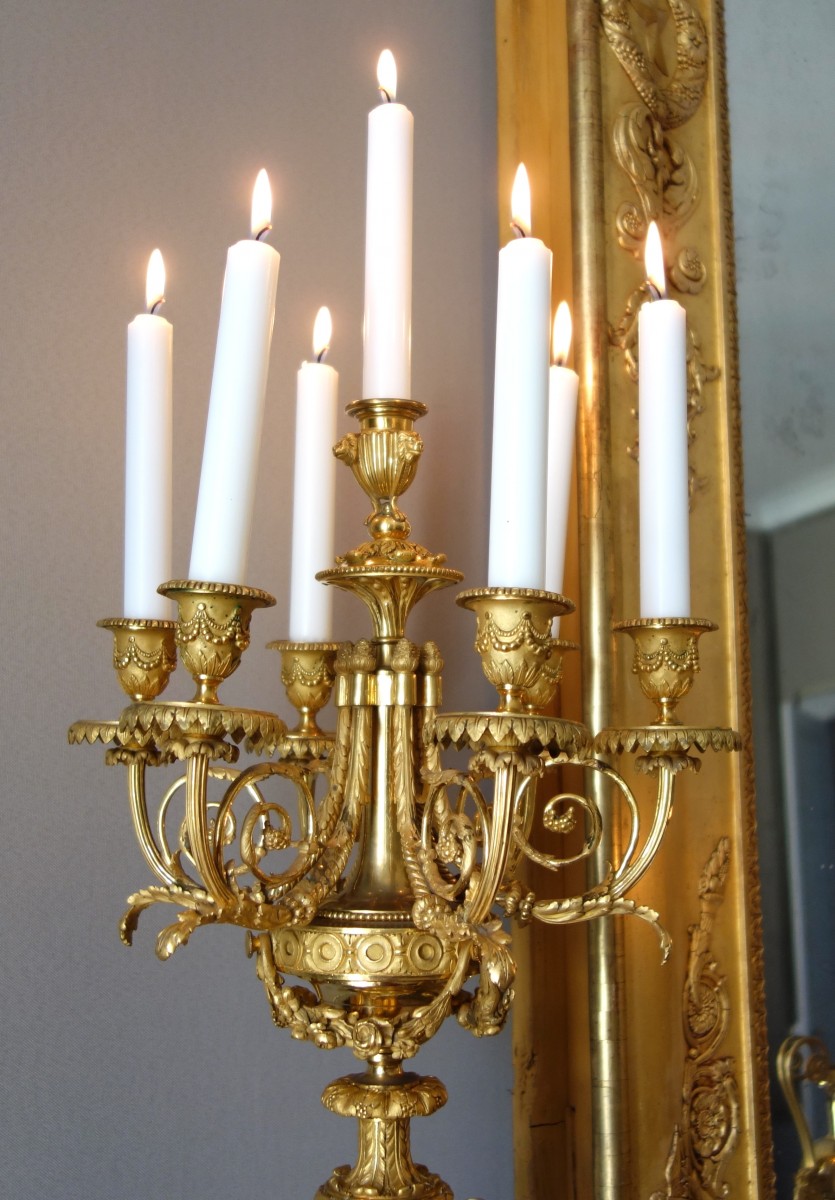
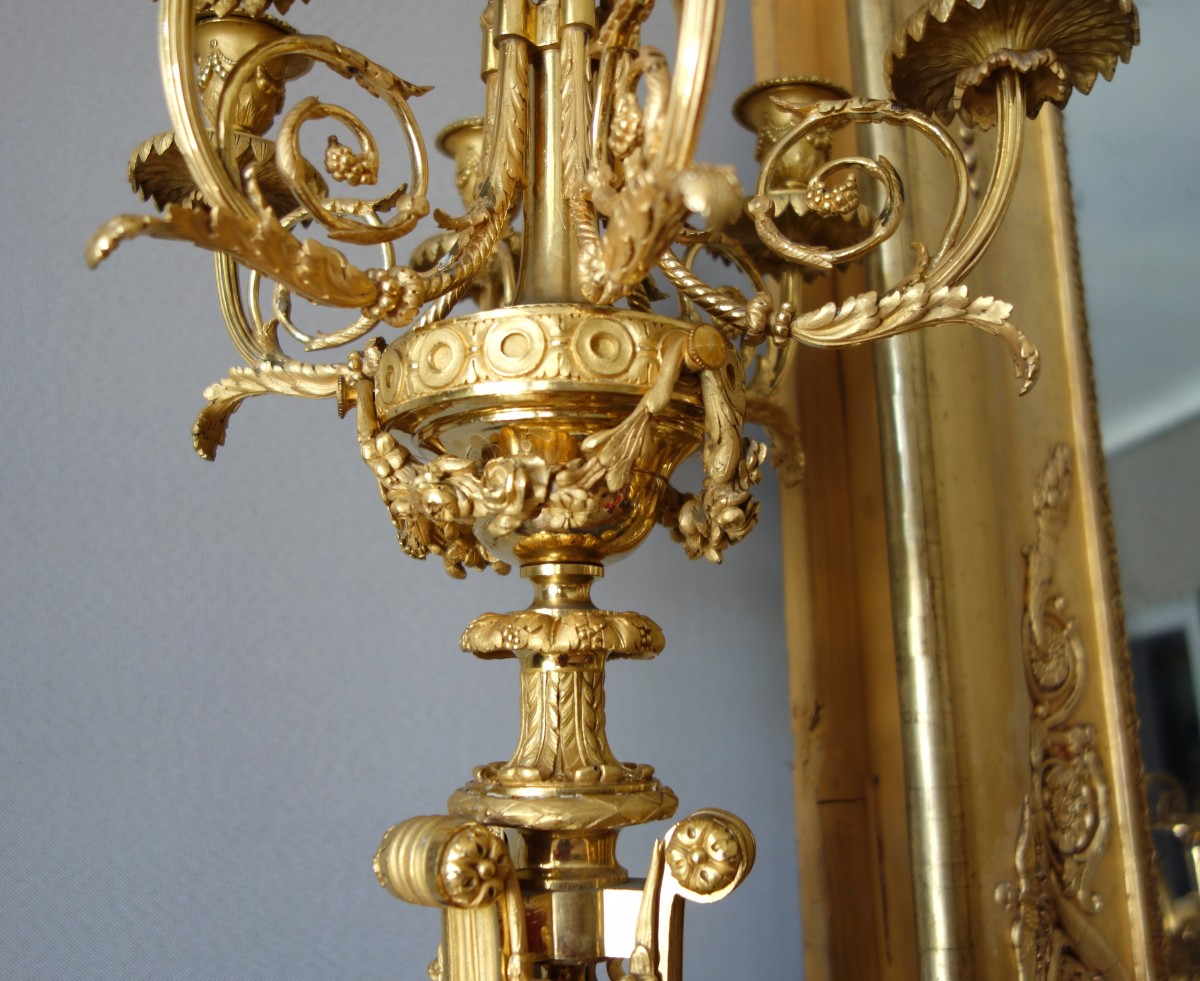

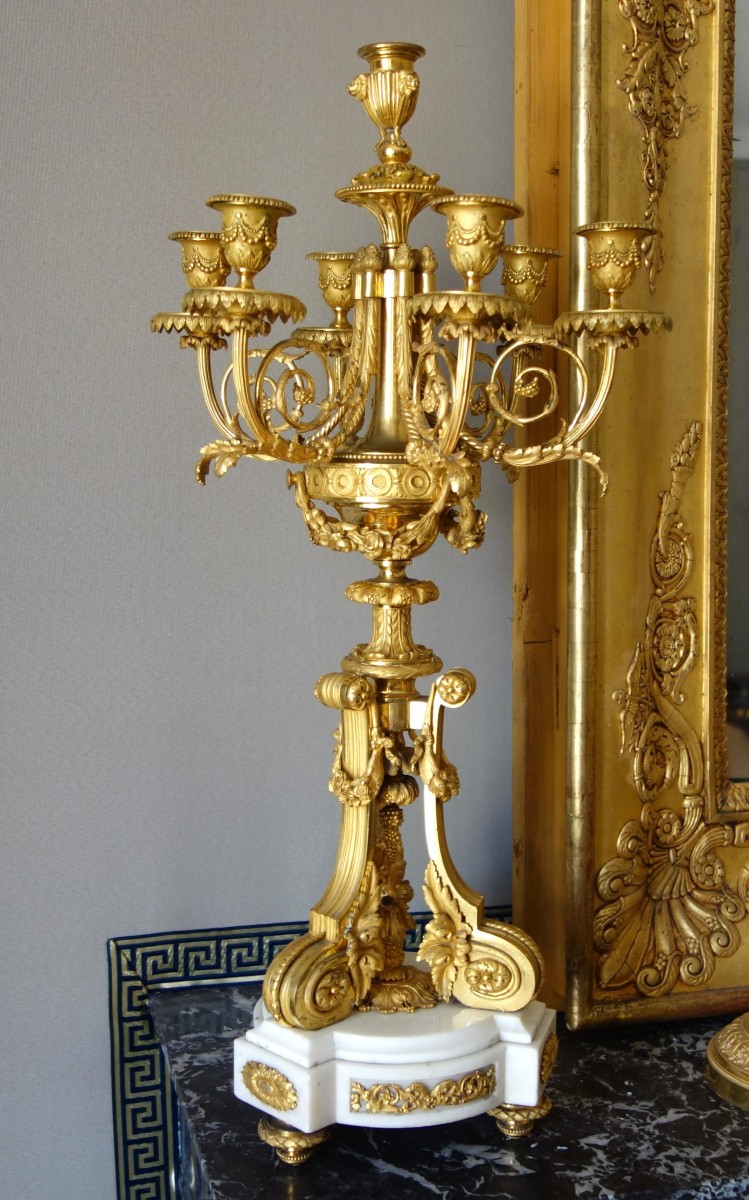
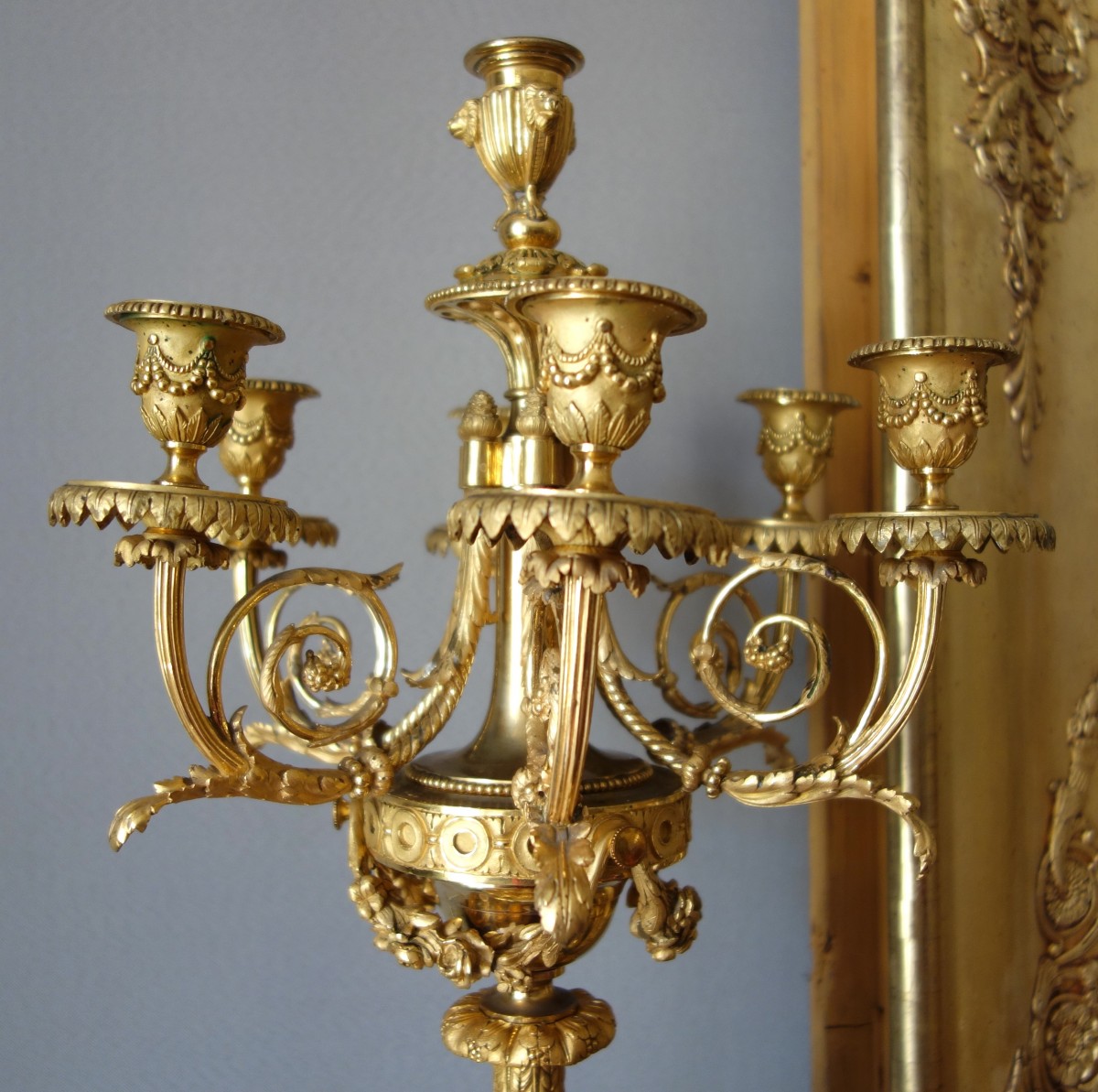
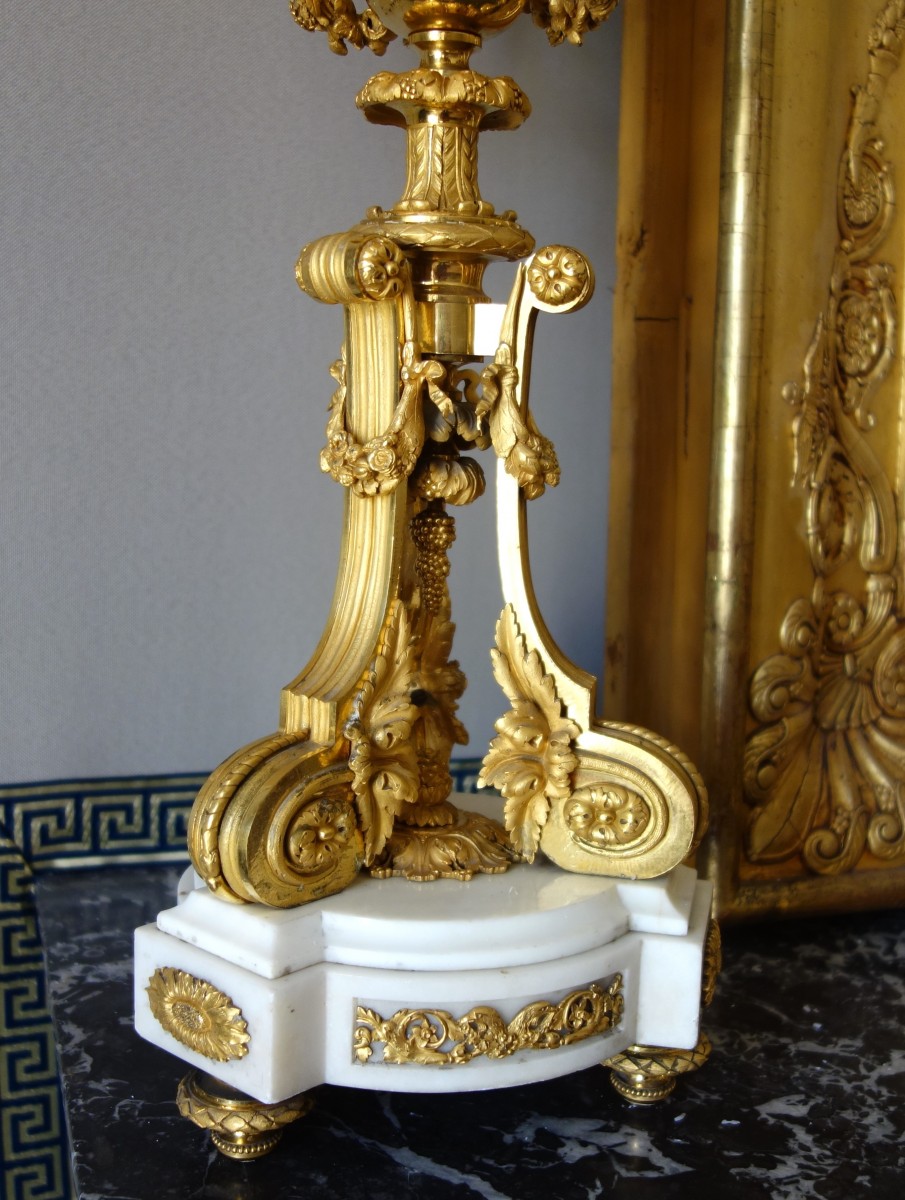
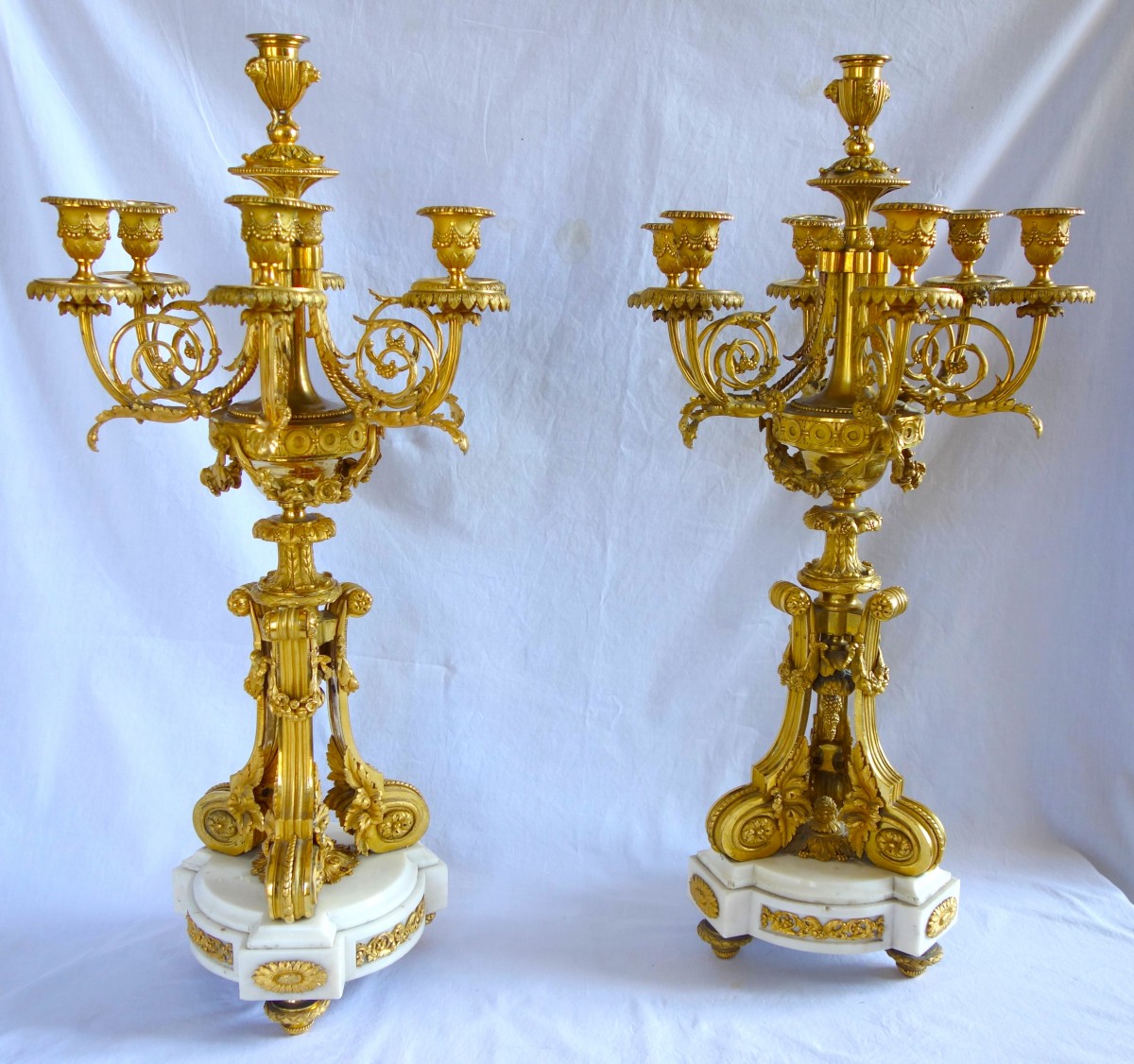
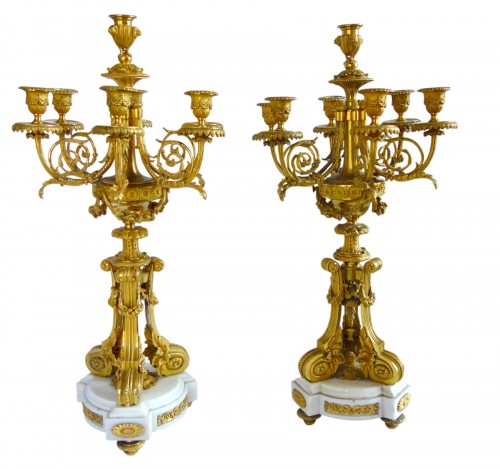
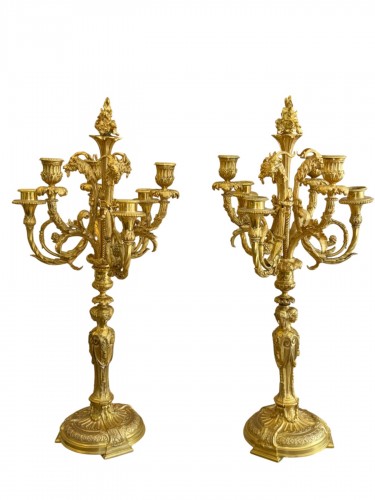
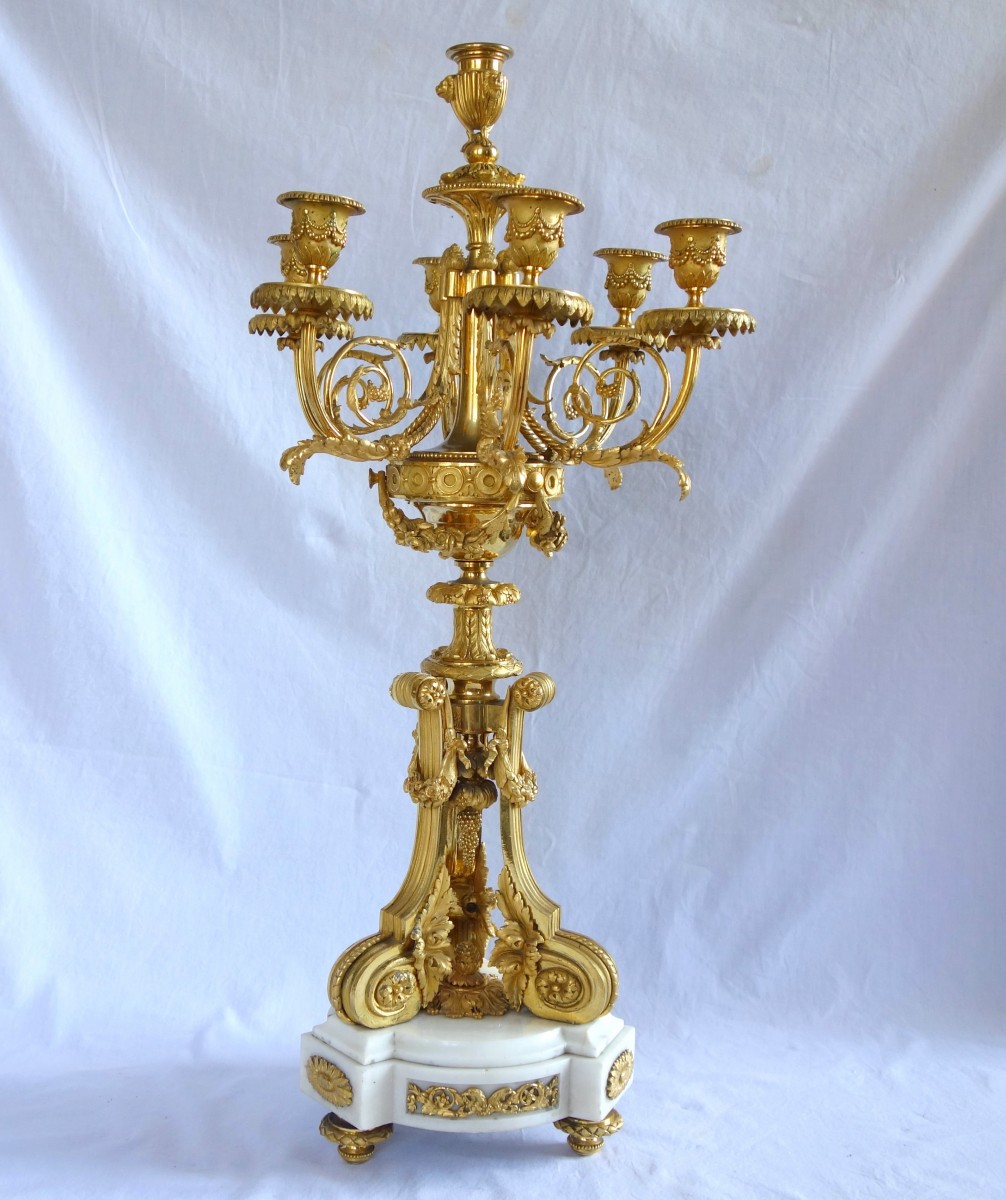
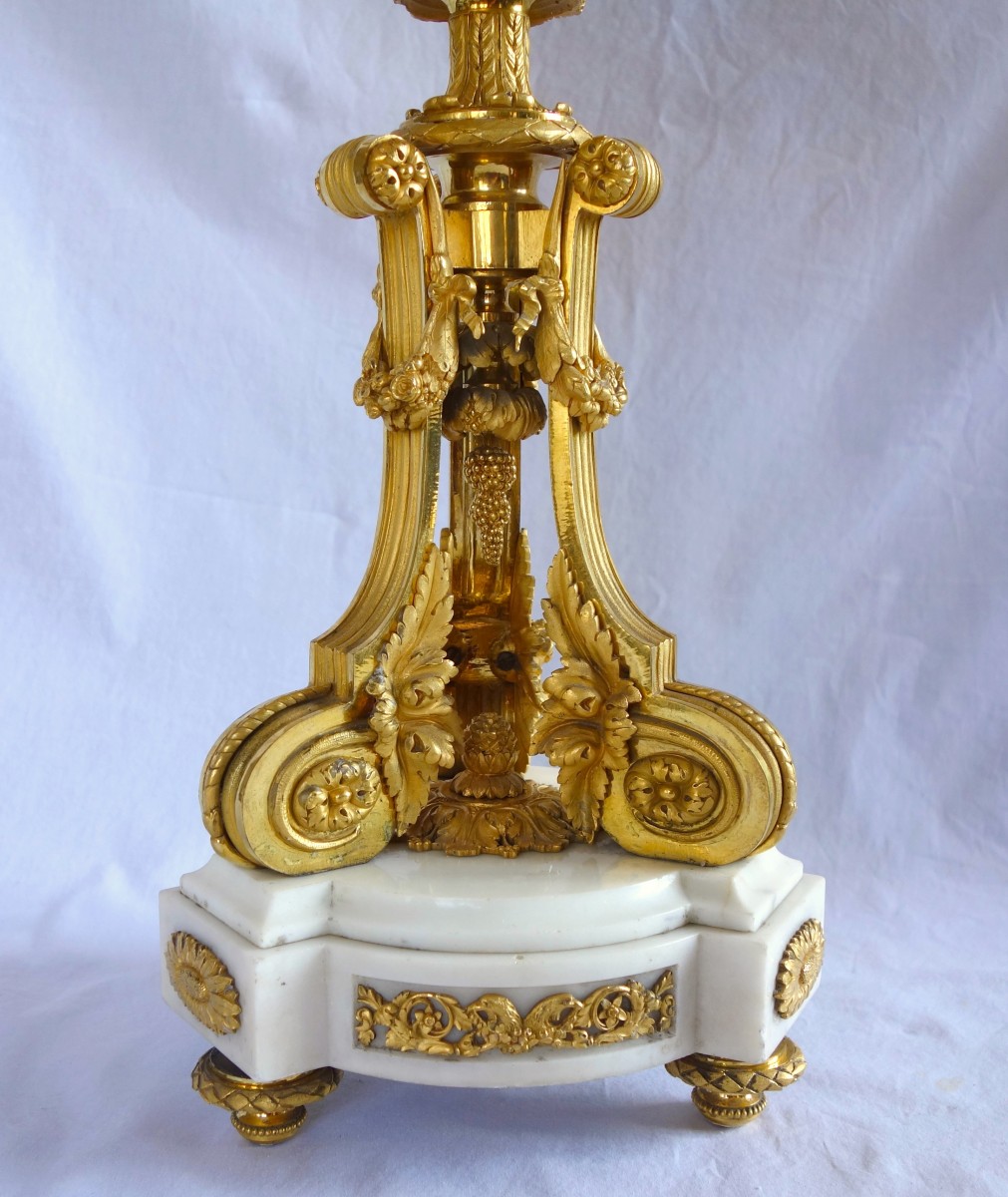
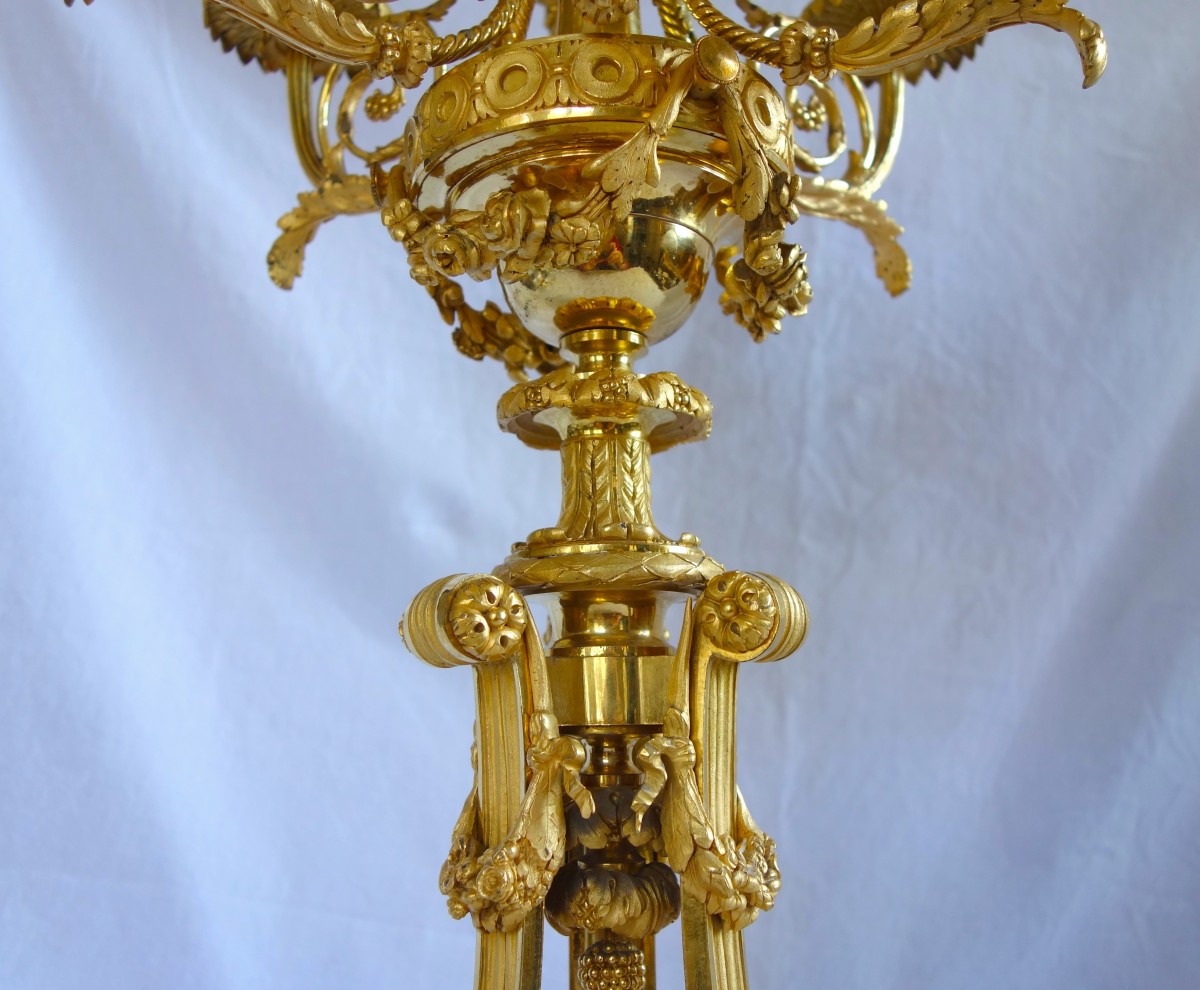
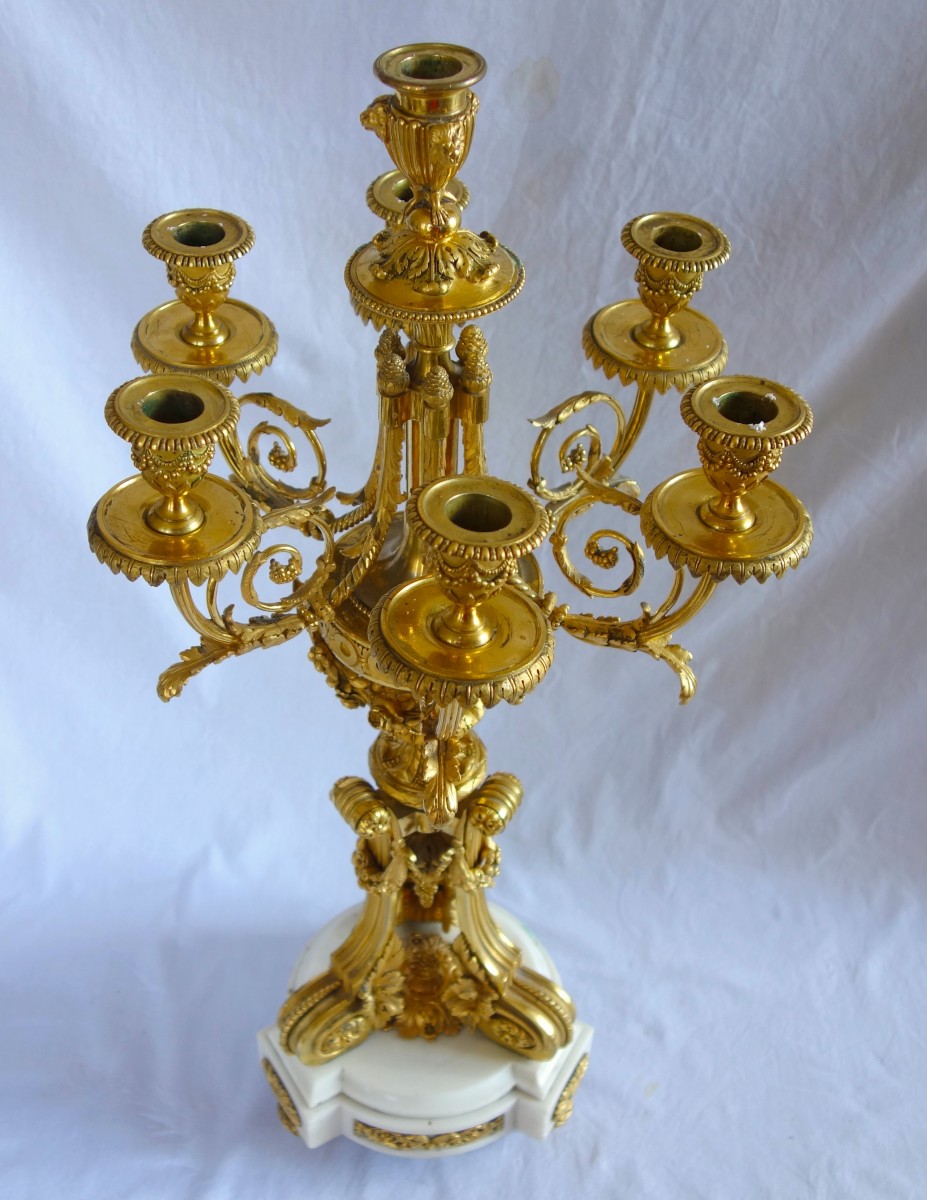
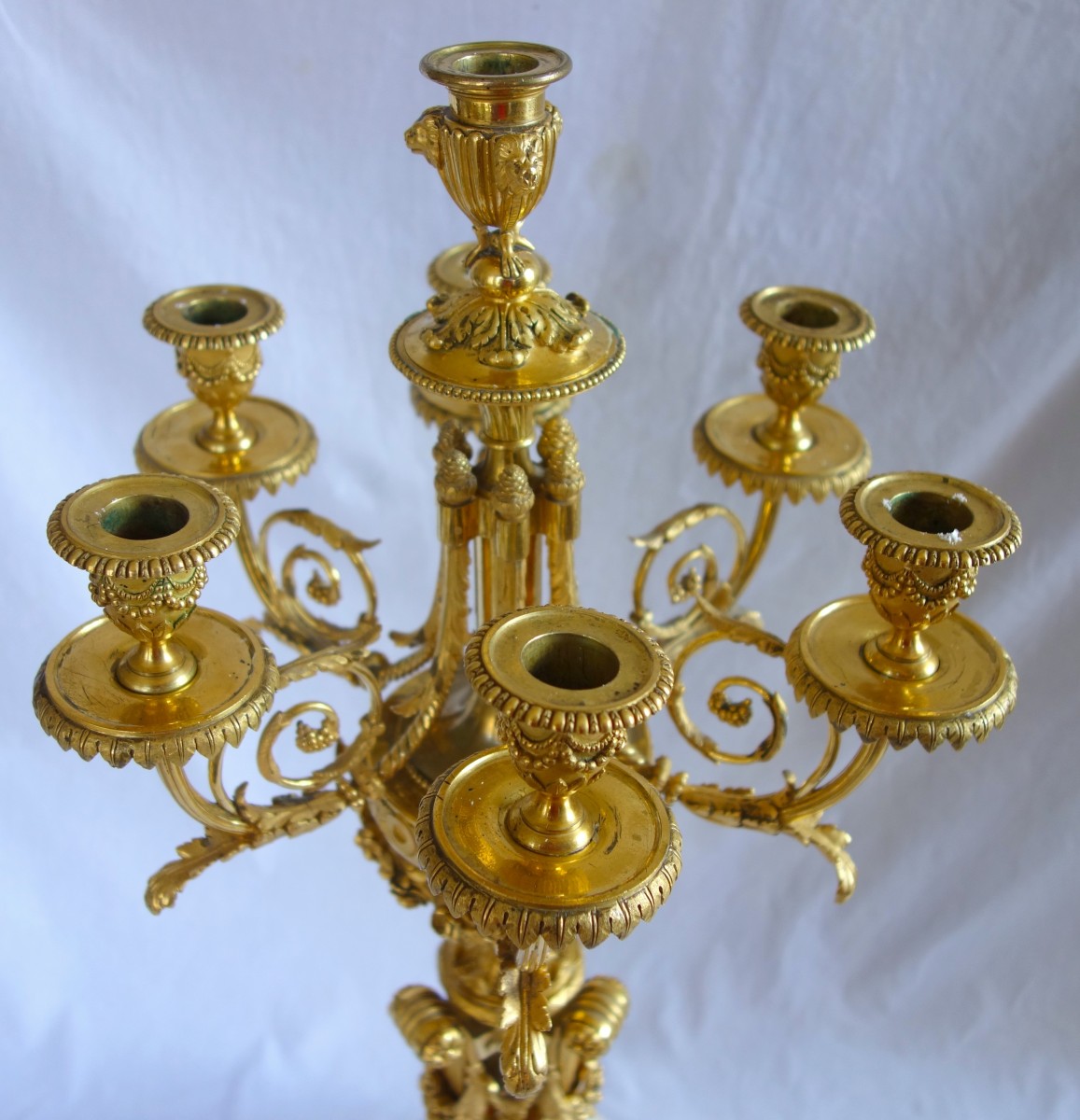
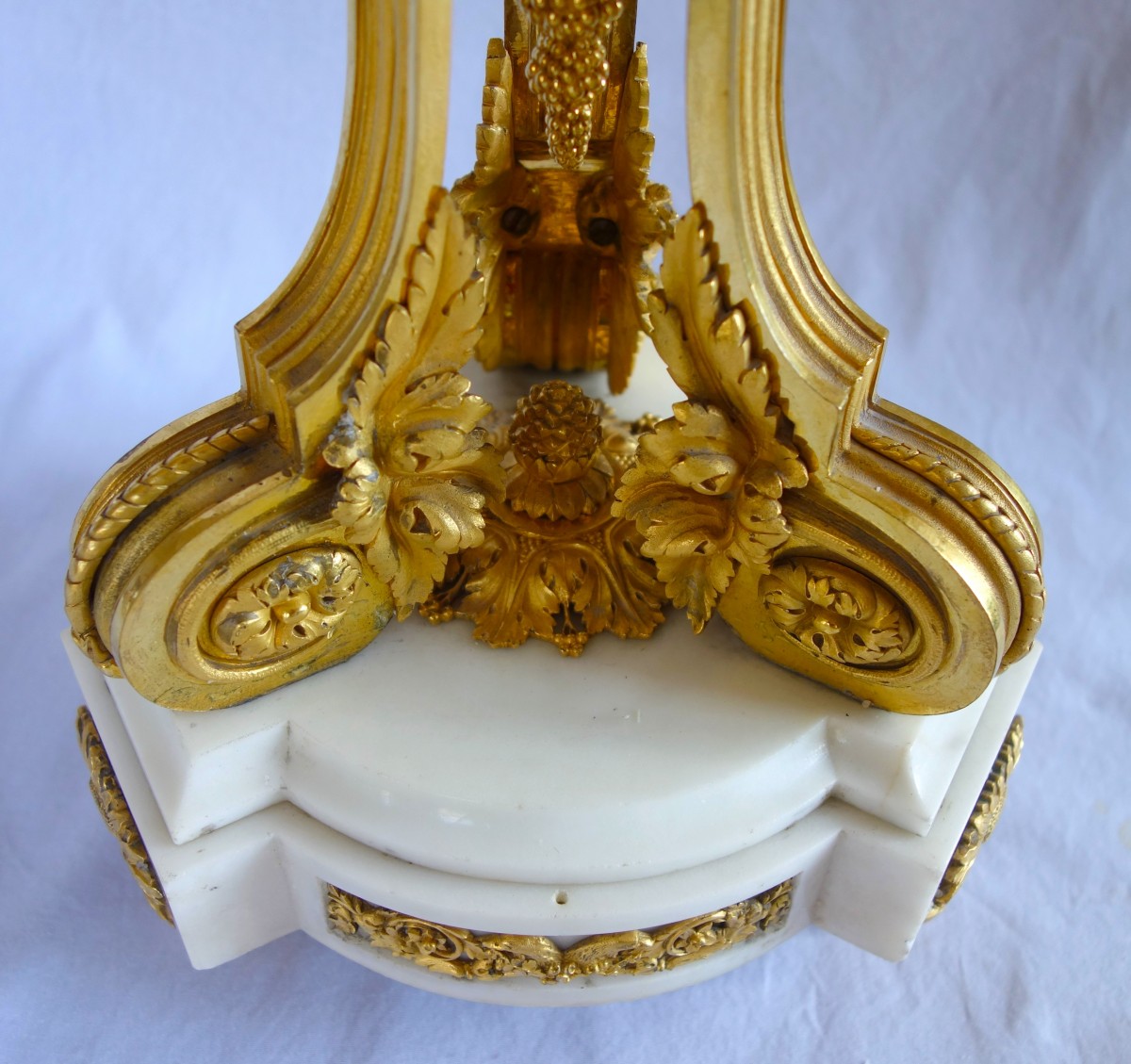
Important pair of seven-light candelabra in finely chased and mercury-gilt bronze on white marble bases. They feature rich Neoclassical decoration, each candelabrum comprising a large central vase decorated with friezes of oculi, floral garlands, and foliage, from which rise seven lights arranged around a central stem surmounted by a fluted vase with lion heads. The elegant scrolling foliate arms support candle sockets in the form of ancient kraters adorned with beaded garlands. The whole rests on an imposing tripod base with Ionic scroll supports, enriched with acanthus leaves, bunches of grapes, rosettes, and hanging garlands, set on a shaped white marble base embellished with gilt bronze mounts.
Each candelabrum consists of approximately forty separate elements, assembled using wrought-iron screws and hand-threaded rods, as in 18th century productions, confirming the luxurious nature of their manufacture. The quality of the chasing is particularly remarkable in the secondary elements and less visible areas, demonstrating craftsmanship of the highest order. The mercury gilding, combining matte and burnished finishes, is of exceptional quality and comparable to that of the greatest bronziers active during the Empire period.
The model is inspired by the decorative repertoire of Jean-Démosthène Dugourc and was executed by a luxury Parisian bronze manufacturer in the second half of the 19th century, most probably Guillaume Denière.
Guillaume Denière succeeded his father in 1844 and headed the important Parisian bronze and silverware firm, which employed some four hundred workers until the end of the 19th century. Its luxury production, based on both historical models (such as our candelabra incorporating elements from Dugourc's designs) and contemporary creations (including collaborations with Carrier-Belleuse), led Denière to execute, among other commissions, several clocks and mantel garnitures for the Tuileries Palace (1852 and 1854), a spectacular bronze table centerpiece for the Russian ambassador (1854), decorative bronzes for the Viceroy of Egypt (1862), a mantel garniture for Napoleon III (1867), the gates of the Throne Room for the King of Cambodia, and other prestigious commissions for French and European high society. His contributions to the Universal Exhibitions were always eagerly anticipated and widely admired, on a par with those of the Maison Barbedienne.
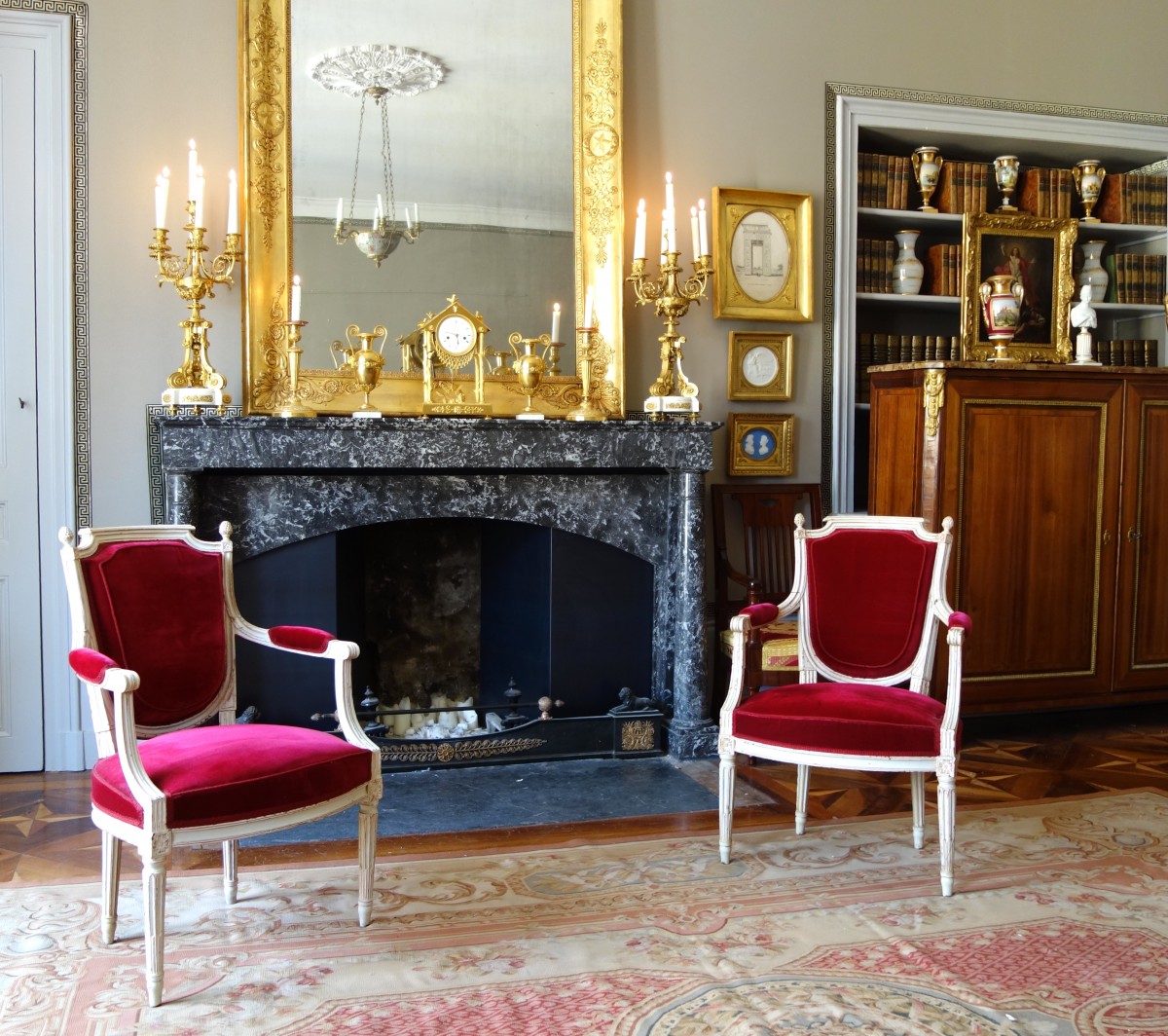
A fine example of luxury craftsmanship dating from the Second Empire, distinguished by the exceptional quality of its bronze work. The ensemble is truly spectacular in its size, quality, and seven-light arrangement. It is worthy of an Imperial or National Palace.
Very good overall condition, with superb matte and burnished gilding, rich in depth and beautifully preserved. The beaded frieze on the marble bases is missing, but this is hardly noticeable due to the richness of the ensemble.
Height: 65 cm Diameter: 30 cm