Offered by Dei Bardi Art
REQUEST INFORMATION

Sculptures and works of art from the Middle Ages and the Renaissance
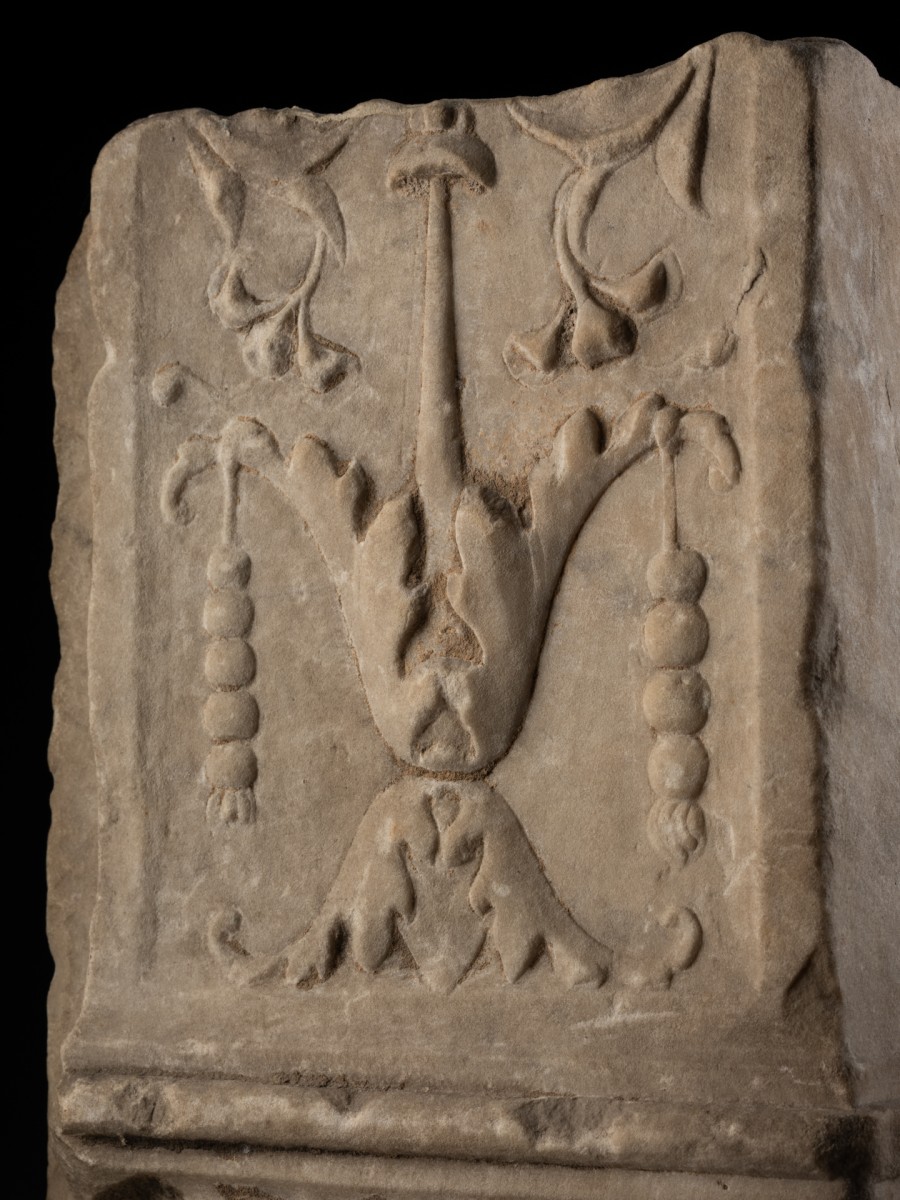
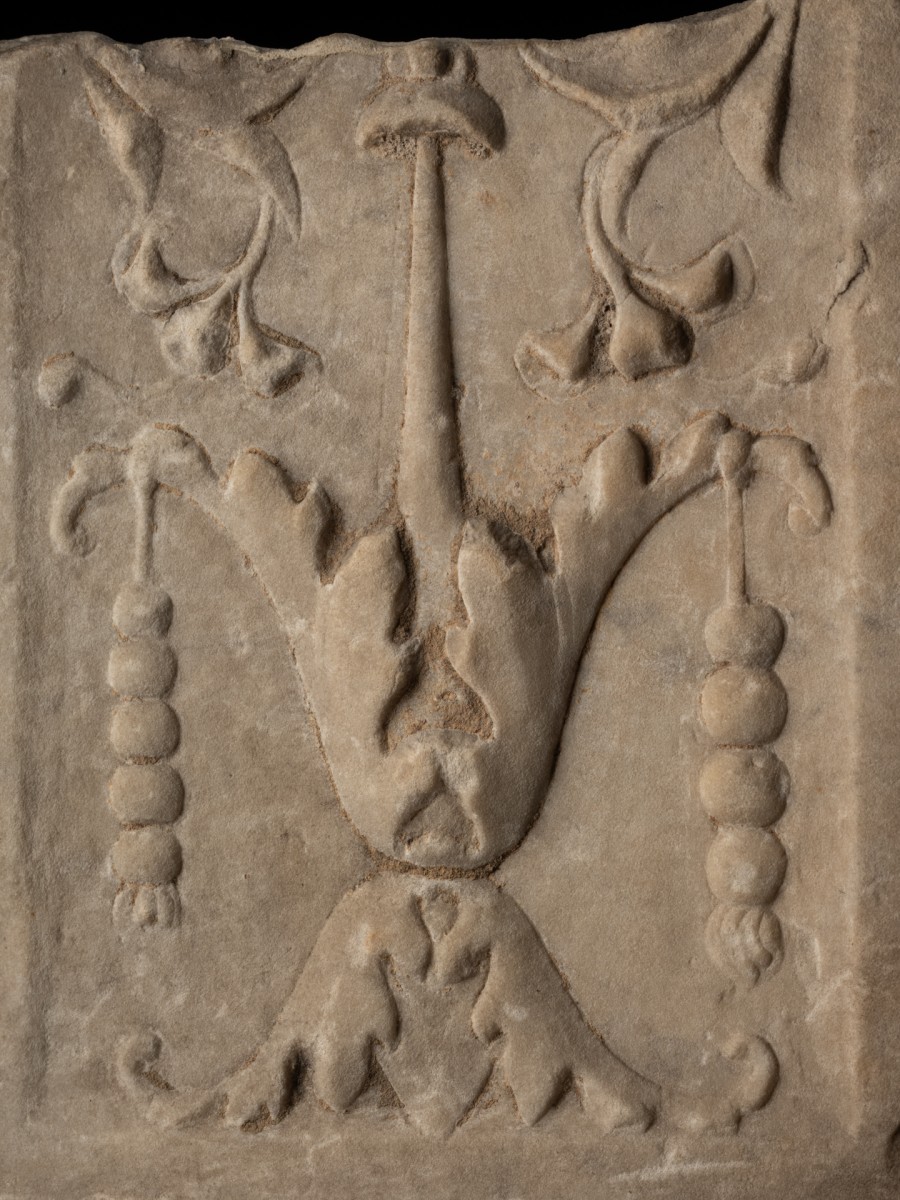
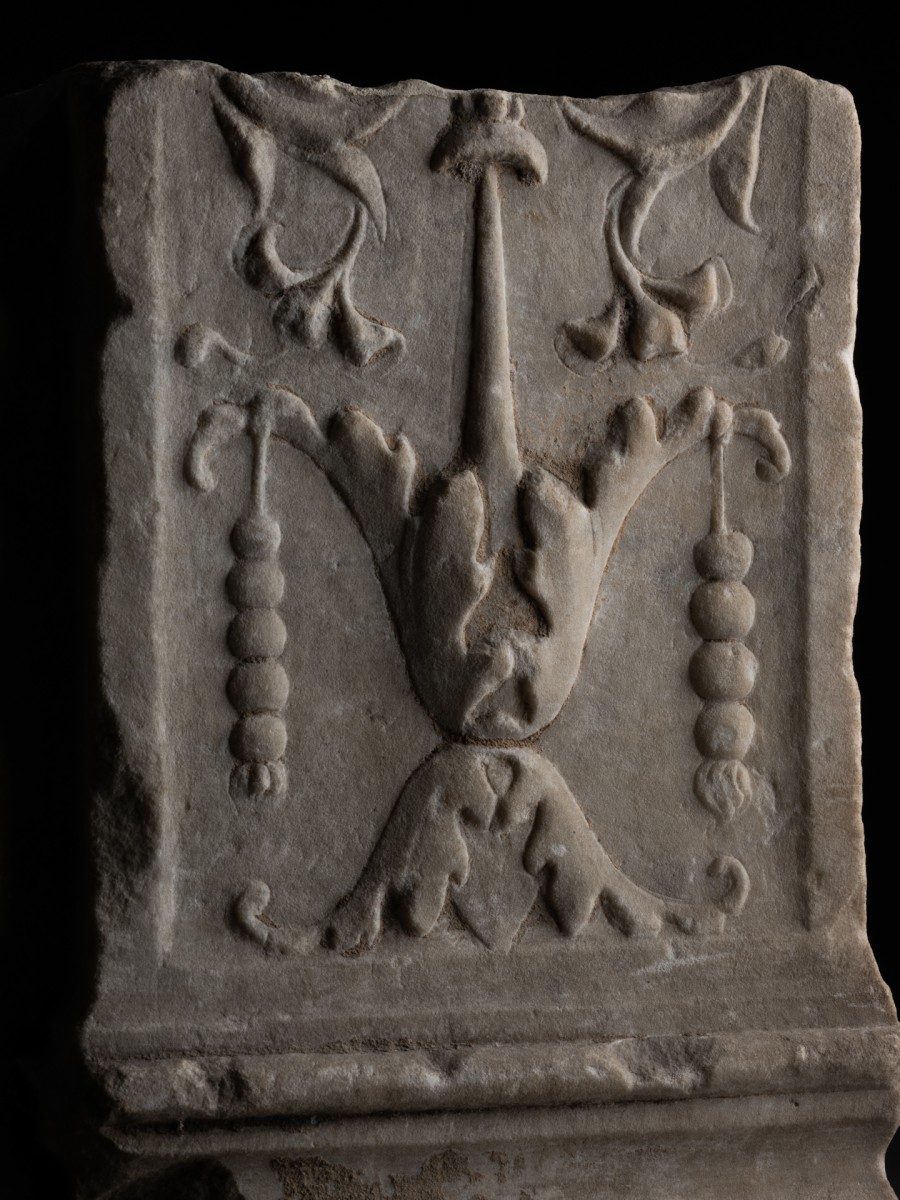
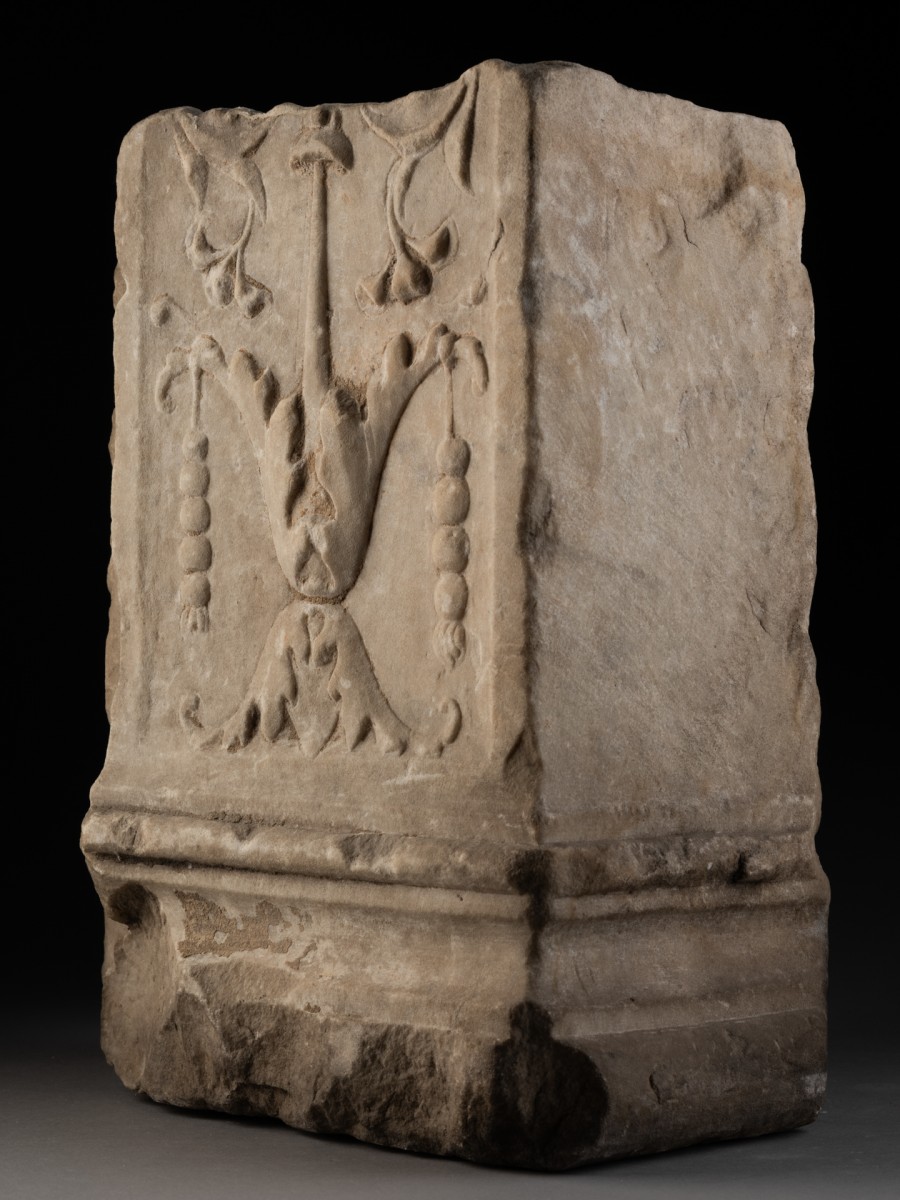
Renaissance Fragment with all'antica decoration
Italy, 16th century
Marble
29 x 21 x 12,5 cm
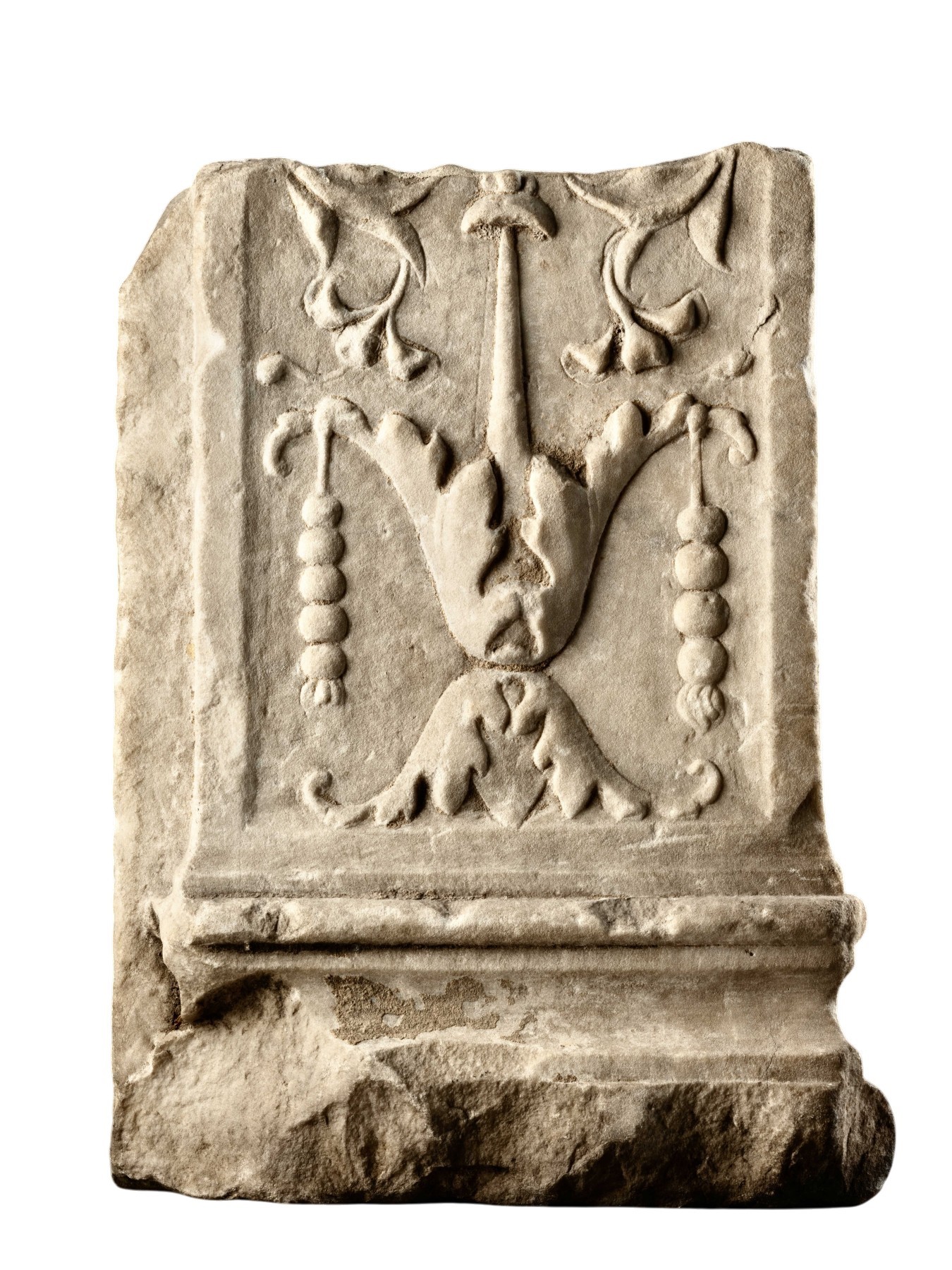
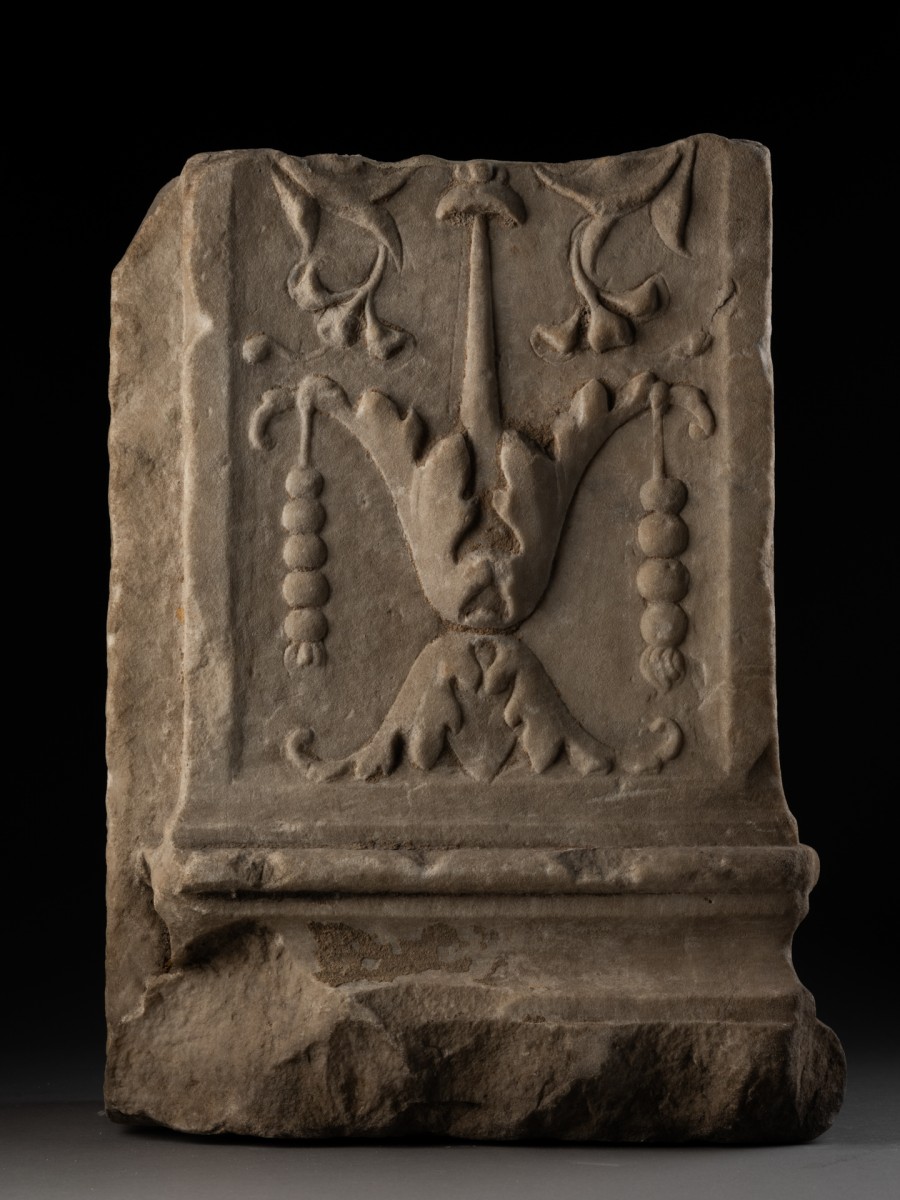
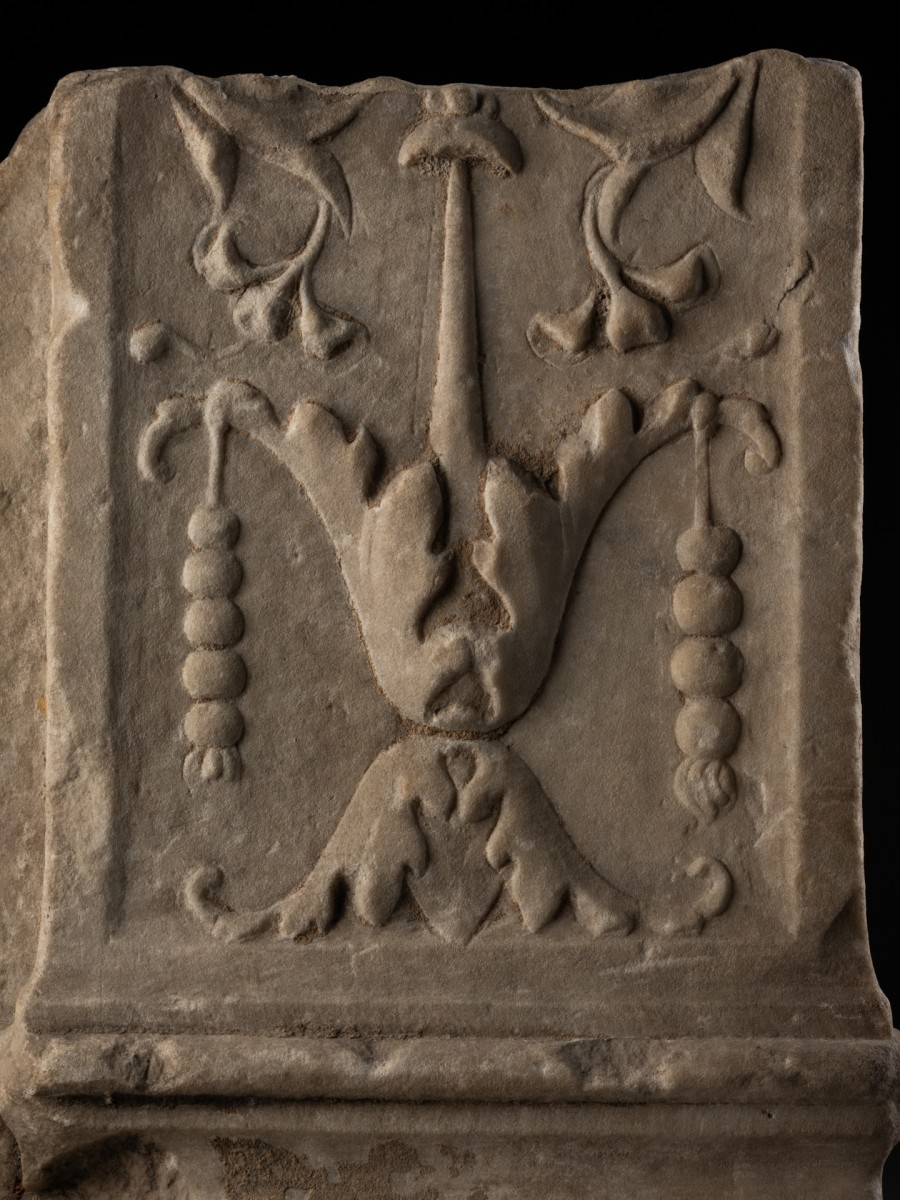
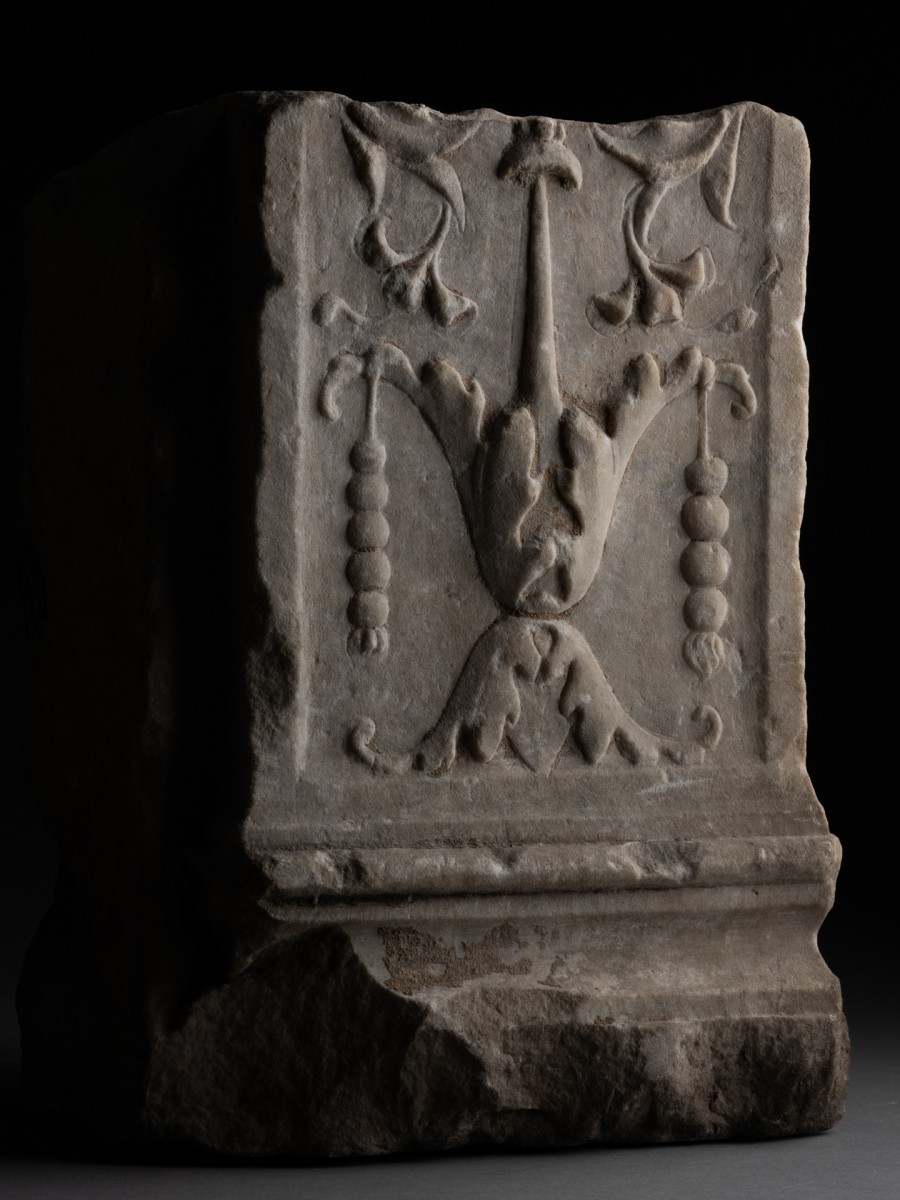
This fragment of a white marble pilaster constitutes a remarkable testament to the ornamental repertory of the Italian Renaissance. Its principal face, framed by a restrained and regular moulding, is enlivened by a candelabrum motif, one of the most emblematic expressions of the rediscovery of Antiquity in the sixteenth century.
The singular charm of the candelabrum also lies in its formal paradox. Its logic is deliberately anti-tectonic: stems too slender to bear their load, garlands suspended in an unreal equilibrium, and a proliferation of elements defying all structural plausibility. This acknowledged impossibility, already criticized by Vitruvius in Antiquity, became during the Renaissance the very sign of learned fantasia and decorative refinement.
Emerging around 1480 from the exploration of the mural paintings of Nero’s Domus Aurea in Rome, this type of ornament transposes into stone a vocabulary of extraordinary inventive freedom. The candelabrum is organized according to a rigorously axial vertical structure: a slender central shaft, surmounted by a flaring terminal motif, unfolds into symmetrical scrolls populated by stylized vegetal forms. On either side, suspended chaplets of beads rhythmically articulate the composition and heighten the interplay of light and shadow.
The sculptor’s virtuosity resides in the balance between decorative abundance and perfect geometric control. The central axis, of absolute rectitude, governs an ensemble that is nonetheless richly animated.
Disseminated throughout Italy from the opening decades of the sixteenth century through the engravings of Agostino Veneziano and Enea Vico, and through the prestige of Raphael’s Vatican Loggie, this vocabulary became a common language among the great workshops.
The preserved moulded base, composed of a cyma reversa and a fillet, indicates its original insertion within a larger architectural ensemble: a door surround, monumental niche, or prestigious interior decoration. Through the nobility of its material, the assurance of its carving, and the rhythmic purity of its composition, this pilaster reveals the work of a High Renaissance workshop, master of its vocabulary and attentive as much to the silence of surfaces as to the eloquence of ornament.