Offered by Galerie PhC

European paintings from the 17th, 18th and 19th centuries.
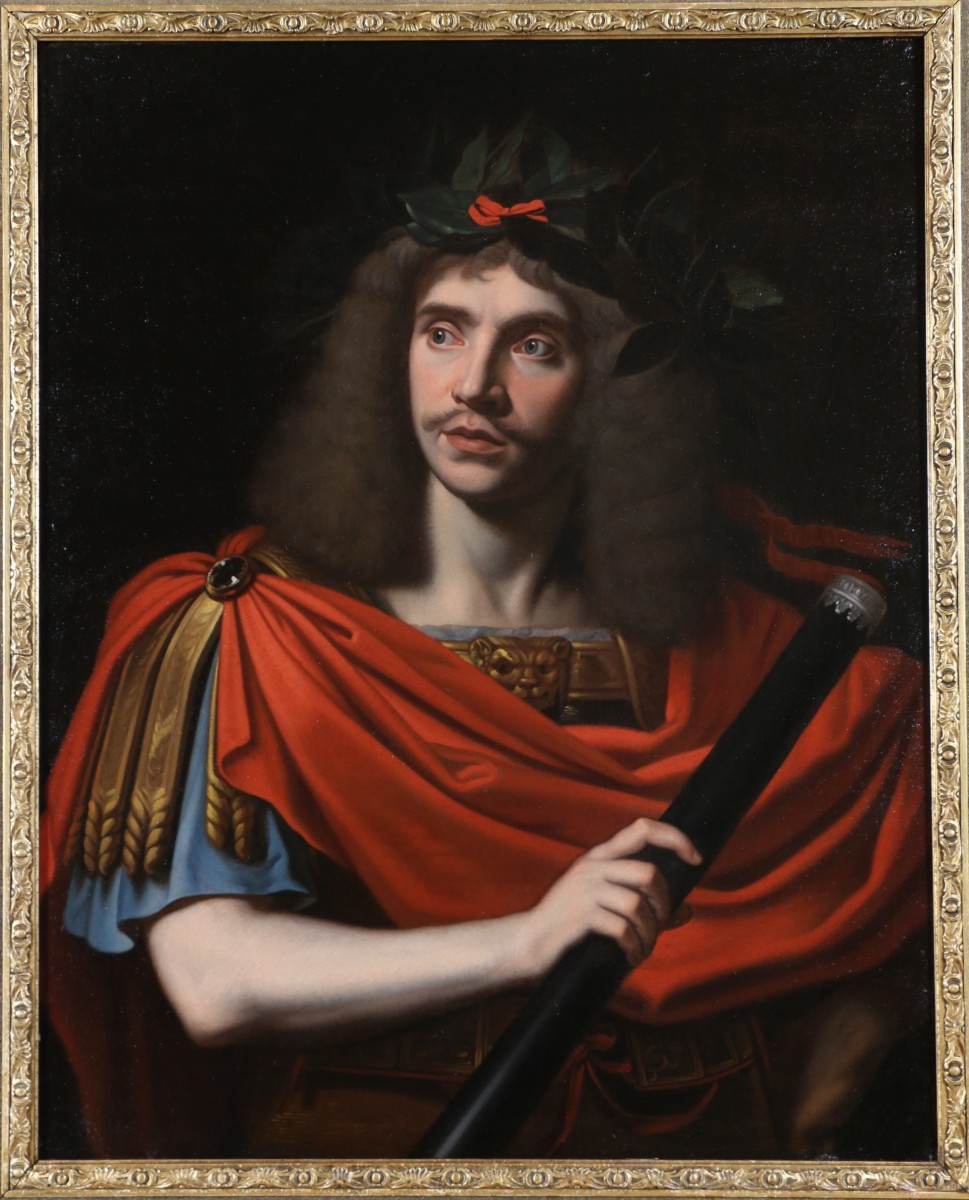
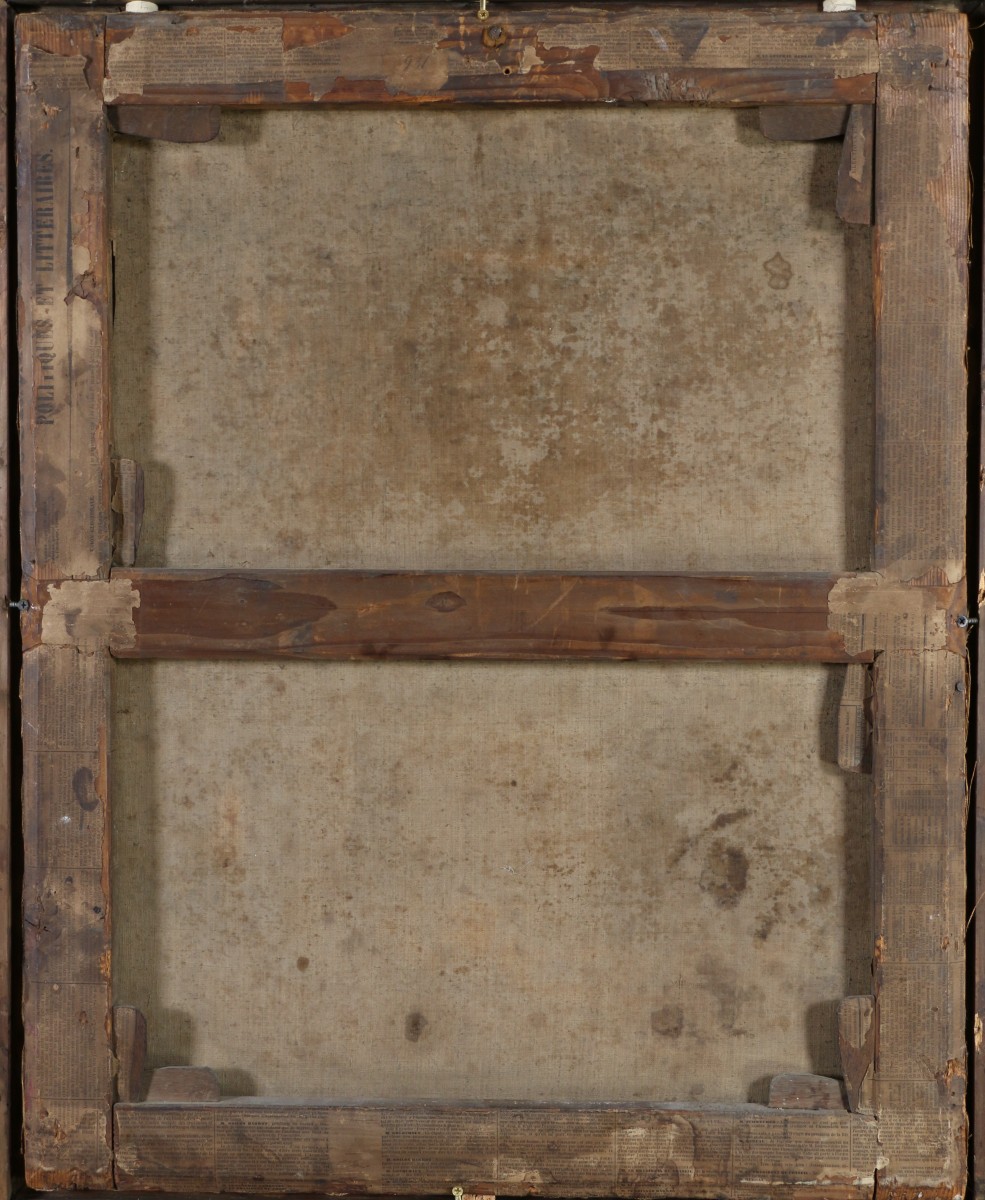
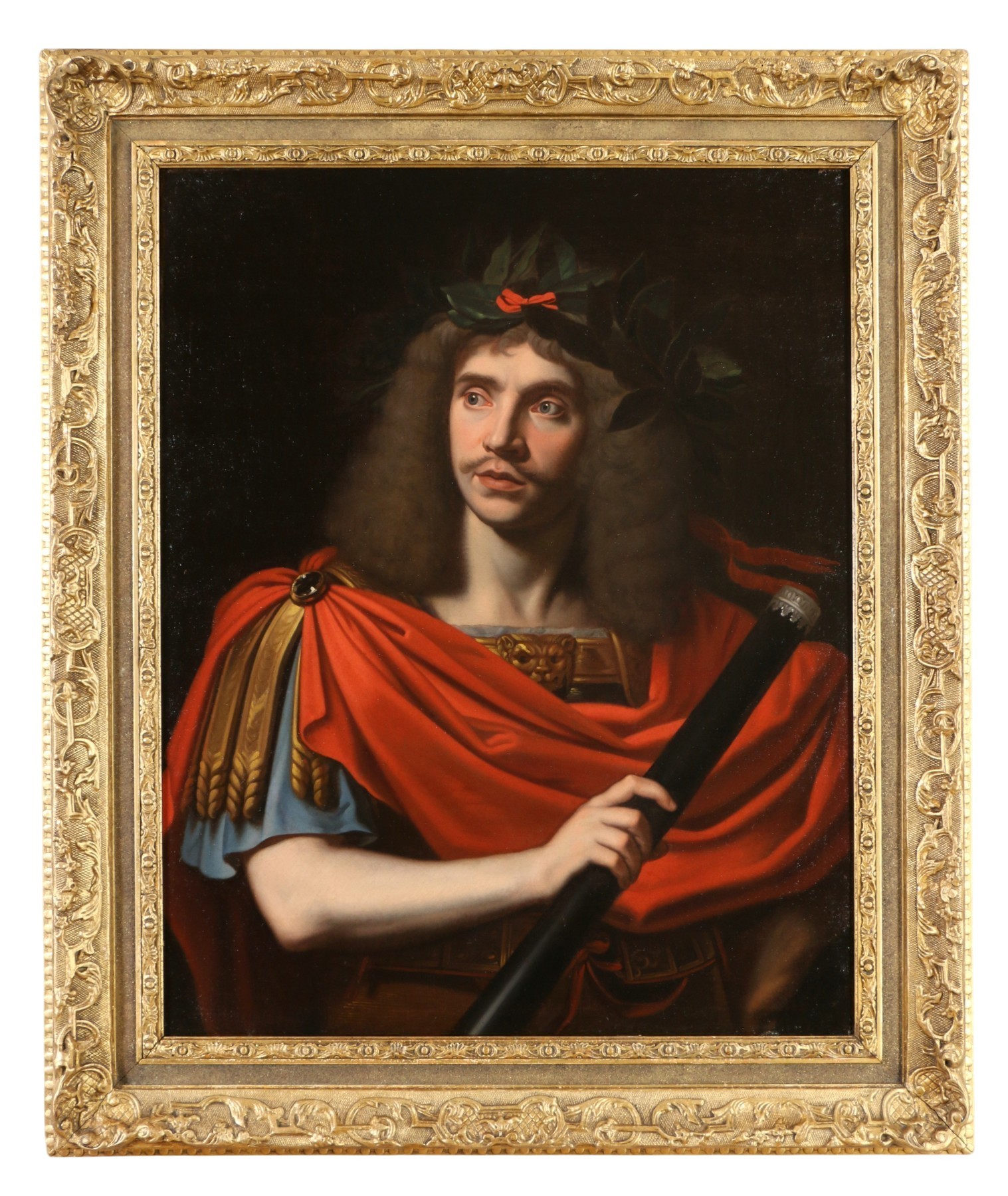
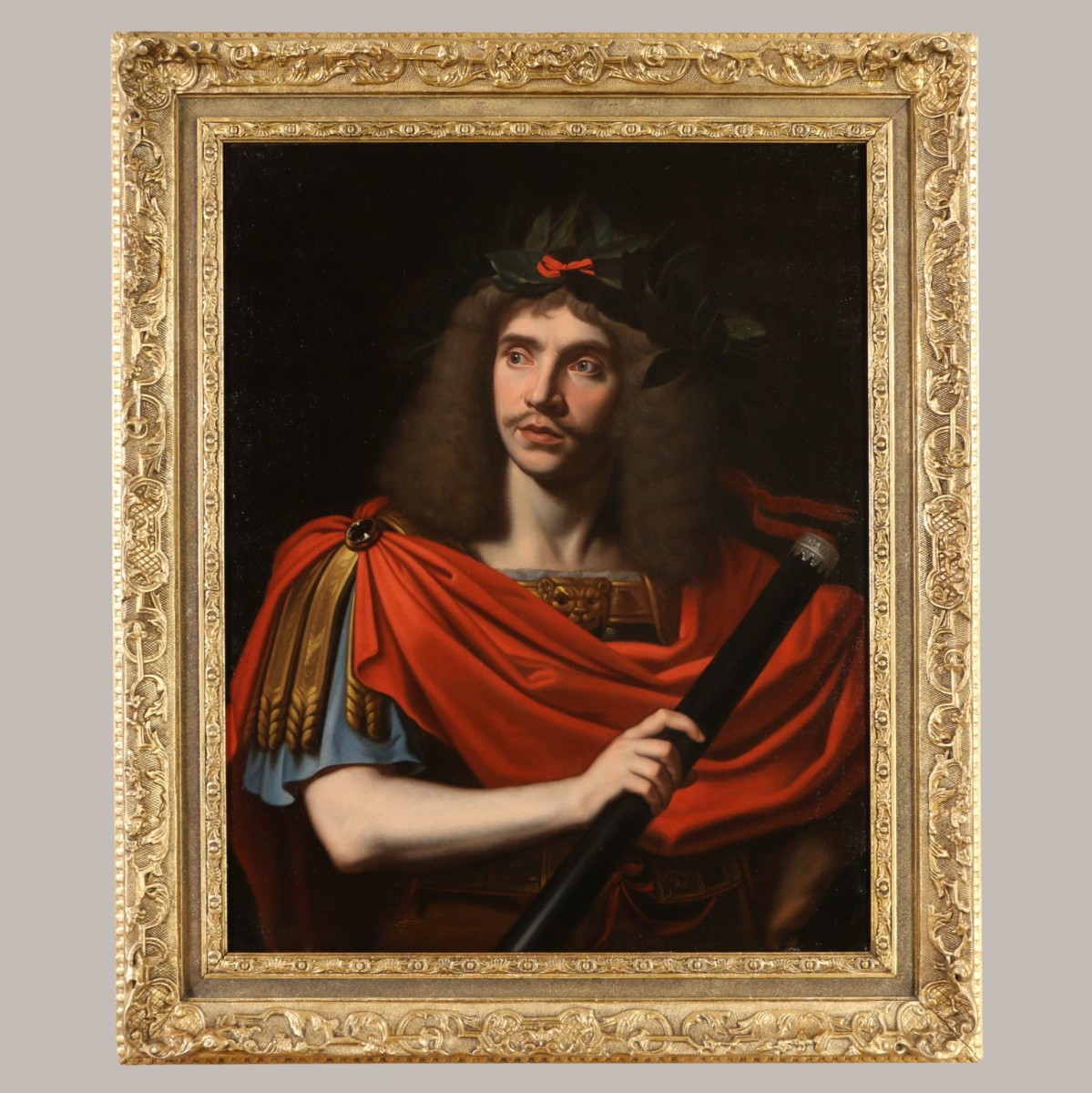
Oil on relined canvas, 80.5 cm x 64.5 cm.
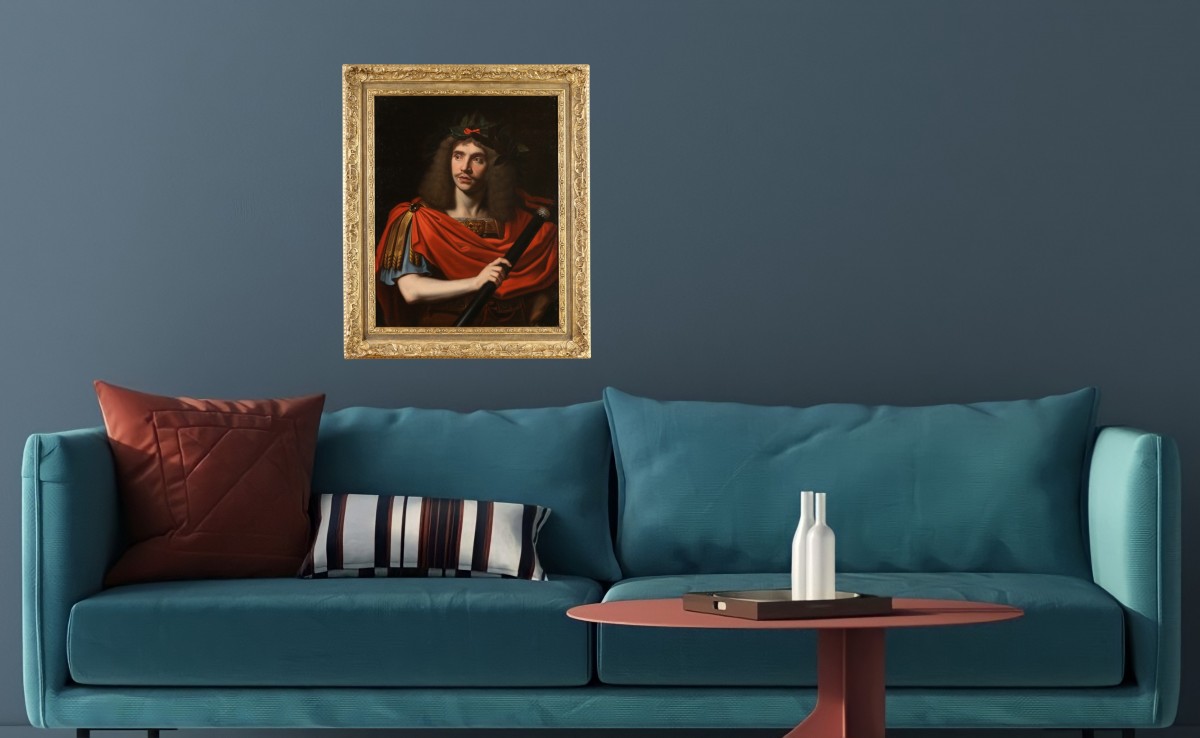
Antique frame (19th century), 102 cm x 85 cm.
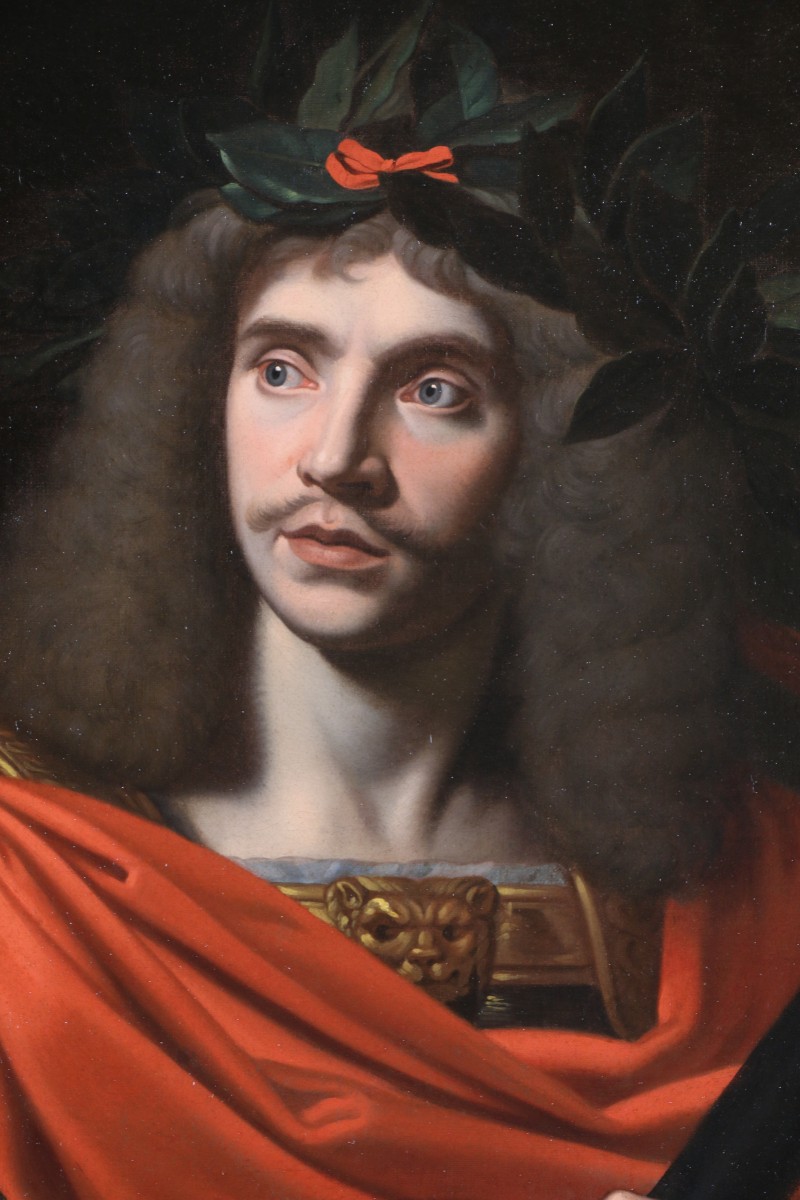
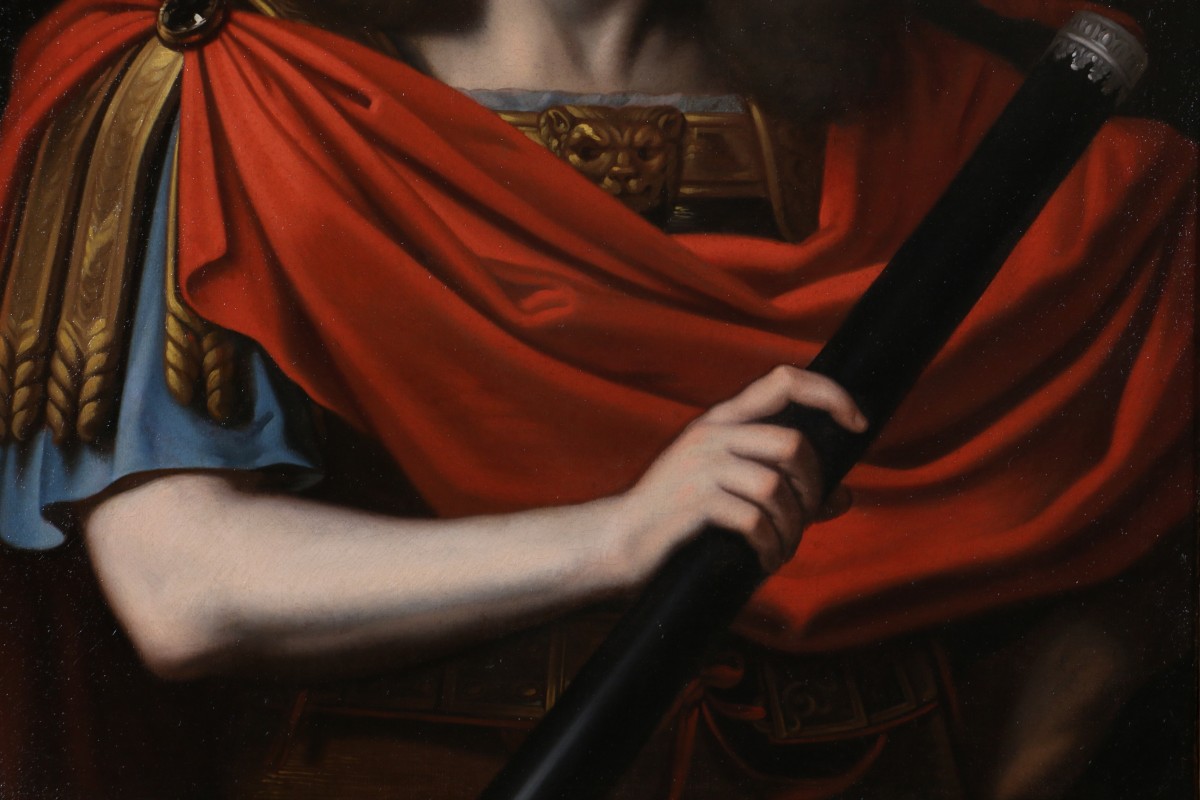
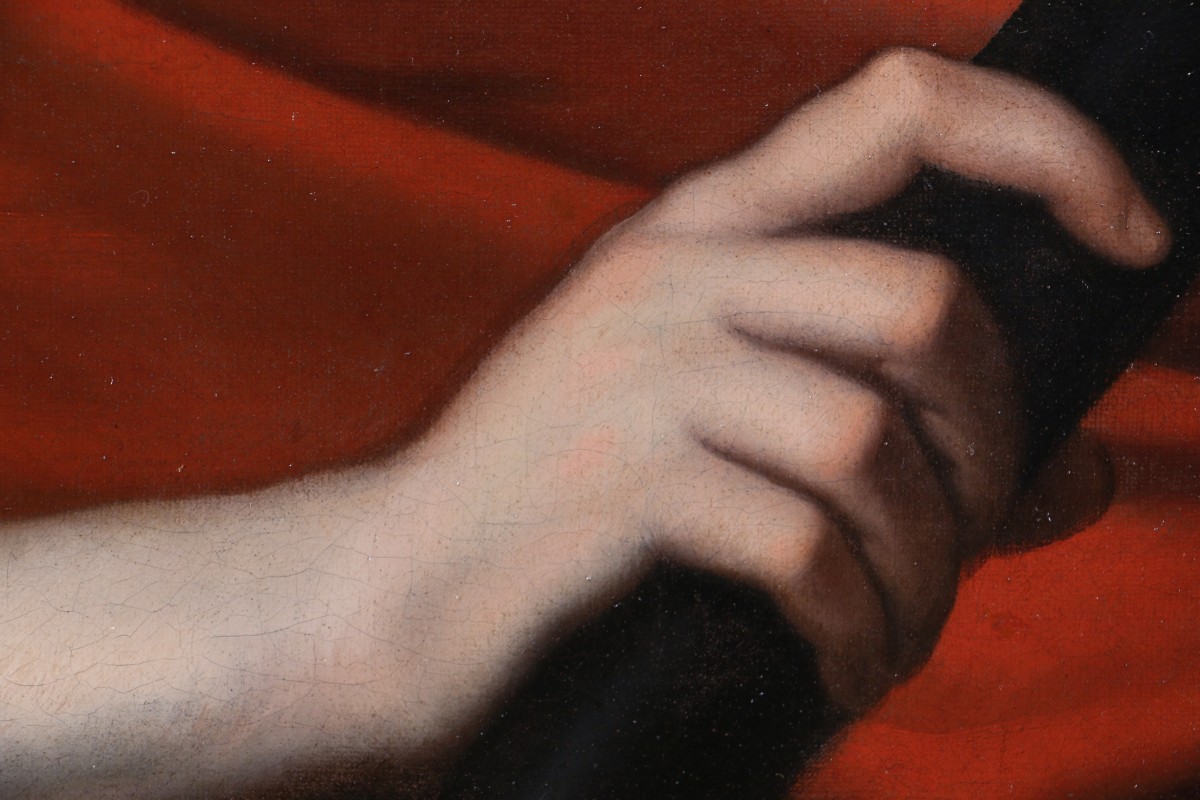
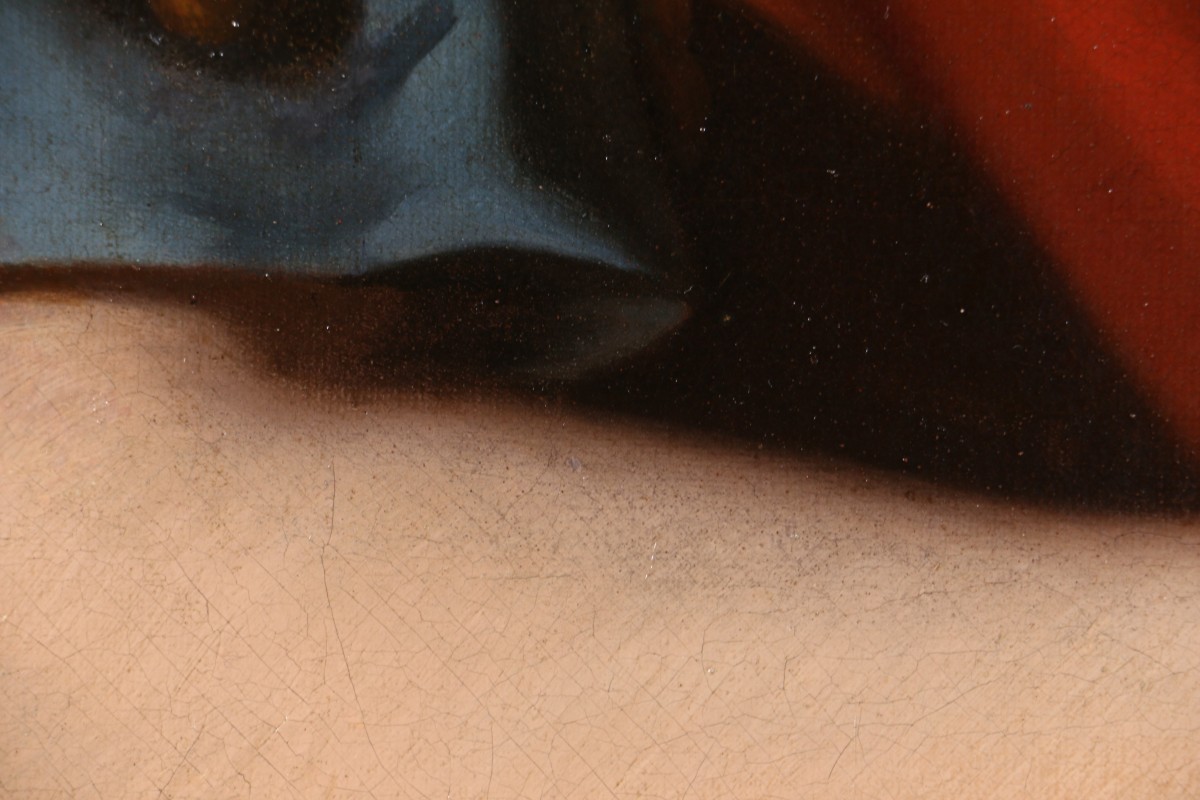
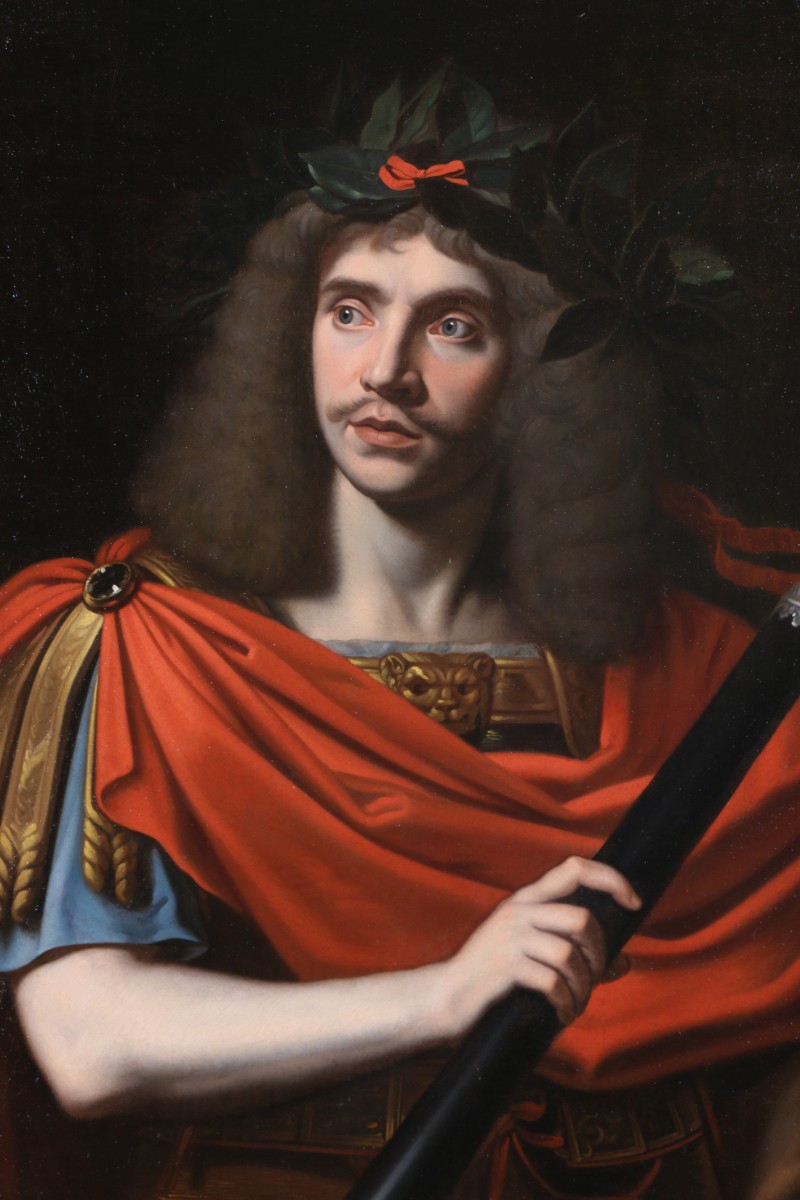
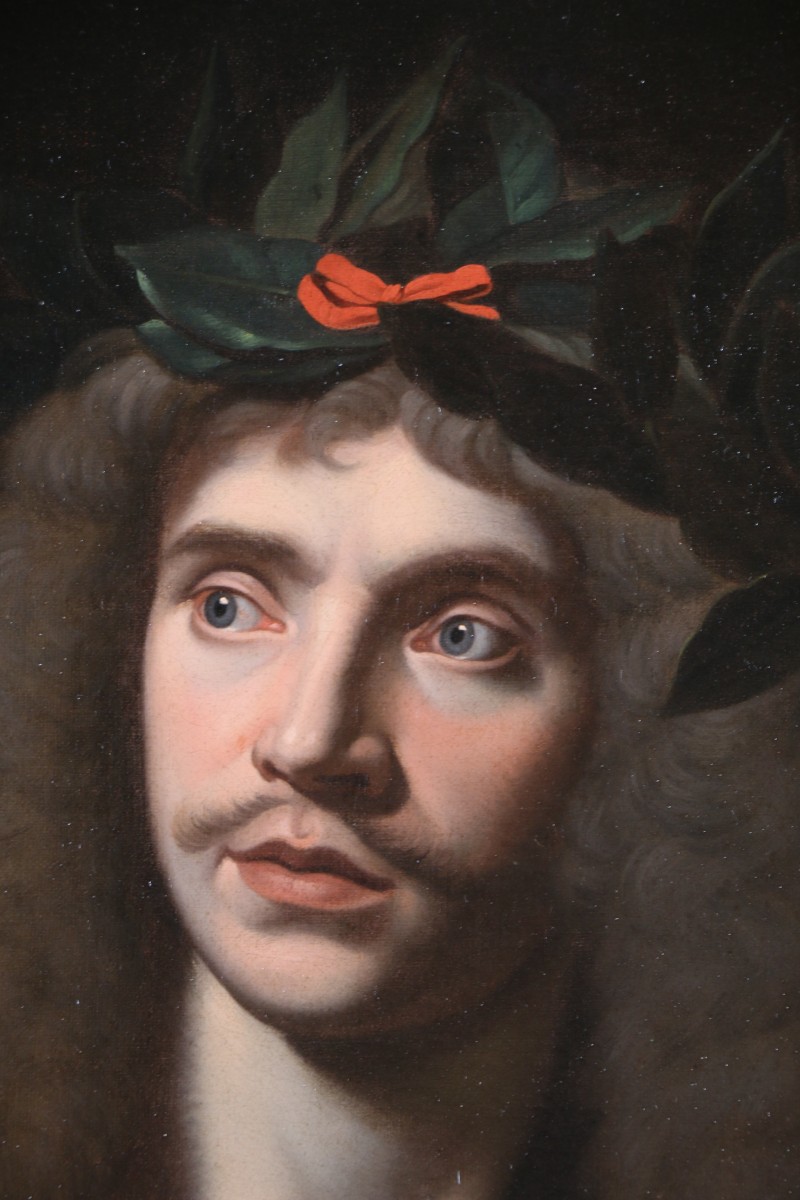
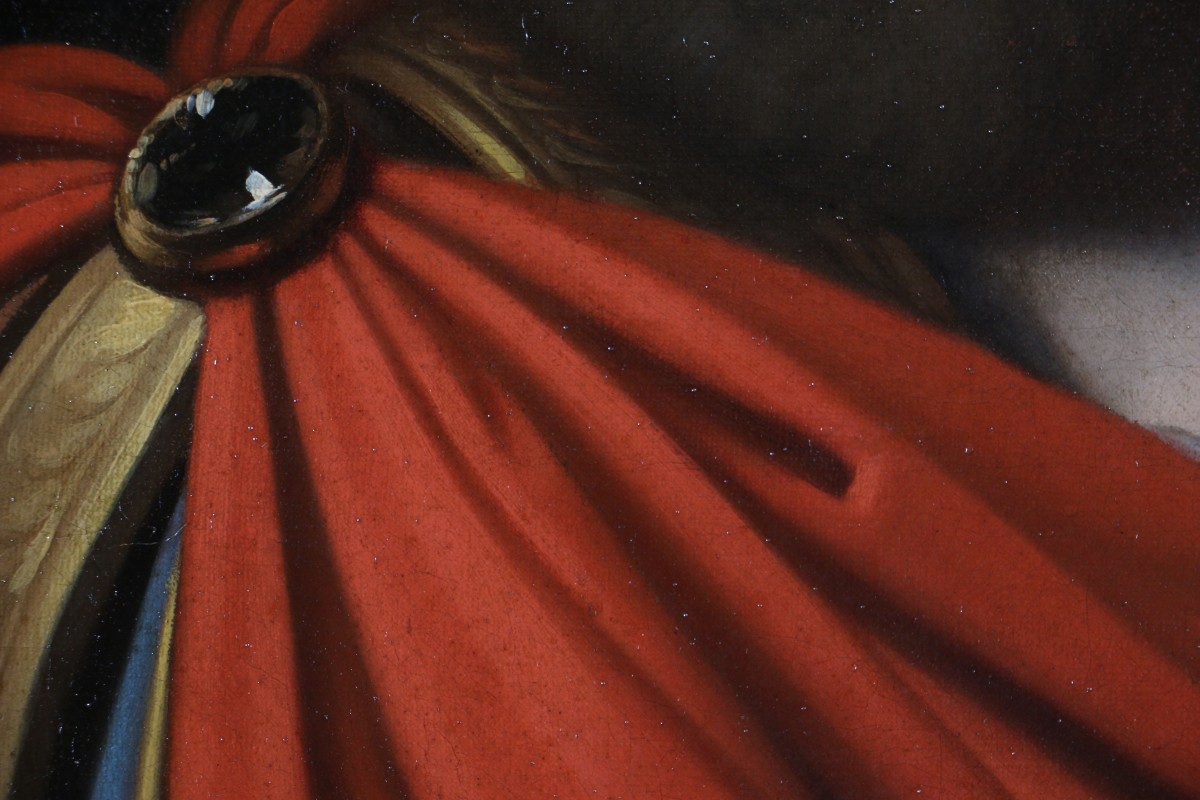
This sumptuous painting depicts Molière in the costume of Caesar, a role he played in Pierre Corneille's *The Death of Pompey*. The writer and actor appears crowned with laurel, draped in a red cloak, and holding a baton of command, according to the heroic iconography inherited from the Grand Siècle (the 17th century). The painting is based on a famous model held at the Musée de la Vie Romantique in Paris, traditionally attributed to the workshop of Pierre Mignard. The quality of the modeling of the face, the subtlety of the flesh tones, and the nobility of the composition place this version within Mignard's sphere of influence, probably at the turn of the 17th and 18th centuries. Through its faithfulness to the original and its pictorial qualities, this antique replica testifies to the early dissemination of Molière's image after his death in 1673. It illustrates the author's growing place in French cultural memory, not only as a playwright, but also as an actor embodying the great heroes of the classical stage.
Pierre Mignard (1612-1695)
Born in Troyes in 1612, Pierre Mignard is one of the greatest French painters of the 17th century and one of the leading portraitists of the reign of Louis XIV. Trained in a provincial artistic environment, he moved to Paris at a young age before departing for Italy, a decisive step in the careers of many artists of his time. Settling in Rome in the 1630s, Mignard remained there for more than twenty years. He studied the masters of the Renaissance and Baroque periods, notably Raphael, Titian, and the great Roman decorators. His talent quickly earned him an international reputation. There, he produced portraits, religious paintings, and mythological compositions, while also frequenting the French intellectual circles established in Rome. Returning to France in 1657, he quickly established himself as a sought-after painter among the aristocracy and the court. His elegant and refined art is distinguished by the softness of his flesh tones, the nobility of his poses, and an ideal grace inherited from the Italian tradition. He particularly excelled in female portraiture, immortalizing the leading ladies of Louis XIV's reign, as well as in large-scale mural decorations. A longtime rival of Charles Le Brun, First Painter to the King and Director of the Royal Academy, Mignard remained on the fringes of official institutions for several decades. Upon Le Brun's death in 1690, he finally rose to the highest positions: he was admitted to the Royal Academy of Painting and Sculpture, appointed First Painter to the King, and then Director of the Academy. Among his major works are the decorations for the dome of the Val-de-Grâce, several portraits of Louis XIV, as well as countless effigies of courtiers, prelates, and literary figures. His very active workshop widely disseminated his style throughout late 17th-century France. Pierre Mignard died in Paris in 1695, at the height of his fame. His work marks one of the pinnacles of French portraiture before the rise of Hyacinthe Rigaud and Nicolas de Largillière. He remains today one of the great representatives of the pictorial elegance of the Grand Siècle. Pierre Mignard's Workshop and its Continuity After 1695 Pierre Mignard's workshop was among the most active in late 17th-century France. Settled in Paris, at the heart of the artistic flourishing of Louis XIV's reign, he responded to significant demand from the court, the aristocracy, the clergy, and a wealthy private clientele. There, Mignard produced official portraits, society portraits, religious subjects, and numerous replicas of sought-after compositions. As in the great workshops of his time, the master conceived the models and executed the essential parts—particularly the faces and hands in the most prestigious works—while collaborators and assistants took charge of drapery, accessories, backgrounds, or studio reworking. This organization allowed for the widespread dissemination of an immediately recognizable style, based on elegant drawing, soft complexions, and noble poses.
The workshop also played a vital role in transmitting the Mignardian taste. Young painters learned working methods, the practice of court portraiture, and the art of idealized compositions there. Through its scope and effectiveness, it contributed to the dissemination of French portraiture in the final decades of the Grand Siècle. Upon Pierre Mignard's death in 1695, the painter's personal studio naturally ceased to exist as a structure directed by the master. However, its activity did not abruptly end. The models, cartoons, drawings, and compositions remained in circulation, while former collaborators continued their careers, preserving his techniques and pictorial language. During the 16 years
Delevery information :
All our paintings benefit from careful and secure packaging. No geographic restrictions.