Offered by Galerie Alexandre Piatti

Works of art, sculptures and furniture Haute Epoque
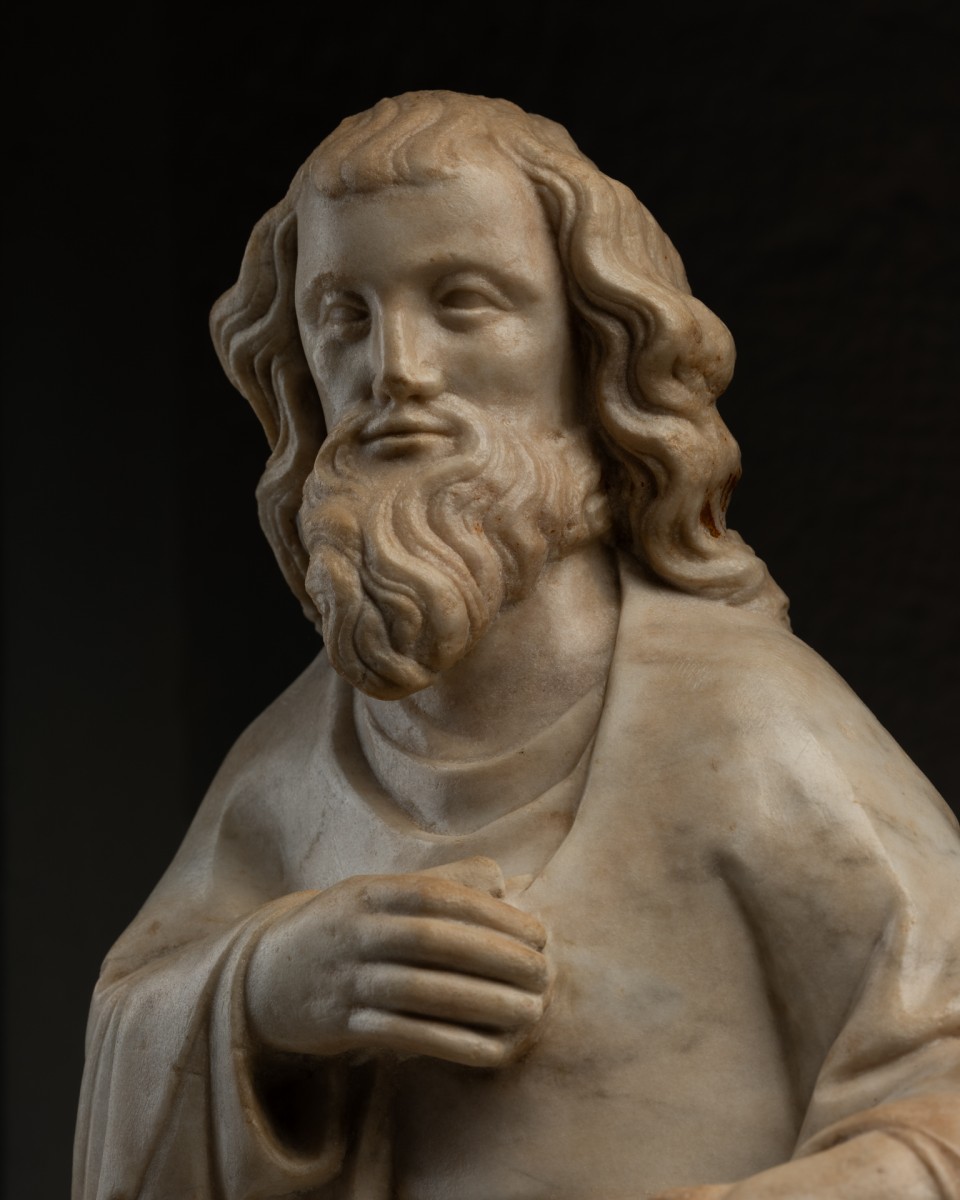
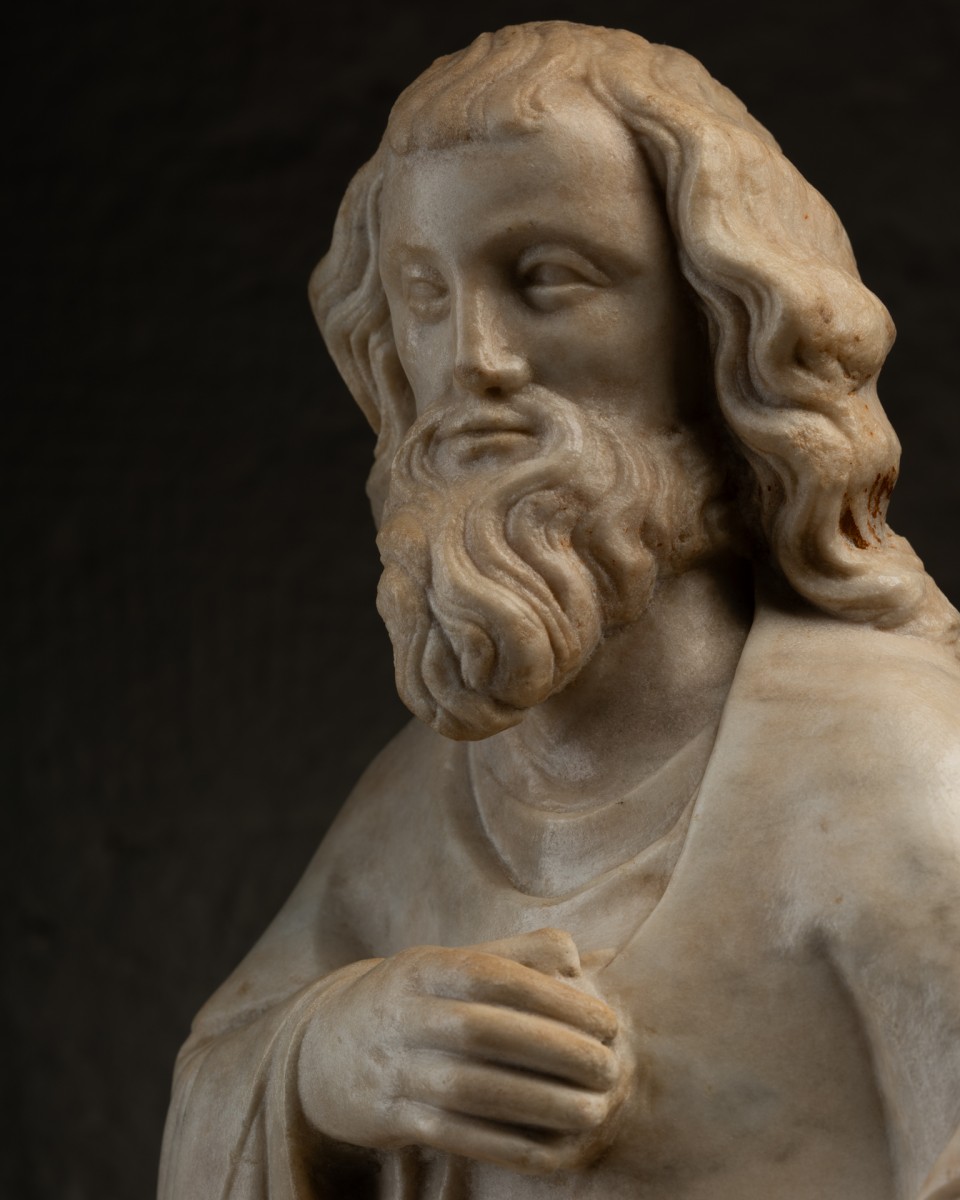
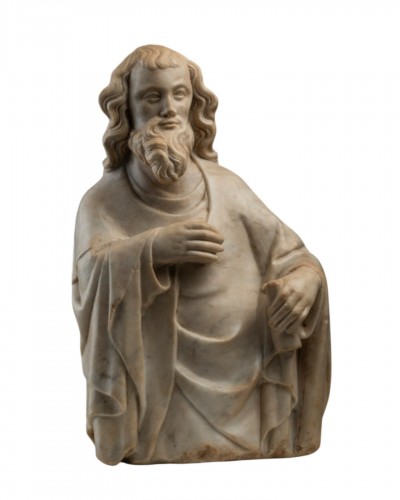
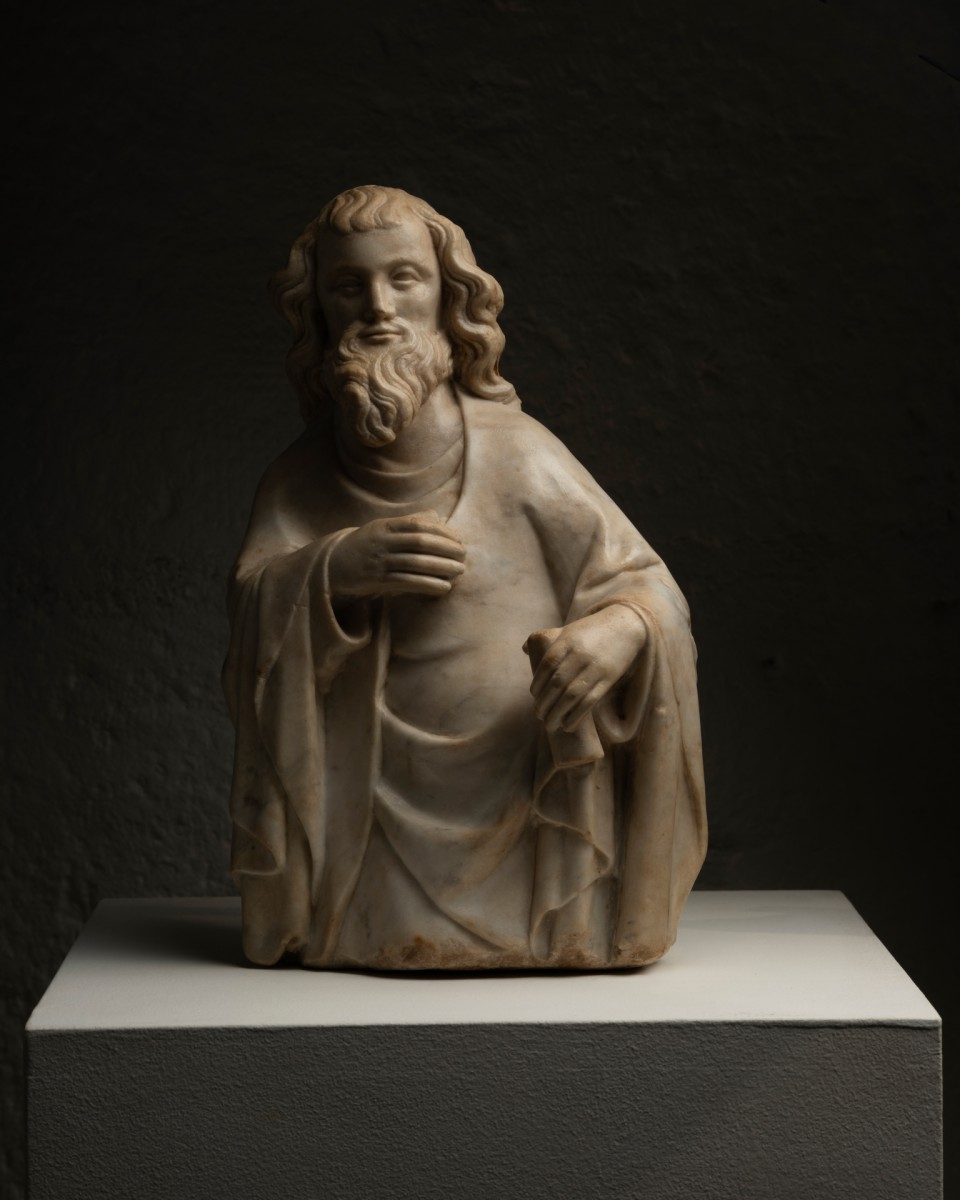
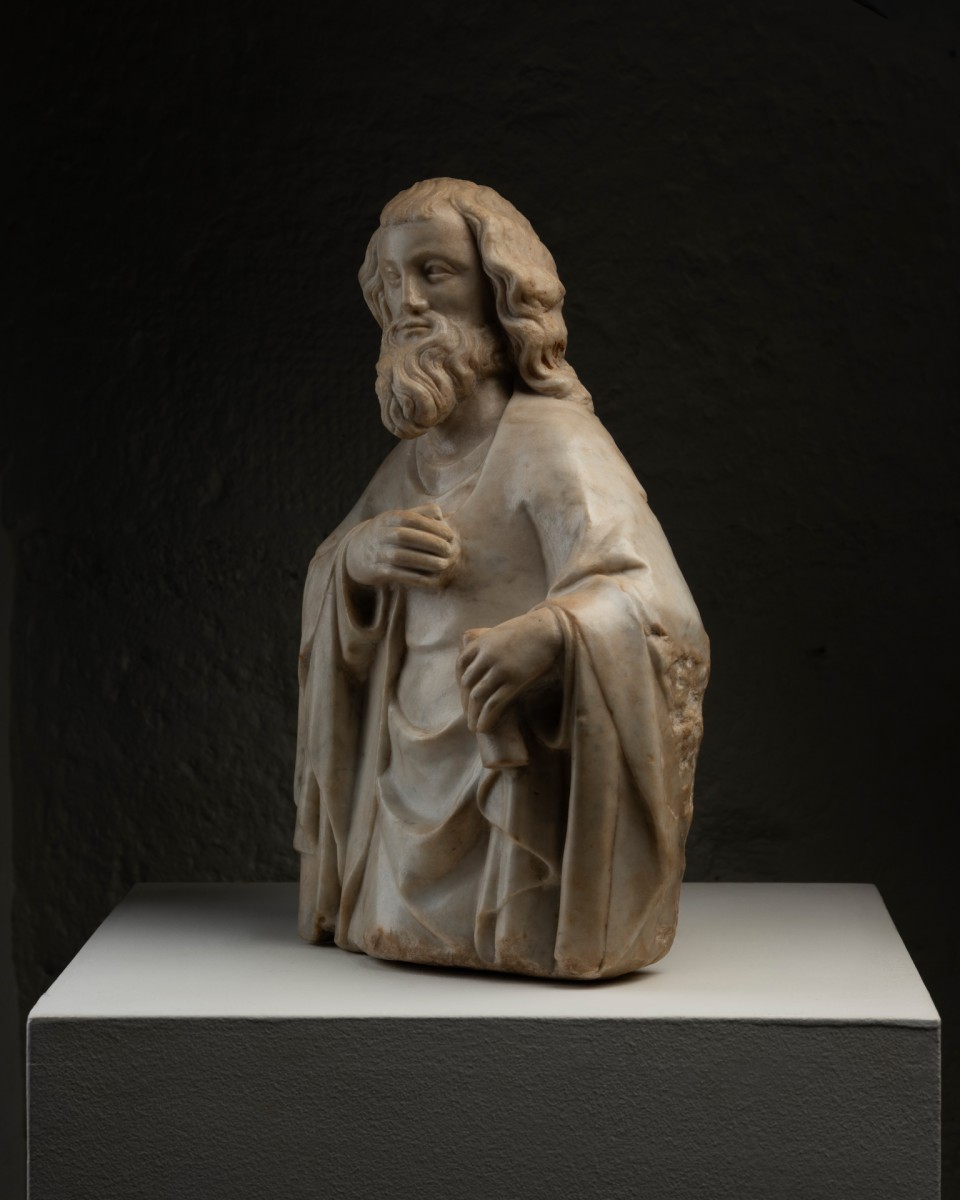
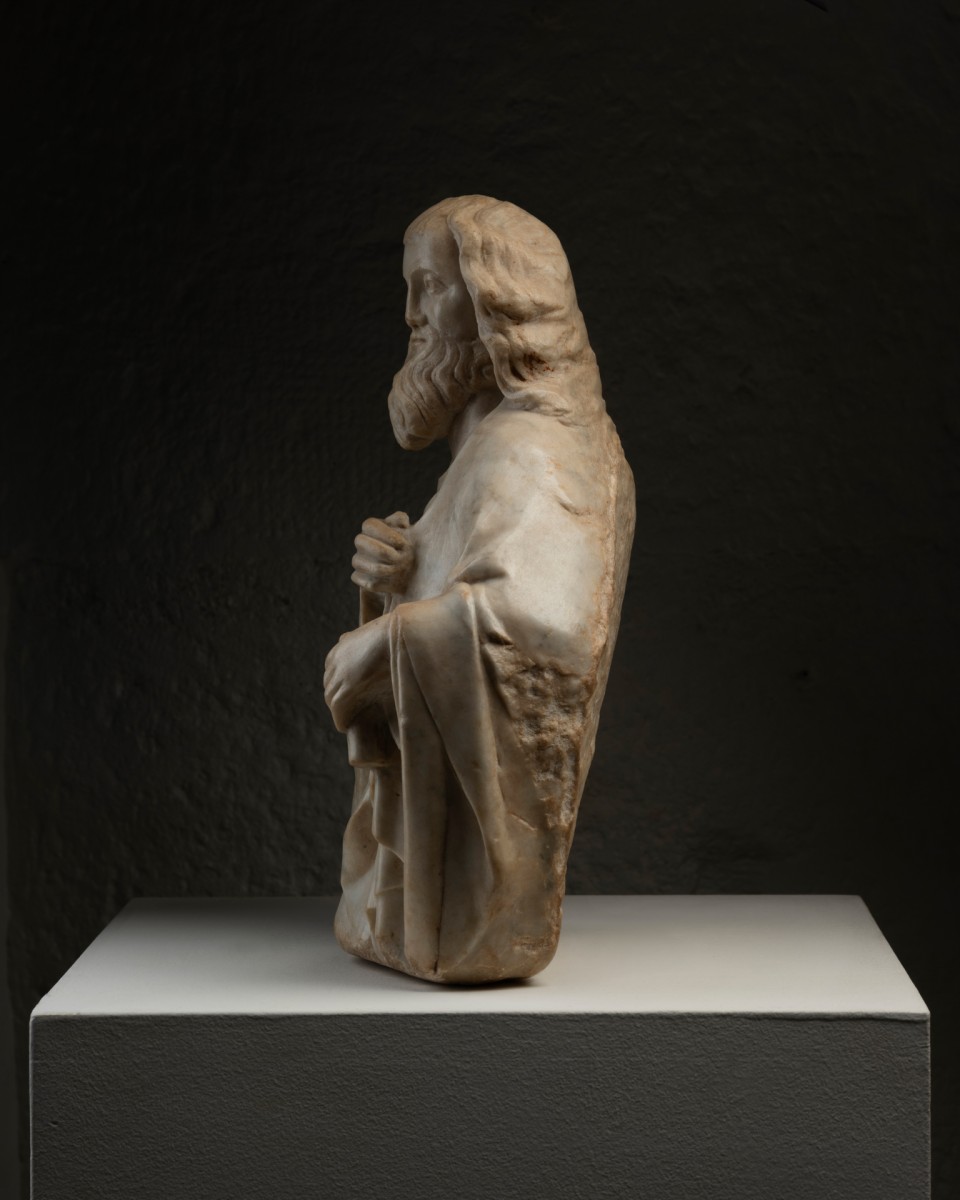
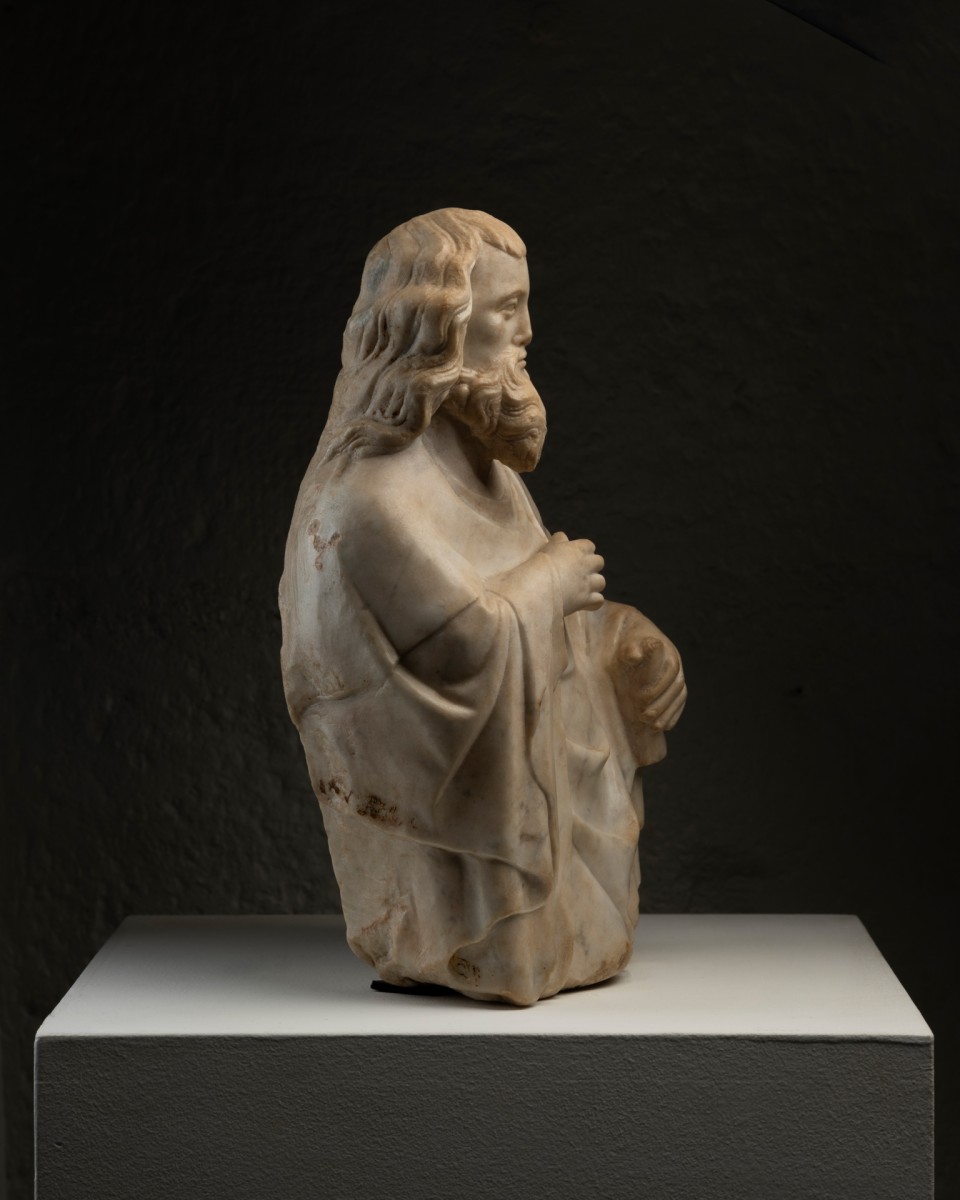
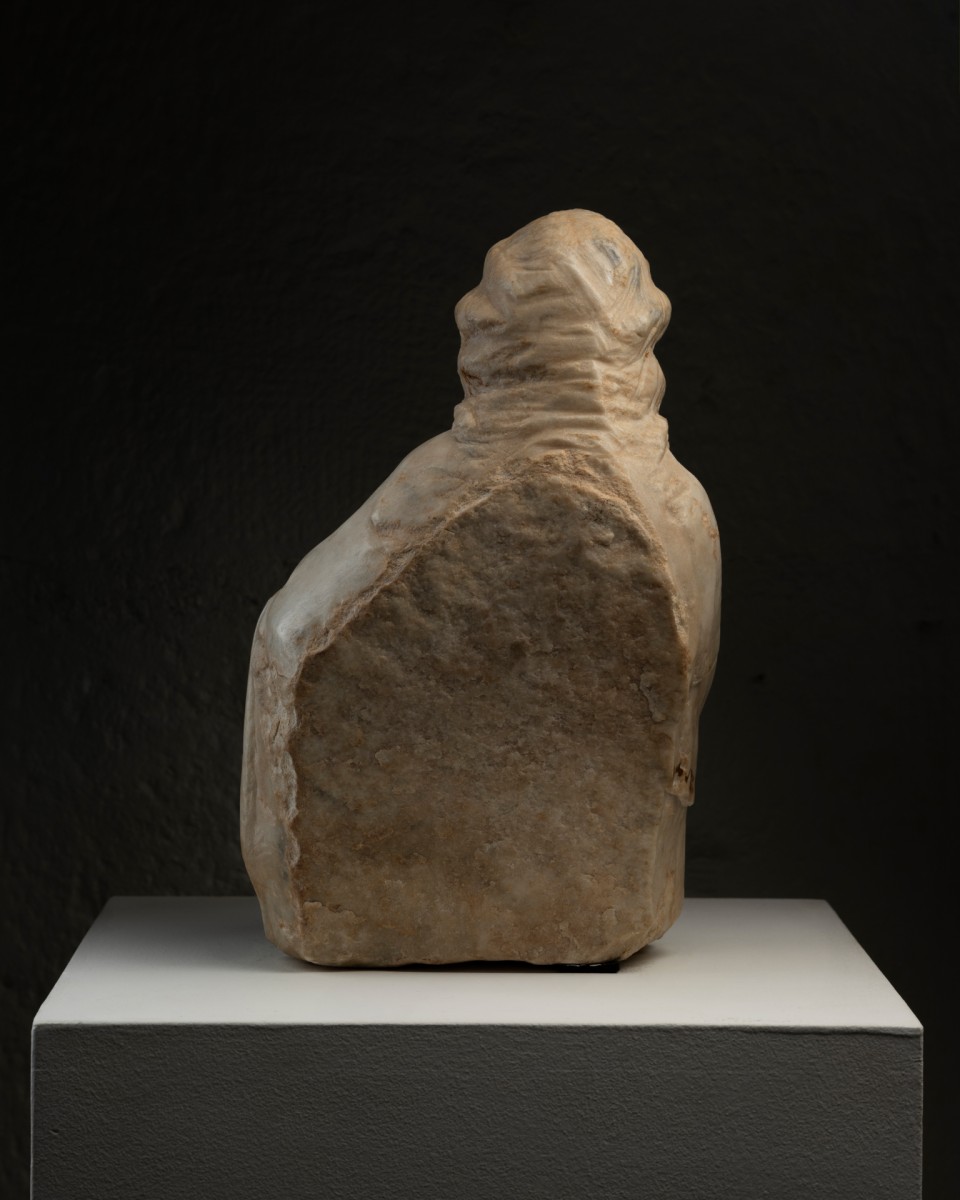
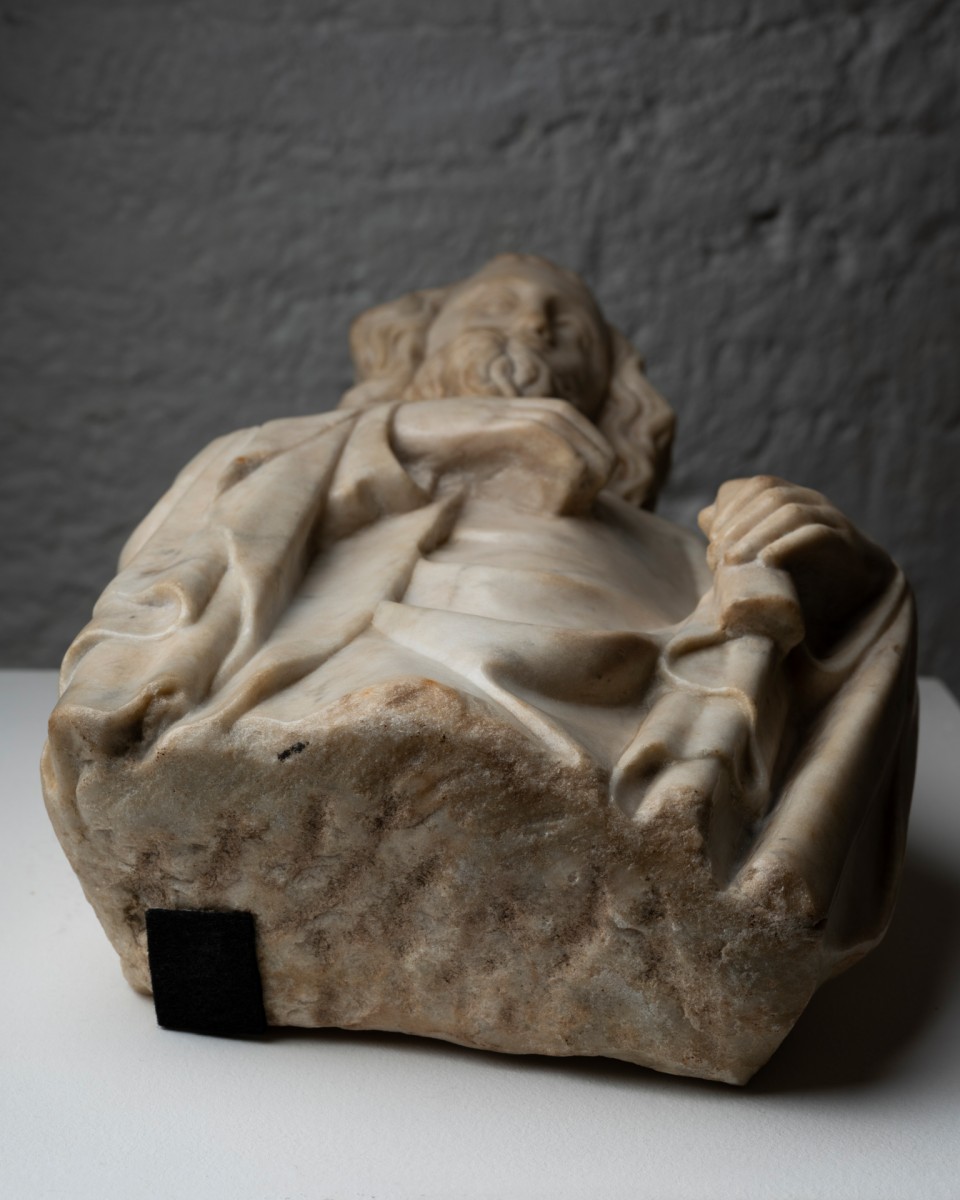
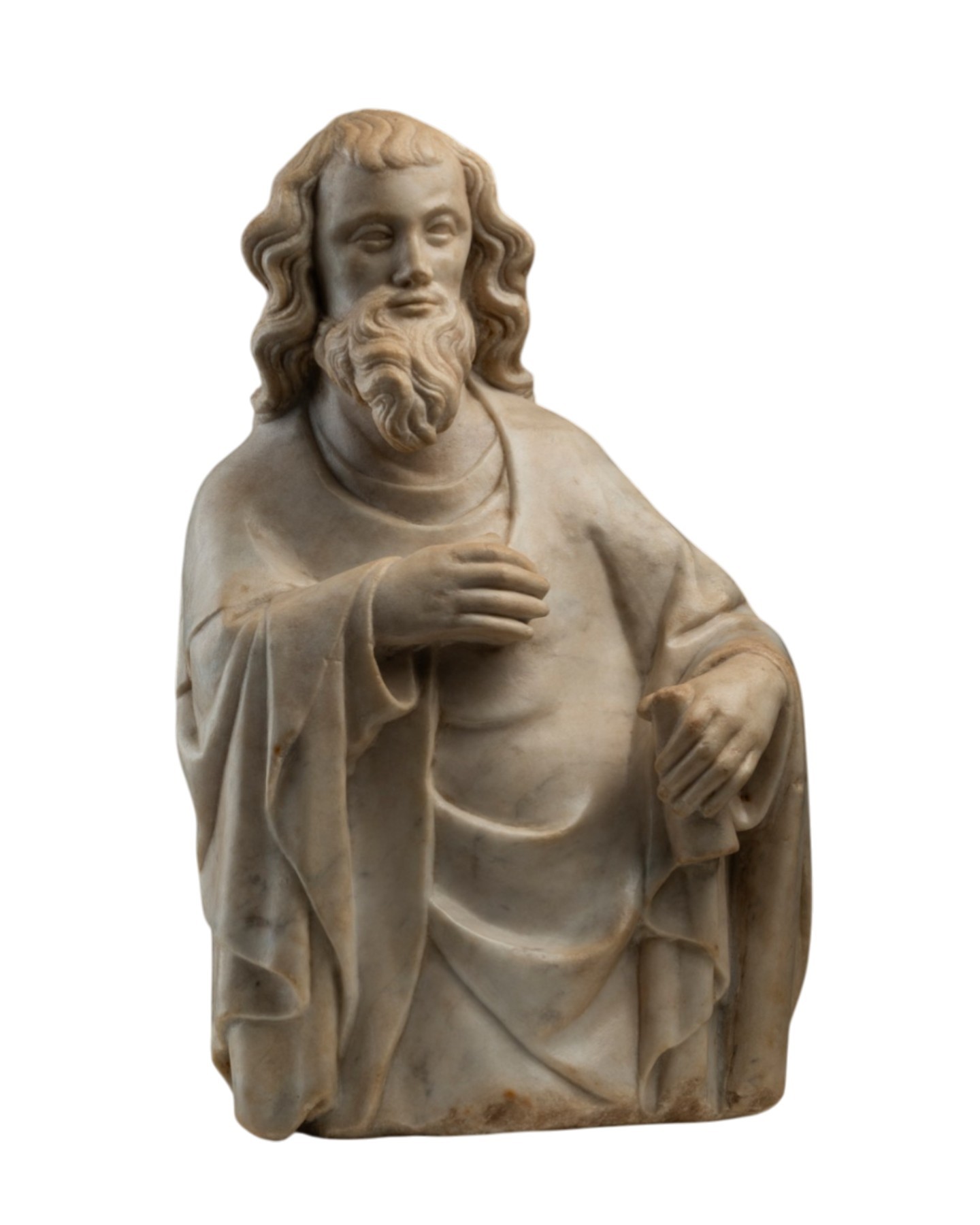
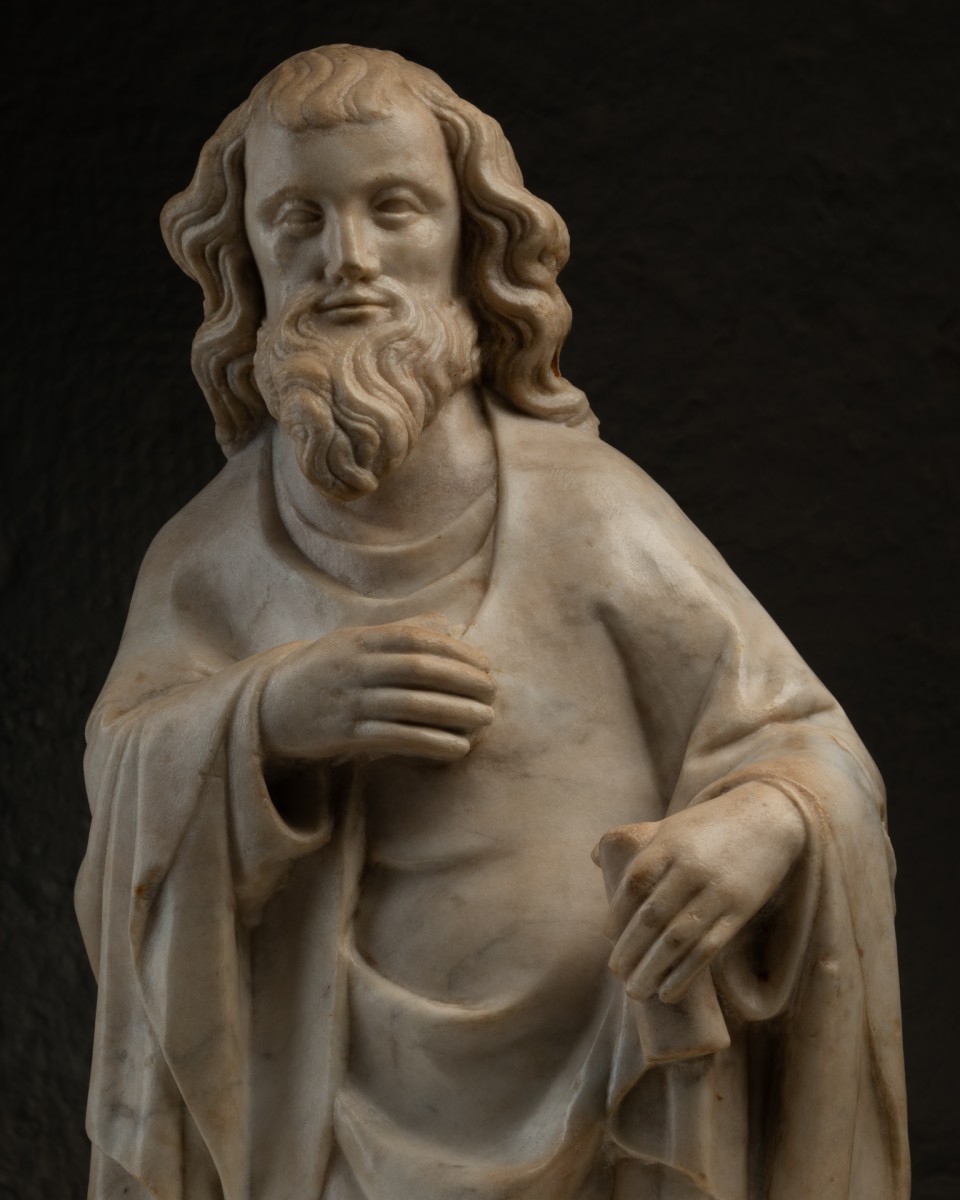
This marble sculpture depicts a saint, shown from the waist up, in a pose that is both solemn and meditative. It is likely that this work was originally intended to be a full-length sculpture. Dating from the 14th century, the work belongs to the Gothic style and originated in Île-de-France, a region that was particularly active in the field of monumental and religious sculpture during the Middle Ages.
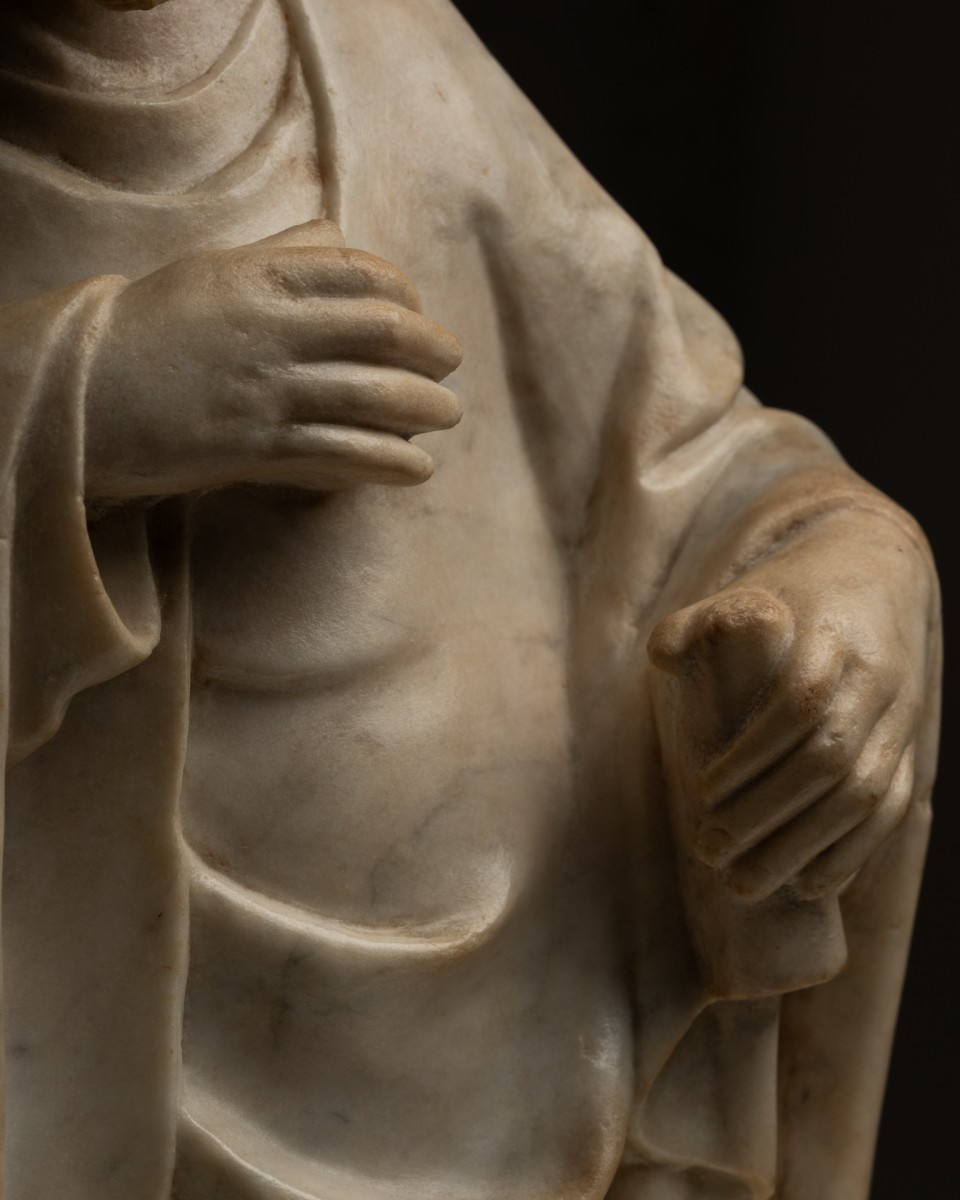
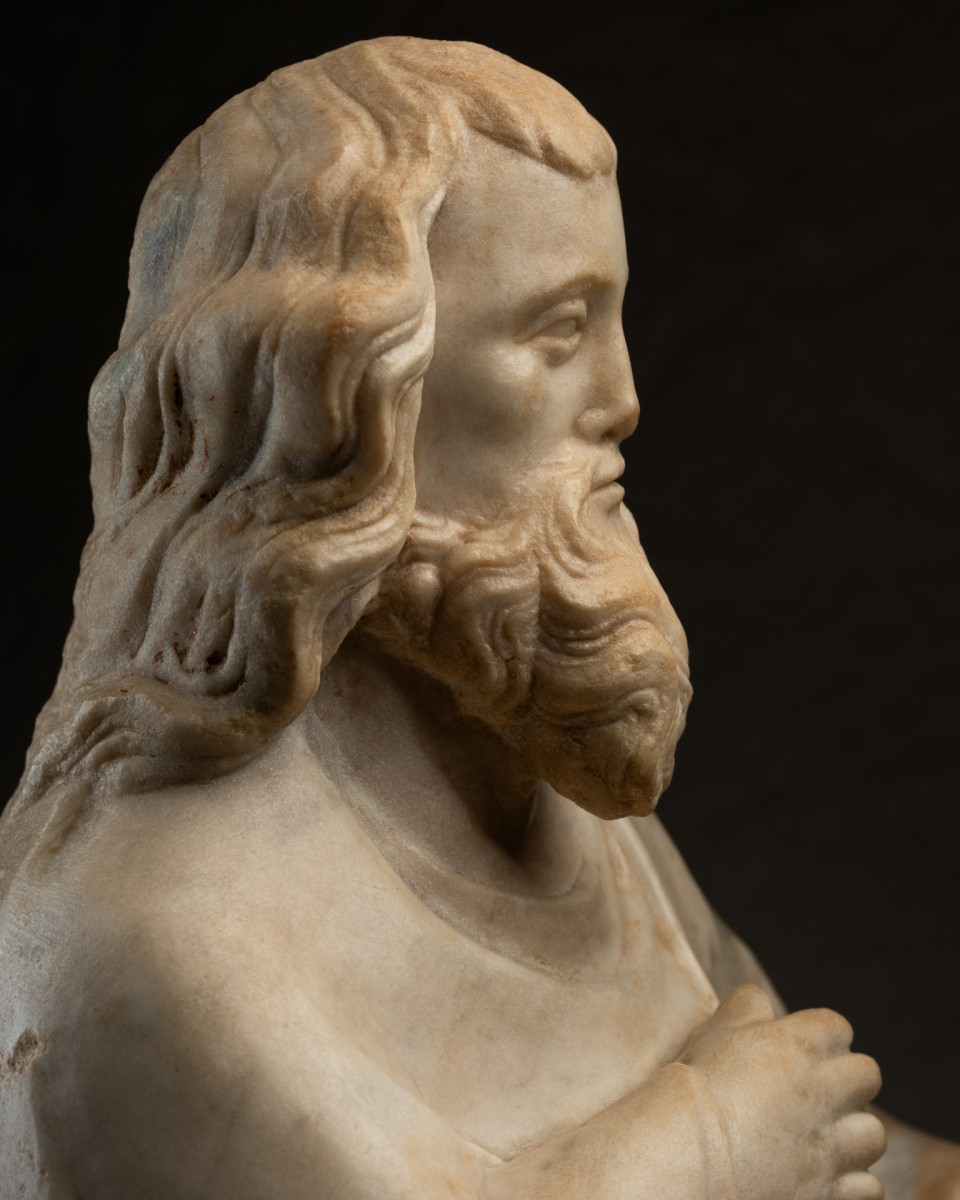
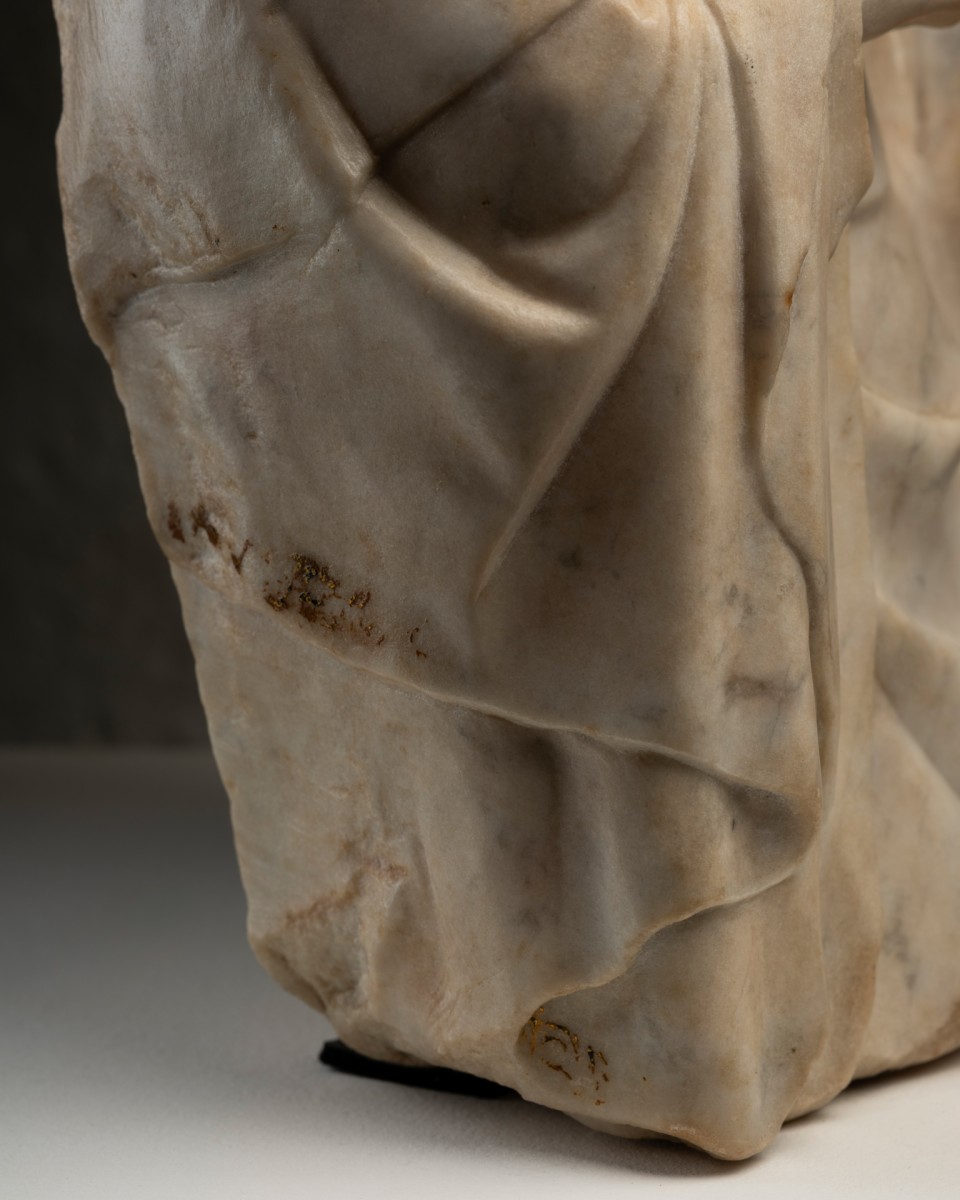
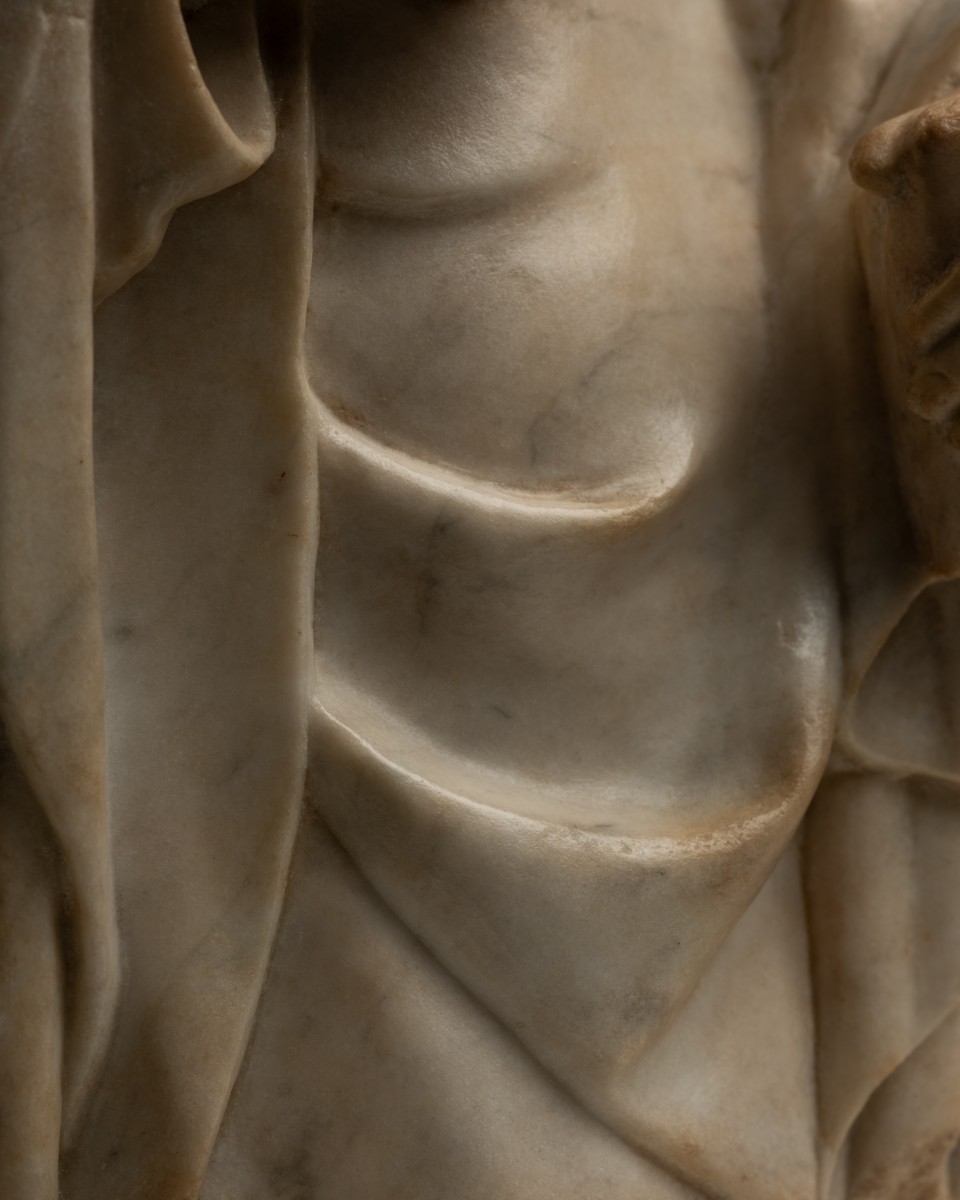
Crafted from marble, a noble material associated with durability and purity, this half-bust reflects the artist’s intention to place the figure of the saint in a timeless context. The meticulous treatment of the surface, alternating between smooth areas and deeply carved folds, reveals remarkable technical mastery. The clothing is accentuated by gold trim along the edges of the drapery, a rare decorative element that lends the figure added dignity and emphasizes its sacred nature.
The work is attributed to the circle of Evrard d’Orléans, a sculptor active in the 14th century, known for his contributions to major royal and ecclesiastical projects. His style is characterized by a synthesis of the legacy of medieval hieraticism and a new emphasis on the naturalness of the faces, the clarity of the gestures, and the inner expression. This half-bust perfectly illustrates this evolution, presenting a figure that is both idealized and deeply human.
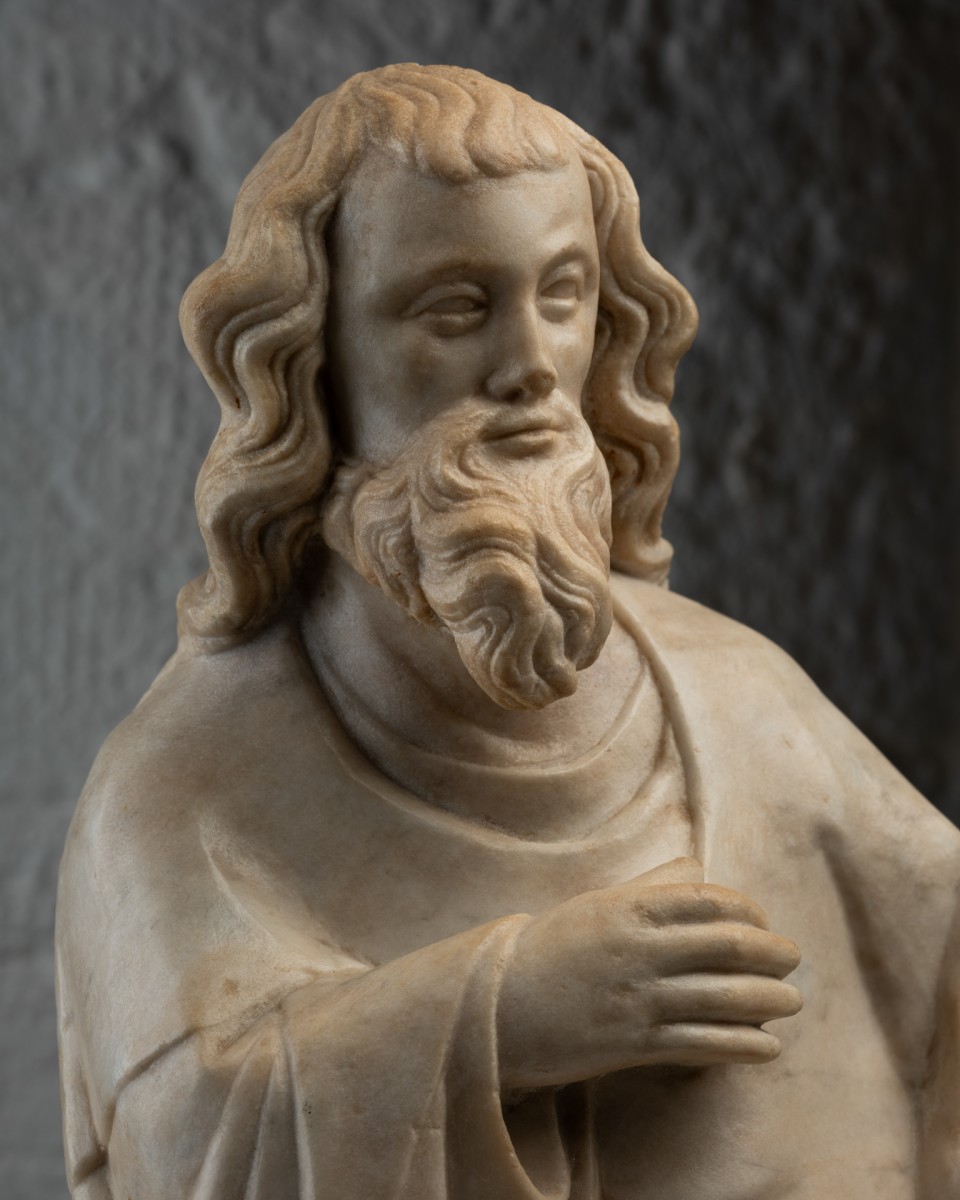
The treatment of the face is another distinctive feature of his work. He favors regular, idealized features, yet ones animated by a profound inner life. The gazes are often calm, almost absent, conveying a silent spirituality rather than expressive emotion. This expressive restraint contributes to the sacred dimension of the figure, inviting contemplation rather than psychological identification. The saint wears a long, wavy beard and a full head of hair framing his face—iconographic attributes traditionally associated with wisdom, moral authority, and holiness. The face, with its regular, serene features, expresses a profound inner life. The slightly sunken, almond-shaped eyes lend the gaze a spiritual intensity, while the closed mouth reinforces the impression of contemplation.
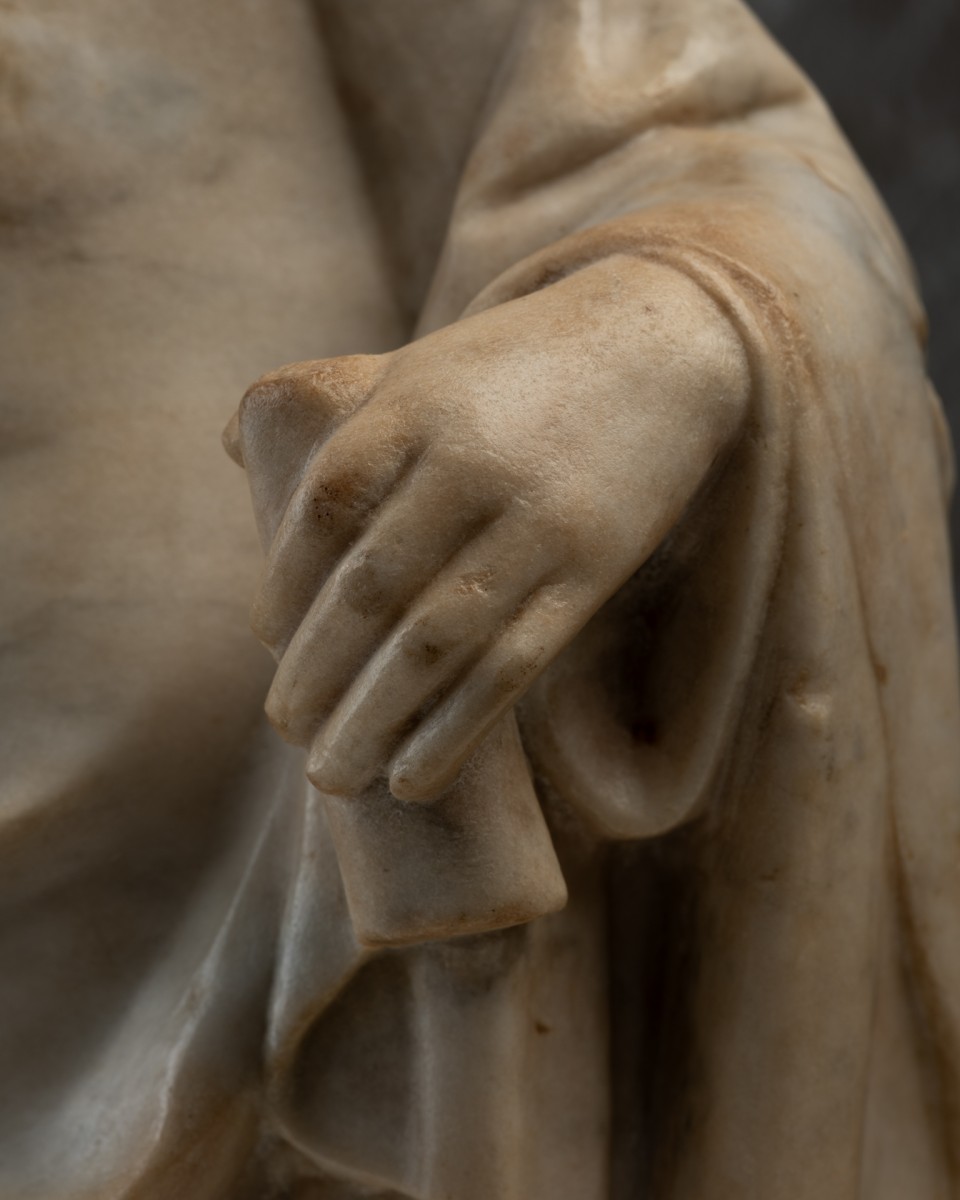
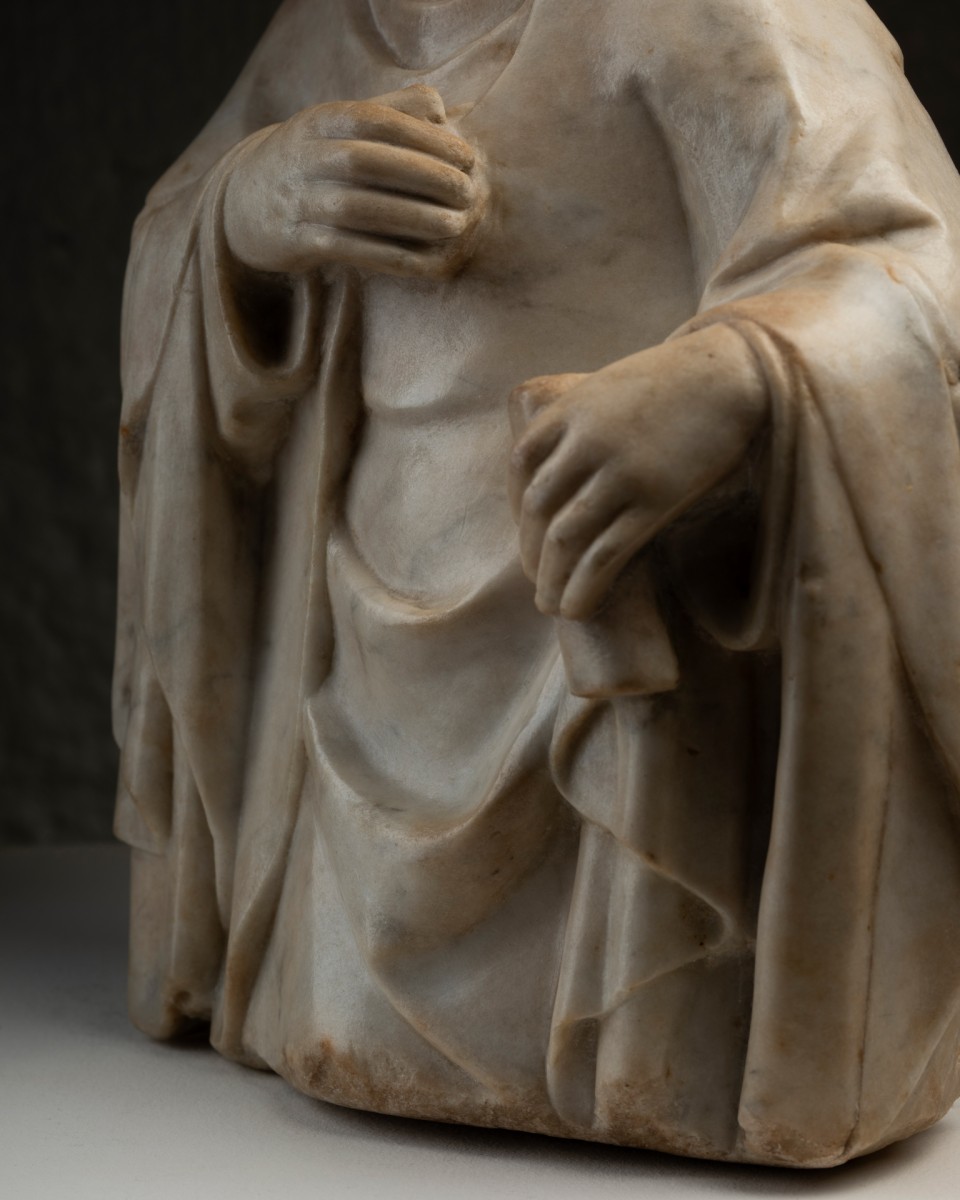
His drapery is also emblematic of his style. The folds are ample, deeply carved, and arranged according to a clear structural logic that guides the viewer’s gaze. They do not seek to faithfully imitate the natural movement of the fabric, but rather to convey a formal and symbolic harmony, reinforcing the figure’s monumentality despite the saint’s small size.
The gesture of the right hand resting on the chest evokes a profession of faith or an intimate adherence to the divine word. The left hand, holding the book, emphasizes the saint’s role as a transmitter of sacred knowledge or spiritual teaching. These measured gestures, typical of Gothic sculpture, convey a restrained expressiveness in which movement is suggested rather than fully asserted.
In the Gothic context, the depiction of the saint allows for a more intimate approach to the sacred figure. Unlike monumental statues integrated into the architecture, this format encourages contemplation of the face and gesture, strengthening the spiritual connection between the work and the faithful. Although the frontal orientation remains pronounced, it is softened by a slight movement of the body and the fluidity of the drapery, foreshadowing a shift toward greater naturalism.
The gold trim adorning the garment and the hair plays a major symbolic role. In medieval art, gold symbolizes divine light and heavenly glory. Its presence underscores the figure’s elevated spiritual status and helps identify the saint as an intermediary between the earthly and divine realms.
Thus, this 14th-century Gothic sculpture stands as a valuable testament to medieval religious sculpture in the Île-de-France region. Through the nobility of its material, its restrained expressiveness, and the symbolic richness of its details, the work embodies the spirituality of its era and illustrates the importance accorded to the figure of the saint as a model of faith and contemplation in the late Middle Ages.
Delevery information :
Please note that packing and shipping costs are not included in the price of the objects which are quoted ex shop.
Final amount including packing and shipment to be discussed with Galerie Alexandre Piatti.