Offered by Galerie Alexandre Piatti

Works of art, sculptures and furniture Haute Epoque
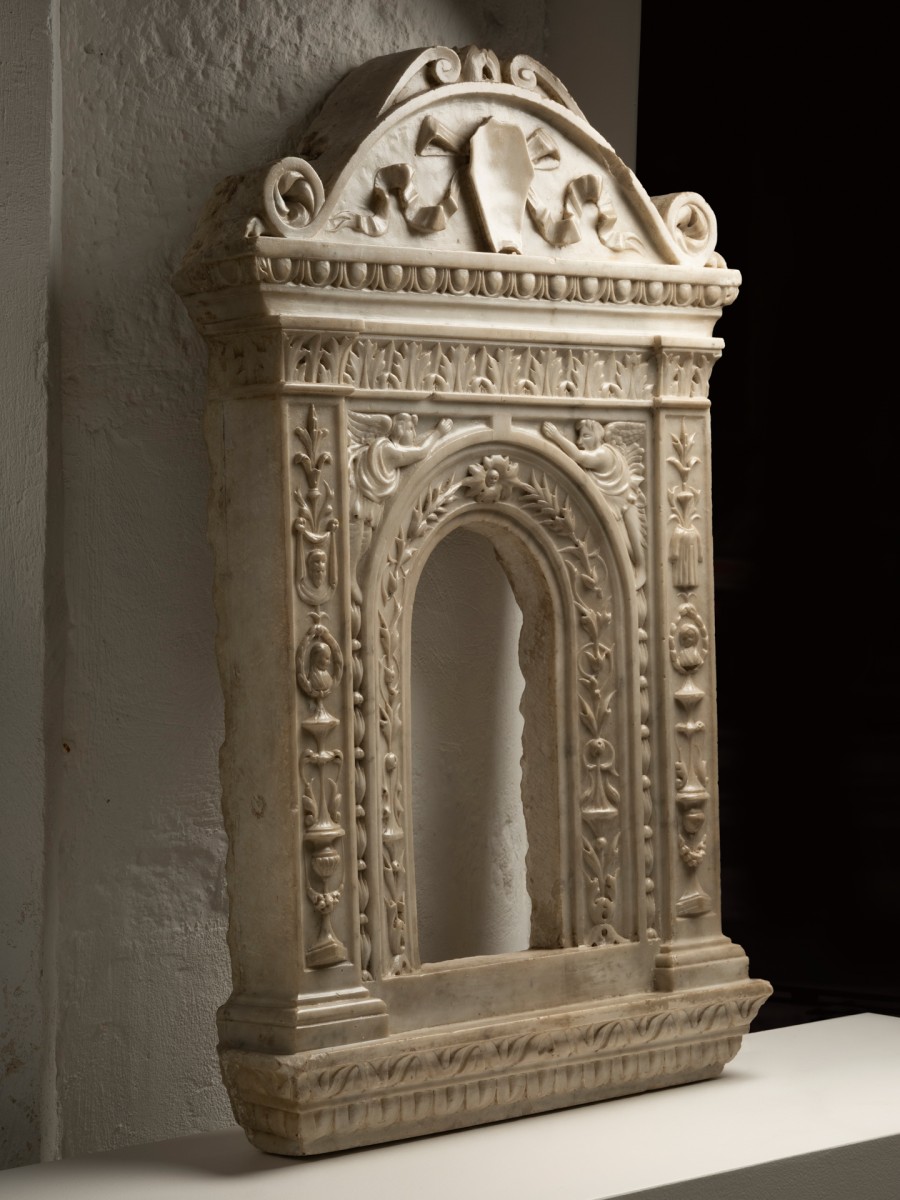
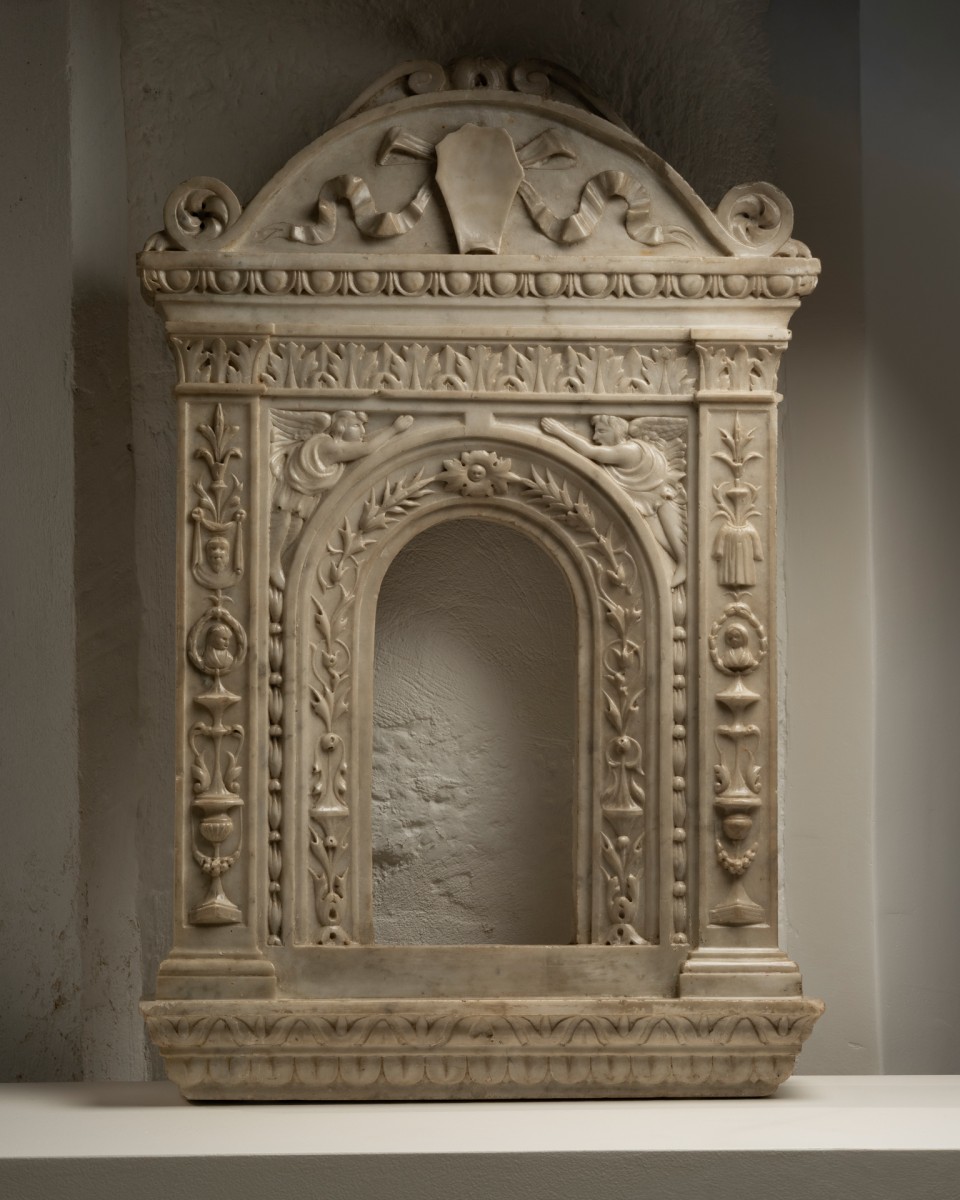
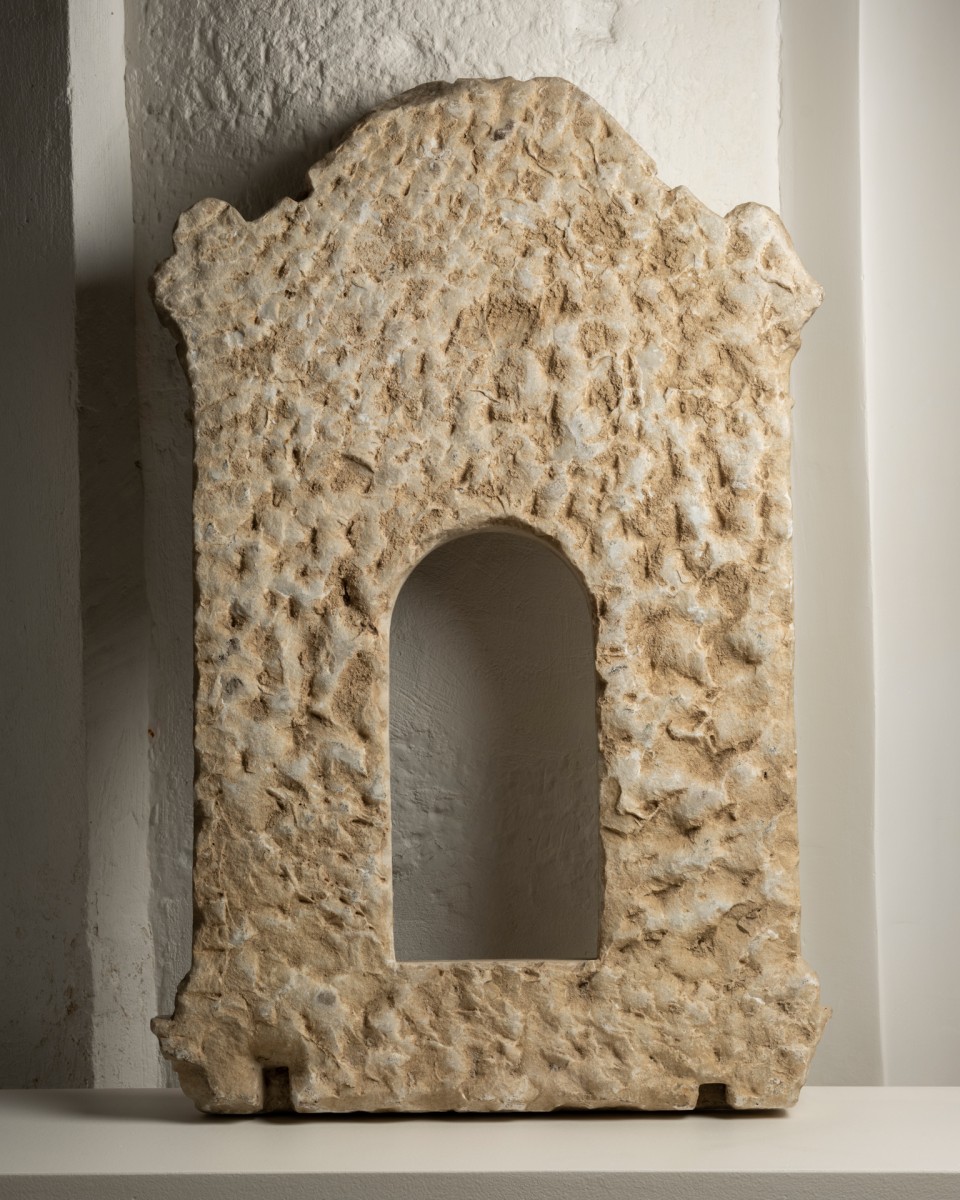
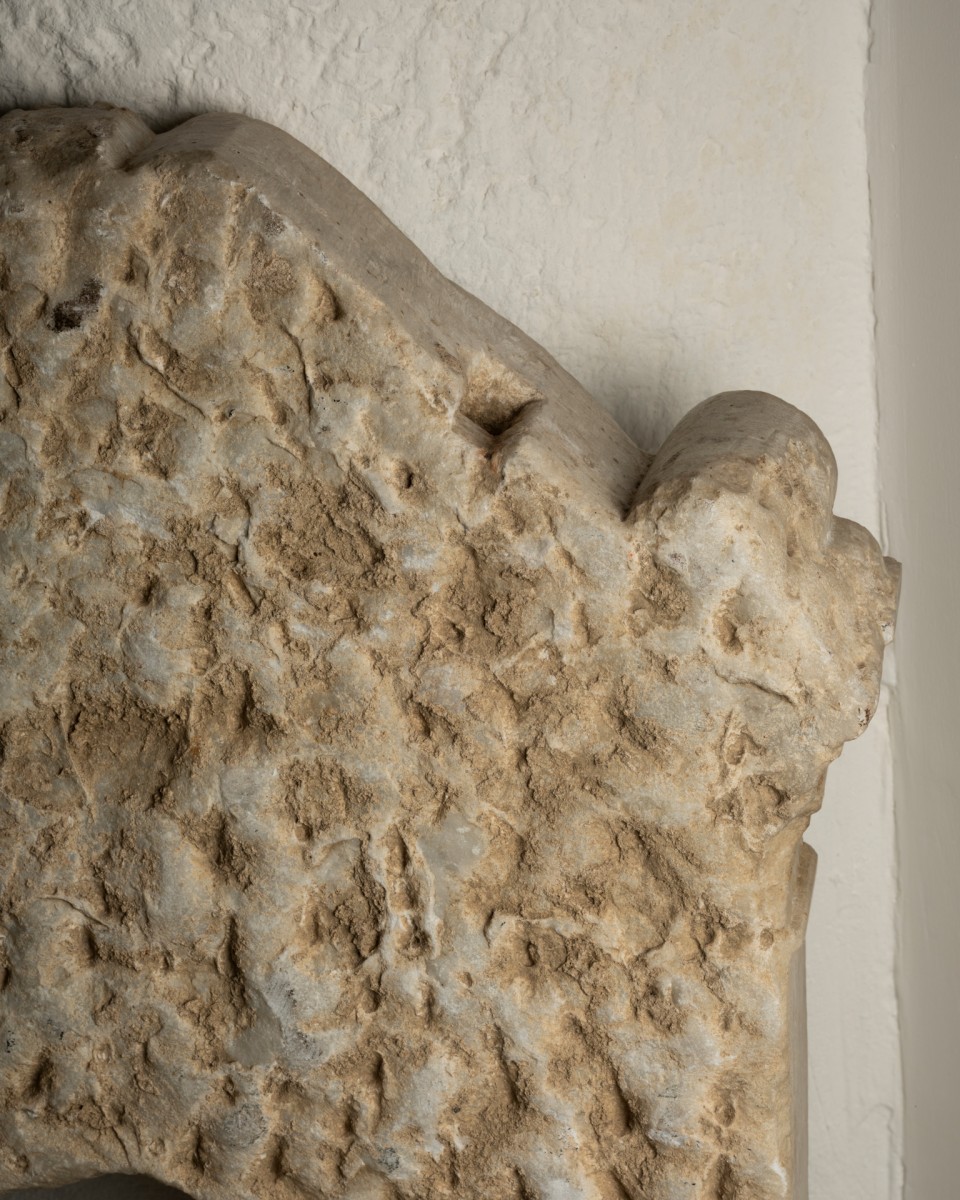
This marble tabernacle, dating from the 15th century and originating in Lombardy, is a product of the Italian Renaissance, a period during which perspective and architecture became essential tools in the service of devotion. More than just a decorative element, it is a major religious object intended to house and protect sacred items of great spiritual value, such as the consecrated Eucharist, as well as relics and miraculous images.
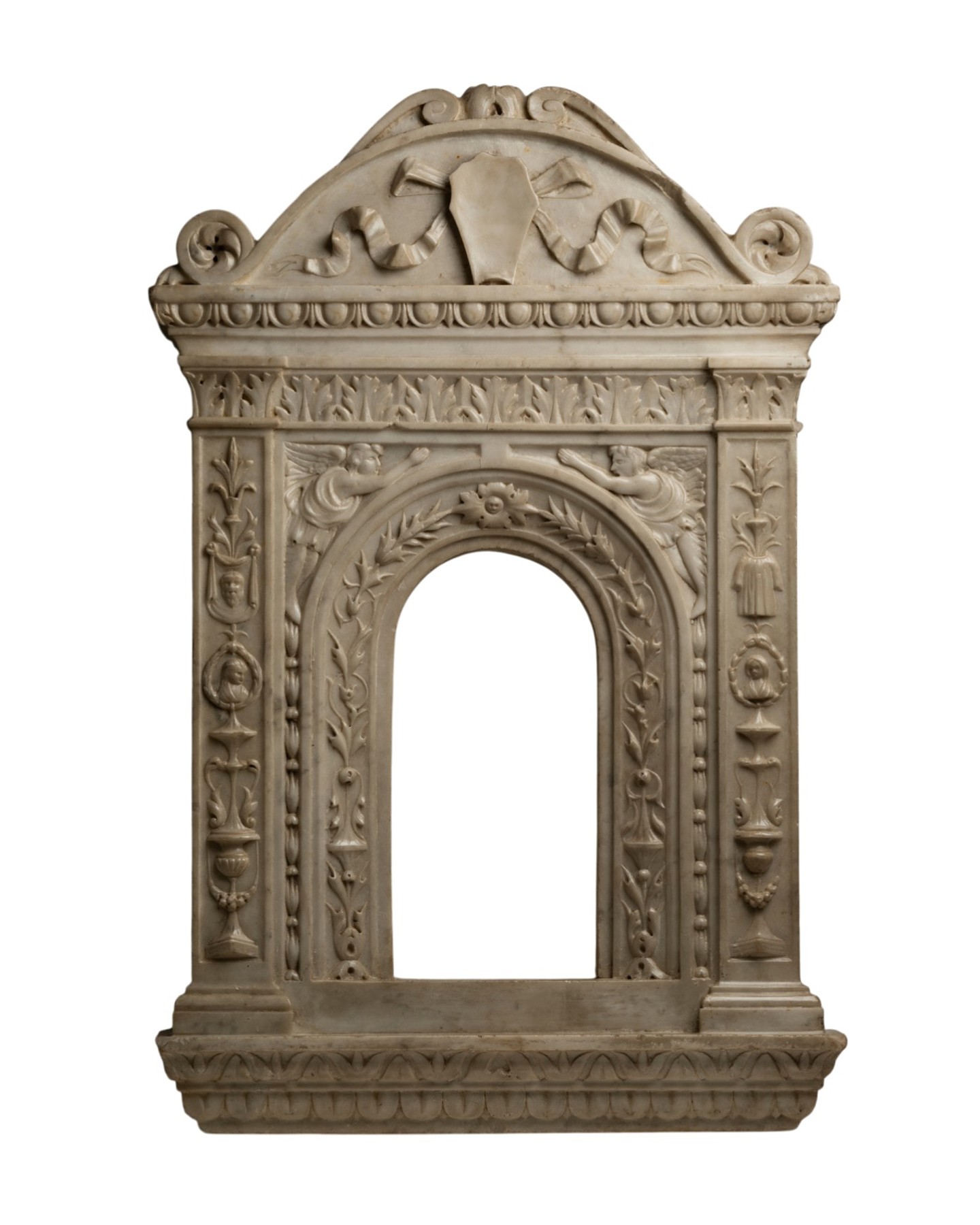
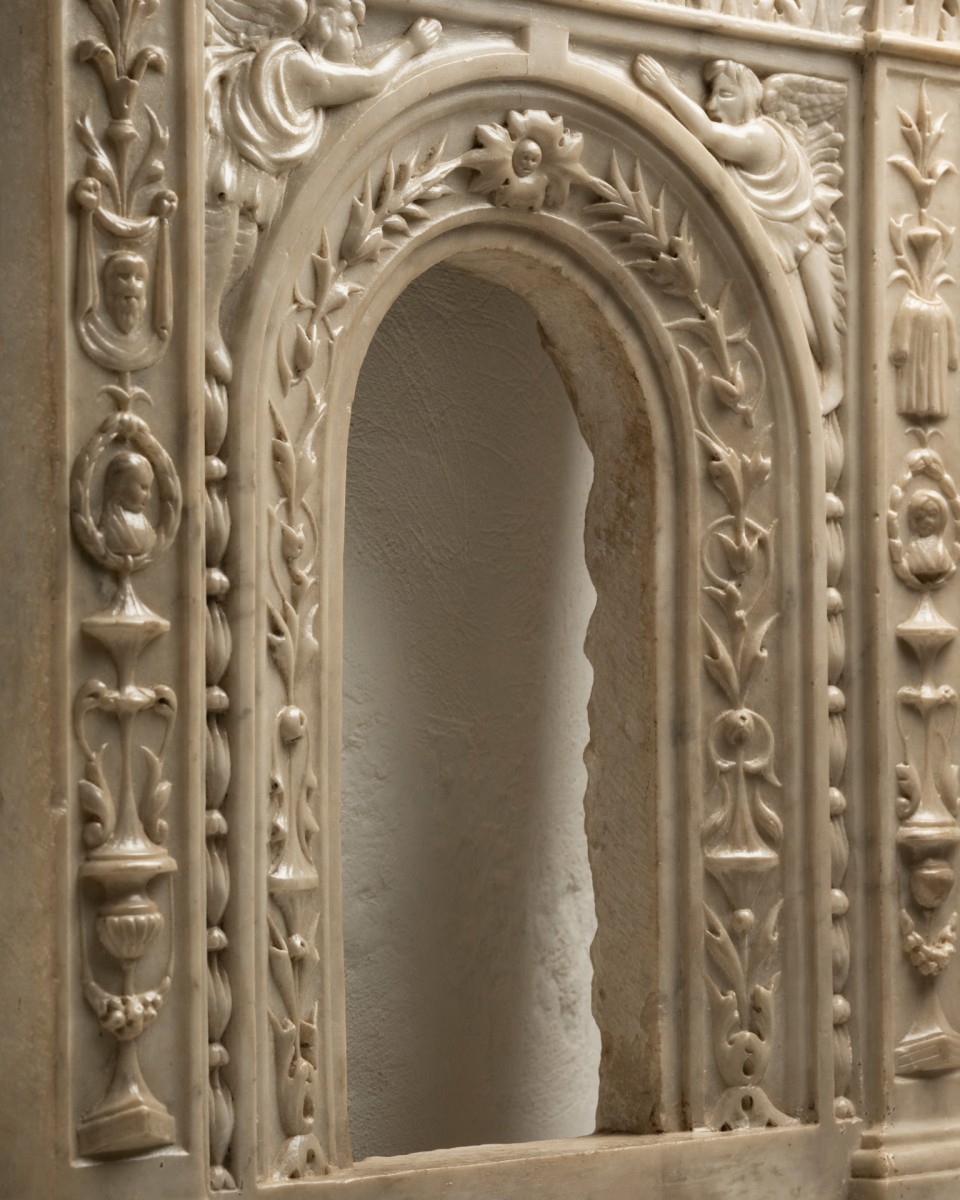
Inspired by Roman antiquity, this tabernacle takes the form of an architectural aedicule reminiscent of a stele or the façade of an ancient temple. This reference to classical architecture, which was prominent during the Renaissance, anchors the object in a tradition of monumentality and sacredness. The structure, designed as a vertically open façade, symbolically offers a glimpse into the sacred interior space, while maintaining a respectful distance from the divine.
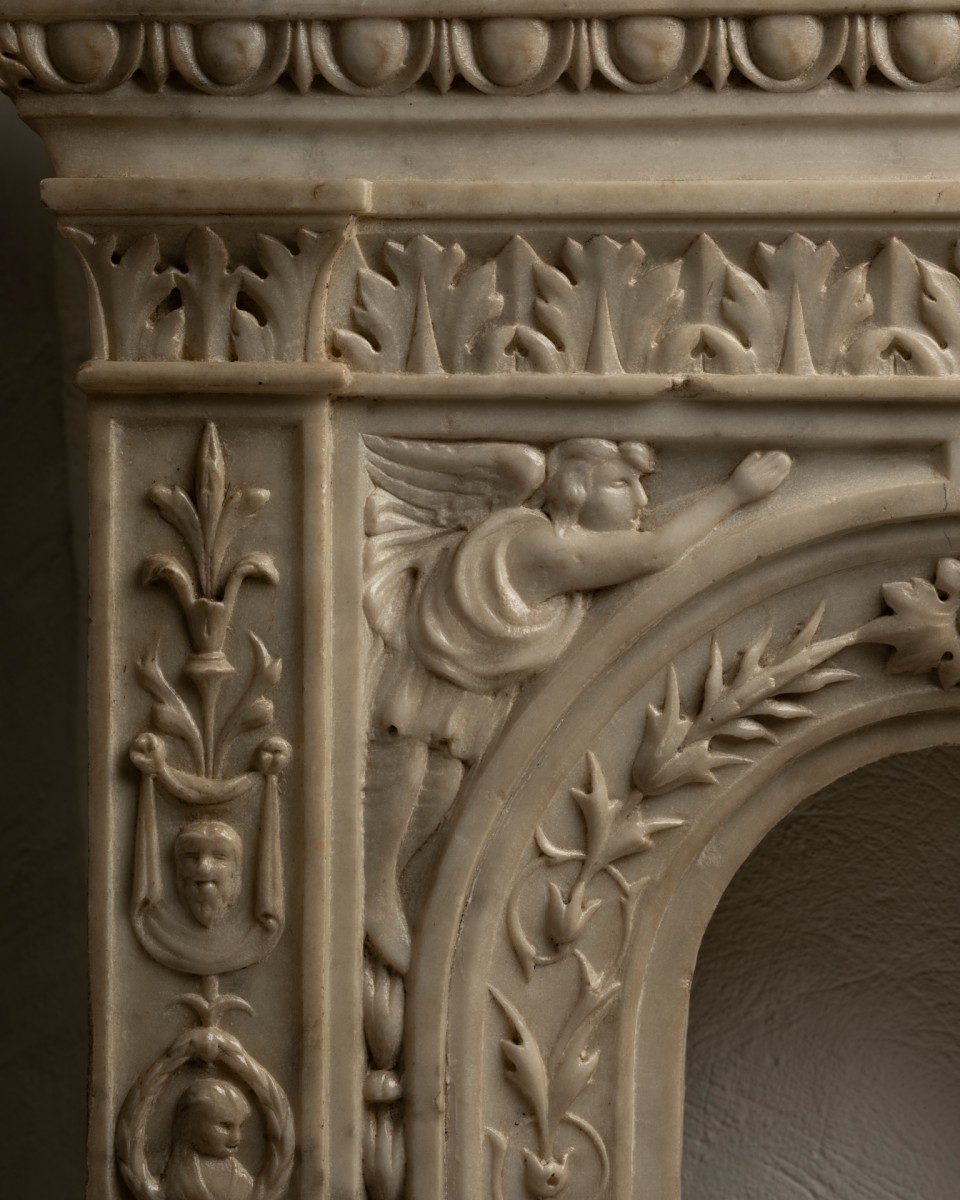
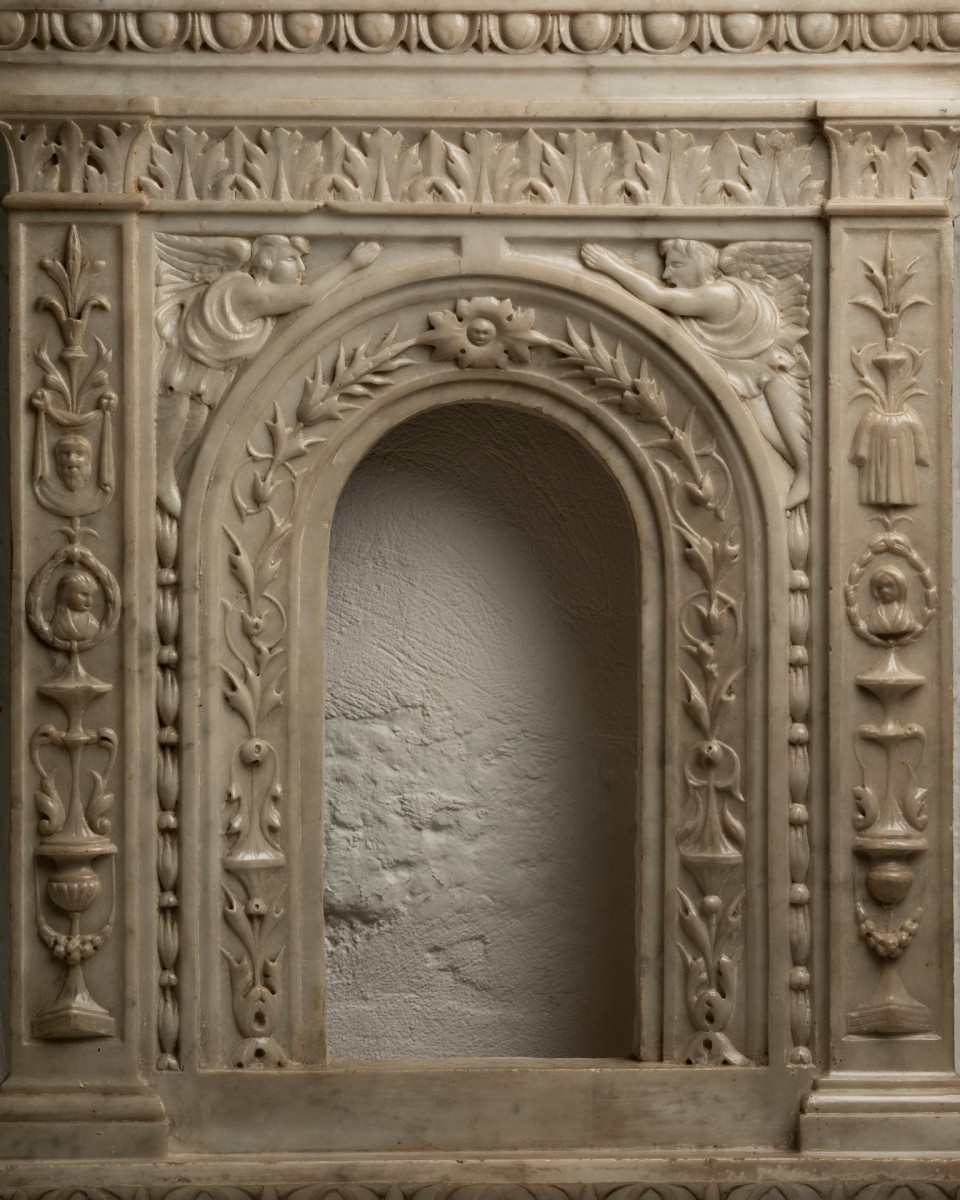
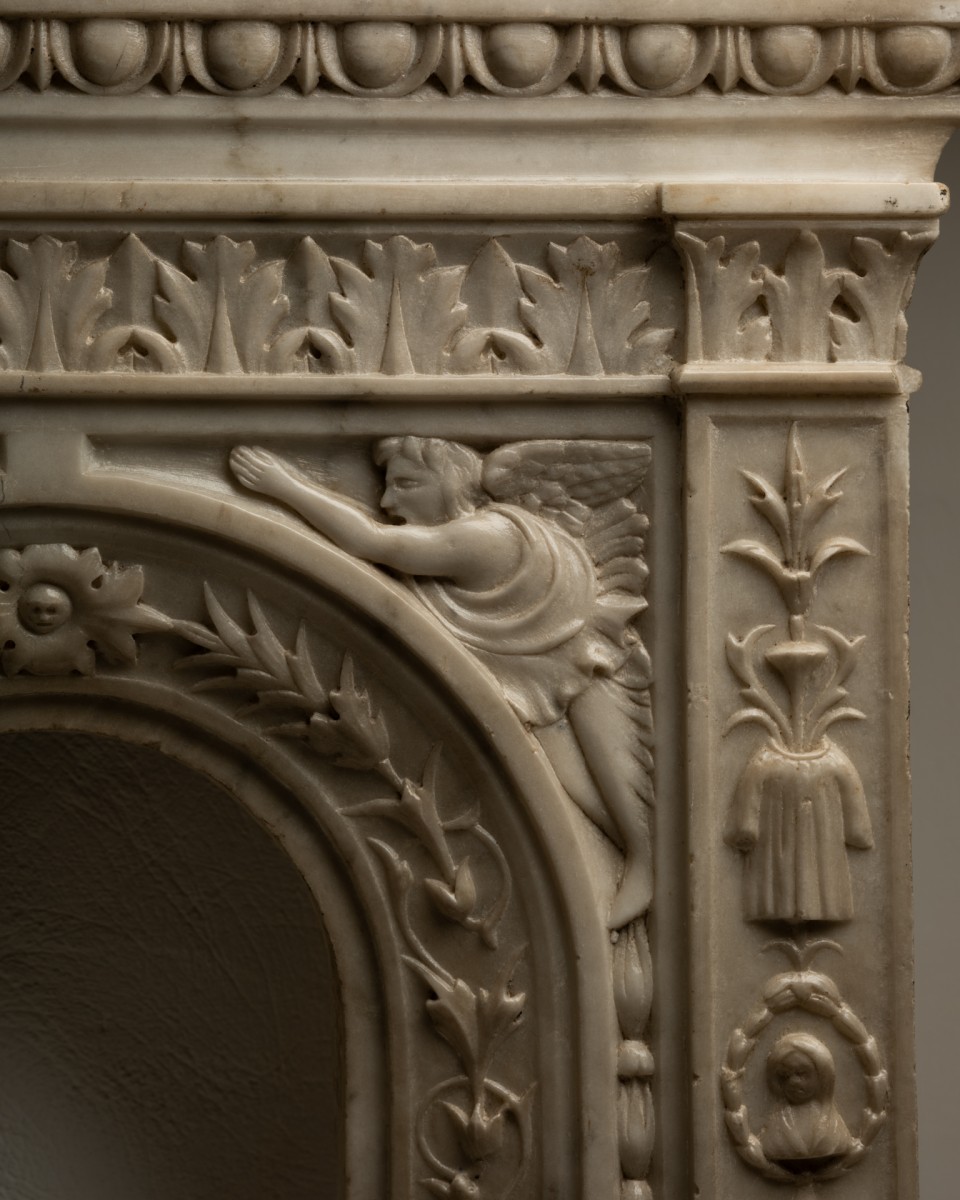
The central element consists of a semicircular arch, resembling a door, designed to hold the Eucharist. This door was likely made of brass. This space corresponds to the Eucharistic niche, a symbol of the Holy of Holies. Although this sacred space is often implied rather than fully visible, it remains the visual and spiritual focal point of the composition. The door is framed by two angels carved in relief, whose presence reinforces the devotional dimension of the work. The angels seem to emerge from offstage to turn toward the center, in an attitude of prayer and adoration before the Blessed Sacrament.
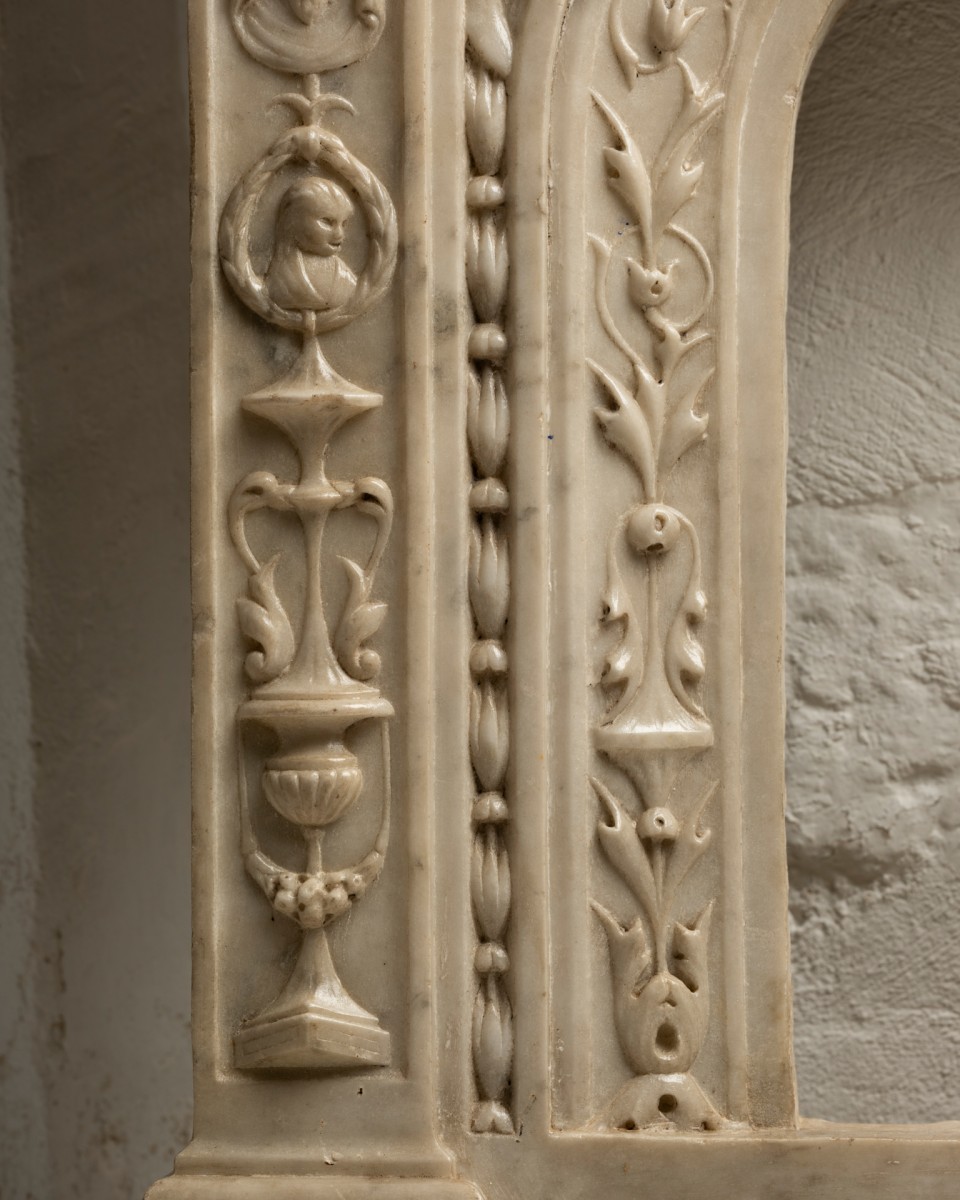
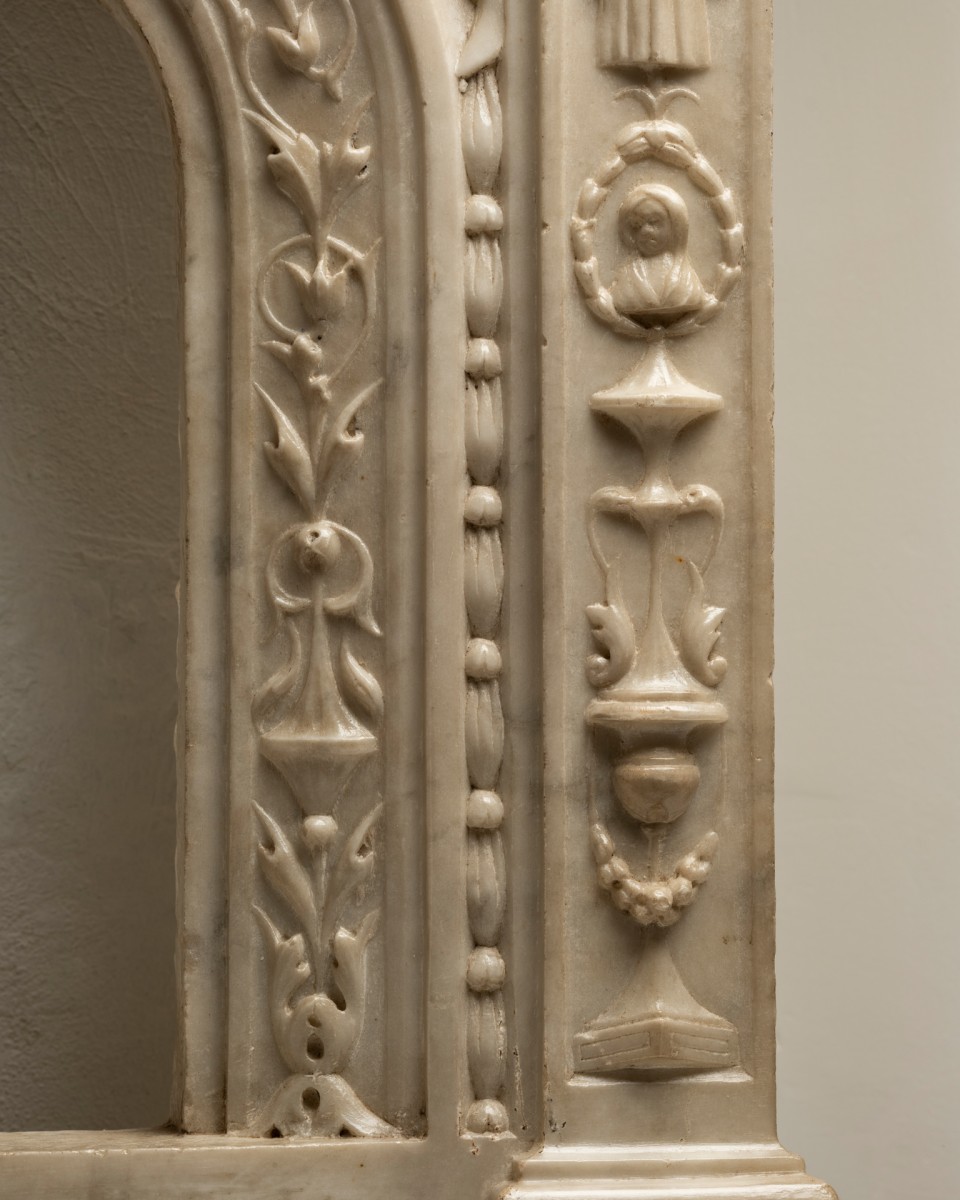
The carved decoration is particularly rich: it features basins, garlands of flowers, and finely crafted plant motifs, all of which contribute to the sanctity of the space. The side columns are of major iconographic importance in this regard, as they are adorned with symbols directly linked to the Passion of Christ, notably the Holy Shroud and Christ’s tunic. These objects, considered relics of exceptional spiritual value, refer to the corporeality of Christ and his sacrifice, thereby reinforcing the link between the Eucharist preserved at the center of the tabernacle and the Passion. Their presence on the columns transforms the architecture into a narrative and theological medium, reminding the faithful that the Body of Christ contained in the host is inseparable from his suffering and his redemptive death.
In addition to these motifs, there are two carved medallions depicting figures, integrated into the decoration of the columns. These rendered figures follow a tradition inherited from Roman antiquity, where the medallion was a favored format for honoring exemplary figures. In the context of the tabernacle, these figures can be interpreted as saints or prophets, acting as silent witnesses to the Eucharistic mystery. Their presence reinforces the devotional dimension of the whole: they visually accompany the faithful in their contemplation of the sacrament.
The upper part of the tabernacle is topped by a coat of arms that is now blank. It was most likely intended to be painted and/or gilded to display the coat of arms of a patron family or a religious institution. The current absence of decoration can be explained either by the fading of the polychromy and gilding over time, or by a project that remained unfinished, suggesting that the commission was interrupted. This empty coat of arms nevertheless attests to the essential role of patronage in the production of such works during the Renaissance.
Perspective plays a fundamental role here. While it helps structure space and organize volumes, its function goes far beyond simply imitating reality. In the context of Renaissance tabernacles, perspective helps reveal the divine and intensify the sense of connection with the sacred. An analysis of these shrines identifies five major devotional functions associated with perspective: focusing the devotee’s devotion, revealing what is hidden, magnifying the sacred dimension, creating distance from the divine, and radiating holiness.
The popularity of these tabernacles therefore stems not so much from their ability to create a convincing illusion of the natural world as from their capacity to enhance the worshipper’s spiritual experience. They are an integral part of the rise of a modern form of devotion, which originated in Northern Europe and spread widely throughout Italy beginning in the fifteenth century, emphasizing a more intimate and visual relationship with the sacred.
Thus, this 15th-century Lombard tabernacle perfectly illustrates how architecture, sculpture, and perspective are placed at the service of the faith. It does not merely preserve a sacred object: it presents it, exalts it, and makes it perceptible to the faithful in the most dignified manner possible, in keeping with its heavenly nature. A true mediator between the earthly and the divine worlds, it bears witness to the importance placed on devotion and the staging of the sacred during the Renaissance.
Delevery information :
Please note that packing and shipping costs are not included in the price of the objects which are quoted ex shop.
Final amount including packing and shipment to be discussed with Galerie Alexandre Piatti.