Offered by Ouaiss Antiquités
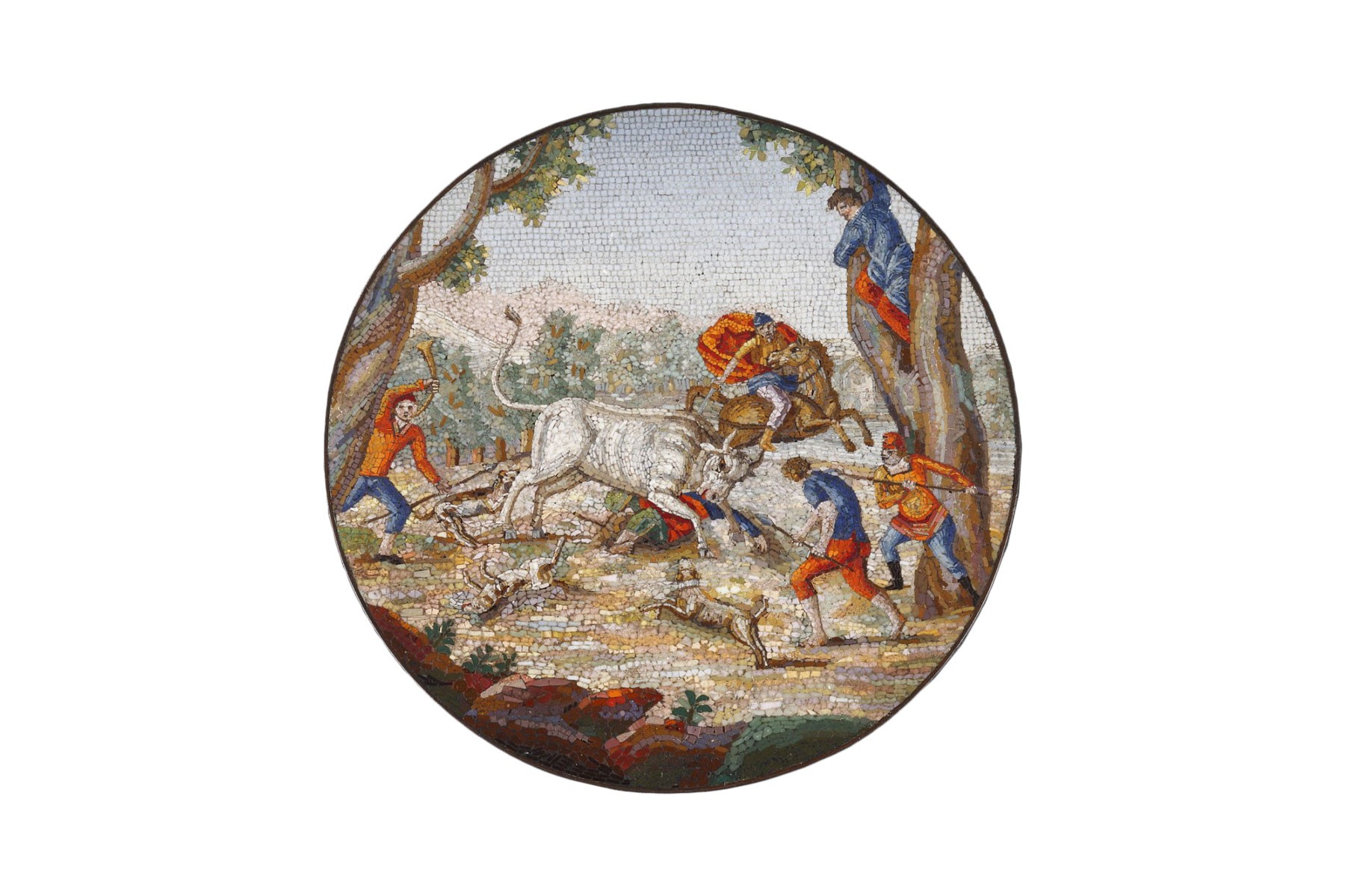
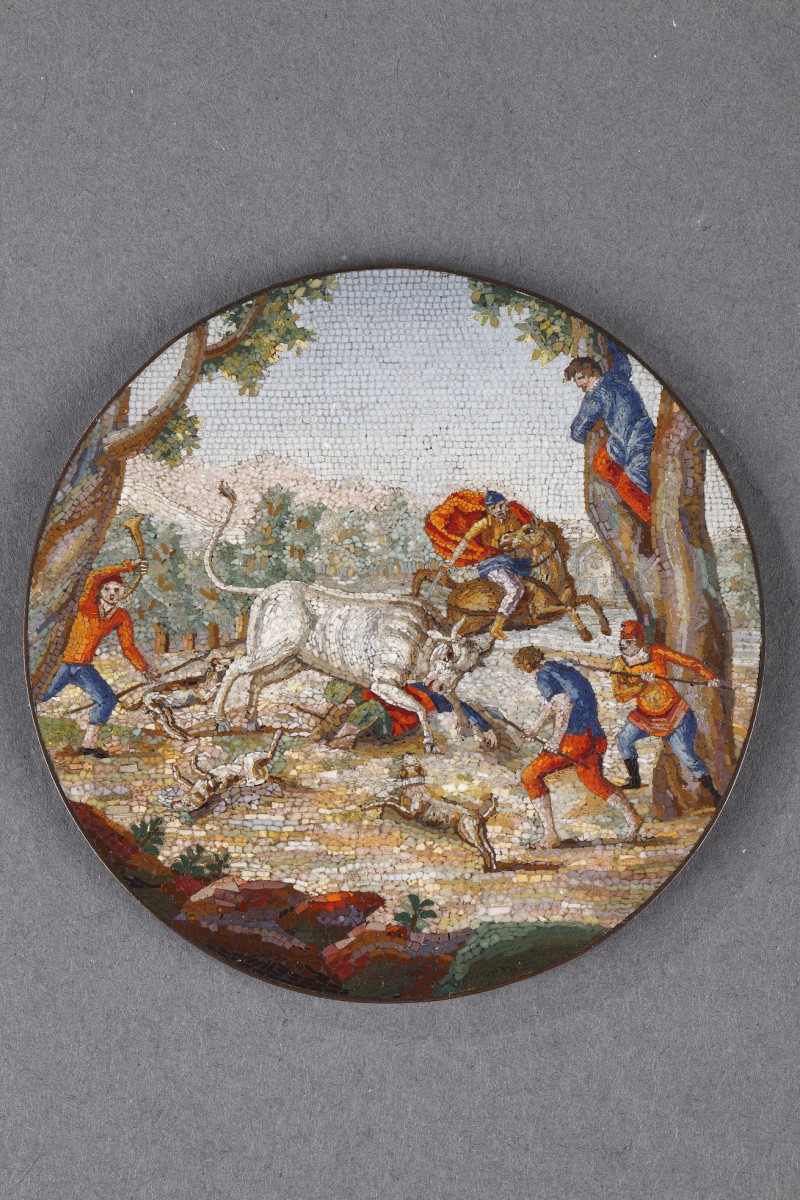
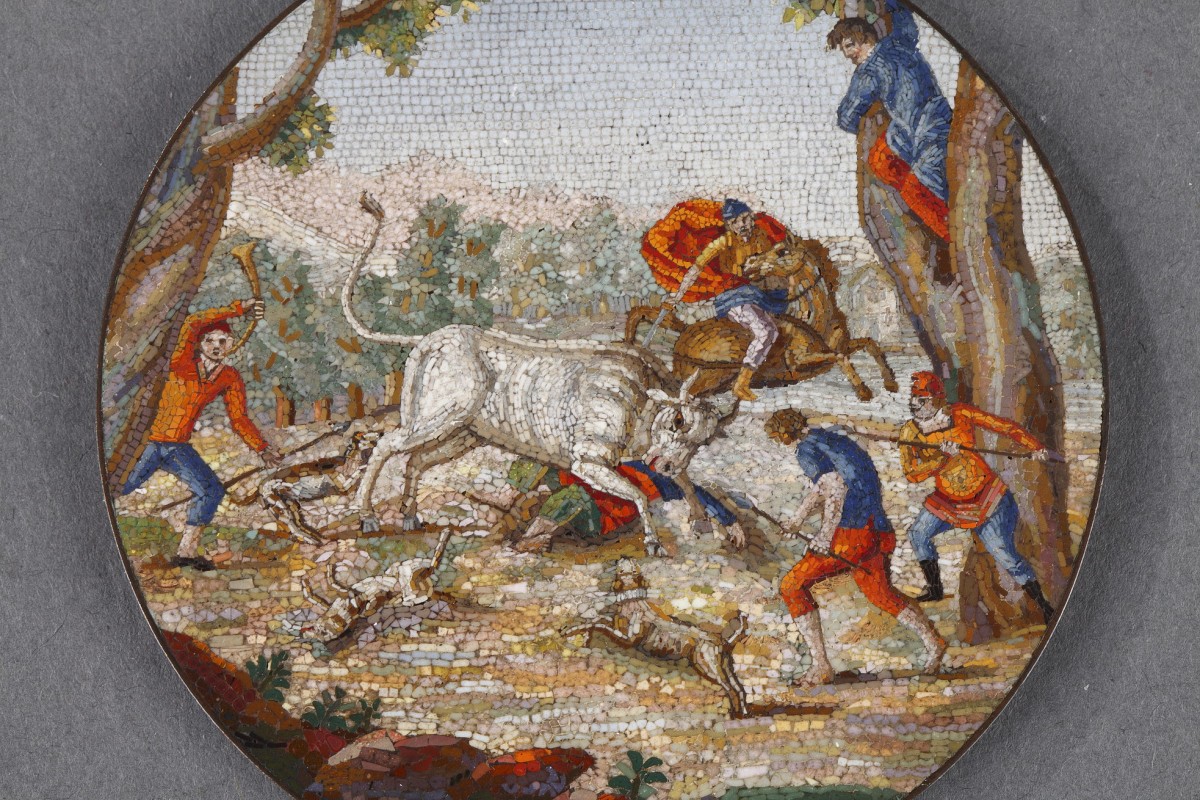
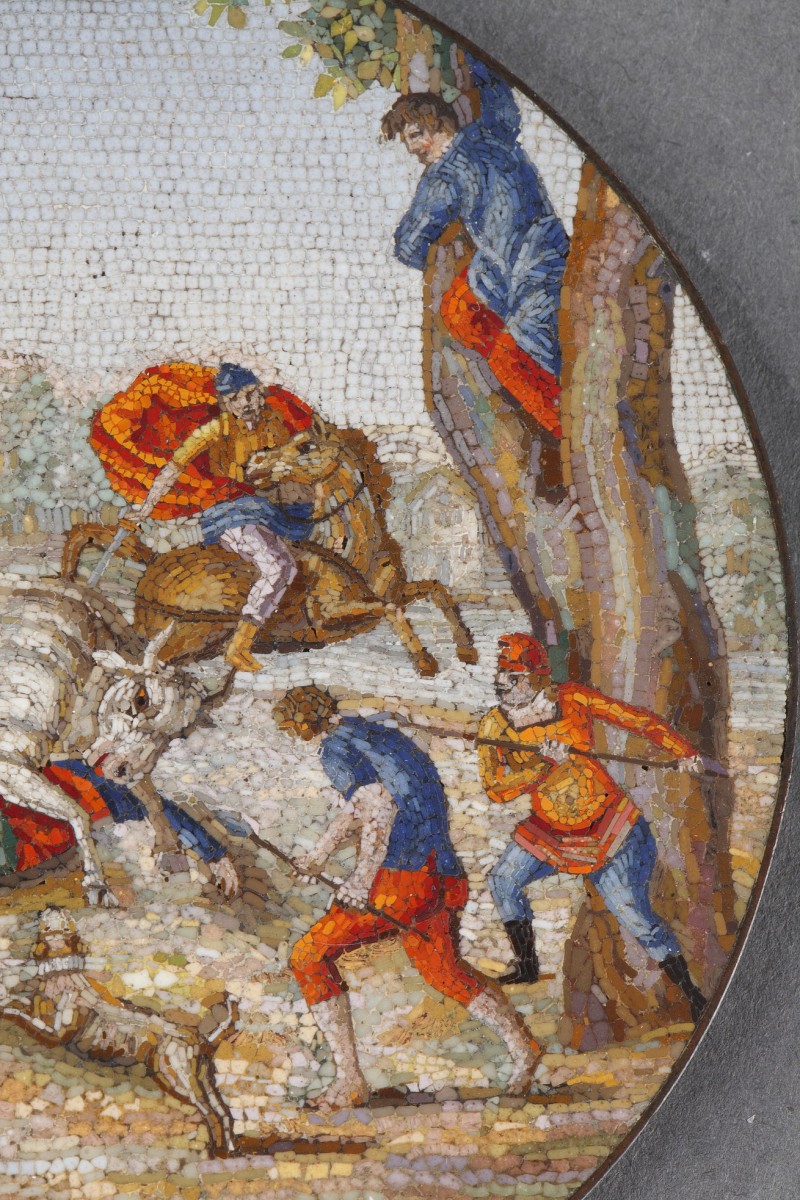
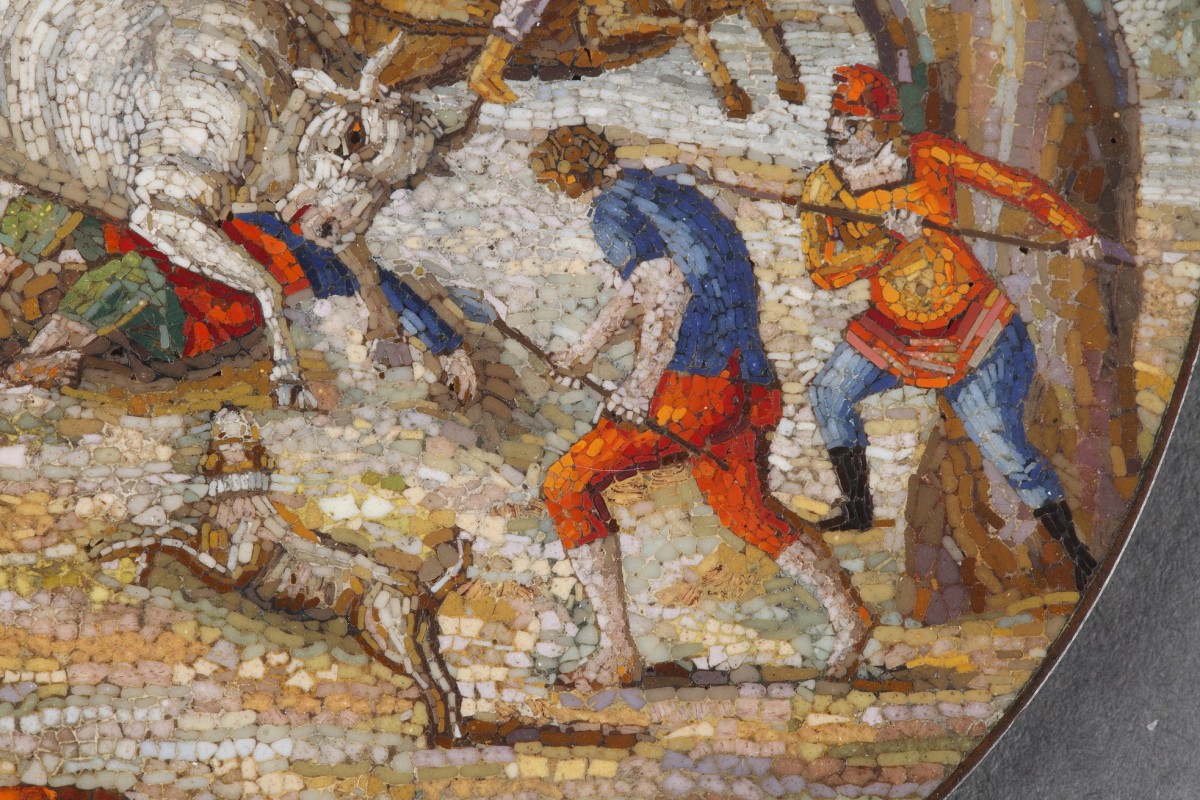

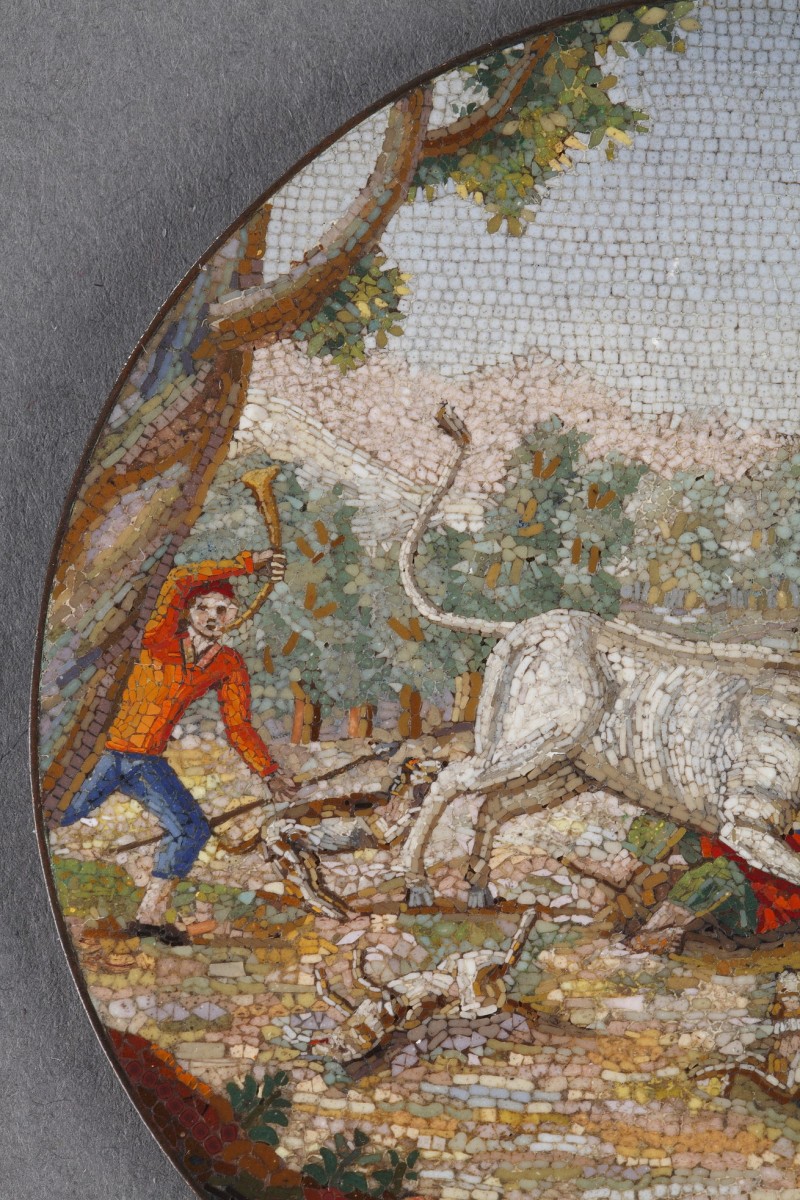
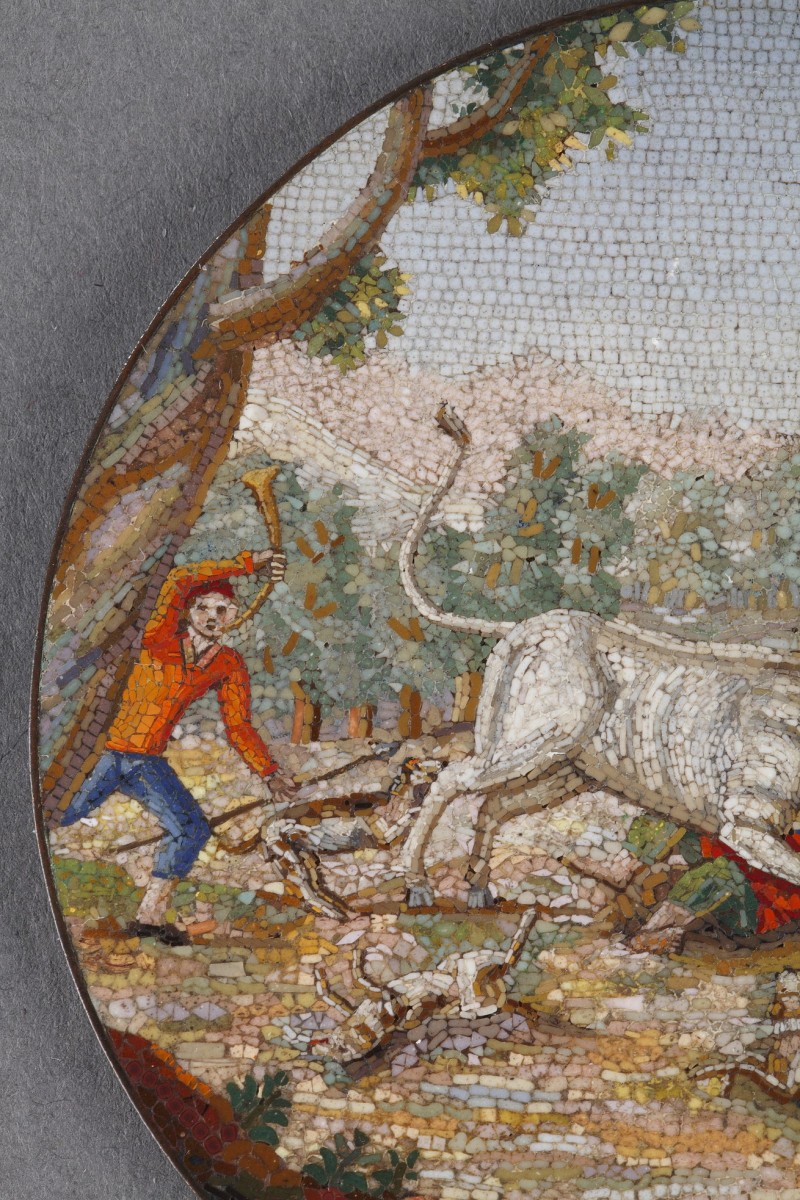
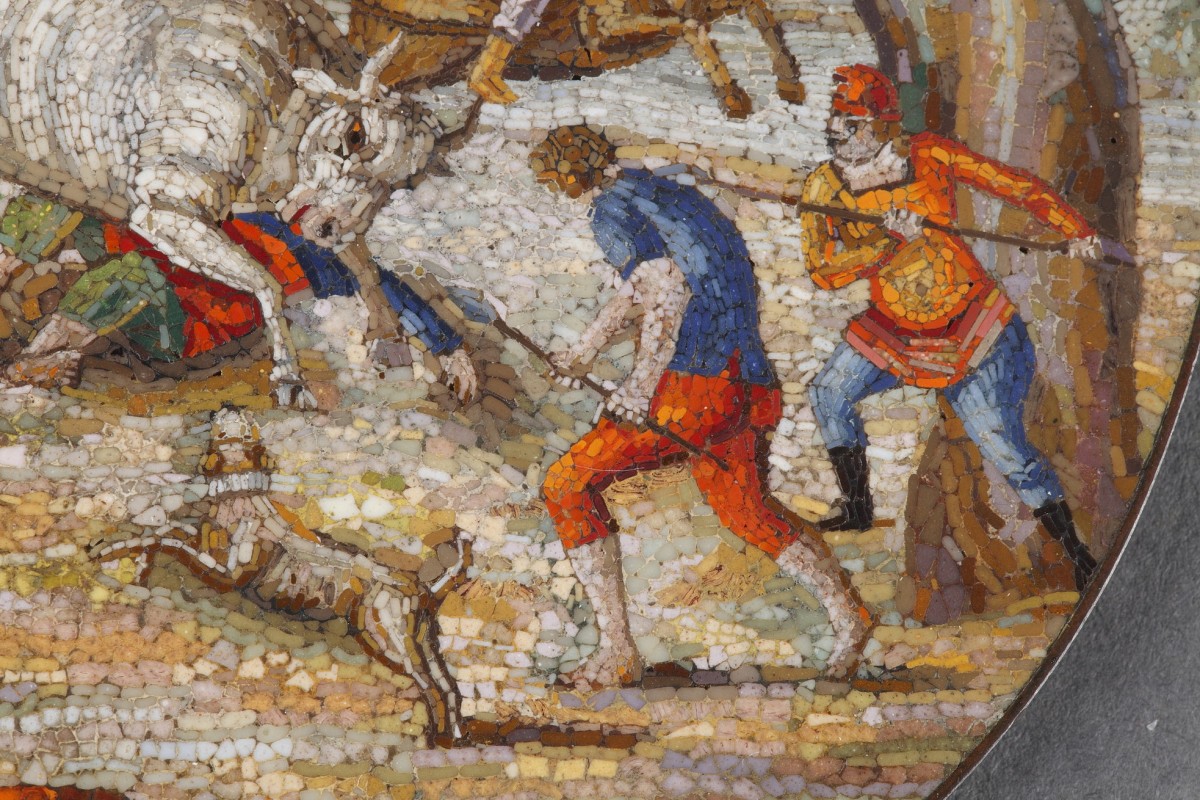
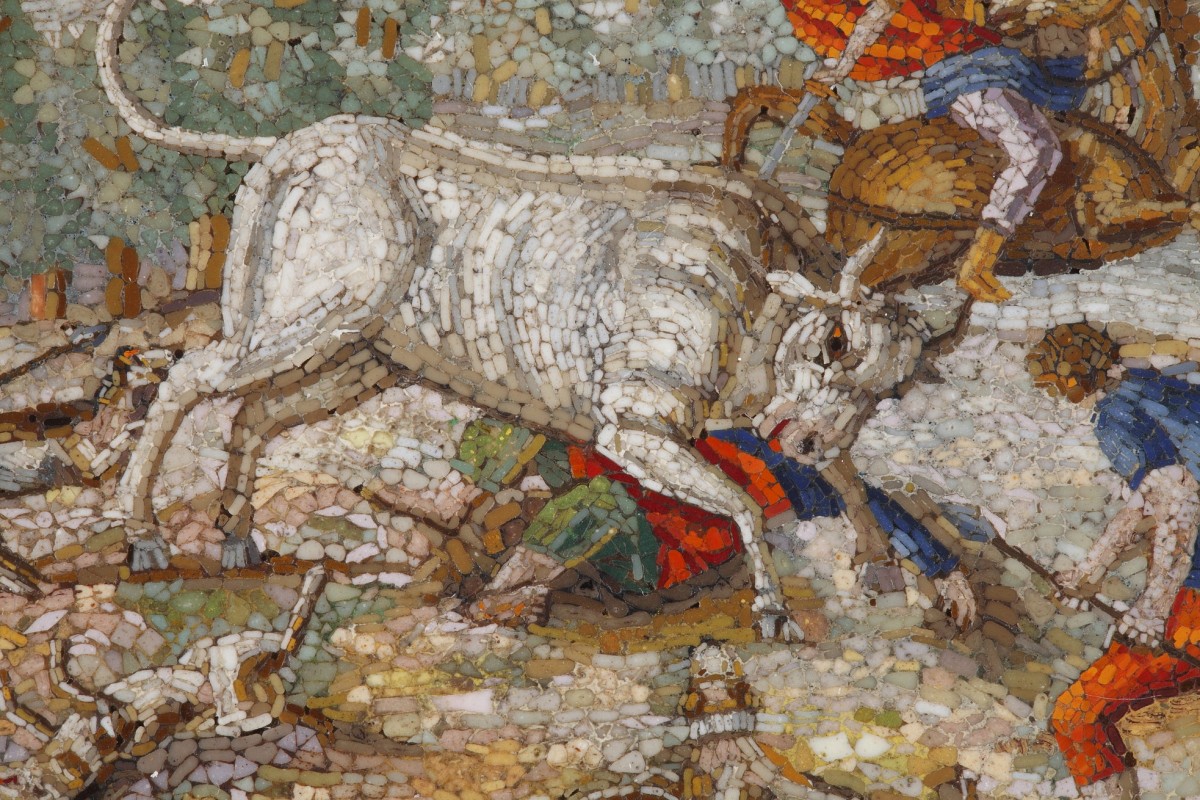
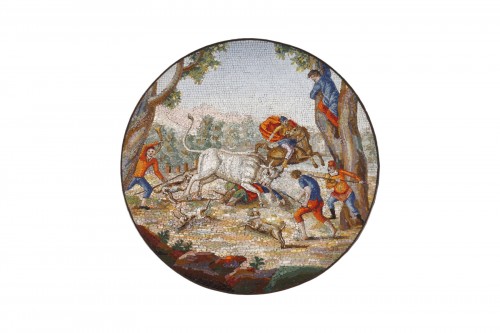
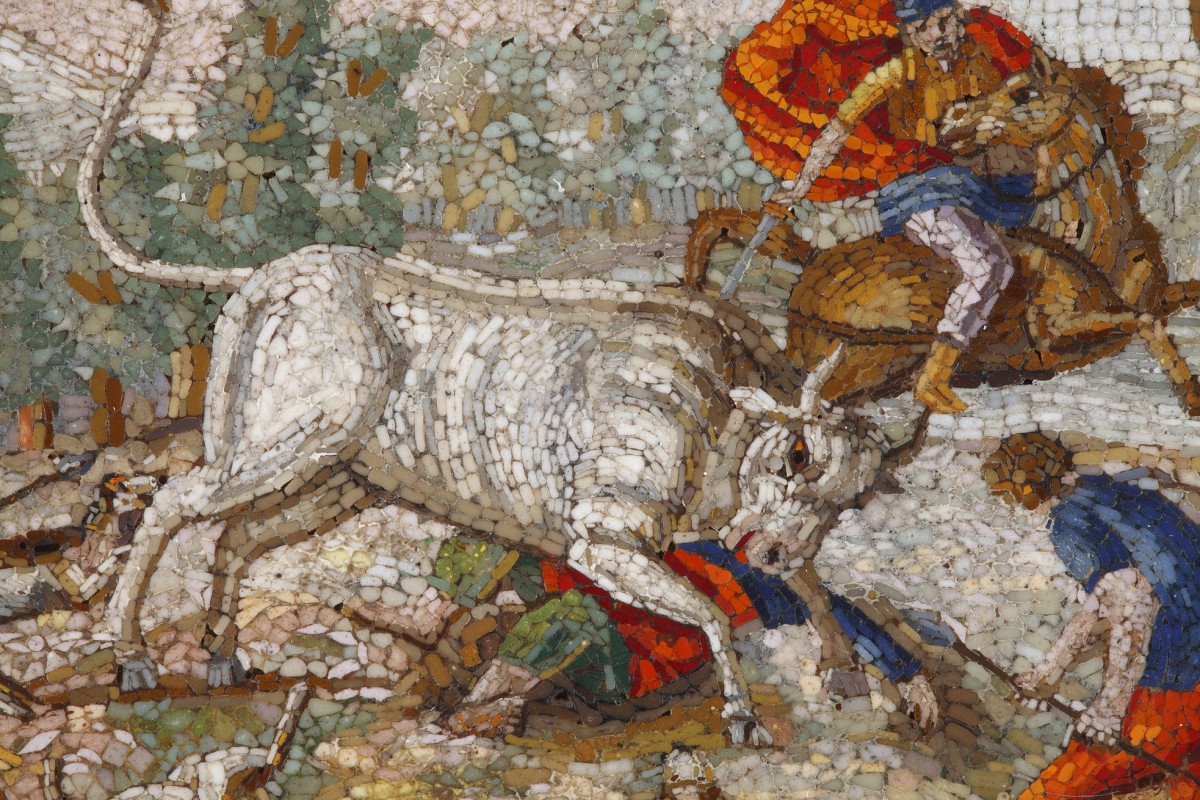
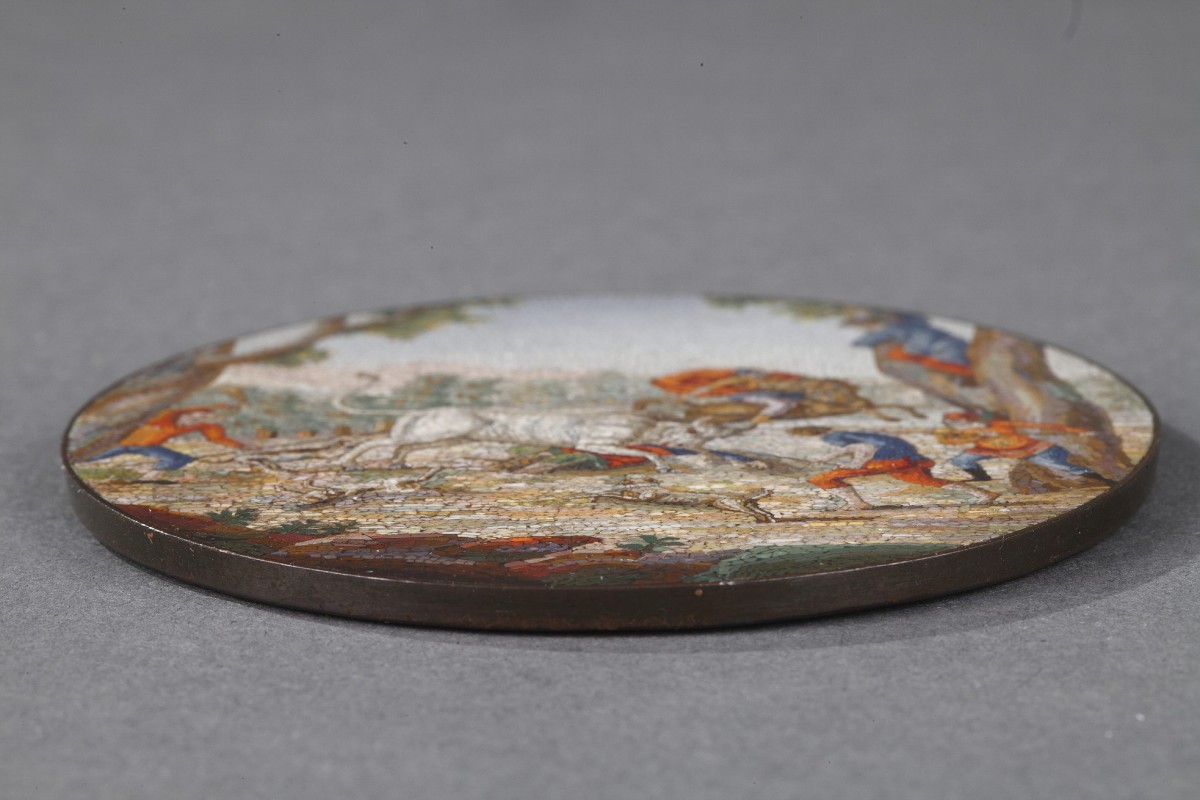
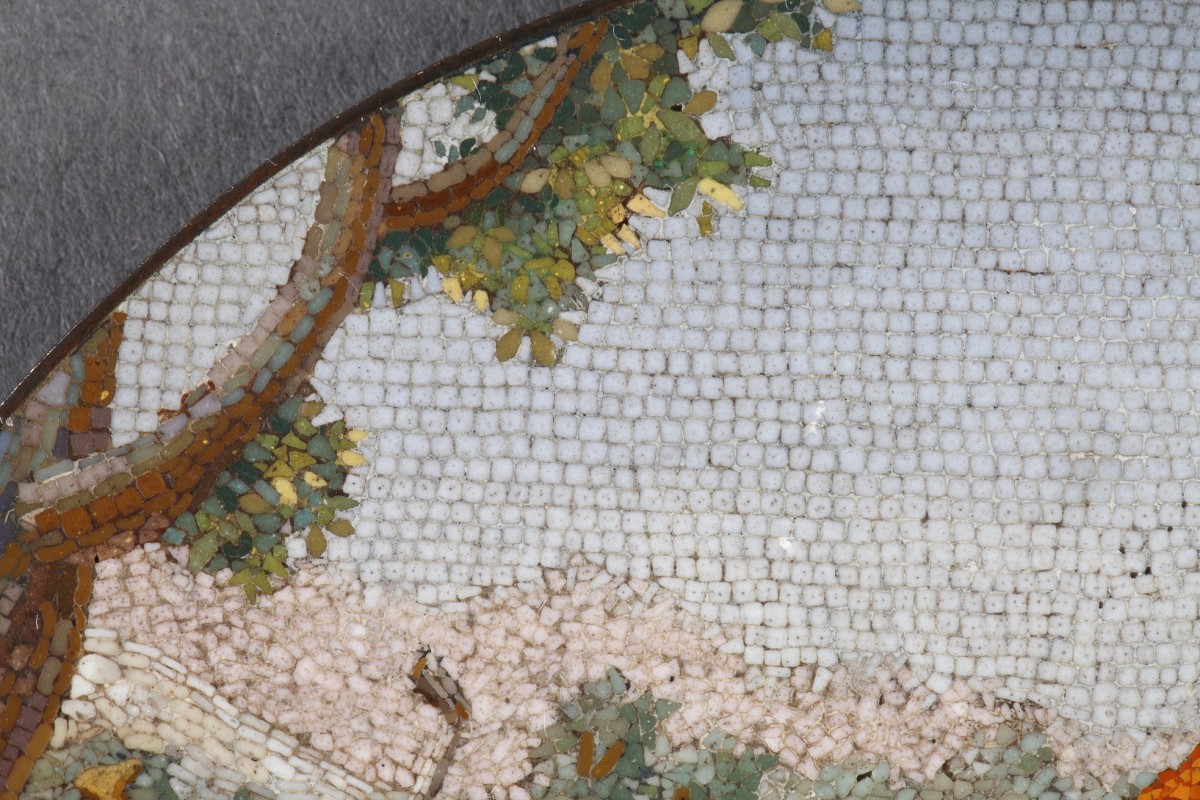
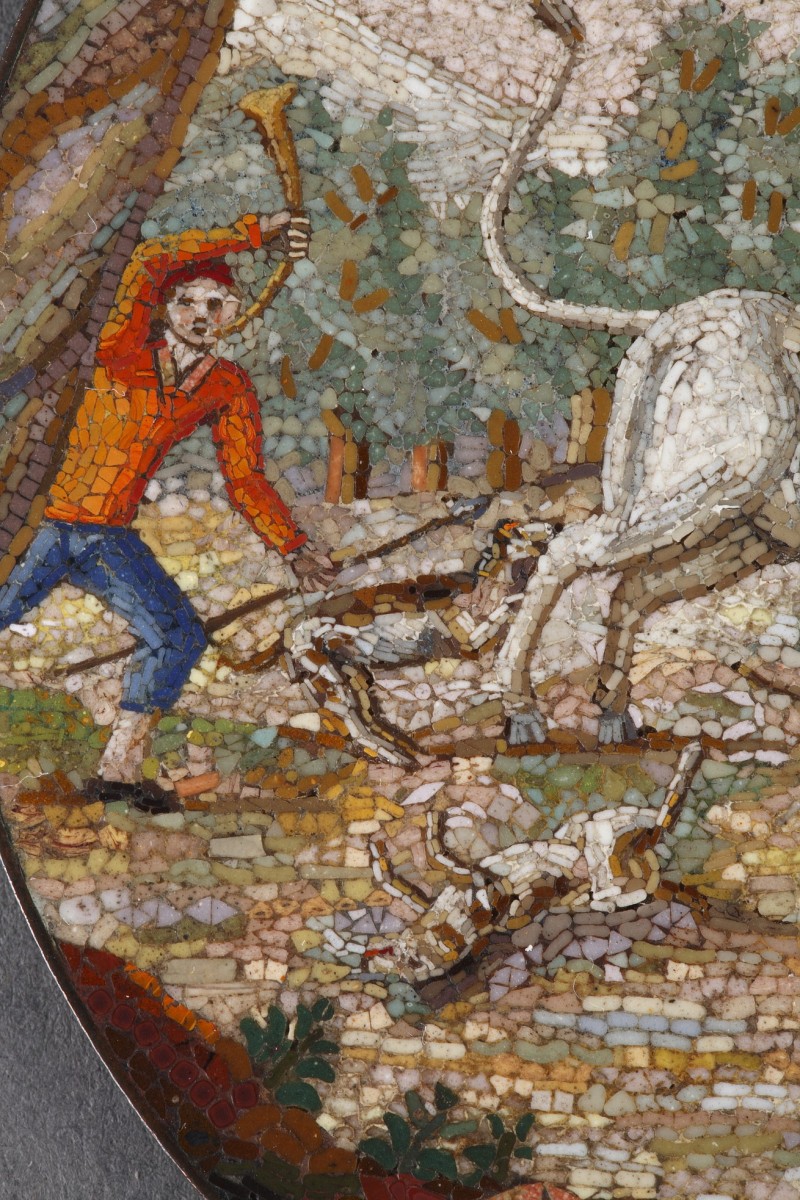
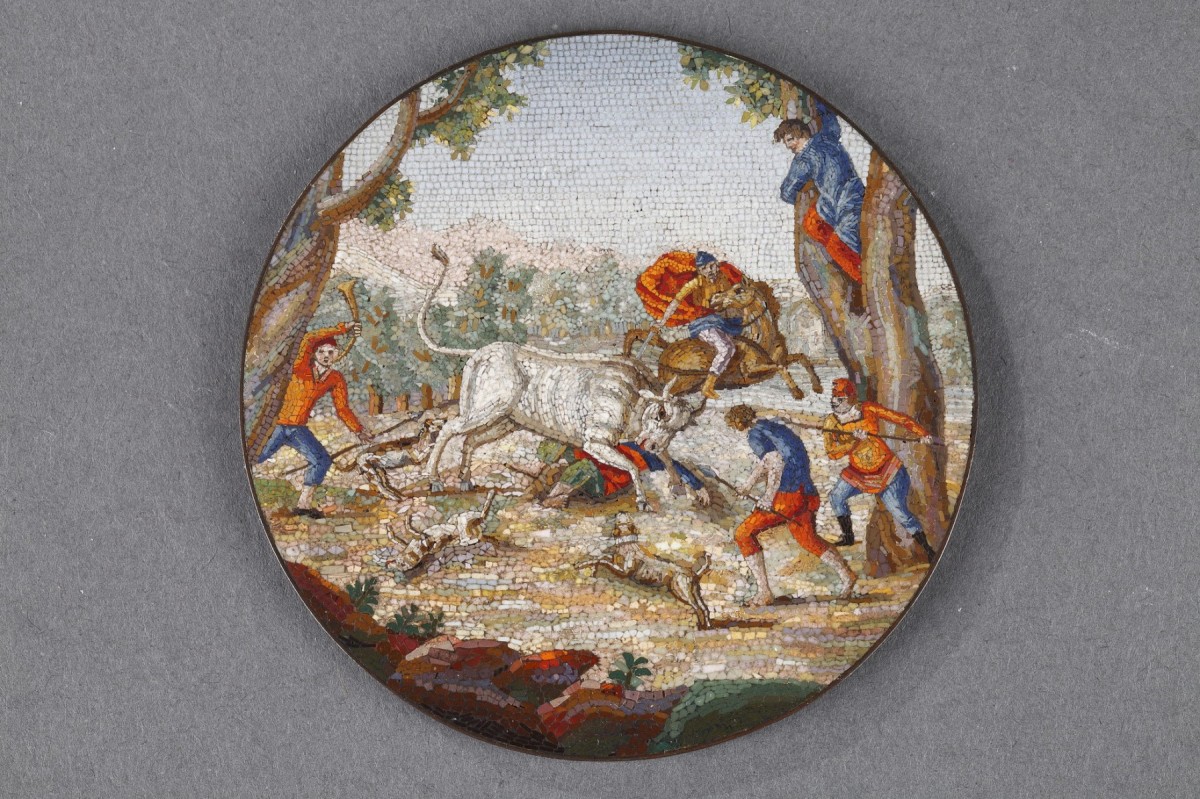
A circular micromosaic panel on copper depicting a furious white bull struggling against figures clad in colourful tunics and armed with spears. A horseman carrying a sword comes to their aid. The scene is set against a bucolic backdrop featuring a house under construction. This scene can be interpreted, on the one hand, as a bull hunt, an iconography influenced by the work of Johannes Stradanus (1523–1605) created as a tapestry for the Medici villa at Poggio a Caiano, or by that of Giovanni Reder (1693–1729). It can also be interpreted as a scene from the Cretan ‘raging bull’ ravaging the countryside, as recounted in the Twelve Labours of Hercules. This work is likely to be attributed to Giovanni Battista Luchini, as a similar micromosaic work, signed by Luchini, is held in a private collection. The quadrangular tesserae forming the background, their wide range of colours, and their triangular shapes allow this work to be dated to the years 1800–1815. Luchini was a micromosaic artist active in the first half of the 19th century in Rome and Naples between 1811 and 1814, where he served as director of the mosaic workshop. His workshop is somewhat less well-known than that of the Vatican. He went into partnership with Francesco de Poletti in 1824. Luchini worked for King Ferdinand I of Bourbon, King of the Two Sicilies, whose micromosaic portraits are held at the Victoria & Albert Museum in London. First quarter of the 19th century.
Bibliography: The Gilbert Collection, Micromosaics, London, 2000. R. Grieco, Roman Micromosaic, Rome, 2008. Works held: Victoria & Albert Museum, London.