Offered by Galerie FC Paris
REQUEST INFORMATION

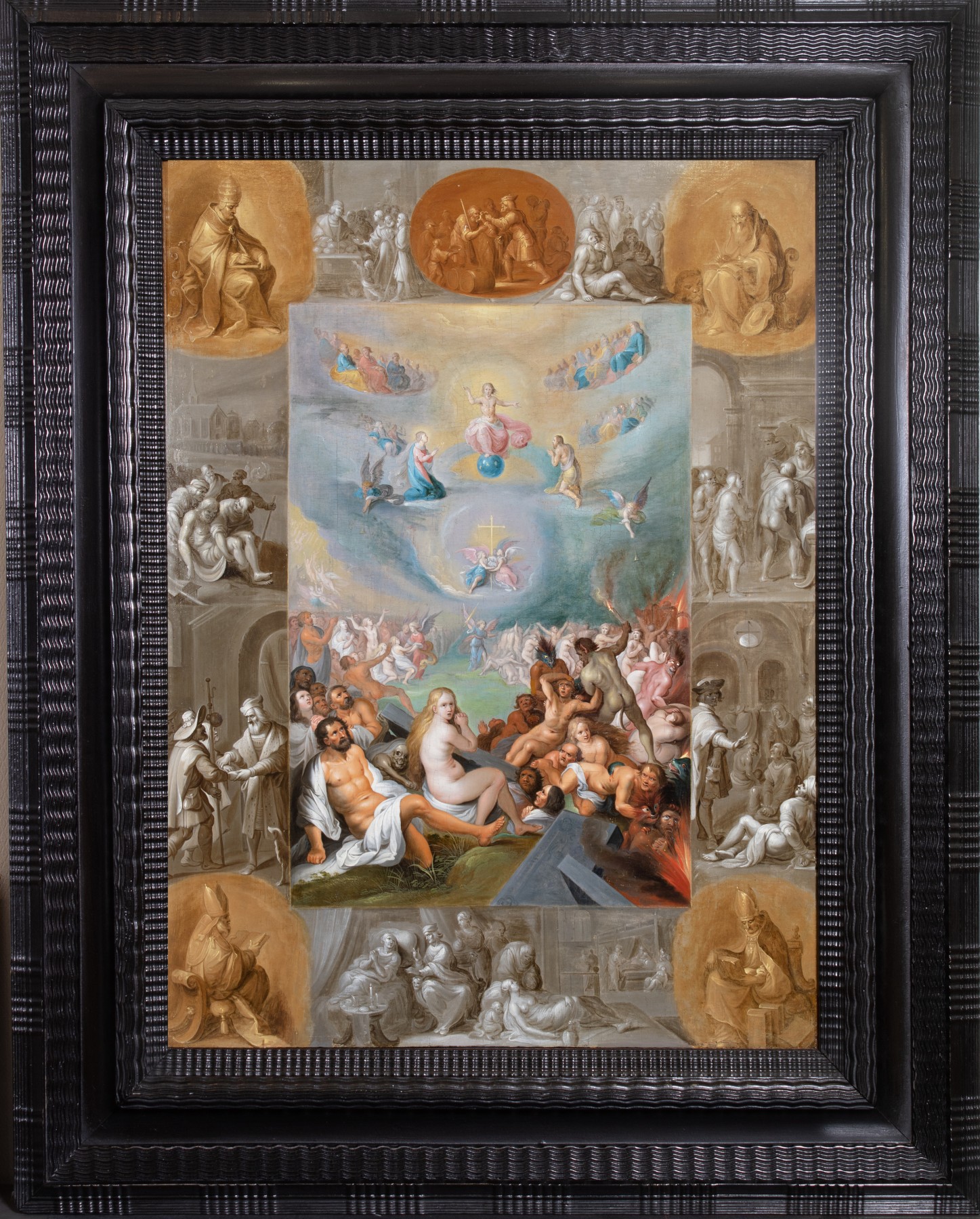
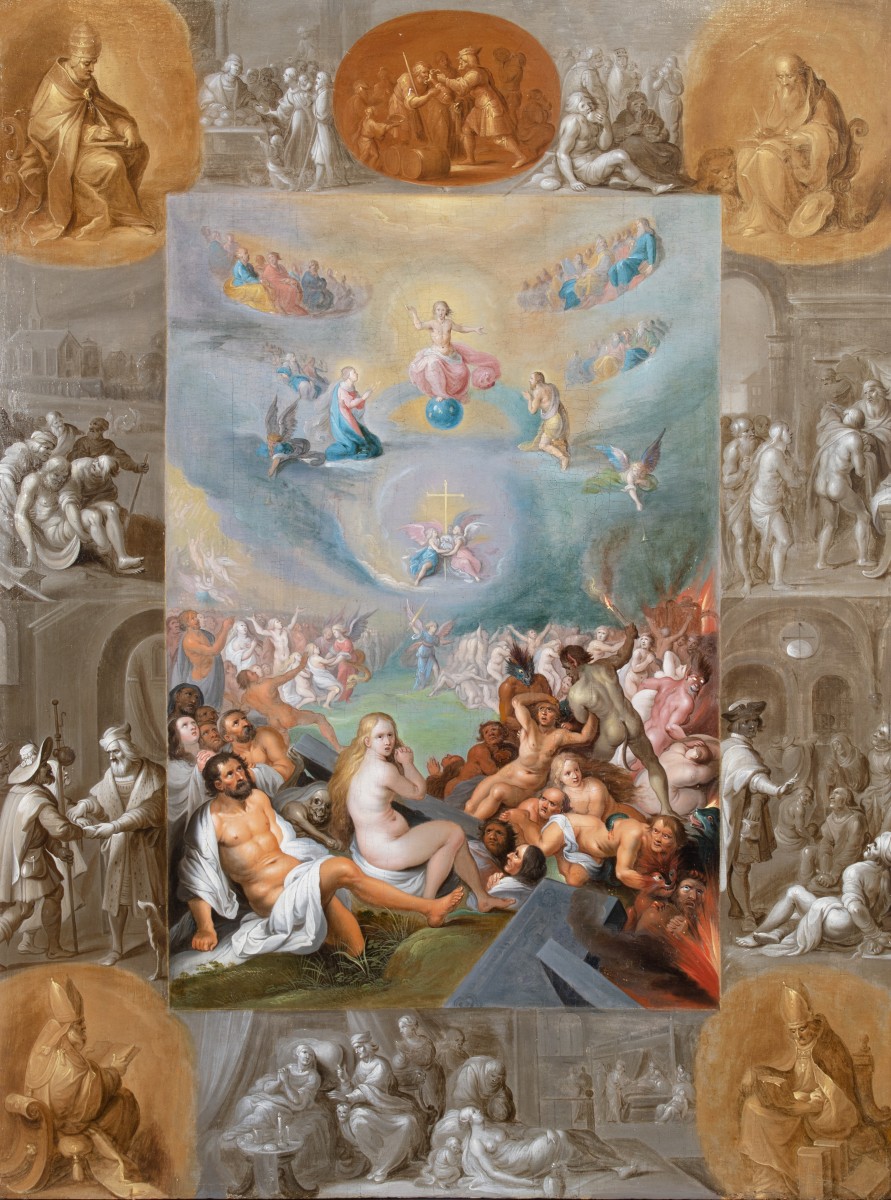
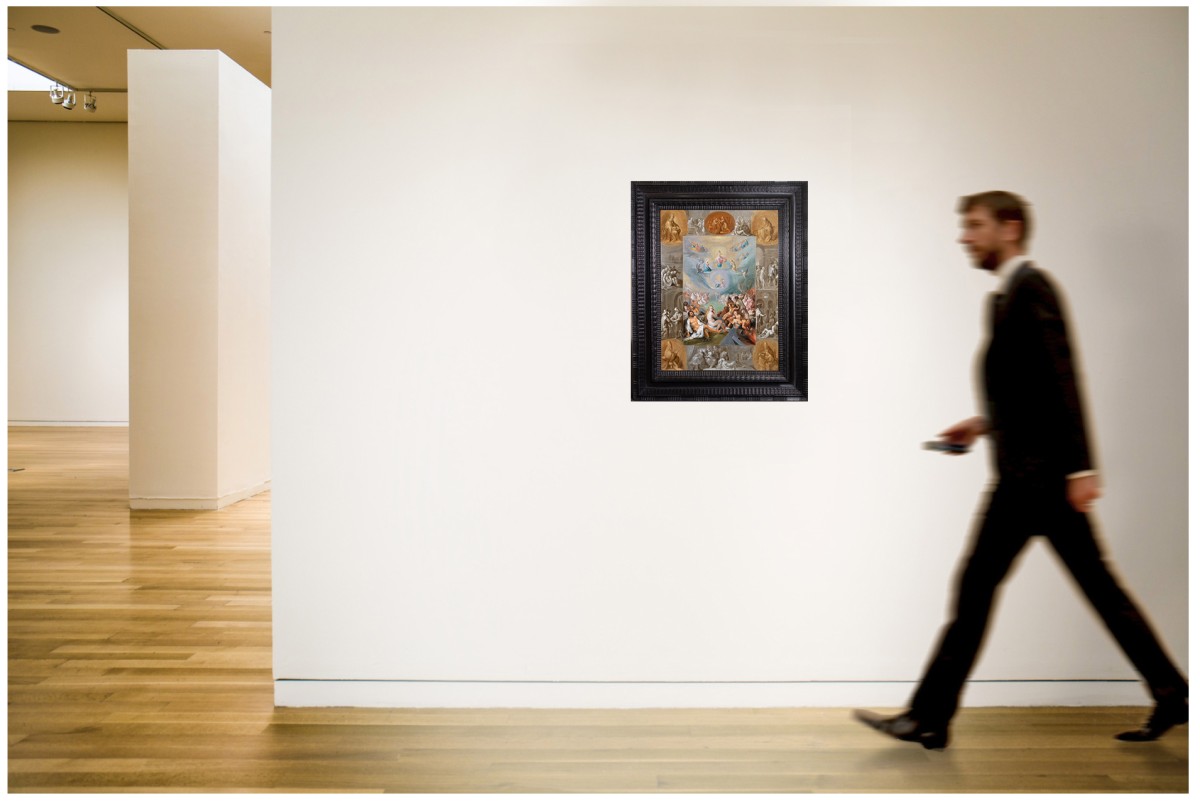
Flemish School, Antwerp, first third of the 17th century.
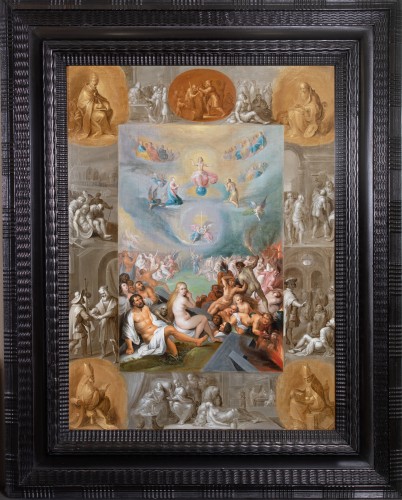
The Last Judgement Surrounded by the Seven Works of Mercy.
Oil on oak panel, prepared on the reverse.
Presented in an antique ebonized wood frame with a reverse profile and guilloché decoration.
Overall dimensions including frame: 88 × 72 cm. Panel alone: 65 × 50 cm.
A major figure of the Antwerp School during the first third of the 17th century, Frans Francken II distinguished himself through religious compositions of exceptional narrative refinement, combining a wealth of invention with meticulous execution inherited from the Flemish tradition. The present panel, executed with the participation of his workshop, is a remarkable example of these sophisticated devotional works intended for a private, educated clientele.
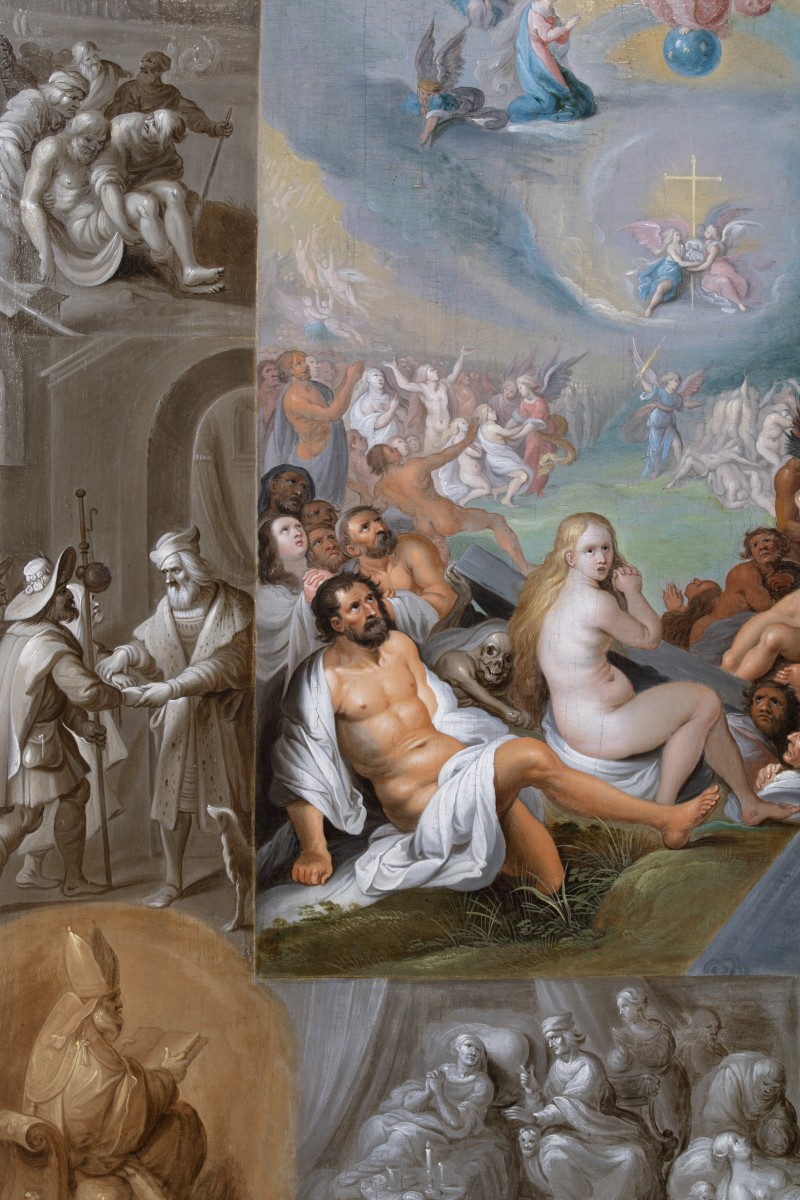
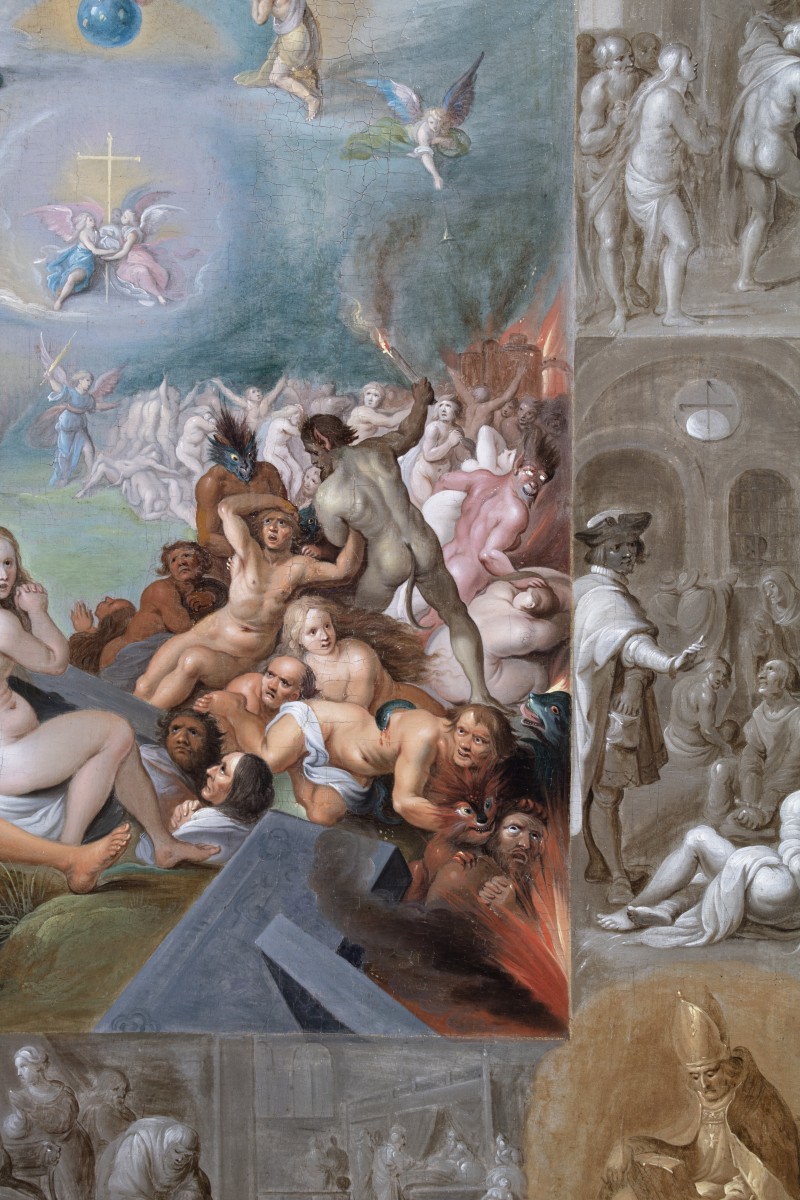
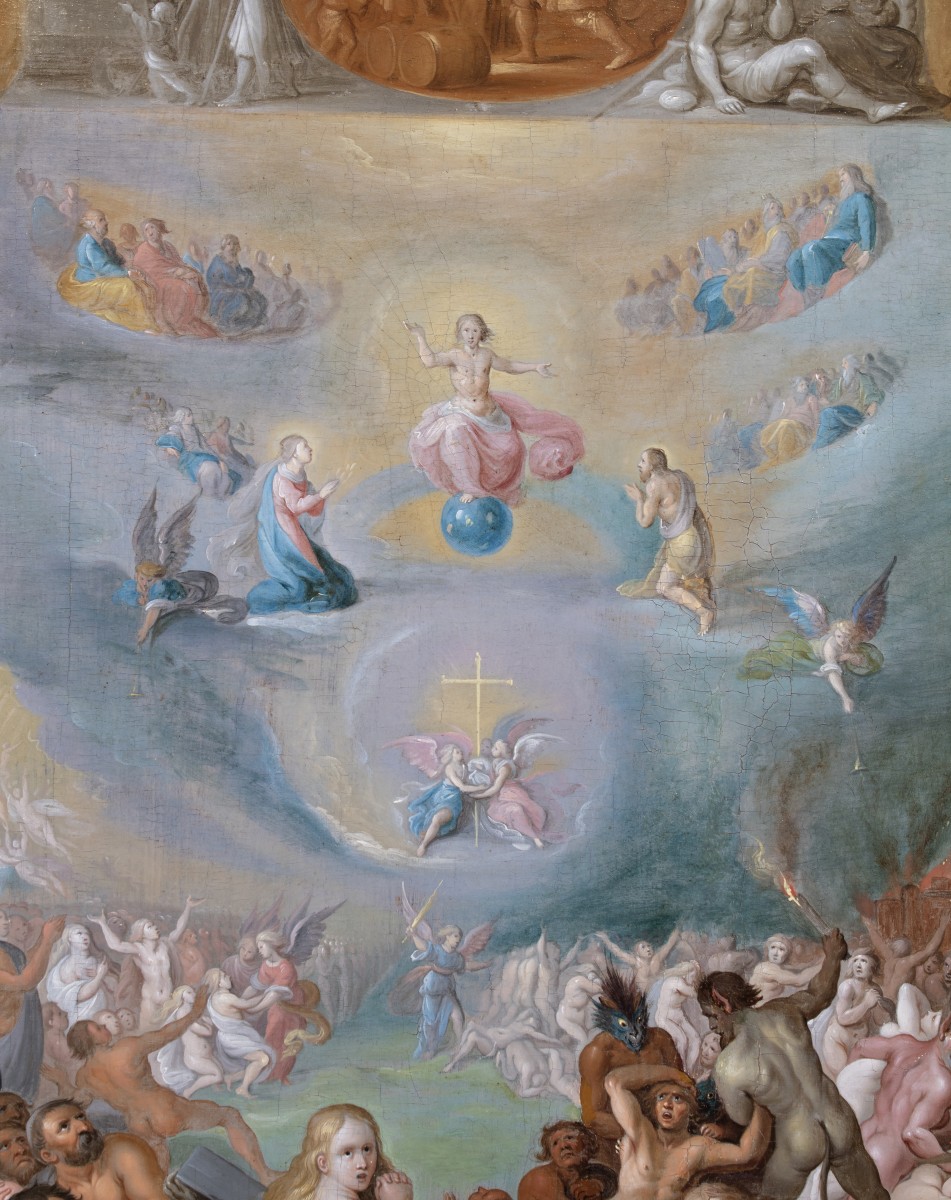
The composition is organized around a central scene depicting the Last Judgement. Christ in Glory, surrounded by the Virgin Mary and the elect, presides over the earthly sphere, while the dead emerge from their tombs at the moment of resurrection. In the lower section, the contrast between the blessed destined for salvation and the damned dragged towards the flames of Hell is rendered with great dramatic intensity. The variety of poses, anatomical precision and lively brushwork demonstrate Francken's mastery in depicting scenes populated by numerous figures.
The originality of the work lies in its painted border, composed of small scenes in grisaille and brunaille, imitating sculpted reliefs. These compartments illustrate the “Seven Works of Mercy”. In the four corners of the painting, the Latin Fathers of the Church — Gregory the Great, Jerome, Ambrose and Augustine — are depicted reading and writing. They bear witness to the connection between earthly deeds and heavenly reward, a theme emphasized in their writings.
It should be noted that the figures in the central composition were created on the basis of Peter Paul Rubens' Great Last Judgement, held at the Alte Pinakothek in Munich.
This dialogue between the central polychrome composition and the surrounding monochrome episodes reinforces the moral and spiritual significance of the whole, inviting the viewer to meditate on redemption and the example of the saints.
The quality of the drawing, the delicacy of the colours and the elegance of the architectural arrangement place this work among the most refined productions of Frans Francken II, whose Antwerp workshop was particularly sought after for this type of learned and devotional composition.
Preserved in very fine condition, this panel is remarkable both for the freshness of its colours and the iconographic richness of its religious programme, characteristic of the 17th-century Flemish taste for works intended for meditation and learned contemplation.
Provenance:
Private collection, Paris, in the 1970s.
Galerie Jacques Ollier, Le Louvre des Antiquaires, Paris, circa 1990.
Certificate of authenticity No. 2168 G.H / A.L, issued by Herdhebaut & Latreille Experts in Paris, dated 27 November 1991, affirming that the painting is an autograph work by Frans Francken the Younger.
Related Work:
A similar painting by Frans Francken is currently held in the collections of the Staatsgalerie in Stuttgart, Germany, under inventory number 437.