Offered by Galerie Lamy Chabolle
REQUEST INFORMATION

Decorative art from 18th to 20th century
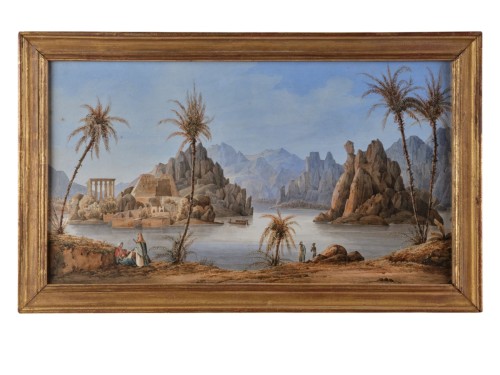
Watercolour on paper
1827–1830
27 x 35 cm (10.6 x 13.8 in., with accessories)
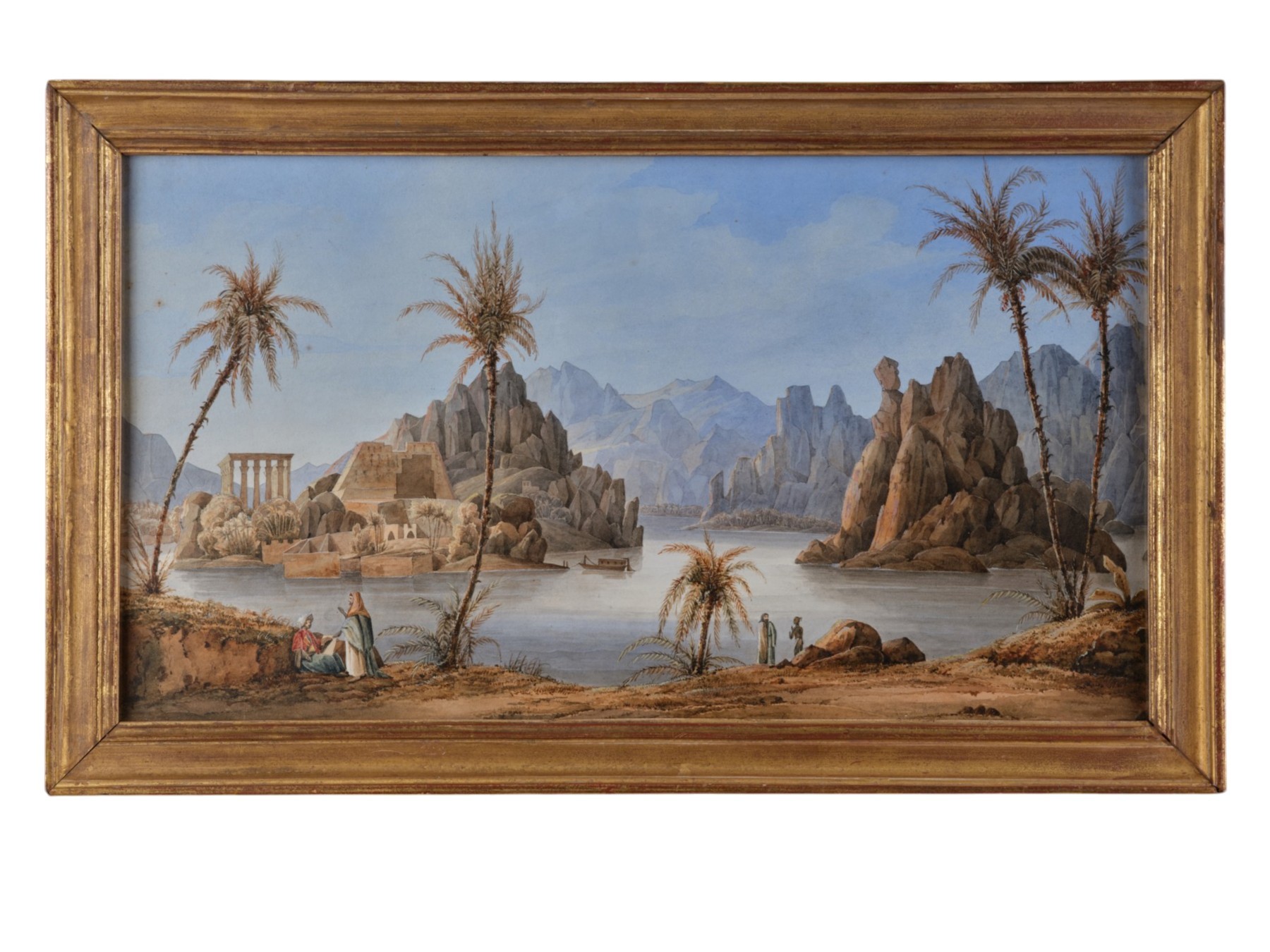
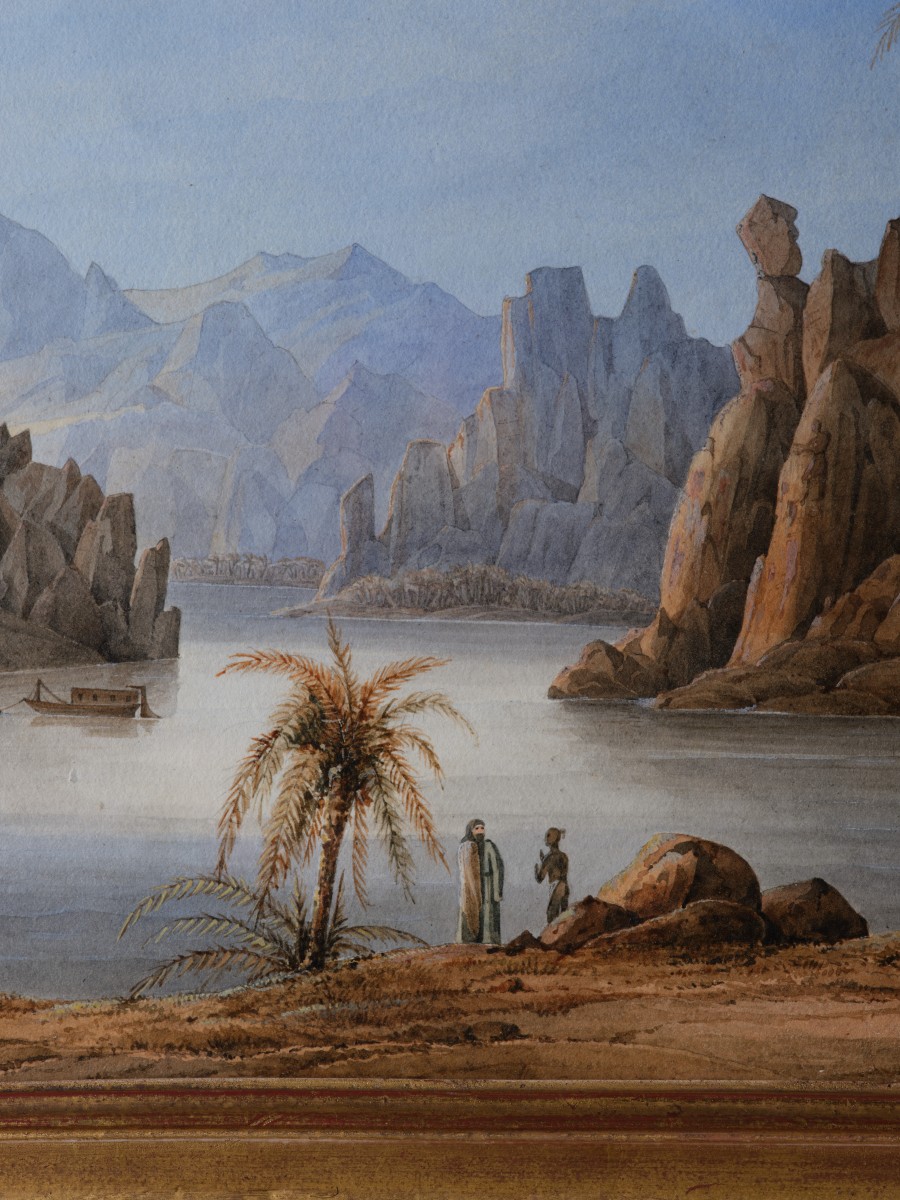
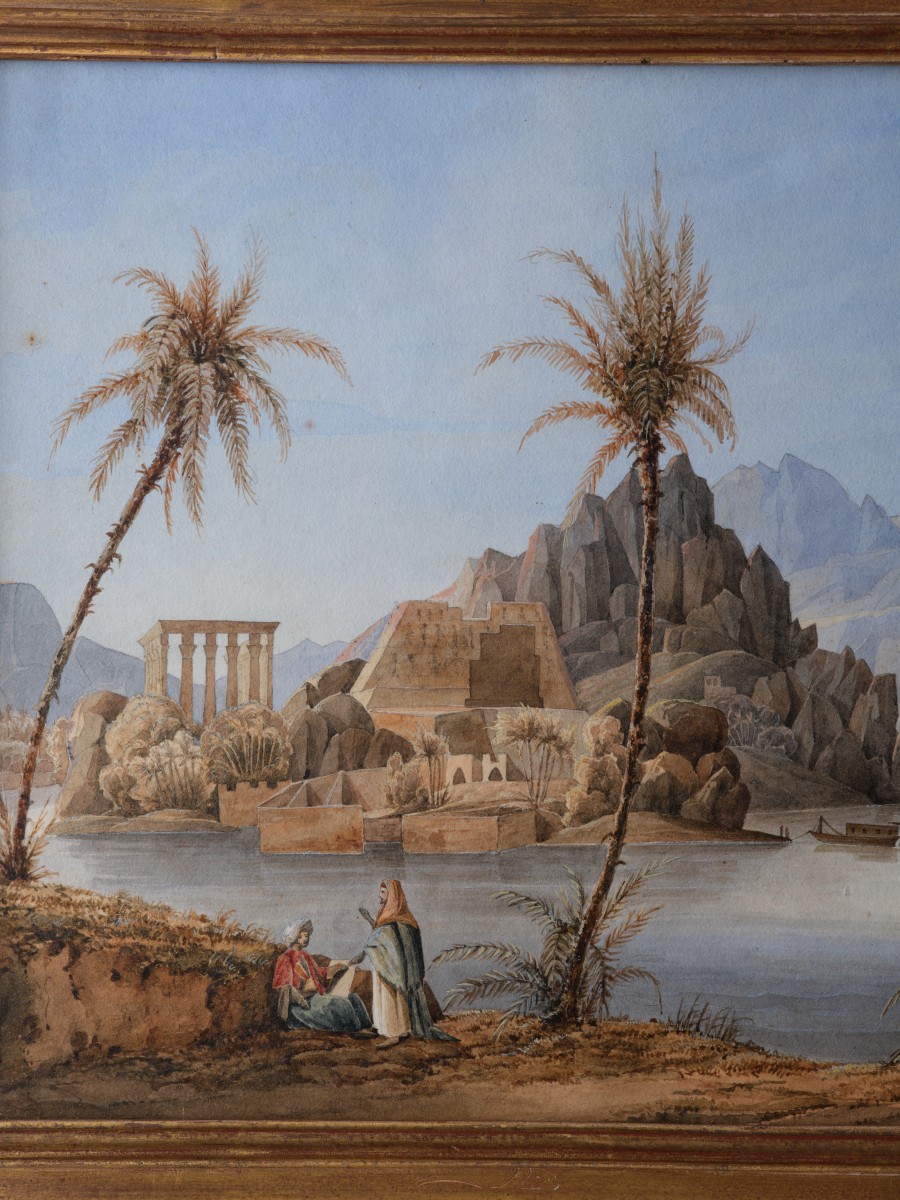
The island depicted here is Philae, in the south of Upper Egypt, now submerged following the construction of a dam near the city of Aswan. A temple dedicated to the goddess Isis had been built there under Nectanebo I in the first third of the 4th century BC; but as a large part of the temple had been ravaged by the waters, or by the vicissitudes of time, the Ptolemaic pharaohs of the third and fourth generations after Alexander rebuilt it. A multitude of other small shrines and sanctuaries dedicated to Arensnuphis, Mandulis, Imhotep, Hathor, Horus, and even Augustus, were built there in the following centuries, so that the island became one of the most important sanctuaries of Upper Egypt until its closure under Justinian.
A label attached to the back of the watercolour states that it was painted by the diplomat, man of letters and traveller Théodore de Bussière, who had published in 1829 his Lettres sur l’Orient, written during the years 1827 and 1828, which include views of his journey in Egypt as well as of the island of Philae. As the label also bears the year 1830, one must conclude that this is either a watercolour executed in Europe, after the publication of his Lettres and based on sketches made in Egypt; or, more probably, the date on which Bussière’s sketchbook was compiled upon his return to Europe. Bussière’s watercolours, probably coming from a dispersed sketchbook, are therefore extremely rare, and this one preserves the trace of a landscape now lost forever. Indeed, as early as the beginning of the 20th century, only a few years after the raising of the first Aswan dam, it was already being written: “But the beauty of the island and its ruins and palm trees, the joy of travellers and artists, is almost gone.”
Literature
See Francis Llewellyn Griffith, in Encyclopædia Britannica, vol. XXI, s. v. “Philæ”, London, 1911.