Offered by Desmet Galerie
REQUEST INFORMATION
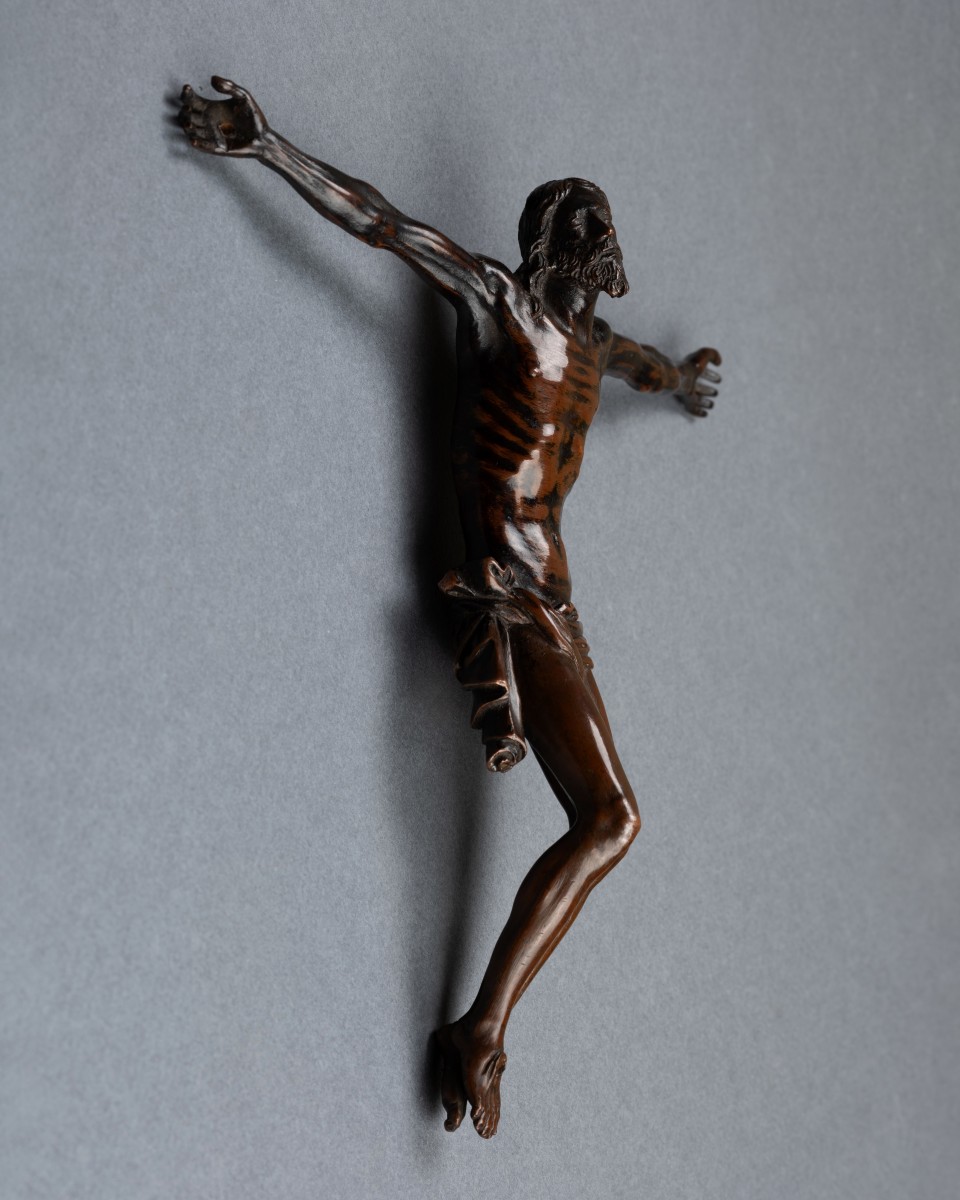
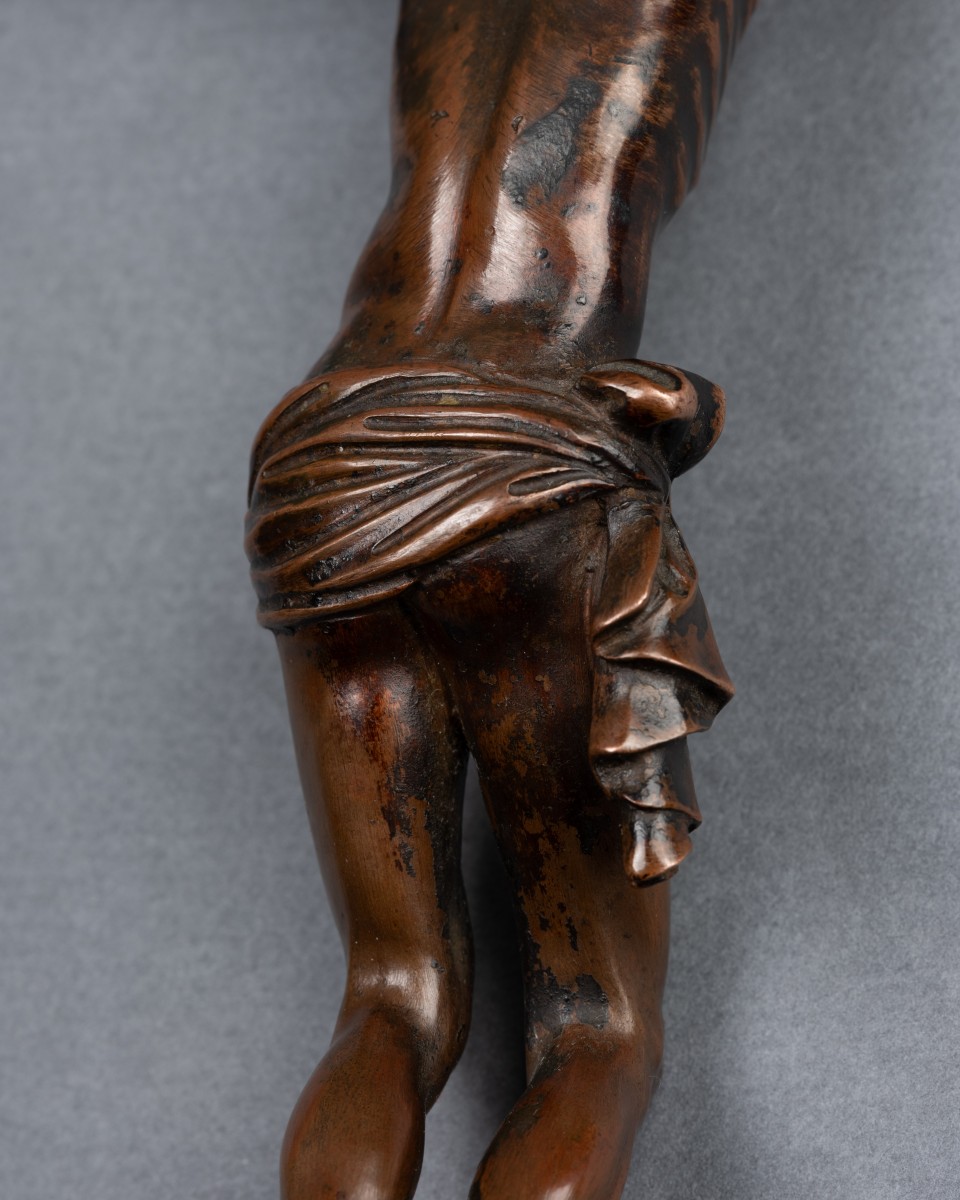
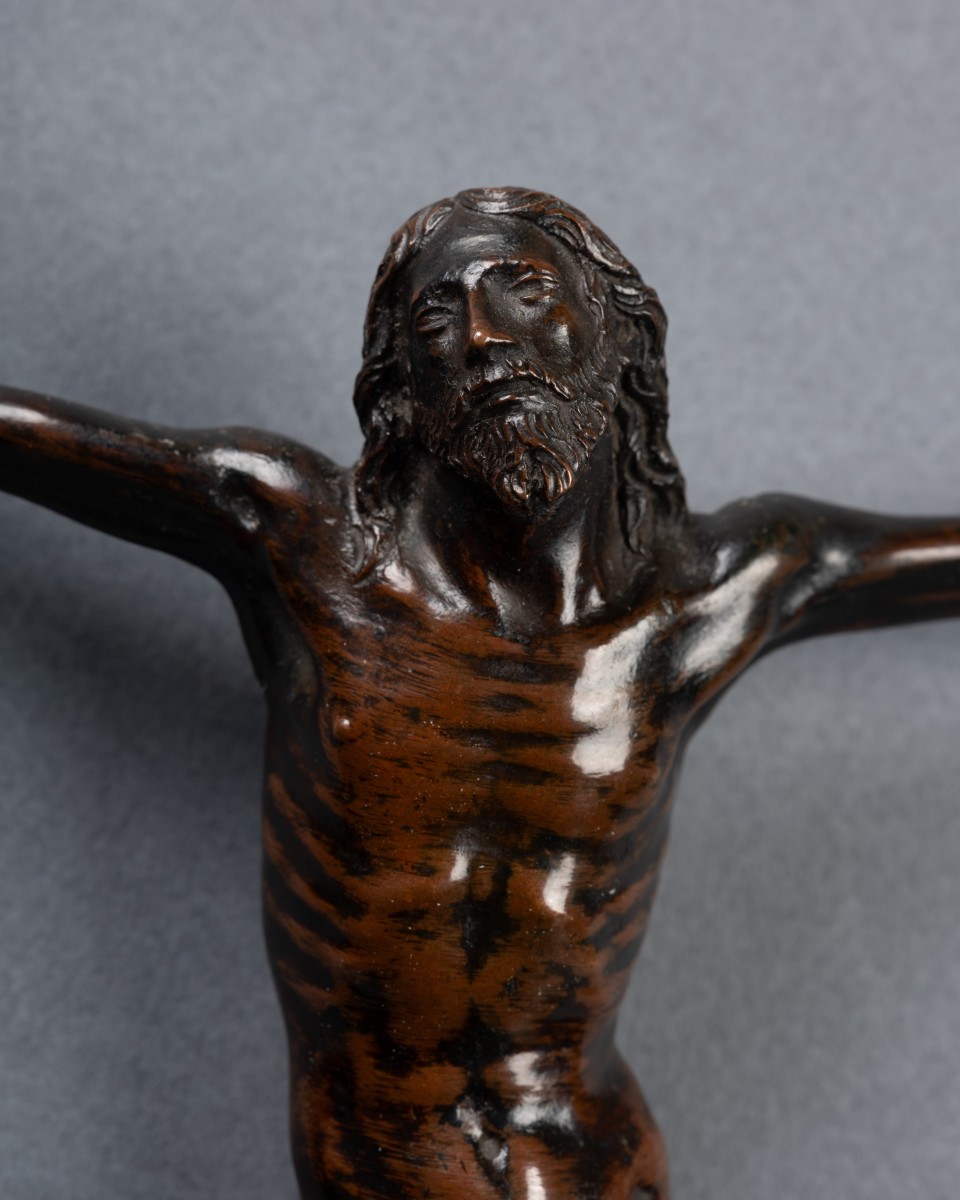

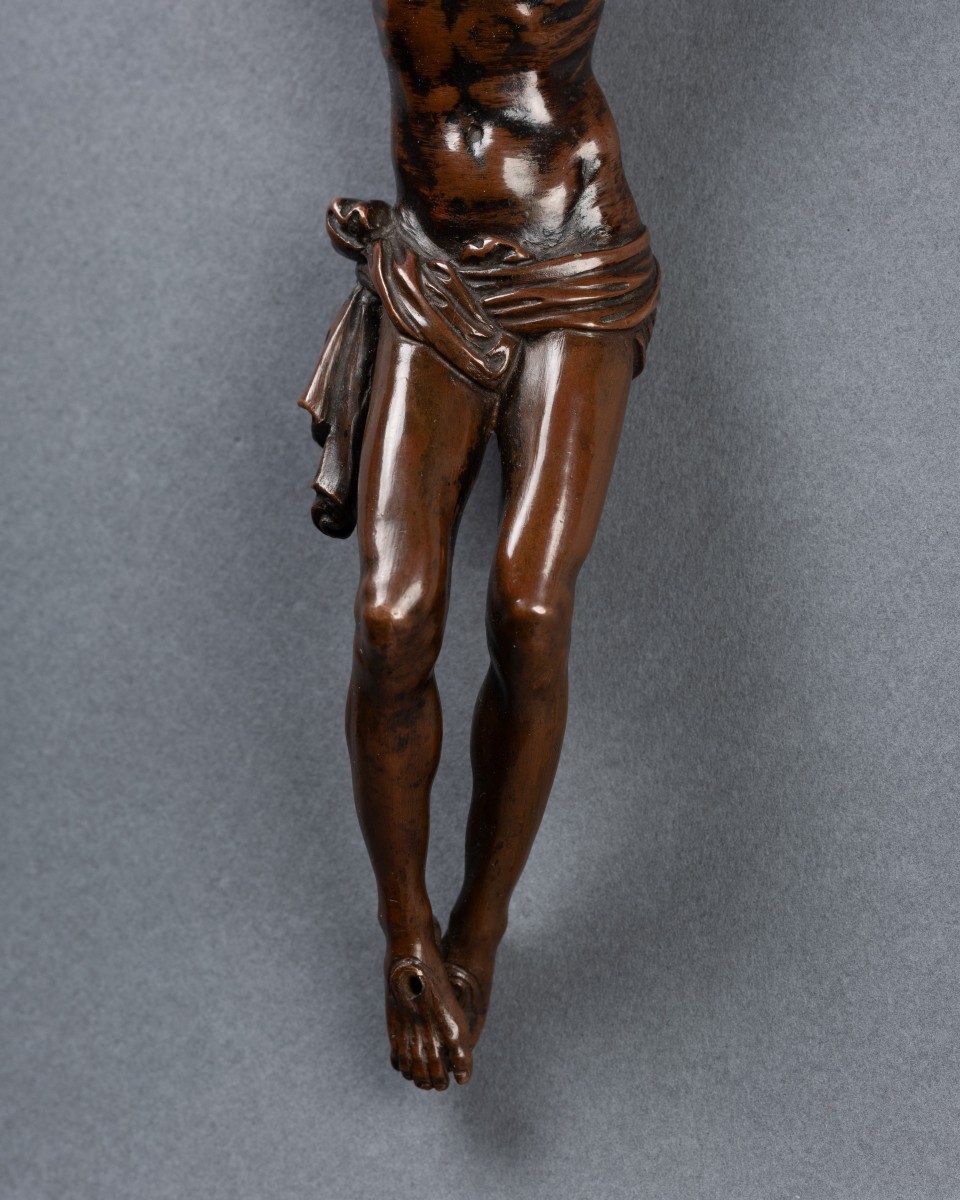
Pietro Tacca was the principal assistant of Giambologna (1525/29-1608) and
succeeded him as court sculptor to the Medici Grand-Dukes in Florence. Son of
a marble merchant in Carrara, he went to Florence in 1592 as an apprentice to
Giambologna and - like his master - worked in both marble and bronze,
delegating much of the technical effort in both materials to skilled assistants. By
1599 he had been elected a member of the Accademia del Disegno and in 1601 he
was enrolled in the household of Grand-Duke Ferdinando I. Thereafter he
enjoyed a role as supervisor of the production of a series of great equestrian
monuments for Ferdinando and for several foreign heads of state, continuing until
well after the death of Giambologna in 1608.
In 1616 Tacca sent to King Philip III of Spain a bronze Crucifix which is now in
the monastery of El Escorial, near Madrid. As Watson writes (p. 228), “Crucifixes
were produced by the workshop in a number of models and sizes; those signed by
Tacca are notable for their anatomical naturalism”. These examples of his work
have not as yet been properly studied and collated, but the Italian expert Pietro
Torriti writes eloquently of them as follows (1975, pp. 81-82):
“Tacca rendered the standard iconography of the Crucifix-figure in a deeply
devotional religious style in Tuscany, where countless examples, mostly in bronze
are attributed to him (or more often to Giambologna). But the majority are by
their respective pupils, with some being by Pietro’s son Ferdinando. The few
Crucifixes definitely by Pietro follow in form the classicizing style of his first
works in the late 16th century and resemble the even more celebrated crucifixes by
Giambologna. This means that they adhere to the forms of the Tuscan
Renaissance and particularly, in this field, those by Michelangelo and his school.
But even in these devotional works by Tacca one remarks the particular
sculptural slant that is to be found in his best bronzes: a sensibility for the actual
material, a care in modelling the surfaces which are ductile and fluid, rendering
harmony to the whole. One notes, for example, how the sculptor seems to caress
the three-dimensional forms around the hip, in the development of the shoulders,
which flow into the wide-spread arms. The impression of power that emanates
from his bronze statues of the Four Moors is now calmed in the abandon of
Christ’s [stricken] body, without the study of the perfect nude becoming any the
less anatomically correct. This study is suddenly transformed into poetic
language in the vibration of the raised planes of the body that are raised with
extreme delicacy and emphasized by the colour of the bronze.”
The Crucifix sent to Spain in 1616 mentioned above, which was entrusted by
Pietro to his brother Andrea, Provost of Massa, to present to the king, along with
the equestrian monument, is the first one securely documented to his hand.
Philip III was delighted with it and it is still to be seen in the Great Sacristy of the
Escorial, in a niche over the altar of the Santa Forma [Fig. 1]. Another very
similar one, 86.8 x 79 cm, from the Piccolomini Collection, Siena (1954), is now
in the National Gallery of Art, Washington D.C. [Fig. 2].
A third, slightly smaller one, 77 cm high, which is mounted over the tomb of
Archbishop Matteo Rinuccini in Pisa Cathedral [Fig. 3], was stated as early as
1643 to be by the hand of Pietro Tacca (Alessandro da Morrona, Compendio di
Pisa illustrata , Pisa 1798, pp. 7-8; Roberto Papini, Catalogo di Pisa , Rome, 1912,
pp. 93-94, ill.).
Of exactly the same size is a fourth example, in the Basilica di Santa Barbara in
Mantua
[Fig. 4], which may be identical with one sent in 1621 by Tacca to Ferdinando,
son of Vincenzo Gonzaga (Tesori , 1974, no. 12). A fifth is in San Vigilio, Siena
[Fig. 5]. Another one was produced for the Cathedral of Prato in 1653 by Pietro’s
son, Ferdinando [Fig. 6]. All of these are illustrated by Torriti.
As to smaller crucifixes for domestic chapels, none is actually documented to
Pietro, but Torriti gives a sensible list of some that may reliably be attributed to
him on the basis of comparisons with the bigger documented ones. An especially
finely chiselled and very expressive Crucifix was formerly with the Florentine
dealer, Giovanni Pratesi [Fig. 7], and closely resembles those in the Del Mazza
collection, Florence, and on the high altar of Santa Maria in Carignano, Genoa
[Fig. 8]. Another such Corpus Christi is the focus of a bronze group of Golgotha
in the Museo degli Argenti of the Pitti Palace, Florence (A.S.E n.81) [Fig. 9].
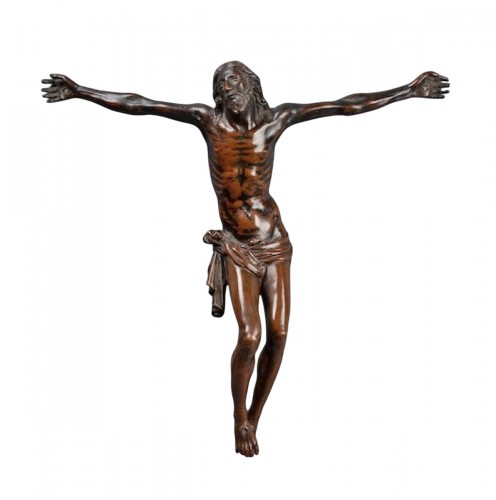
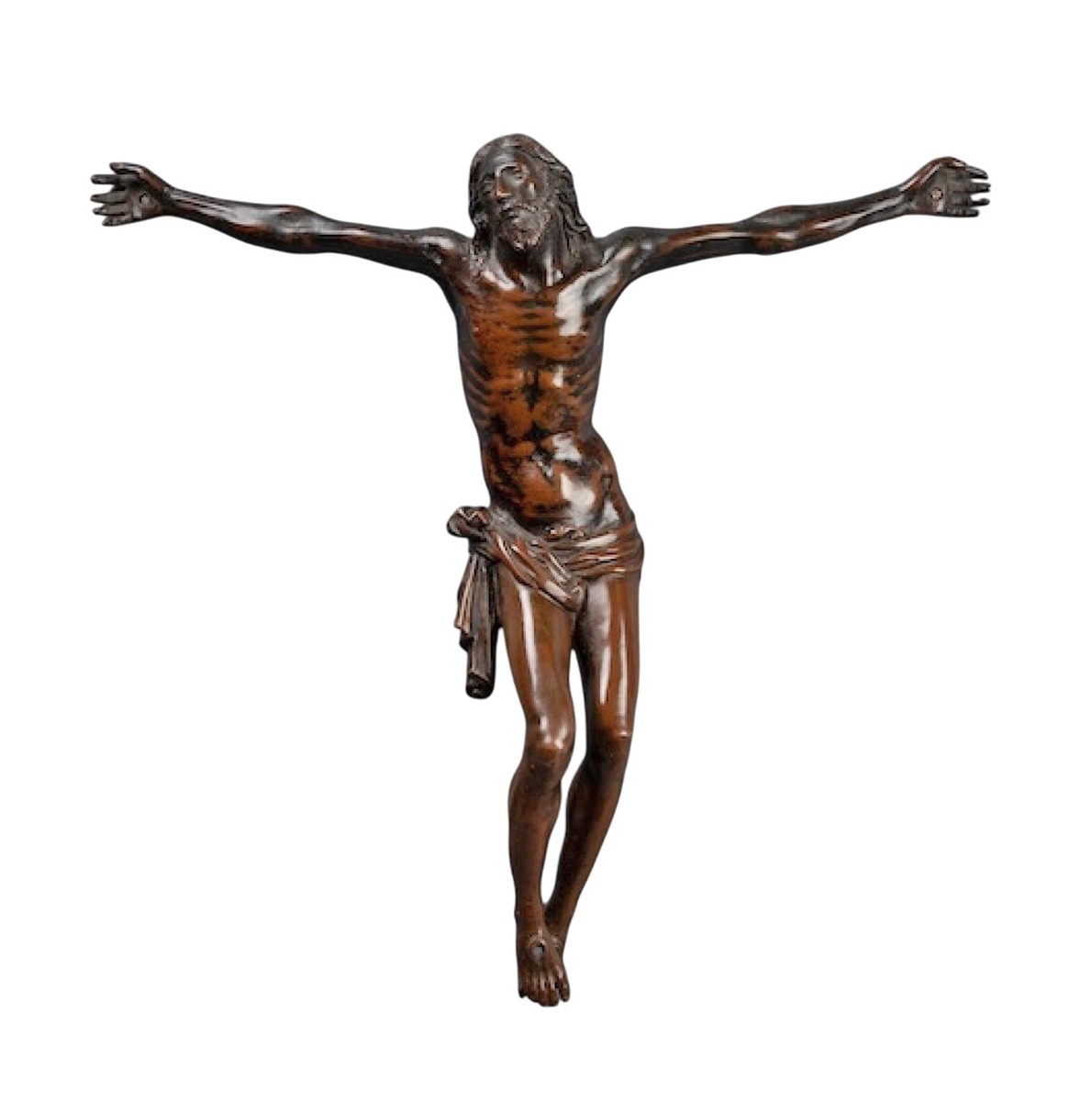
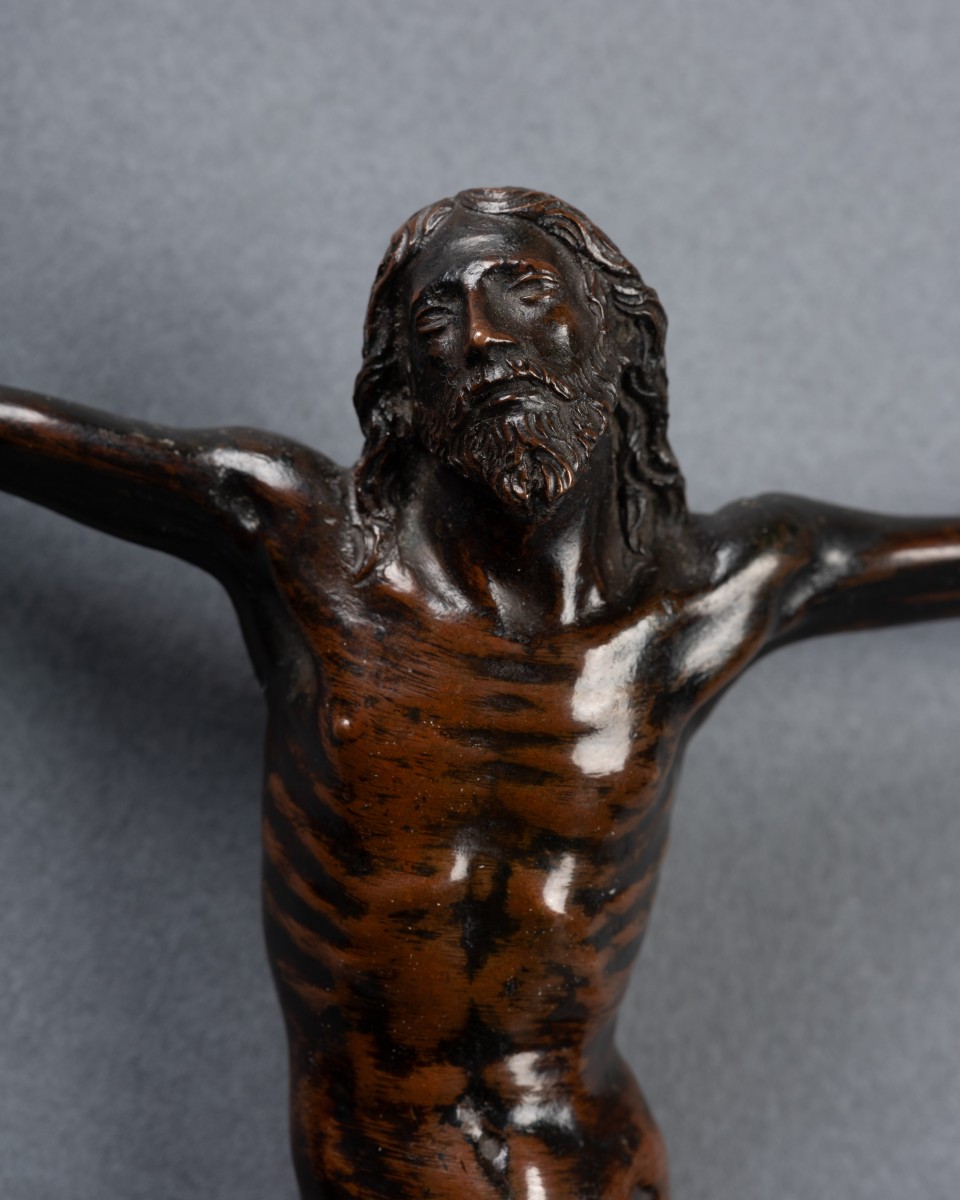
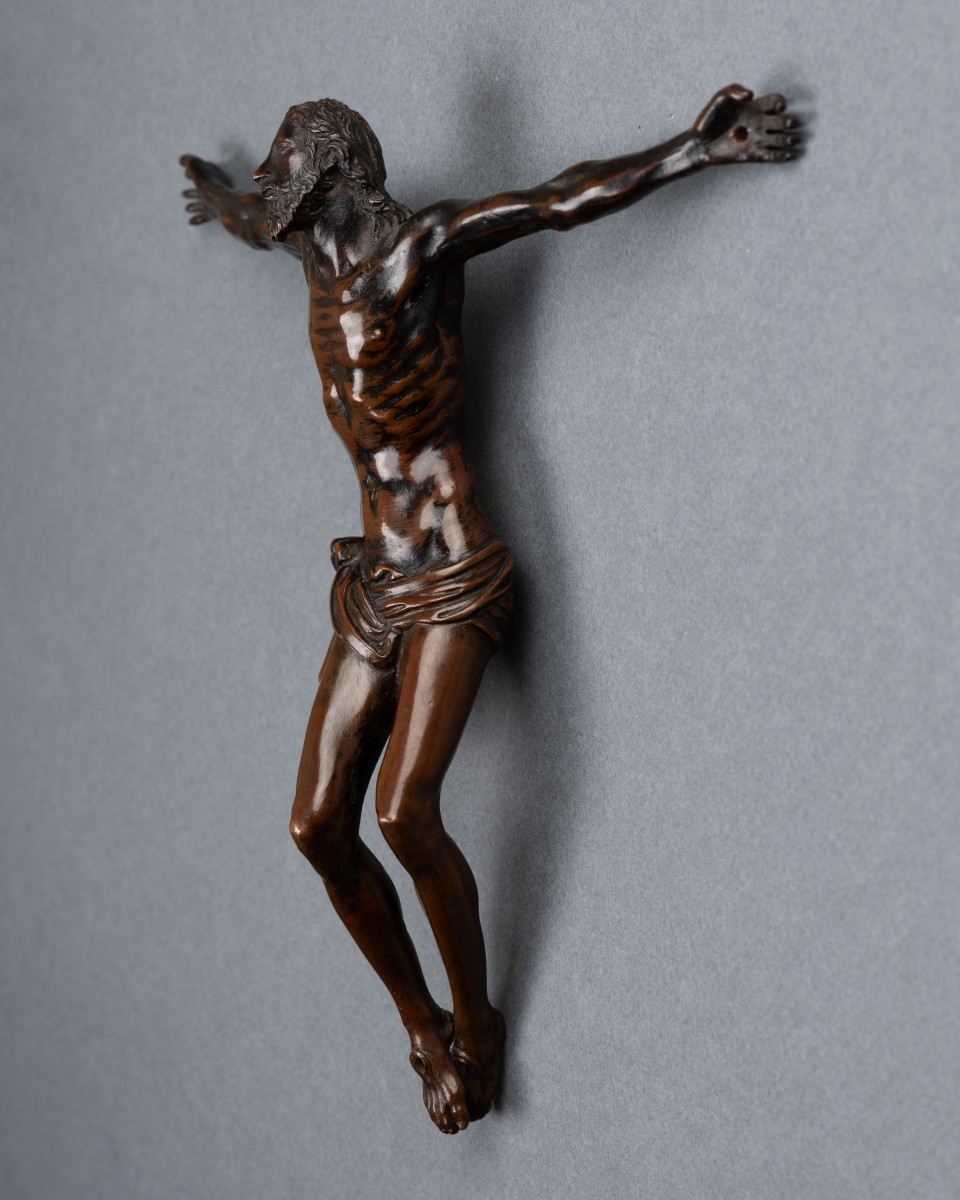
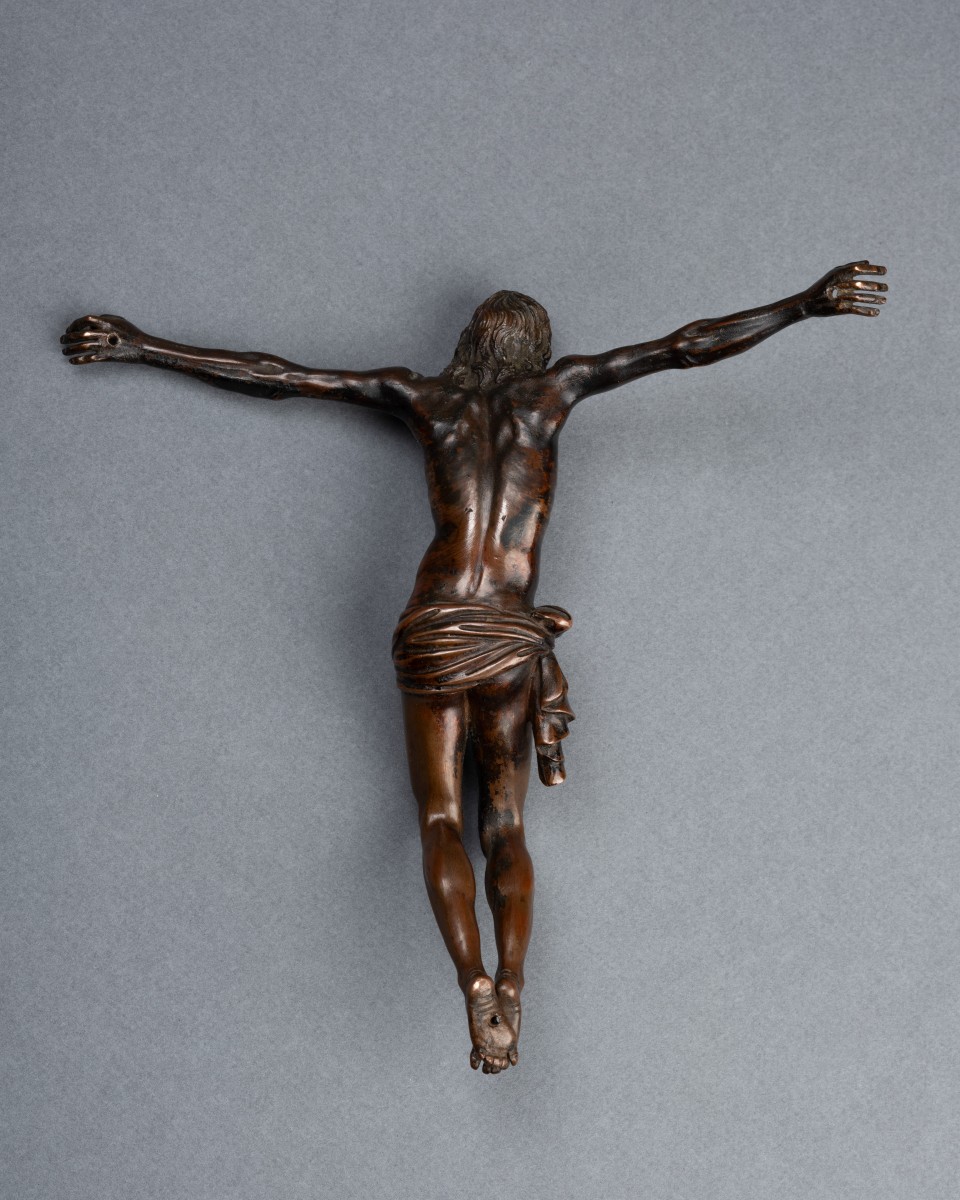
All of these share with the present Corpus Christi the same, distinctive, outward
thrust of Christ’s left hip to the viewer’s right; the same thinness of the figure
from front to back at the waist; and the same complicated knotting of the
loincloth [perizonium ] at his right hip, with the tucking of one end under and
then over the girdle, just above the private parts. These close similarities permit
the attribution of the present figure to the same hand, that of Pietro Tacca.
The present figure is smaller than those recorded above, being only about one
palmo [22.34cm] high, whereas they tend to be around 35cm - or even one metre
- high. Furthermore, it is the only example by Pietro Tacca of the Living Christ
[Cristo vivo , or semi -vivo ], which – with its very refined modelling and finishing -
makes it of great interest.
This image was invented quite late in his career by Giambologna – perhaps at the
behest of Ferdinando de’Medici, before he inherited the Grand-Duchy in 1587 -
and while he was a Cardinal of the Catholic Church. It was serially produced by
his associate Antonio Susini, in bronze and silver and it is interesting here to find
a deliberate variant of it by Susini’s rival in bronze production at the court of the
Medici in Florence, Pietro Tacca.
Delevery information :
We can arrange shipping.