Offered by Poisson et Associés
REQUEST INFORMATION

Paintings, sculptures and art objects from the 15th to the 17th century
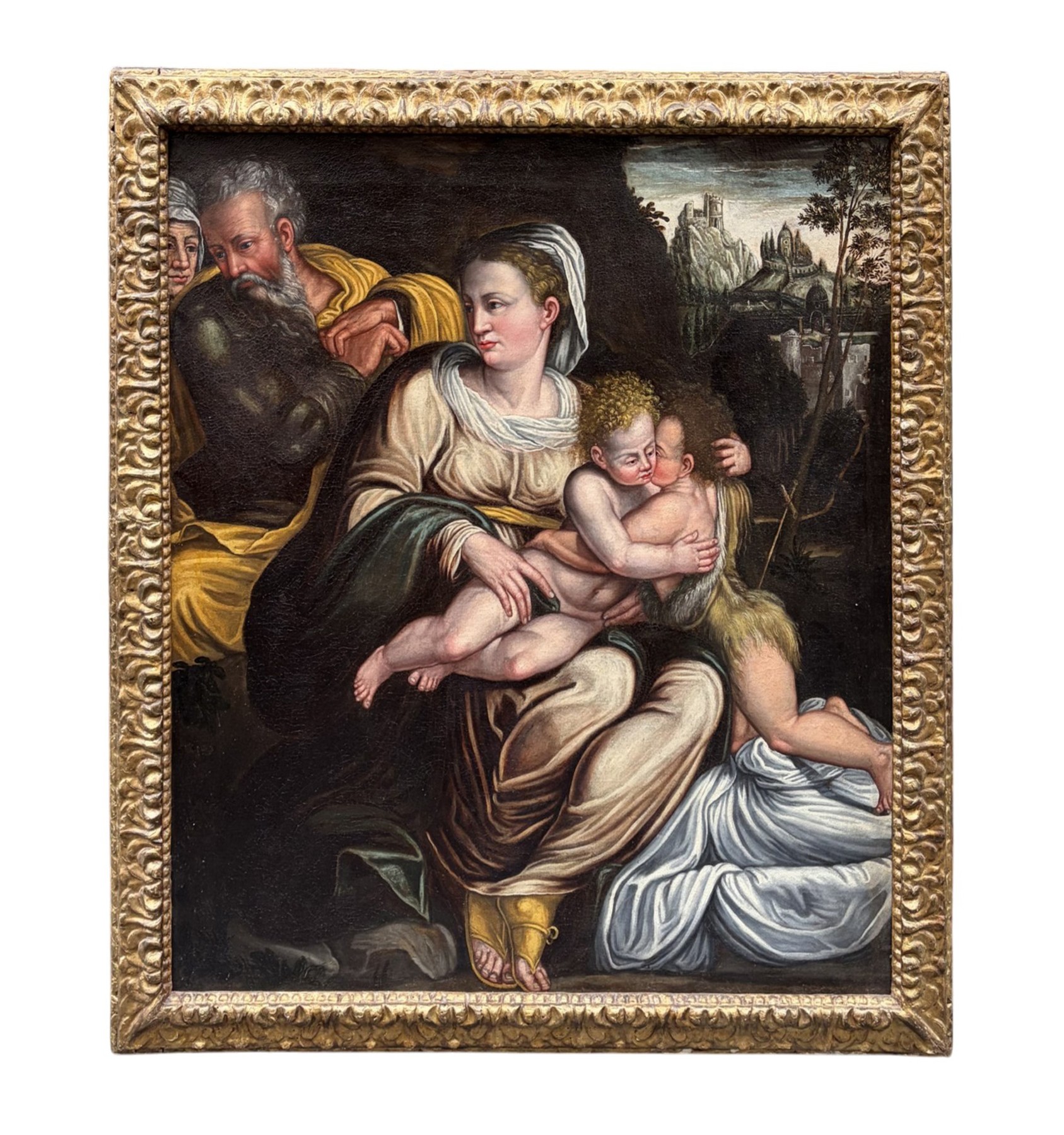
Emilian School, 16th century.
Workshop of ORAZIO SAMACCHINI (Bologna, 1532 – Bologna, 1577).
“The Holy Family with Saint Elizabeth and the Infant Saint John the Baptist”.
Oil on canvas.
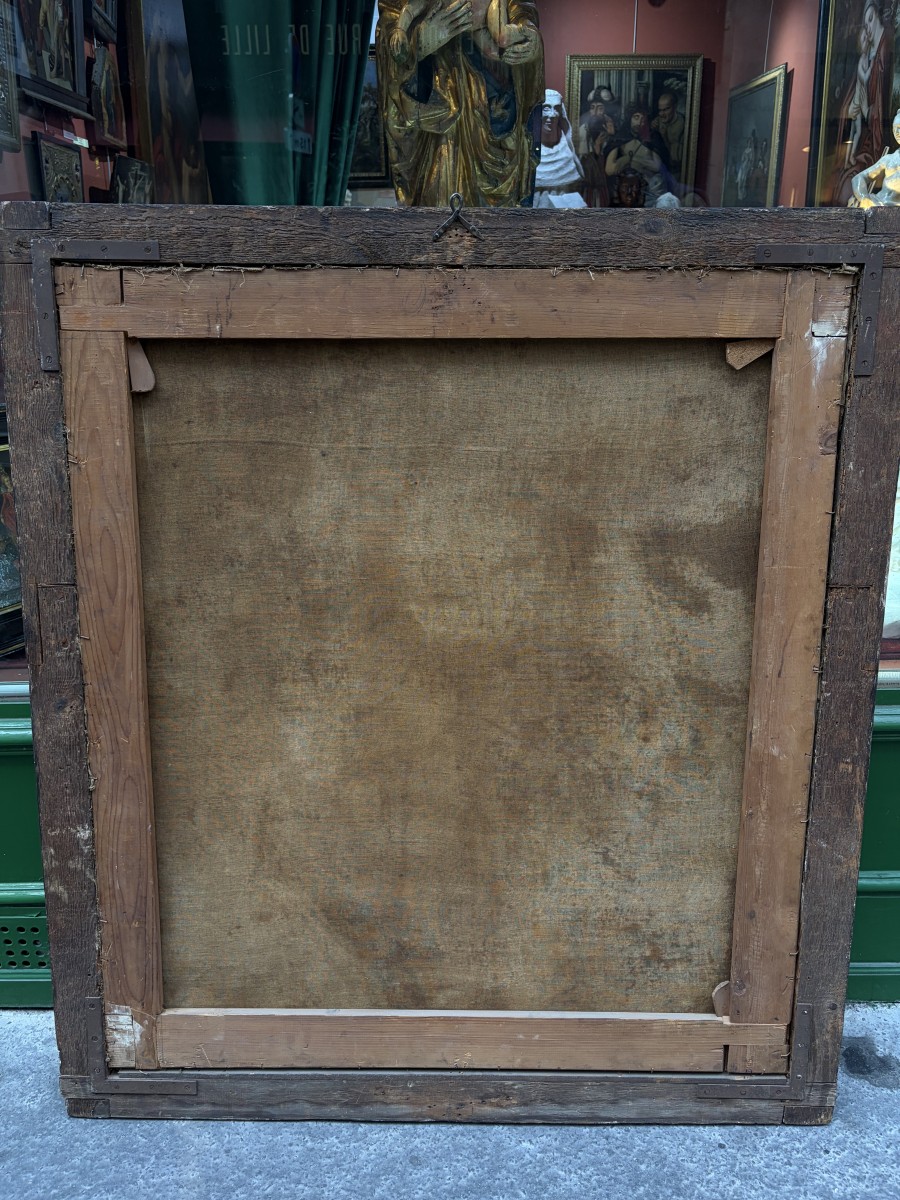
Old relining.
Craquelure consistent with age.
Period carved and gilded wood frame with foliate decoration.
Dimensions: 114 x 99 cm (sight); 132 x 115 cm (frame).
This work should be understood in the context of Bolognese painting in the second half of the 16th century, which was profoundly renewed by the dialogue between the Emilian tradition and Roman models. Trained in Bologna, Orazio Samacchini first absorbed the refined grace of Parmigianino and the softness of Correggio. Like many artists of his generation, he undertook the journey to Rome, then an essential step for studying Antiquity and the great masters of the Renaissance. Around 1563, he took part in the decoration of the Sala Regia in the Vatican under the pontificate of Pius IV, alongside the leading painters of the day. Direct contact with the work of Michelangelo, Raphael and the Zuccari brothers left a lasting mark on his artistic language. Back in Emilia, he worked in Bologna, Parma and Cremona, developing a manner that combined Emilian elegance with Roman monumentality. His “Purification of the Virgin”, in San Giacomo Maggiore in Bologna, is among the most significant examples of this synthesis, which his workshop helped to spread.
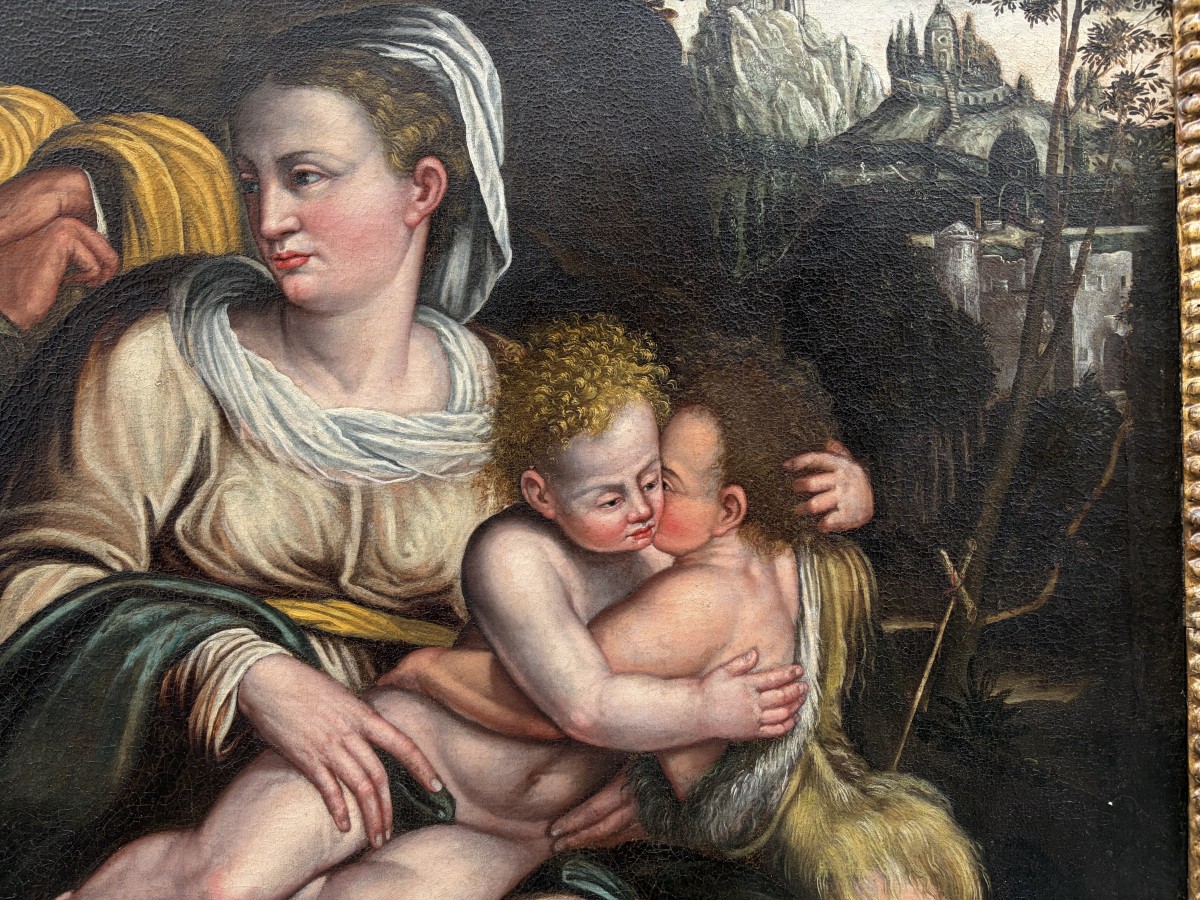
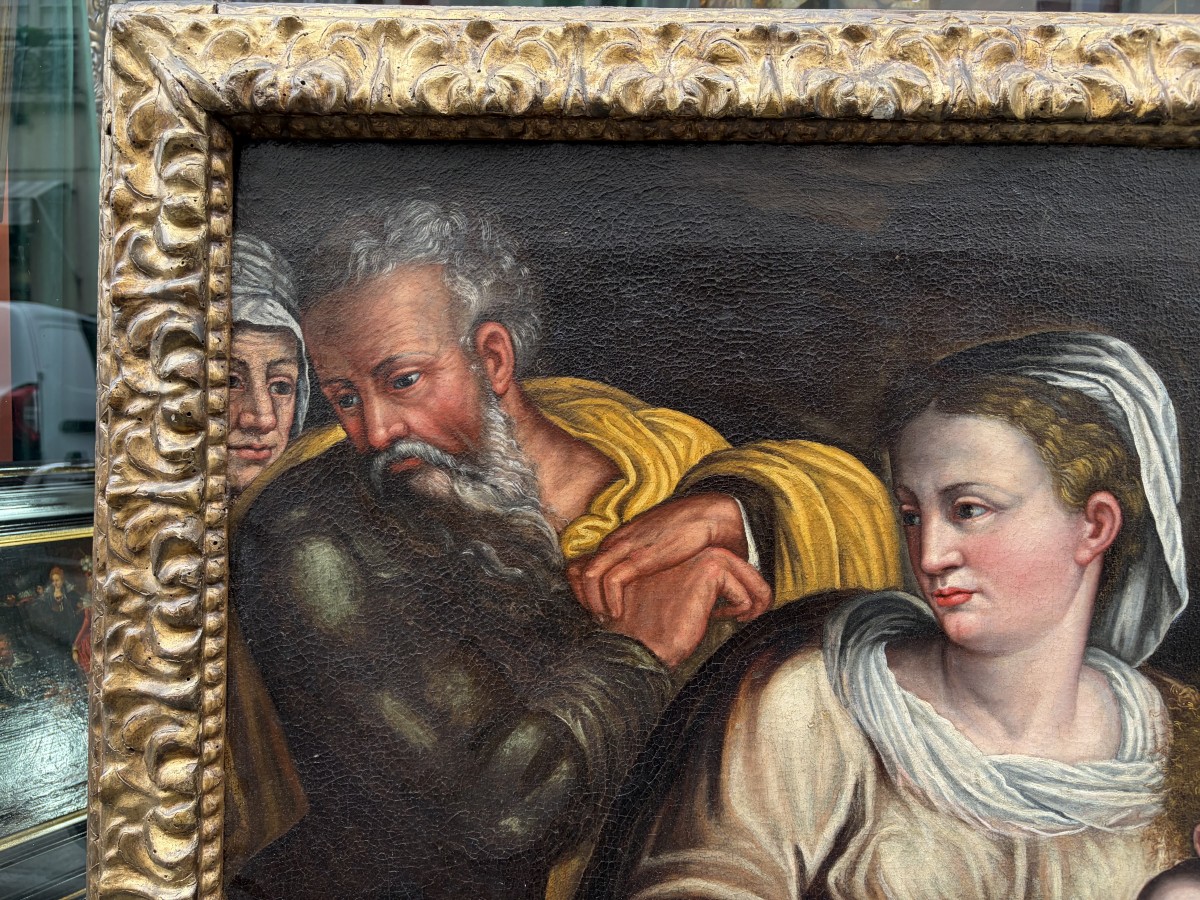
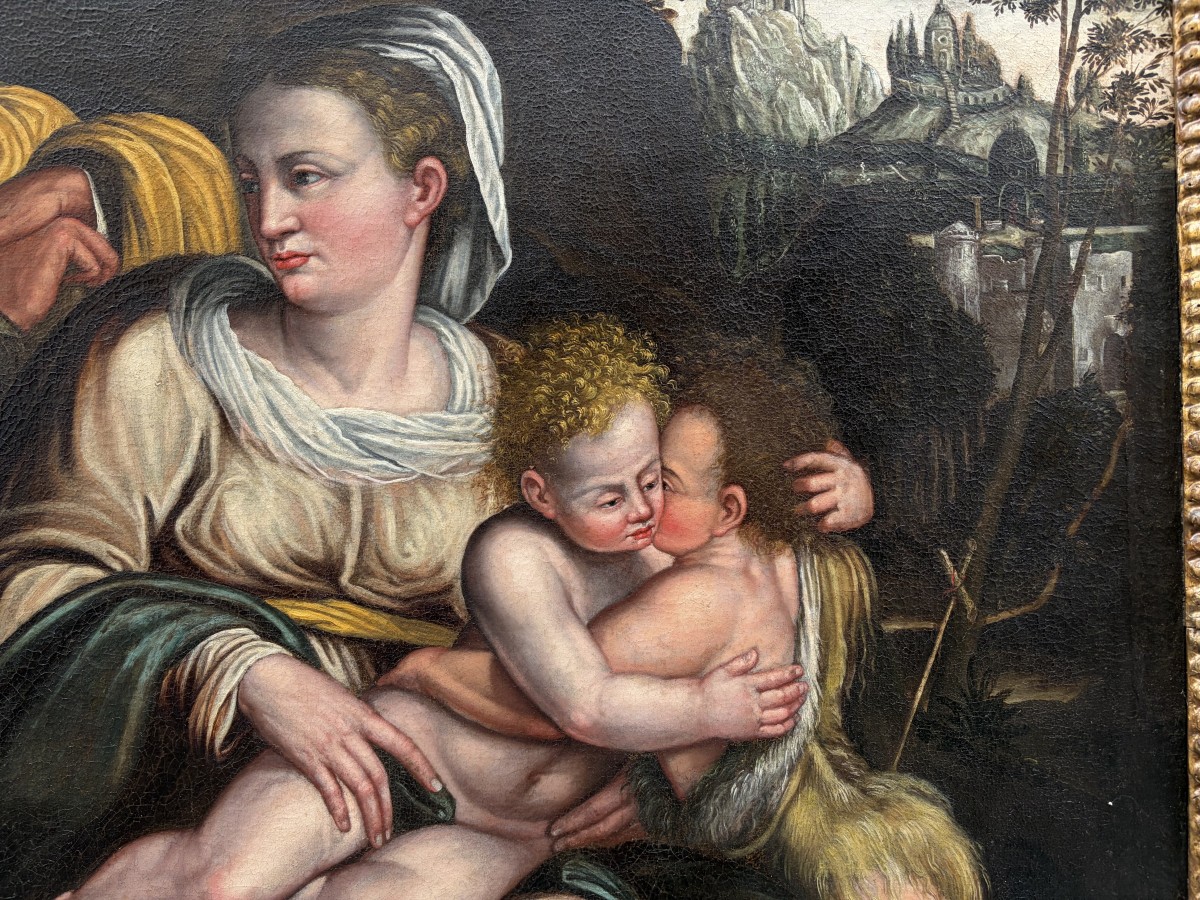
The composition draws its intensity from the affectionate exchange between the two children. At the centre, the seated Virgin, dressed in a pale pink gown and wearing a white veil, holds the Christ Child on her lap. The young Saint John the Baptist, clad in his animal skin and accompanied by his reed cross, embraces and kisses him in a gesture full of tenderness. On the left, Saint Joseph, draped in a broad ochre-yellow mantle, leans towards the group in a meditative attitude, while the face of Saint Elizabeth appears behind him. On the right, the scene opens onto a landscape with a fortress perched on a rock and a distant city. The landscape balances the density of the main group.
The present canvas faithfully preserves the qualities characteristic of this school. Particularly noteworthy is the sculptural fullness of the drapery, whose deep folds are built up through strong contrasts of light and shadow. The delicate modelling of the children’s flesh tones and the characterisation of Saint Joseph’s face, with his grave expression and finely rendered beard, are also striking. The contrast between the children’s movement and the restraint of the adult figures gives the scene a controlled expressive tension. The assurance of the drawing and the handling of volume reveal a careful execution that reflects the Roman influence absorbed by the Bolognese school of the Cinquecento.