Offered by Schoppmann Art and Antiques

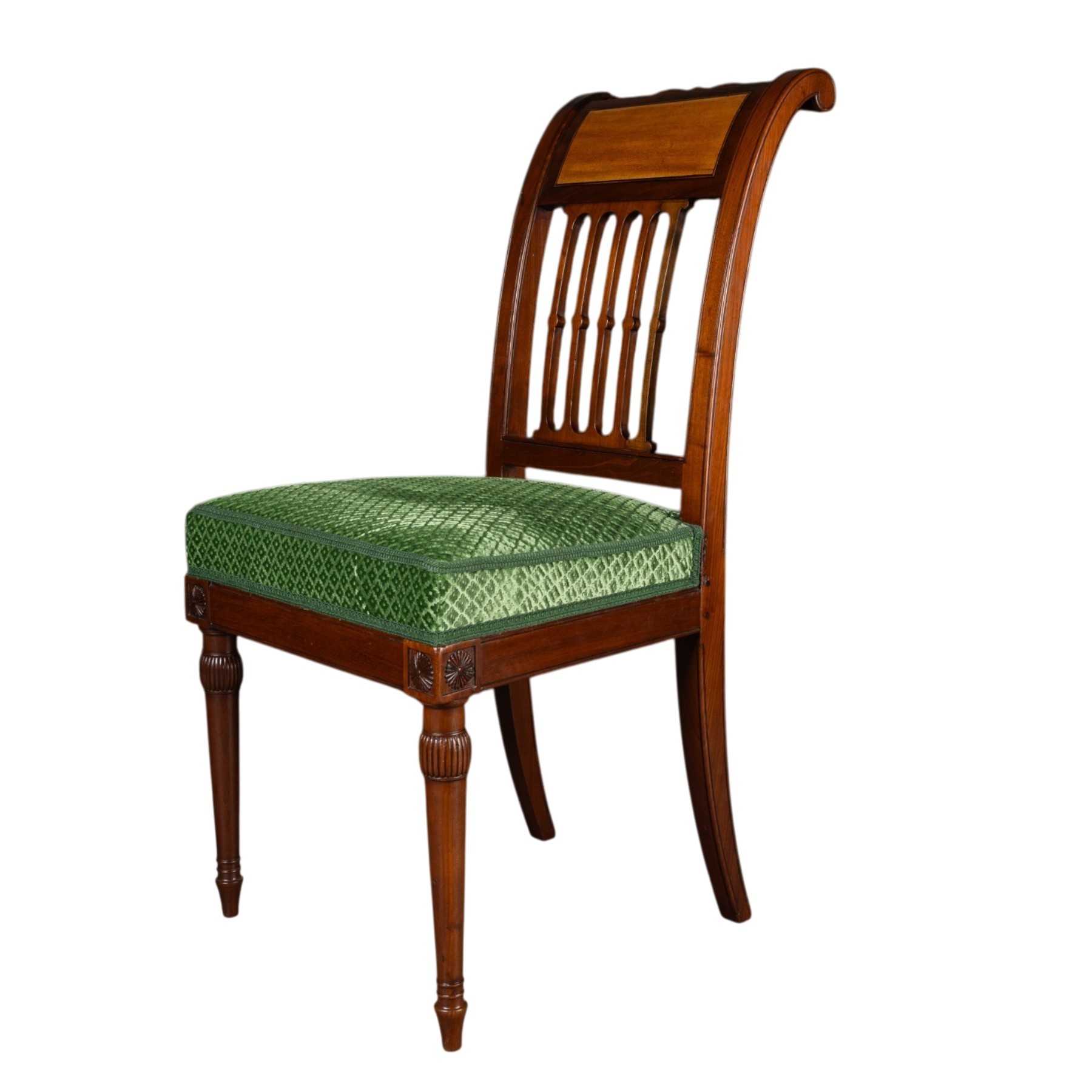
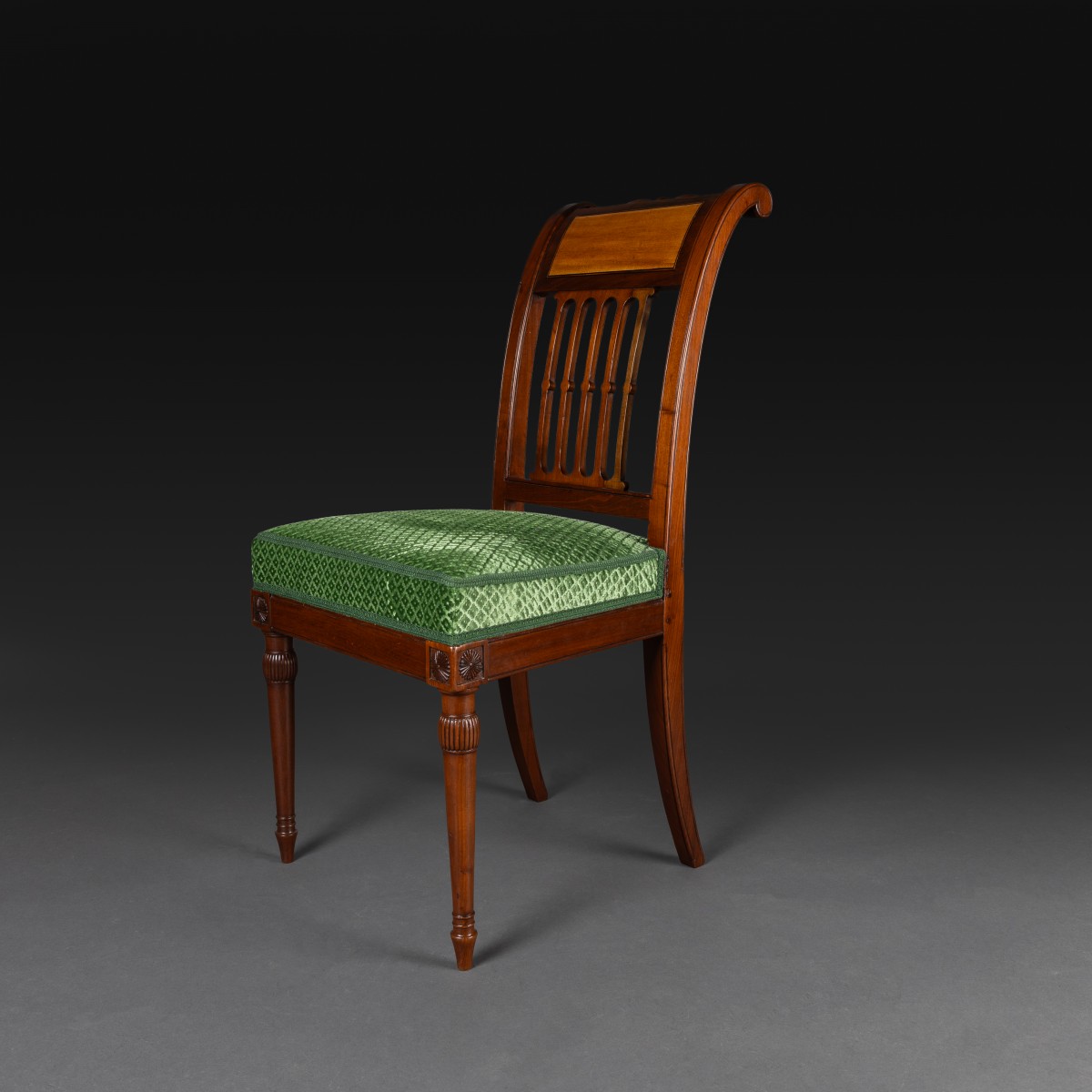
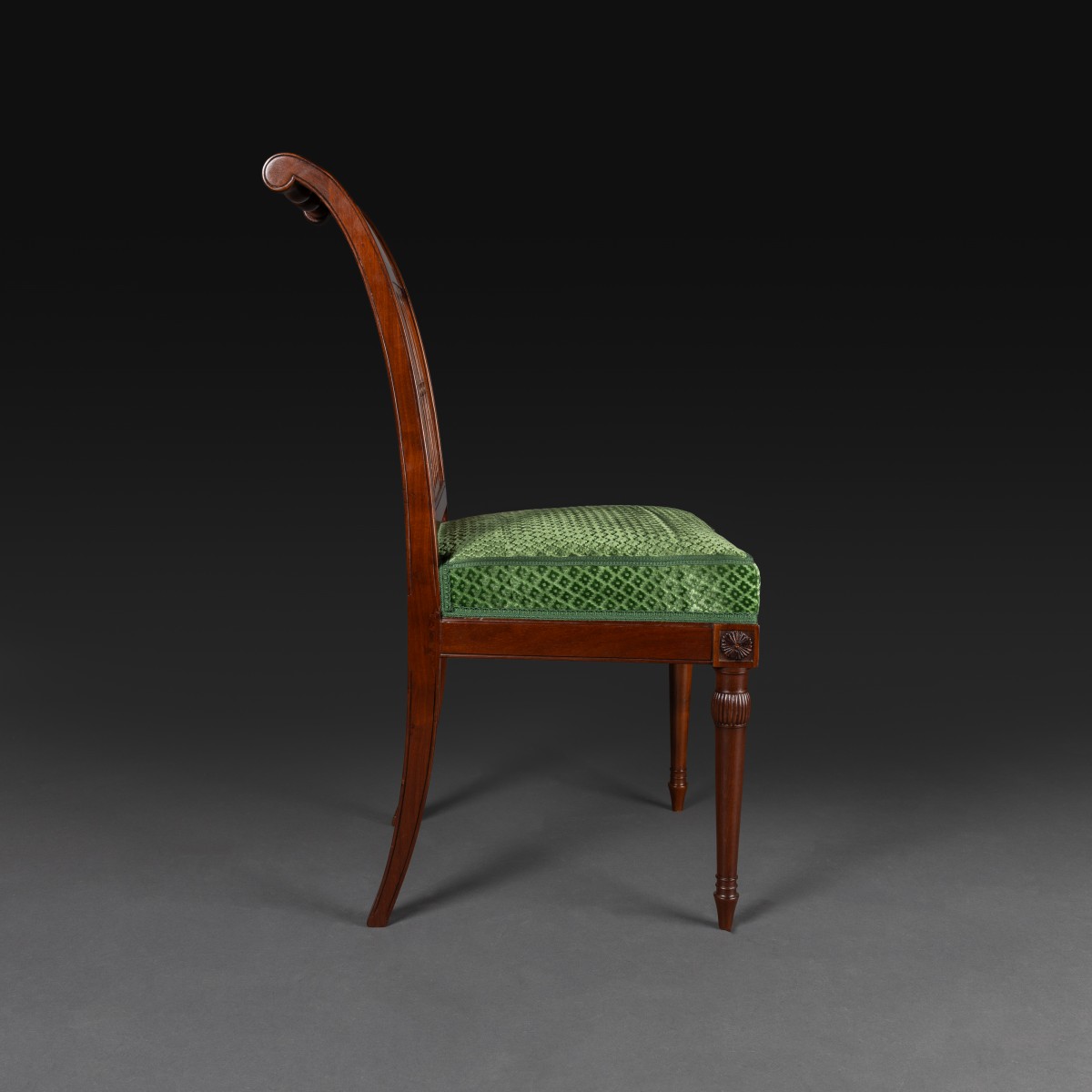
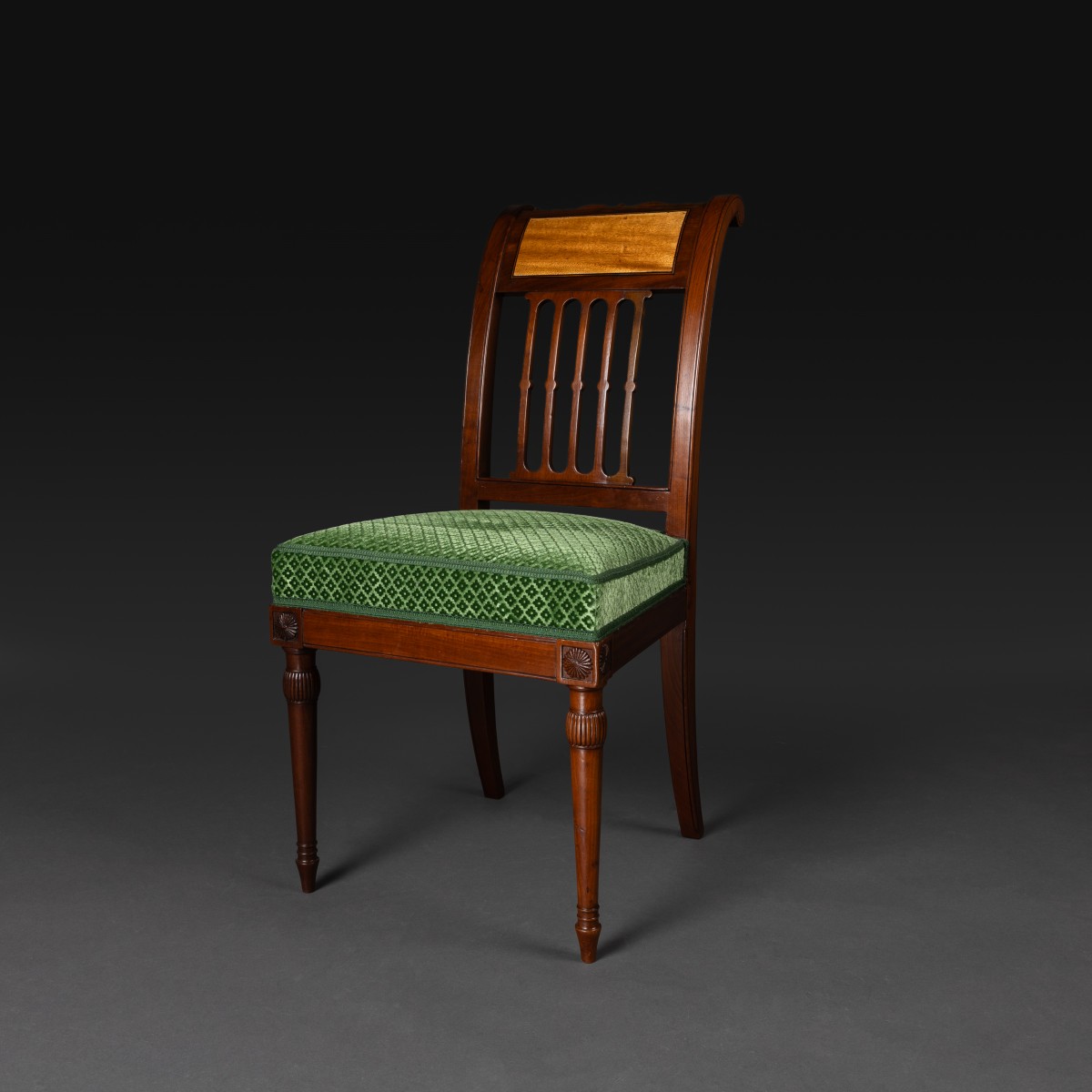
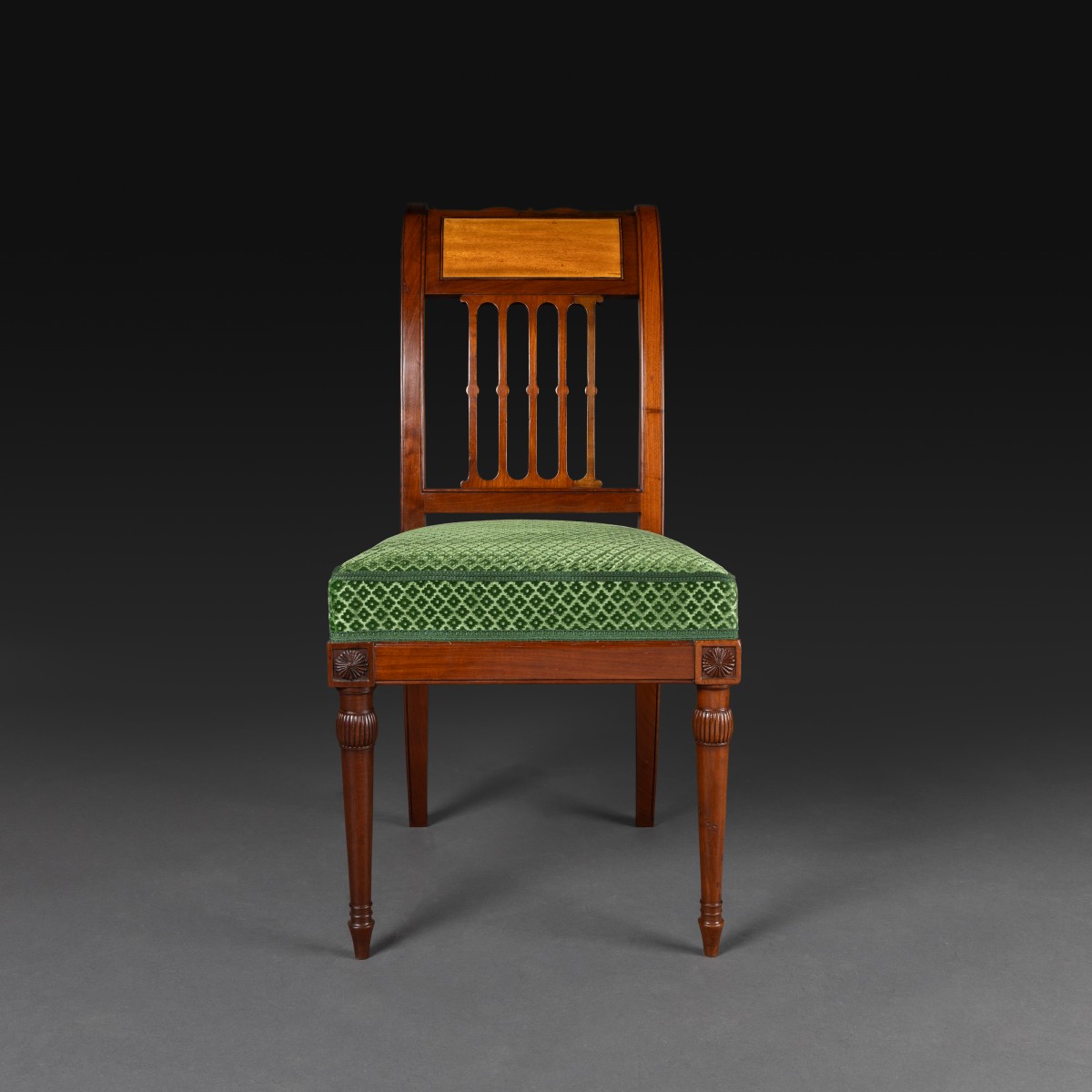
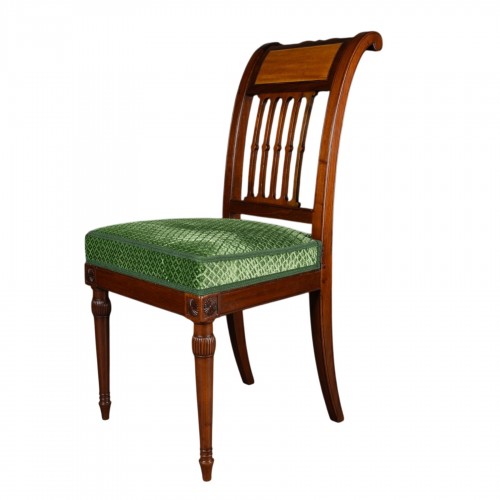
Mahogany, mahogany and lemonwood veneer, on beech
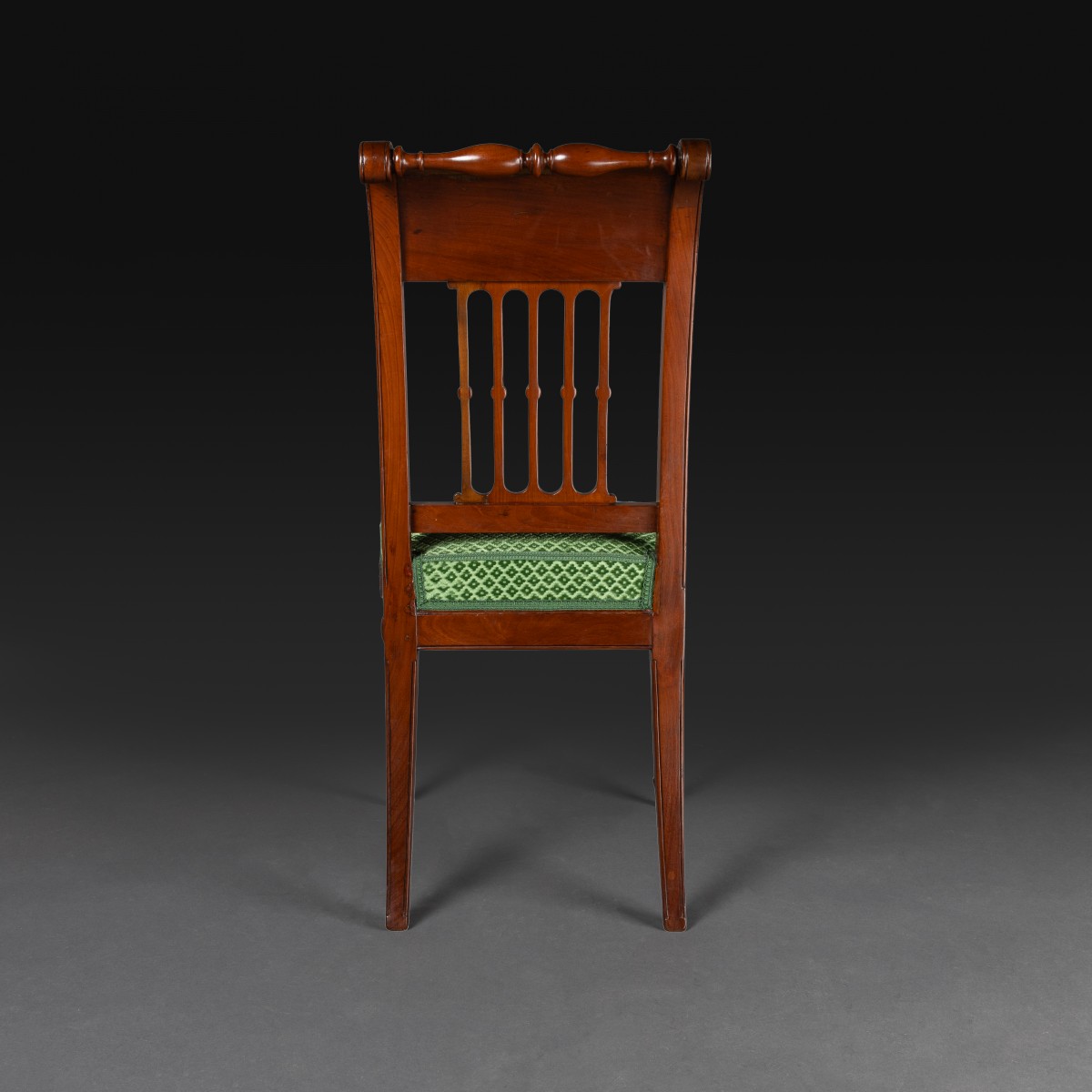
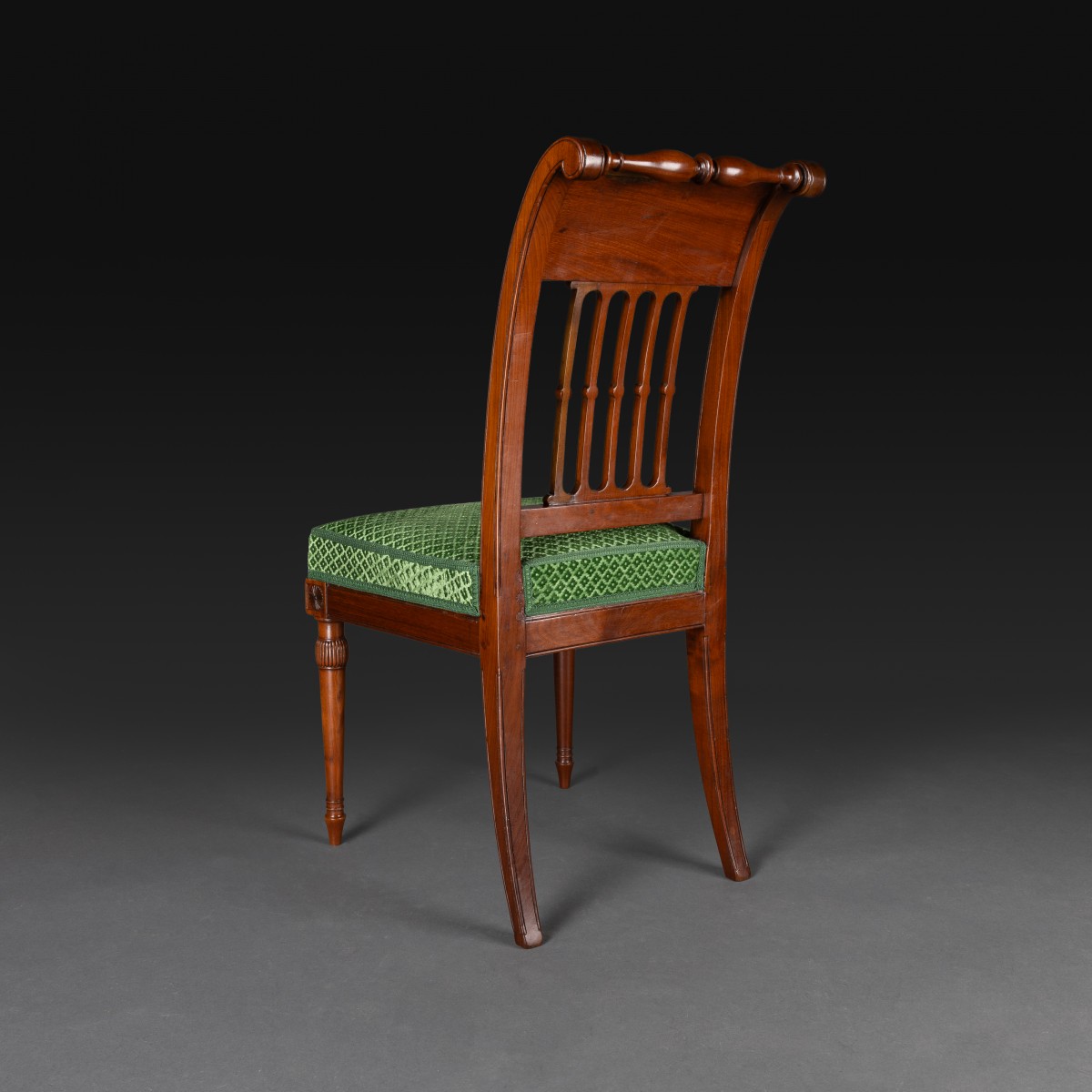
Brand-marked "G.IACOB" on the back crossbar
Dimensions: H.; Seat H.; W.; D. (cm.)
Paris, circa 1790
Provenance: former Lefuel collection; for a matching chair and armchair, see Lefuel Collection, Fontainebleau, June 25, 2022, lot 235, sold for €6,000
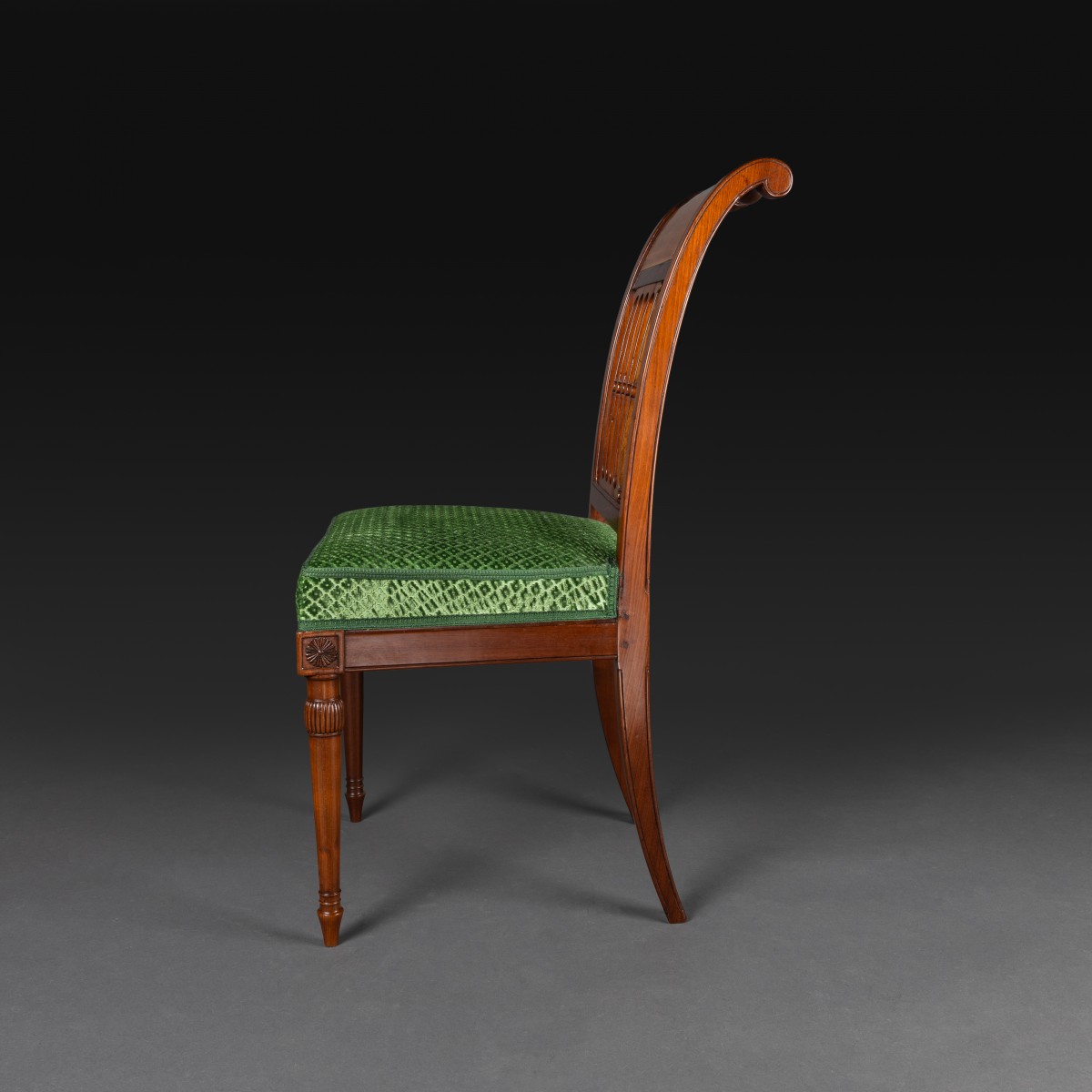
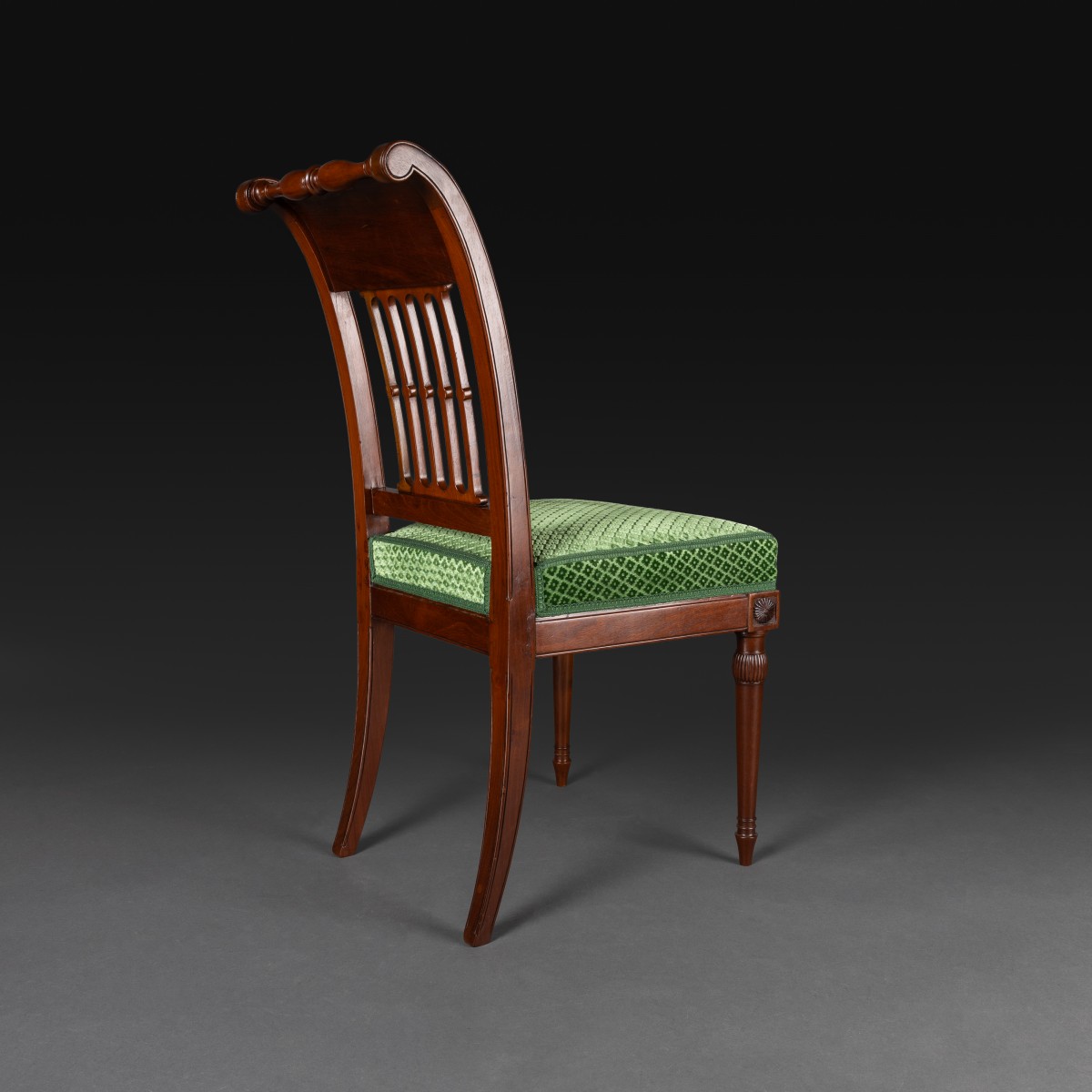
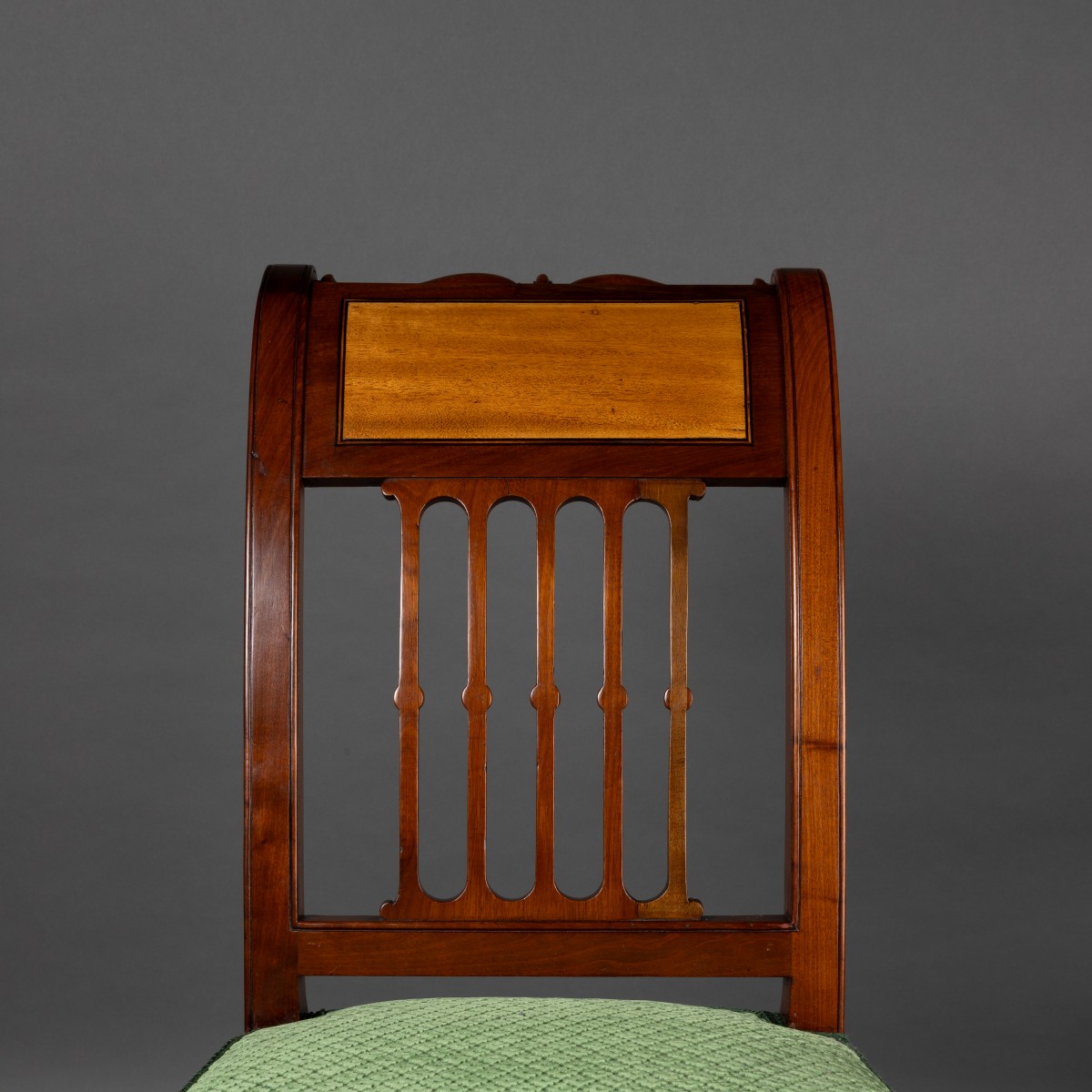
Elegant neoclassical chair, resting on tapered front legs ending in “toupie” feet, with fluted tops. The rear legs are saber-shaped. The crossbars are simply molded, with rosette-adorned connecting blocks. The backrest features an “Etruscan-style” scroll design, an openwork lattice panel, and a lemon tree motif insert at the top. A turned bar handle completes the top of the backrest.
The Lefuel Family
A true dynasty, the family has been at the heart of the history of France’s seats of power and cultural heritage for several generations. Martin Lefuel first served as controller of the internal administration of the palaces under the Consulate, then became curator of the furnishings of the government palaces under the Empire.
His grandson, Hector-Martin Lefuel (1810–1880), enjoyed a brilliant career: after winning the Grand Prix de Rome in 1839, he became chief architect of the Louvre and the Tuileries in 1854 following Visconti’s death. He completed and radically transformed Napoleon III’s new Louvre, notably with the Richelieu Wing, the courtyard and the Lefuel Staircase, the Pavillon de Flore, and several major spaces within the palace. Thus, over the course of three generations, the family transitioned from managing the palaces’ furnishings to their architecture, and then to preserving their legacy.
Subsequent generations remained connected to the worlds of art and cultural heritage, particularly through the preservation and transmission of Hector-Henri Lefuel’s drawings, archives, and mementos. His son, Henri Lefuel, made significant donations to French museums related to his ancestors’ achievements.
Finally, Hector (1885–1937) and his wife were particularly innovative in the rediscovery and appreciation of the decorative arts of the late 18th and early 19th centuries. Through his role as curator of the Marmottan Museum and his numerous publications on the museum’s collections—as well as on the Jacob dynasty of cabinetmakers and woodworkers—he offered a fresh perspective on the decorative arts following the Ancien Régime. Furthermore, together with his wife, they have worked to recreate a Directoire and Empire atmosphere in their home: hand-printed wallpapers, “Wedgwood” colors, silky mahogany, and gilded neoclassical bronzes; a significant portion of which was inherited from the Jacob branch of the family. The entire collection is extensively illustrated in a 1950s issue of *Connaissance des Arts*. This is likely the source of our chair’s provenance.
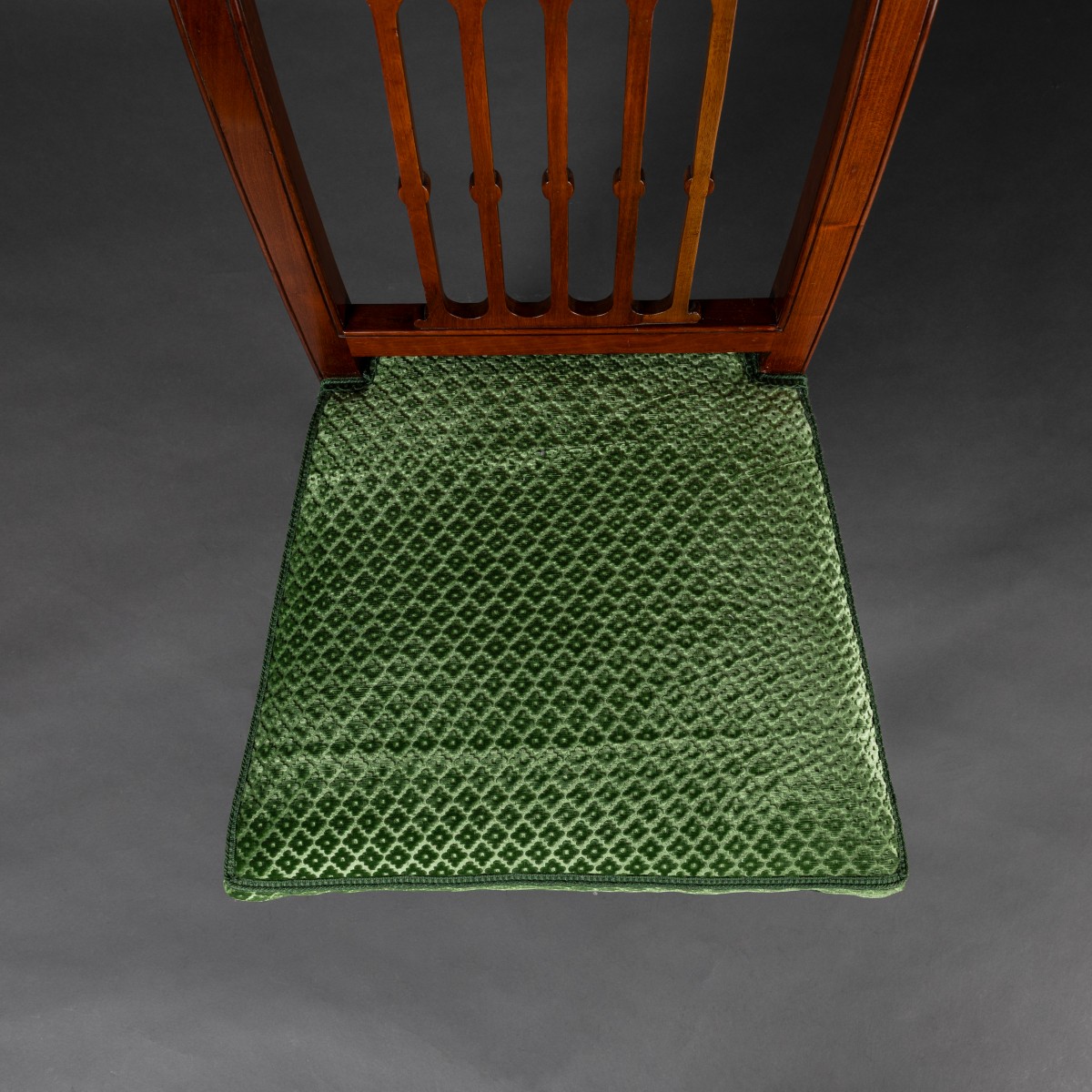
Condition report: original french polish finish; traditionally upholstered with embossed silk velvet. Previous restorations.
Delevery information :
All our objects are visible in Paris. Worldwide delivery by DHL.