Offered by Tobogan Antiques
REQUEST INFORMATION
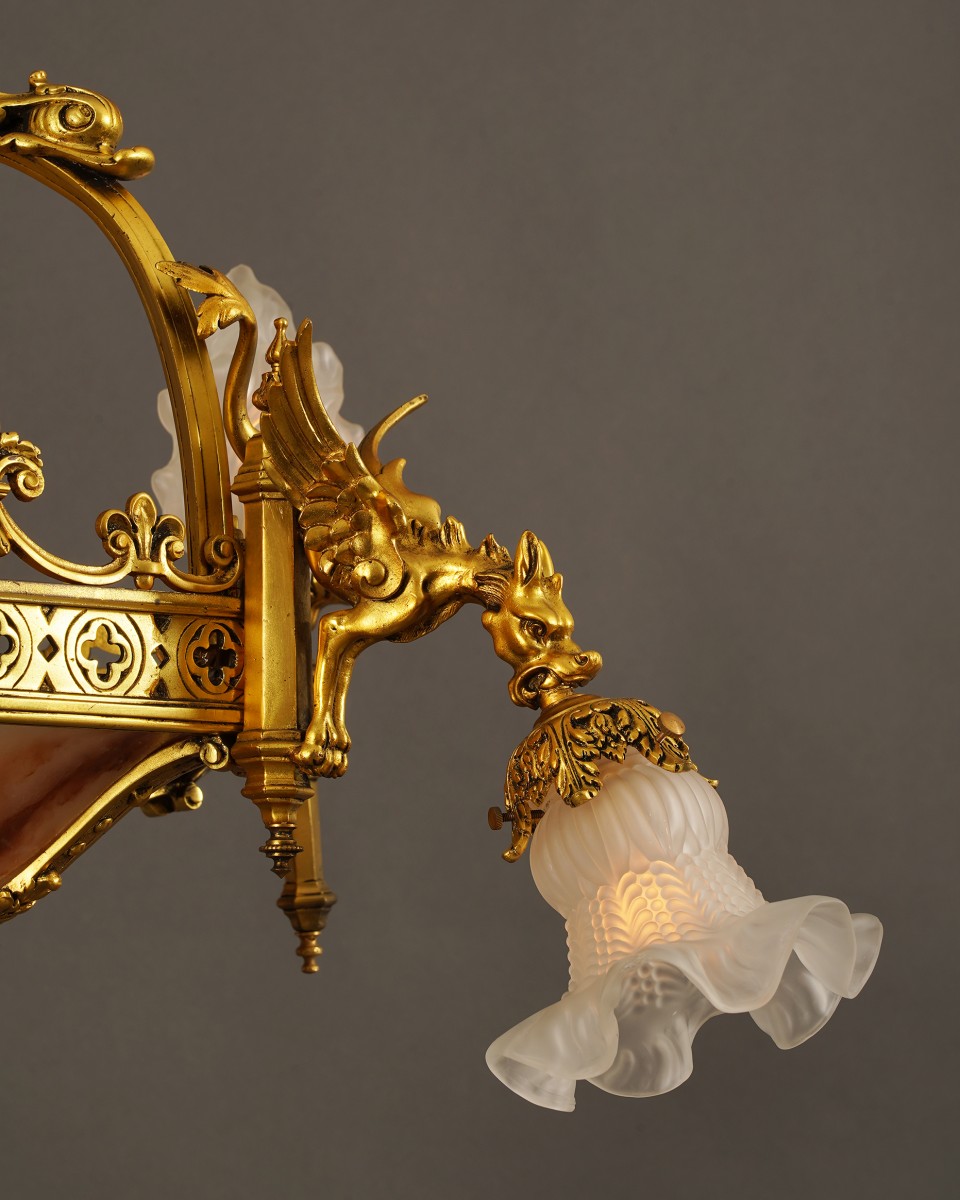
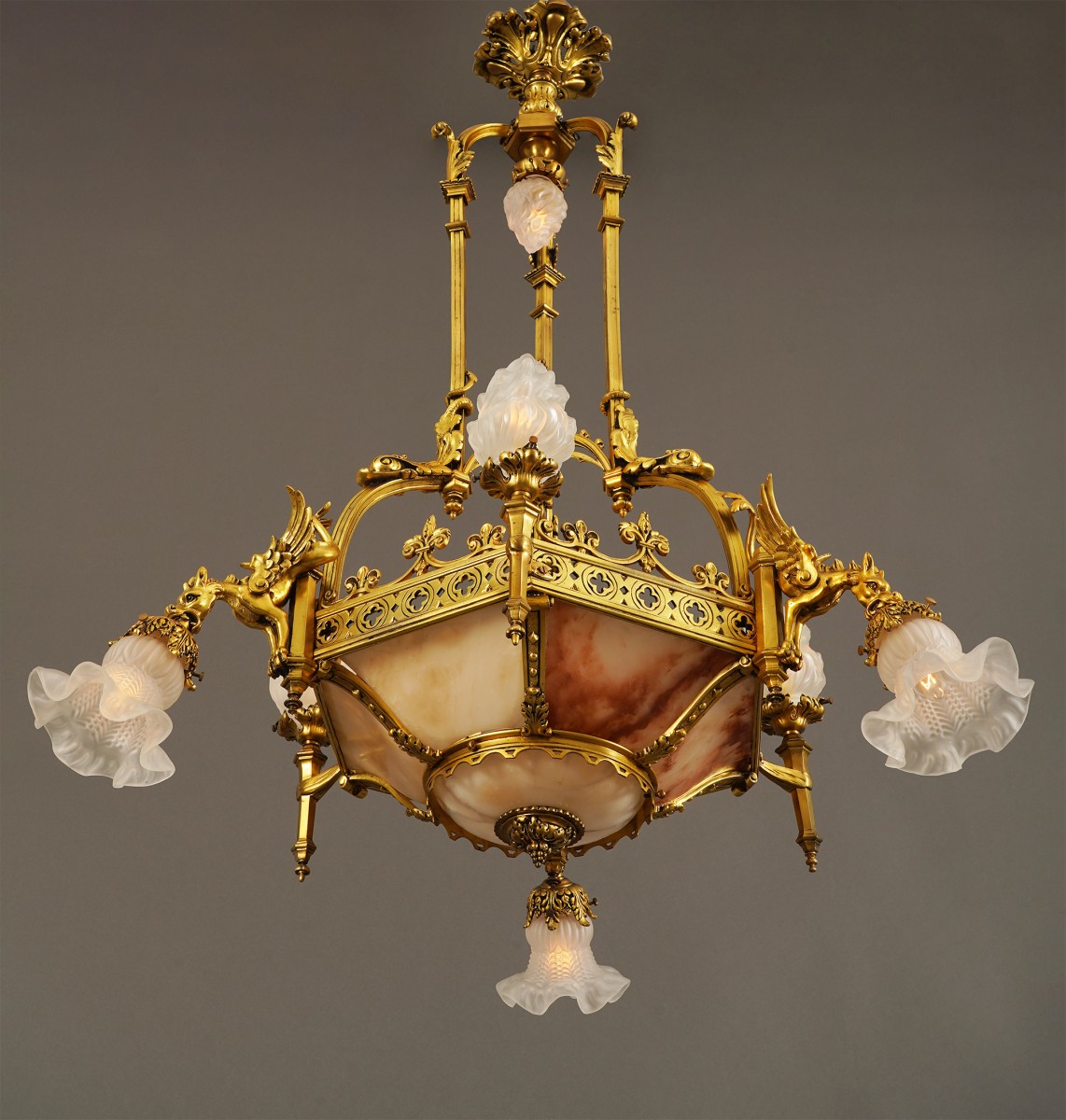

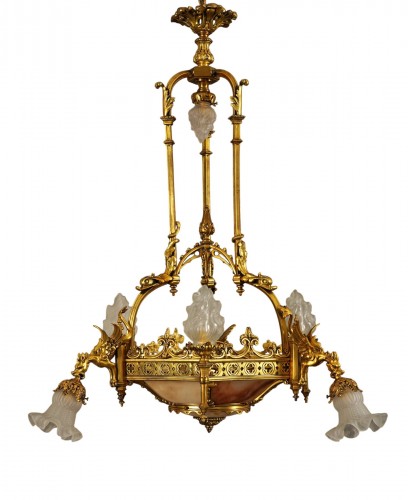
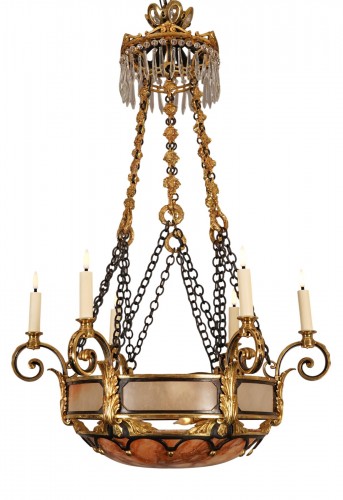
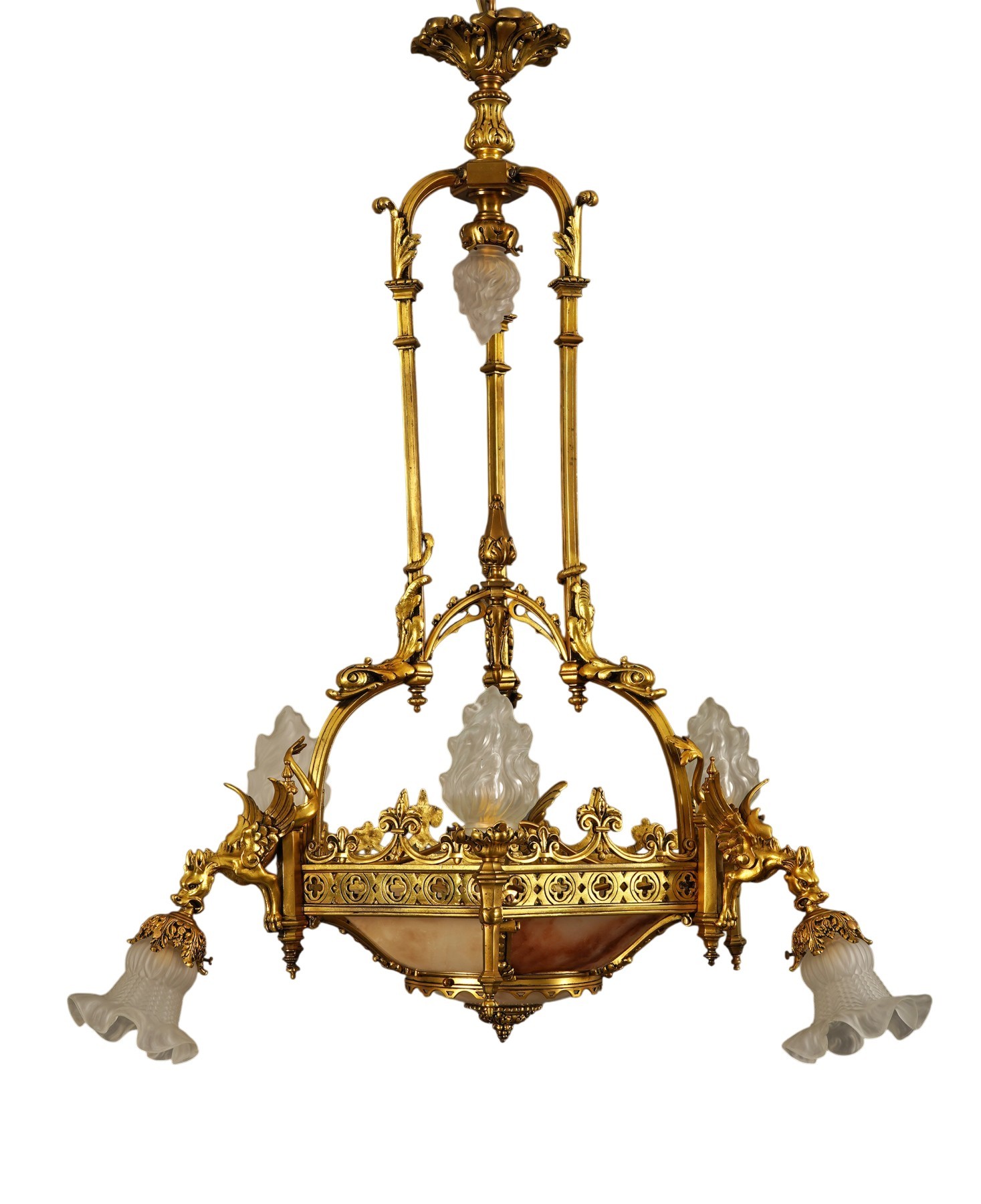
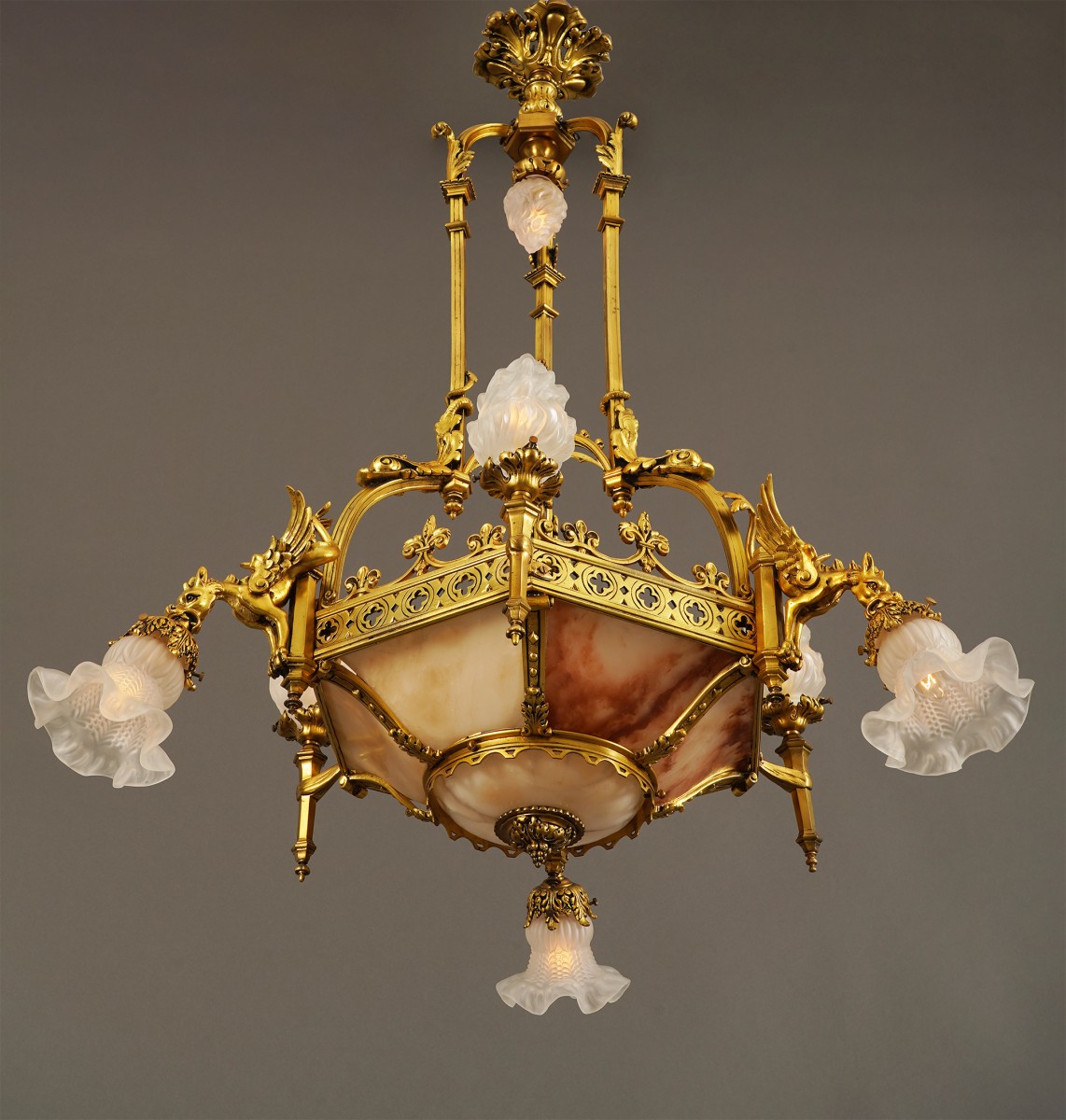
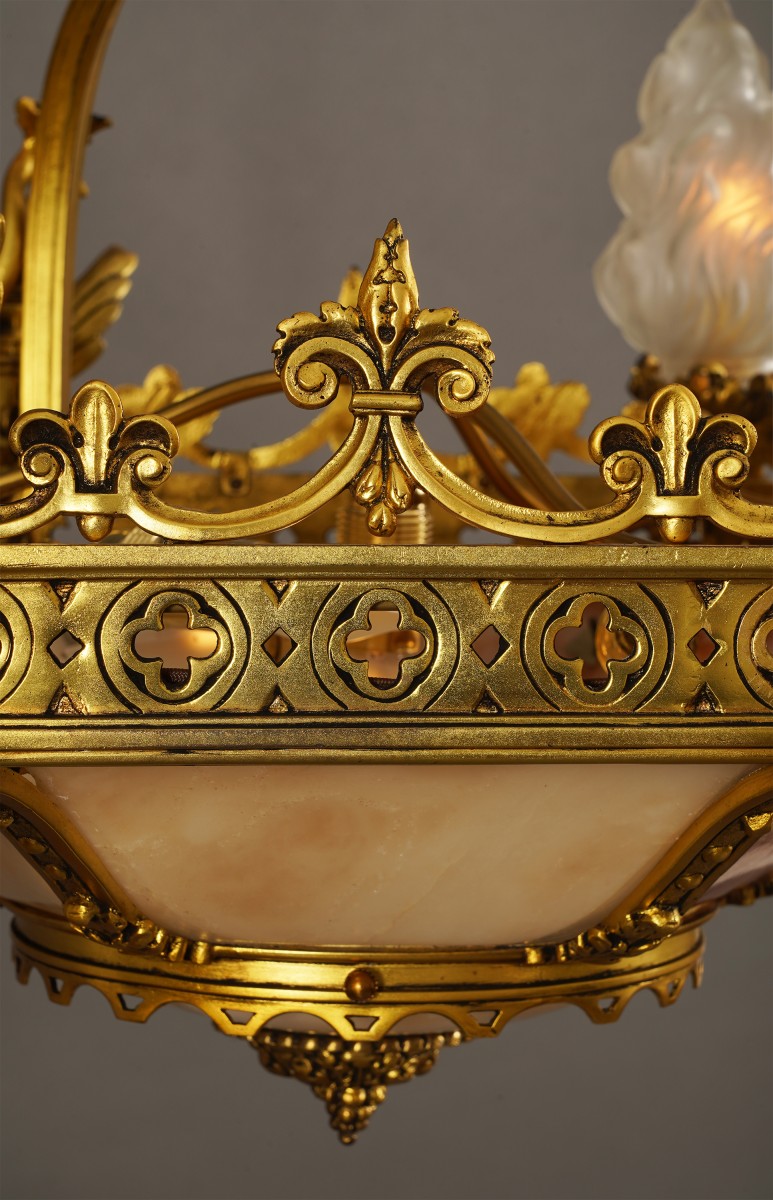
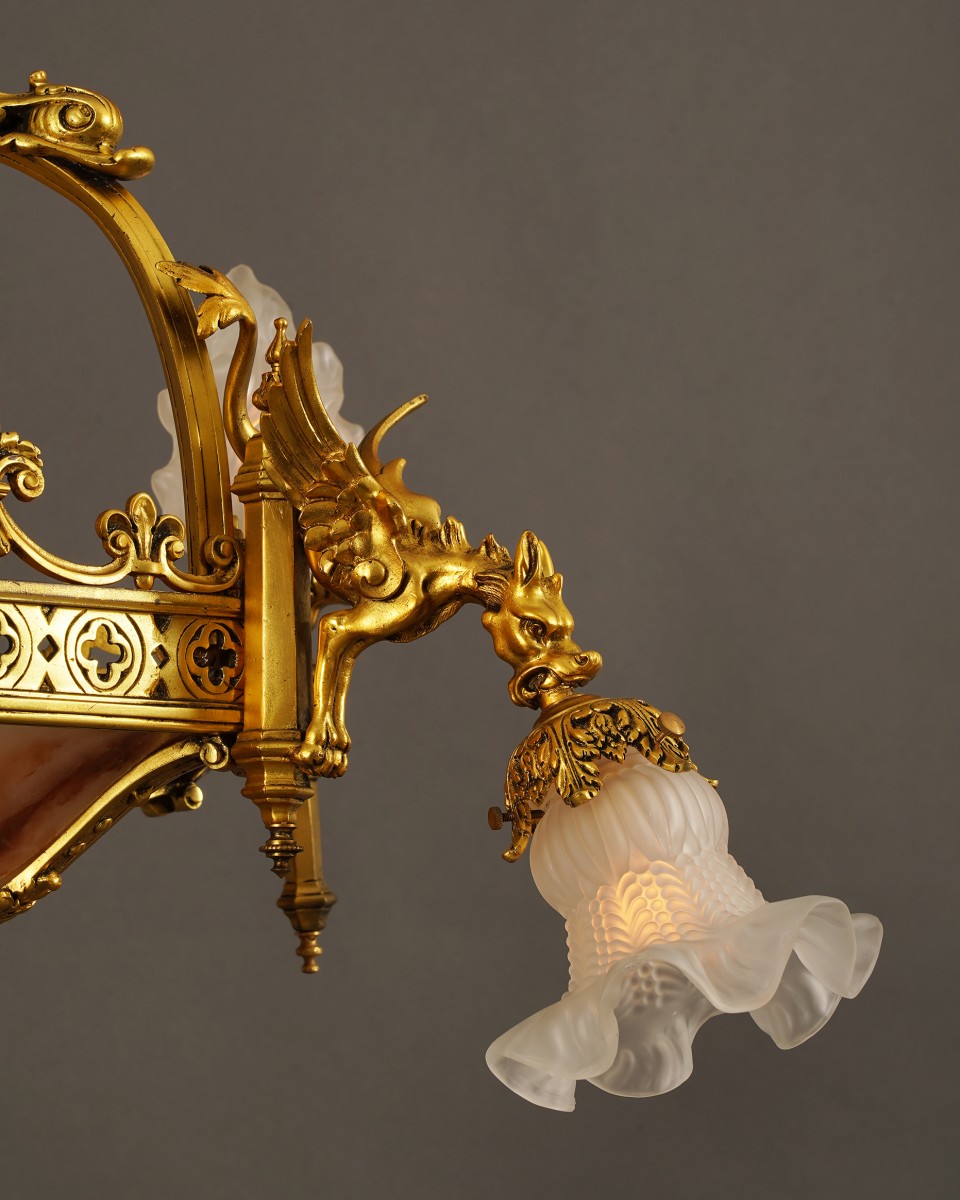
Elegant neo-Gothic gilt bronze chandelier attributed to Susse & Lelievre with seven lights, composed of a veined alabaster bowl mounted in a bronze frame and ending in a gallery and a finial. The basin is surmounted by a wide openwork frieze of quatrefoils and fleurons, punctuated by capitals and foliated crockets, in an architectural vocabulary directly borrowed from Gothic art. The most spectacular element lies in the three dragons arranged in corbelling, mouths open, wings spread. Each carries a glass tulip at the end of its snout. The whole is supported by three arched uprights decorated with dolphins and acanthus leaves, all attached to a crown with foliage motifs from which emanates a seventh light.
This chandelier is probably the fruit of the successful collaboration between the sculptor Olivier Lelièvre (1869-1947) and the prestigious Parisian art foundry Susse Frères, for which he designed and modeled models.
BIOGRAPHY
A world-renowned foundry, Maison Susse began producing bronzes in the first half of the 19th century. Confirming their success during the famous Exhibitions of Products of French Industry in Paris, the Susse brothers, Victor (1806-1860) and Amédée (1808-1880), appear as early as 1841 as manufacturers of "Art bronzes for clocks, candelabras, vases, statuettes, etc." The greatest French sculptors entrusted them with their sculpted works to be cast in bronze, such as James Pradier (1790-1852) who signed the oldest currently known publishing contract in 1841. After the death of the two brothers, Albert Susse succeeded them from 1880 to 1922 at the head of the firm. He gave it new impetus and considerably developed the foundry. Albert then opened a luxurious store at 13 boulevard de la Madeleine in Paris.
Octave Georges Lelièvre (1869-1947) is a French sculptor and ornamentalist associated with the decorative arts of the Belle Époque and the revisited Louis XVI style. A student of the sculptor Théodore Eugène Victor Barrau, as well as Dumont and Gumery, his work is primarily known through furnishing bronzes, clocks, candelabras, desk sets, and decorative objects published by great houses of art bronziers, notably the Susse Frères house. Active around 1890-1930, he worked in the tradition of French decorative sculpture, mixing neoclassical influences and Art Nouveau then Art Deco refinement. His creations frequently use gilt bronze, with decorations of acanthus leaves, garlands, mascarons, and motifs inspired by the French 18th century.