Offered by Ars Antiqua

Old Masters paintings, furniture, sculptures and modern art
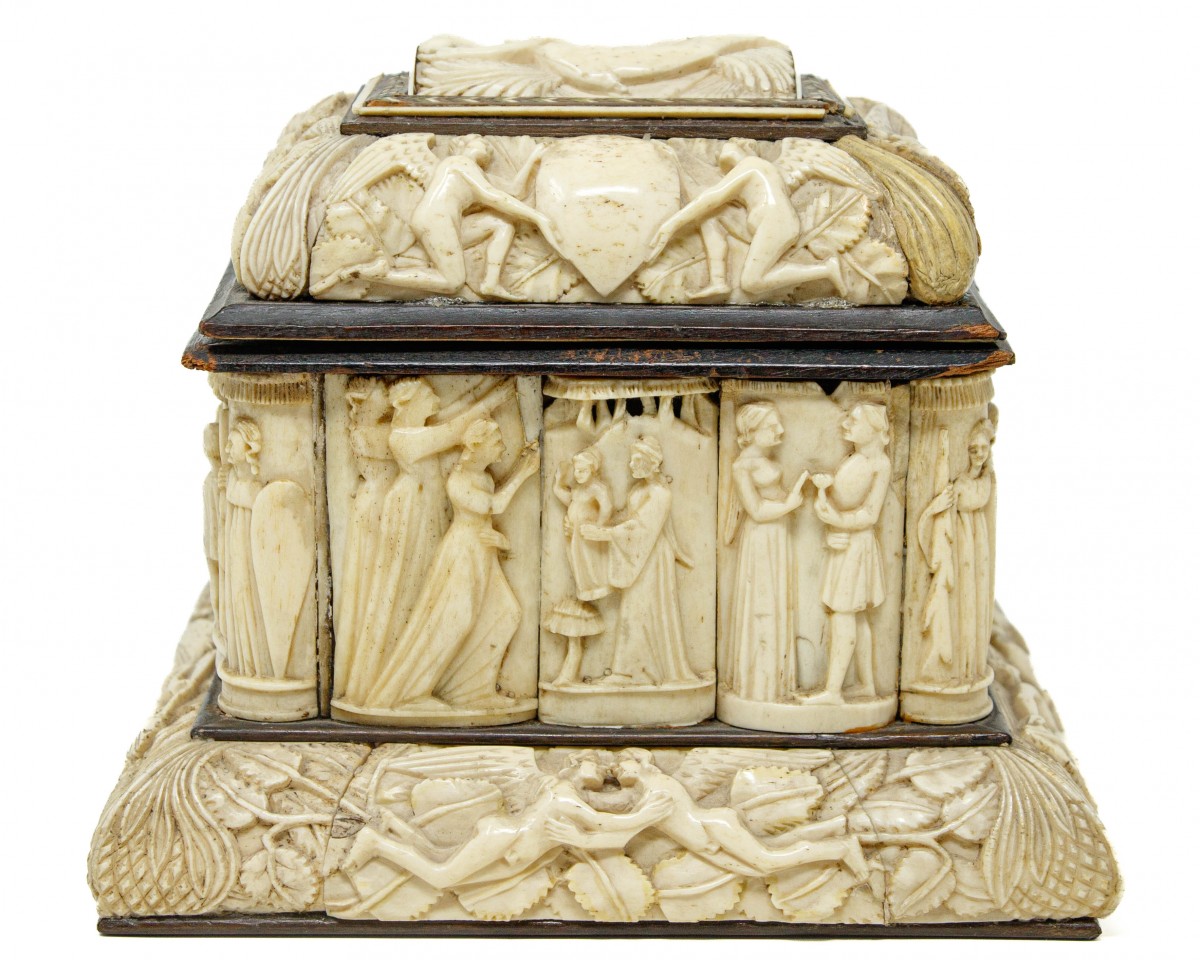
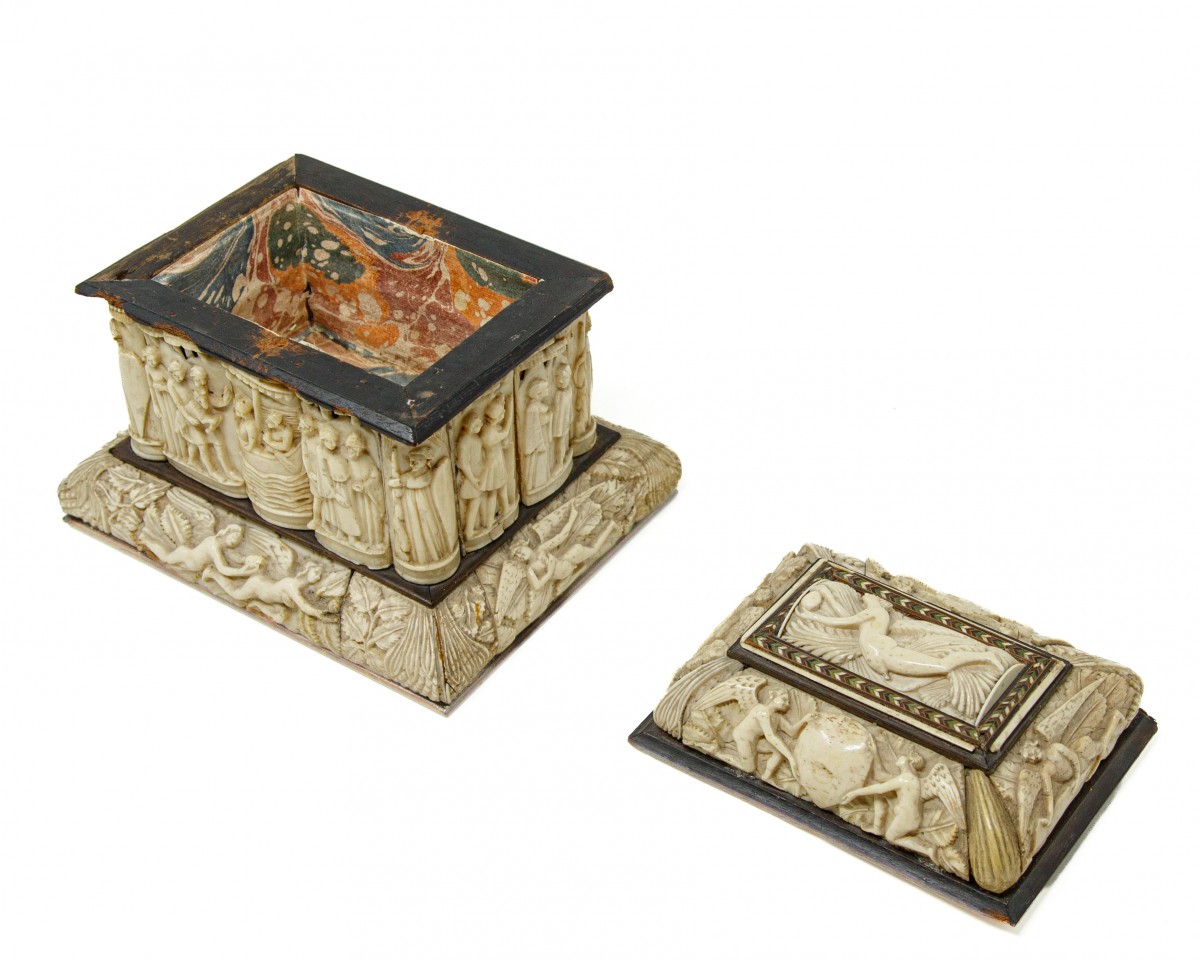
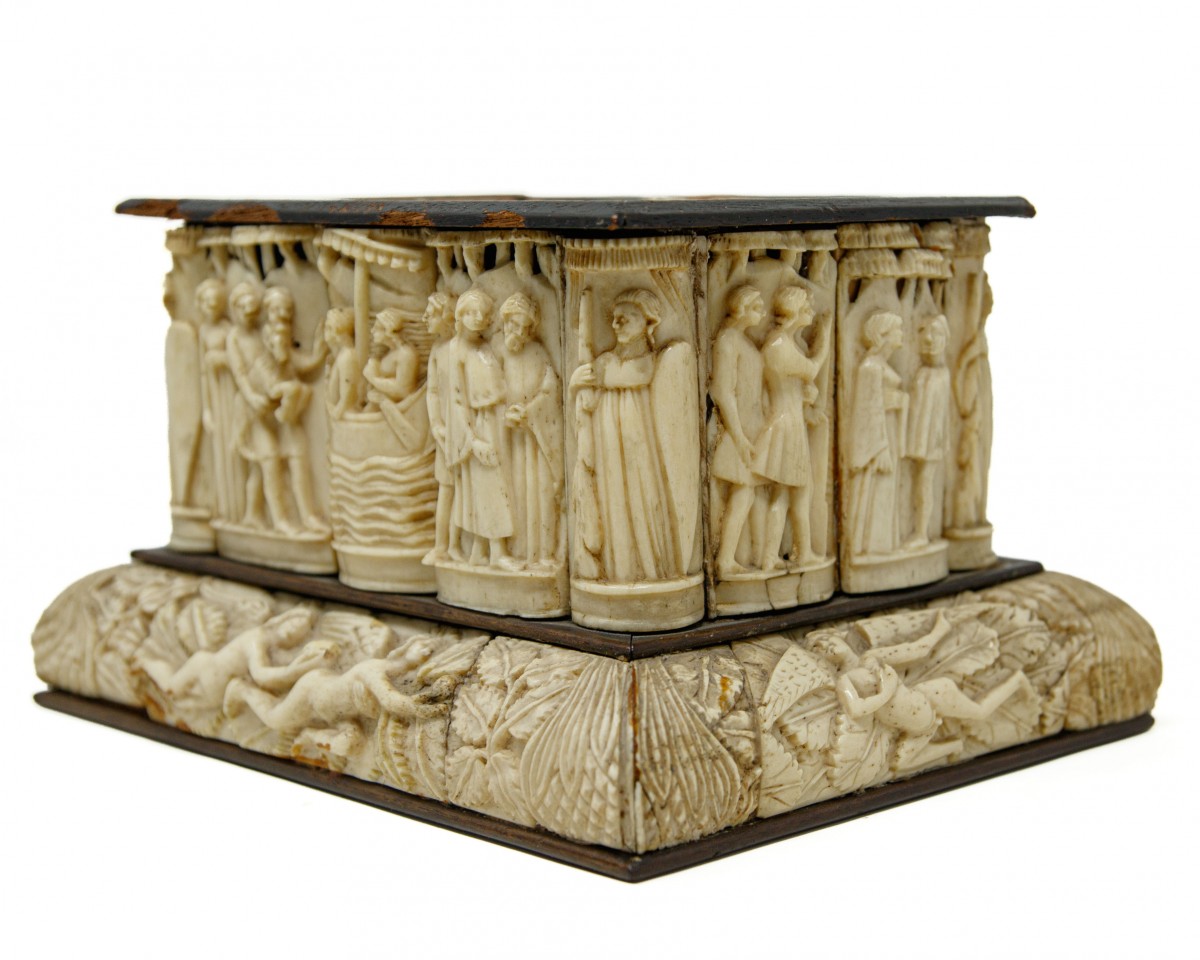
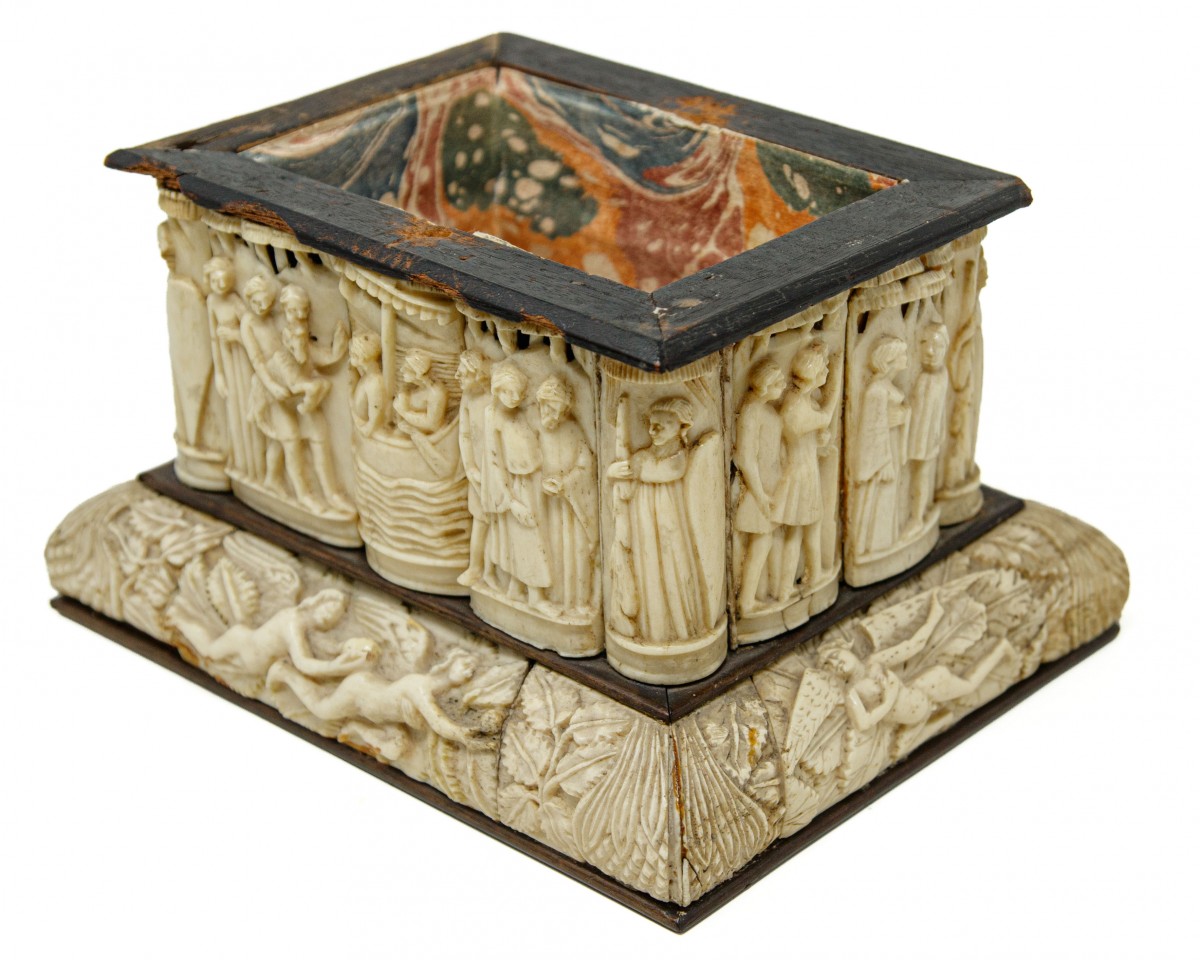
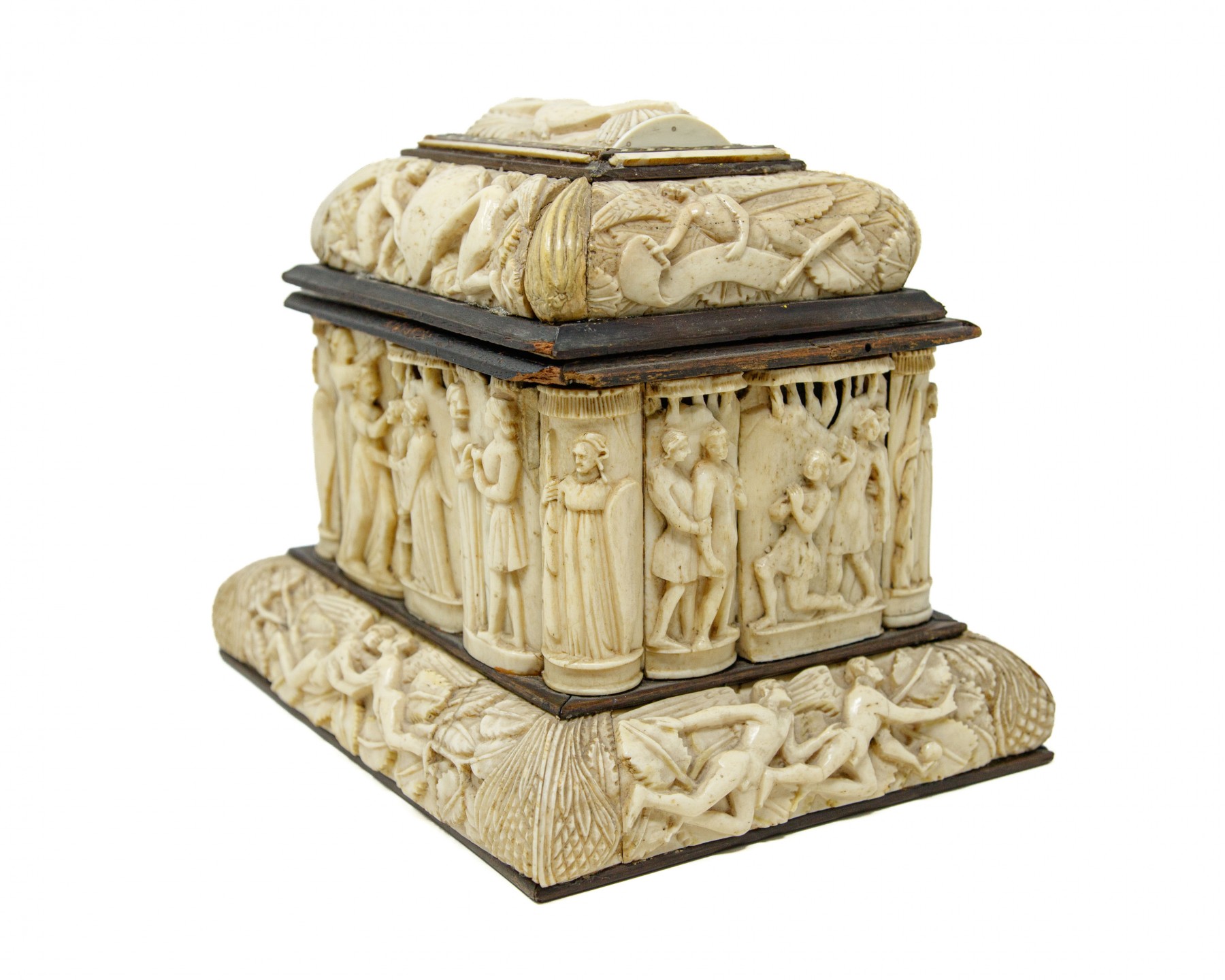
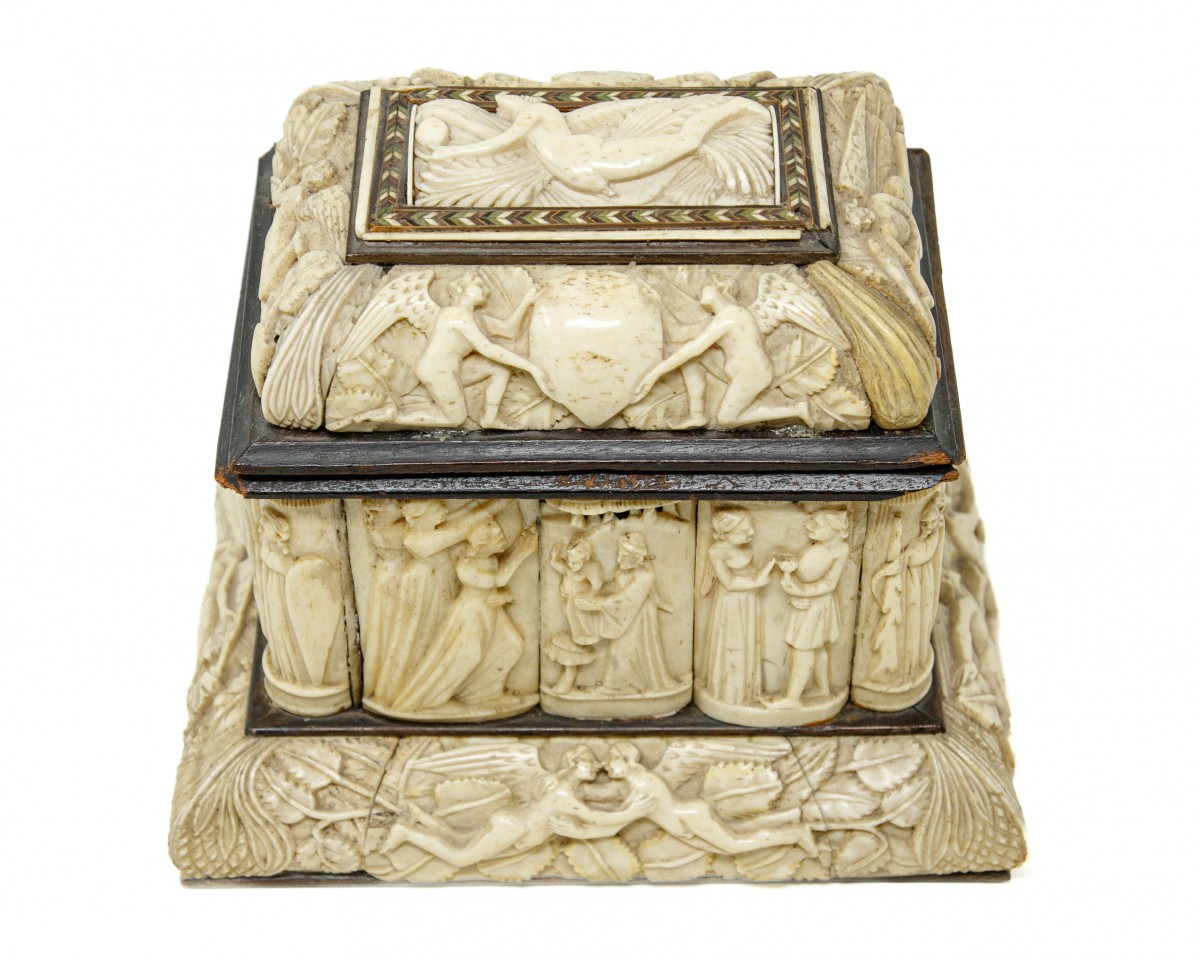
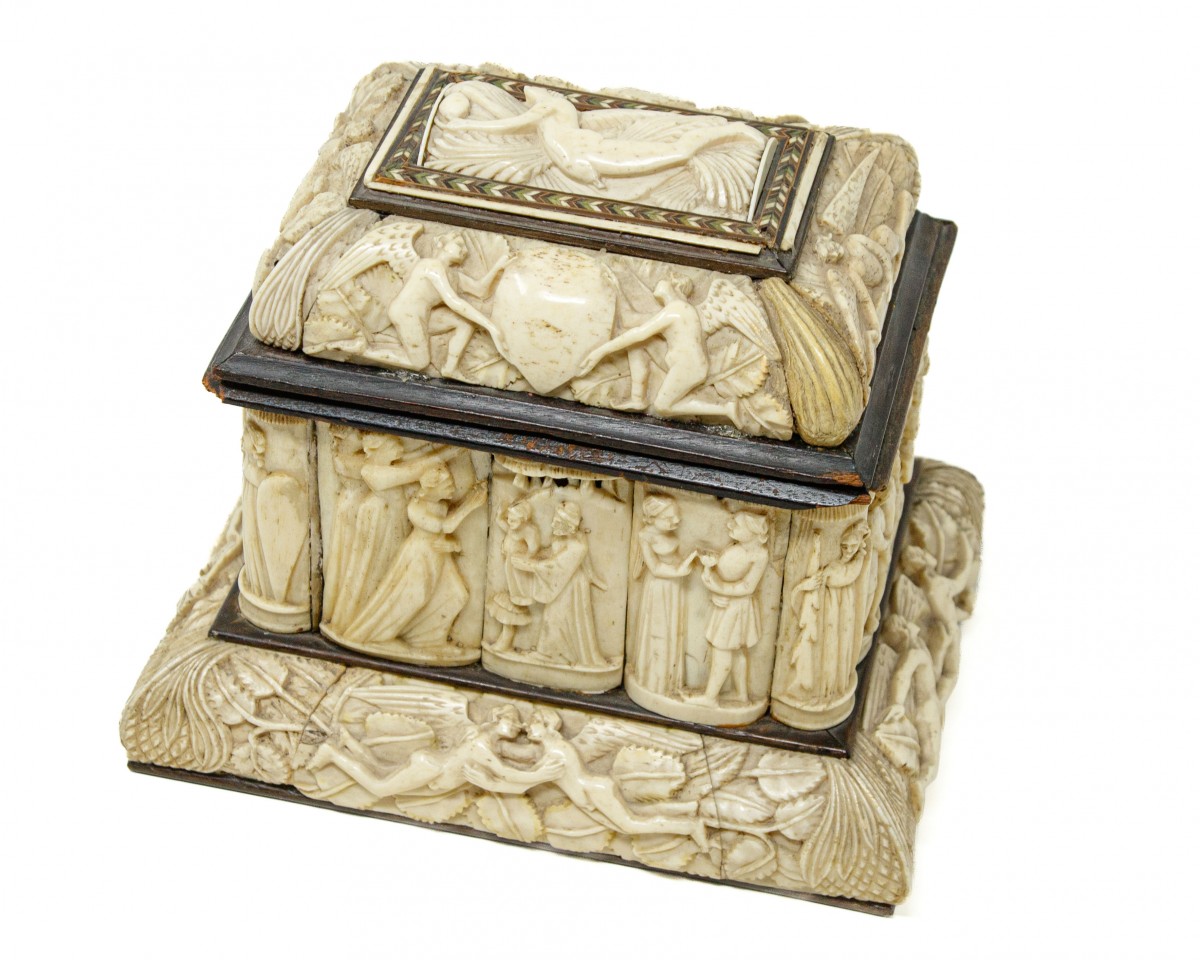
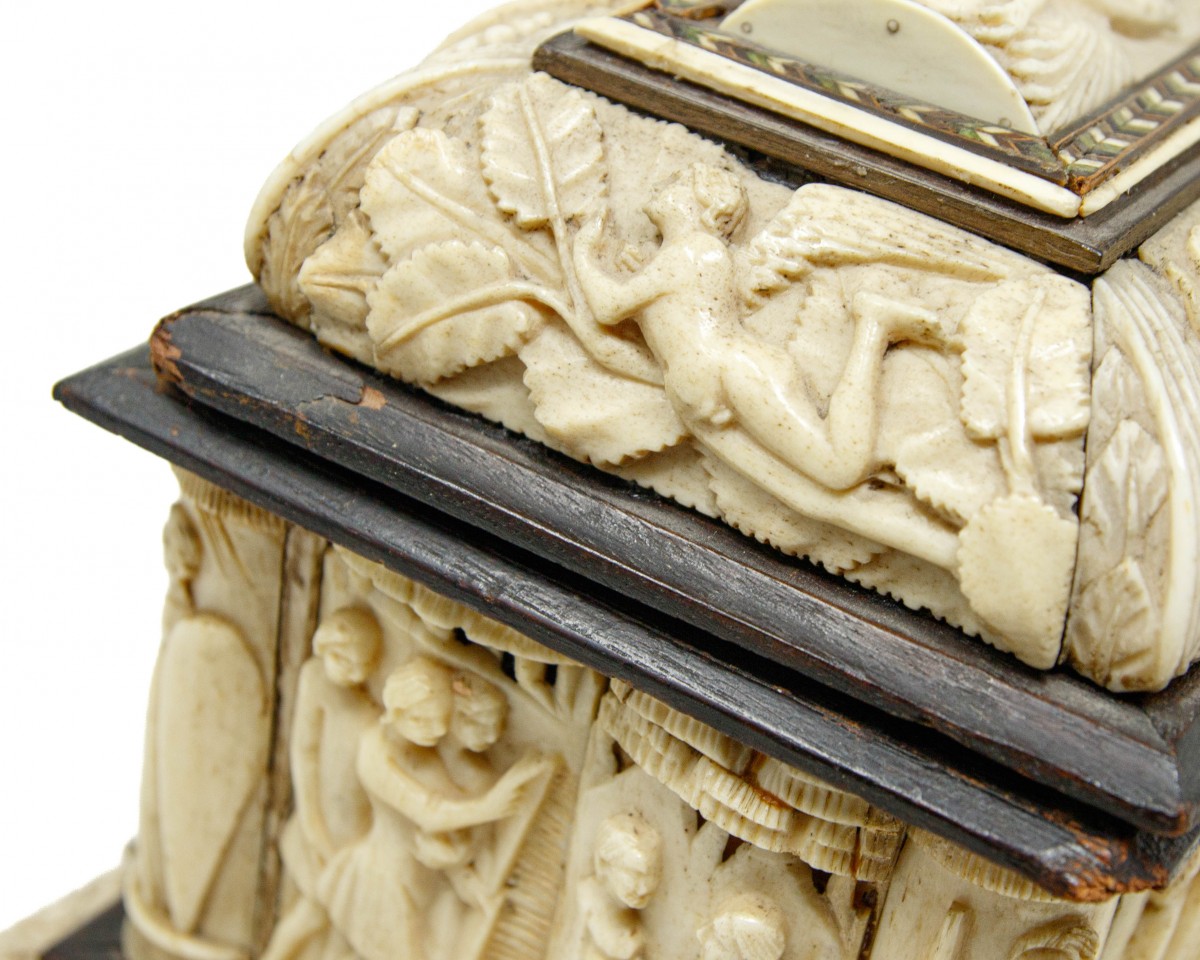
This refined rectangular bridal casket in bone and wood stands as a significant testament to the production of the Bottega degli Embriachi, the celebrated Florentine-Venetian workshop founded by the nobleman Baldassarre Ubriachi at the end of the 14th century and active throughout the first half of the 15th century. Operating as a proto-industrial enterprise, the workshop met the growing demand for domestic luxury items from the wealthy merchant class and the Late Gothic nobility. The success of these artifacts lay in the serial division of narrative cycles into individual, convex plaques of bovine bone, carved and assembled upon a wooden core adorned with meticulous geometric certosina marquetry. This casket fits perfectly into this repertoire, presenting a secular narrative centered on the myth of the Story of Paris, filtered through the lens of medieval courtly romances highly popular in nuptial contexts. The choice of this cycle was interpreted in a chivalric key as an exaltation of love, adventurous travel, and dynastic destiny—ideal themes for safeguarding a young bride’s valuables.
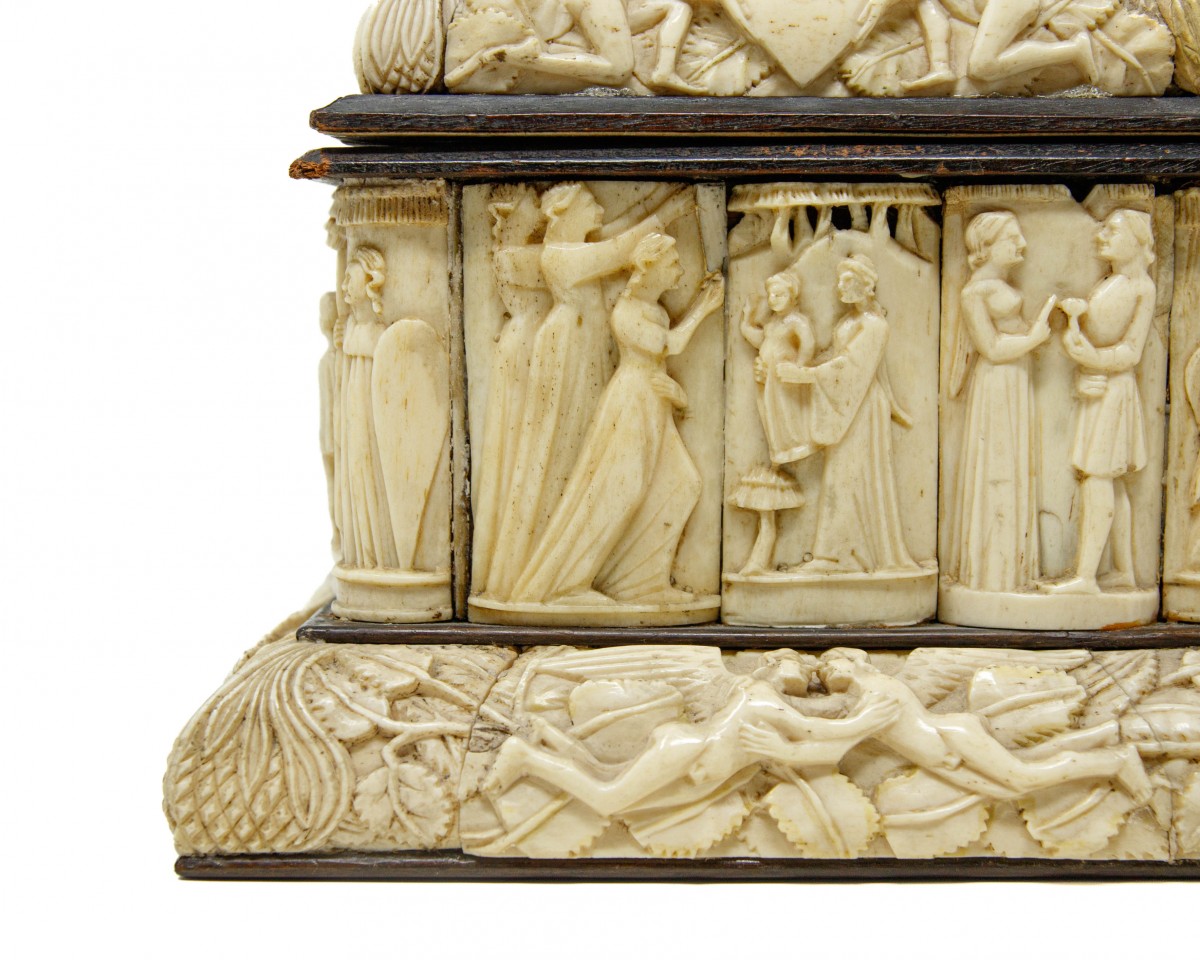
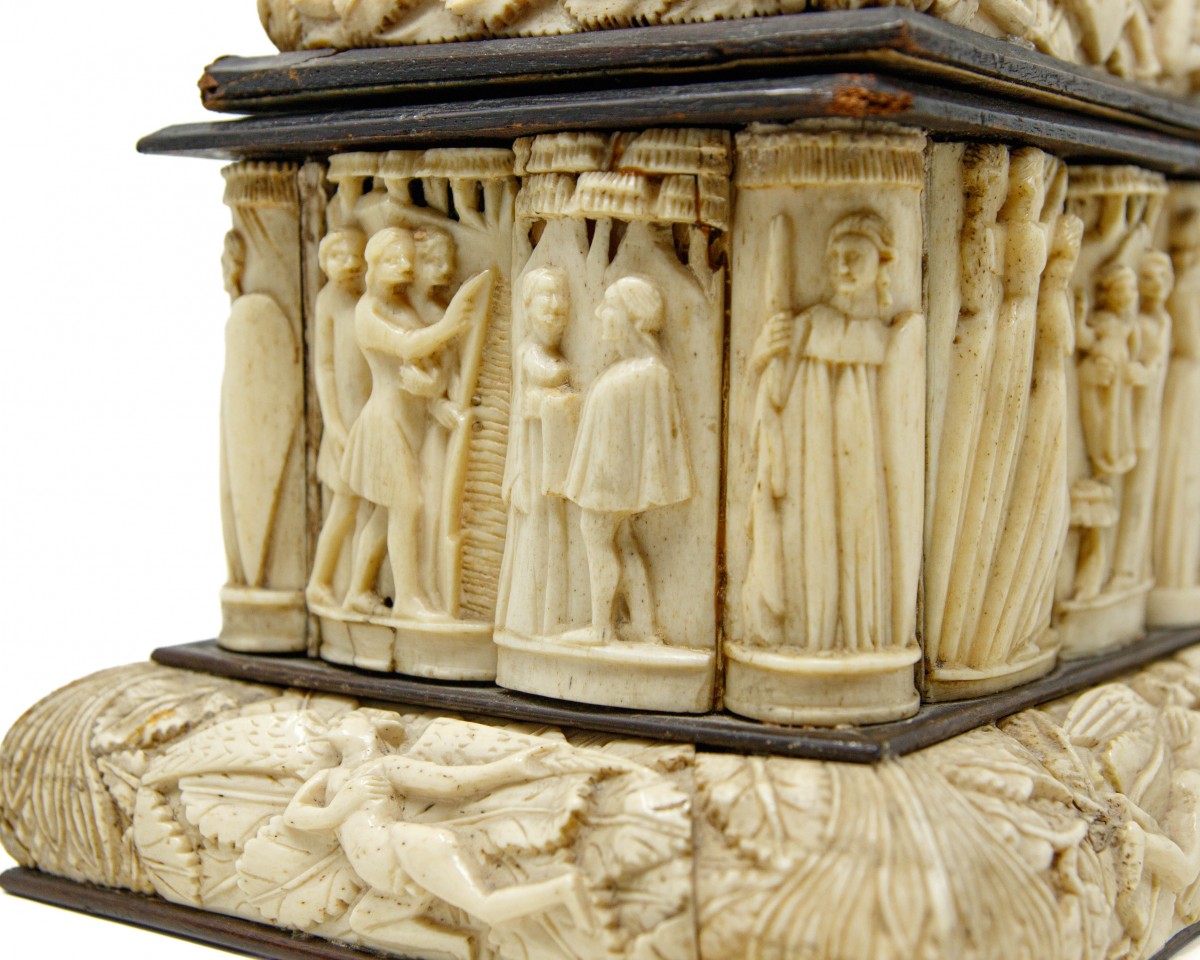
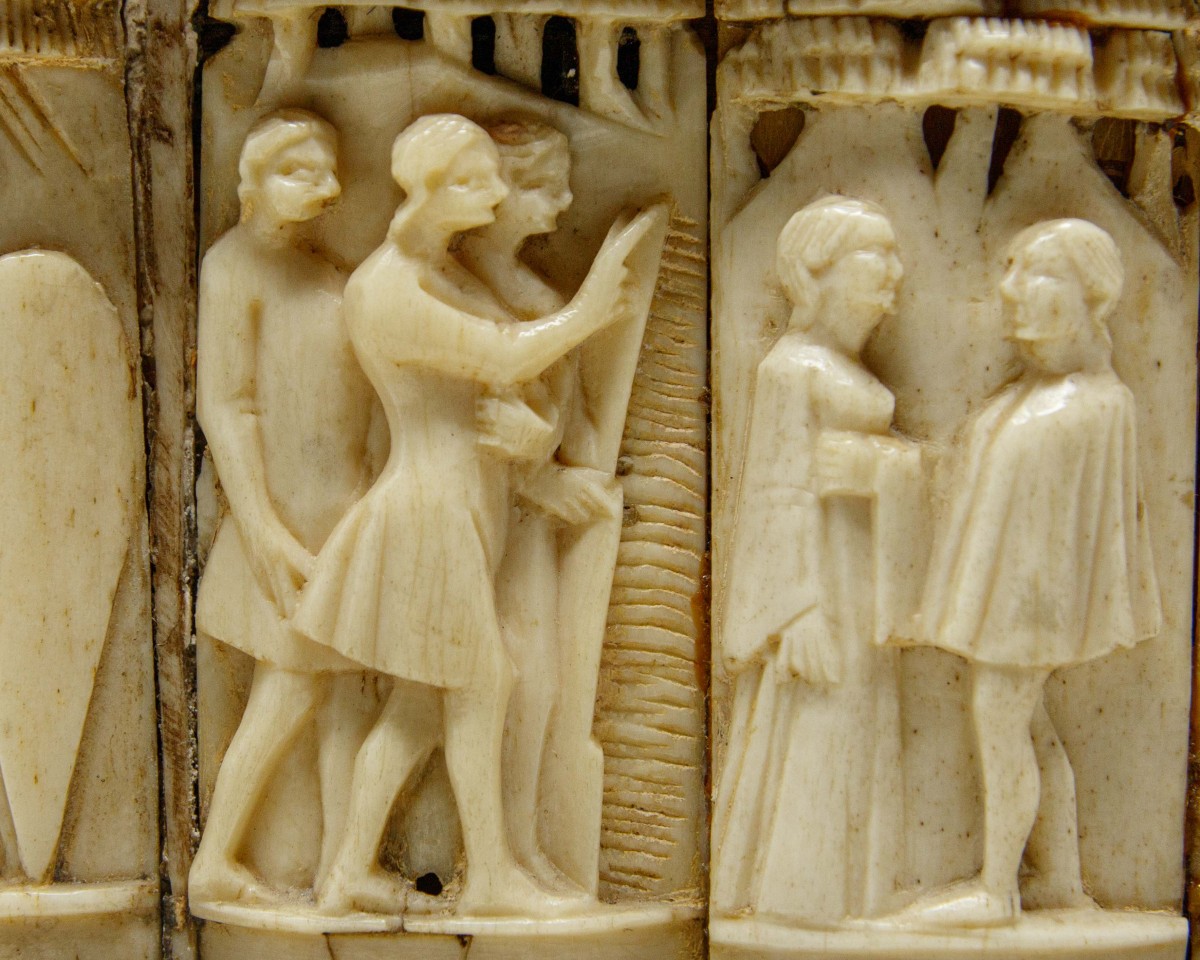
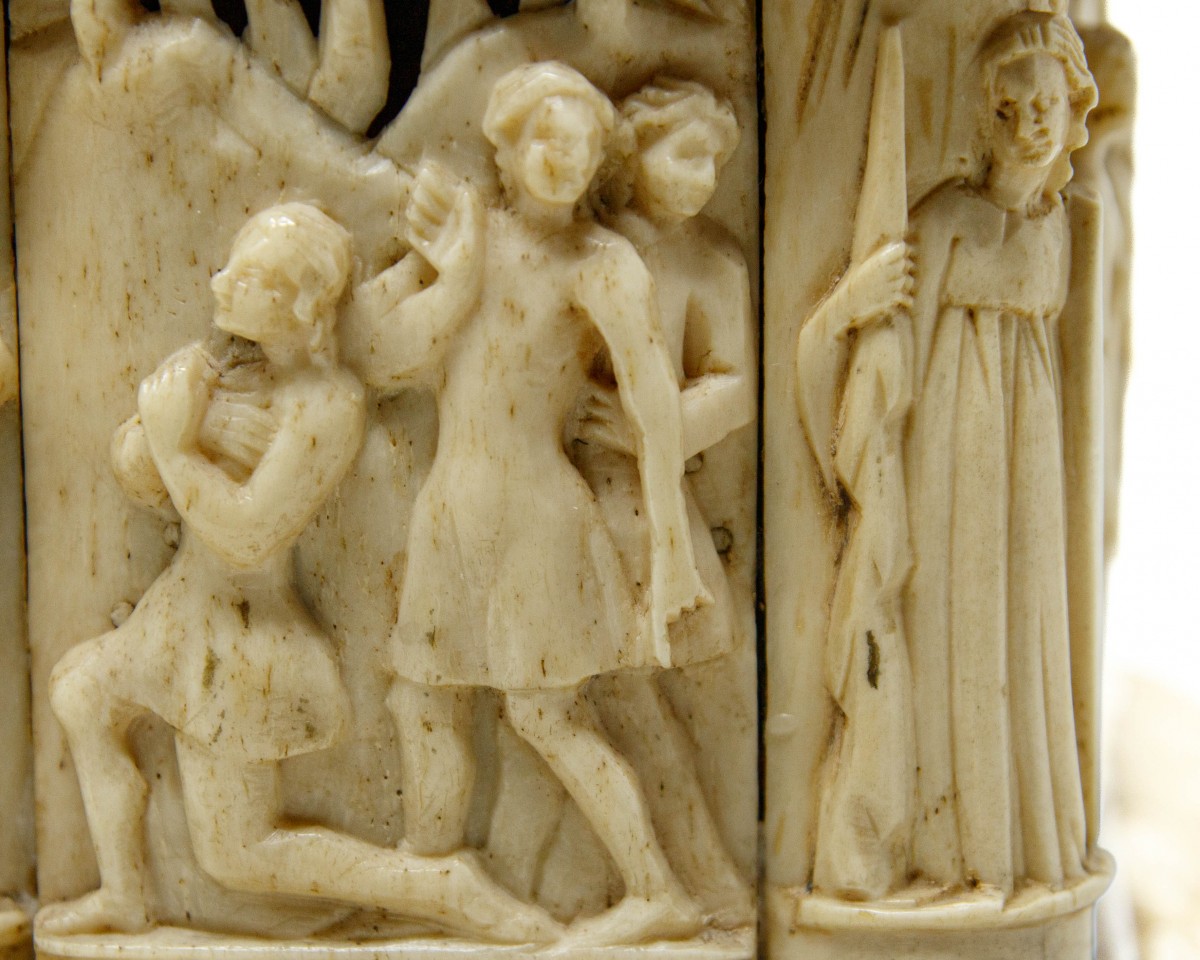
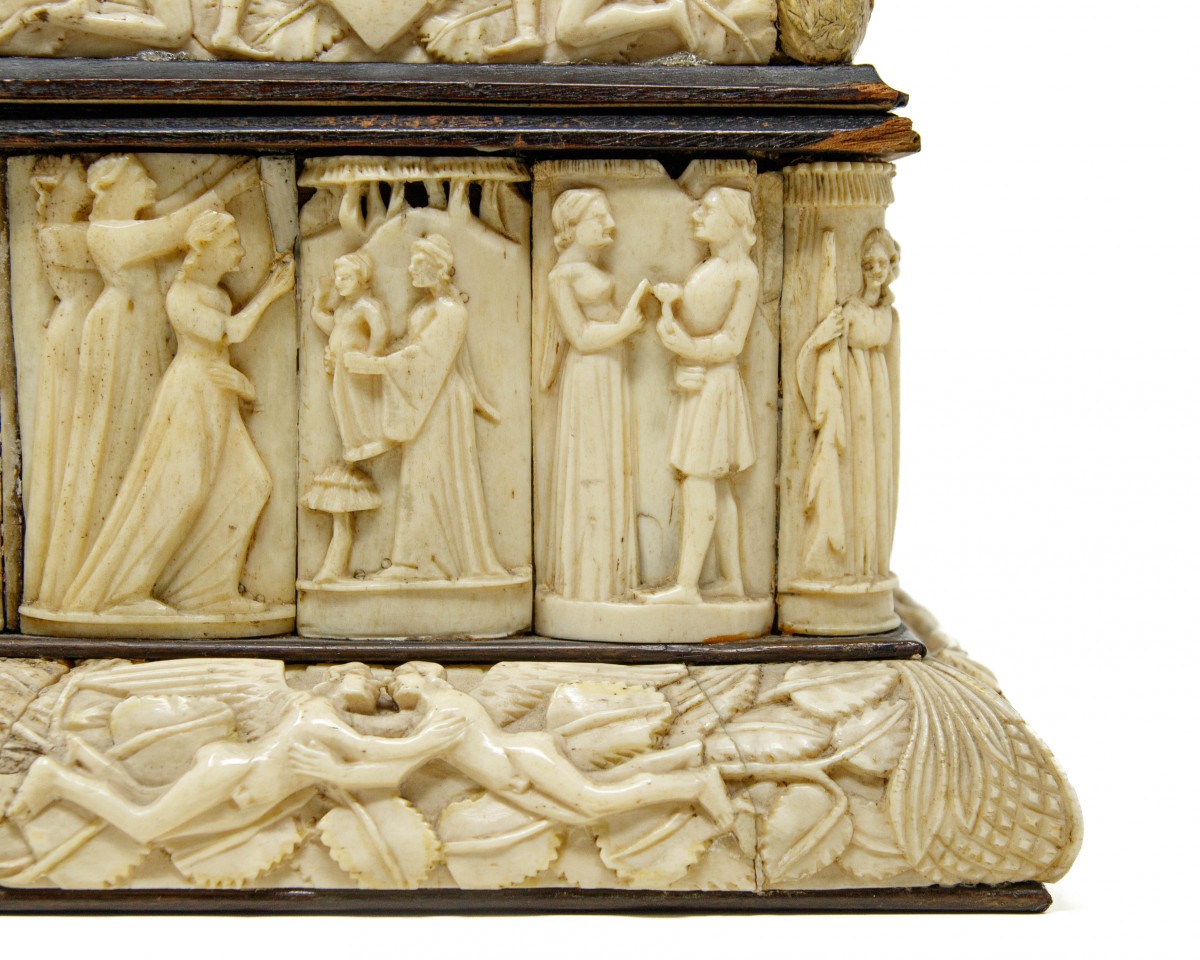
An analysis of the reliefs highlights the workshop's extraordinary skill in condensing the Trojan hero's complex biography within the strict physical boundaries of the plaques. The narrative opens with the origins of the myth: the infant Paris, saved from the death decreed due to his mother Hecuba's prophetic dream, is handed over to the shepherd Agelaus, who decides to raise him as his own son on Mount Ida. The subsequent episode shows the young Paris in his pastoral state, rendered through the codified image of a man bearing a ram on his shoulders, a symbol of his temporary estrangement from the splendors of the royal court. As the reading continues, the background becomes enriched with phytomorphic and rocky details where dense vertical carvings simulate the forest of Mount Ida. It is here that the young man's destiny is fulfilled when he is approached by deities to resolve the dispute of the golden apple: in a sequence of consecutive plaques, a figure is shown kneeling before two standing figures, at the exact moment Paris receives the divine commission to judge the beauty of the goddesses Hera, Athena, and Aphrodite.
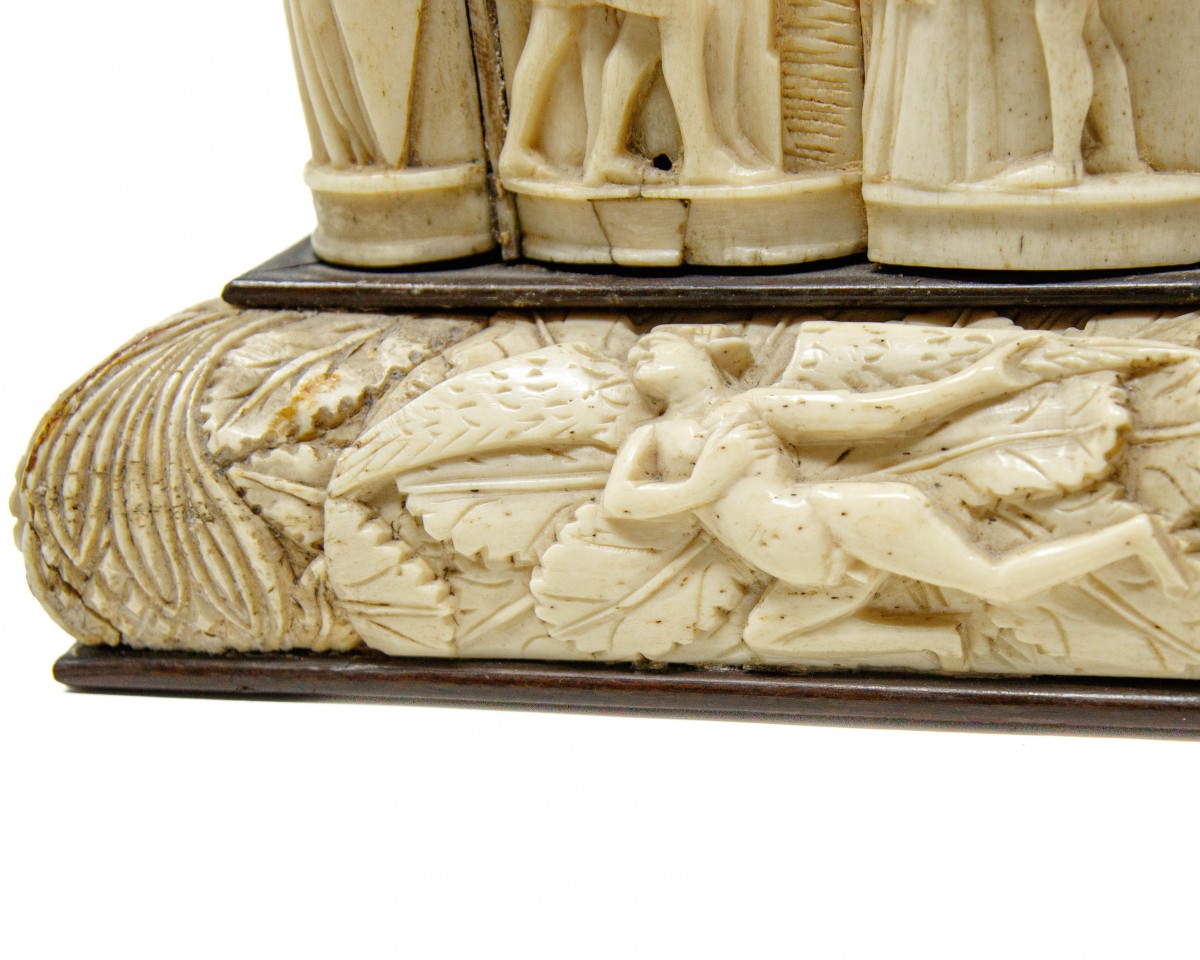
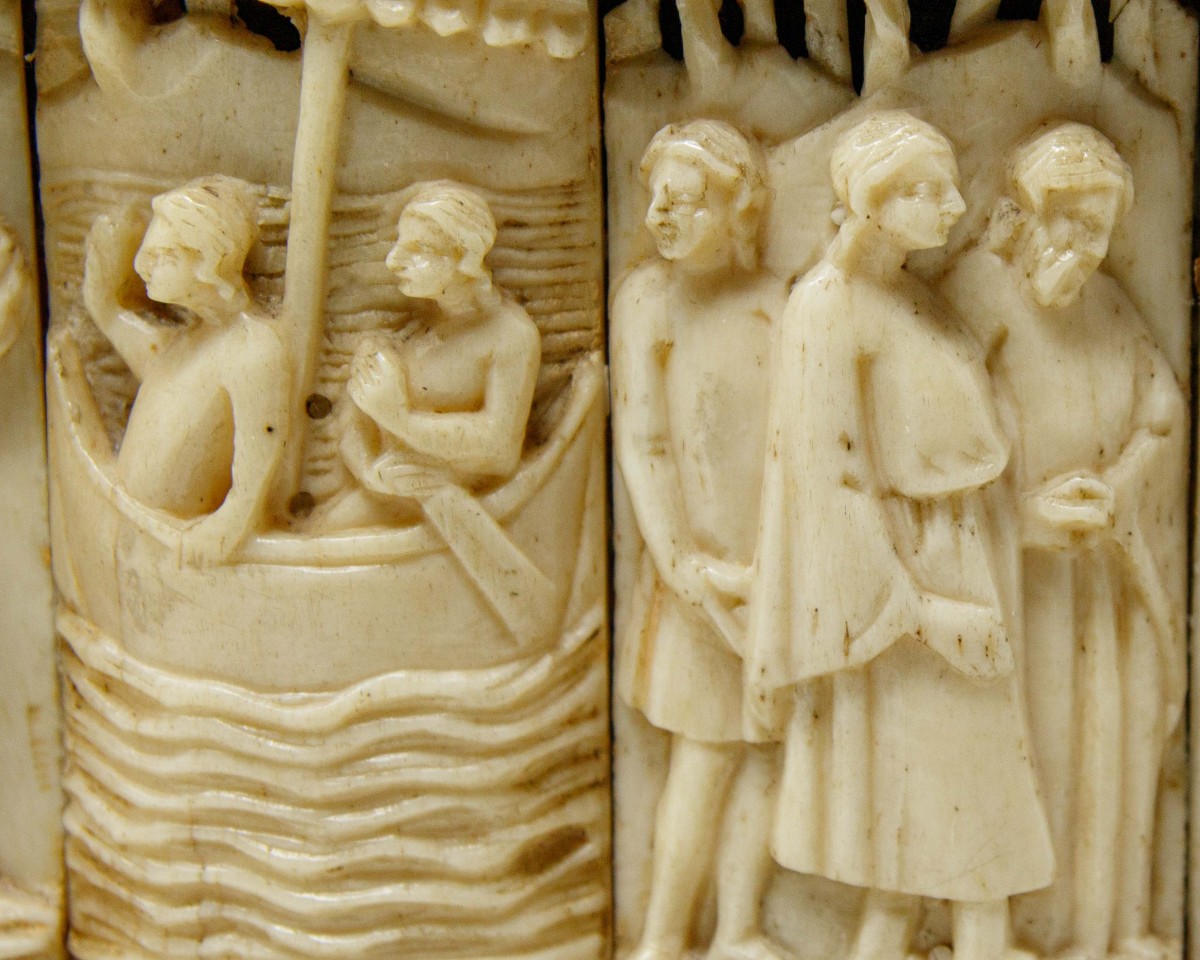
The most dynamic section of the iconographic apparatus is the marine scene, wherein the carvers demonstrate a remarkable capacity for volumetric synthesis. Within a single plaque, a medieval sailing vessel cuts through thick, rhythmic, stylized waves. On board, the profiles of two figures can be distinguished, illustrating the sea voyage undertaken by Paris—now recognized by King Priam and reinstated to his rank as a Trojan prince—toward Sparta. The landing on Greek soil and the subsequent entry into the court are evoked in the adjacent plaques, where figures in courtly attire move toward the vessel to welcome the delegation. In the remaining registers, the dense dialogues and ceremonial meetings between Paris and Helen unfold, paced by the elegant rhythm of lithe bodies and the vertical drapery of garments that mimic the cadences of contemporary Late Gothic sculpture. At the corners of the casket, within architectural niches, stand the customary corner female figures: protective Virtues, standing and armed with shields, serving an auspicious, protective function. Finally, the entire narrative rests upon a tall wooden base clad in a continuous bone frieze, in which small, naked, winged genii or cupids chase one another, captured in plastic, darting poses as they run through wide scrolls of lobed leaves, a classical decorative motif reinterpreted in courtly taste that seals the formal coherence of this splendid masterpiece of micro-sculpture.
Delevery information :
Les frais d'expédition seront calculés au moment de la commande en fonction de la destination, des dimensions et du poids du tableau, ainsi que de l'assurance couvrant la valeur totale de l'œuvre.
For paintings purchased from abroad: following payment, the application process to obtain the export license (ALC - Attestato di Libera Circolazione) will be initiated. All antiques shipped abroad from Italy require this document, which is issued by the Ministry of Cultural Heritage. The procedure may take 3 to 5 weeks from the date of request; therefore, the painting will be shipped as soon as the document is obtained