Offered by Galerie Sismann
REQUEST INFORMATION
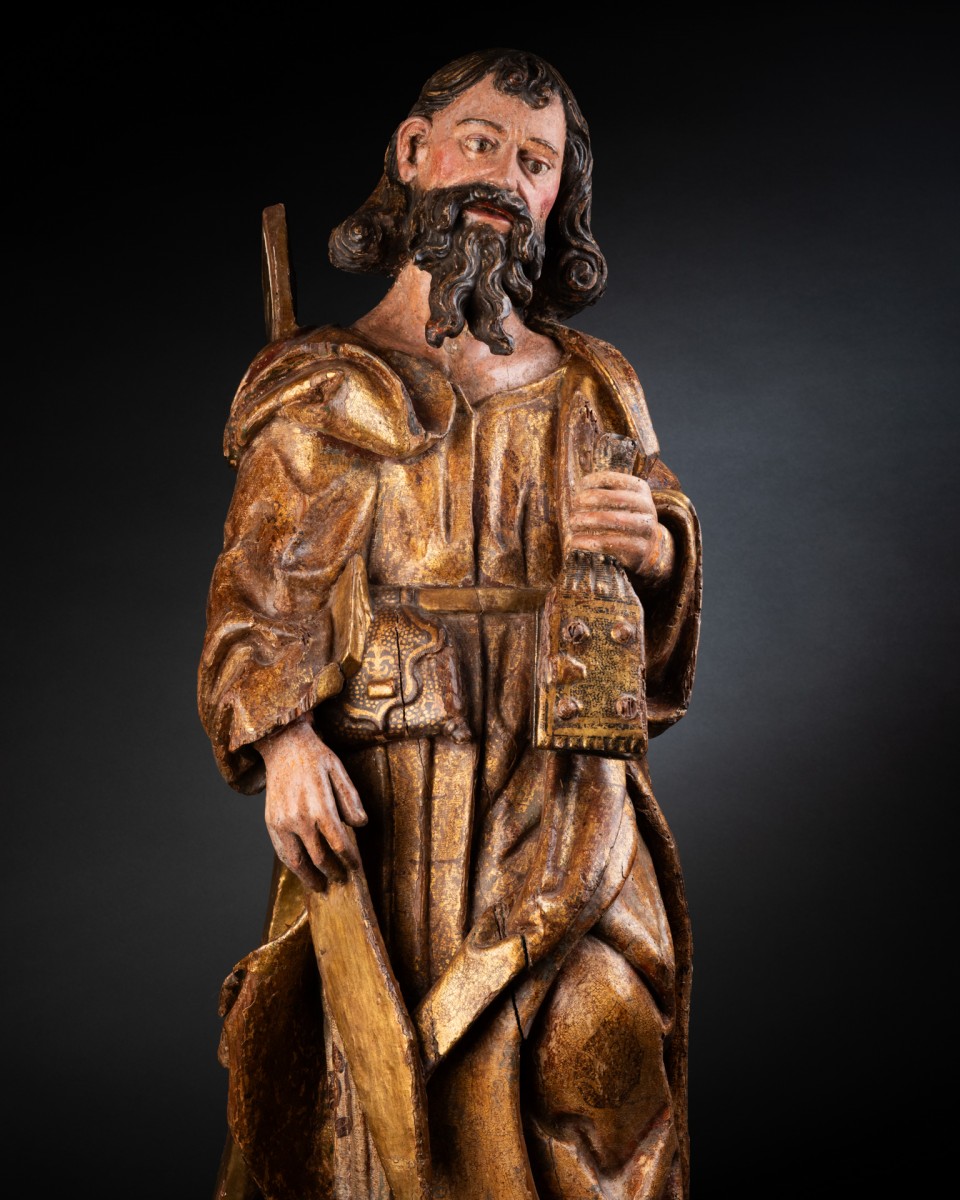
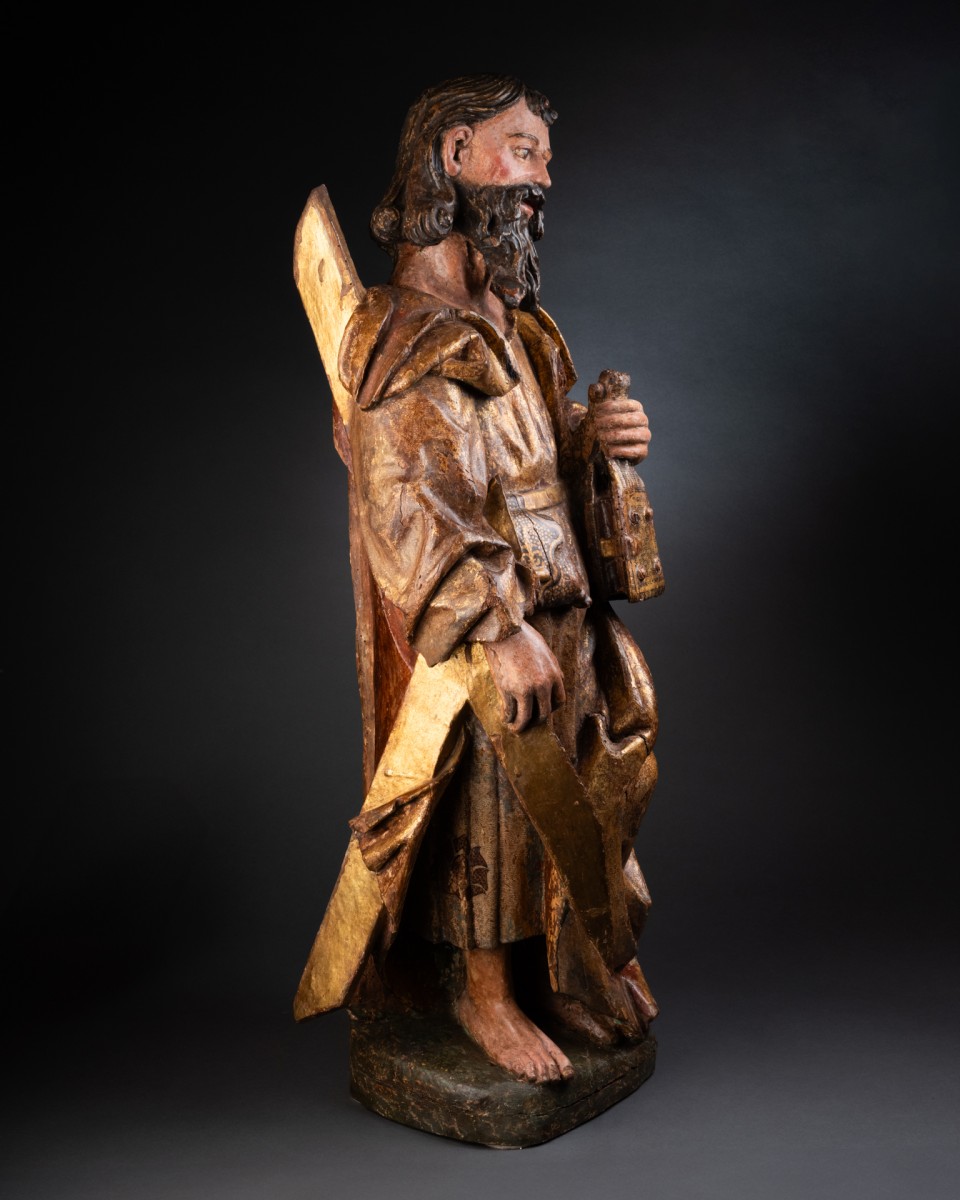
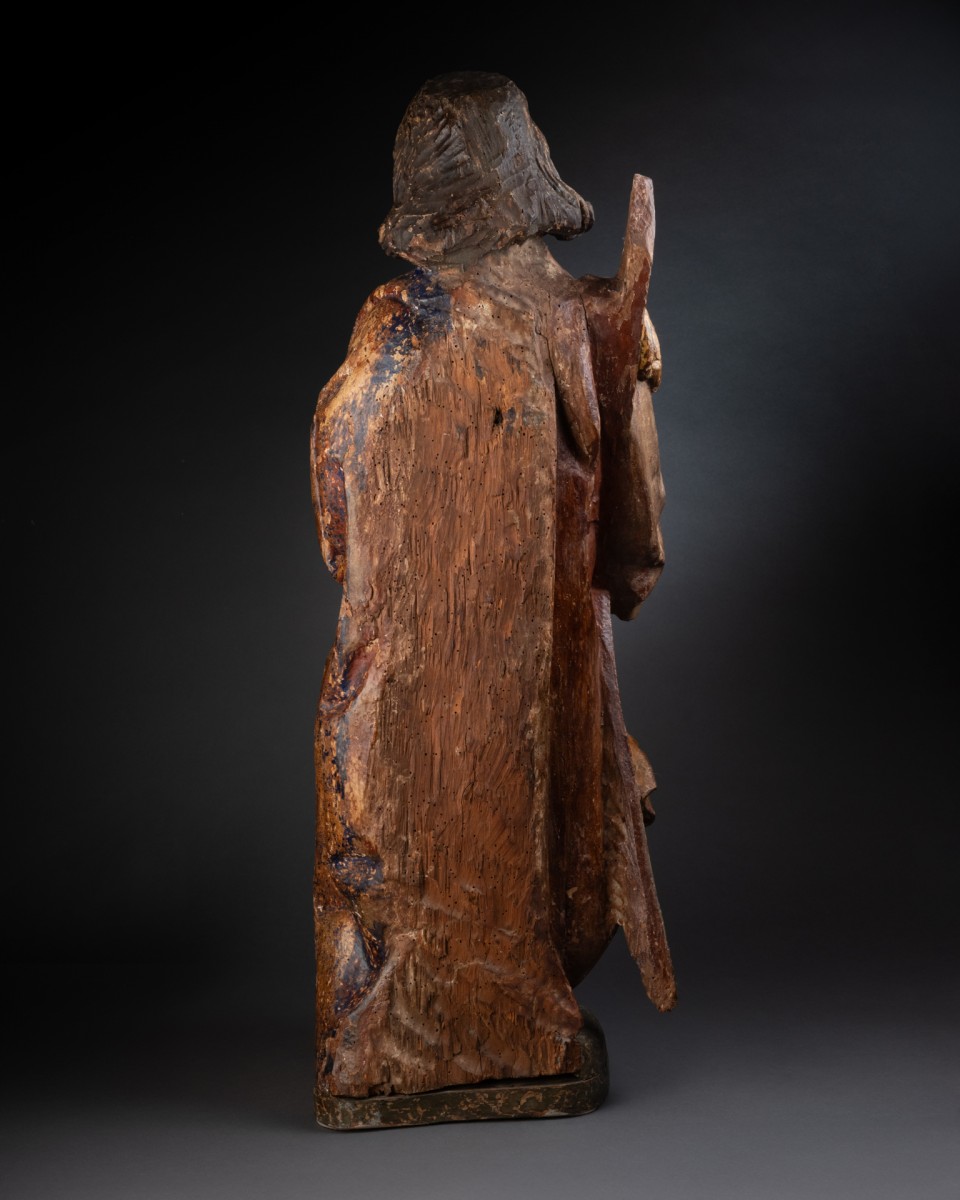

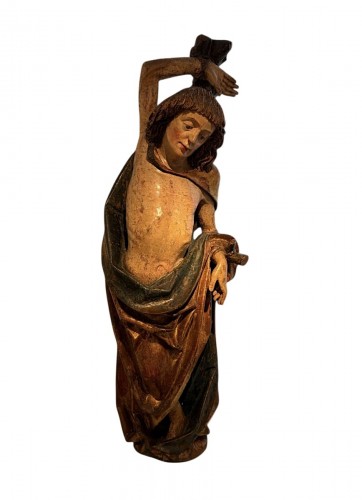
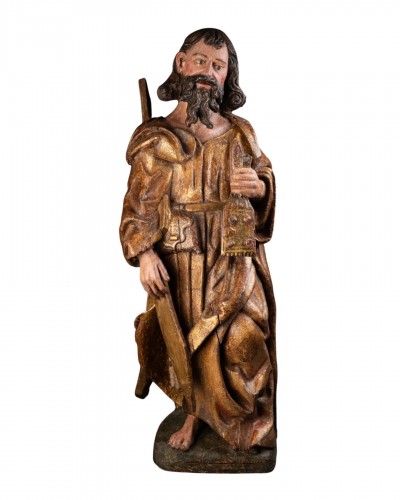
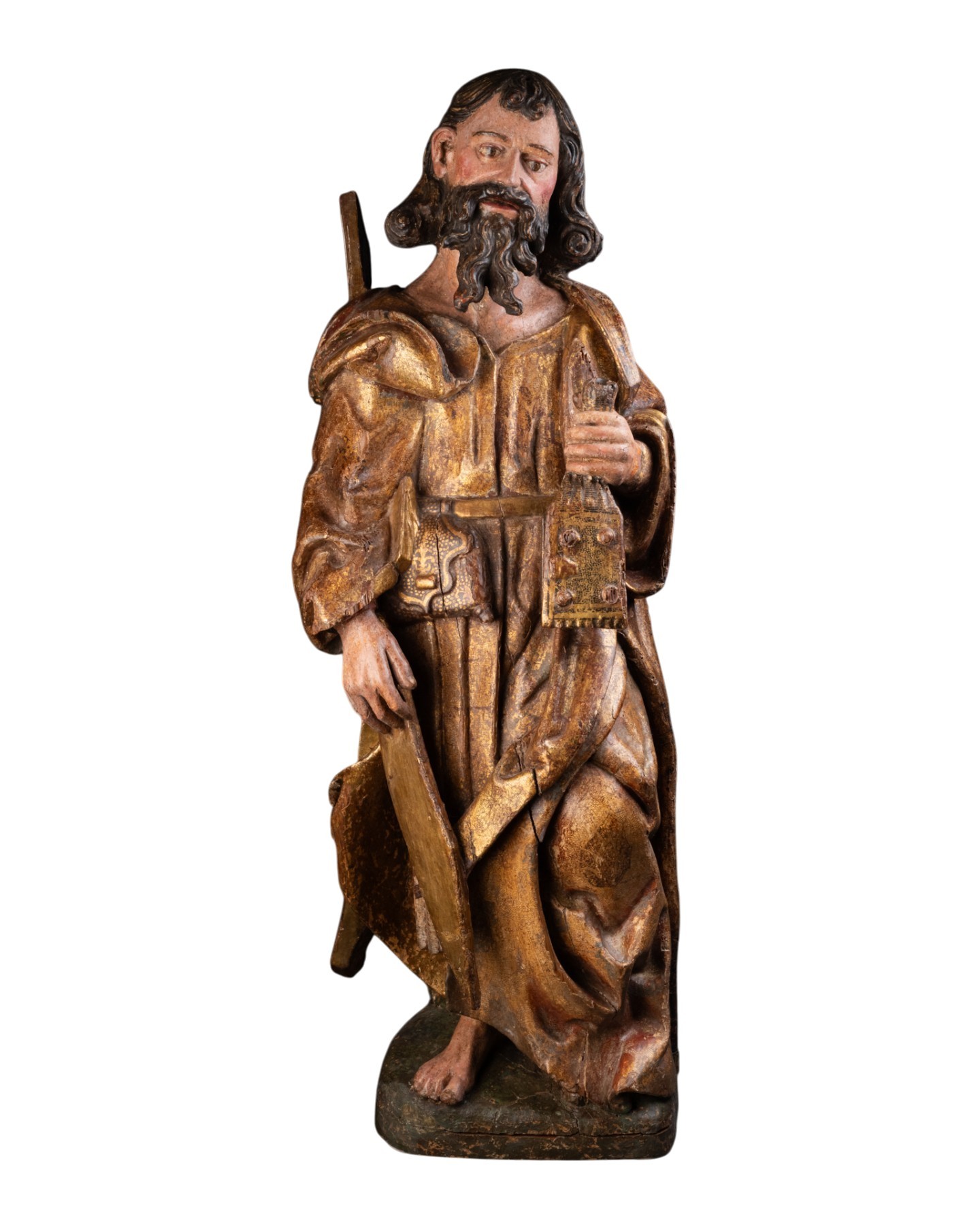
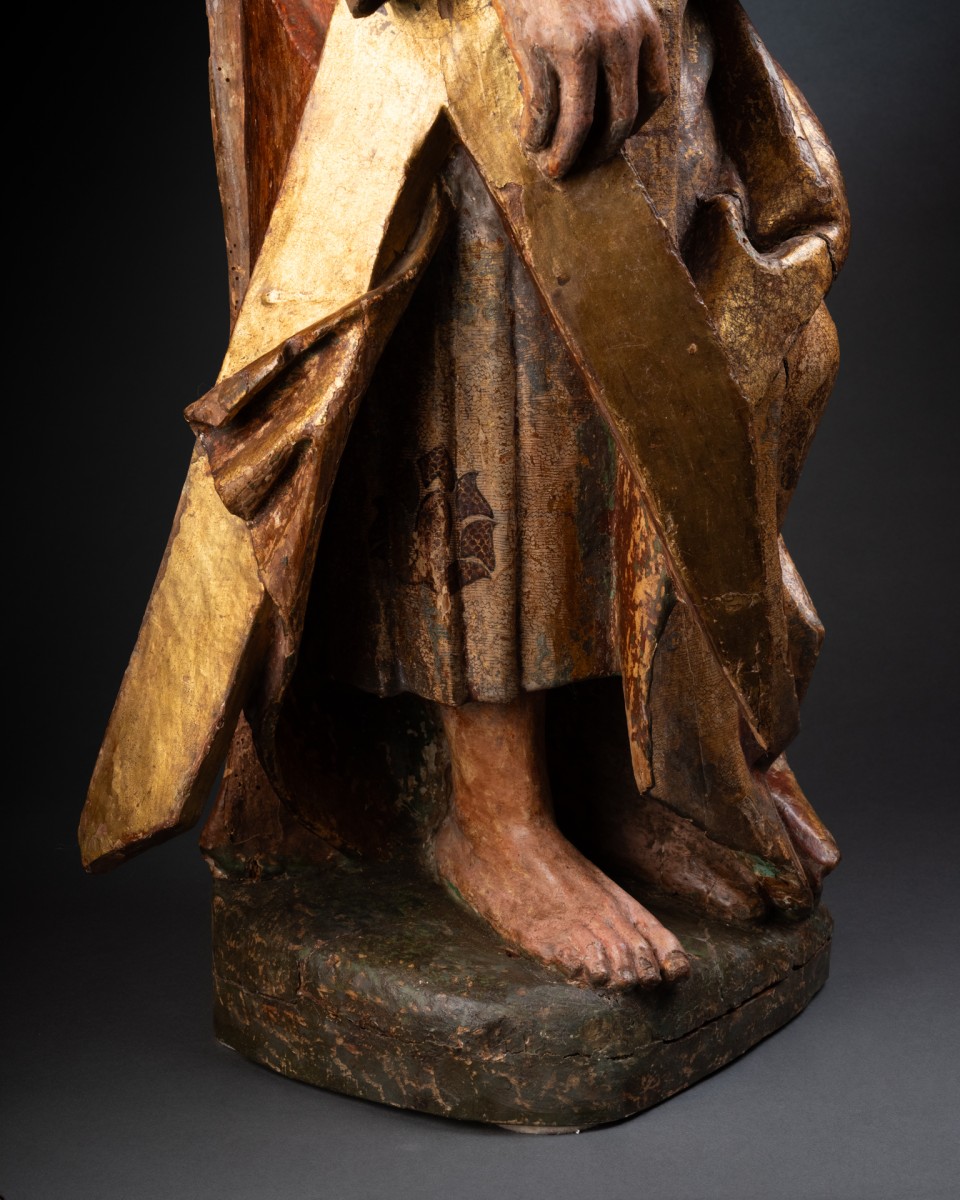
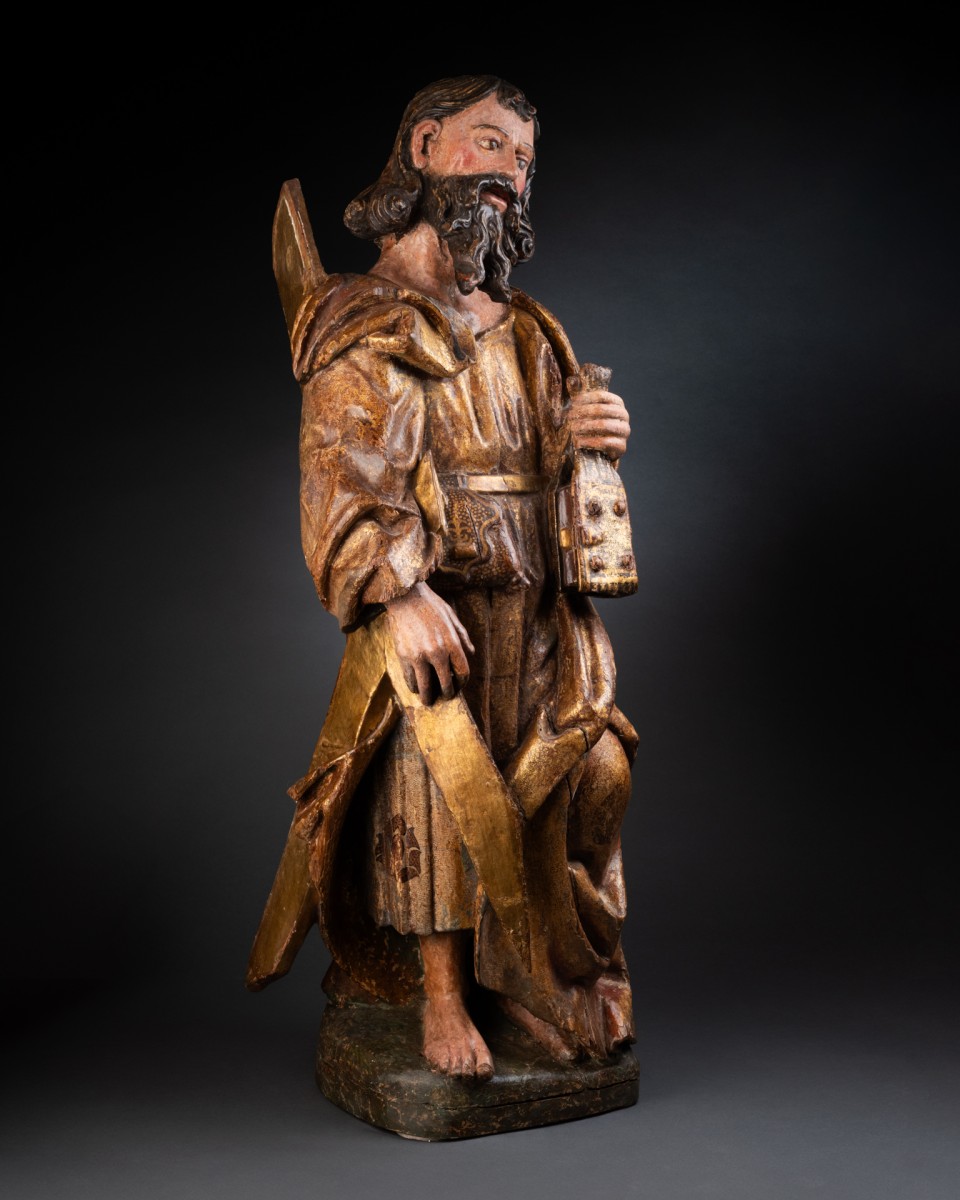
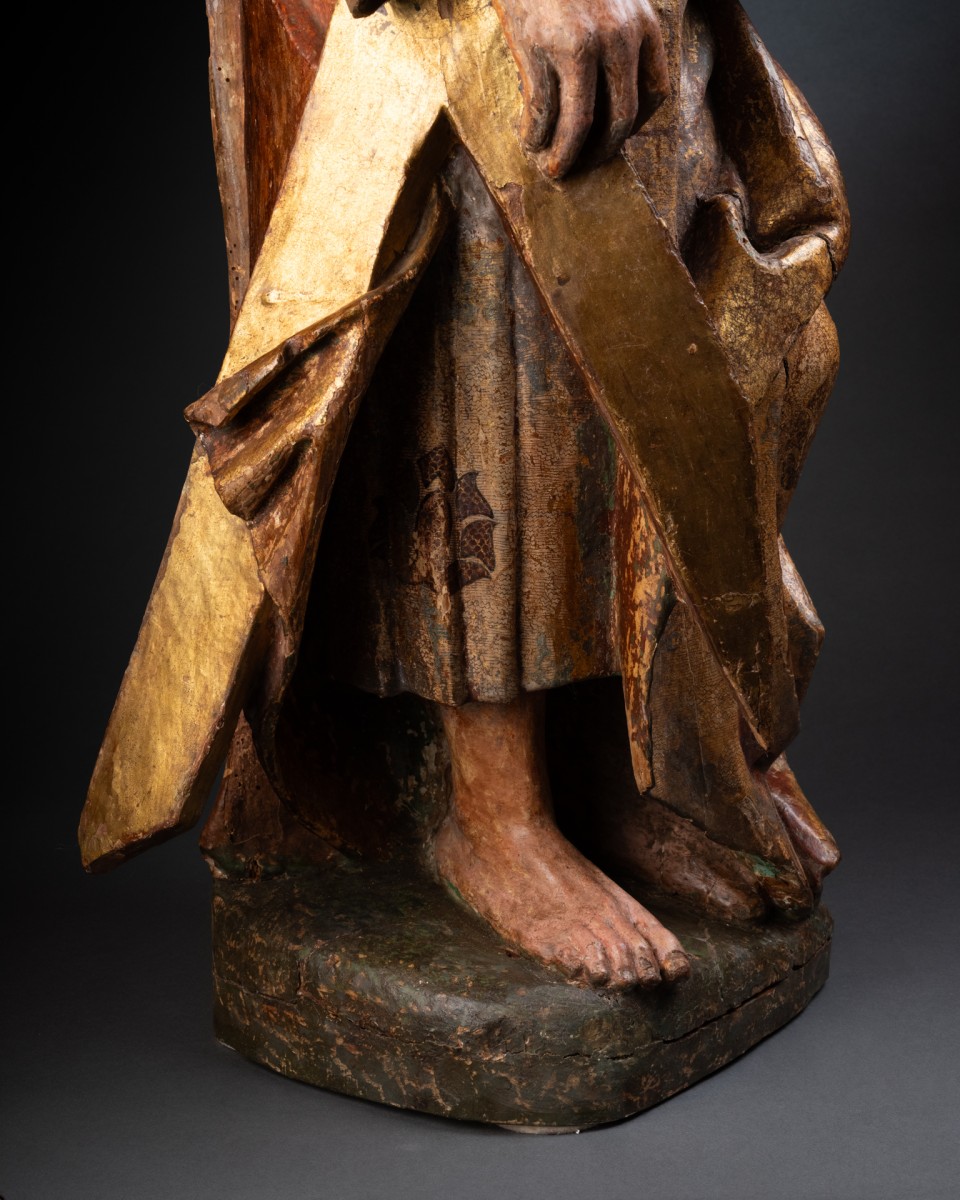
Saint Andrew is depicted here with his principal attribute: an X-shaped cross whichhe holds behind him. In his left hand, he holds a bag containing the Bible, which symbolises his role as an apostle and spreader of the Gospels. This type of depiction is rather rare; indeed, the X-shaped cross is usually given moreprominence. Another iconographic detail catches our eye: Saint Andrew’s head isinclined, and his hairstyle leaves his right ear exposed, which is finely sculpted. This choice may symbolise his role as an intercessor, listening to the prayers of the faithful. Beyond these symbolic aspects, the figure is in excellent condition and displays exceptional polychromy for a sculpture over five hundred years old. The gilding, the flesh tones and the coloured varnish decorations applied over the gold are still present and in very good condition.
Several factors suggest a connection with Alejo de Vahia (1473-1515), a leading sculptor from Palencia (Castile and León). Although he was probably of Nordic origin, his work is known to have been produced in Castile and León; in particular, he carried out a commission for the high altar of Palencia Cathedral. Among his most famous works are a Saint Mary Magdalene, which forms part of the main altarpiece created by the sculptor Felipe Vigarny (c. 1475-1543) and the painter Juan de Flandres (c.1465-1519). Also included is a Lamentation over the Dead Christ, carved before 1505 in Palencia and now in the Meadows Museum in Dallas (acc. no.89.02): here, the full talent of the Castilian master is revealed through the eight figures that make up the group.
The choice to place the X-shaped cross in the background, the bifid beard, the expressionless face and the highly refined polychromy allow us to compare our Saint Andrew with a depiction of the same saint that came up for sale at Sotheby’s in 2026 [1]. The more rounded drapery, the details of the purse at his belt, the bag containing the Bible, and the ear pricked up as he listens to the prayers are characteristic of the early Renaissance and place our sculpture in a period slightly later than that of Alejo de Vahia.
Thus, our sculpture bears witness to Alejo de Vahia’s direct influence on his successors, whilst introducing the earliest characteristics of the Spanish Renaissance. Its unique iconography and exceptional state of preservation makeit a rare devotional work.
[1] 06/02/2026,Sotheby’s New York, lot n°336.