Offered by Galerie Sismann
REQUEST INFORMATION

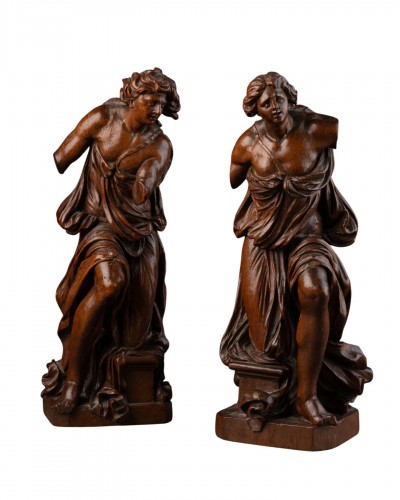
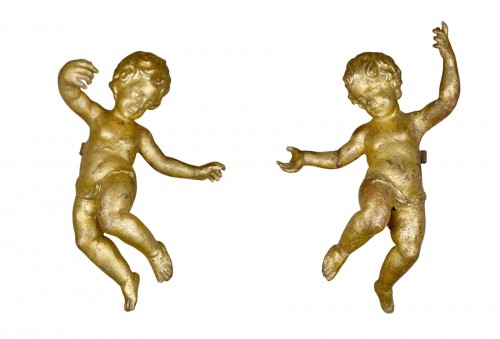
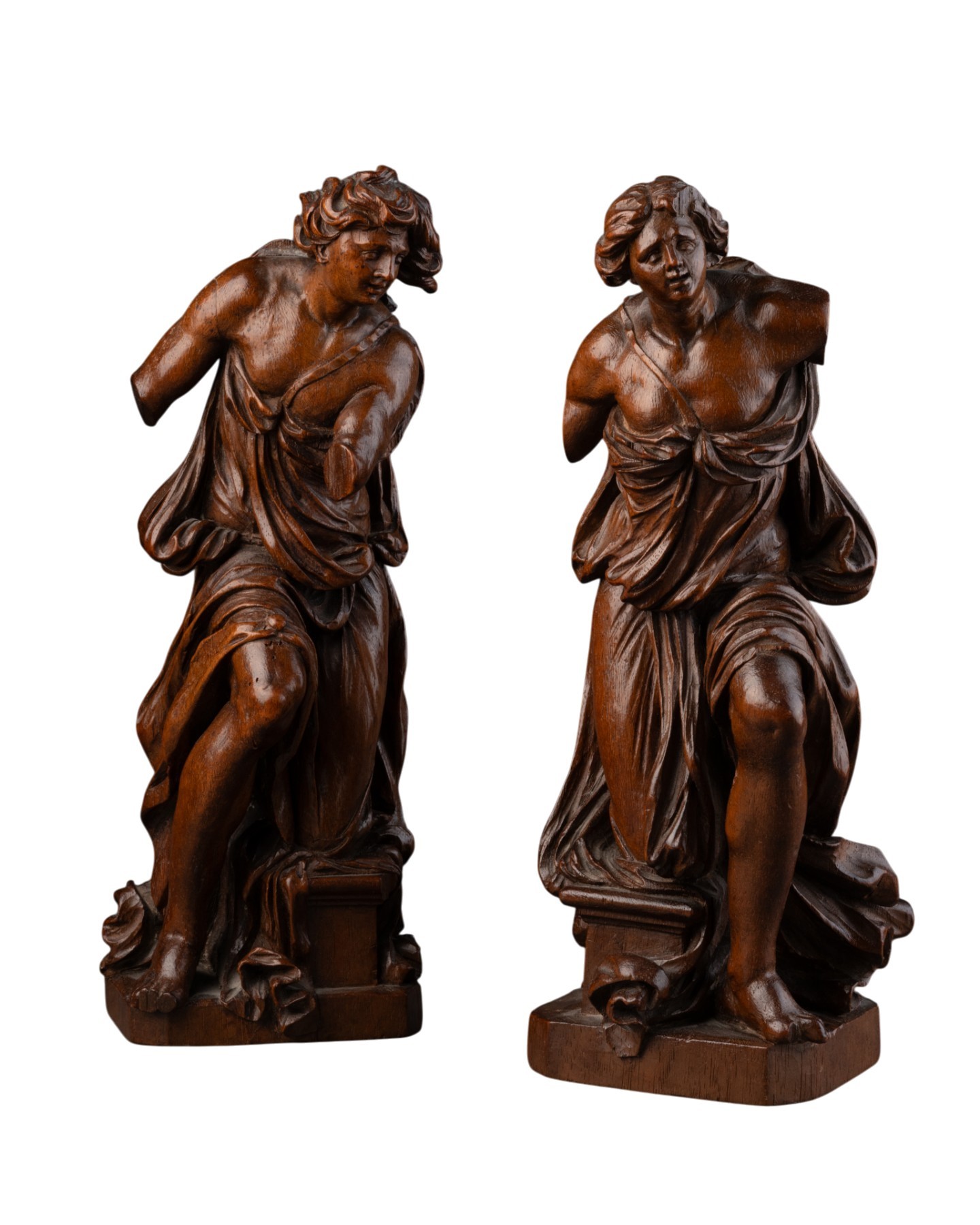
This small pair of sculptures, with their refined design and craftsmanship, probably constitutes a pair of modelli - small wooden models for a larger work yet to be created, most likely sculptures for a large altarpiece.
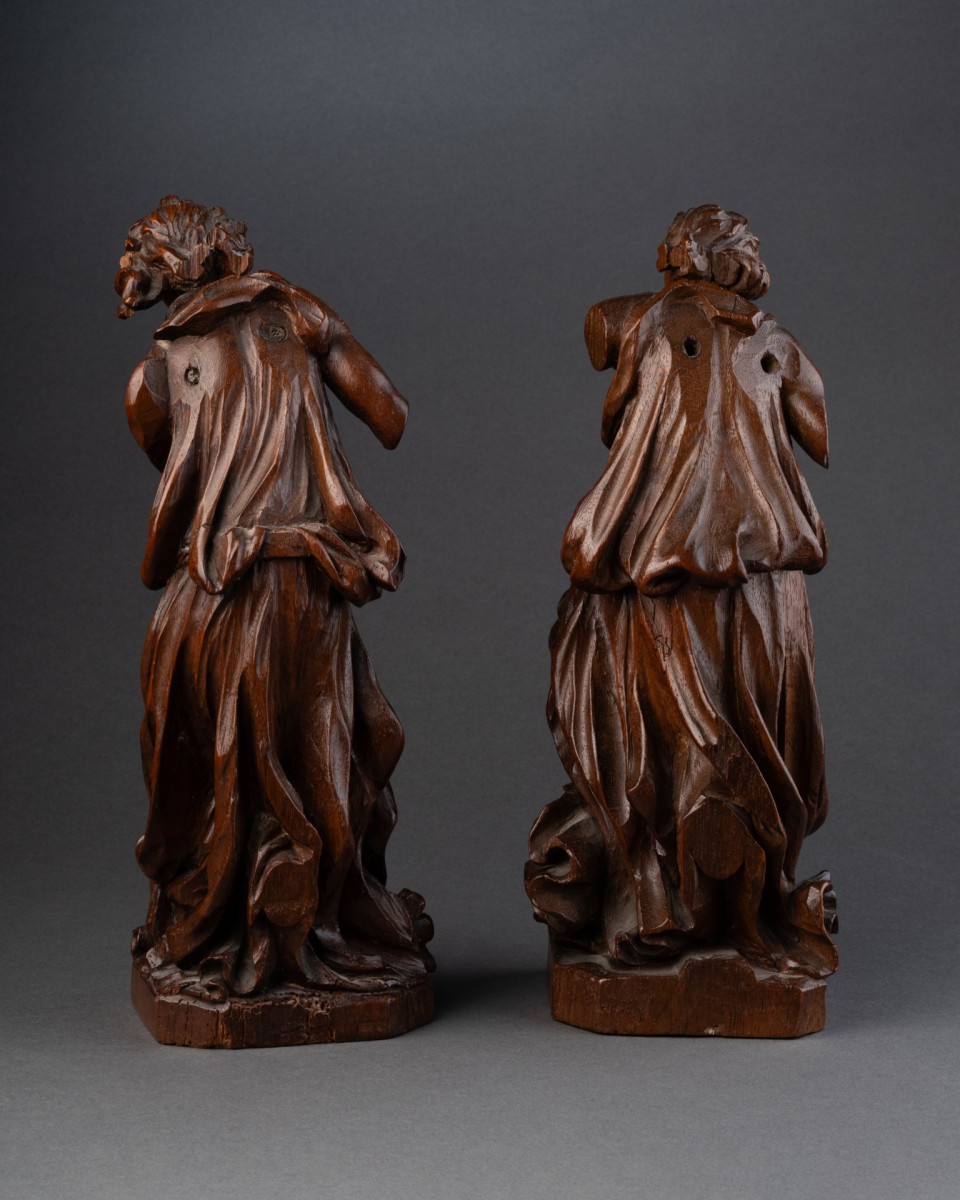
The form-fitting, flowing drapery, the voluminous hairstyles that appear to be lifted by the wind, and the dynamic poses of the figures resting on one knee are typical of the Flemish Baroque style that flourished during the second half of the 17th century, primarily in Antwerp. The angels were winged, as evidenced by the notches on their backs used to attach the wings.
The drapery, rendered with delicacy, evokes fine fabrics clinging to the body or falling in rolled masses. This approach reveals a classical influence, typical of artists trained in academies or associated with renowned masters. Among them, Marc de Vos (1650-1717), Lucas Faidherbes (1617-1697) and Peter Verbruggen (1615-1686) carved this type of drapery, which features abundantly in their works.
It was therefore within this rich and demanding artistic milieu that the creator of these two delicately carved woodcuts developed his craft.