Offered by Franck Baptiste Provence
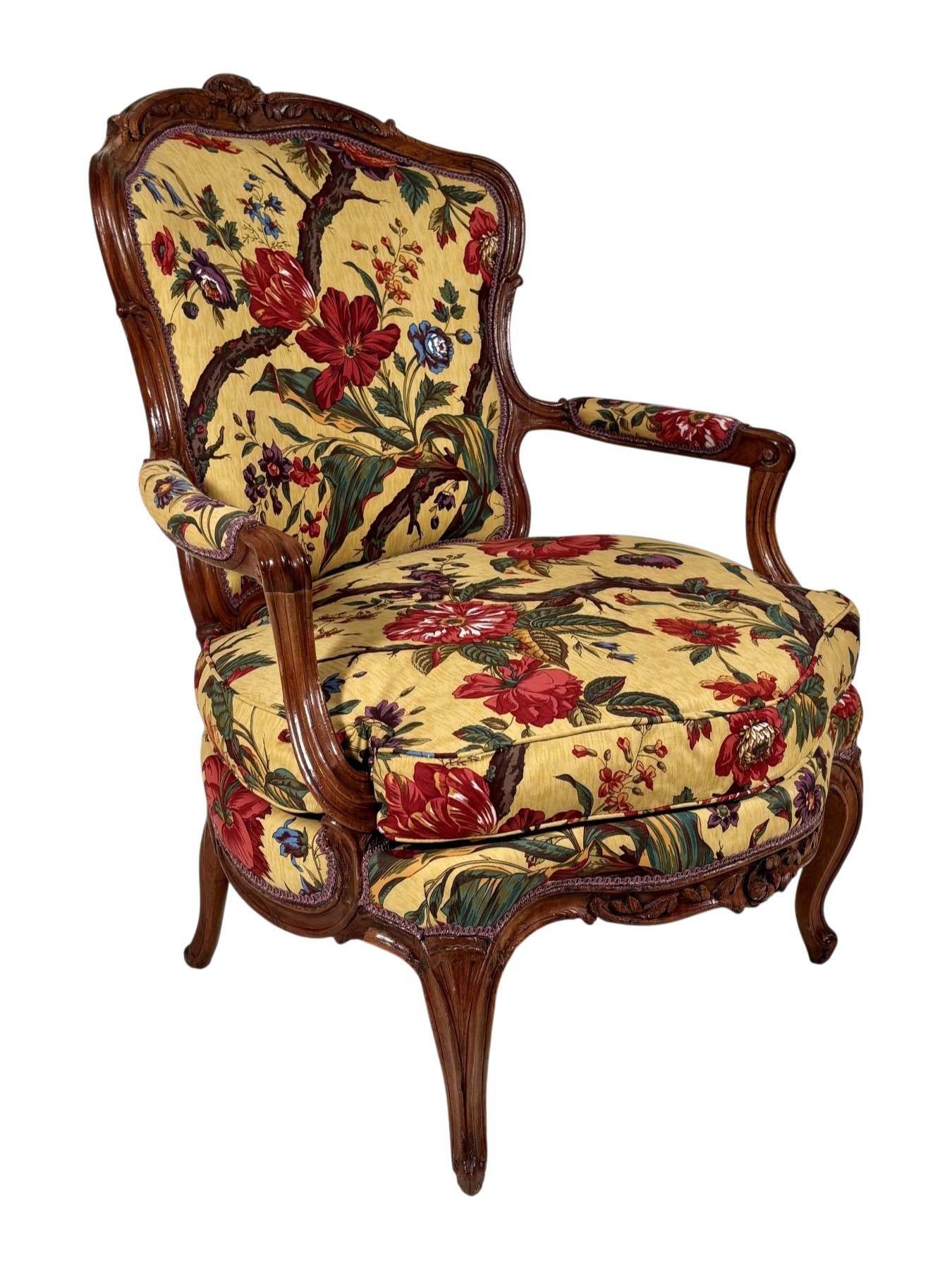
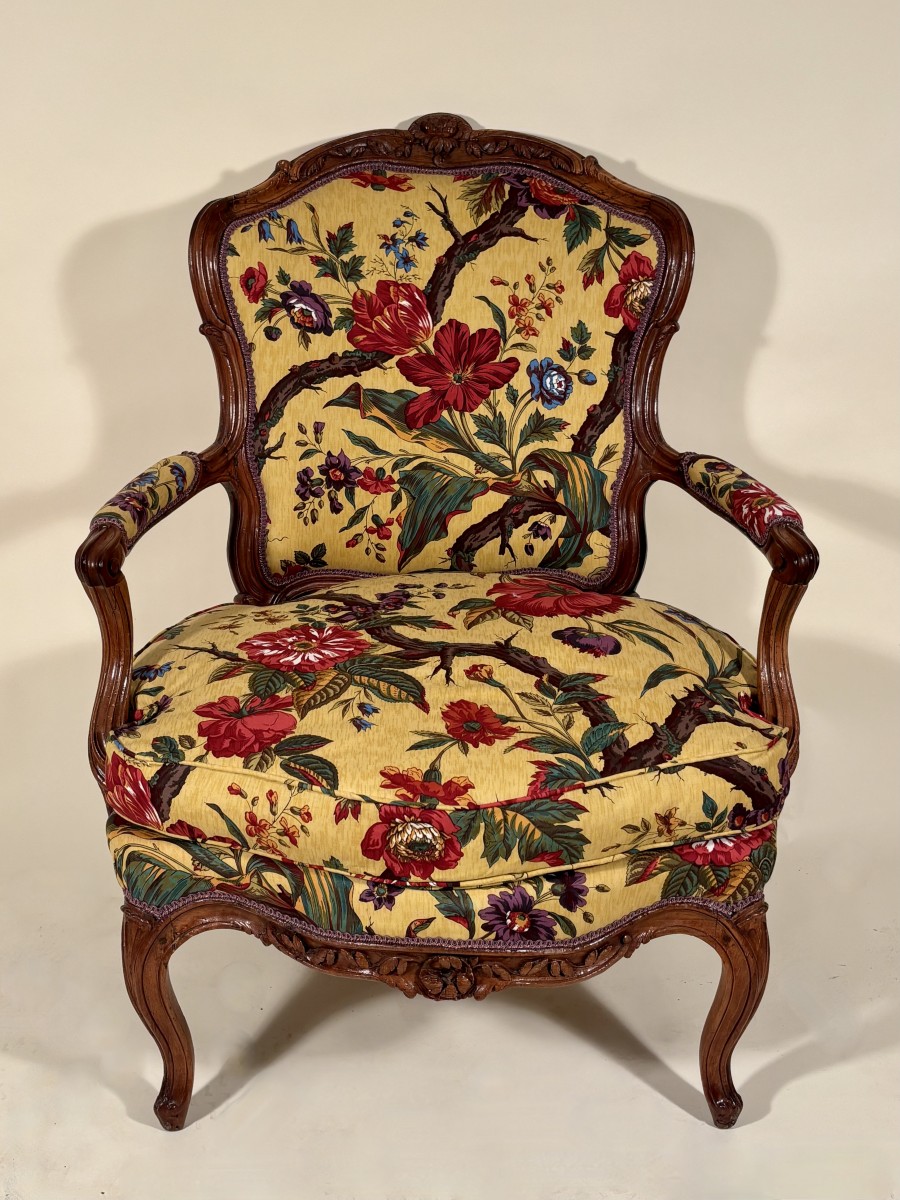
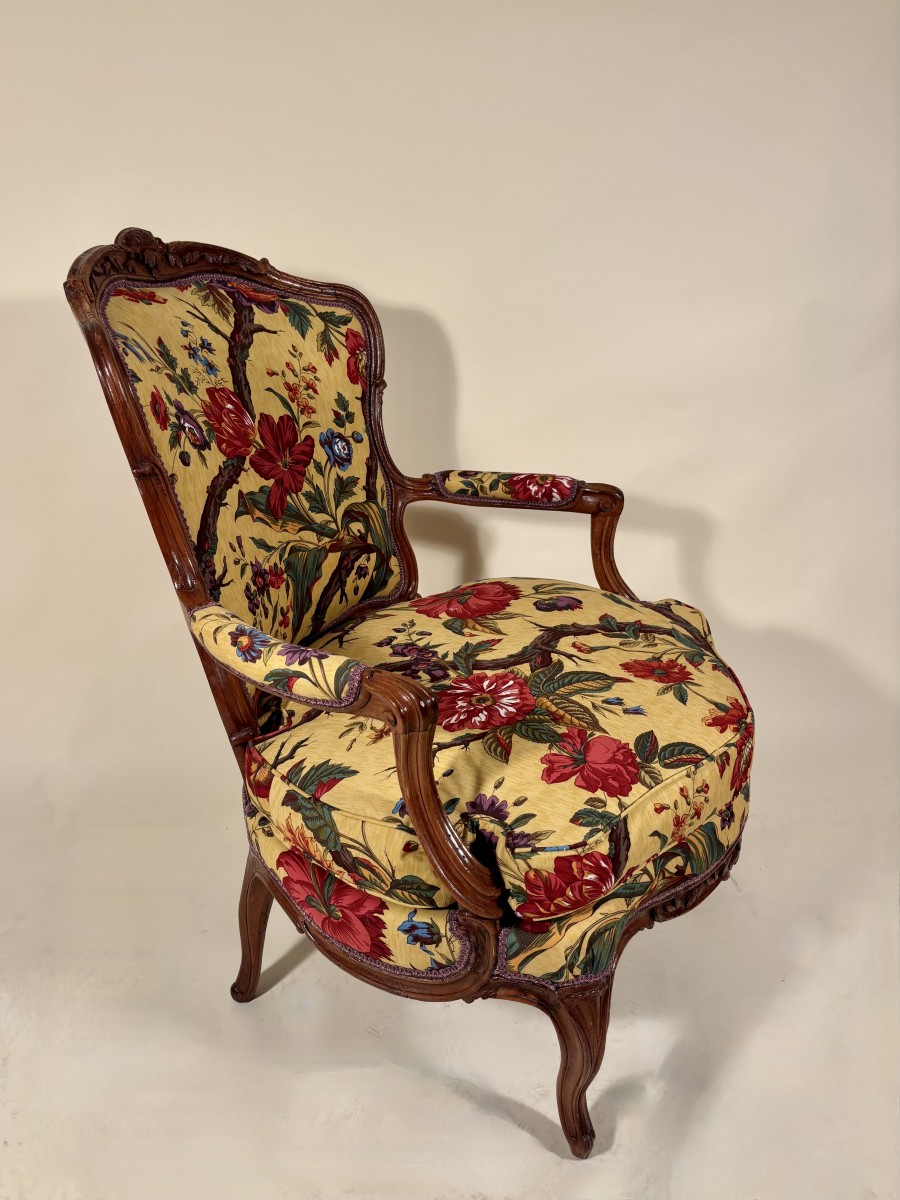
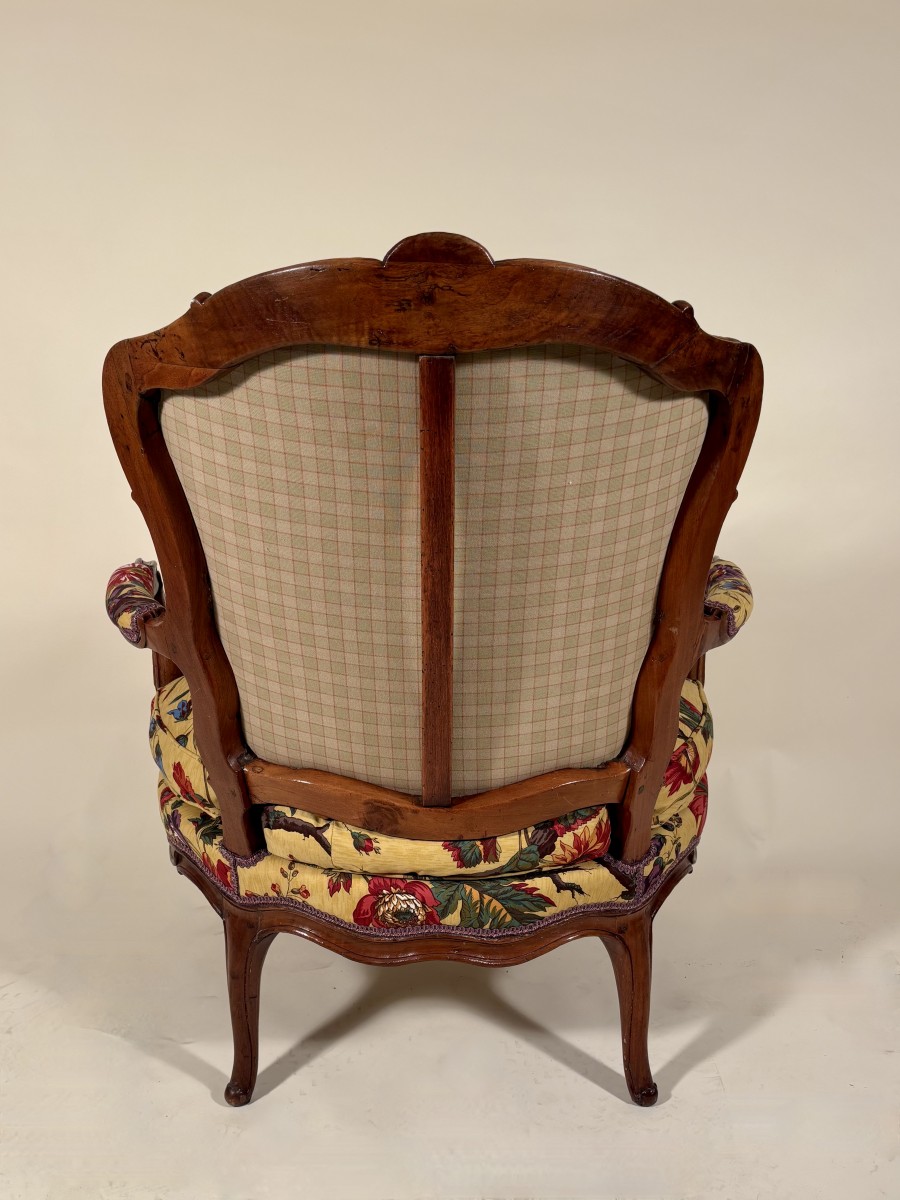

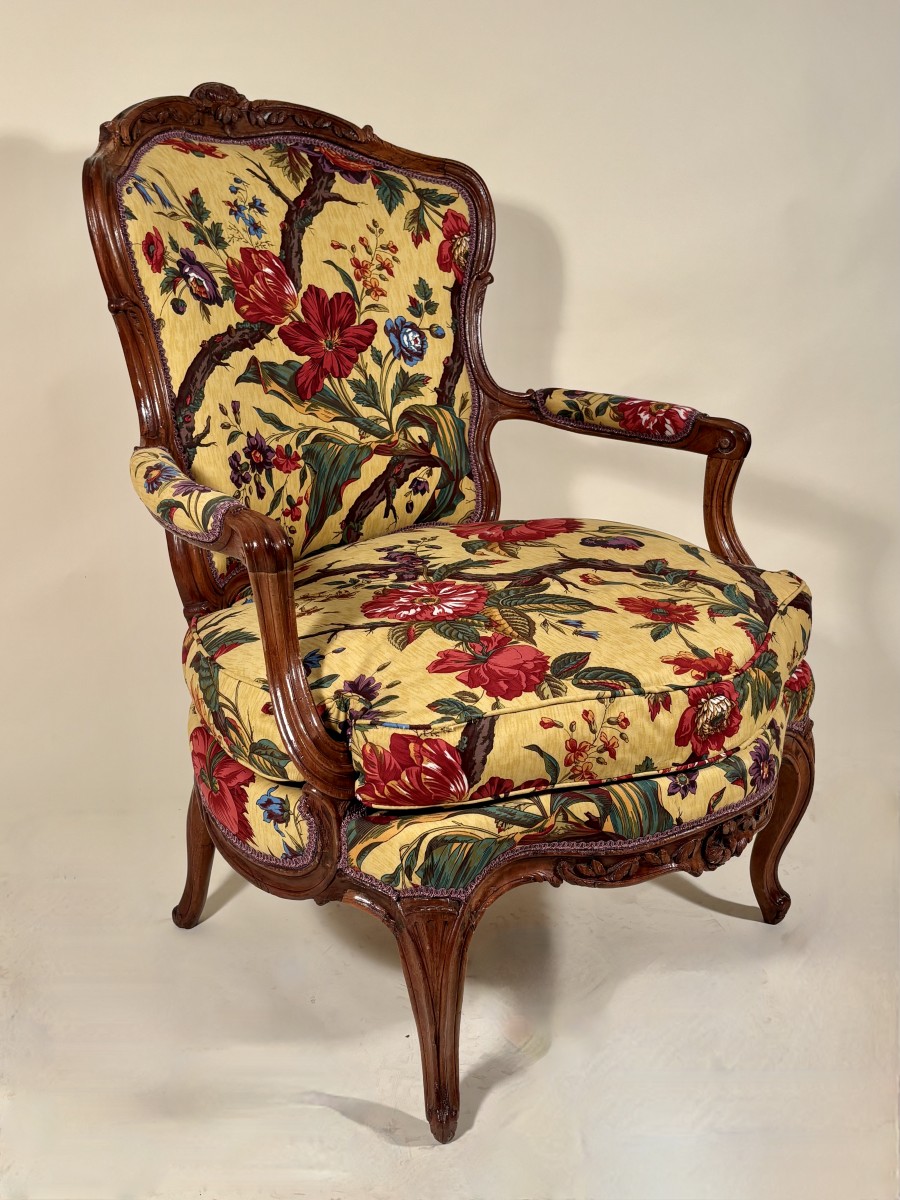
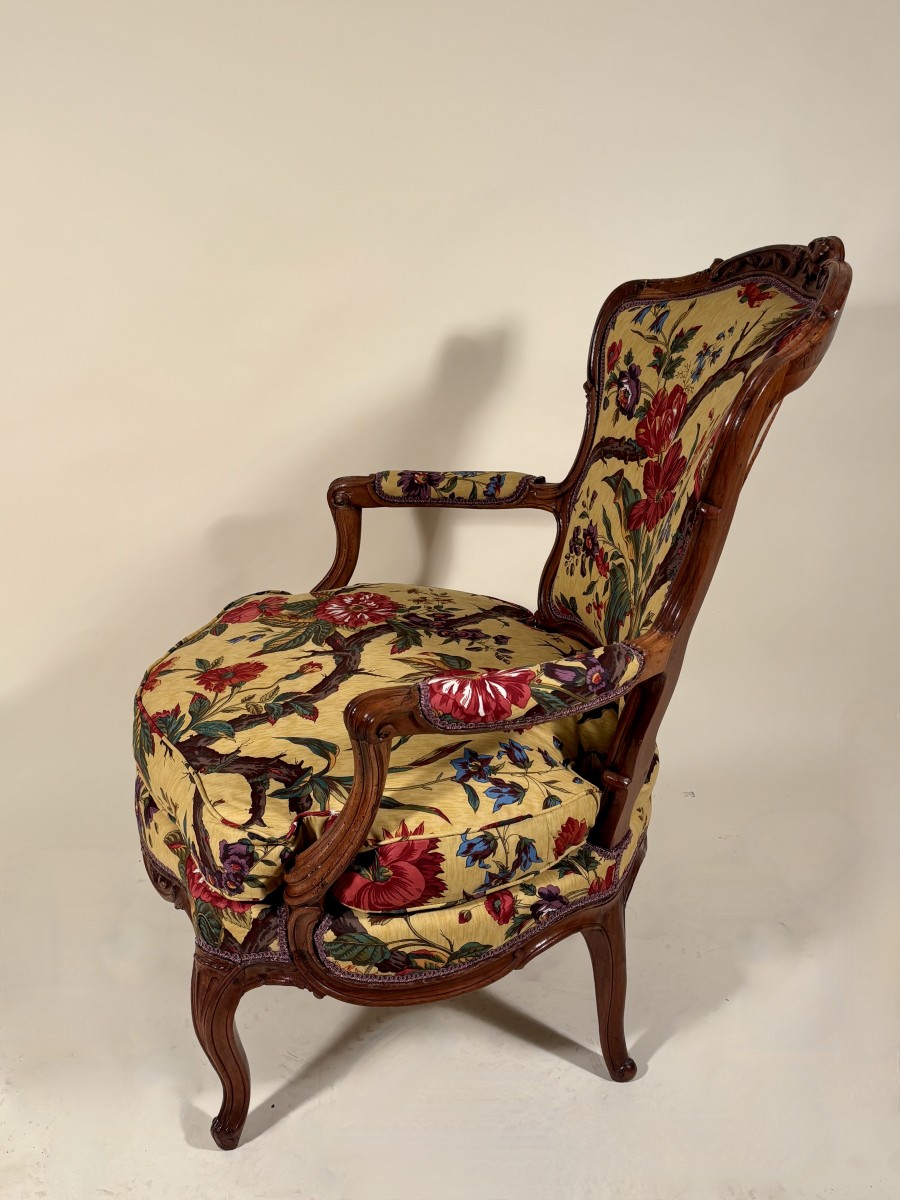
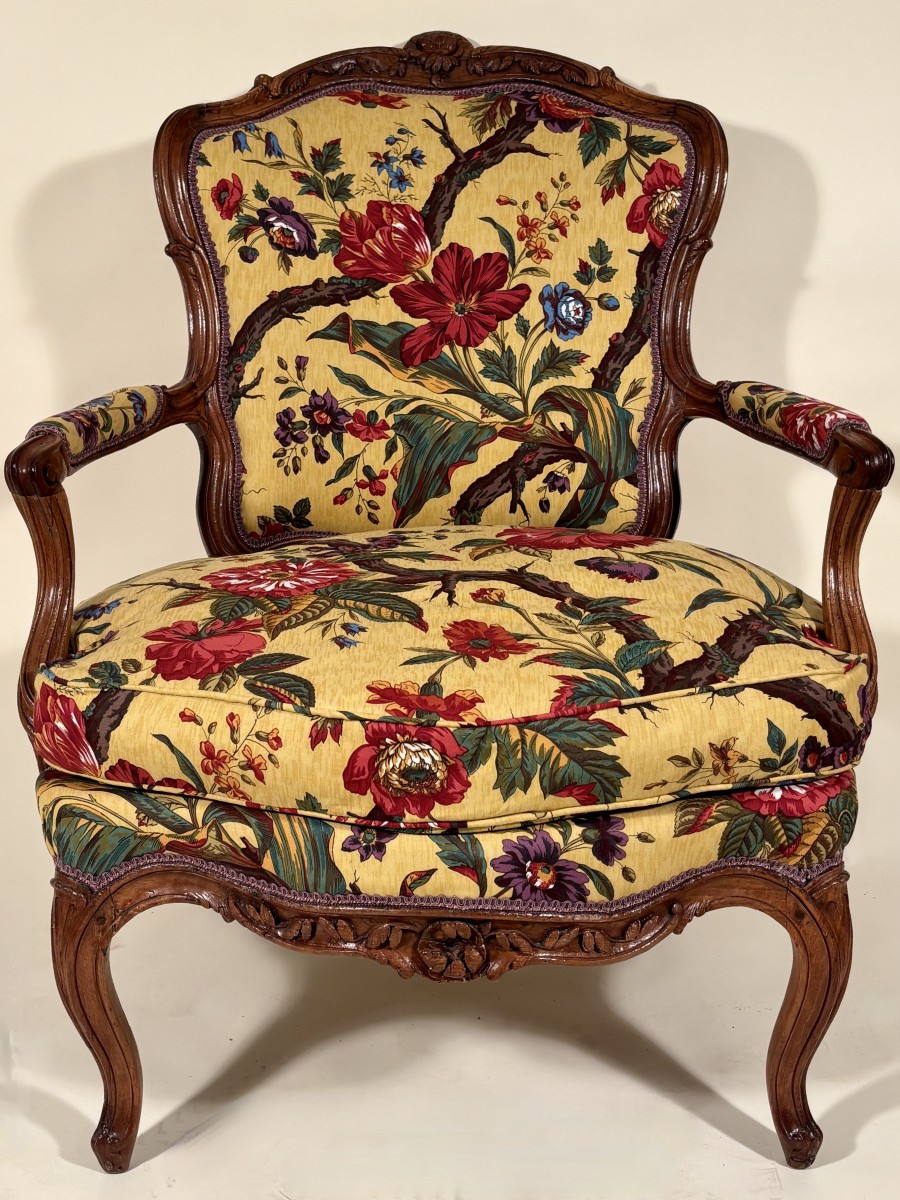
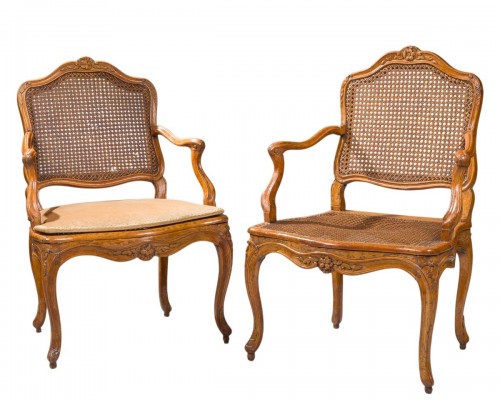
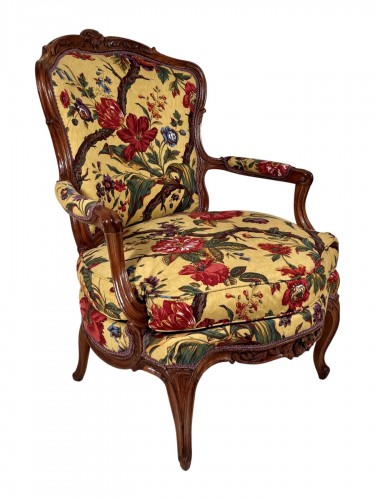
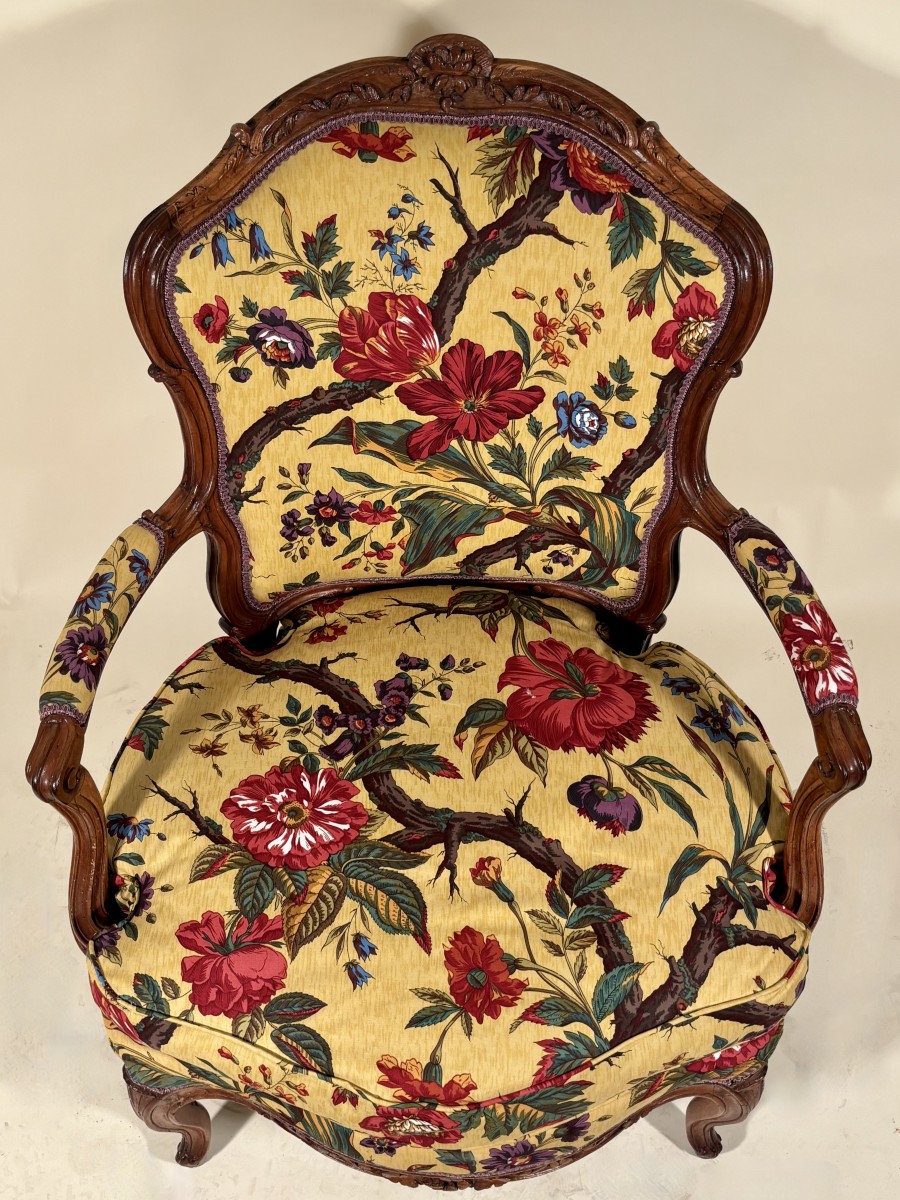
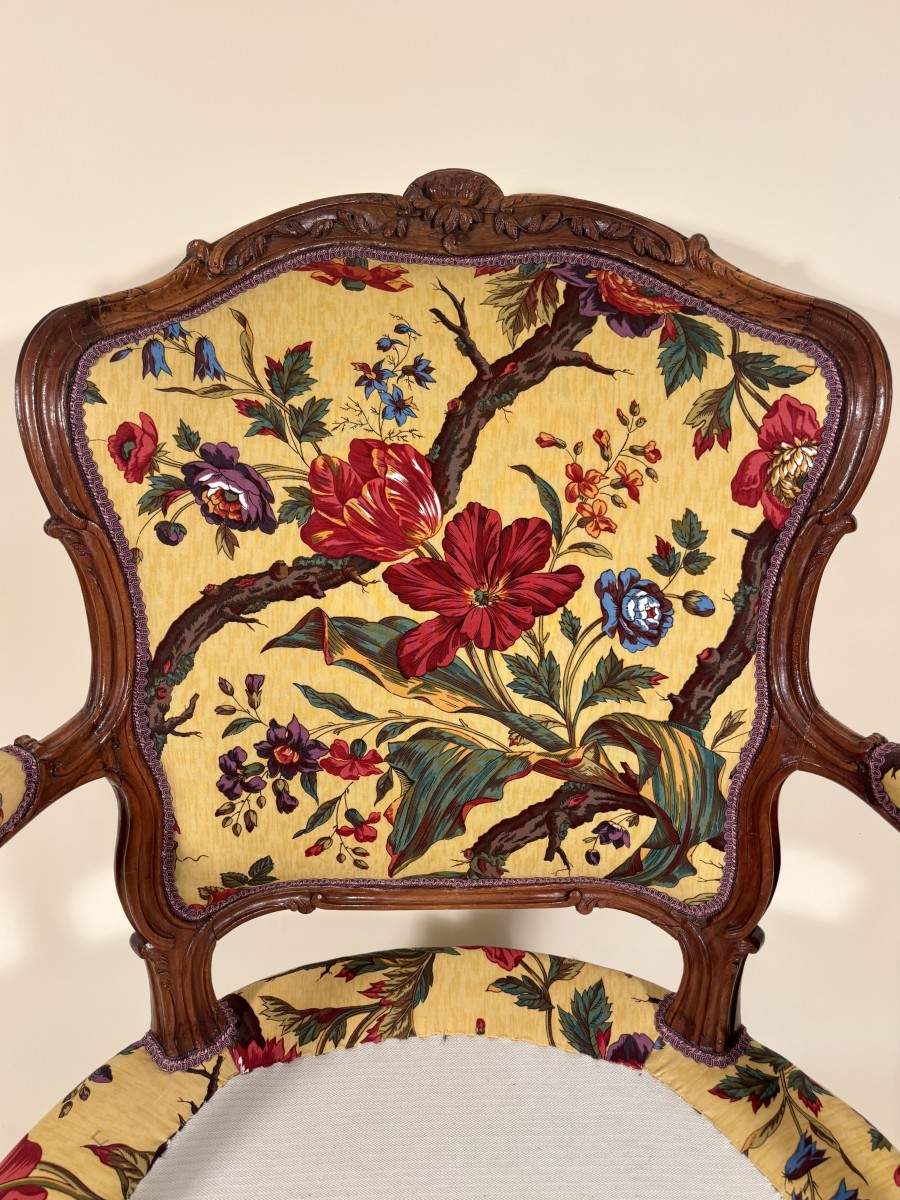
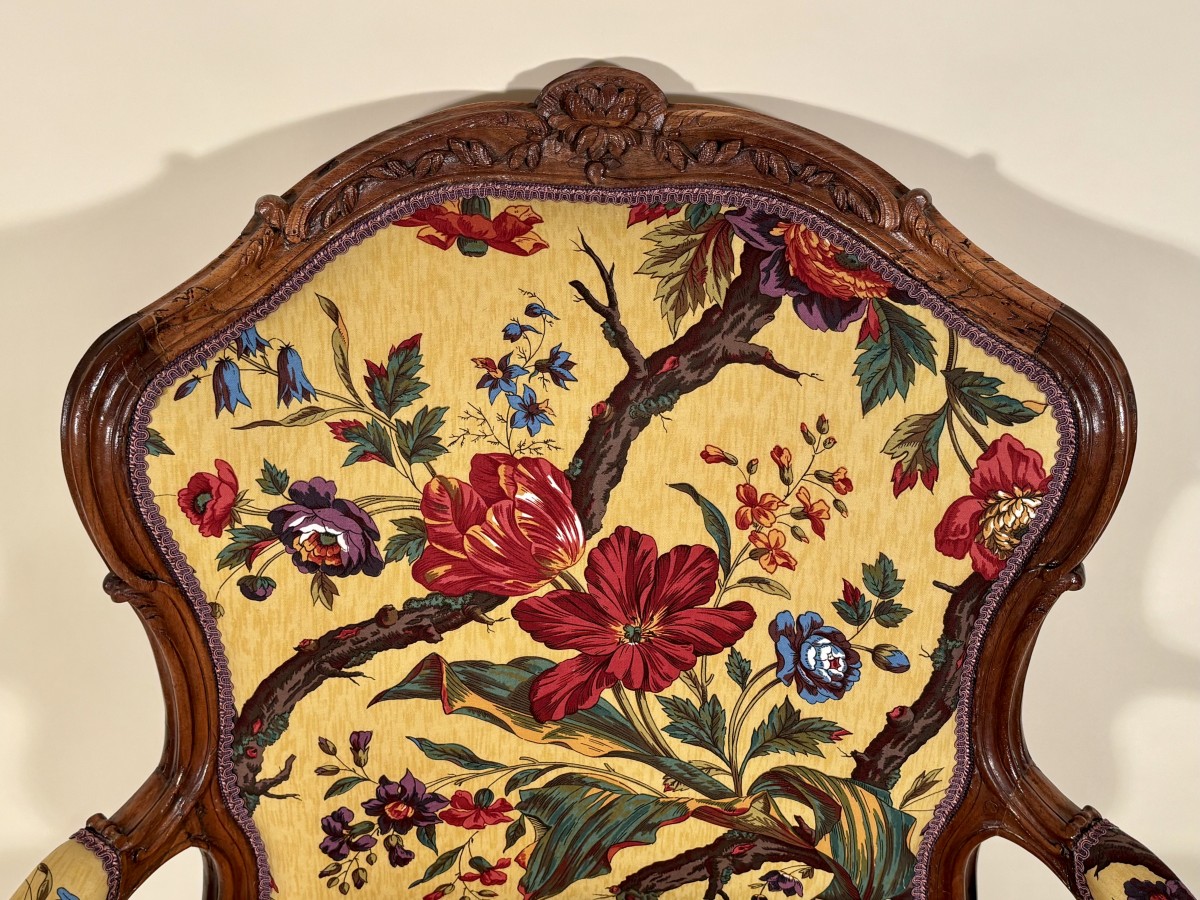
A rare bergère specifically a "coin de feu" (fireside) model crafted from solid walnut.
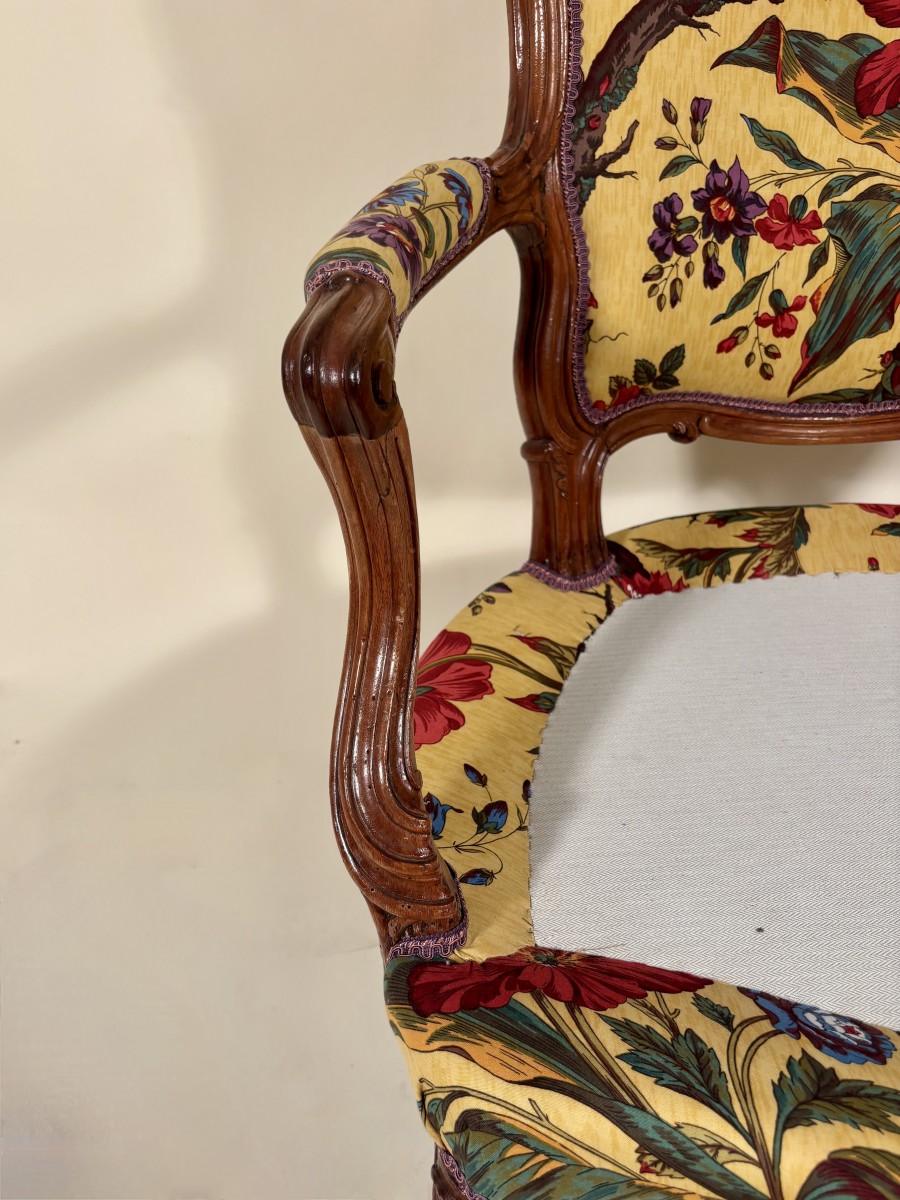
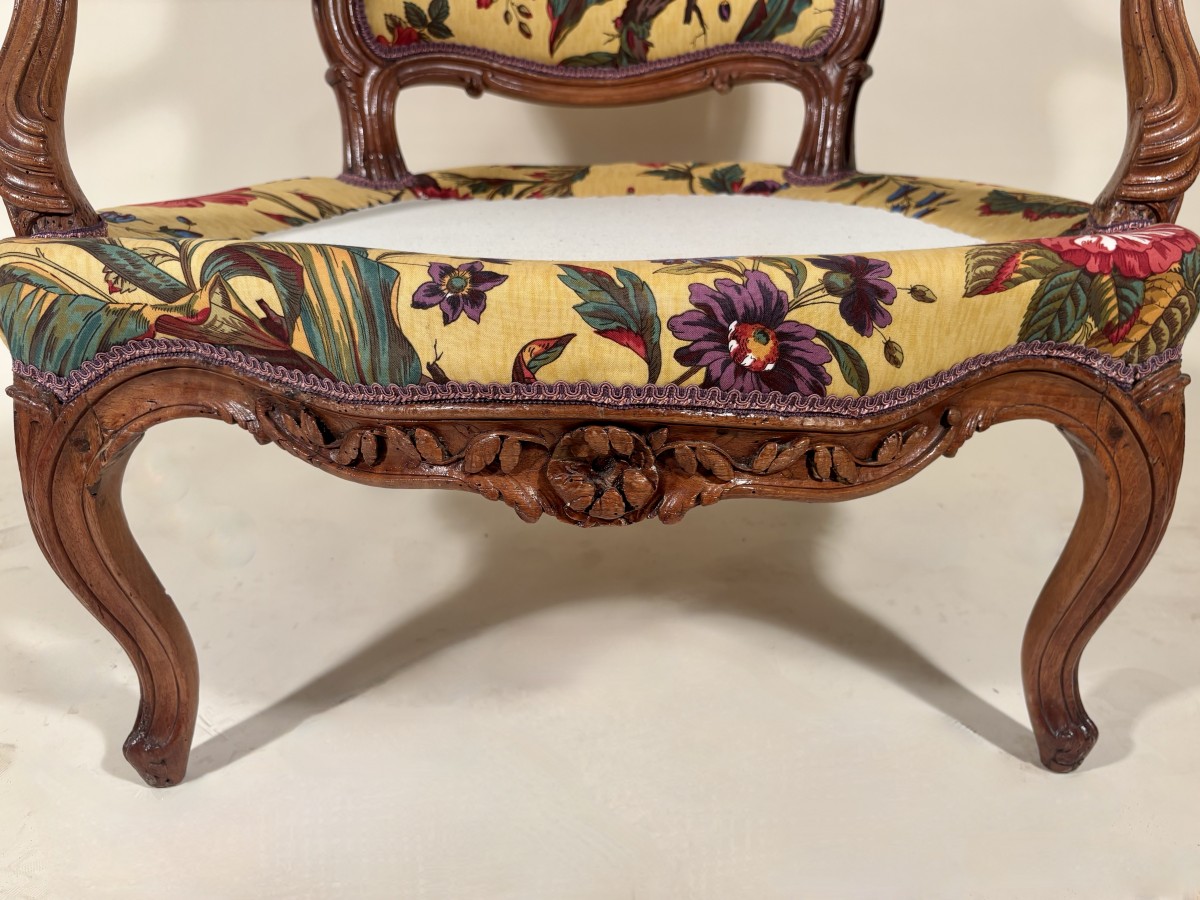
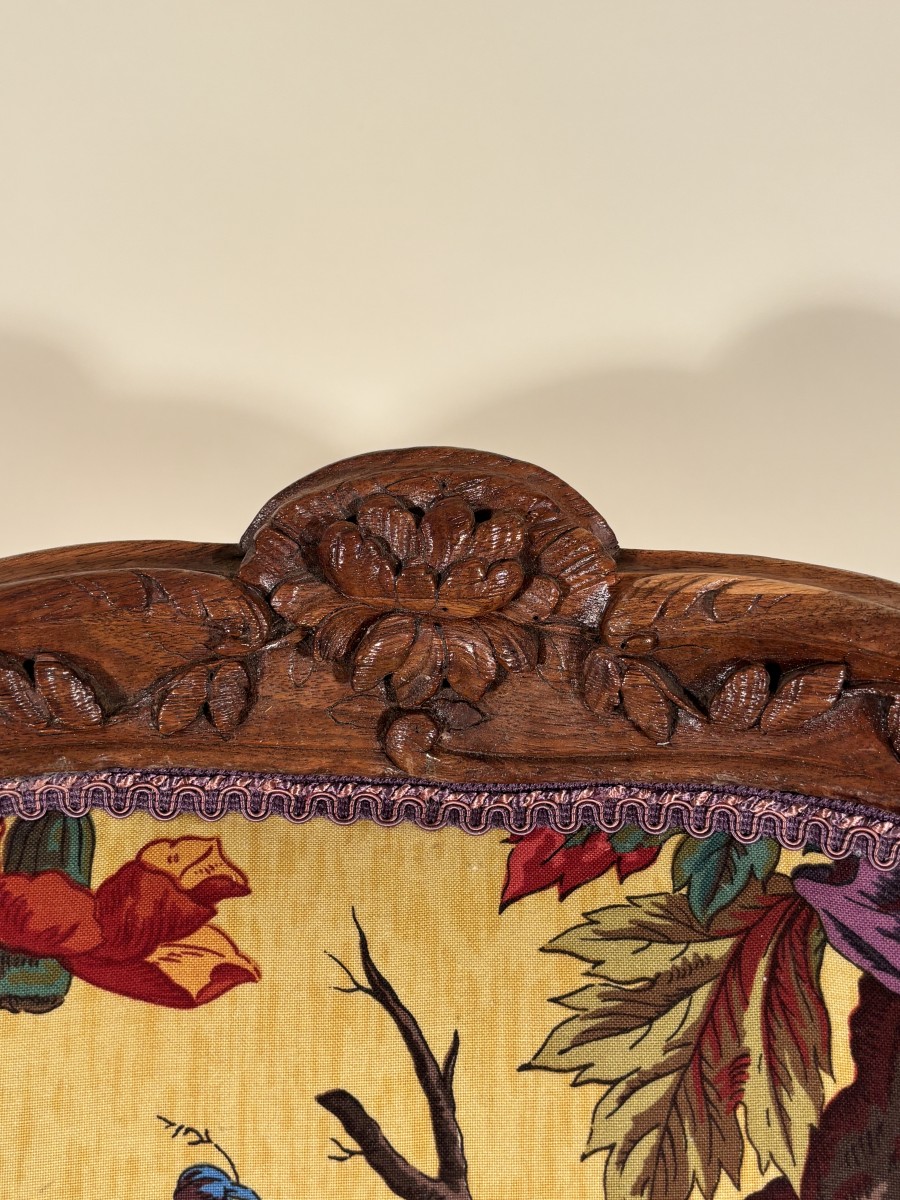
It features a tall, pronouncedly violin-shaped backrest, armrests with vigorous "whiplash" curves, and delicately shaped rails finely carved with small floral motifs; it rests on four cabriole legs terminating in scroll feet.
Crafted from beautiful, very tight-grained black walnut.
Excellent state of preservation; minor restorations consistent with age and use.
Natural horsehair upholstery and fabric covering fully restored in our workshop.
Louis XV period piece attributed to the *menuisier* (joiner) Pierre Nogaret, Lyon, circa 1750.
Dimensions:
Height: 98 cm; Width: 77 cm; Depth: 80 cm
Pierre NOGARET (1718–1771), admitted as Master Joiner in Lyon in June 1745.
Our assessment:
This remarkable *bergère en cabriolet* stands out for its truly exceptional proportions, designed above all for comfort. It rests on short cabriole legs that give the seat a particularly low profile—a hallmark of the "coin de feu" style. This low elevation allowed the sitter to position themselves close to the hearth to fully enjoy the fire's warmth. This design is complemented by an unusually tall backrest; its enveloping shape contours perfectly to the occupant's back. Acting as a genuine shield against drafts, it also helped circulate heat around the body, making the chair exceptionally comfortable during the winter months. The vigor of the design—characterized by armrests executed with a spirited "whiplash" curve, an elegant violin-shaped backrest, and delicately carved, shaped rails—combined with telling construction details such as the tapering of the rails and the presence of reinforcing cross-braces, forms a set of features distinctive of Pierre Nogaret’s style. These stylistic and technical elements, recurring in seating from his workshop, allow this remarkable *bergère* to be attributed to him.
Pierre Nogaret, a renowned provincial chair-making master, stamped his pieces "Nogaret A Lyon"; it was in Lyon that this Parisian chose to settle. A chair of his making is instantly recognizable: a subtle interplay of curves and counter-curves, a characteristic widely flared armrest, a "whiplash" arm support, and a distinctive molding scheme. Balance and vitality, elegance and movement are the terms most often used to define his style. Finally, impeccable quality—in construction, choice of wood, and the care taken with joinery—ensures his pieces stand the test of time. The influence of Tilliard and Cresson—the former regarding line, the latter regarding carving—demonstrates that Nogaret had mastered the expertise of the Parisian masters.