Offered by Galerie Léage
REQUEST INFORMATION

Comparable works:
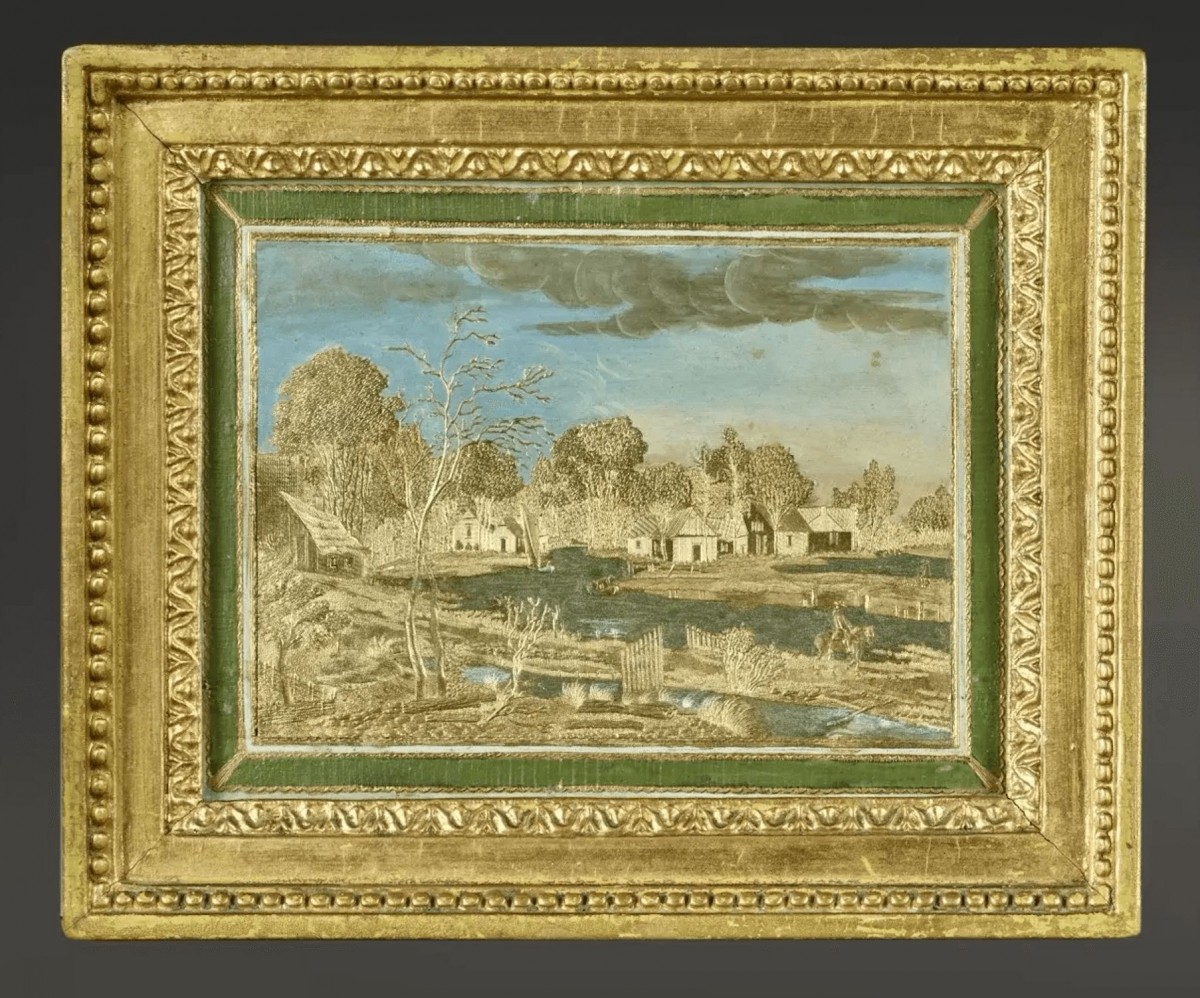
-Attributed to Thomas Compigné, View of the Ypres canal in Furnes, second half of the 18th century, Galerie Léage collection.
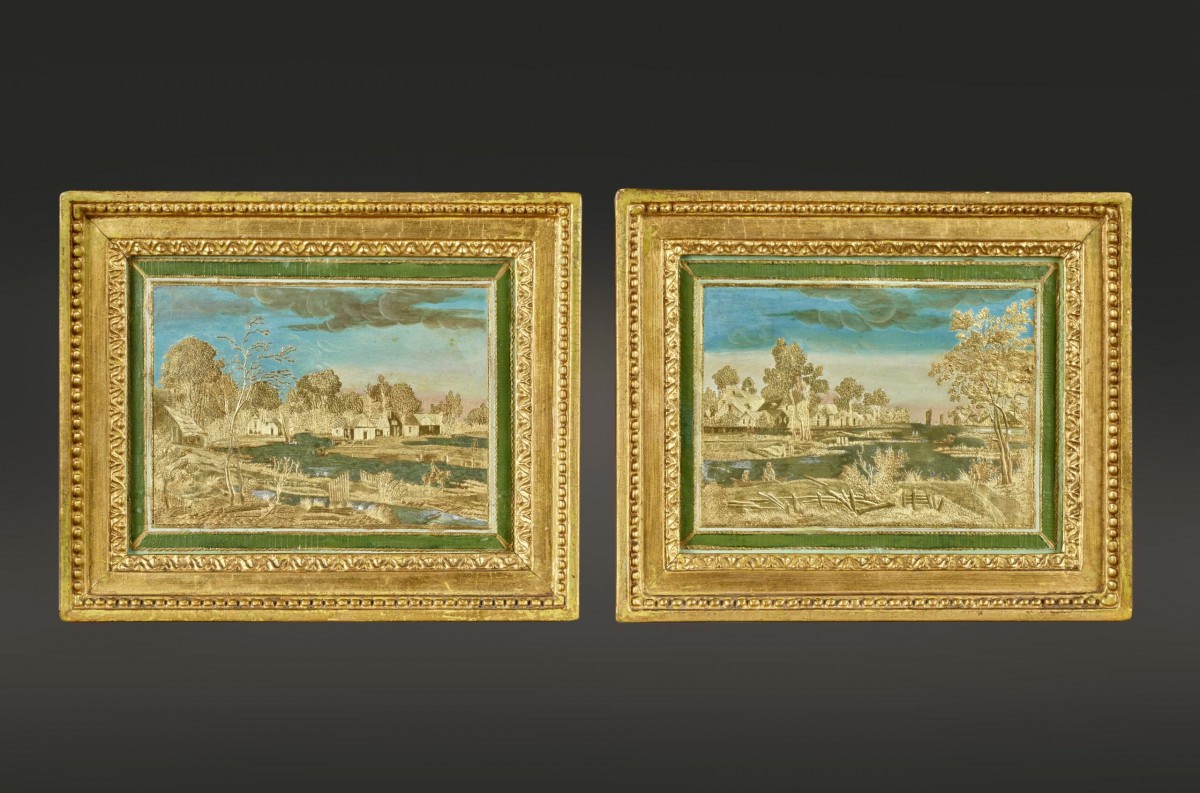
-Attributed to Thomas Compigné, Pair of paintings in Compigné, View of the surroundings of Utrecht and View of the Ypres canal in Furnes, second half of the 18th century, Galerie Léage collection.
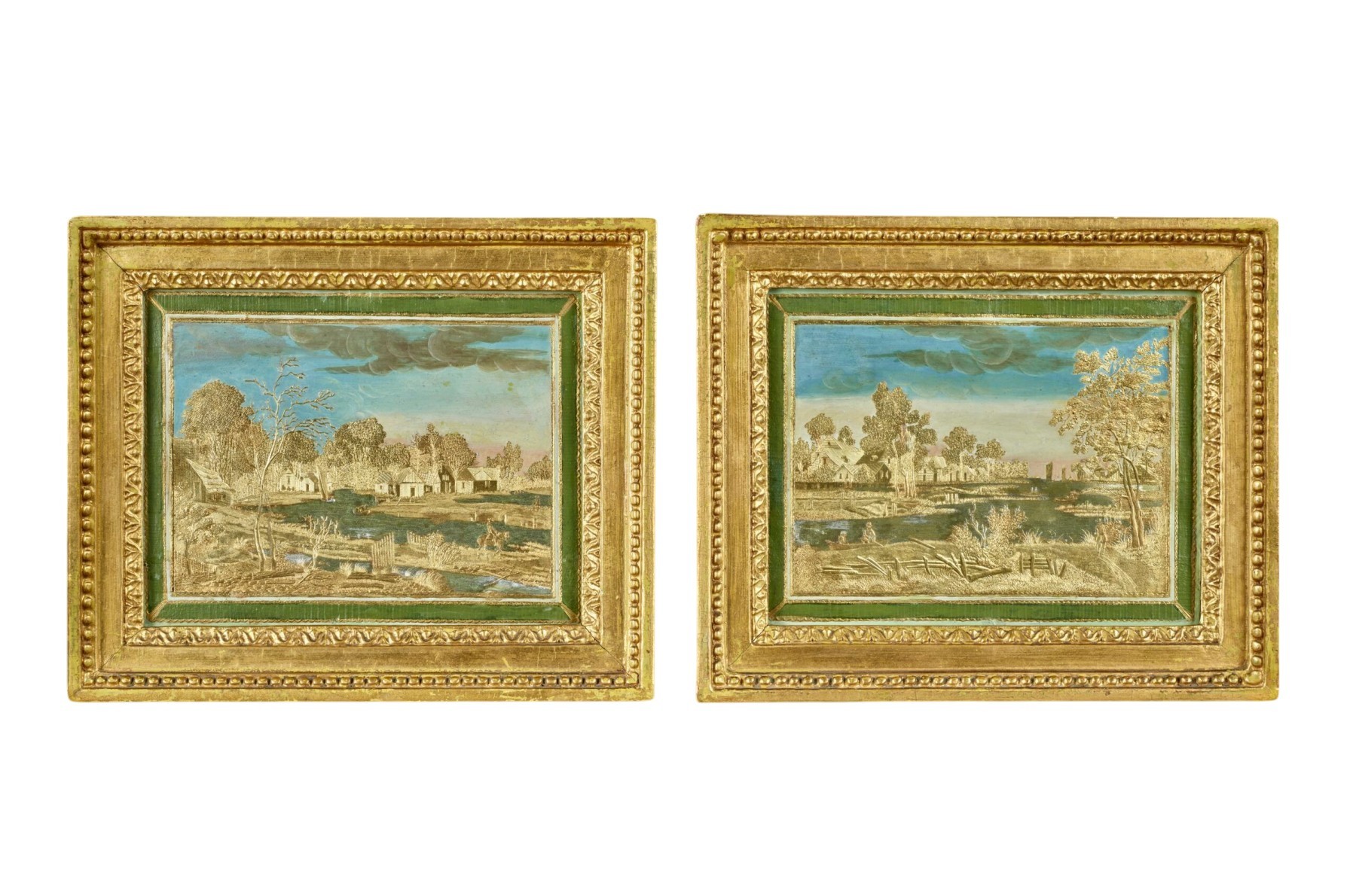
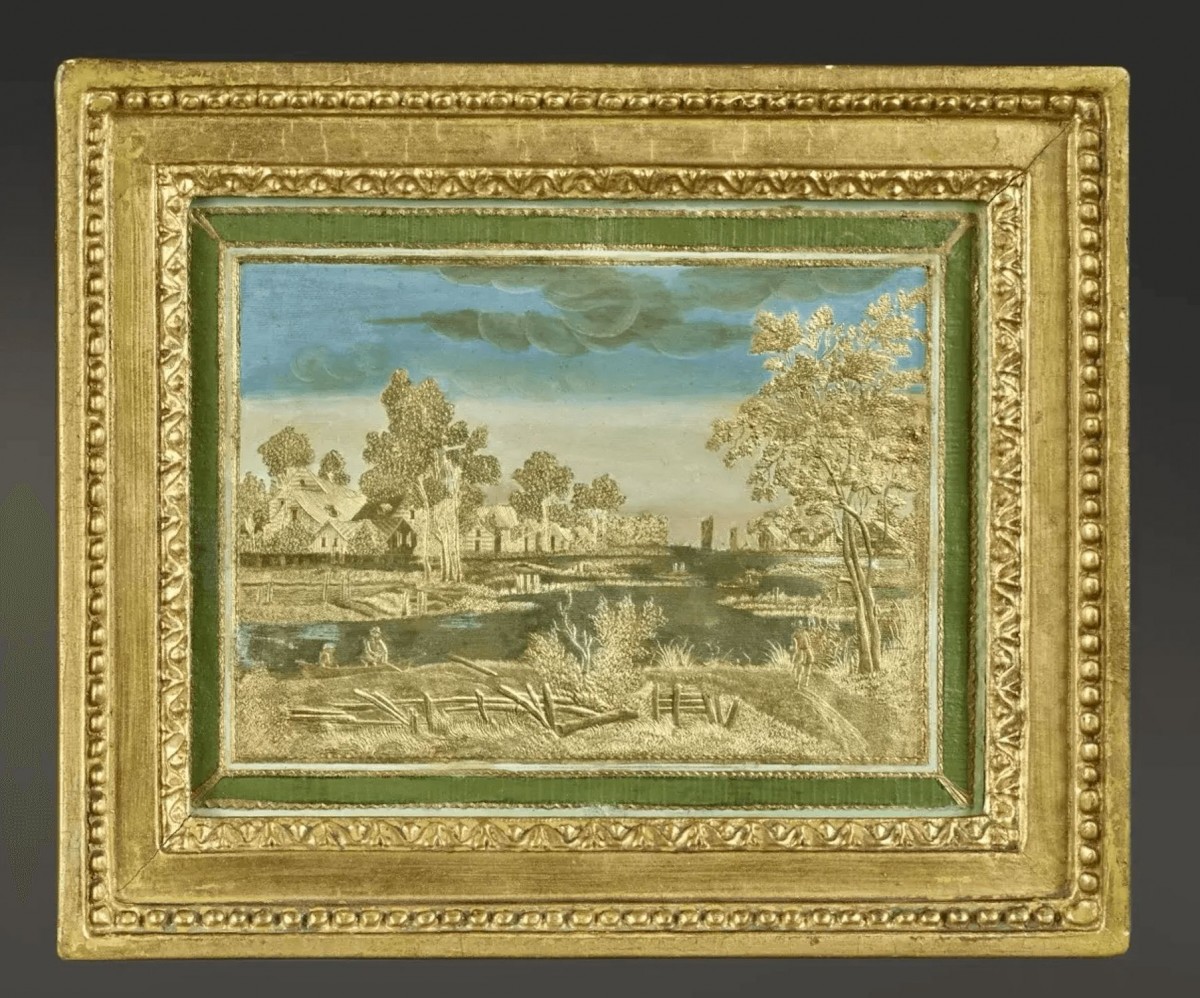
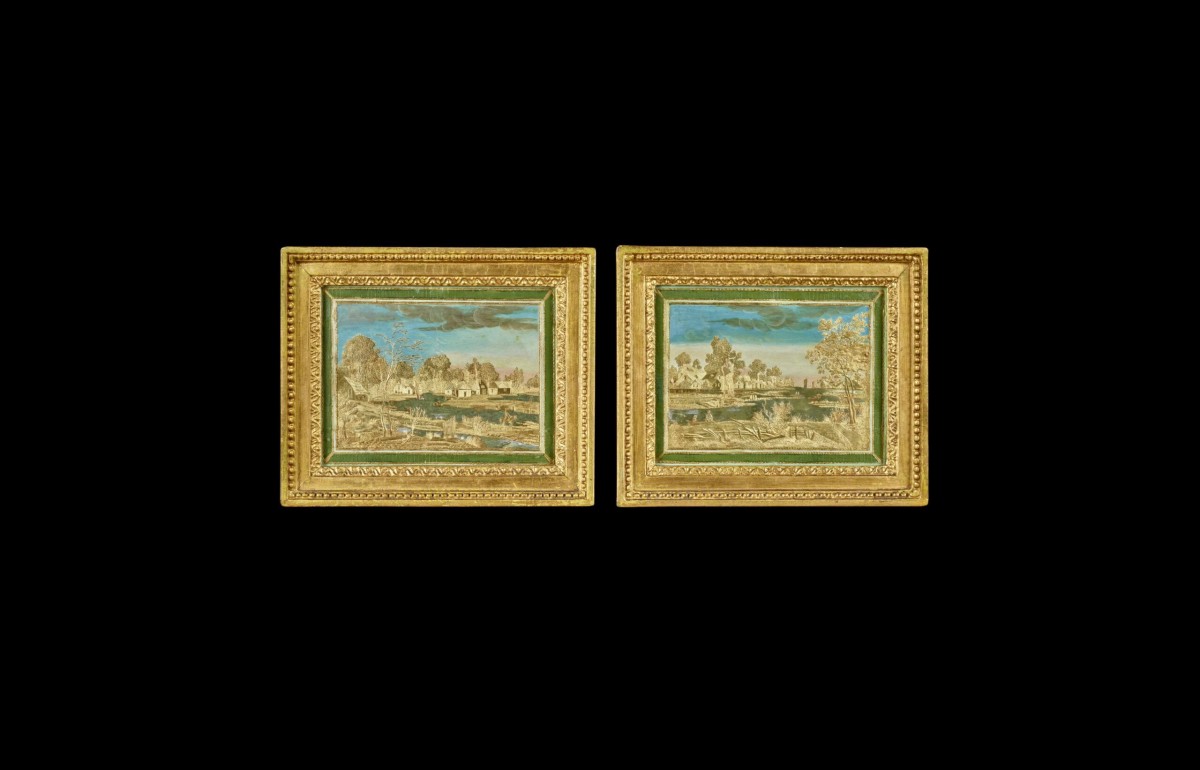
This pair of Compigné paintings represents two riverside landscapes, animated by characters navigating on the water. Rectangular in shape, each is made on stamped tin foil. The latter is enhanced with silver, gold leaf and gouache. This clever mix of materials produces an effect of perfect union between painting and engraving. In the first painting, the scene represents, in the foreground, the winding bank of a river. A character, standing and seen from behind, contemplates the watercourse which stretches into the background. The engraved horizontal lines, used to represent the river, are tinted with green gouache, and evoke marshy, flat and peaceful water. Two men are busy docking their boat. On the opposite bank, to the left, a hamlet stands out, while two sailboats appear in the distance. A second hamlet, similar to the first, emerges through sparse vegetation. The second painting offers a similar scene. Three calm and peaceful stretches of water, interspersed with winding banks, structure the space. In one of them, a rider crosses the scene on horseback. On another, a figure from behind walks along the bank. In the background, a hamlet rises in the heart of lush vegetation. A sailboat and a boat, docked along the banks, complete the scene. Gold highlights, in varied tones, highlight each detail, apart from the water, and create effects of contrast and shadow, giving a delicate relief and a subtle shimmer to the whole. The skies, treated with gouache in shades of bluish, and sometimes pink, convey the soft colors of a late afternoon. This chromatic range transitions harmoniously from pink to blue, colors supported by graying clouds and birds flying over the scene. Each painting is housed in a frame decorated with gold edging, a frieze of pearls and water leaves.
The Compigné Creation Process
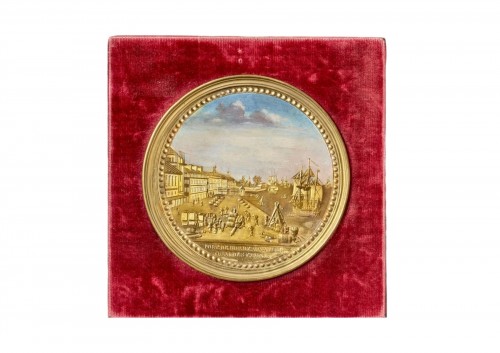
The paintings known as "Compigné" are made from a bronze-engraved matrix, allowing designs to be stamped onto tortoiseshell or pewter. After printing, the artist applies polychromy with gouache and sometimes highlights in gilding. This process combines technical precision with artistic variations, particularly in the colors and added figures.
Variations and Interpretations of Engraved Models
Compigné draws on existing engravings, which he adapts by simplifying or modifying certain elements. His subjects are varied, ranging from landscapes to contemporary events, and his works evolve from small cabinet pieces to more ambitious compositions. This diversity testifies to a flexible and inventive production.
Thomas Compigné
A Parisian cabinetmaker active in the 18th century, Thomas Compigné is renowned for his luxury objects and technical innovations. Close to the court, he developed a refined style and signed his works, which contributed to his fame. Despite his success, some aspects of his life and work remain poorly understood.
Bibliography
-Les Compignés et leurs créateurs, ces délicats chefs?d’œuvre de la tabletterie au XVIIIe siècle, Plaisir de -France, no. 427, March 1975.
-Compigné, peintre et tabletier du Roy, exhibition catalogue, Grasse, Villa-Musée Jean-Honoré Fragonard, June–July 1991.