Offered by Galerie Léage
REQUEST INFORMATION
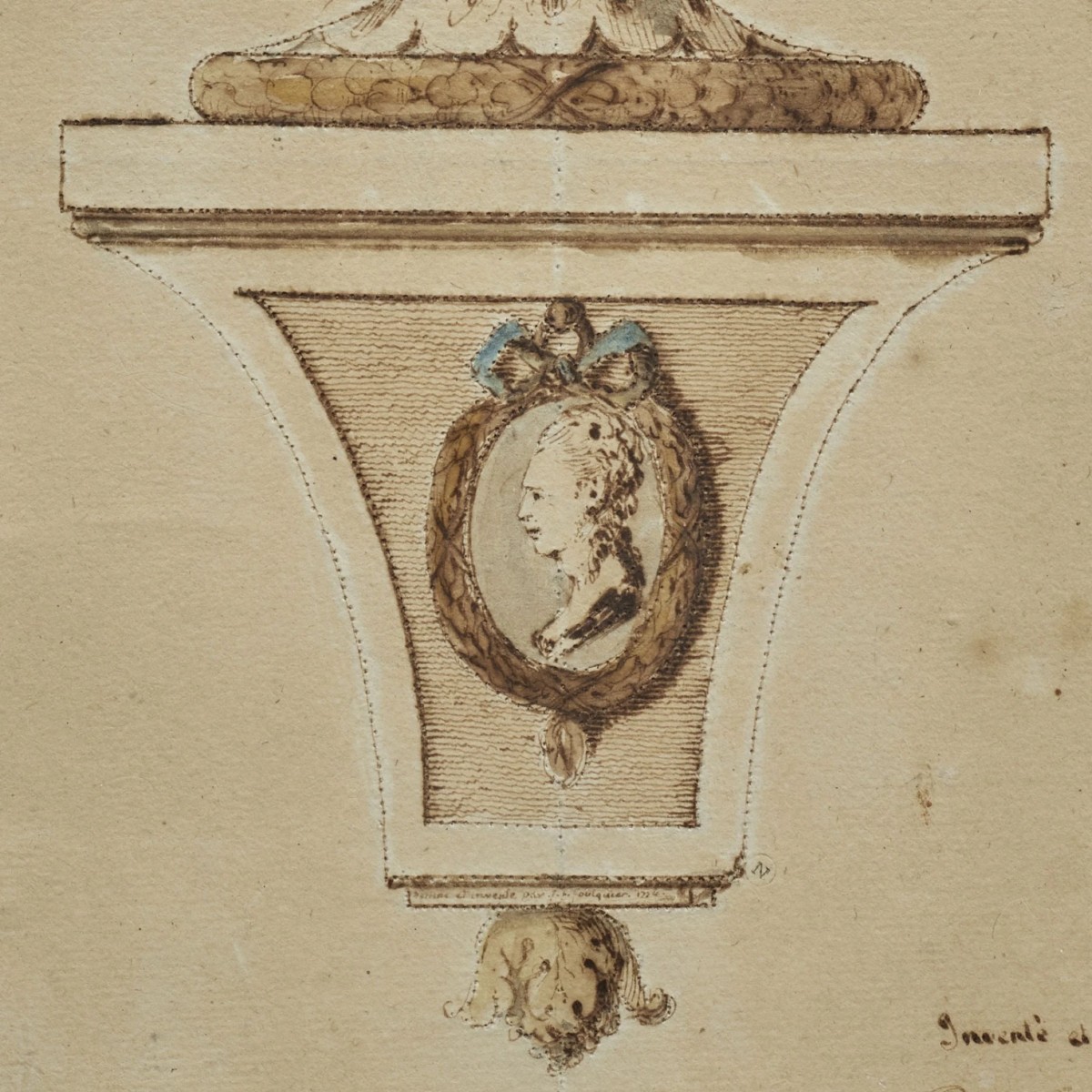
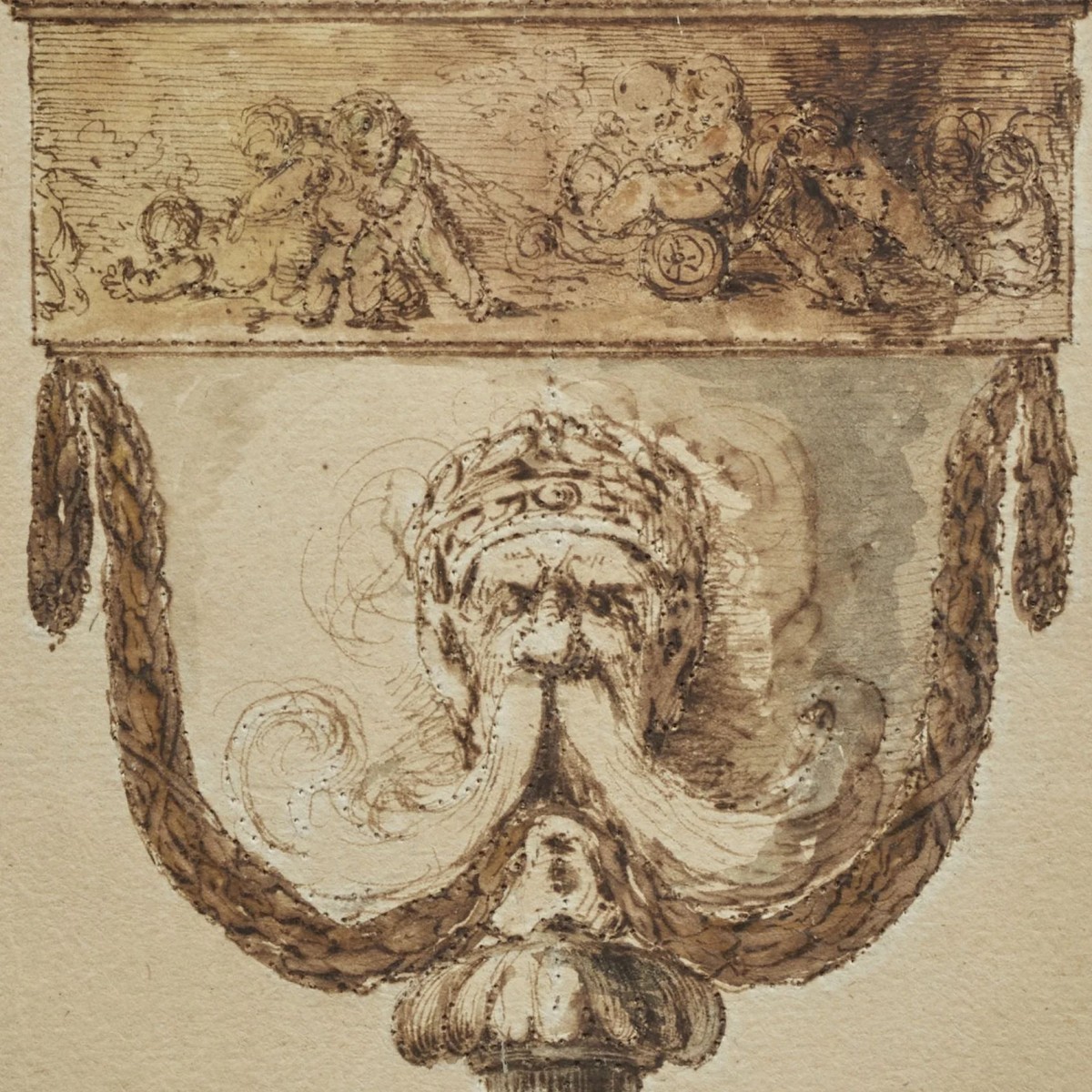

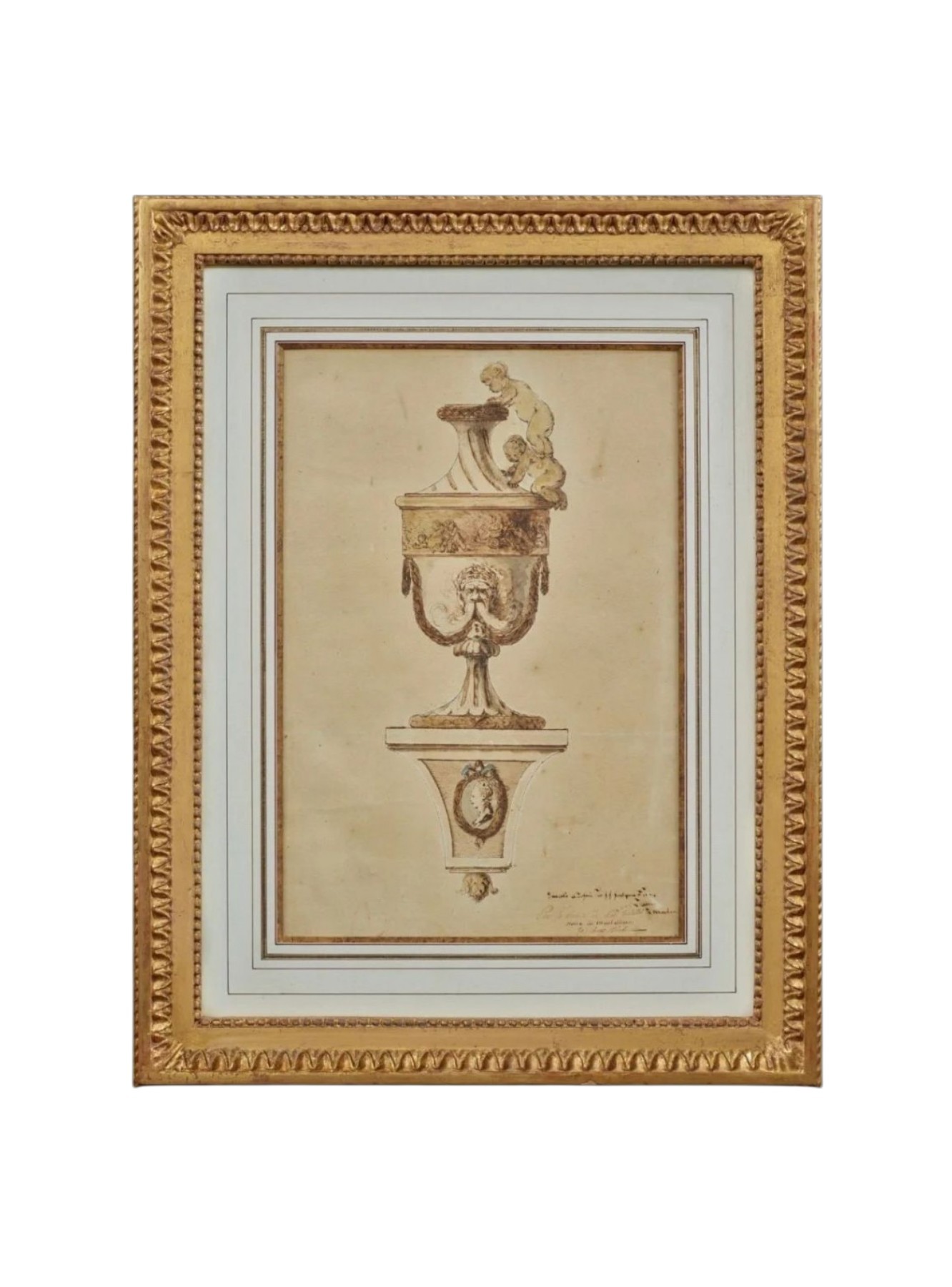
France, 1774
Joseph François Foulquier (1744?1789)
Collection stamp: N
Black chalk, pen and brown ink, yellow and blue watercolor, gray wash
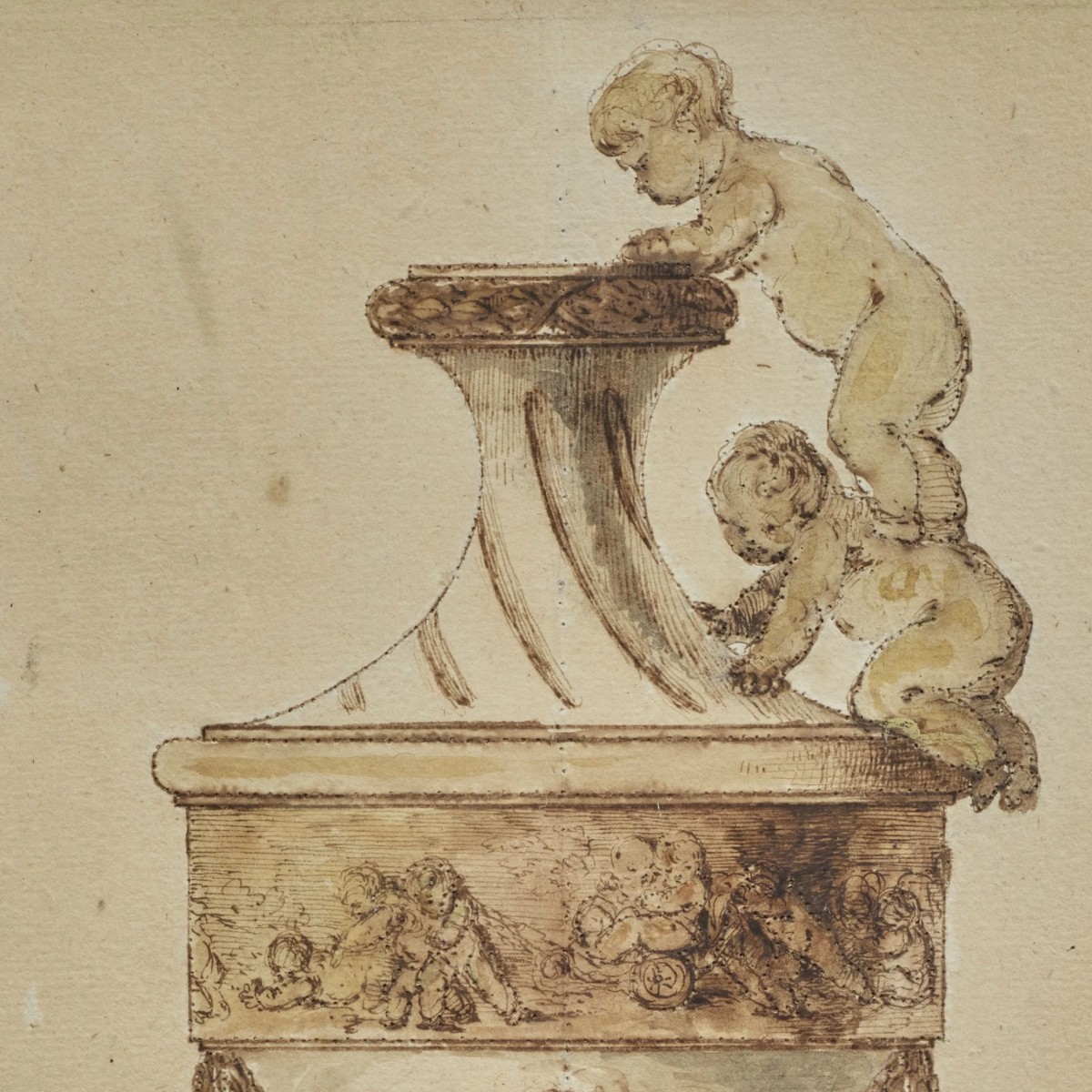
Piqué for transfer
With frame:
Height: 37,5 cm – 15 inches
Width: 35 cm – 14 inches
Without frame:
Height: 56 cm – 22 inches
Width: 43 cm – 17 inches
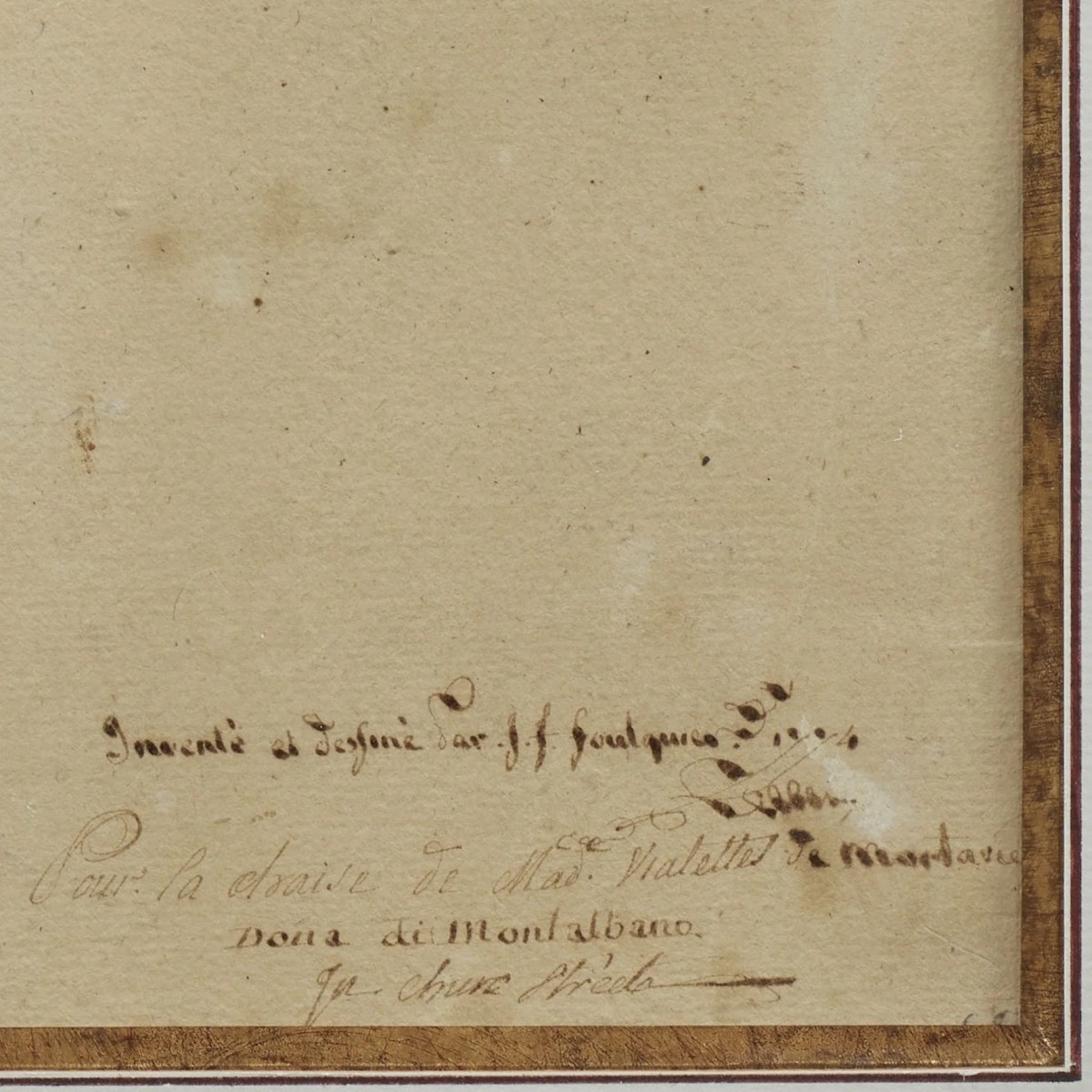
Annotations:
On the base of the vase: Designed and invented by J. F. Foulquier 1774
Bottom right: Invented and designed by J.F. Foulquier 1774 / For the chair of Mad.e Vialettes de Mortarieu / Dona di Montalbano / In Churc. Streets
Comparable examples:
-Jean Charles Delafosse, Three vases « à la grecque », 2nd half of the 18th century, pen, black ink, gray wash, paper (cream), Musée des Beaux-Arts de Rouen (inv. AG.1975.4.633)
-Jean-Louis Prieur, Model of a bronze vase, Paris, circa 1780–1790, pen, black ink, sepia watercolor, Paris, Musée des Arts Décoratifs (inv. cd 41)
-Jean-Louis Prieur, Model of a bronze vase, Paris, circa 1780–1790, pen, black ink, sepia watercolor, graphite pencil, Paris, Musée des Arts Décoratifs (inv. 3413)
-Attributed to Claude Michel dit Clodion, Vase, 1762–71, terra cotta, Boston, Museum of Fine Art (inv. 1989.48)
Ornamental Designs
Ornamental designs constitute the first step in the creation of an object. Commissioned by patrons, collectors, or dealers, they are created by architects, ornamentalists, or artists. Often anonymous, they can sometimes be attributed to well-known figures such as Oppenord, Gabriel, or Ledoux.
Ornamentalists play a central role: they design decorative motifs intended to be reproduced by artisans in various materials. The drawing thus becomes a true creative tool, ranging from a sketch to a highly refined representation, close to the final design.
Both a technical aid and an aesthetic work, it can be collected and serve as a source of inspiration. The studied drawing, signed, dated, and intended for a specific commission ("chair for Mademoiselle Vialettes de Mortarieu"), testifies to this dual function. The presence of pricking indicates its use in the manufacturing process, while its preservation and collector's mark show that it was also appreciated as a work of art.
Vases in the Antique Style
At the end of the 18th century, archaeological discoveries (Palatine Hill, Hadrian's Villa) sparked a craze for classical forms. Artists then produced numerous designs for vases in the antique style, often published in collections.
These creations incorporated a variety of decorative motifs, notably figures of children or playful scenes, as seen in the works of Jean-Louis Prieur, Delafosse, and Clodion. The drawing studied here is part of this trend.
Joseph François Foulquier (1744–1789)
Born in Toulouse into a wealthy family, Foulquier received a solid education before turning to art in Paris, where he learned drawing and engraving. He produced works blending fantasy, satire, and the grotesque, and exhibited at the Salon.
Close to Rousseau, he was appointed intendant in Guadeloupe in 1781, then in Martinique, where he died in 1789. There he also developed scientific and botanical activities, sending observations and samples to France.
The Vialettes de Mortarieu Family
Originally from Rouergue and settled in Montauban, the Vialettes de Mortarieu family held important positions from the early modern period onward. One of its most prominent members, Joseph Vialettes de Mortarieu, played a major role in the city's development and secured its status as regional capital from Napoleon.
The drawing, intended for a "Miss Vialettes de Mortarieu," likely reflects a commission linked to this high social class, although the exact connection cannot be established. It could be associated with a family residence in Montauban.
Bibliography:
-Pierre Verlet, Les Bronzes Dorés Français du xviiie Siècle, Paris, Éditions Picard, 1987.
-Etienne-Léon de Lamothe-Langon, Biographie toulousaine : ou Dictionnaire historique de personnages…se sont rendus célèbres dans la ville de ----Toulouse, ou qui ont contribué à son illustration, Tome 1, Paris, 1823, p. 247.
Annuaire du Tarn et Garonne, 1851.
-Collective catalog, Clodion (1738 – 1814), Paris, Éditions de la Réunion des Musées Nationaux, 1992.
Collective catalog, Dessiner et ciseler le bronze. Jean--------Louis Prieur (1732?1795), musée Nissim de Camondo, Paris, 2015.