Offered by Galerie Nicolas Lenté
REQUEST INFORMATION
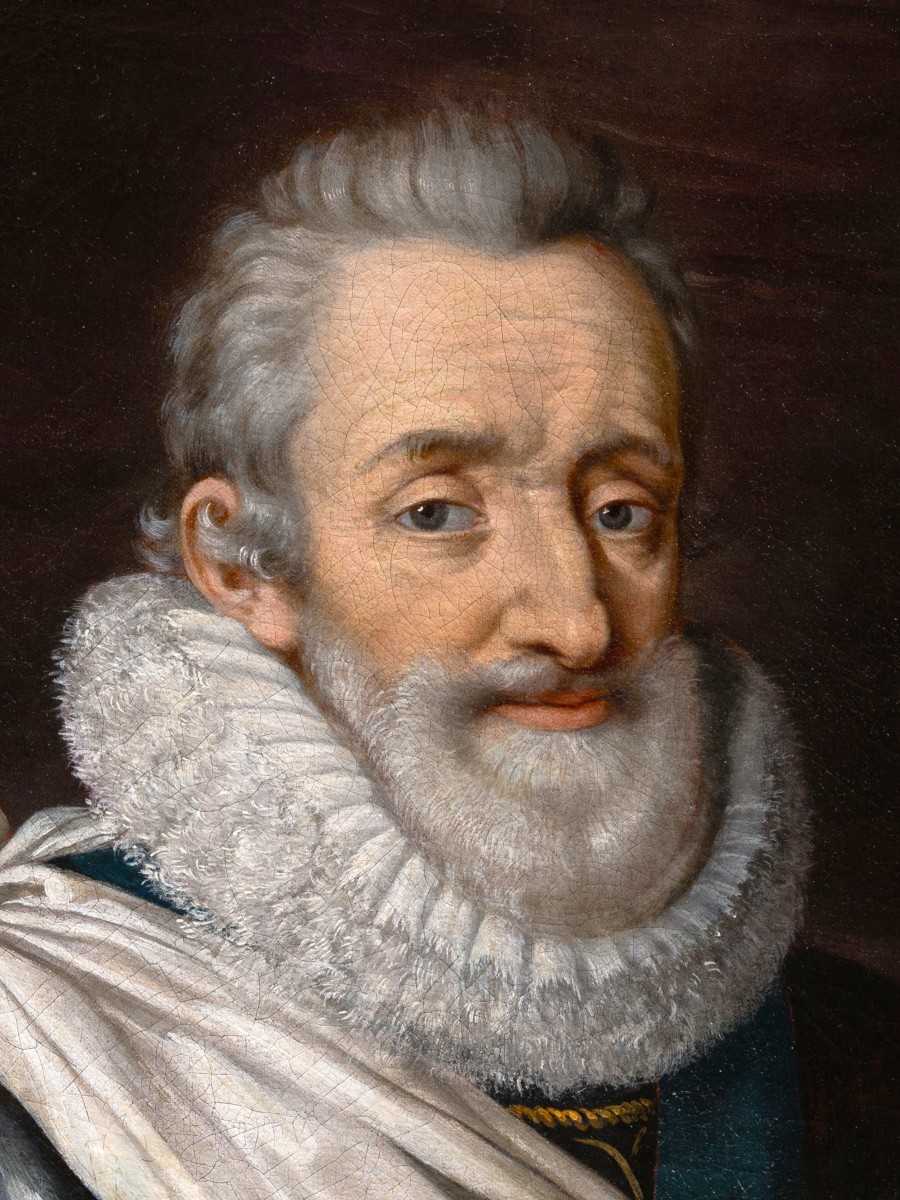
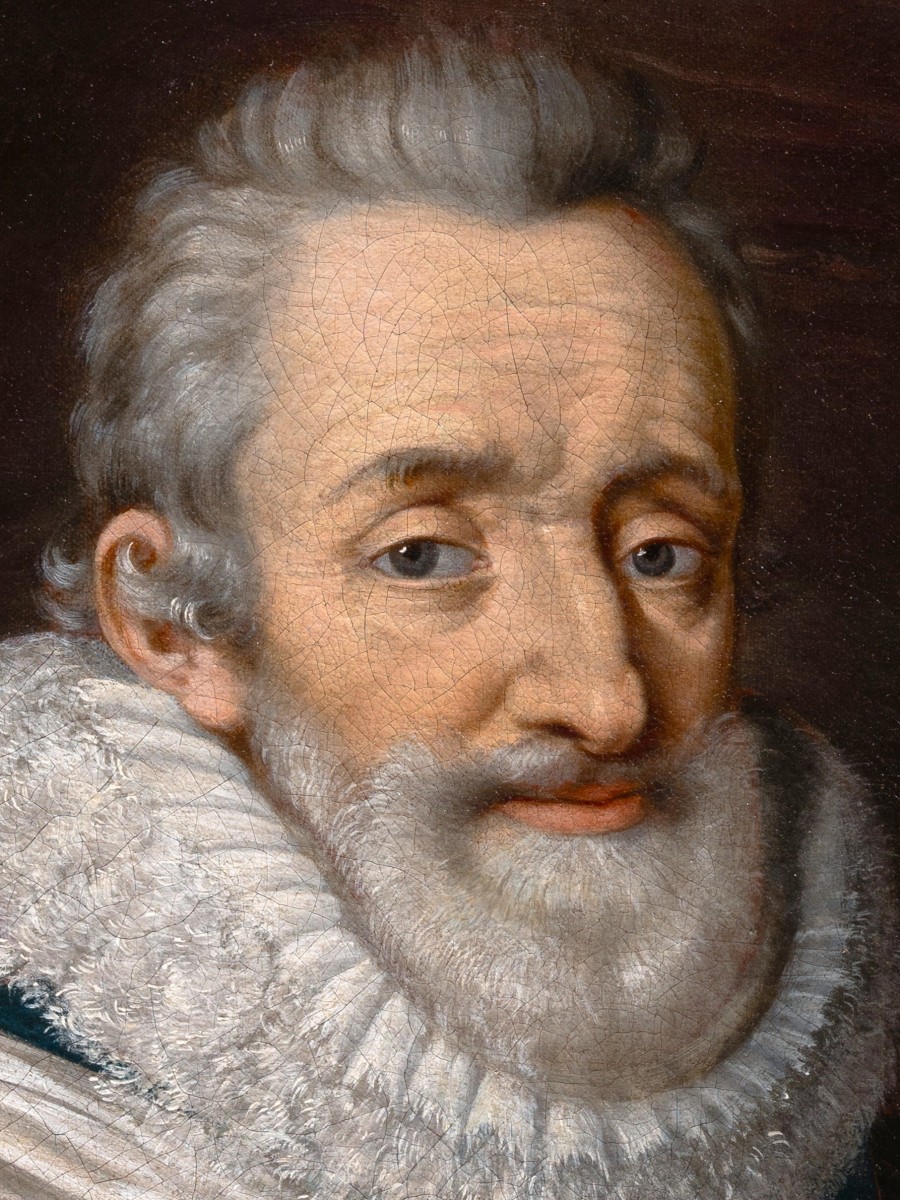

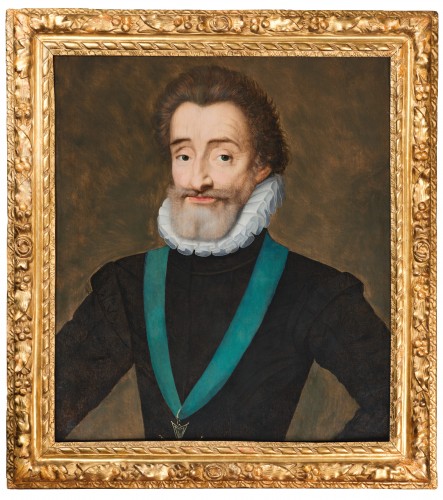
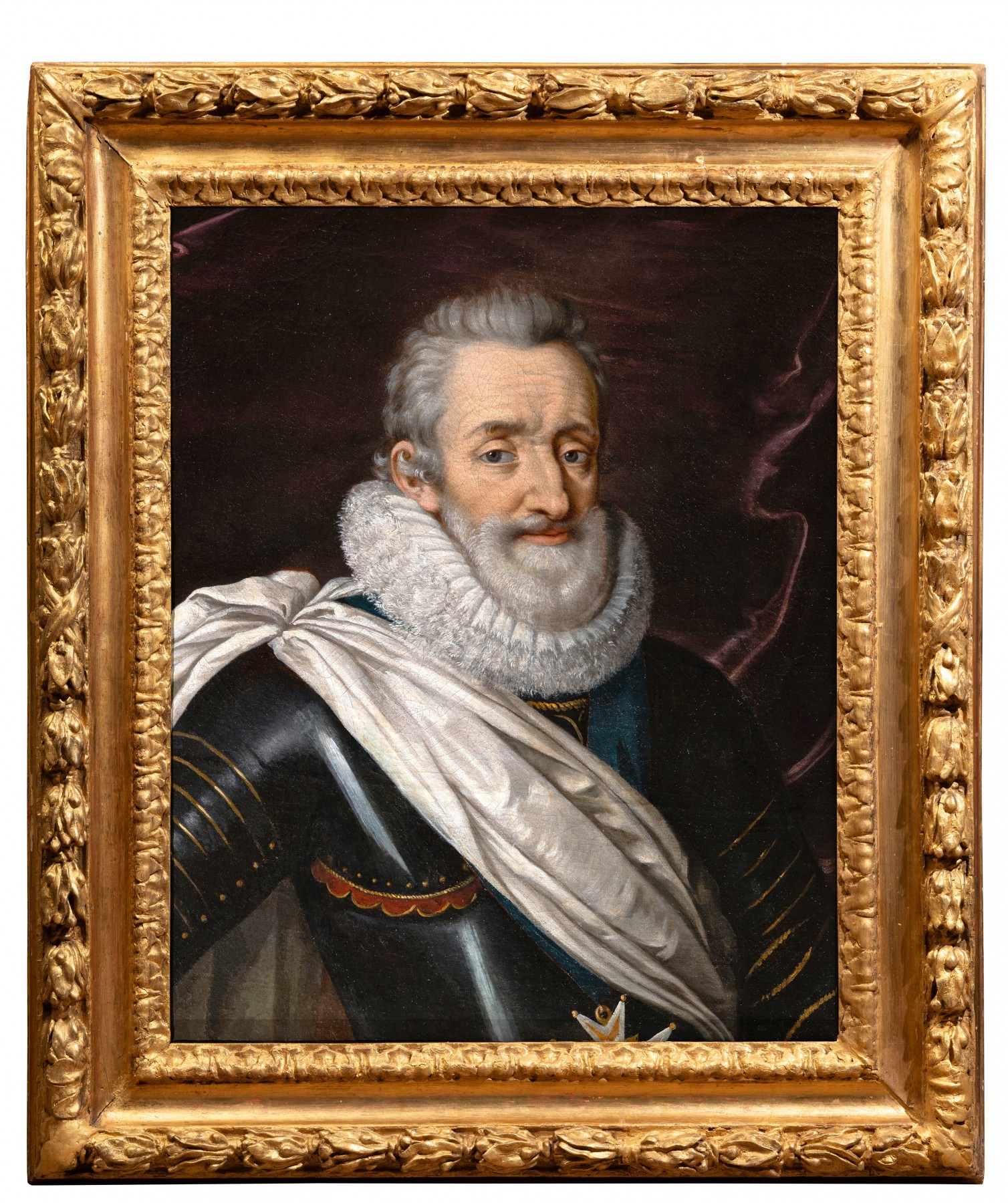
Portrait of Henry IV in armor,
studio of Frans Pourbus the Younger (1569-1622), circa 1610
Oil on canvas: h. 62 cm, w. 50 cm
17th century richly carved giltwood frame.
Framed: h. 84 cm, w. 72 cm
Related works:
Frans Pourbus circa 1610, Full-length portrait, canvas 42x28 cm, inv 1707, Louvre Museum
Studio of Frans Pourbus, half-length portrait, canvas 76x60 cm, inv MV5508, Palace of Versailles
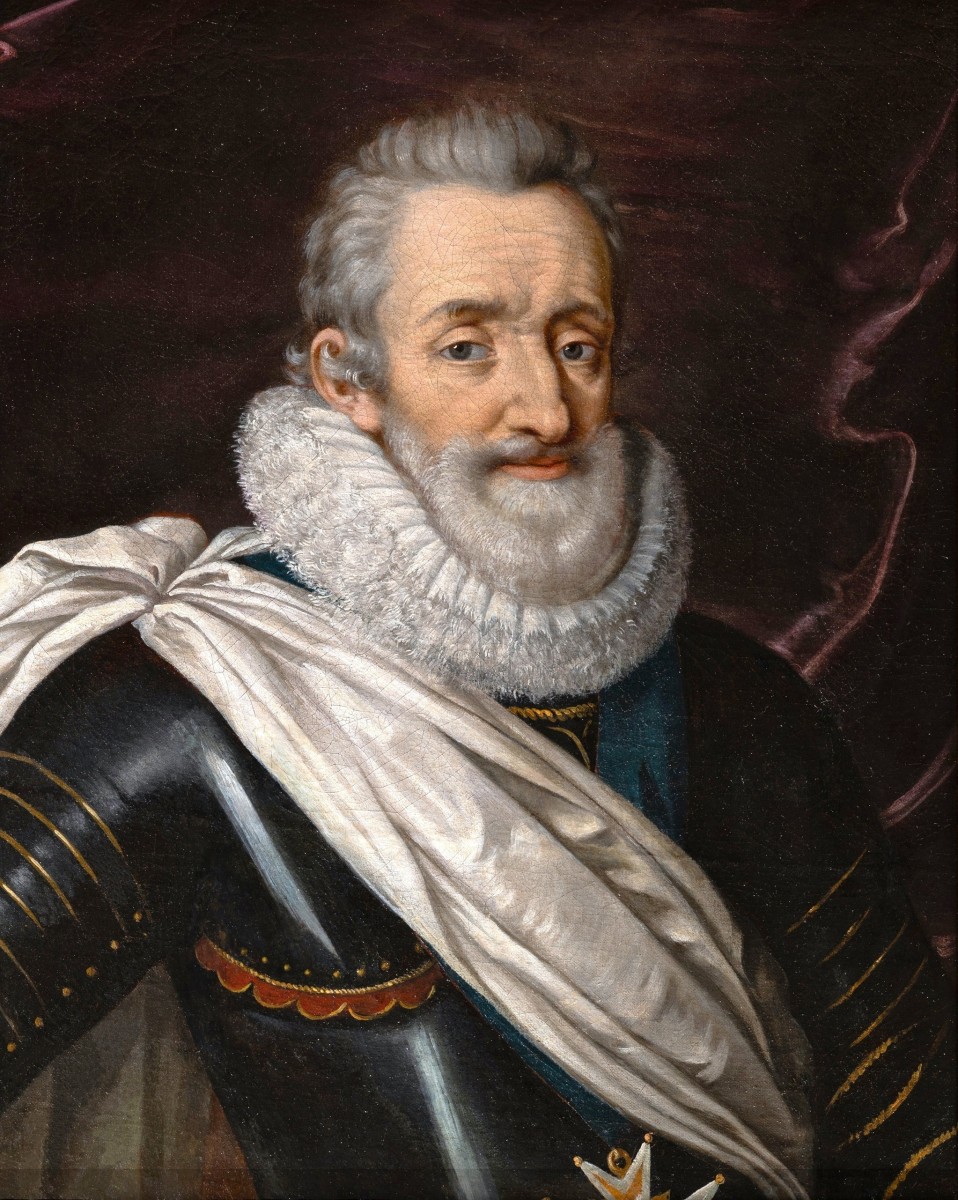
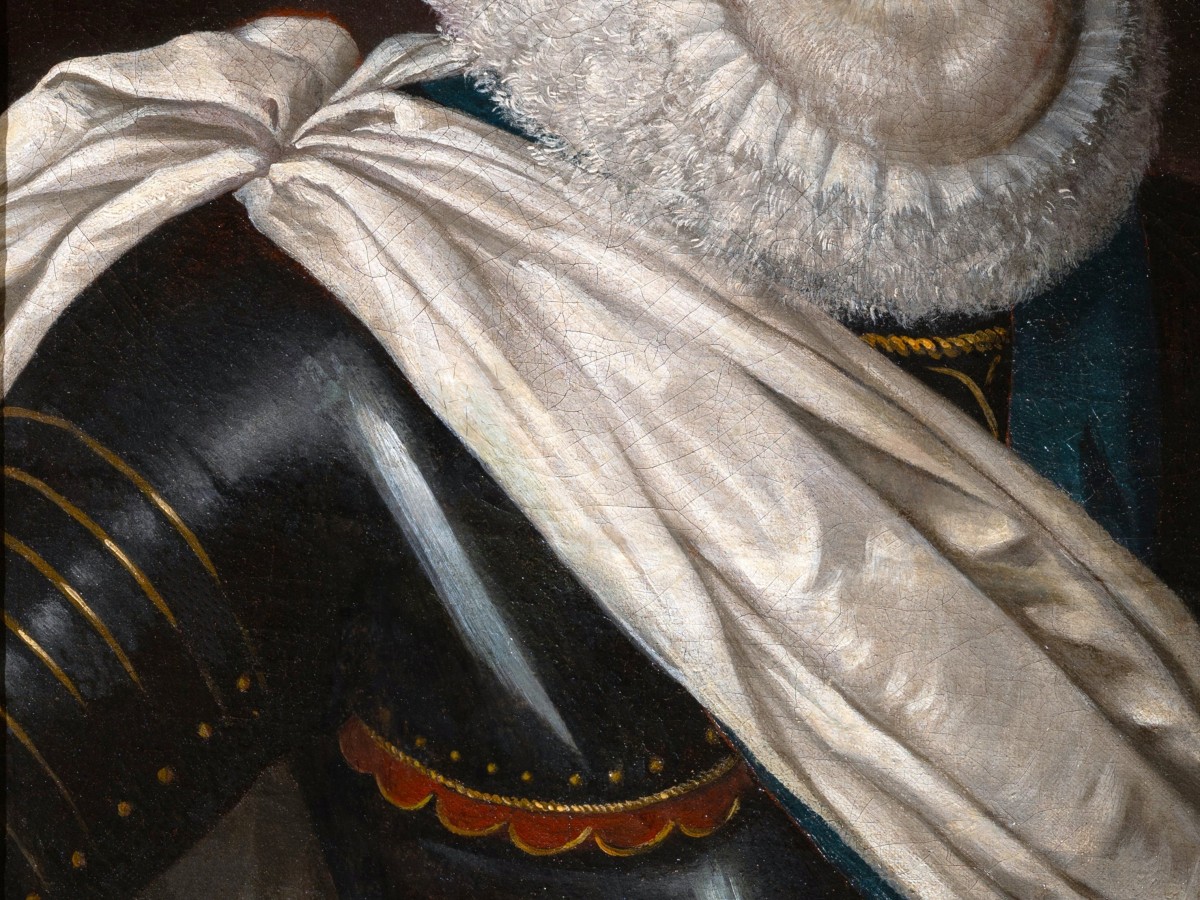
This portrait of Henry IV, produced around 1610 in the workshop of Frans Pourbus the Younger, is distinguished by its unique iconography in the artist's corpus, representing the king as a "warrior" and without regalia. A king born of conflict, he is keen to emphasize his status as a man of war: dressed in armor and wearing the white sash, a distinctive symbol of Protestants during the Wars of Religion, in contrast to the red sash adopted by Catholics.
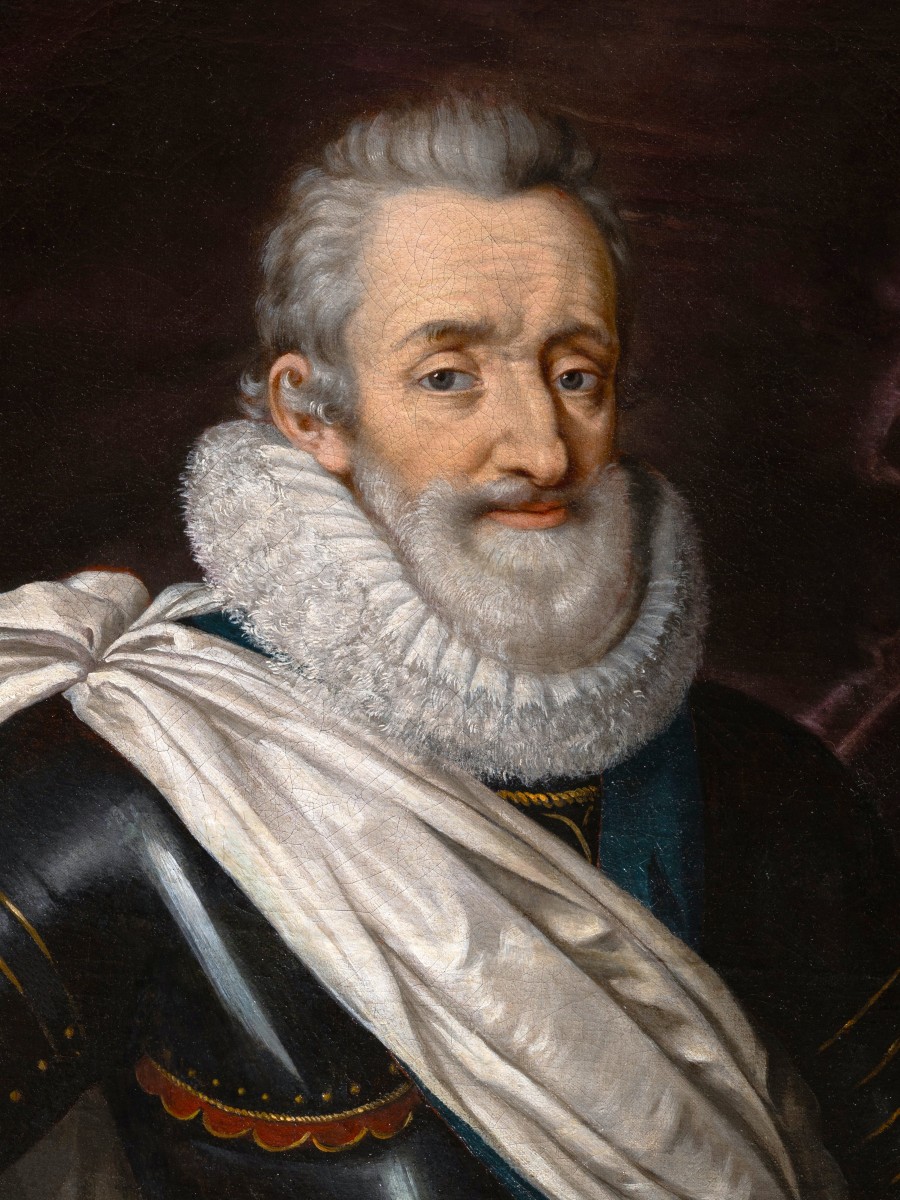
The sovereign is depicted in a bust portrait, slightly turned three-quarters, in a a posture both firm and measured. His gaze, fixed directly on the viewer, combines authority and gentleness, contributing to the construction of an image of a king who is both powerful and a peacemaker. Then in his fifties, he appears here with a slightly gaunt face, softened by a white beard, while his distinctive, so-called "Bourbon" nose affirms his dynastic identity.
Entirely clad in meticulously polished black armor, the reflections capture the light and structure the king's torso. Enhanced with delicate gold ornaments, it transcends its military function to become a true attribute of representation: it evokes the bravery of the war leader while magnifying his presence. Draped over his shoulder, the symbolic white sash softens this metallic ensemble and introduces a contrast of textures, while the wide white ruff frames his face and draws attention to the sovereign's features, rendered with great finesse.
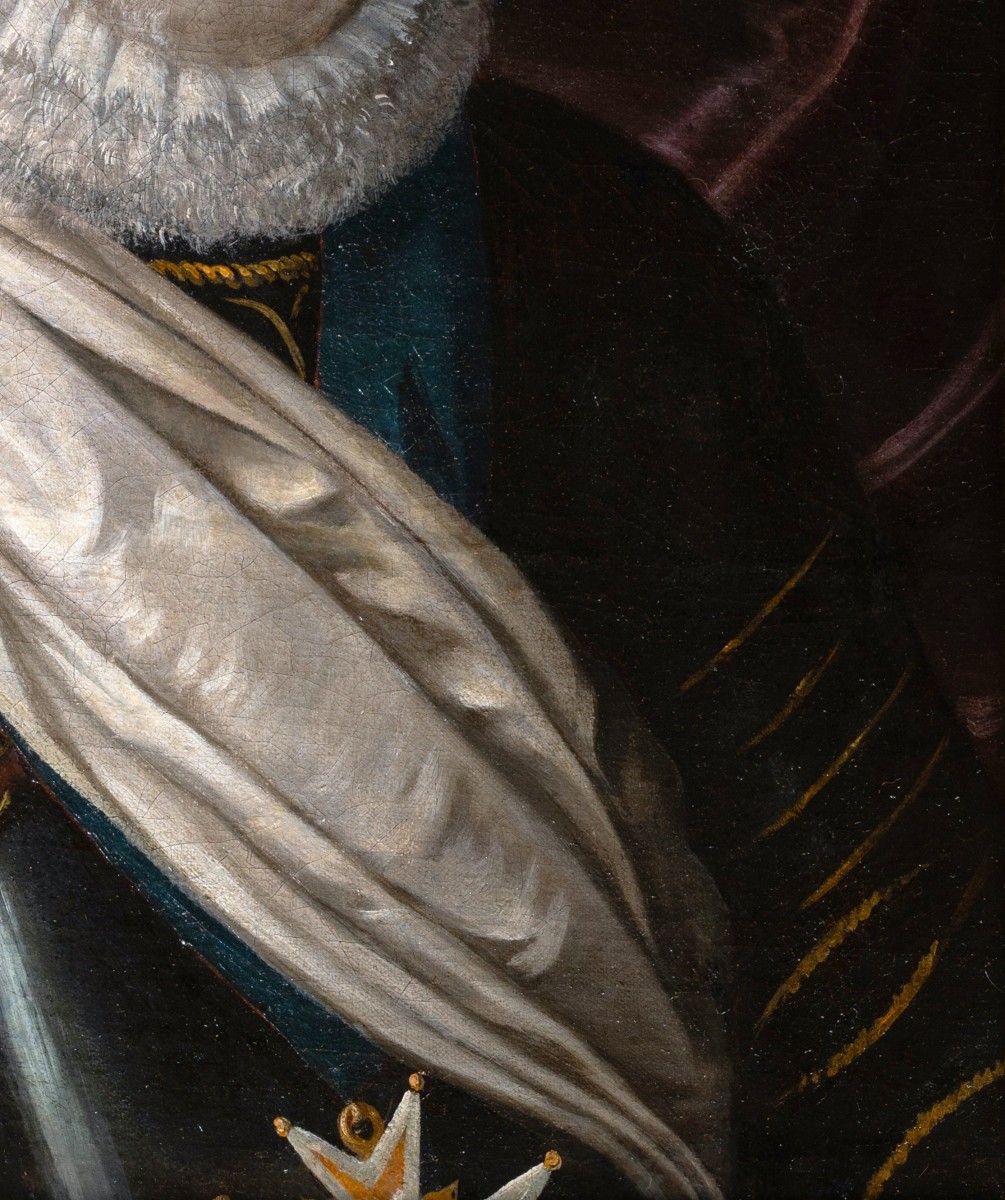
The monarch displays on his chest the blue ribbon bearing the insignia of the Order of the Holy Spirit, the highest distinction of the French monarchy. Instituted in 1578 by Henry III, this order was reserved for a very select elite and represented the pinnacle of the nobility. Wearing this ribbon and its cross signified both the king's membership in this prestigious order and, more profoundly, the sacred dimension of his office. It recalled that royal authority was placed under the sign of the Holy Spirit, inscribing Henry IV's power in a legitimacy that was both political and divine. Thus, to the martial dimension embodied by the armor was added an explicit affirmation of sacred sovereignty.
The background was occupied by a deep-pleated purple curtain, which framed the figure and reinforced the effect of solemnity. This color, traditionally associated with emperors since antiquity, lends the image a powerful symbolic significance: it elevates Henry IV to the rank of a sovereign of almost imperial stature. The curtain also acts as a theatrical device, isolating the king in a timeless space and focusing all attention on him.
Through the precision of the rendering, the richness of the materials, and the codified pose, this portrait perfectly illustrates the expertise of Frans Pourbus's workshop and the demands of court portraiture at the turn of the 16th and 17th centuries. It is not simply a matter of representing a man, but of constructing a political image: that of a victorious, legitimate king, the guarantor of order restored after the turmoil of the Wars of Religion.
Bibliography: Blaise Ducos, FRANS POURBUS LE JEUNE 1569-1622. Le portrait d'apparat a l'aube du Grand siecle Entre Habsbourg, Medicis et Bourbon. Faton Edition, 2011, p. 221
Delevery information :
We organize the shipping and delivery of our artworks worldwide, working with specialized fine art carriers as well as DHL Express for the secure shipment of small and medium-sized works (up to 120 cm).
Each artwork is carefully packed and shipped in a custom-made transport crate to ensure optimal protection. All shipments are fully tracked and insured.
We pay the utmost attention to every stage of the shipping process to ensure fast, reliable delivery. Shipments via DHL Express are generally dispatched within approximately 7 days of purchase.
All of our artworks can be viewed at our Paris gallery and may also be collected in person.