Offered by Tobogan Antiques
REQUEST INFORMATION
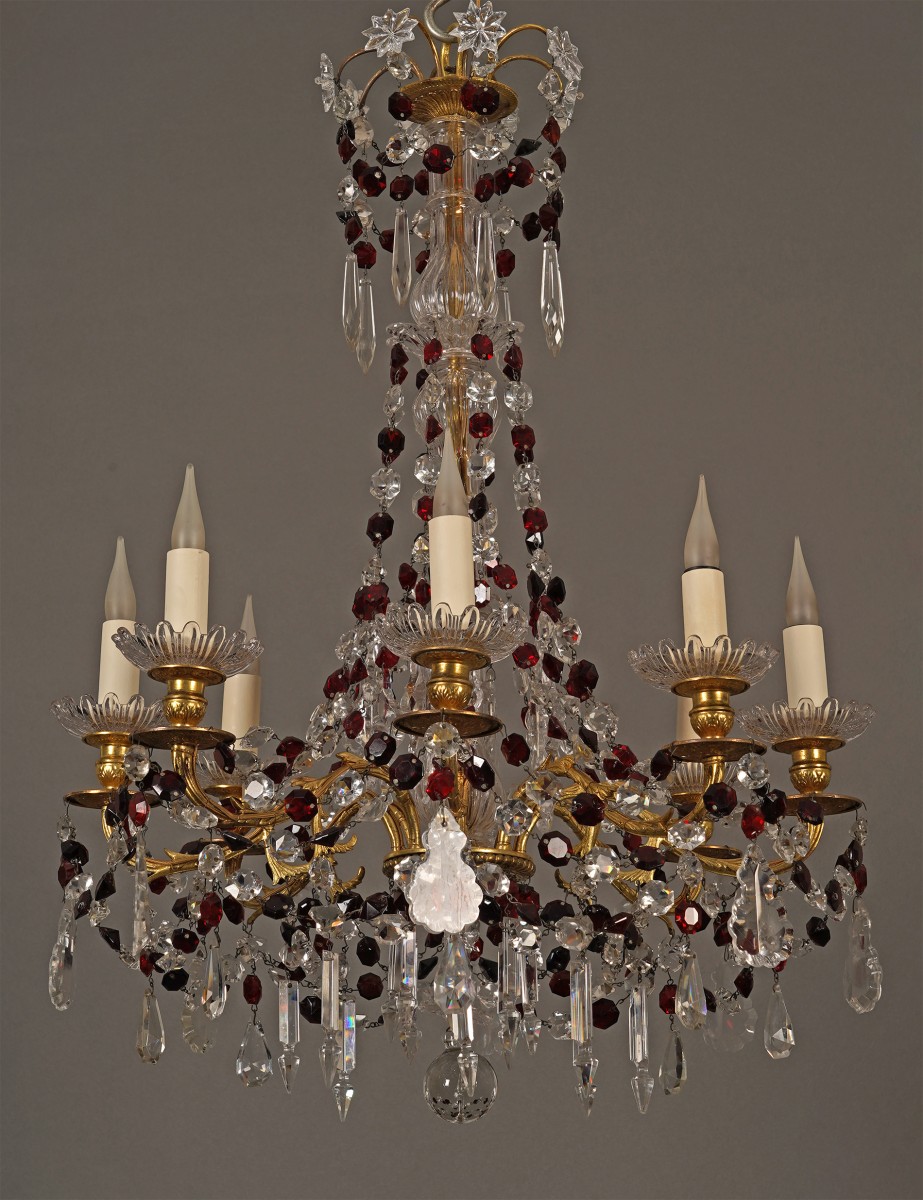
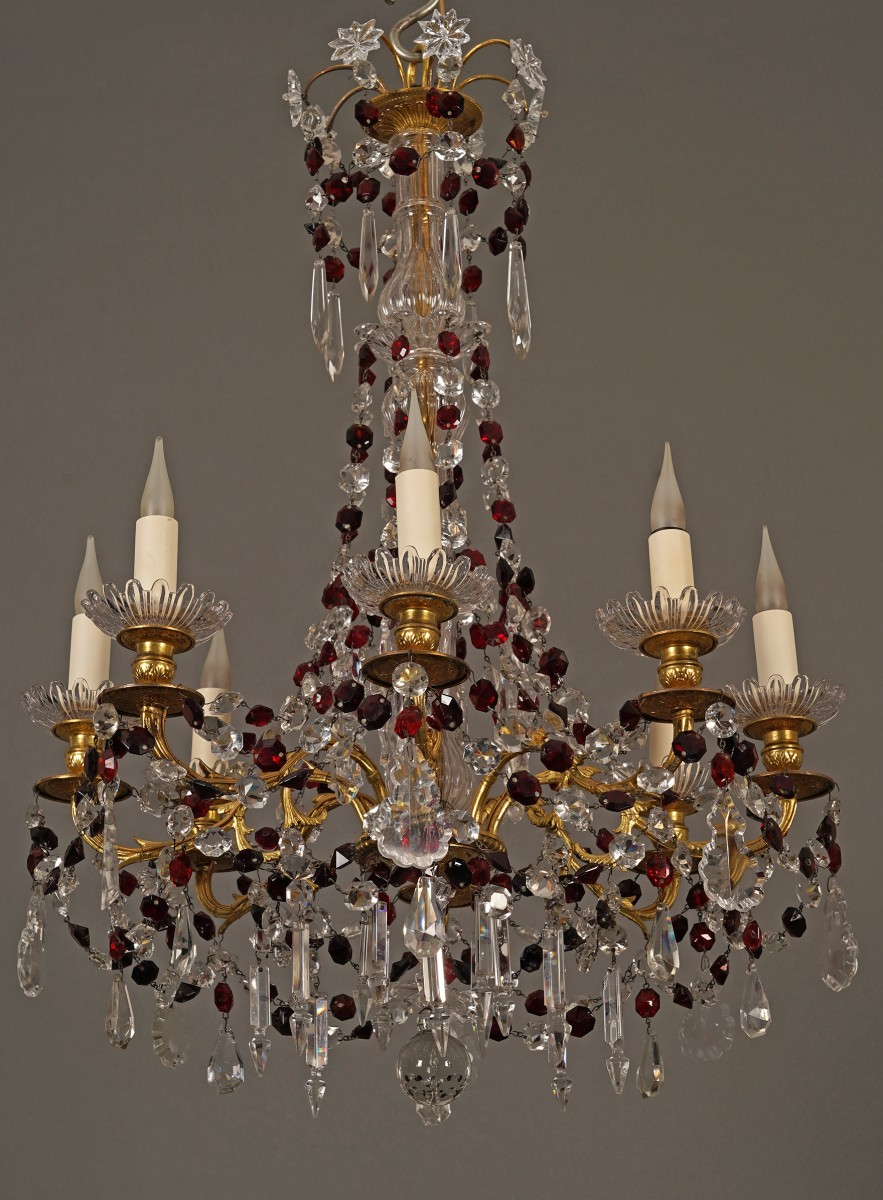
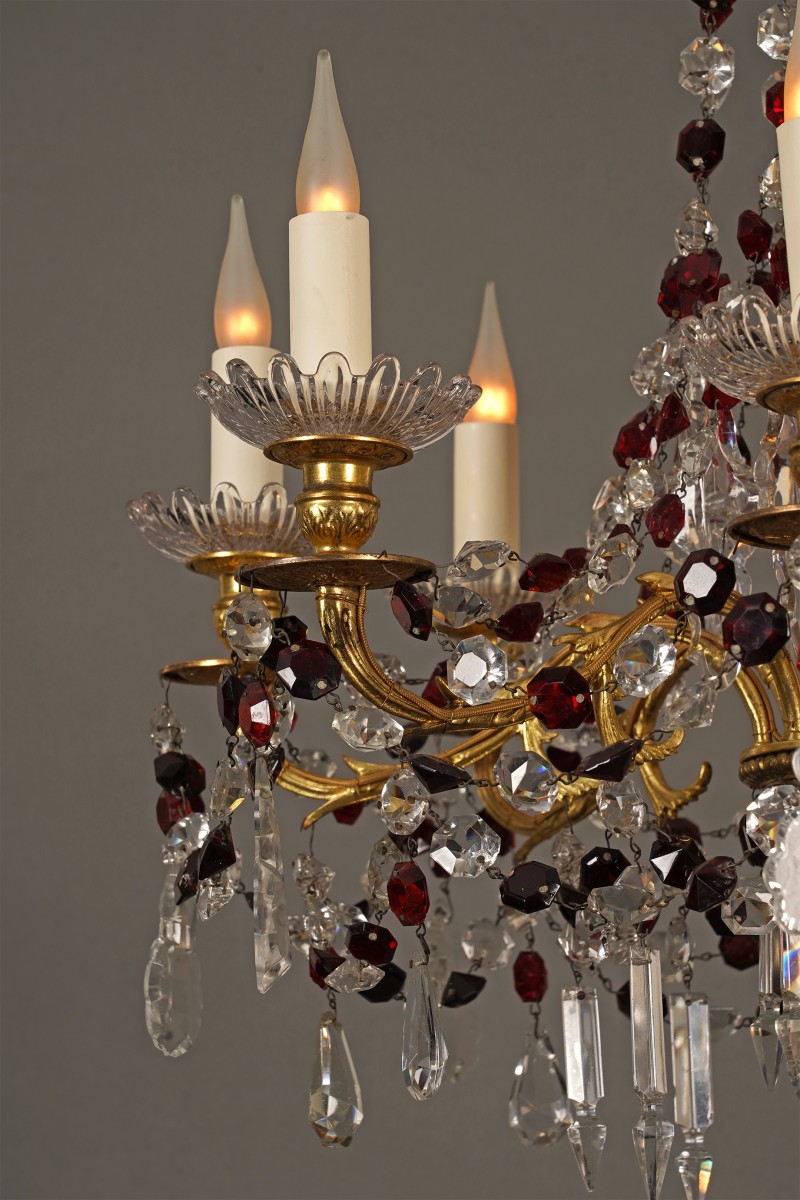

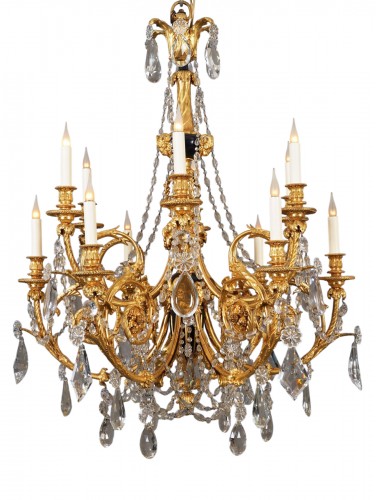
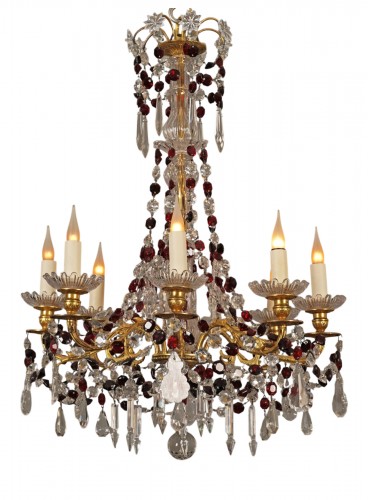
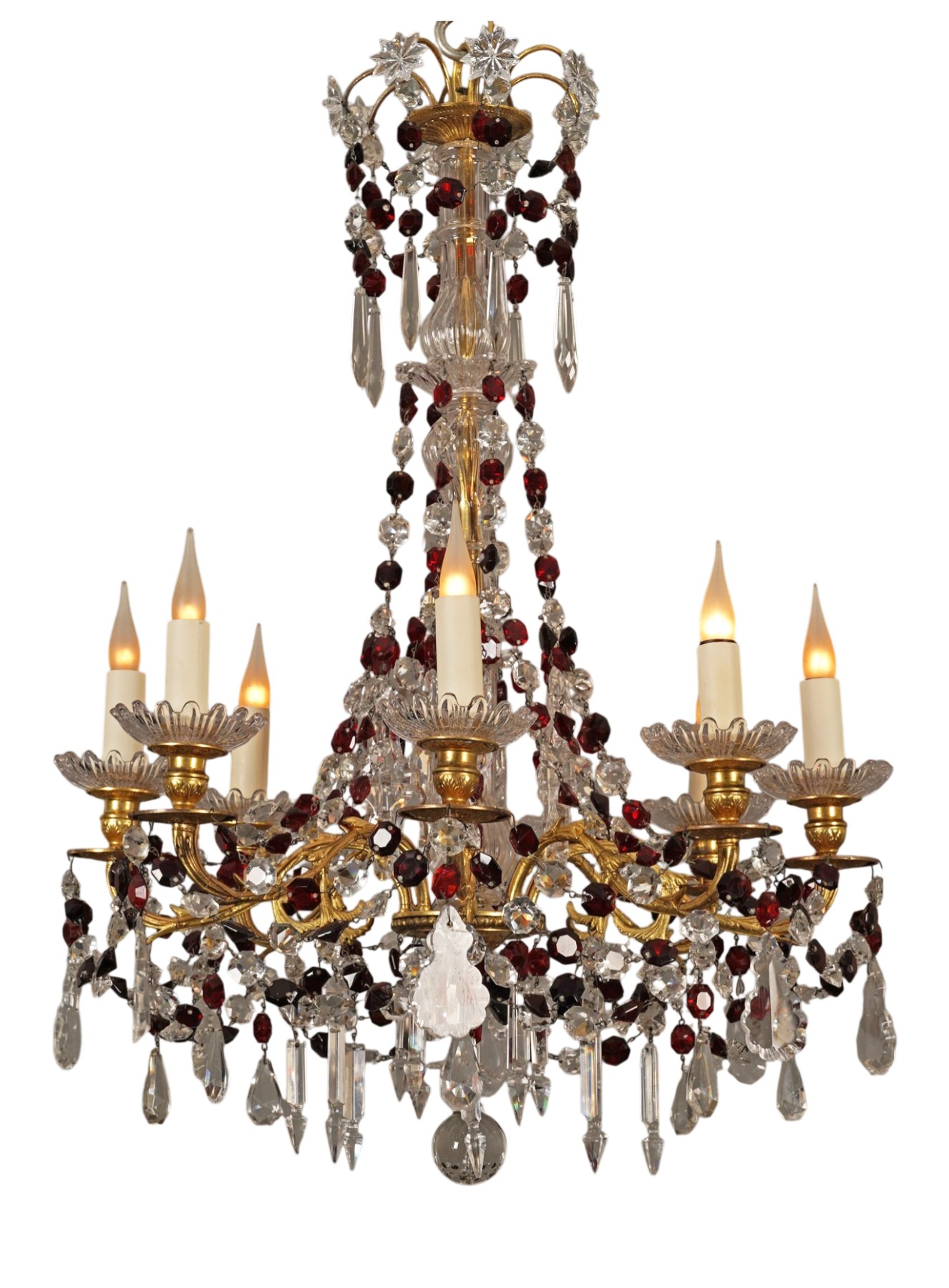
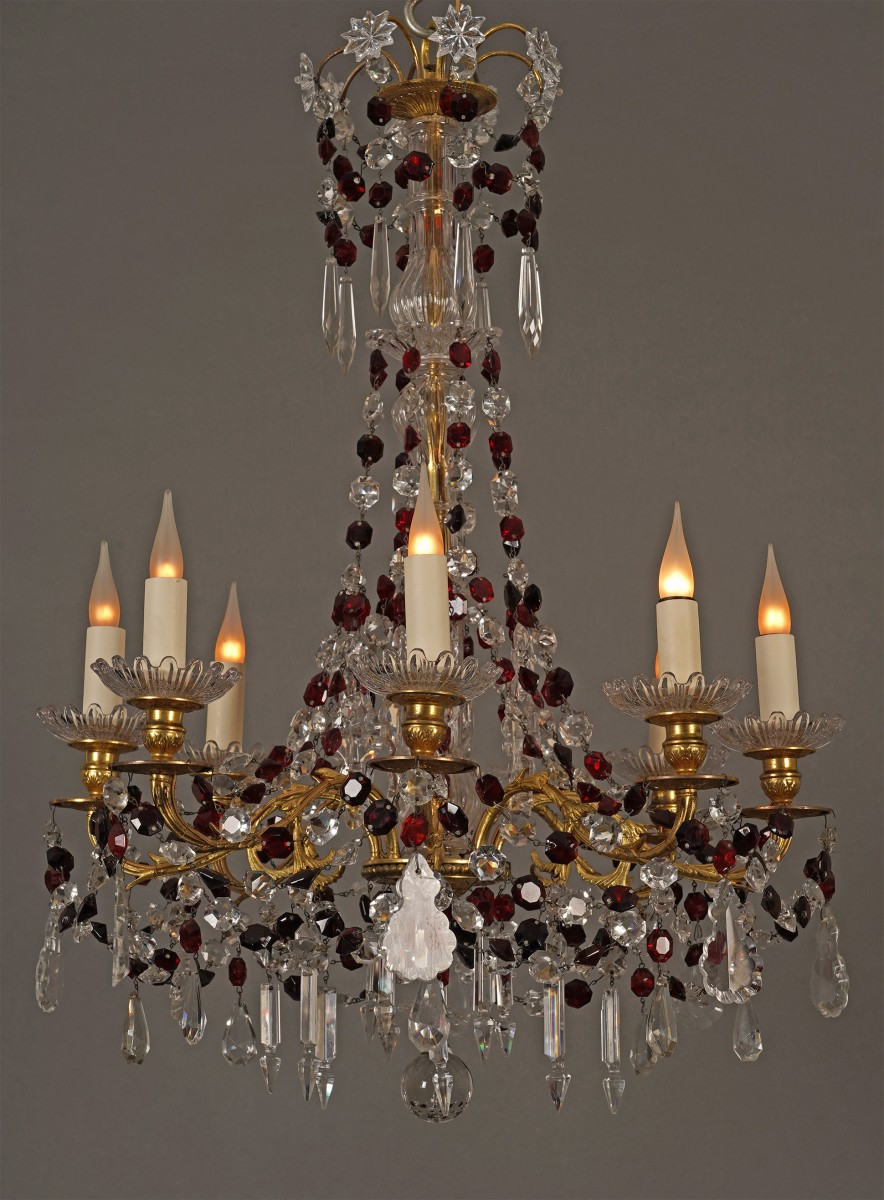
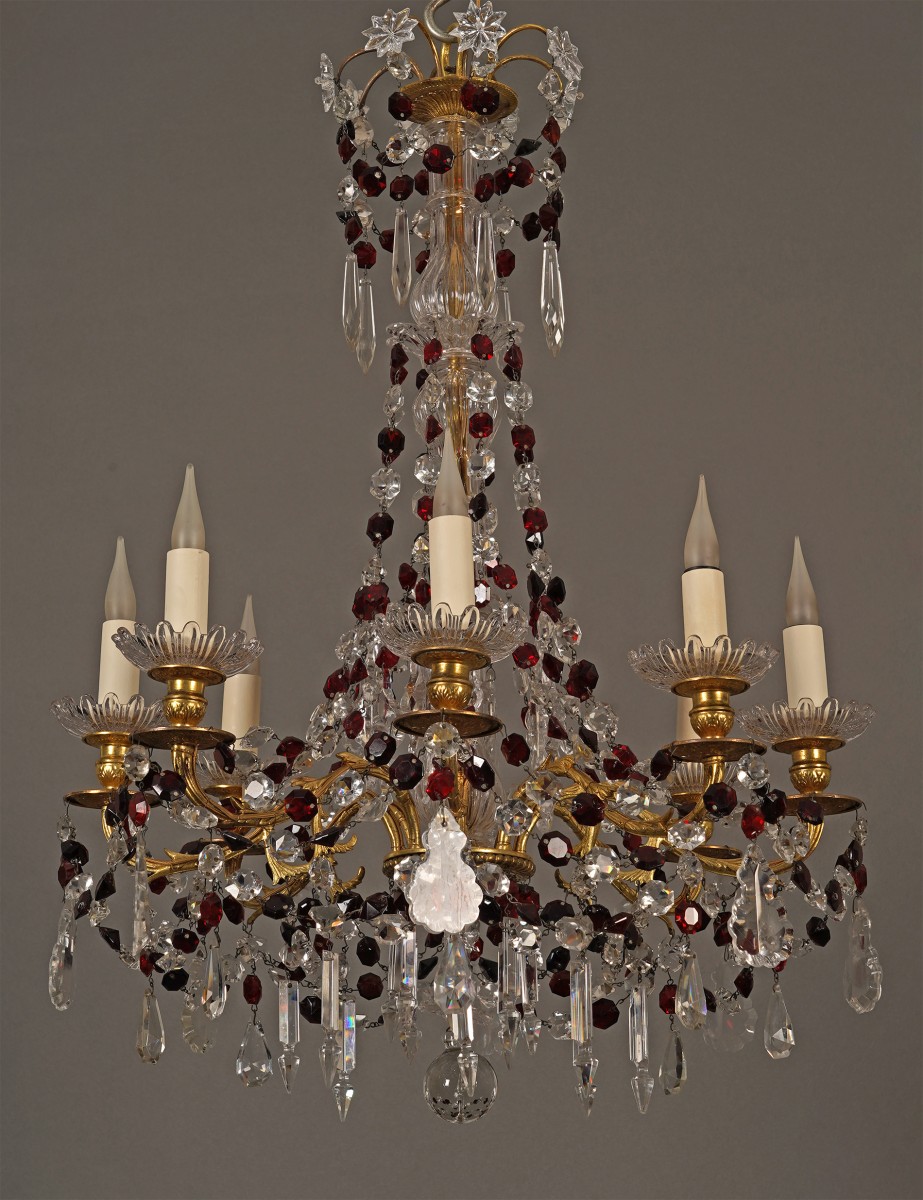
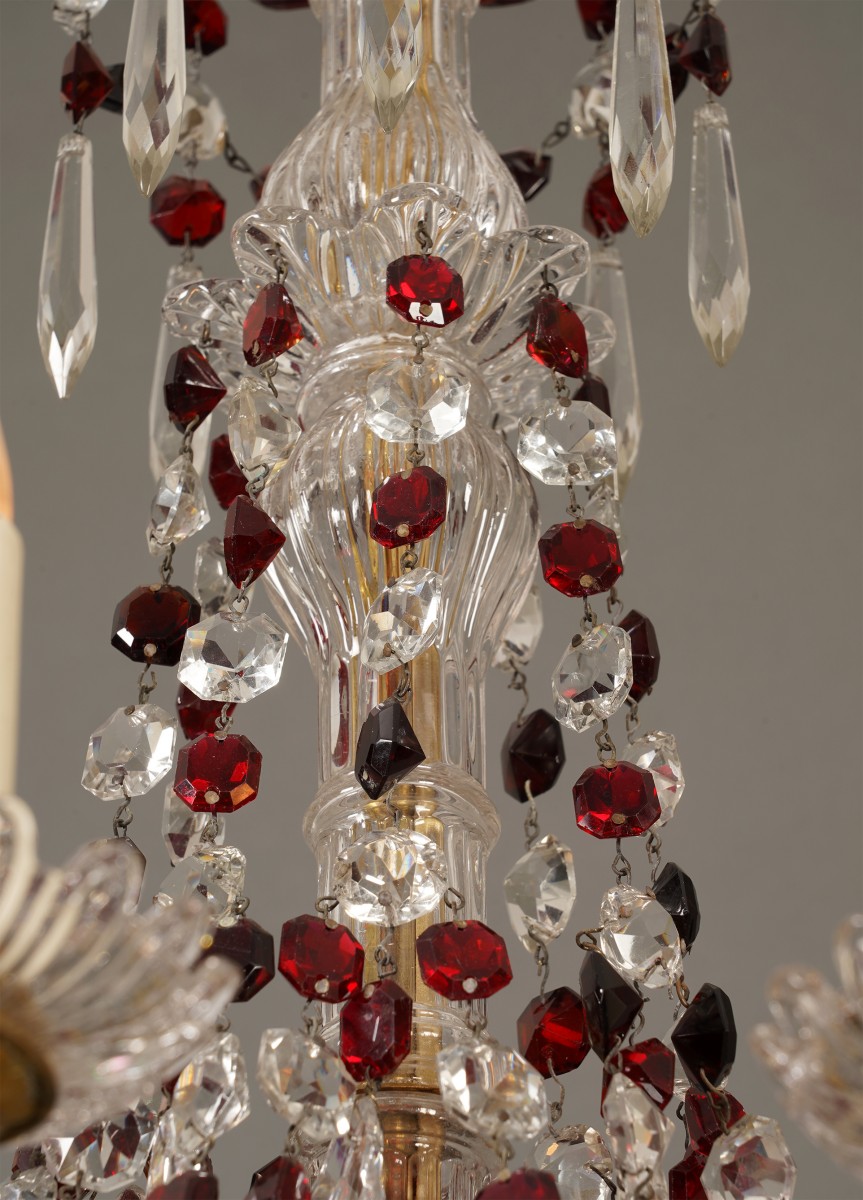
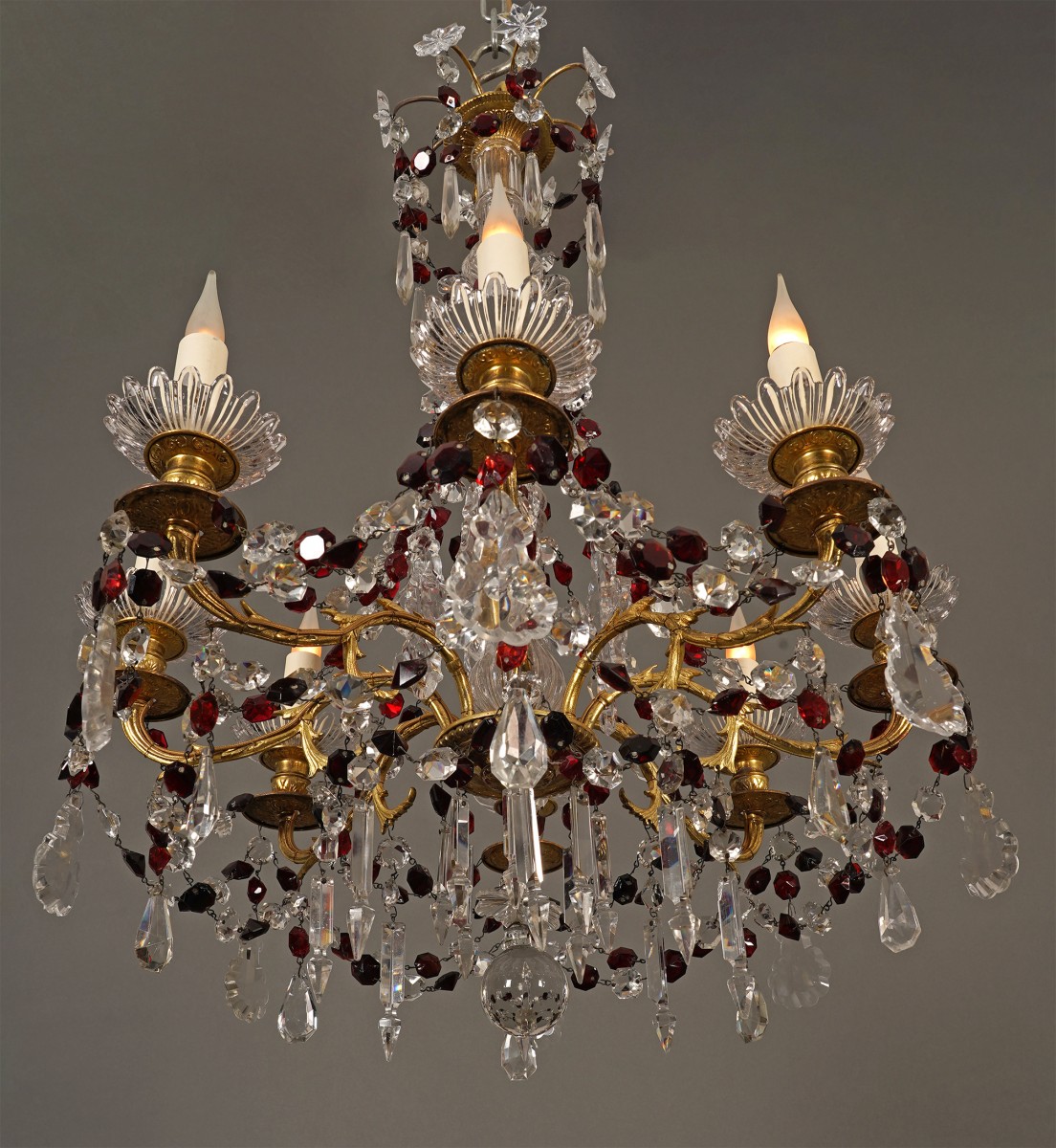
Fine baluster-shaped chandelier in crystal with a gilded bronze mount attributed to Baccarat. The central shaft, composed of threads, is illuminated by eight sinuously shaped light-arms adorned with foliage, each terminating in a gadrooned crystal bobeche resting on a foliate basin. A rich ornamentation of drops, pendants, elongated prisms, stars, and faceted crystal elements in both clear and “ruby” red, together with crystal garlands linking the arms to the central shaft, enhances the whole, which concludes in a suspended sphere.
Between 1764 and 1860, with rare exceptions, the crystal Manufacture of Baccarat doesn’t sign its works. The first paper labels appear in 1860 and represent inside a circle, a carafe surrounded by a goblet and a cup above which is marked BACCARAT. From 1875, the brand BACCARAT in stick letters and in relief is present on some blown models and on the bronze parts of the mounts. It’s from 1936 that the carafe, surrounded by a goblet and a cup with BACCARAT marked above, appears systematically on the production.
Biography :
The famous Baccarat crystal manufactory, whose origins date back to the 18th century, won its first gold medal at the 1823 Exhibition of the Products of Industry, where it was praised for the “brilliance and fineness of its crystal” and established itself as the leading crystal producer in France. Baccarat was undoubtedly the only French industry to be consistently and superbly represented at the various exhibitions in which it took part, thereby earning honors and prestigious awards. One key expression “the perfection of the material and of the cutting” recurs in all the reports of the Universal Exhibitions between 1855 and 1867, during which the Baccarat crystal works dominated through the quality of its crystal, regarded as superior to that of Bohemia and England.