Offered by Tobogan Antiques
REQUEST INFORMATION
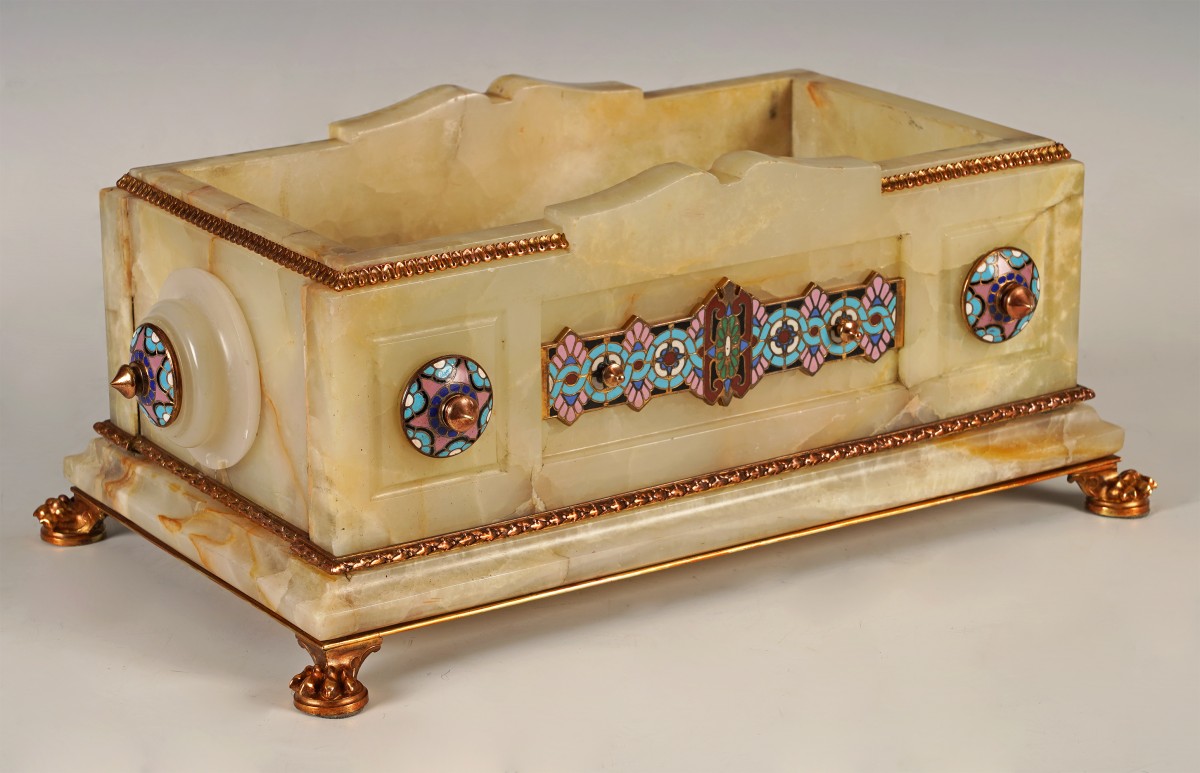
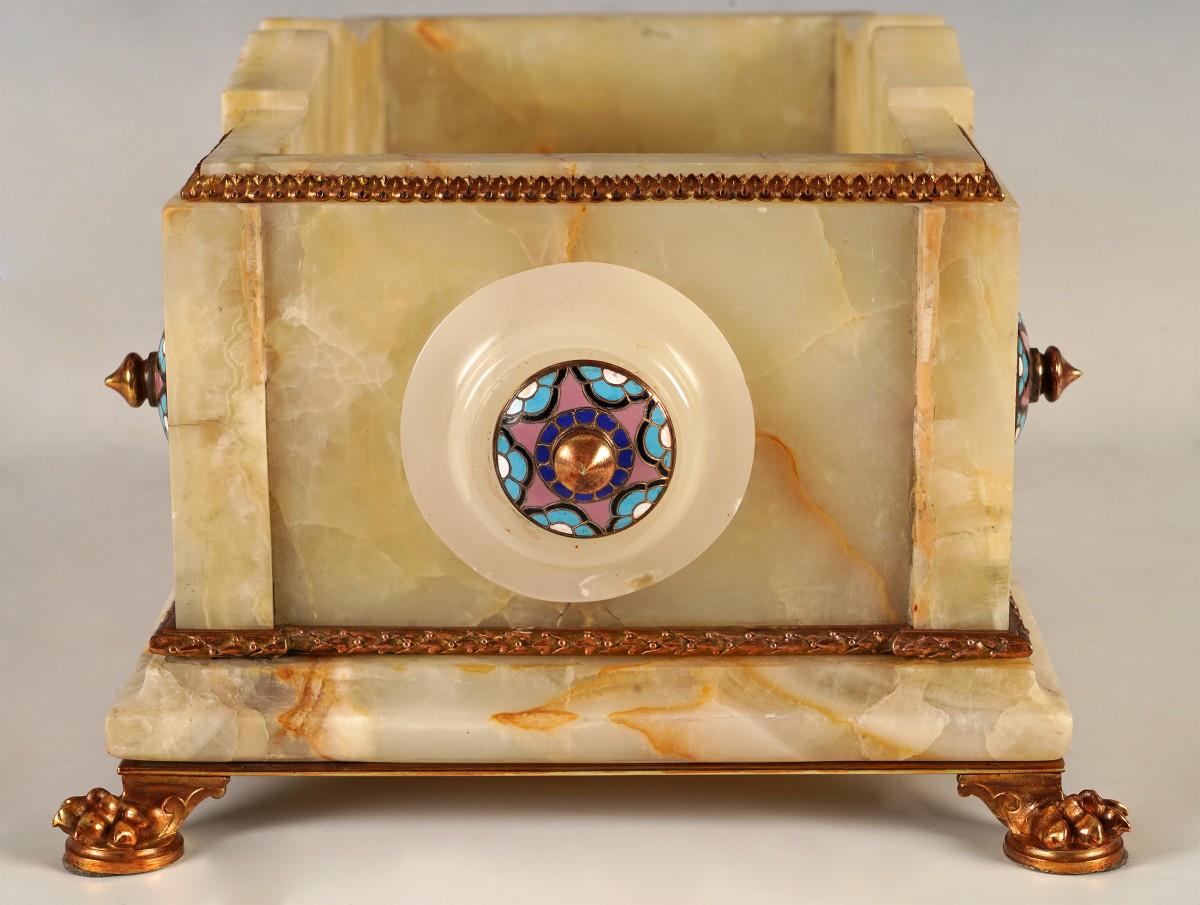
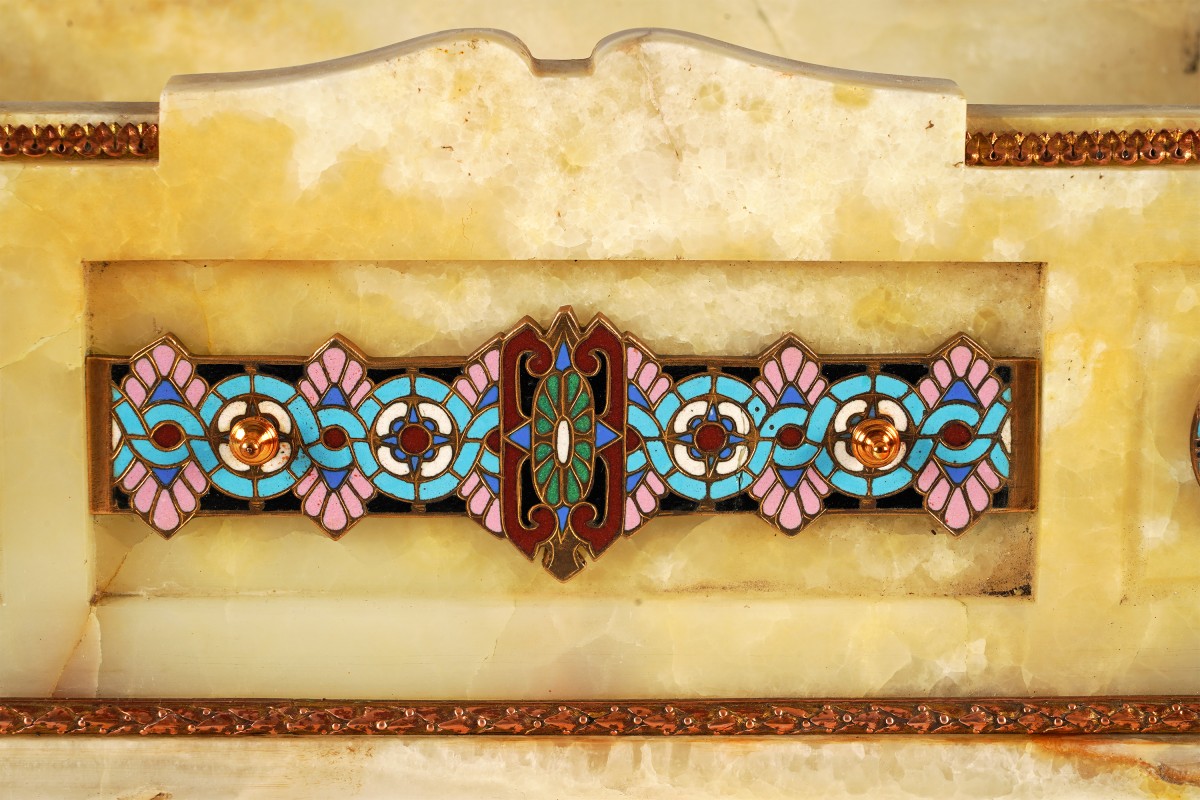
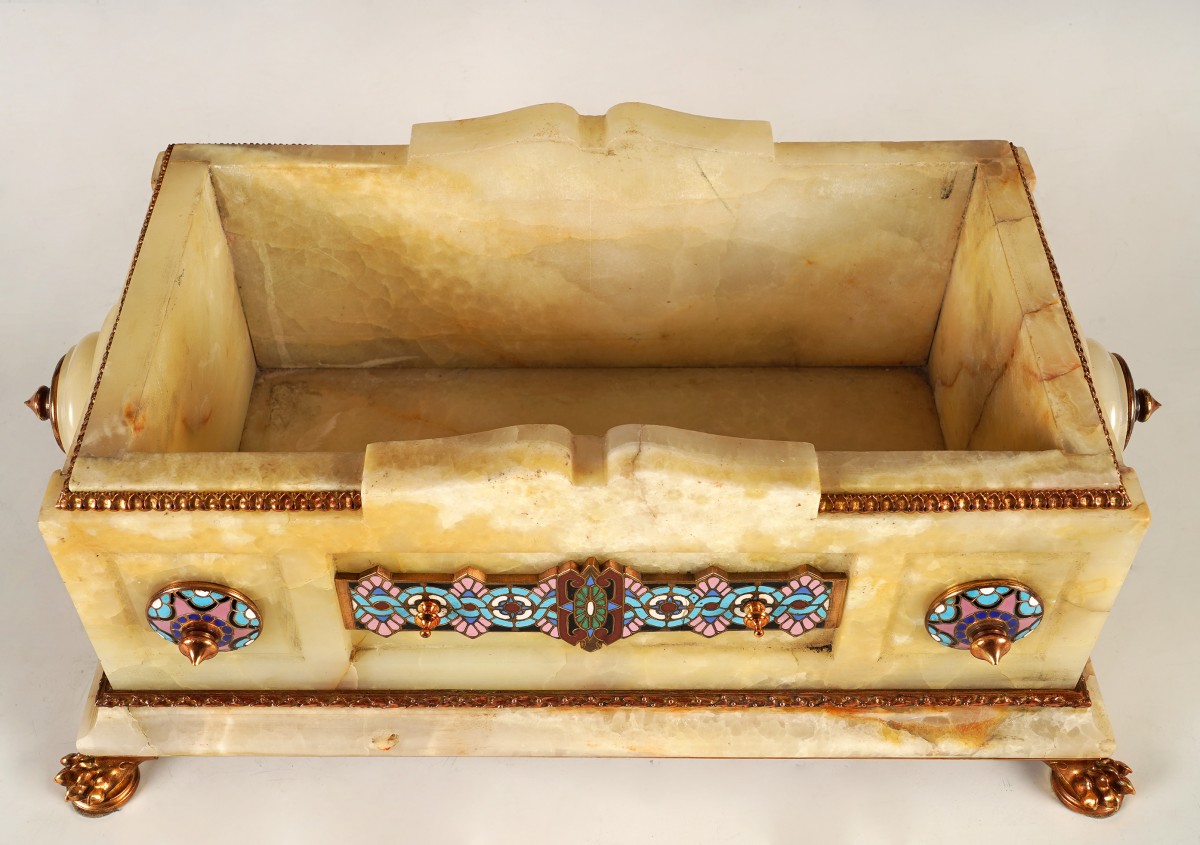

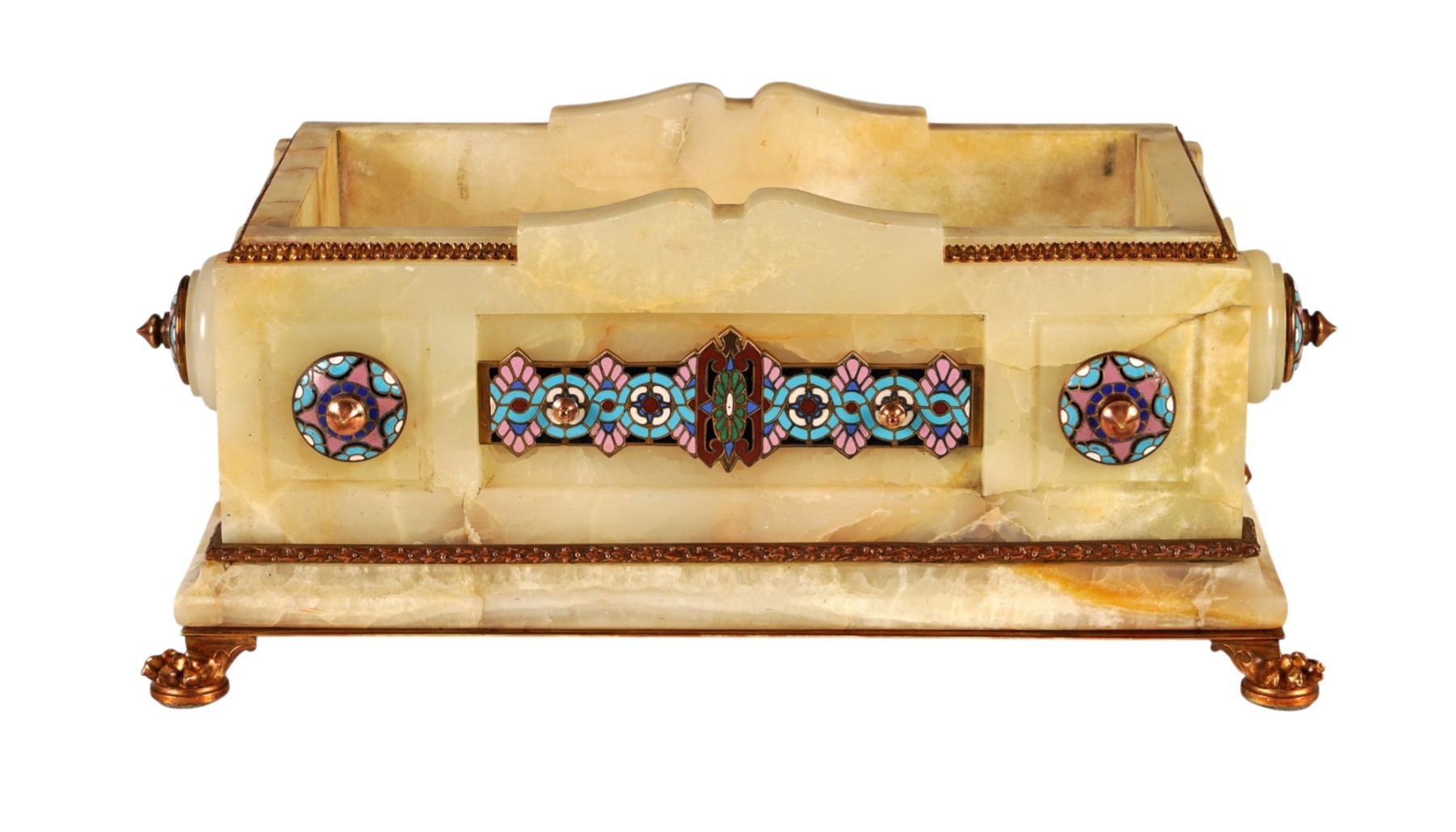
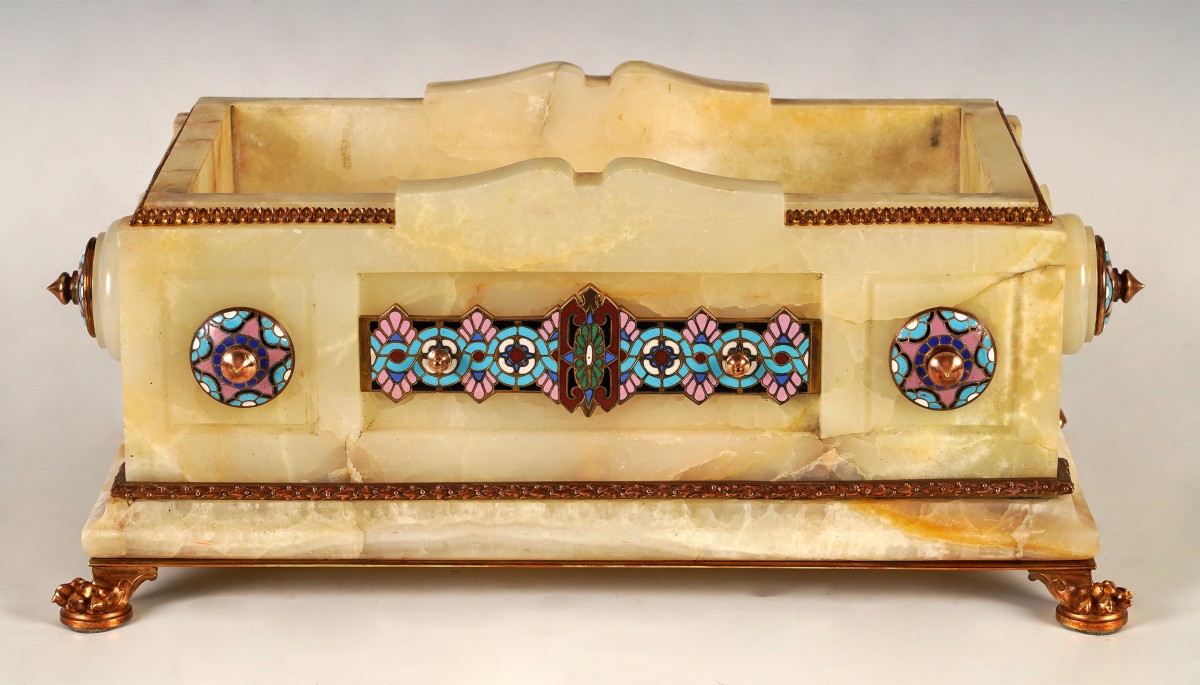
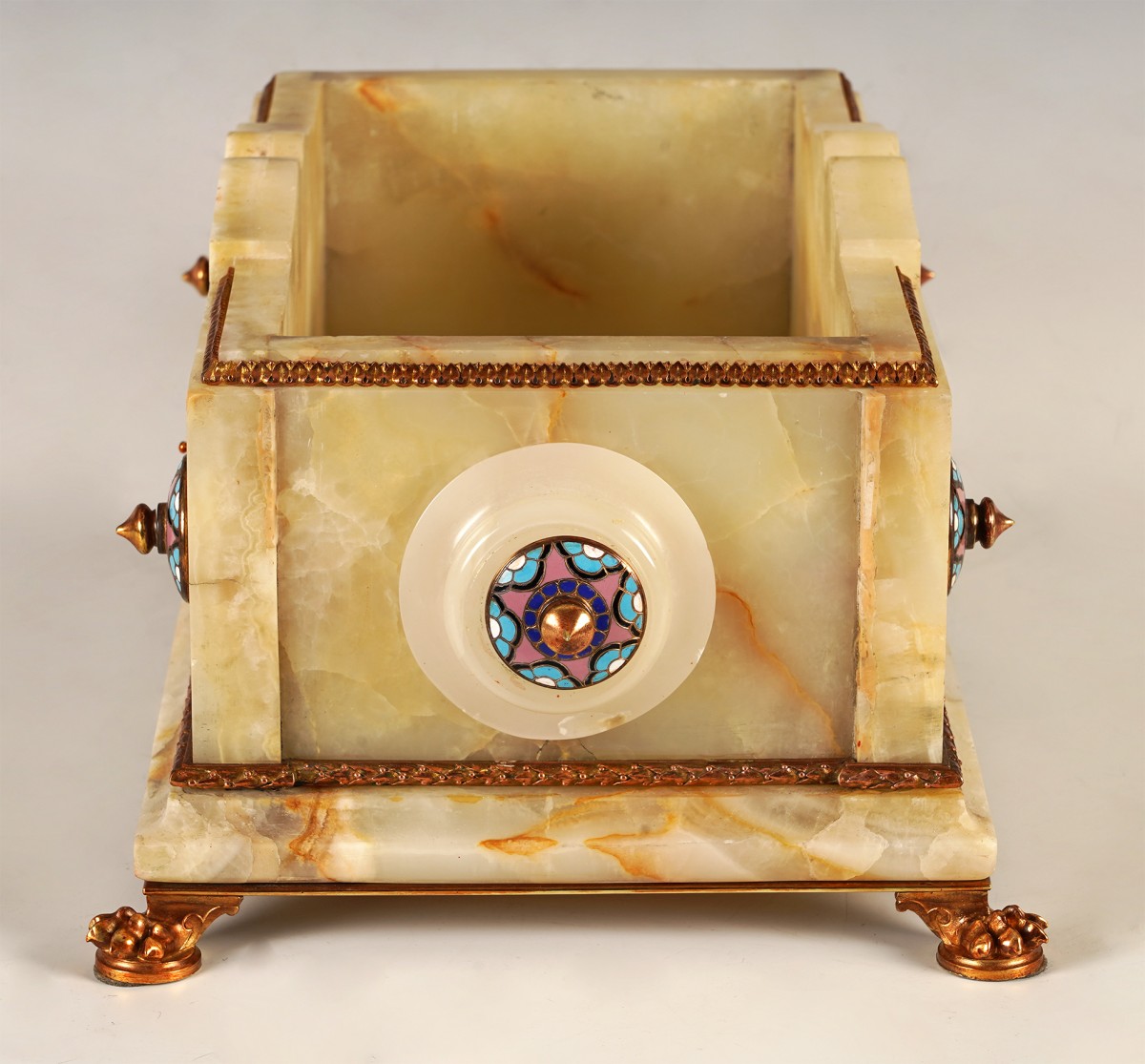
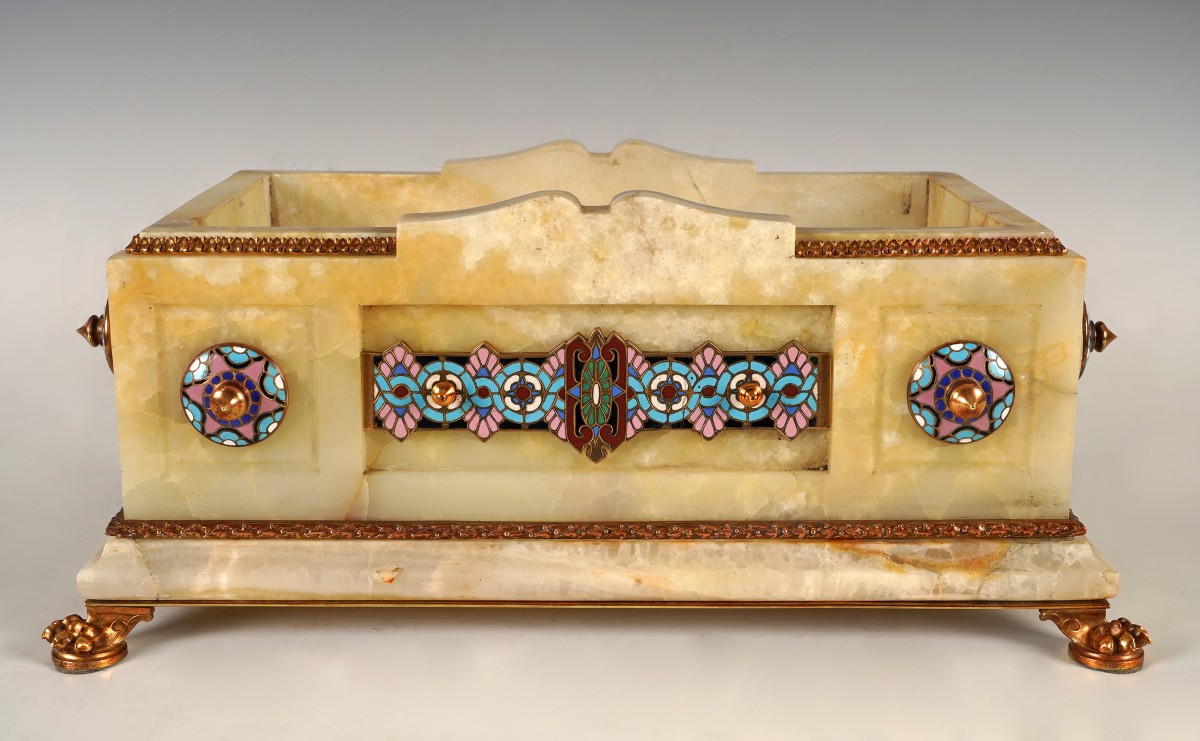
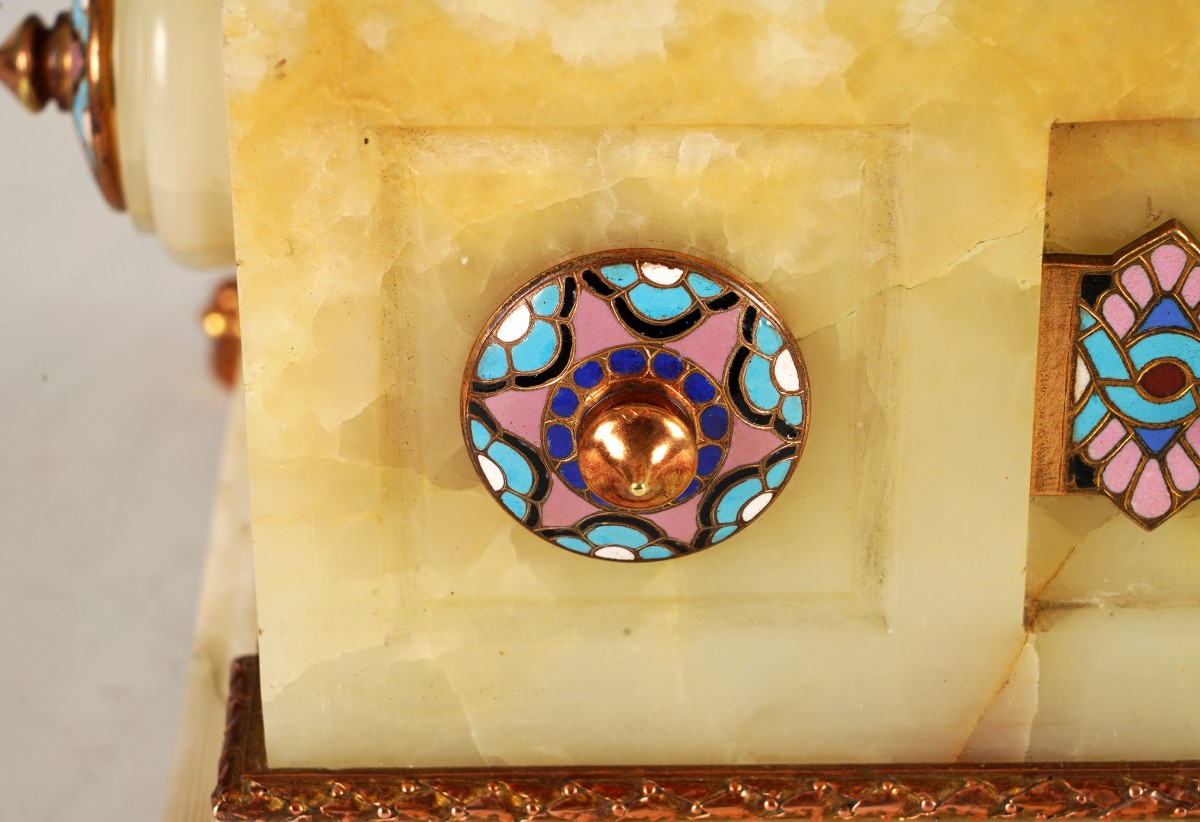
Fine Orientalist planter of rectangular form in Algerian onyx and finely chiselled and gilded bronze. The upper section, shaped in an arabesque profile, is accentuated by a frieze of water leaves. Rectangular recessed cartouches and raised square reserves are set with gilded bronze plaques decorated with stylized cloisonné enamel of Persian inspiration, composed of interlacing patterns and geometric motifs in a vibrant palette of turquoise blues, pinks, and greens. The shorter sides are adorned with molded onyx cabochons embellished with two pointed finials, and the whole rests on four gilt bronze claw feet.
This planter presents itself as a display object characteristic of decorative arts production in the second half of the 19th century, when a taste for exoticism and precious materials was integrated into a historicist and eclectic aesthetic. It reflects the technical refinement and the fascination with Orientalism that defined the Second Empire period.
Biography :
The sculptor Eugène Cornu (1827-1899), installed in Paris at N.29 rue Popincourt, after having worked as a designer and then director for the renowned company Tahan (1813-1892), worked closely from 1858 with the « Compagnie des Marbres Onyx d’Algérie », led by Gustave Viot (1828 – 1897) and created by Alphonse Pallu (1808-1880) on June 14th 1858. This company refers to the exploitation of onyx, known since antiquity but rediscovered in 1849 in Oran Province, Algeria, by Del Monte, a marble worker. It opened in 1863 a shop on Boulevard des Italiens N.24, in Paris. In the mid 1860’s, the name of the company changed to “G. Viot & Cie” and produced, after models created by the most well-known sculptors, such as Eugène Cornu, Albert Carrier-Belleuse (1824-1887) (Victoria & Albert Museum, Inv. 9070-1863), Charles Cordier (1827-1905) (Orsay, Inv. RF 2996) ou Louis-Ernest Barrias (1841-1905) (Orsay, Inv. RF 1409), luxurious furniture and art objects, incorporating onyx marble and bronze, with sometimes enamel, a combination then considered as a novelty and become quickly highly prized among wealthy collectors. They showed together on their booth at the 1867 Universal Exhibition held in Paris a fine pair of onyx, bronze and enamel vases and their stands with elephants figures (signed « G. Viot et Cie, Exposition de 1867, Eugène Cornu Inventeur » ; Catalogue Officiel de l’Exposition, groupe III, classe XIV, « meubles de luxe », n°65) for which they won the Gold Medal (Rapports du Jury International, Exposition Universelle de 1867 à Paris, 1868, t. III, groupe III, classe XV, chapitre II, § 2, p°45 & 46). Around 1873, Eugène Cornu became director of the Company and replaced G. Viot, which took then the name of « Société des Onyx d’Algérie E. Cornu et Cie ». Around 1878, the company was then headed to H. Journet from which it took his name. That firm remained opened until the beginning of the 20th century.