Offered by Franck Baptiste Paris
REQUEST INFORMATION
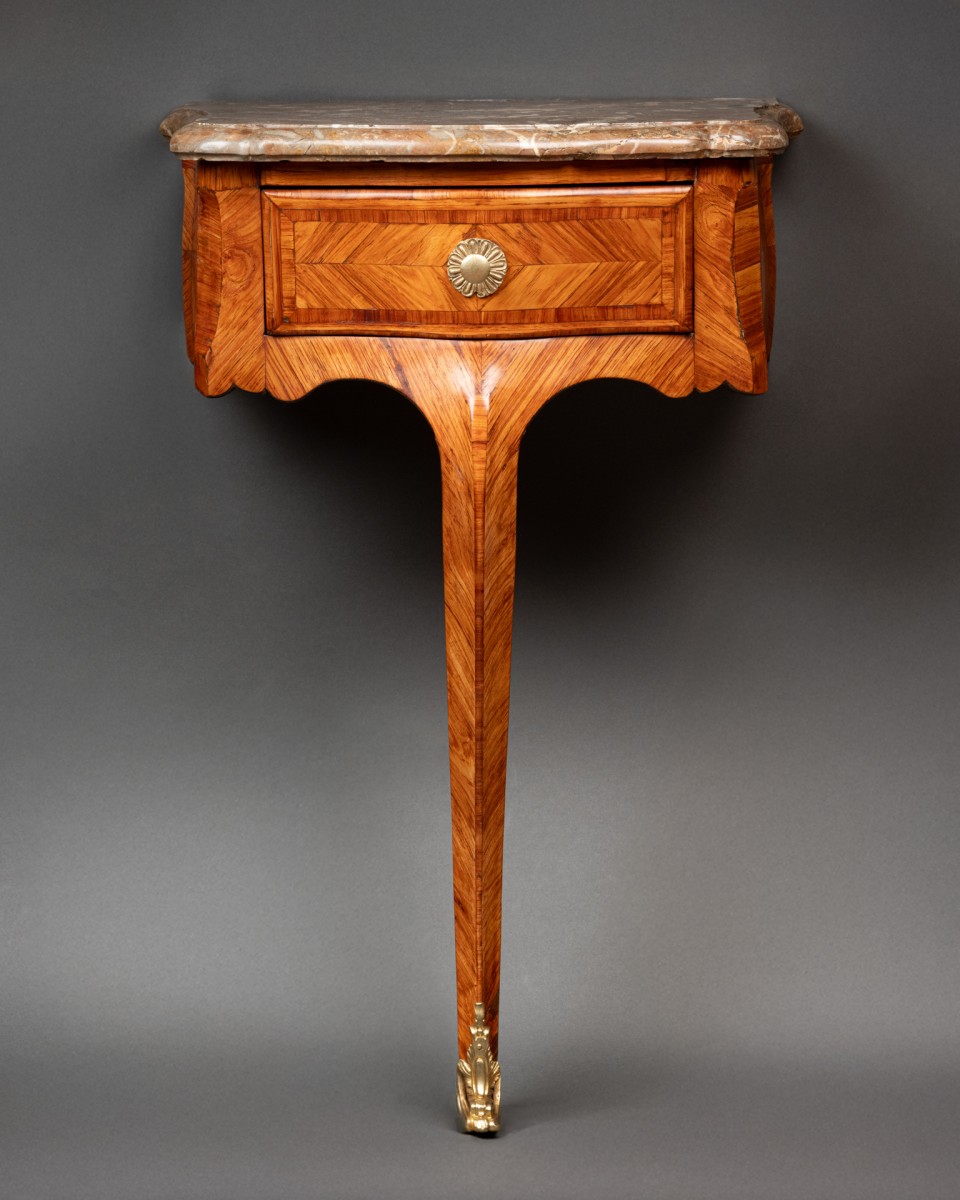
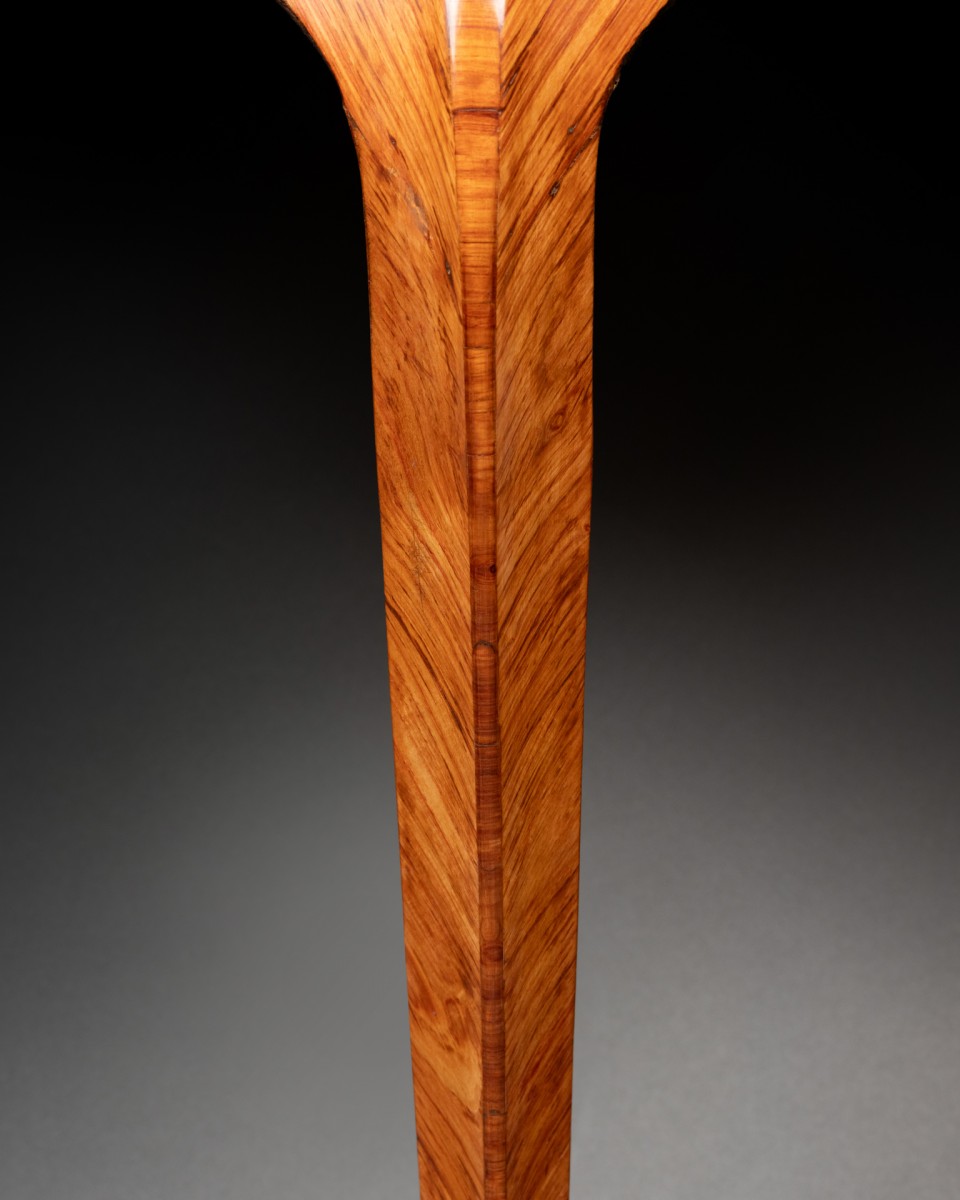

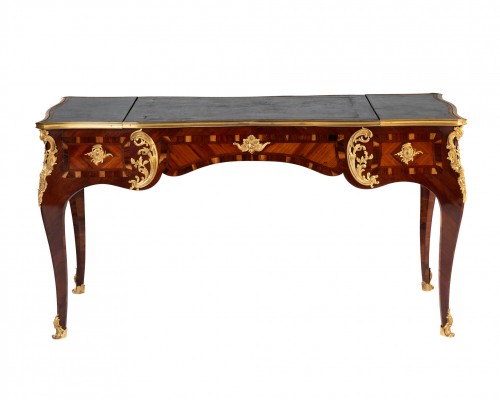
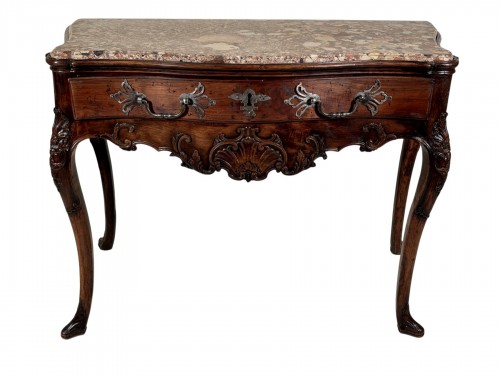
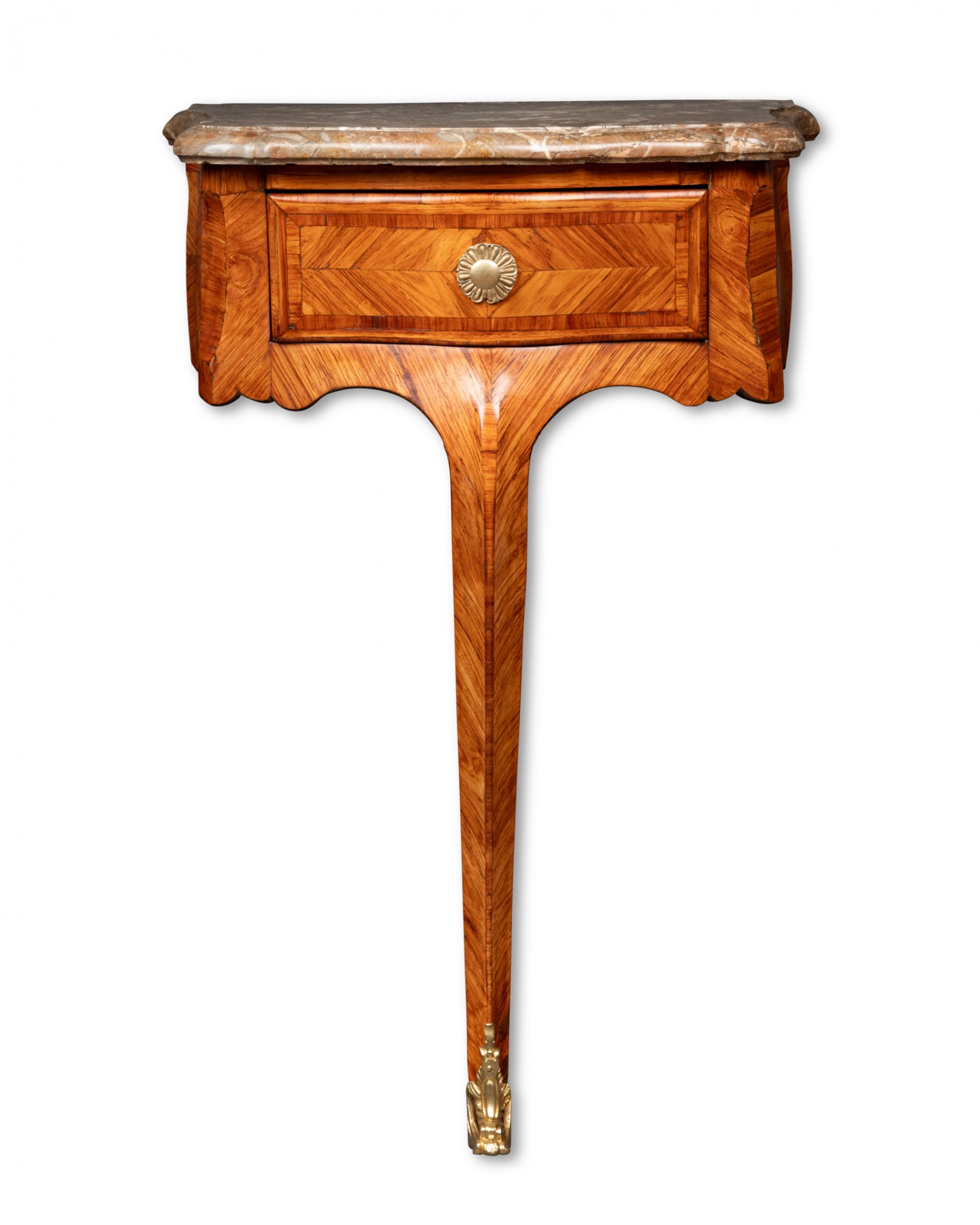
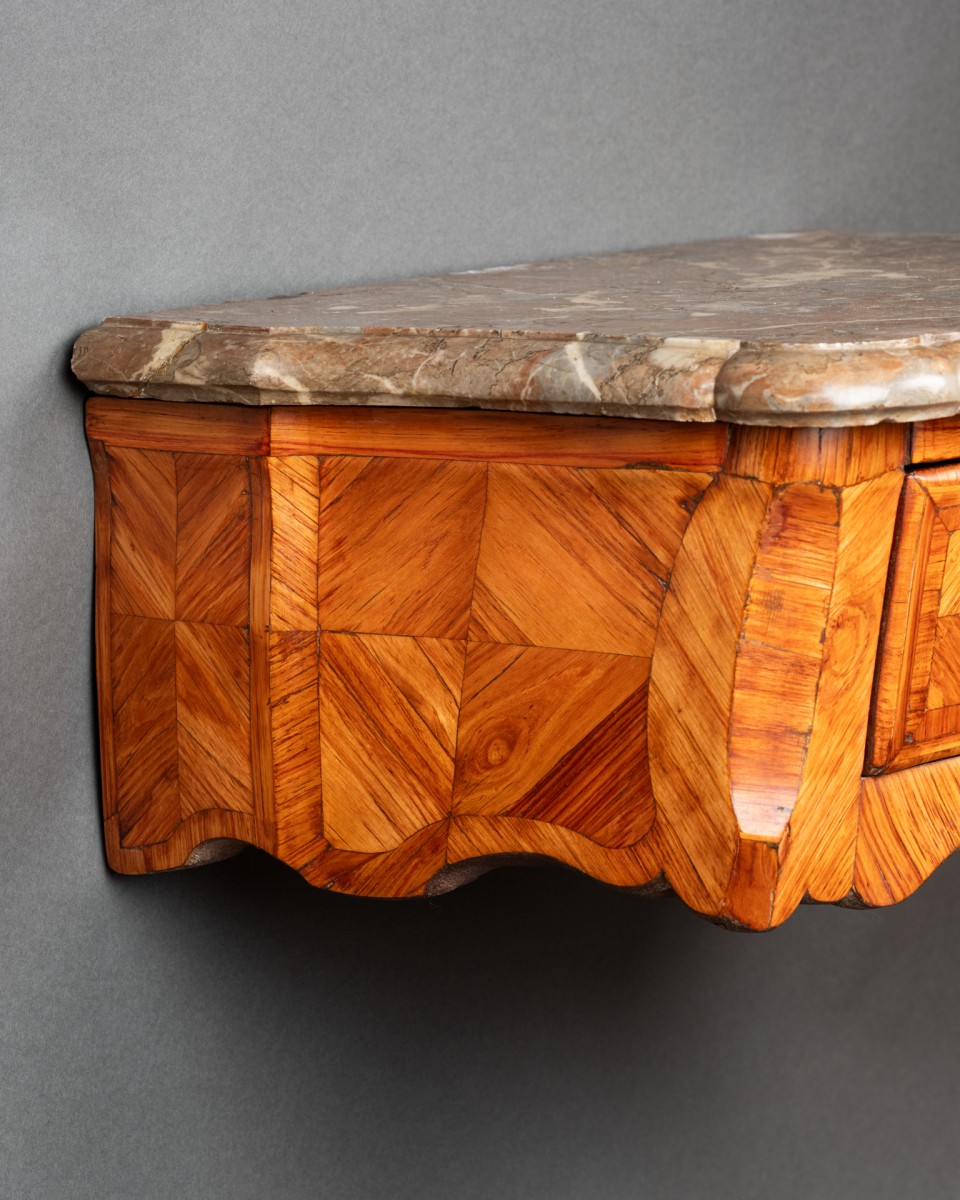
Small console table veneered in rosewood with a herringbone pattern.
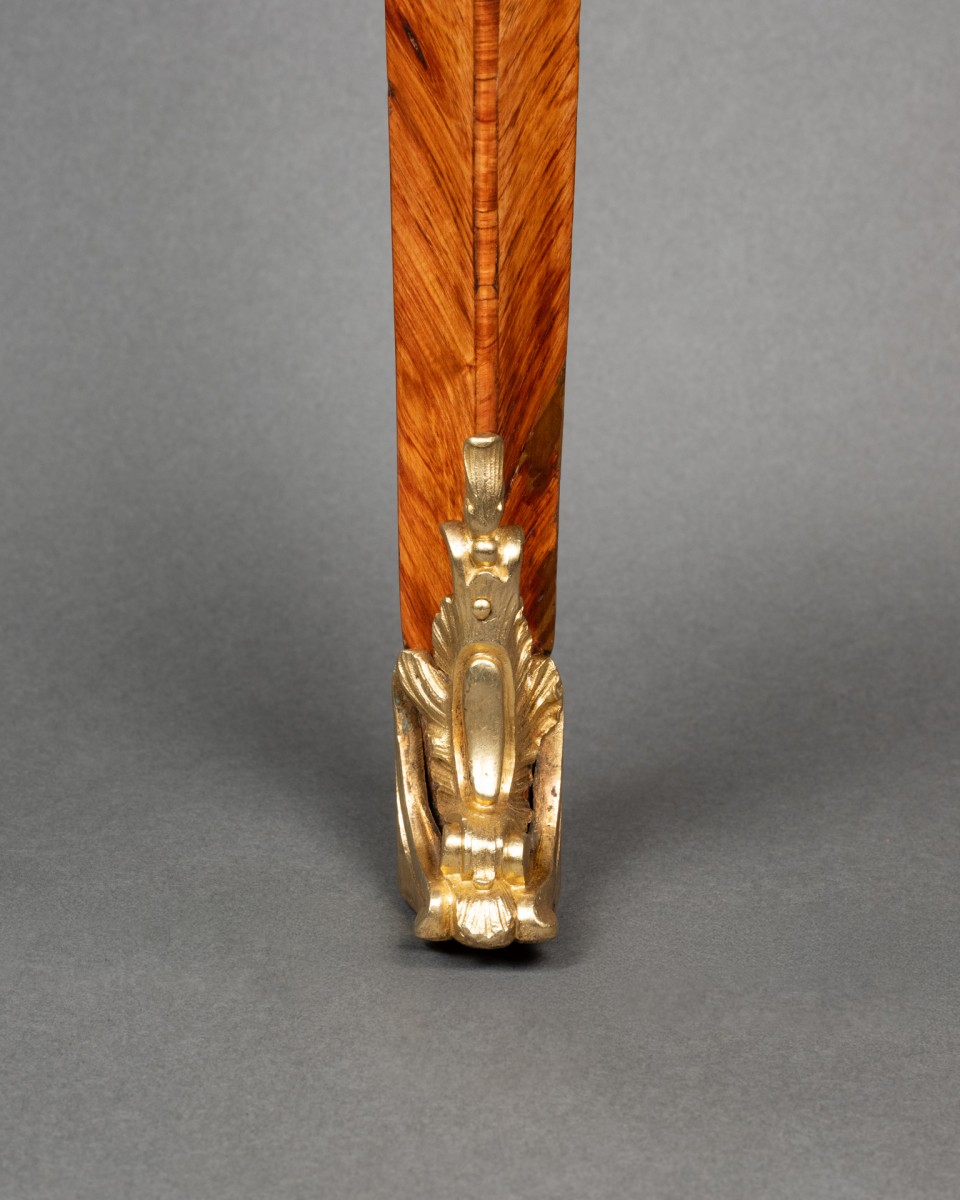
This model features a single, slightly curved central leg supporting a cabinet with flared sides and shaped rails, which opens with a large drawer in the front.
Made of solid oak.
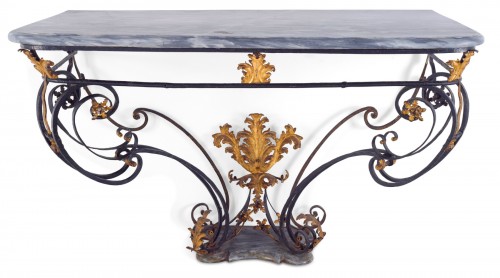
Original gray marble top.
In excellent condition.
Stamped P. Denizot for the cabinetmaker Pierre Denizot.*
Property mark "CP" separated from a marine anchor and under a crown, for the Château de Chanteloup during the Duke of Penthièvre period.
Parisian work from the Louis XV period, circa 1765.
Dimensions:
Width: 50 cm; Height: 76 cm; Depth: 36 cm
Provenance:
Commissioned by Duke Etienne François de Choiseul-Beaupré-Stainville (1719-1785) for his Château de Chanteloup, probably during the renovations of 1761.
-The Duke of Choiseul-Stainville (1719-1785) at the Château de Chanteloup until 1785.
-His wife, Louise Honorine Crozat du Châtel, Duchess of Choiseul-Stainville (1734-1801) until 1786.
-Louis-Jean-Marie de Bourbon, Duke of Penthièvre (1725-1793) at the Château de Chanteloup until 1793.
-His daughter, Louise-Marie-Adélaïde de Bourbon (1753-1821), Duchess of Orléans until [date missing]. 1794 and the seizure of the château by the National Convention.
-Probably sold by the successful bidder for the château, Guillaume Barbier-Dufay, who dismantled Chanteloup in 1798 and resold the furnishings.
-Private collection, Paris, then passed down through the family.
Bibliography:
Published on page 250 of the book "Chanteloup: A Moment of Grace Around the Duke of Choiseul," Somogy Edition; Museum of Fine Arts, Tours.
Our opinion:
The lines of this console are striking in their purity and rarity: the curve in elevation, in contrast to the curved façade, creates a particularly subtle interplay of tensions. The measured and unusual cut of the crossbeams reflects a time when the Louis XV style was becoming more restrained and disciplined.
From now on, the quality of the wood and the fluidity of the lines take precedence over the abundance of bronze, heralding Neoclassicism and the birth of the Louis XVI style.
This stylistic evolution accurately reflects the "Choiseul" taste, as expressed during the remodeling of the Château de Chanteloup between 1765 and 1768, a pivotal period in which this new, more refined decorative language was developed.
Pierre Denizot was the son of the cabinetmaker and merchant Jacques Denizot. He worked in his father's workshop, and although he obtained his master's certificate in 1740, he did not register it until 1760, upon his father's death. It was only then that he marked his pieces with his personal stamp.
He established his business on Rue Neuve-Saint-Roch, worked for his colleague Léonard Boudin, and received royal and princely commissions for the châteaux of Saint-Germain-en-Laye and Maisons-Lafitte.
From 1764 to 1766, he served as a sworn accountant for his guild and, from 1776 onward, became the official supplier to the Count of Artois, providing him with all kinds of furniture, both luxury and everyday pieces.
He possessed great technical skill and produced works primarily in the Louis XV or Transitional styles. Very few Louis XVI pieces actually came from his workshops. His creations were mainly inlaid with geometric motifs—circles, squares, lozenges—or with meticulously drawn floral and trophy designs. It was while fulfilling a commission for one of his clients, the Count of Provence, that Pierre Denizot died in his workshop in 1782. On July 29th and November 27th, 1782, the various announcements, notices, and notices mention an auction held after the cabinetmaker's death, which listed, in addition to a large stock of mahogany, amaranth, and ebony, a significant number of commodes, wardrobes, roll-top desks, secretaries, game tables, round and oval tables... "adorned with cast iron and gilt ornaments of ground gold."