Offered by Antichità Castelbarco



Pietro Liberi (Padua 1605 - Venice 1687) follower of
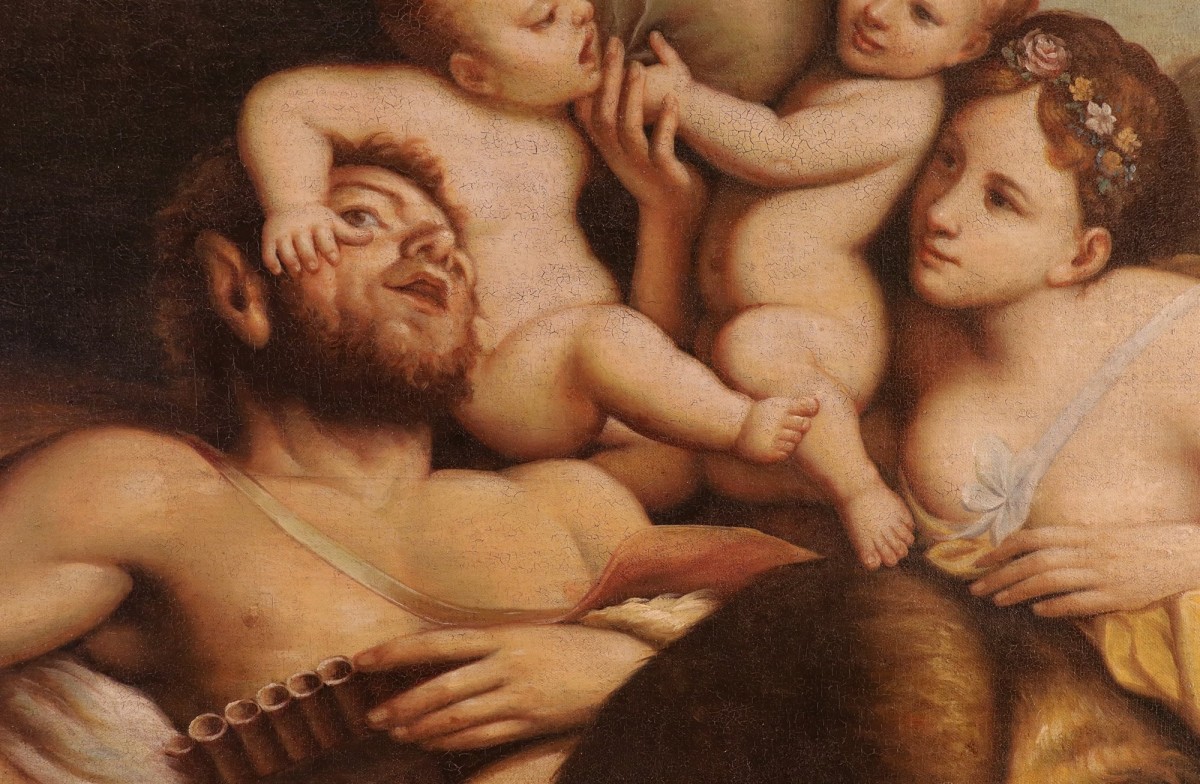
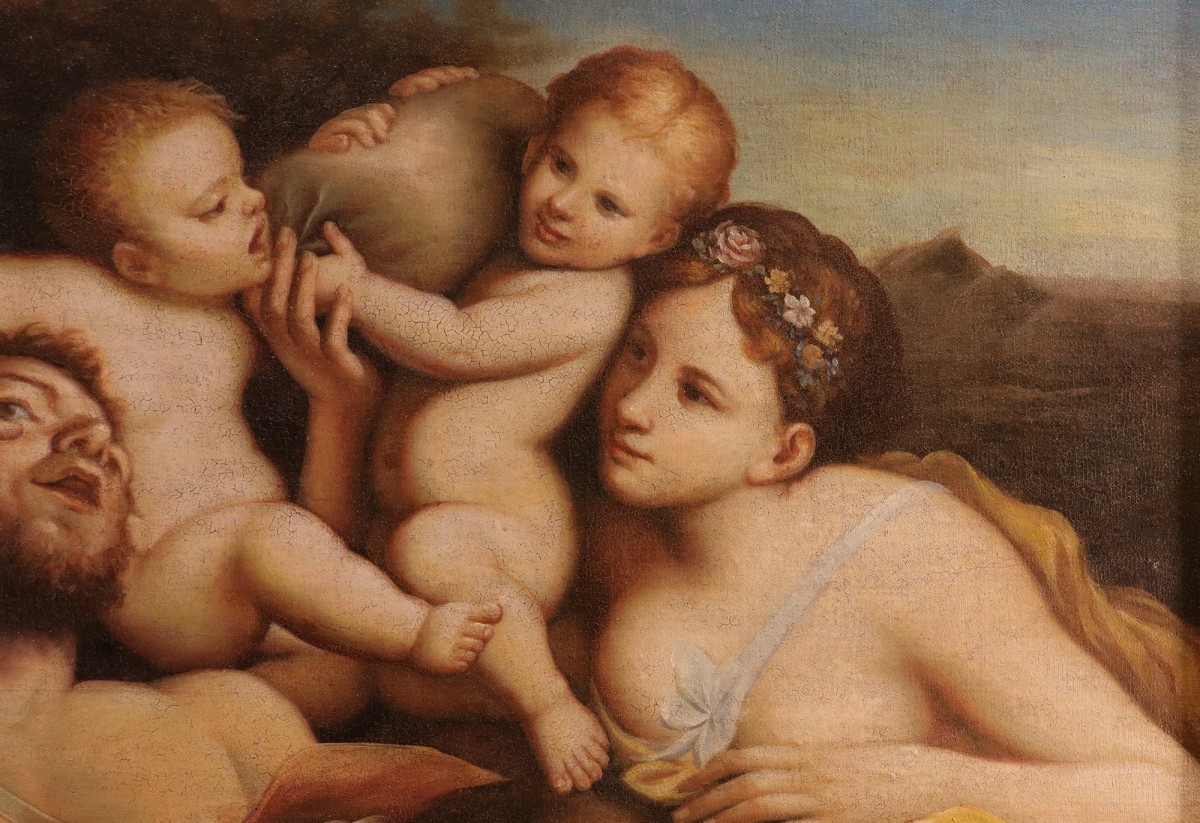
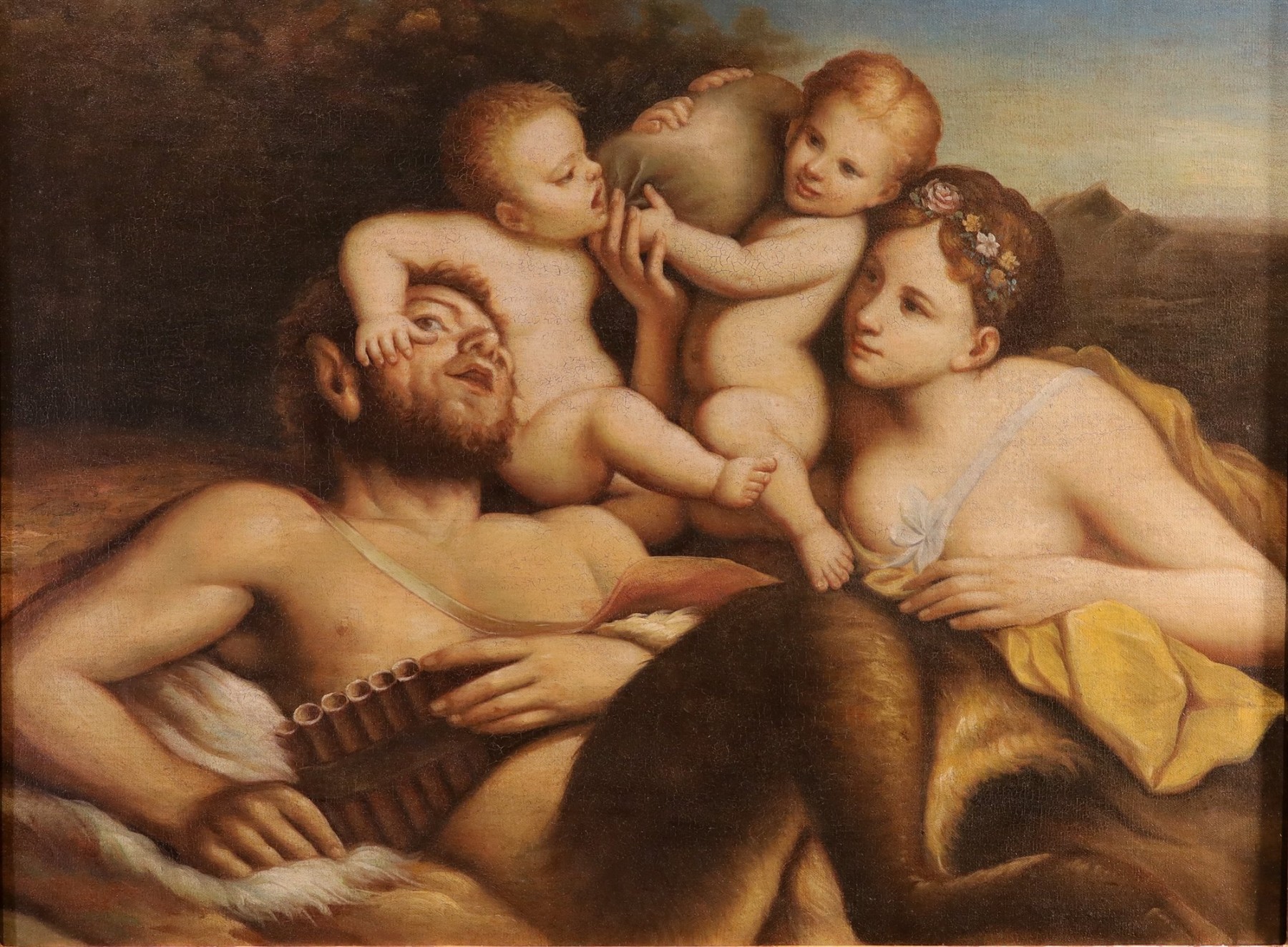
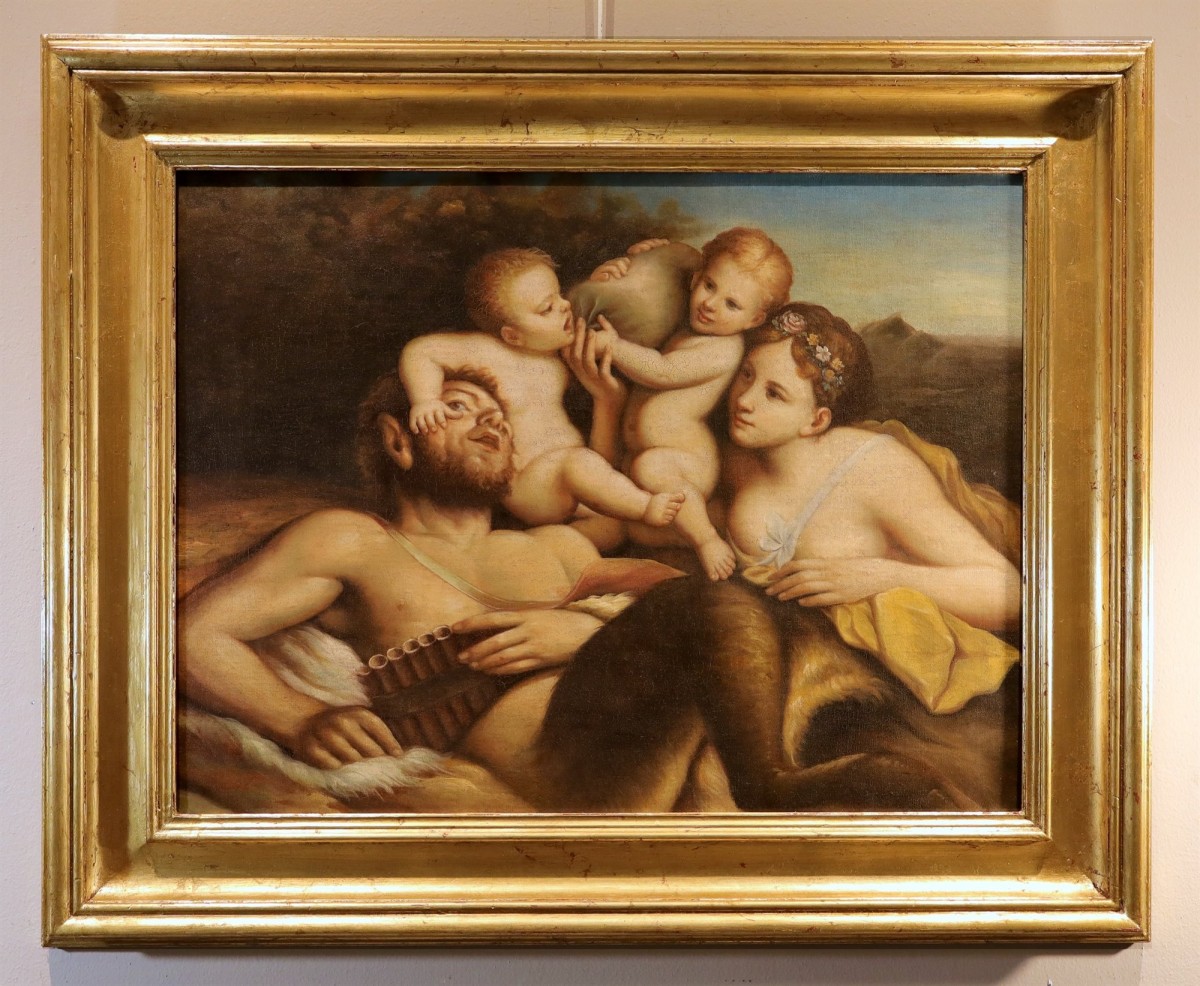
Faun, Nymph and Two Cherubs
Oil on canvas (62 x 82 cm. - Framed 85 x 104 cm.)
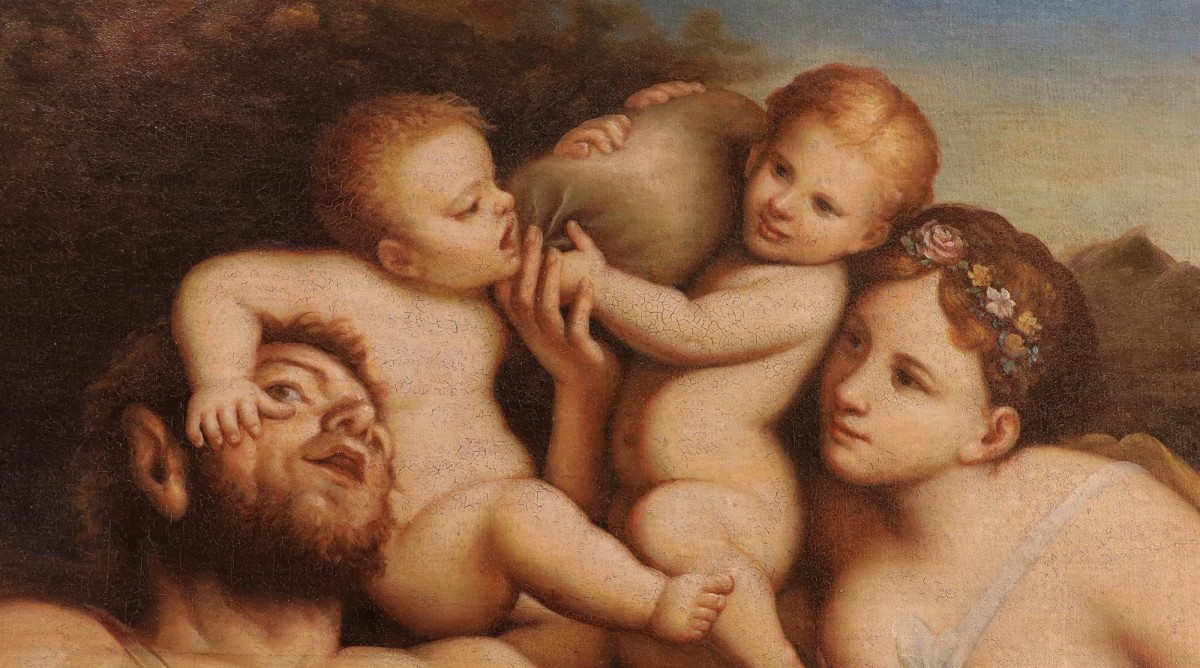
The subject of the painting, drawn from Greek mythology, shows a faun, a mythological figure half man and half goat originating from Arcadia, in a moment of family intimacy with a nymph and two cherubs.
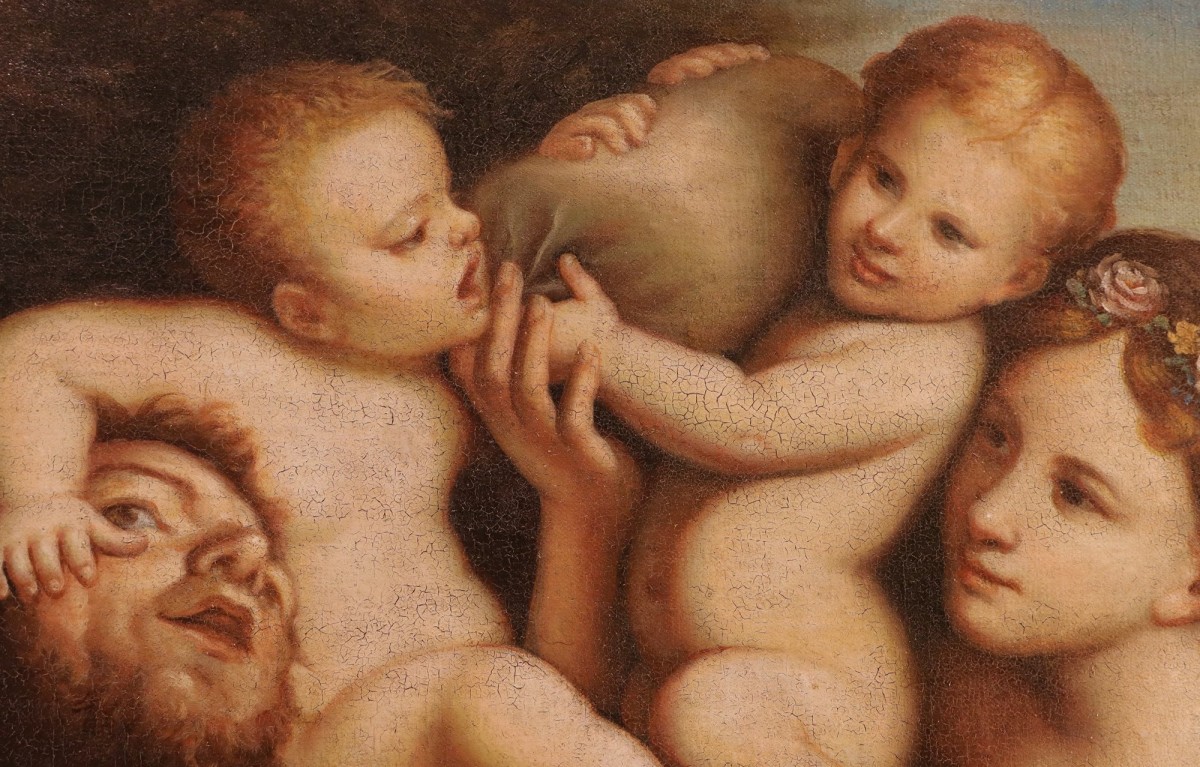
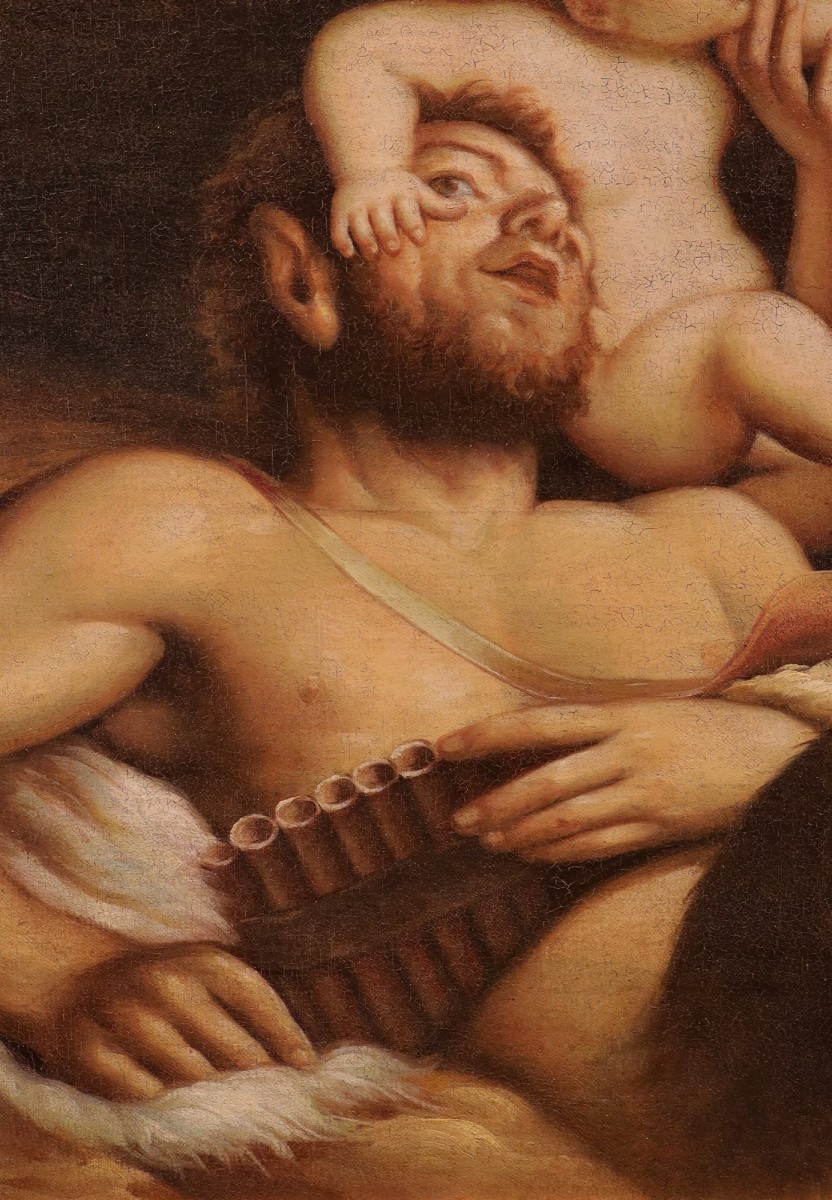
Although there are no specific references, it could be the family of the god Pan, lying in the foreground on the left playing his traditional flute made of bamboo reeds, with his wife, the nymph Echo, and their two young children, Iunge and Iambe, one of whom is holding a wineskin or a vase, perhaps of wine, from which the other is drinking.
The scene is characterised by a bucolic atmosphere, typical of mythological representations of the time, expressing a climate of festive cheer and a hymn to carefree living.
It represents an idealised vision of natural and primitive life, far from the ideals of dissolute living often associated with the figures of satyrs and fauns, embodying here a domestic and protective dimension, elevating the mythological creature to a symbol of natural virtue and family stability.
The work was probably intended for humanist circles, where the theme of “life according to nature” was the subject of philosophical debate, contrasting the purity of natural instincts with the corruption of social conventions.
Analysis of the painting allows us to place its execution within the Northern Italian school, carried out by an artist from the Venetian area active between the 17th and 18th centuries, and in particular a successor to the school of Pietro Liberi (Padua 1605-Venice 1687), who had always been interested in themes related to myth.
One of the leading exponents of Baroque art in Italy, he was a skilled painter who was a disciple of Padovanino and the father of another important painter and follower, Marco Liberi.
Liberi created important cycles of frescoes, as well as altarpieces and numerous secular easel paintings; the latter are particularly similar to the one in question and are highly sought after and appreciated by contemporary collectors for their elegantly sensual and erotic themes.
His formal elegance and pictorial softness are enhanced in mythological scenes such as ours, characterised by sensual and classical nudes.
Delevery information :
We take care of and organise the transport of the purchased works, both for Italy and abroad, through professional and insured carriers.
We take great care We personally take care of the packaging, to which we devote a great deal of care: each work is carefully packed, first with arti- cle material, then with a custom-made wooden box.
Should you have the desire to see this or other works in person, we would be happy to welcome you to our gallery in Riva del Garda, Viale Giuseppe Canella 18, we are always open by appointment only.