Offered by Antichità Castelbarco
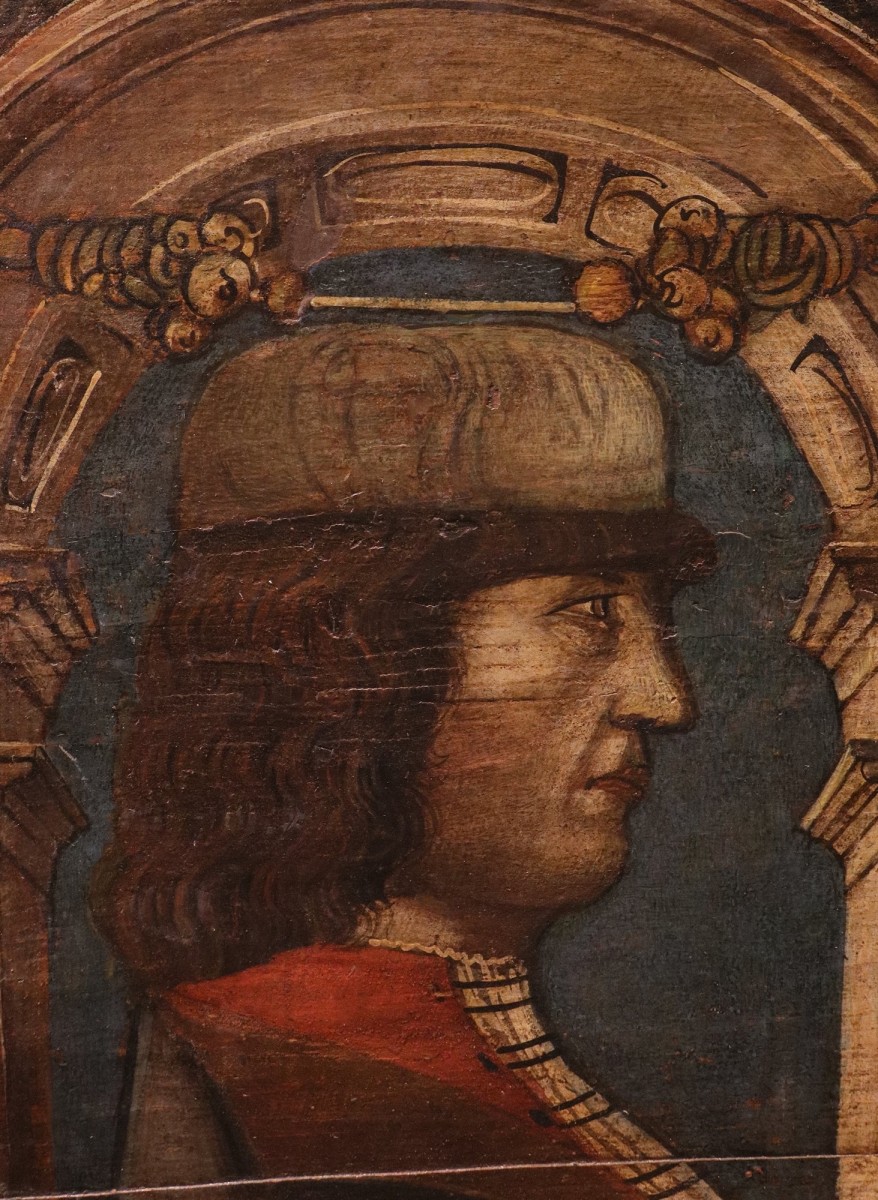
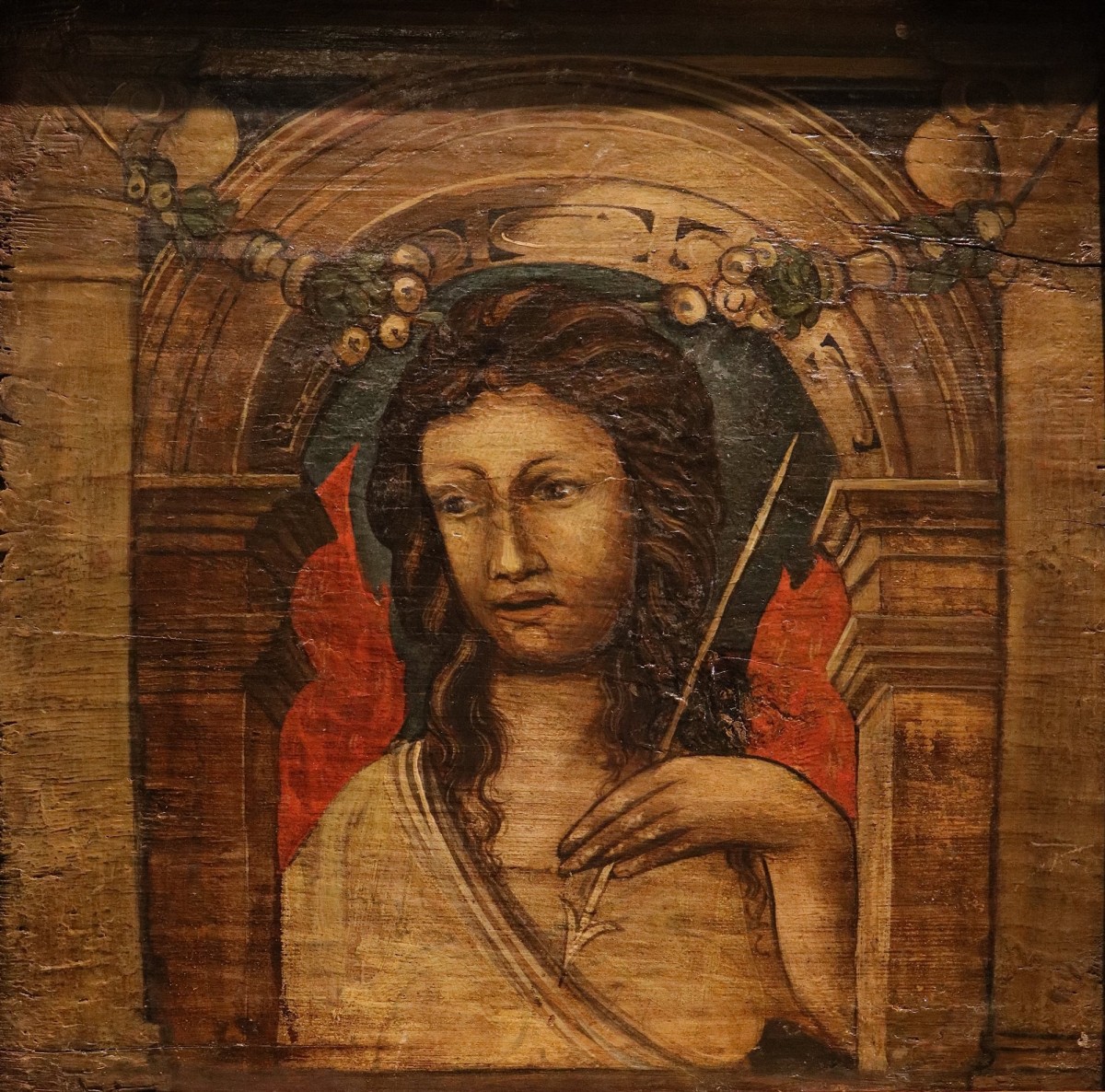

Pair of ceiling panels
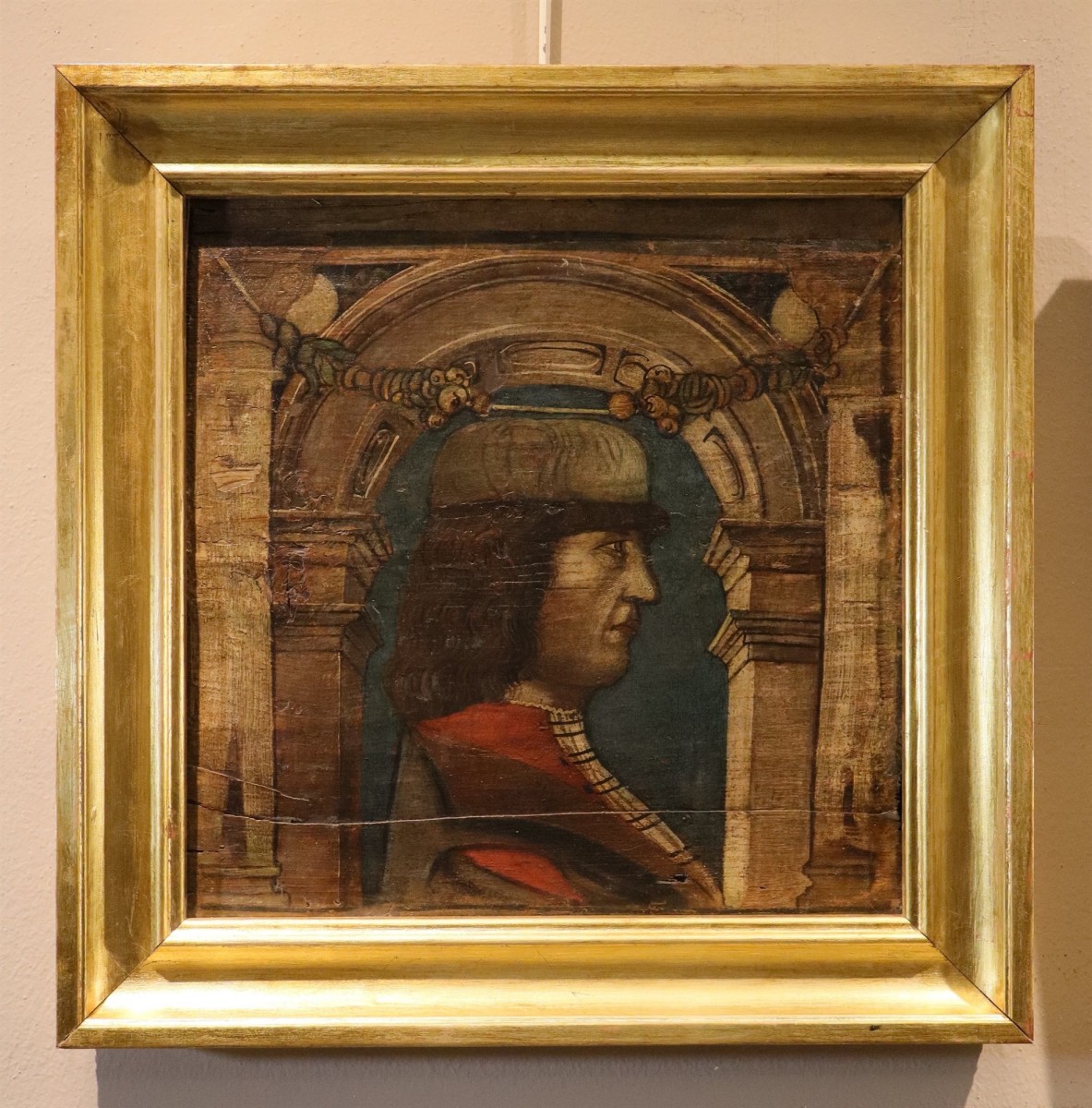
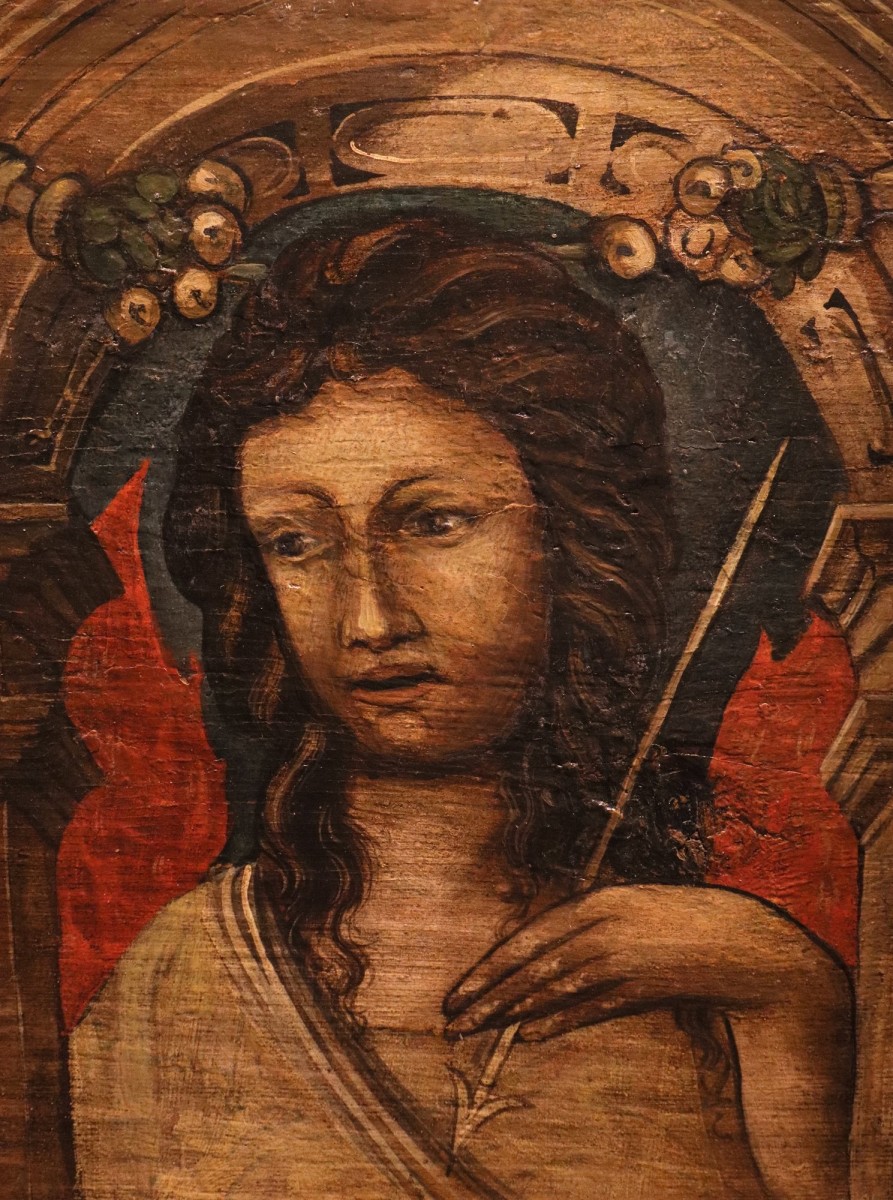
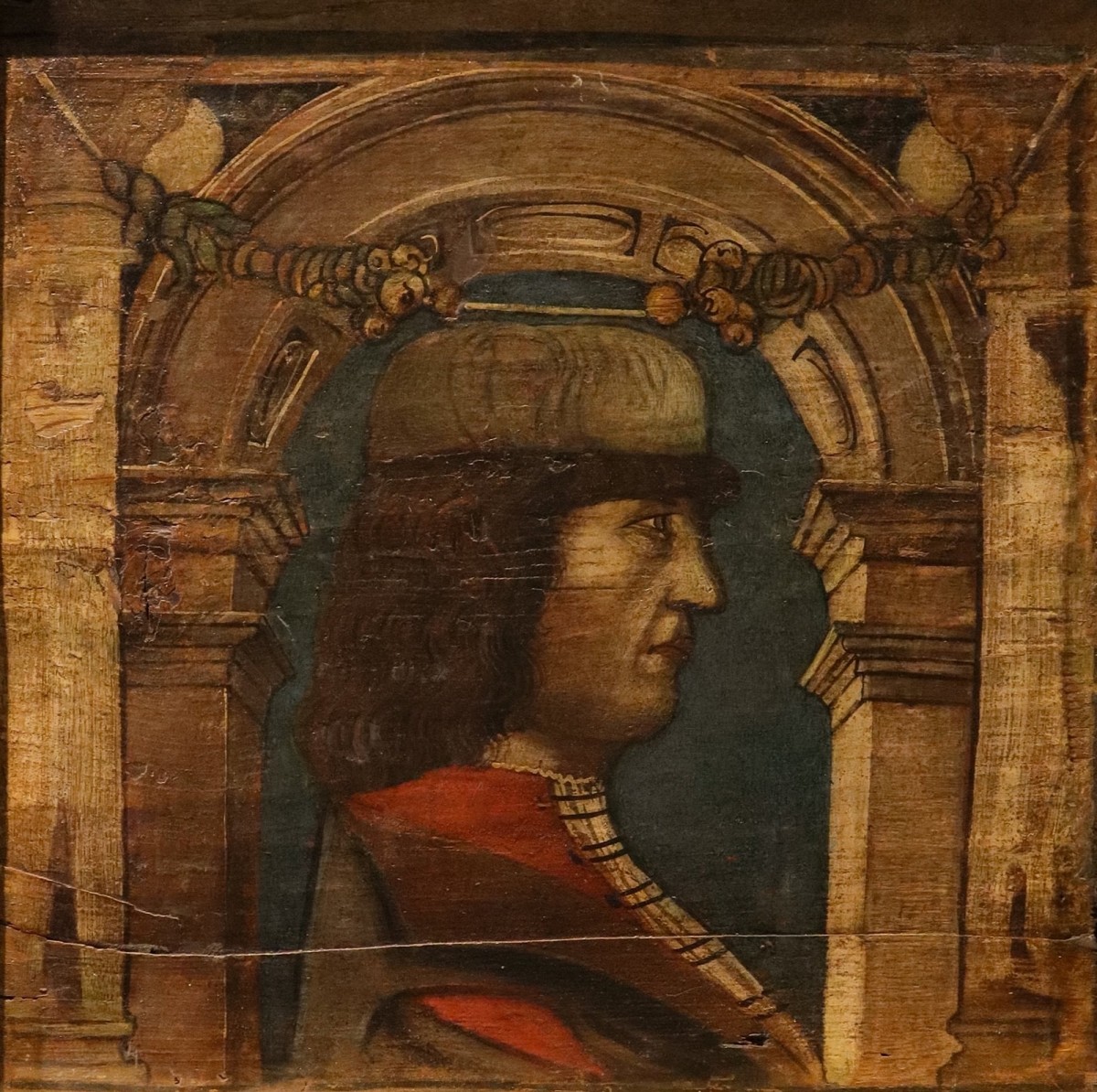
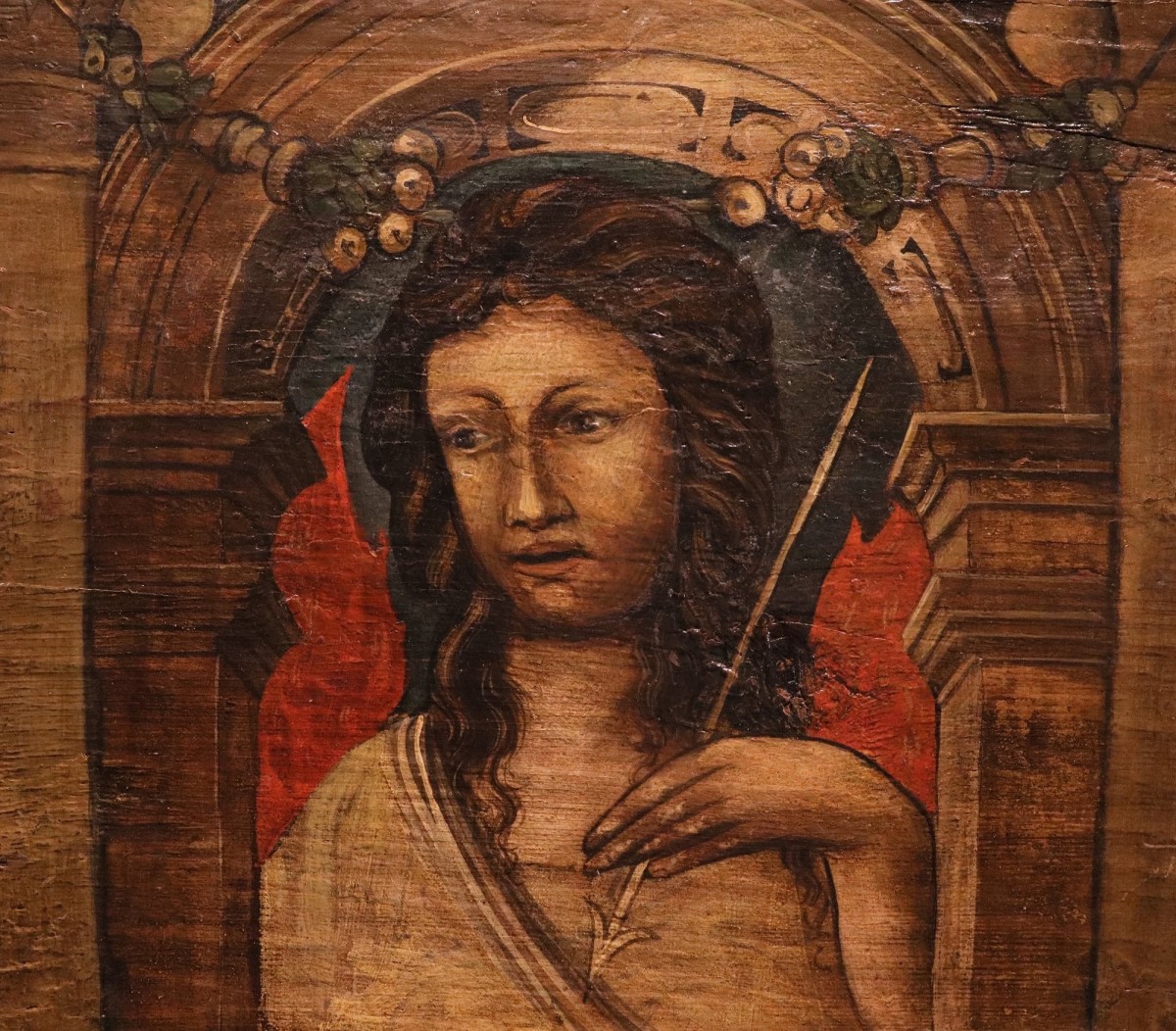
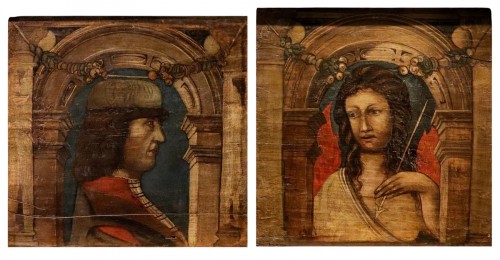
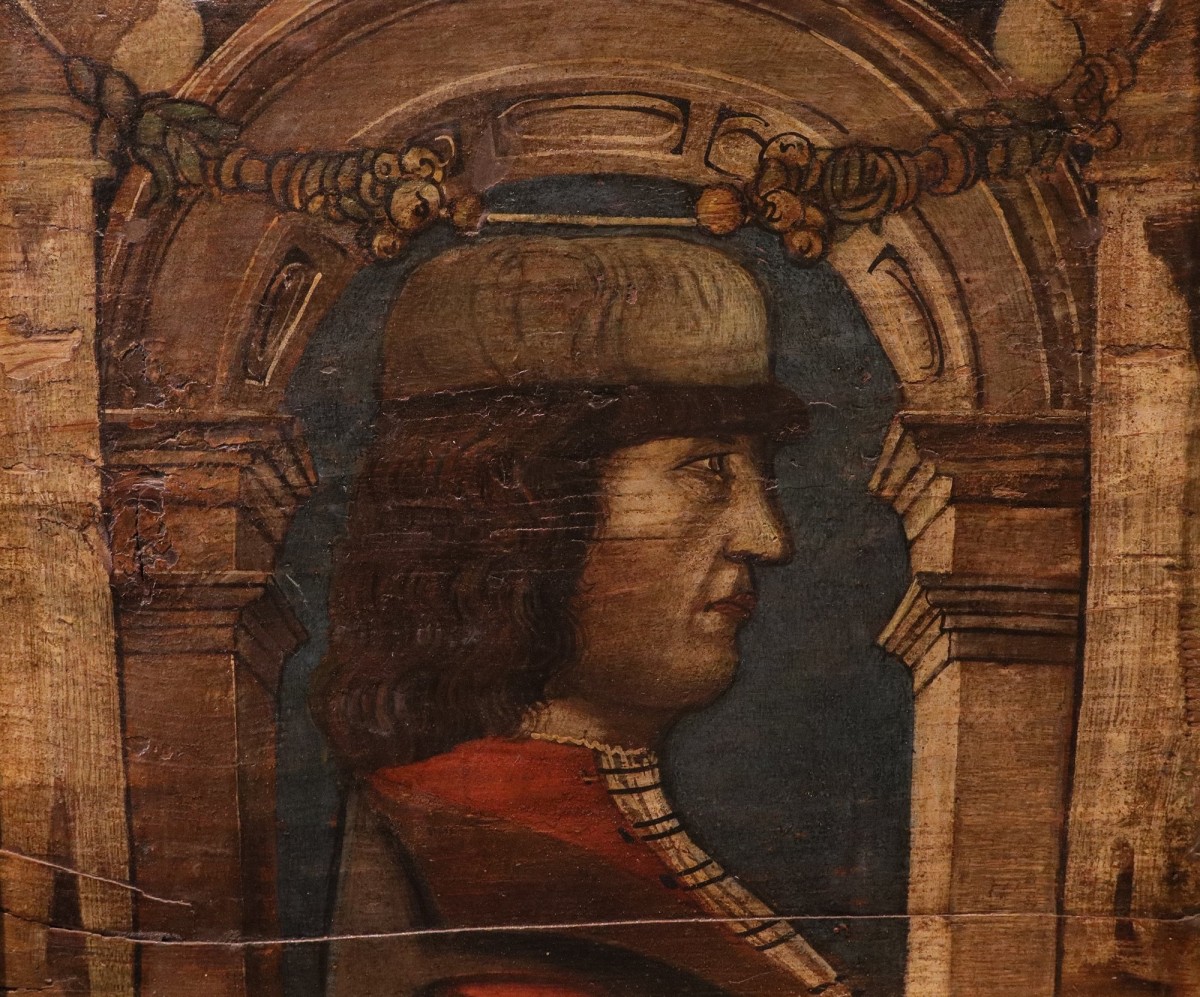
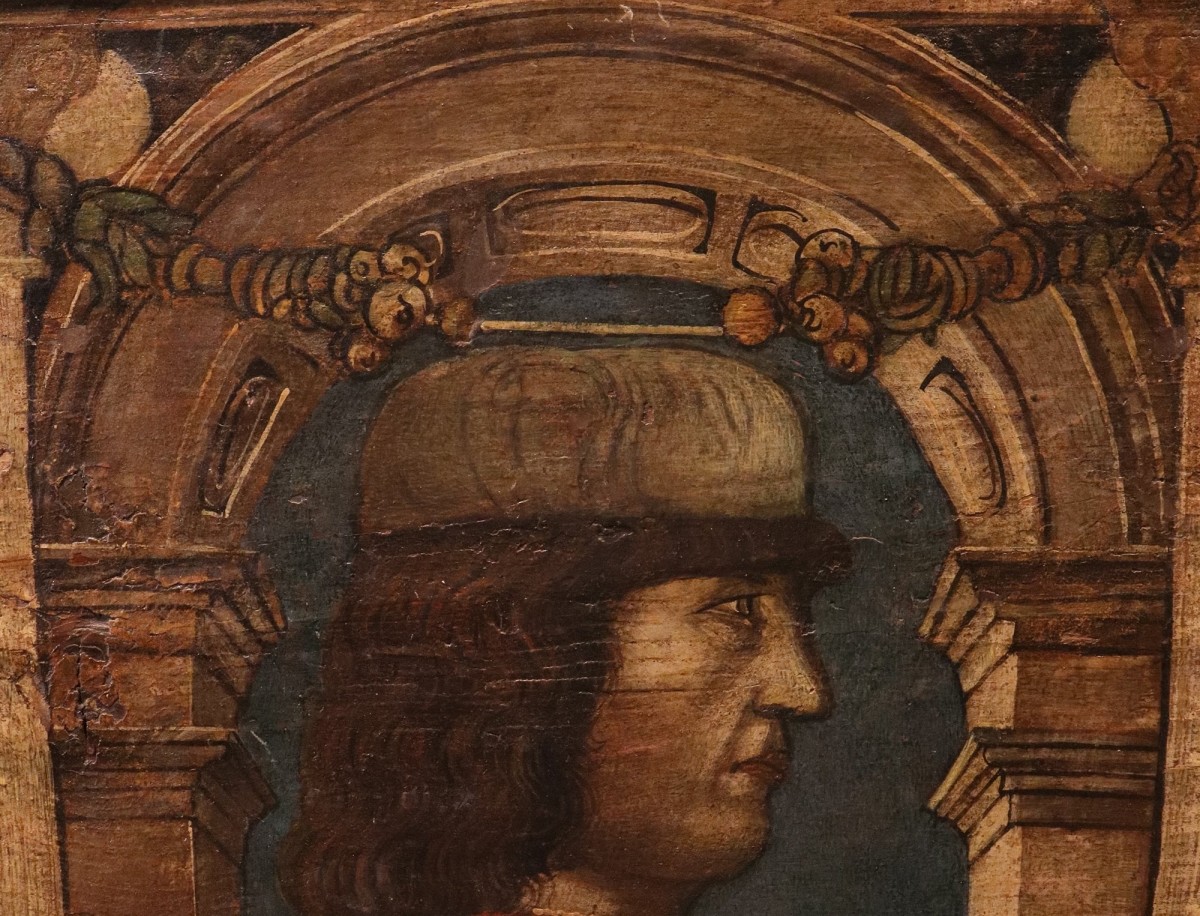
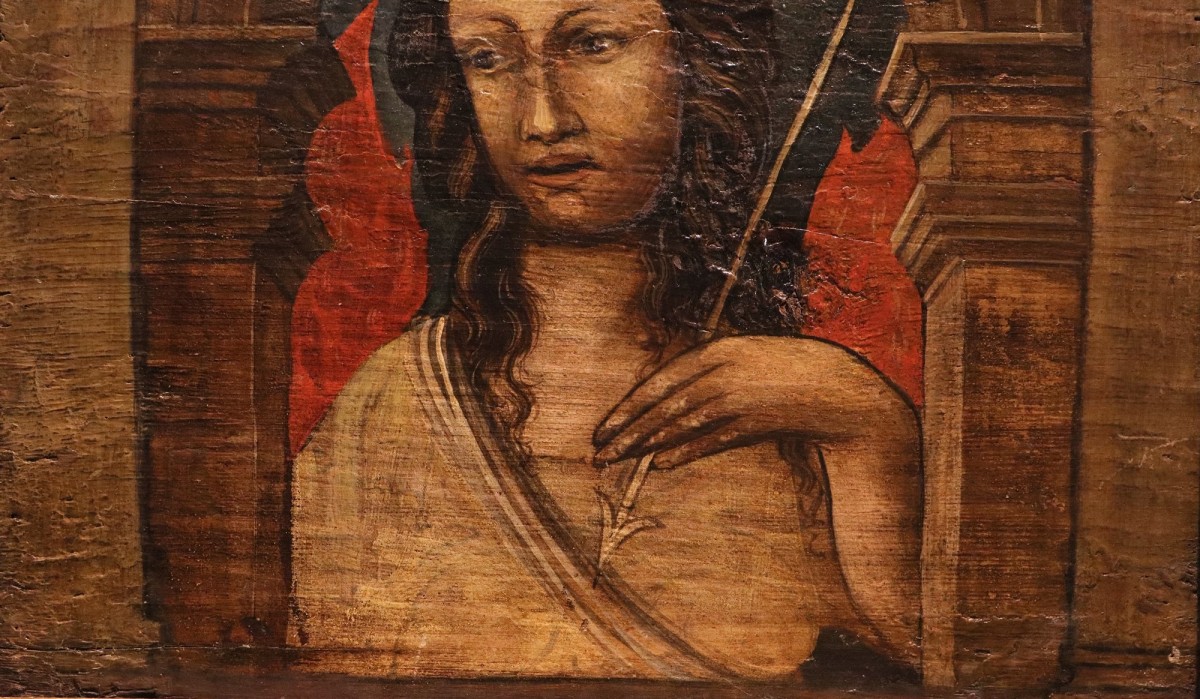
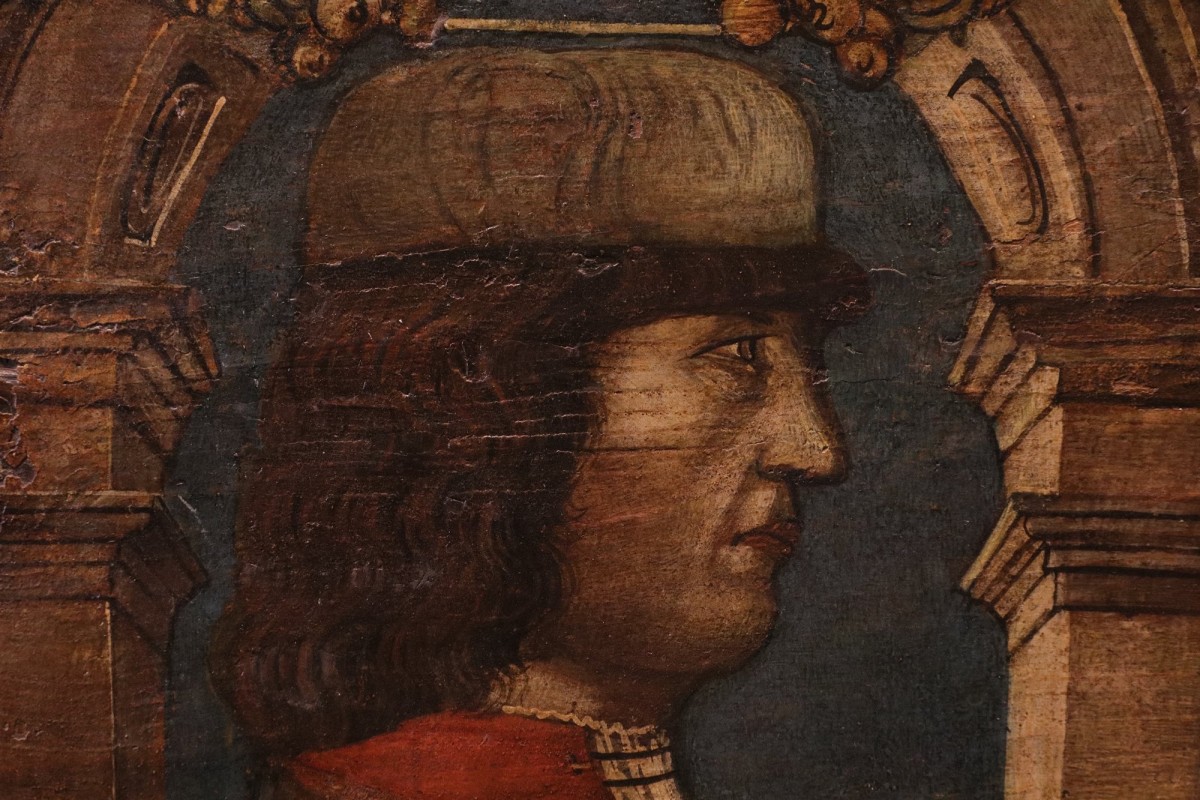
Portrait of a Warlord / Portrait of Saint Sebastian
Bonifacio Bembo (Brescia, 1420 – Milan, 1480) Follower of
Oil on panel (each) 43 x 43 cm. Framed 55 x 55 cm.
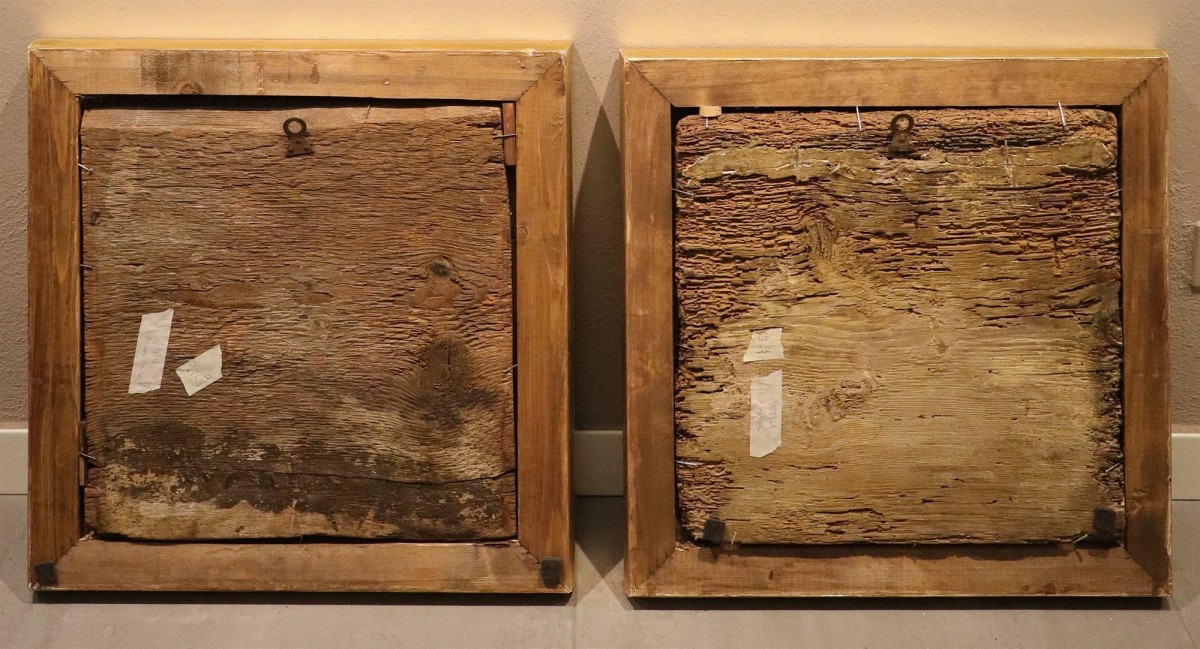
This splendid pair of painted wooden “ceiling panels” represents a classic element of Renaissance furnishings and decoration in residences between the 15th and 16th centuries, especially in Northern Italy: works of this type were originally set into the coffered ceilings of noble palaces, which were widespread in the Lombardy region (particularly in the areas around Cremona, Bergamo, and Brescia), and were mounted at an angle between the beams to be admired from below looking upward (see example images).
Fortunately, there are still many historic residences that preserve these spectacular works intact, although many of them, following sales and renovations, have been dismantled and sold separately on the antique market.
Created by specialized workshops, these small paintings typically featured depictions of ladies, knights, saints, and illustrious men, recounting the history and the cultural and political ideals of the homeowners, who were often portrayed among the figures.
As for our two panels, given their quality and distinctive craftsmanship, we are inclined to identify the stylistic hand of Bonifacio Bembo (Brescia, 1420 – Milan, 1480), and they should therefore be attributed to one of his direct followers.
A highly significant Italian painter and illuminator of the fifteenth century, active primarily at the court of the Dukes of Milan (the Visconti and the Sforza), Bembo was the foremost specialist in this field, so much so that his prolific workshop—and, of course, his followers—continued this tradition, producing a large number of these small panels for noble residences.
By comparing the style and manner of our two figures, as well as the architectural setting in which they are placed, one can note the similarity to many of Bembo’s works, preserved in various collections: for example, they show strong similarities to the series of profile portraits housed at the Castello Sforzesco in Milan and the Poldi Pezzoli Museum, commissioned by the Dukes of Milan.
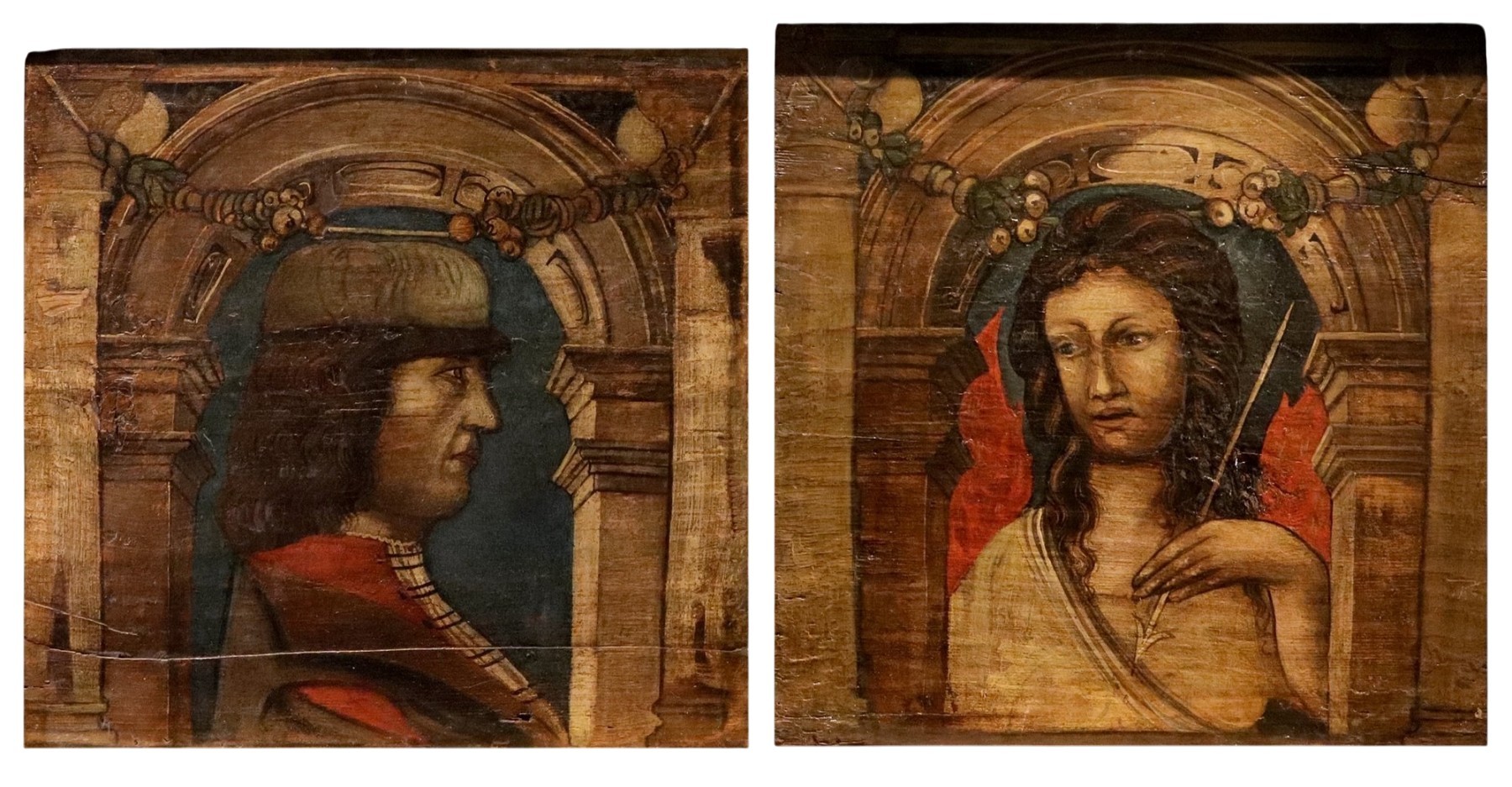
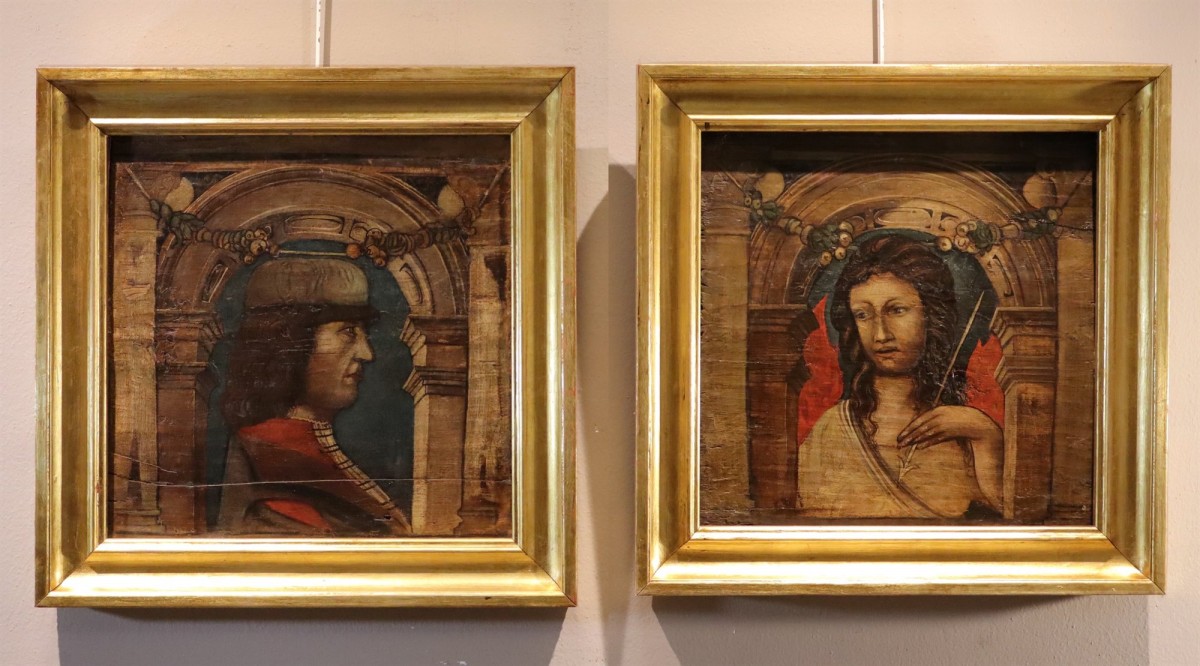
Let us now examine the characteristics of the works: in the first panel, we see the portrait of a high-ranking gentleman, depicted in profile, following the classic Renaissance style inspired by ancient Roman coins, with a pose that conveys nobility and a sense of firmness.
The man has strong features, with a slightly aquiline nose and pursed lips that convey severity and a proud expression, typical of 15th-century rulers.
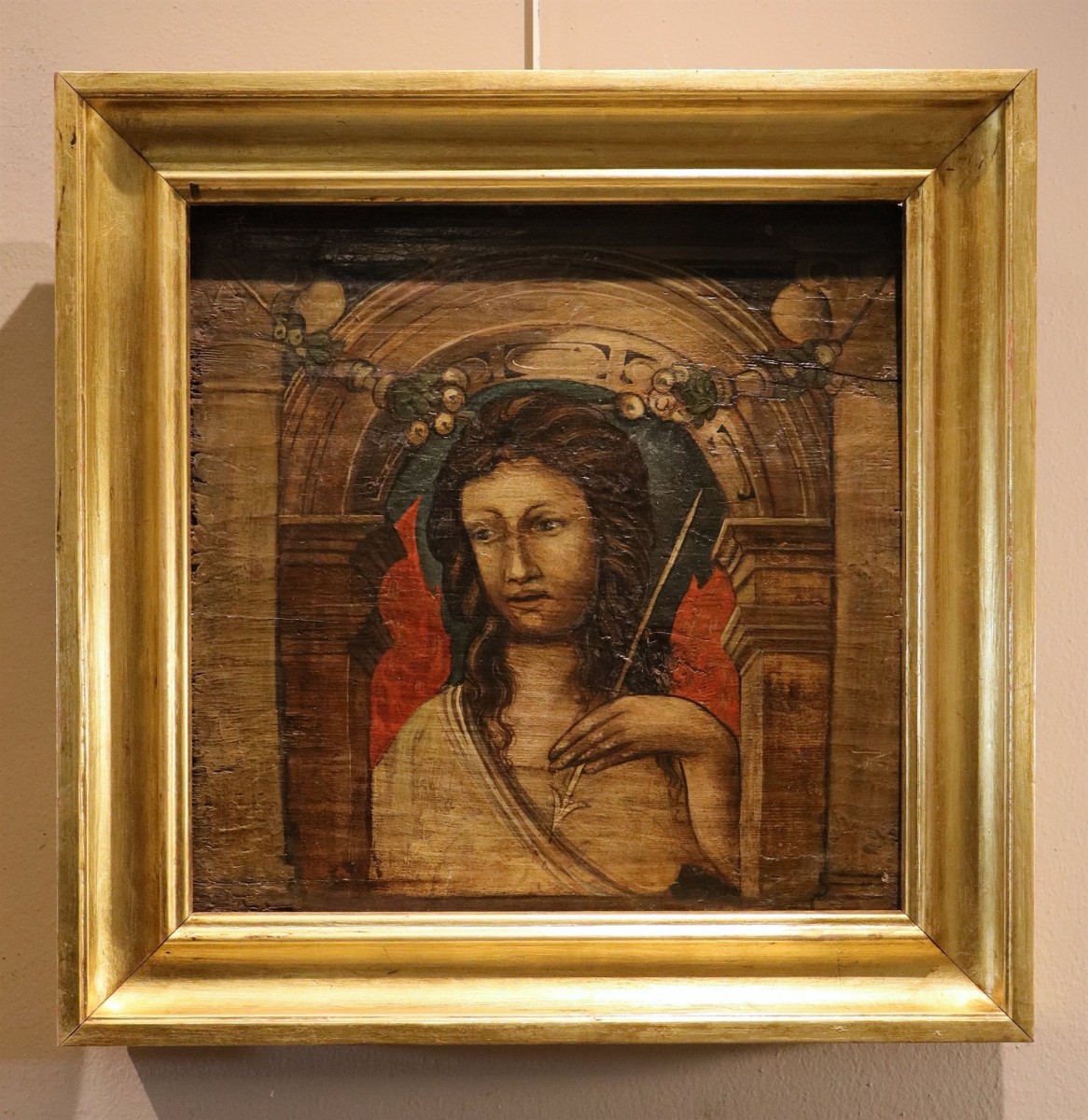
The second panel, on the other hand, depicts a splendid image of Saint Sebastian, portrayed as a young man with gentle features and long, wavy hair, but enveloped in bright red flames to evoke the fervor of his faith.
He wears a light-colored robe and holds an arrow—the symbol of his martyrdom—in accordance with Renaissance fashion, which favored depicting the saint elegantly dressed and clutching an arrow between his fingers in an almost symbolic manner, rather than naked and pierced by dozens of arrows.
The setting enhances the work, with the figures placed within a rich architectural frame painted with a round arch supported by classical columns on either side, from which hangs a garland of flowers and fruit (perhaps pomegranates), a classical decorative element beloved during the Renaissance as a symbol of the family’s prosperity and good fortune.
Delevery information :
We take care of and organise the transport of the purchased works, both for Italy and abroad, through professional and insured carriers.
We take great care We personally take care of the packaging, to which we devote a great deal of care: each work is carefully packed, first with arti- cle material, then with a custom-made wooden box.
Should you have the desire to see this or other works in person, we would be happy to welcome you to our gallery in Riva del Garda, Viale Giuseppe Canella 18, we are always open by appointment only.