Offered by Antichità San Felice
REQUEST INFORMATION
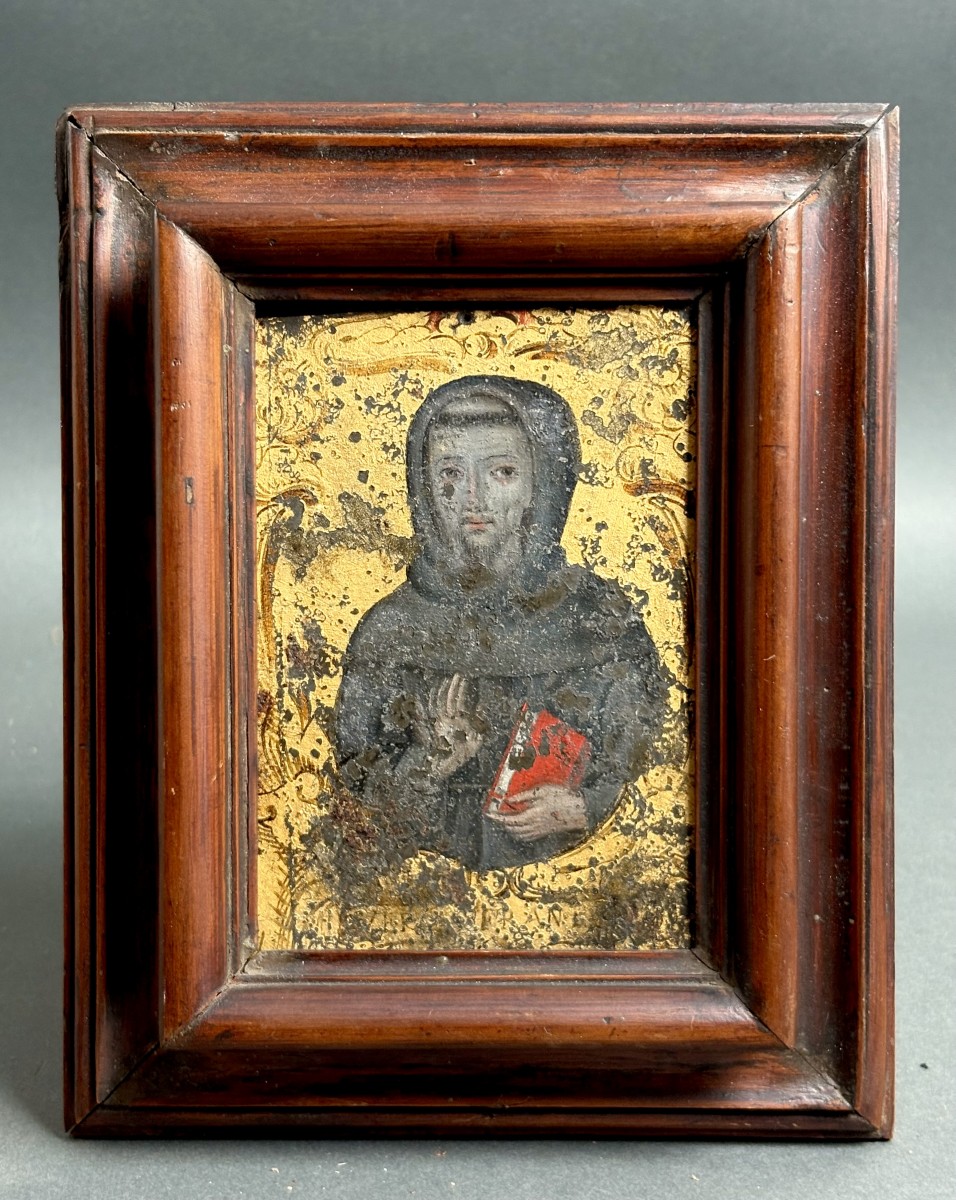
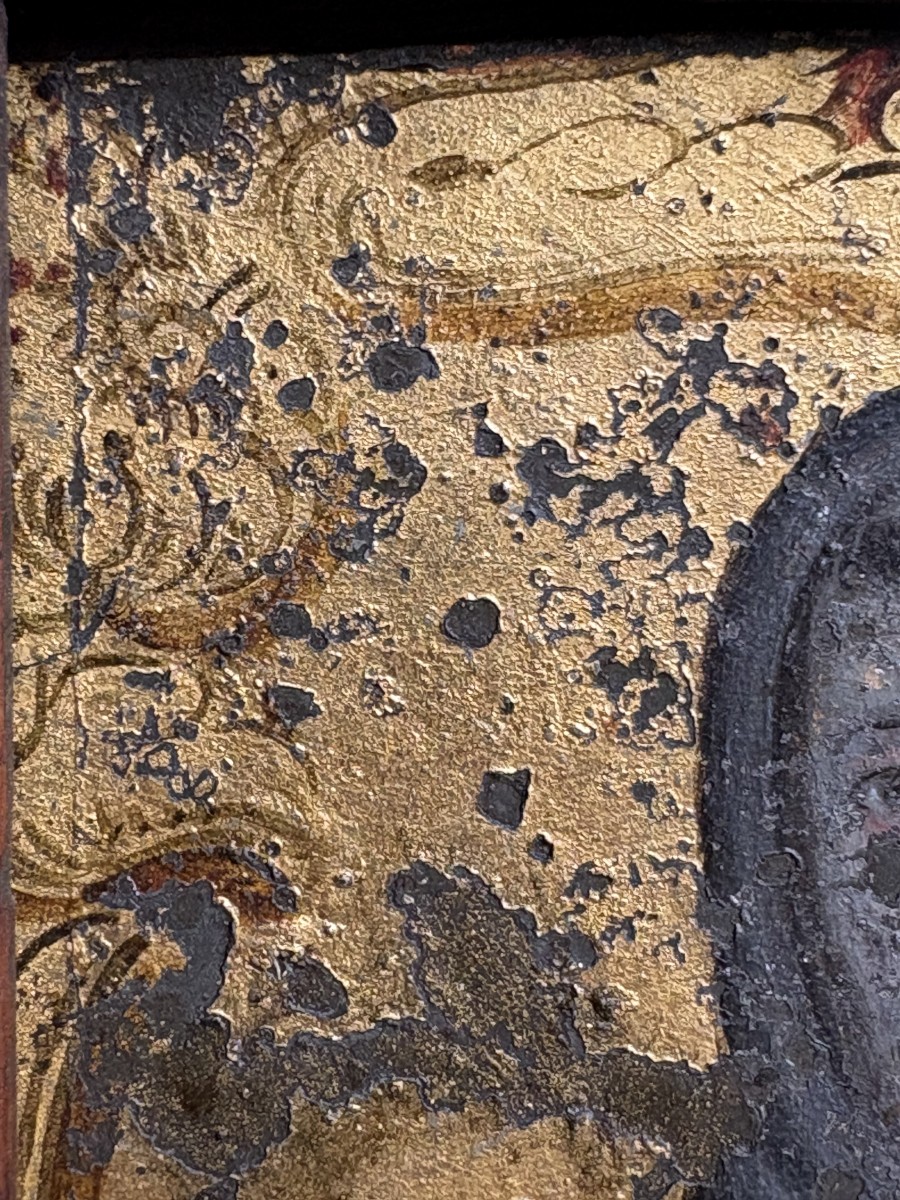

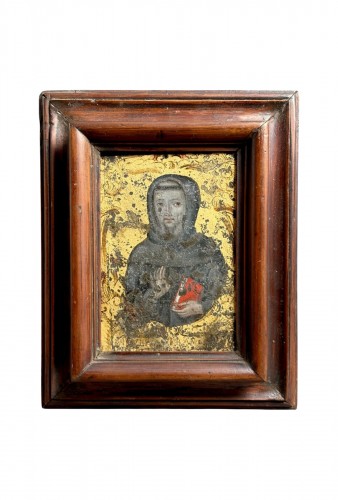
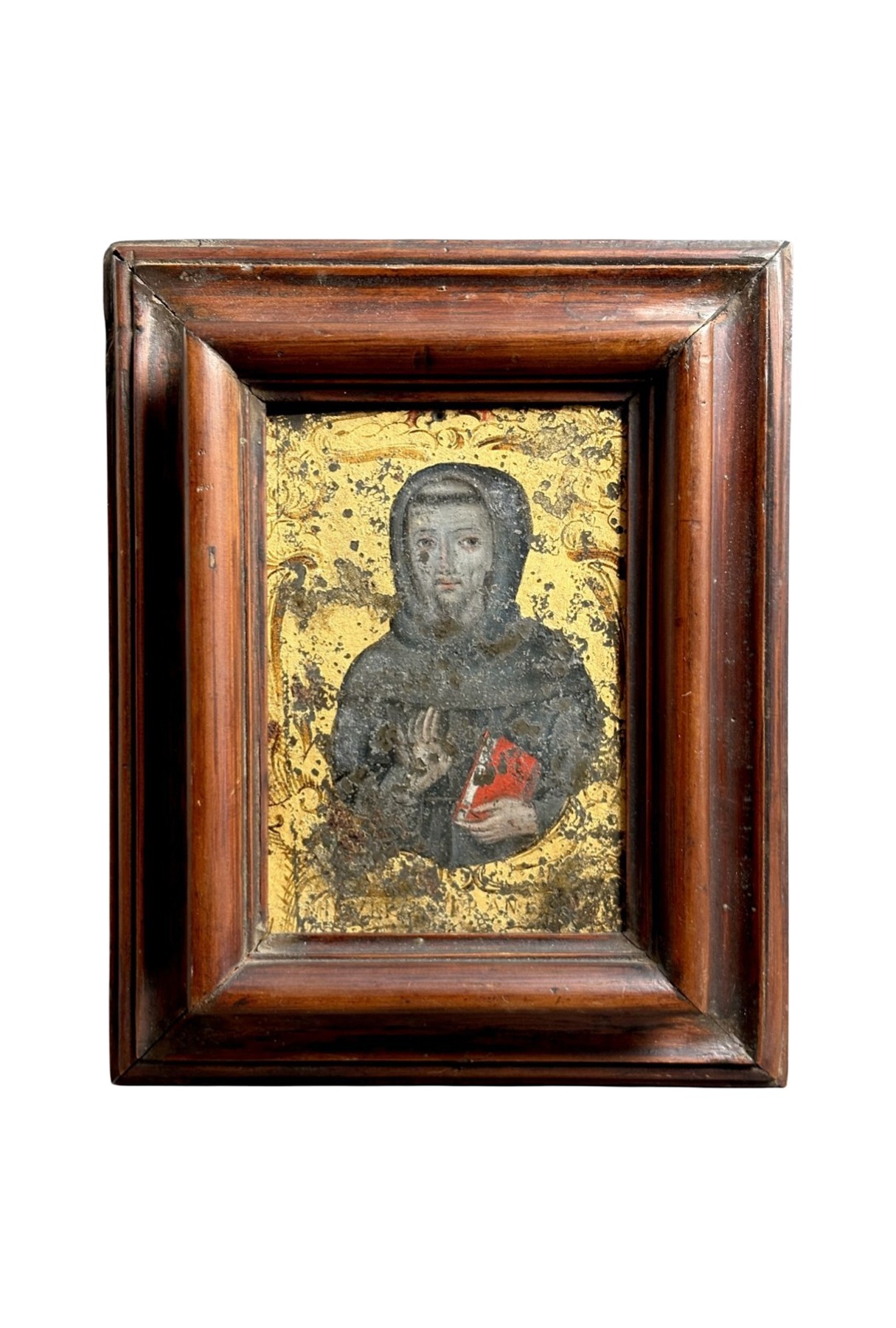
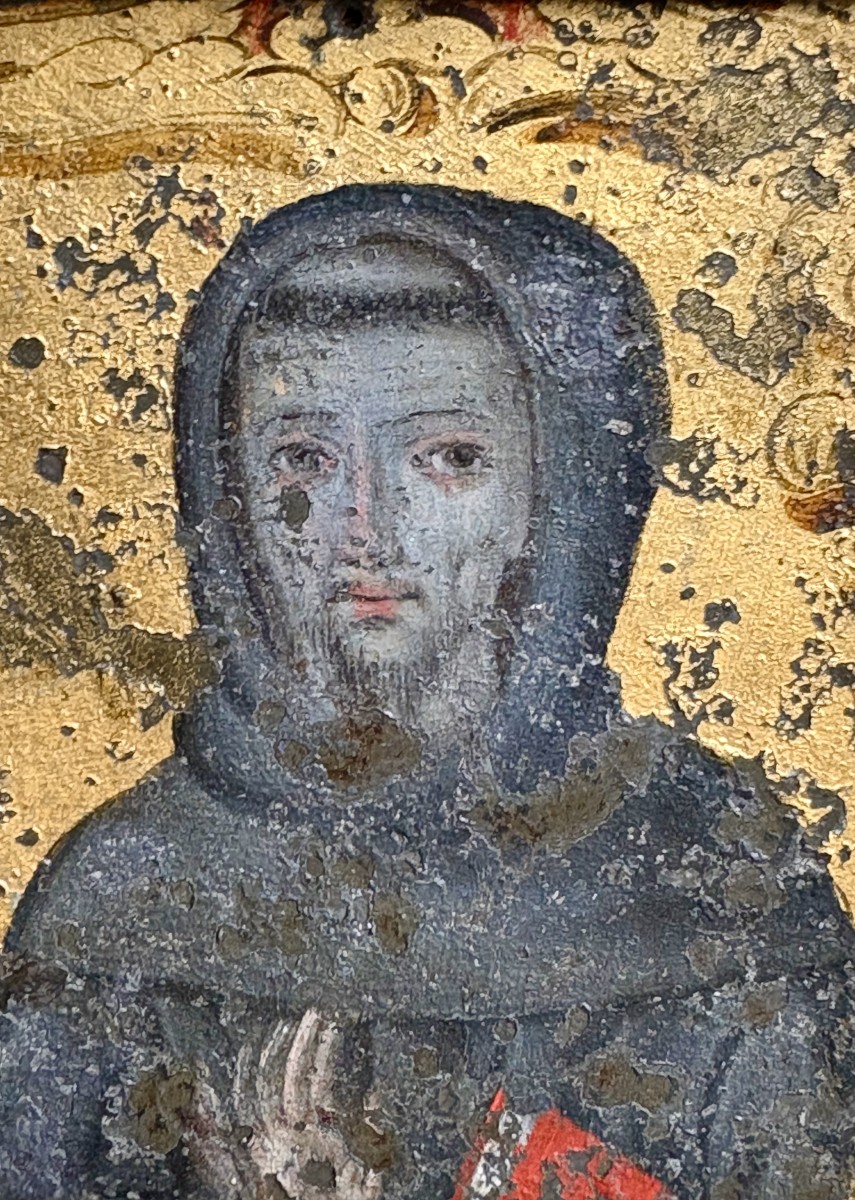
St. Francis of Assisi, painted on tin, Venice, 17th century.
Beginning in the 16th century, the Republic of Venice served as the ideal focal point for analyzing the spread and success of tinplate painting. In the 16th century, the manufacturing process for tinplate—also known as “banda stagnata,” consisting of a thin sheet of iron coated with a light layer of tin—was an industrial secret firmly held by Bohemian and Saxon artisans. Venice, through its historic merchants and contacts at the Fondaco dei Tedeschi, held a monopoly on imports into Italy of these flexible, lightweight, and rust-resistant sheets of tinned iron. Unlike Florence and Rome, which emphasized the primacy of drawing, the Venetian school based its entire aesthetic on the primacy of color and the atmospheric effects of light. The silvery, mirror-like surface of the tin provided Venetian painters with the perfect medium for enhancing oil glazes and creating the warm, vibrant luminosity typical of tonalism.
Venice, moreover, was a cosmopolitan port, a city of merchants, sailors, and pilgrims bound for the Holy Land. There was a massive commercial demand for portable devotional images. Specialized workshops, known as “Madonneri,” mass-produced small images of the Virgin Mary or the saints on tin sheets: they were inexpensive, withstood the humidity on ships, and were not likely to break like wooden panels in the event of a storm.
The tin-plated iron sheets were decorated using mixed techniques: oil painting with translucent lacquers (a “cold enamel” effect) or embossing and gilding with gold leaf (the “embossed brocade” technique). Major workshops on the Venetian mainland experimented extensively with metal supports.
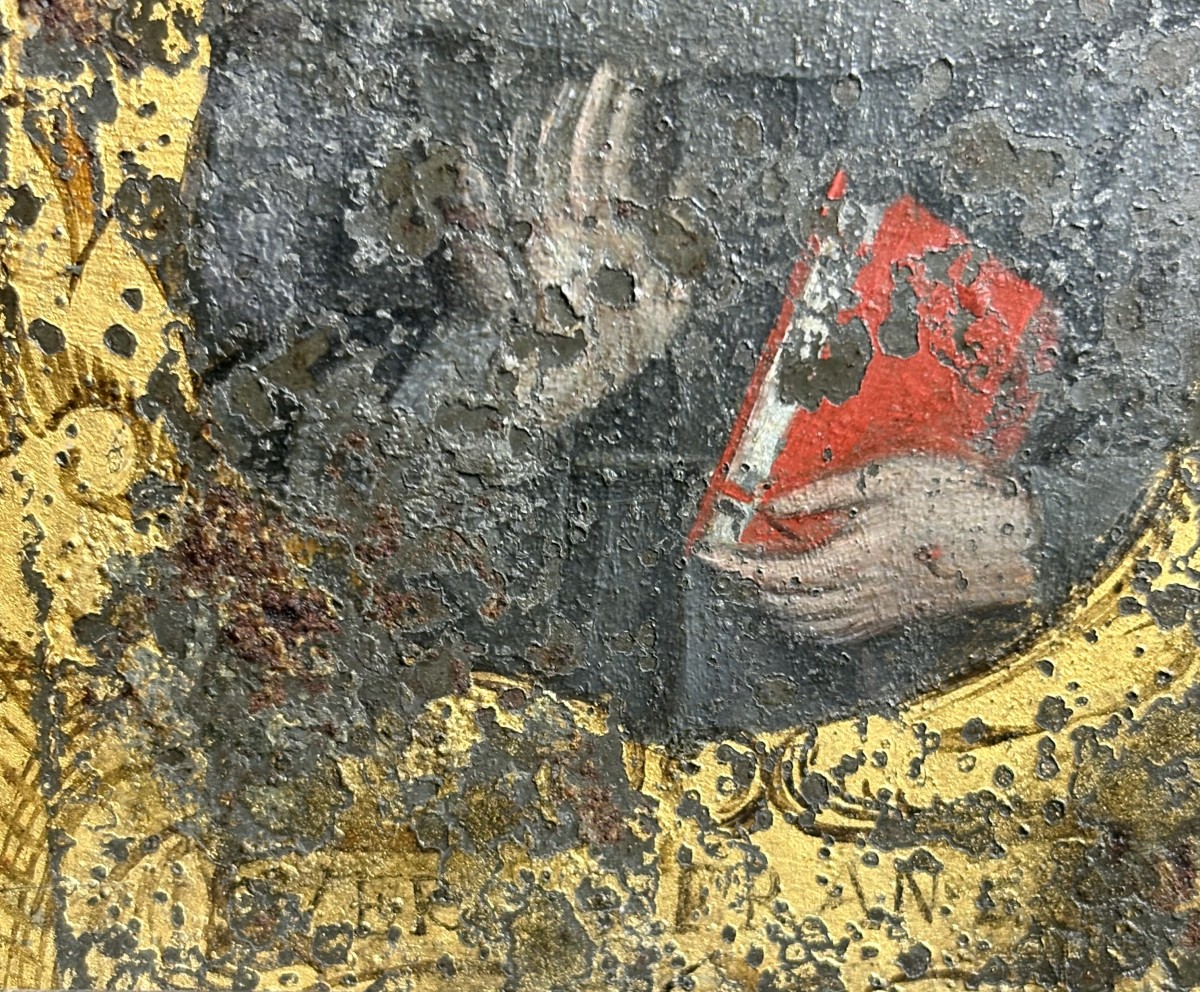
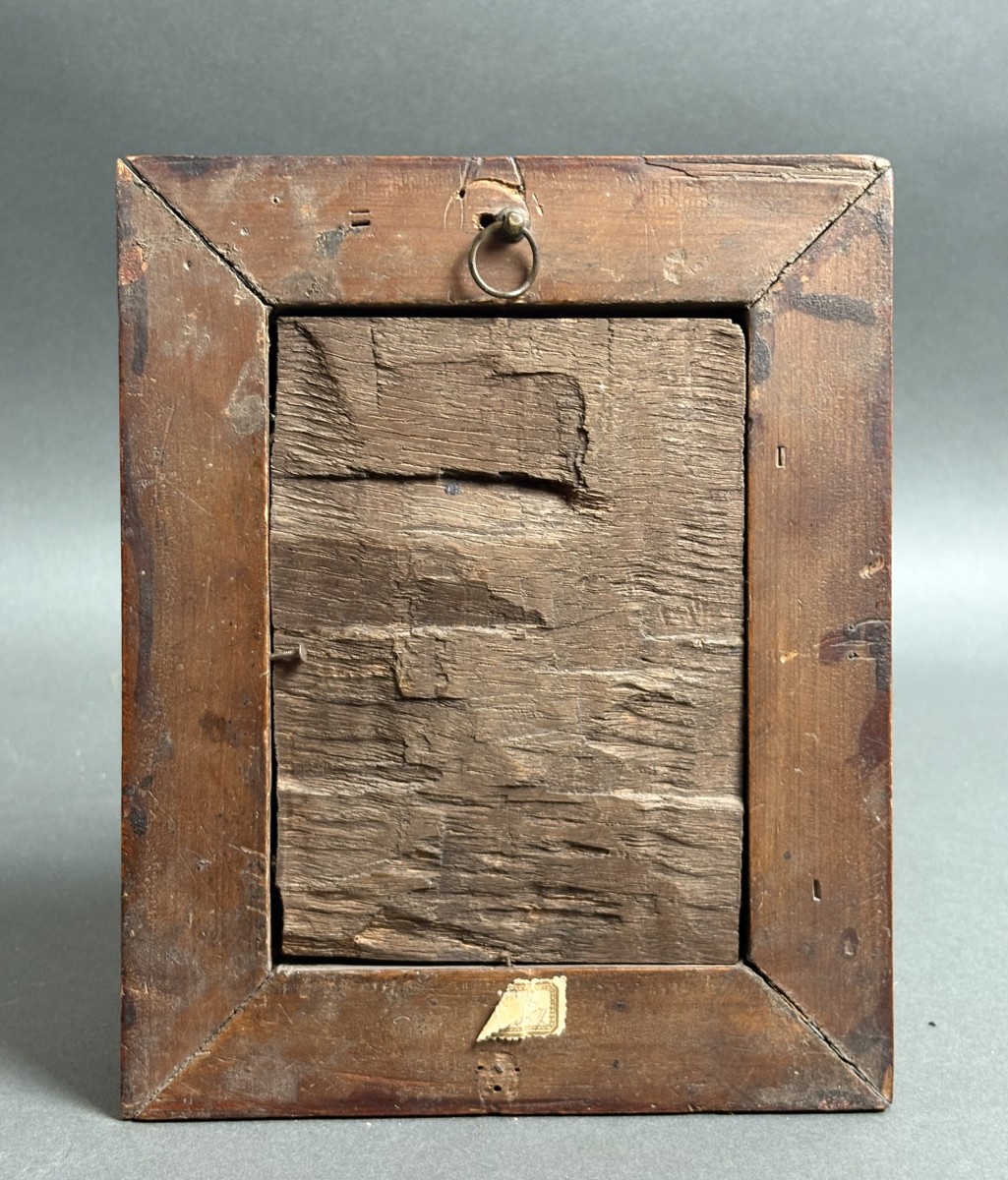
In our painting, the saint wears a hooded monastic robe and holds a book with a red cover; the background is gilded with ornamental embossing. The style is reminiscent of Byzantine or Venetian-Cretan sacred art. In its original frame.
Dimensions
painting: 14 x 10 cm
frame: 22 x 18 cm
Delevery information :
Antichità San Felice takes care of organizing the packaging, home delivery and all the administrative formalities related to the shipment.
Antichità San Felice works with several service providers selected for their professionalism, in order to ensure delivery of works of art in the best conditions.
For the packaging of the goods, we involve craftsmen who were responsible for the construction of custom-made wooden crates.
For transport, depending on the case, we involve the most suitable service provider.
All shipments from Antichità San Felice are covered by value insurance. It is important to note that the Customer must indicate on the dispatch note any reservations upon receipt of the object, in order to be able to bring the insurance into play.
Payments accepted:
bank transfer
online bank card
paypal (+3.4% Europe +5% rest of the world)