Offered by Galerie Nicolas Lenté
REQUEST INFORMATION
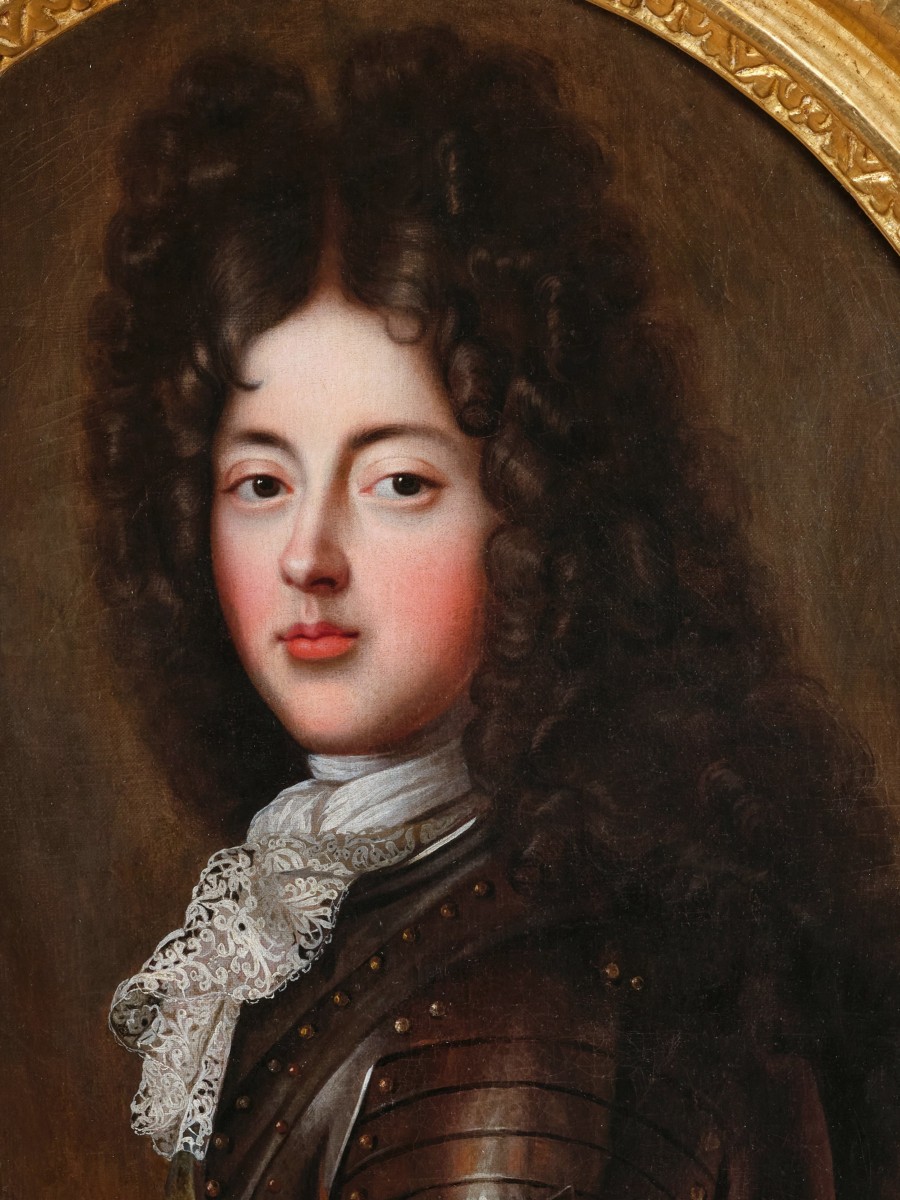

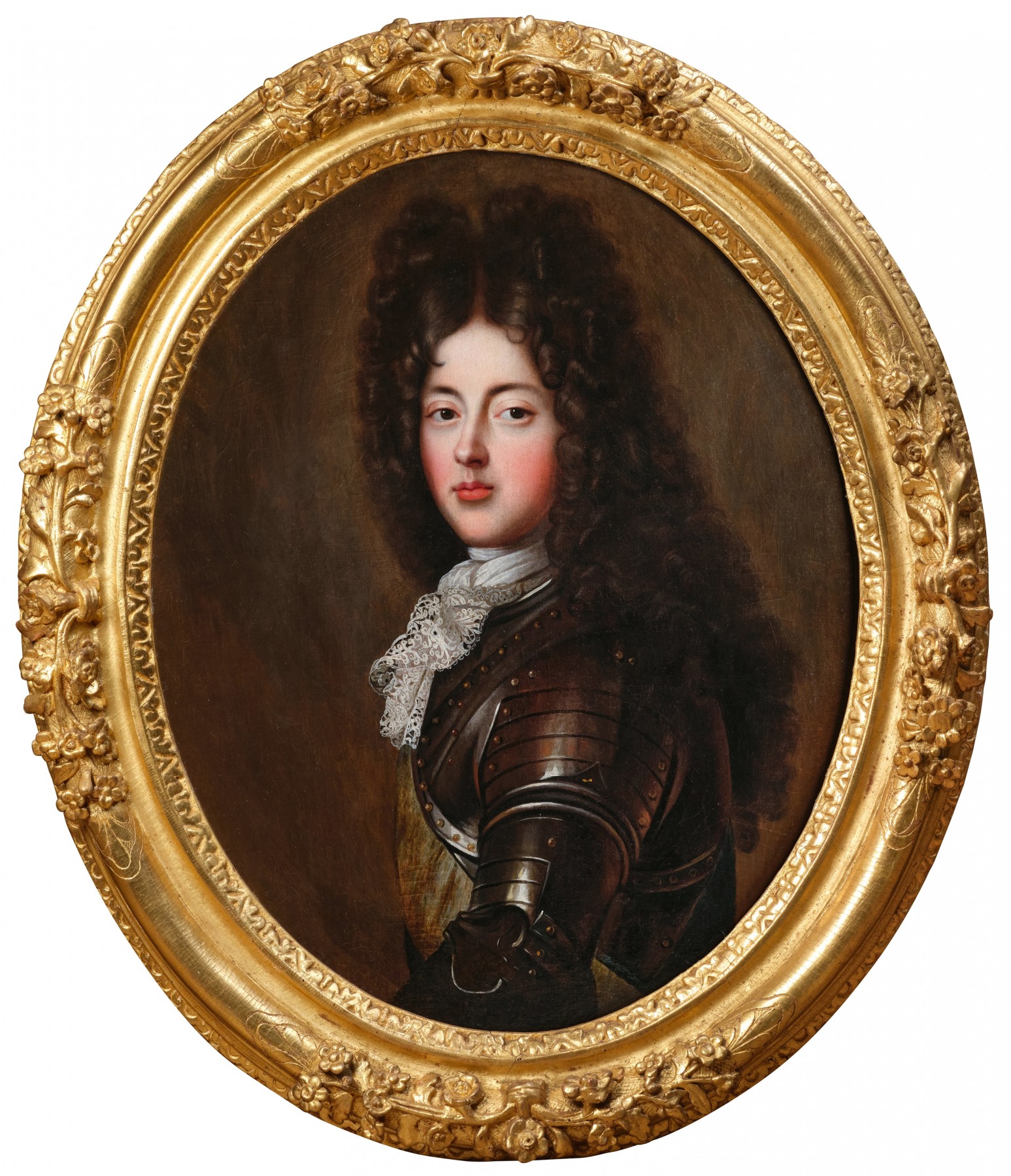
Portrait of Louis-Auguste de Bourbon, Duke of Maine (1670–1736)
studio of François de Troy(1645–1730)
Late 17th century French School, Paris, circa 1690
Oil on canvas: h. 72 cm, w. 57 cm.
Louis XIV period frame in giltwood, richly carved with foliage and scrolls.
Framed: h. 97 cm, w. 80 cm
This remarkable portrait from the reign of Louis XIV, executed around 1690 in the studio of François de Troy, depicts Louis-Auguste de Bourbon, Duke of Maine, the legitimized son of Louis XIV and Madame de Montespan. The young prince appears at the dawn of his adulthood, aged approximately eighteen to twenty.
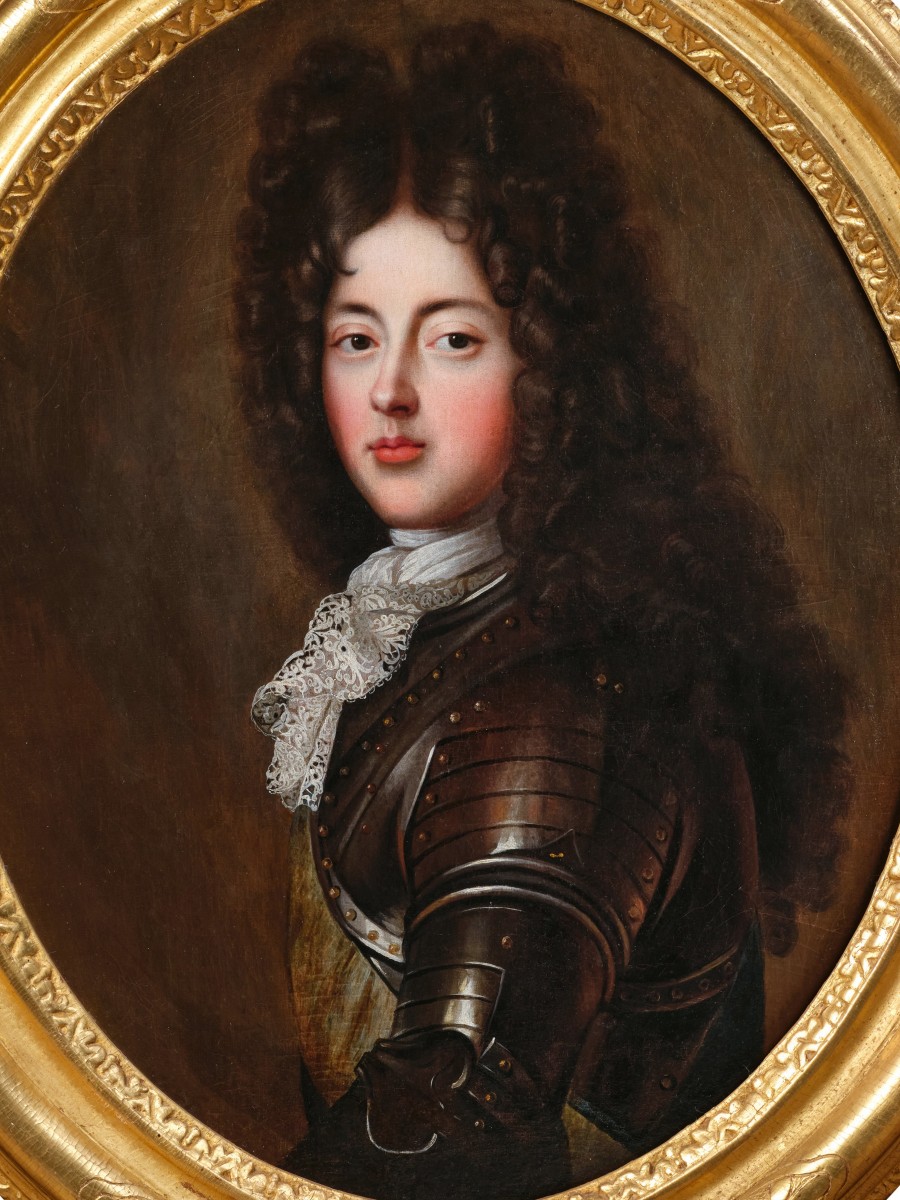
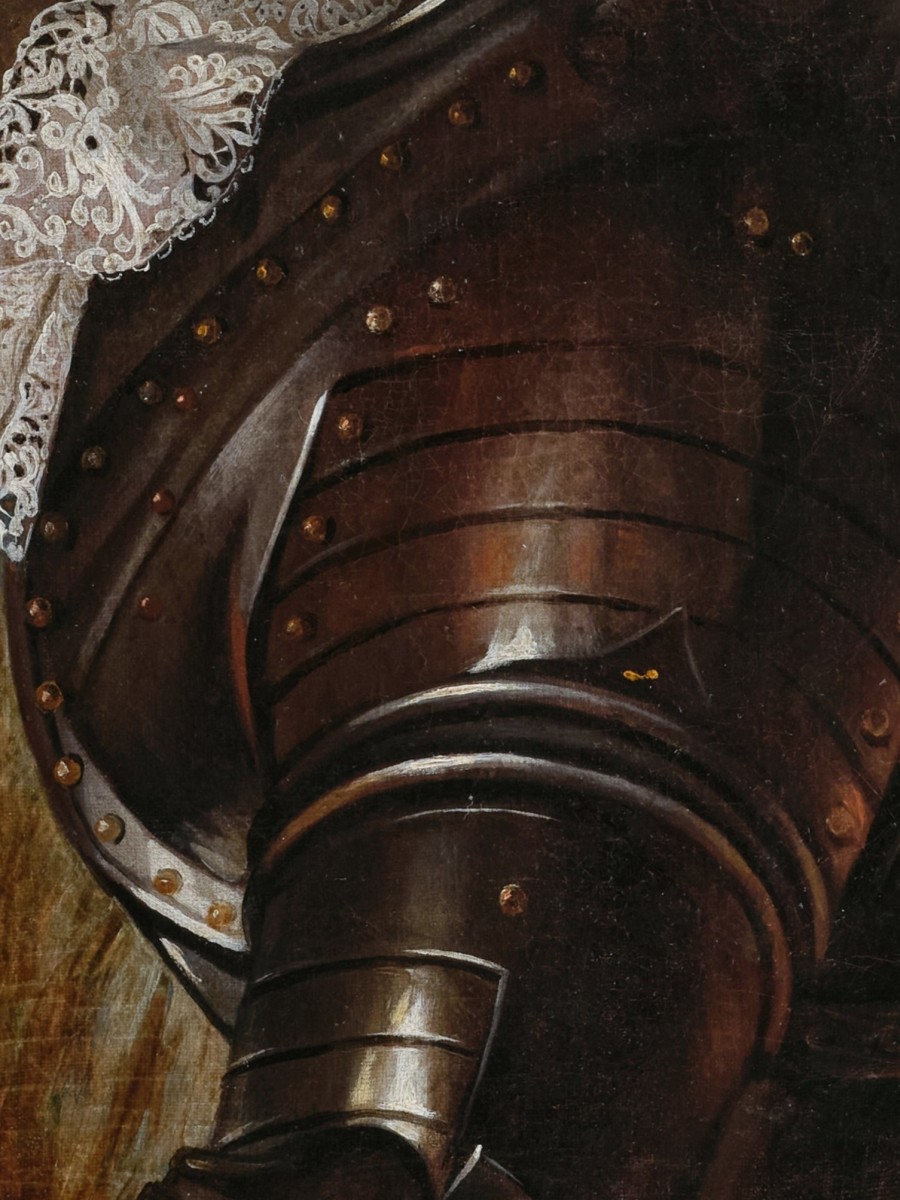
Shown in half-length, he wears ceremonial armor whose metallic sheen, rendered with great restraint, underscores his rank and military vocation. This portrait was likely painted shortly after his appointment by Louis XIV to the rank of Lieutenant General of the King's armies in 1688, an exceptional honor bestowed upon a prince then only eighteen years old. Slung across his shoulder, he wears the ribbon of the Order of the Holy Spirit, the most prestigious distinction of the French monarchy (the original blue color was covered over, probably during the Revolution, to conceal its connection to royalty and to prevent the portrait's destruction).
The neutral background and deep tones of burnished iron, accentuated by gilded rivets, lend the effigy an austere nobility and focus attention on the sitter's figure.
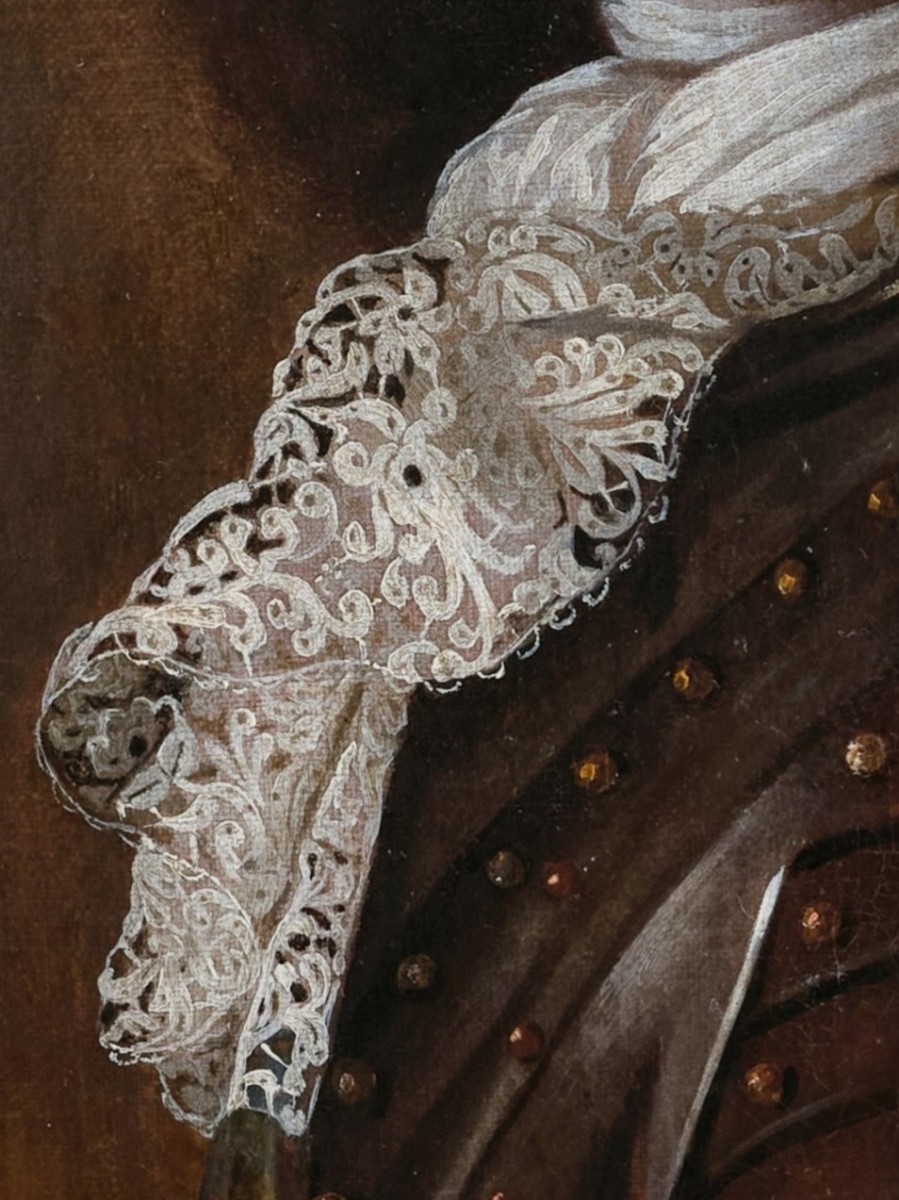
The white lace jabot introduces a touch of refinement that contrasts with the sober, martial nature of the armor. This luminous detail subtly enlivens the composition while recalling the elegance characteristic of the court aristocracy during the reign of the Sun King.
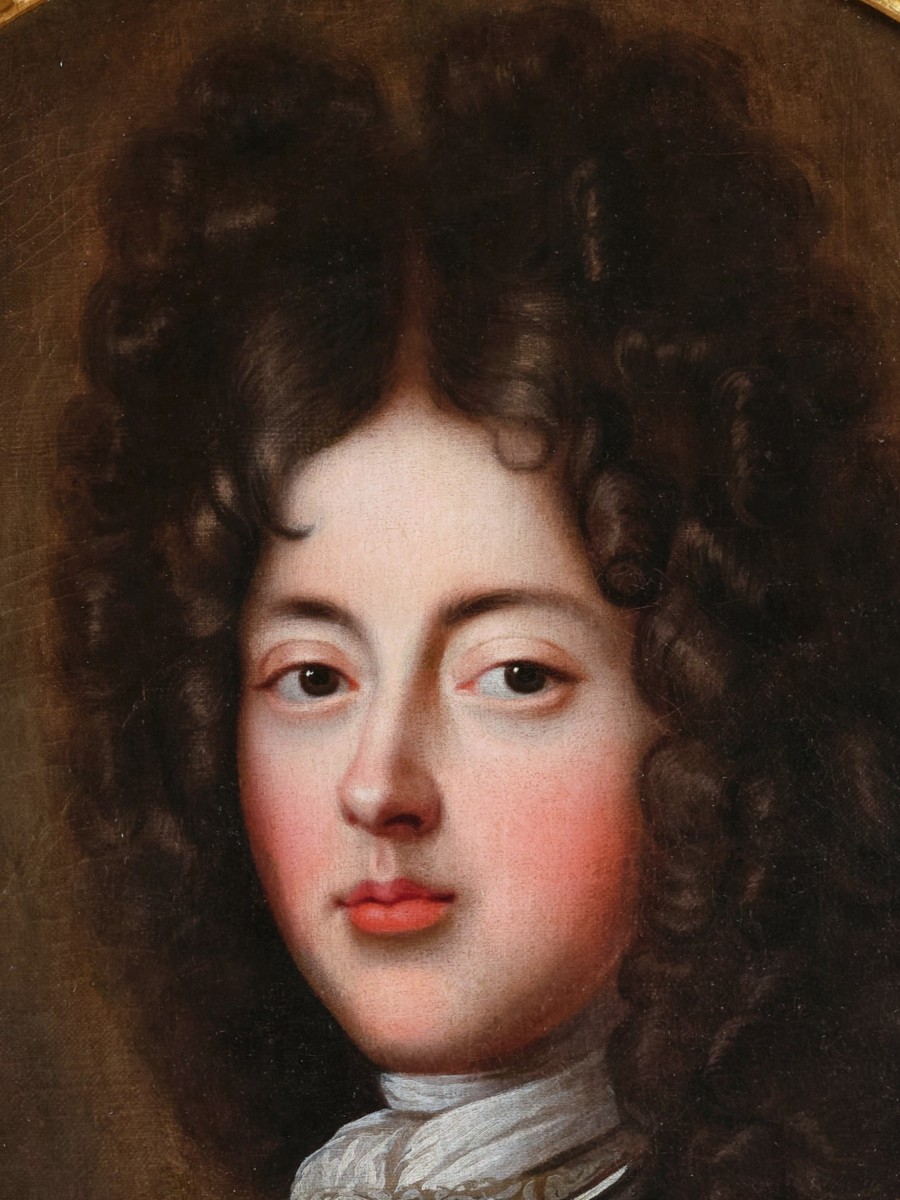
One of the work's most remarkable qualities lies in the treatment of the face. The painter excels here in the art of bringing out the sitter's presence through subtle plays of light. The delicately rosy flesh is modeled with great finesse, giving the face an almost tangible life and presence. The slightly prominent chin adds a discreet firmness to the overall face and balances the softness of the features. His eyes, slightly turned towards the viewer and veiled by delicately lowered eyelids, lend the young prince an expression of reserve, thoughtful gravity, and natural distinction. This restraint in his gaze further reinforces the impression of silent authority emanating from the figure.
The tall wig with its abundant curls, characteristic of court fashion under Louis XIV, fully contributes to the monumentality of his figure. Its long, thick brown locks rise above his forehead before cascading down on either side of his shoulders. This majestic volume frames his face like a jewel box and accentuates the nobility of his bearing.
This mastery of modeling is part of a deliberately restrained composition. By eliminating all secondary decorative details, the painter concentrates all the light on the face, whose striking presence dominates the composition. The subtle balance between official representation, aristocratic refinement, and psychological truth gives this portrait a particular power.
Through the quality of its execution, the understated elegance of its presentation, and the timeless presence of this princely effigy, this portrait stands as a particularly captivating testament to the art of French portraiture during the reign of the Sun King. It belongs to the production of François de Troy's workshop, which, from the very beginning of its career, enjoyed the favor of Madame de Montespan and Louis XIV, and gradually contributed to shaping the image of the royal family as well as that of the kingdom's most prominent princely houses.
Related work:
Portrait of the Duke of Maine in armor by François de Troy, circa 1690, Sceaux Museum, oil on canvas, 90 x 87 cm
Delevery information :
We organize the shipping and delivery of our artworks worldwide, working with specialized fine art carriers as well as DHL Express for the secure shipment of small and medium-sized works (up to 120 cm).
Each artwork is carefully packed and shipped in a custom-made transport crate to ensure optimal protection. All shipments are fully tracked and insured.
We pay the utmost attention to every stage of the shipping process to ensure fast, reliable delivery. Shipments via DHL Express are generally dispatched within approximately 7 days of purchase.
All of our artworks can be viewed at our Paris gallery and may also be collected in person.