Offered by Étienne de Roissart
REQUEST INFORMATION
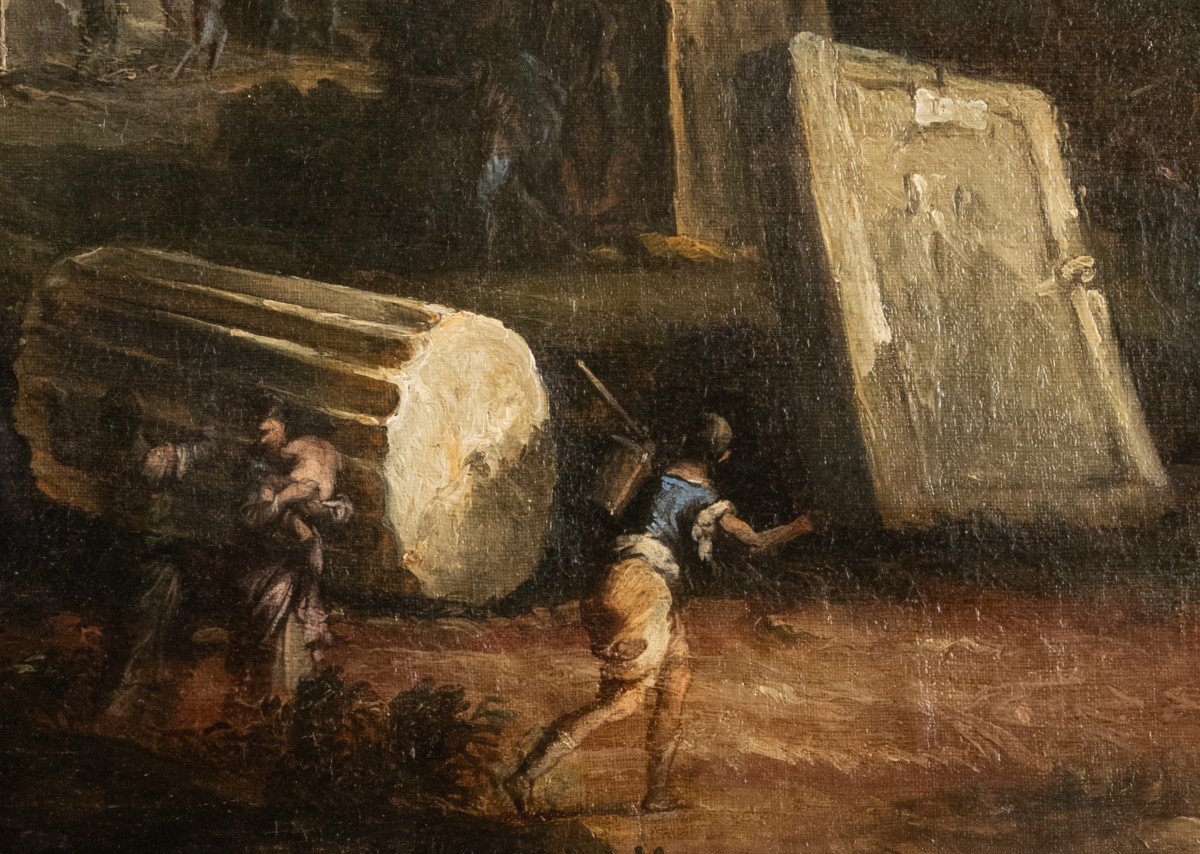
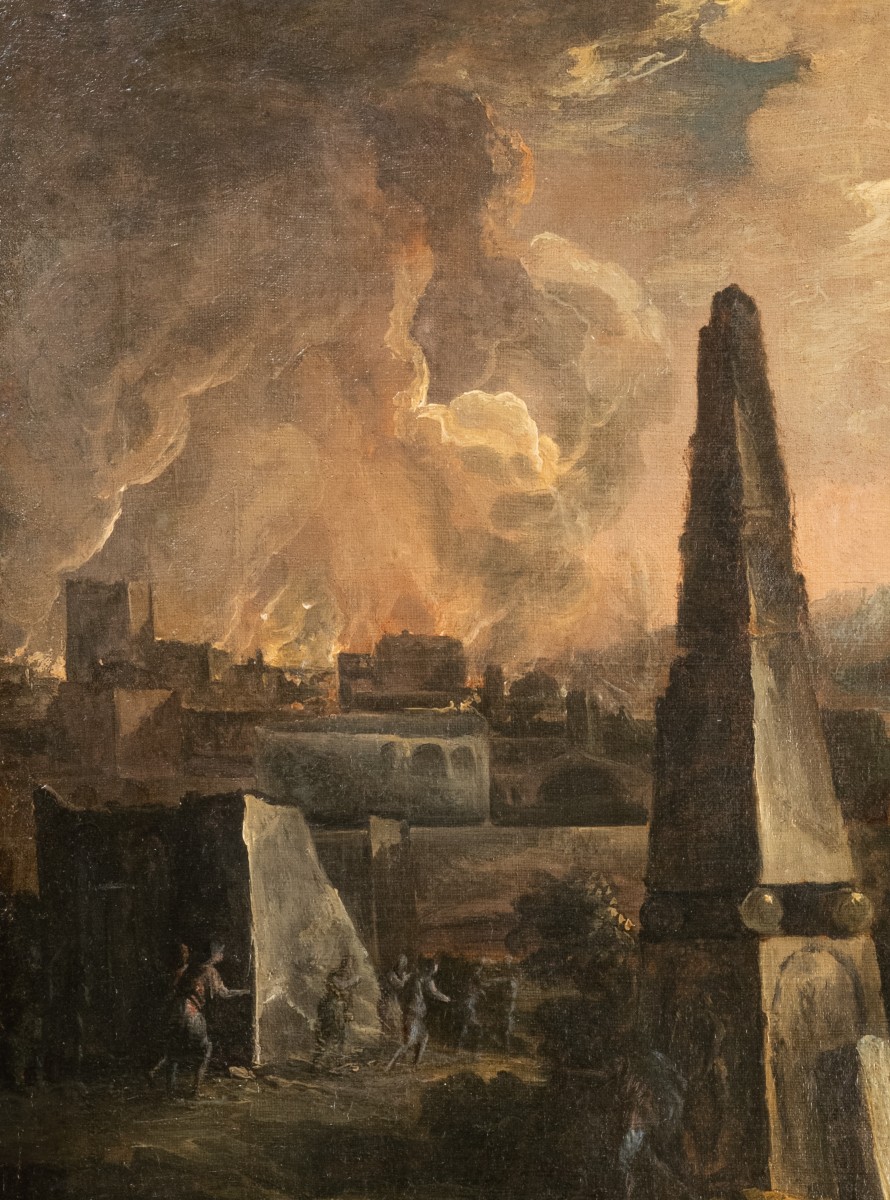

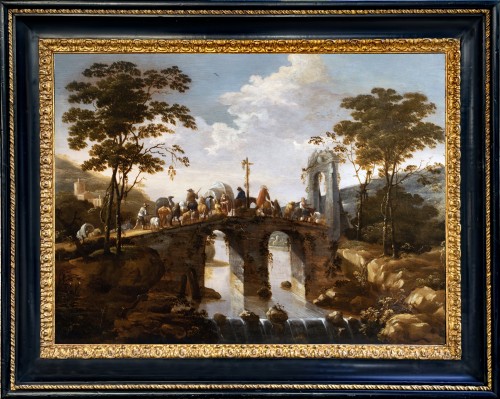
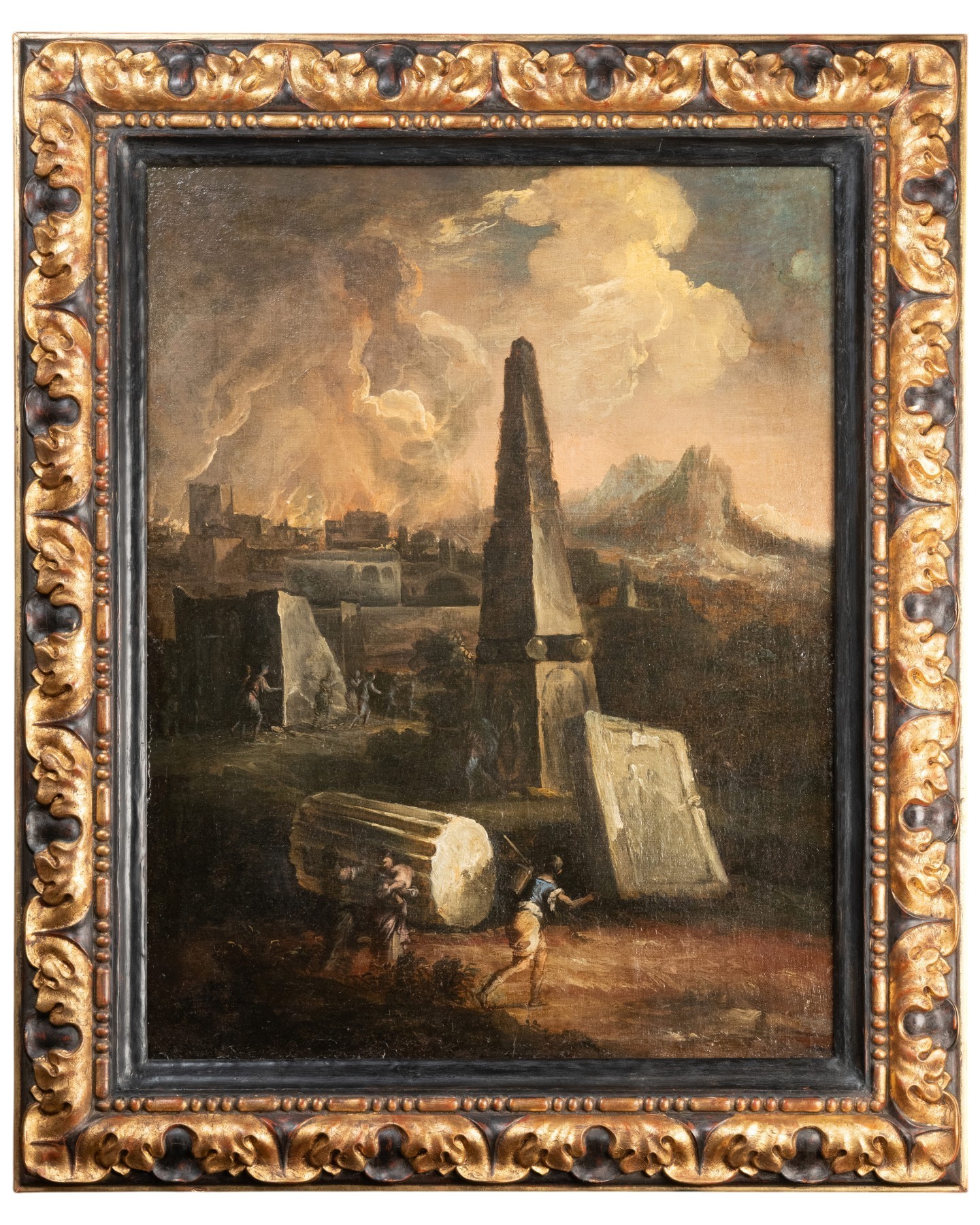
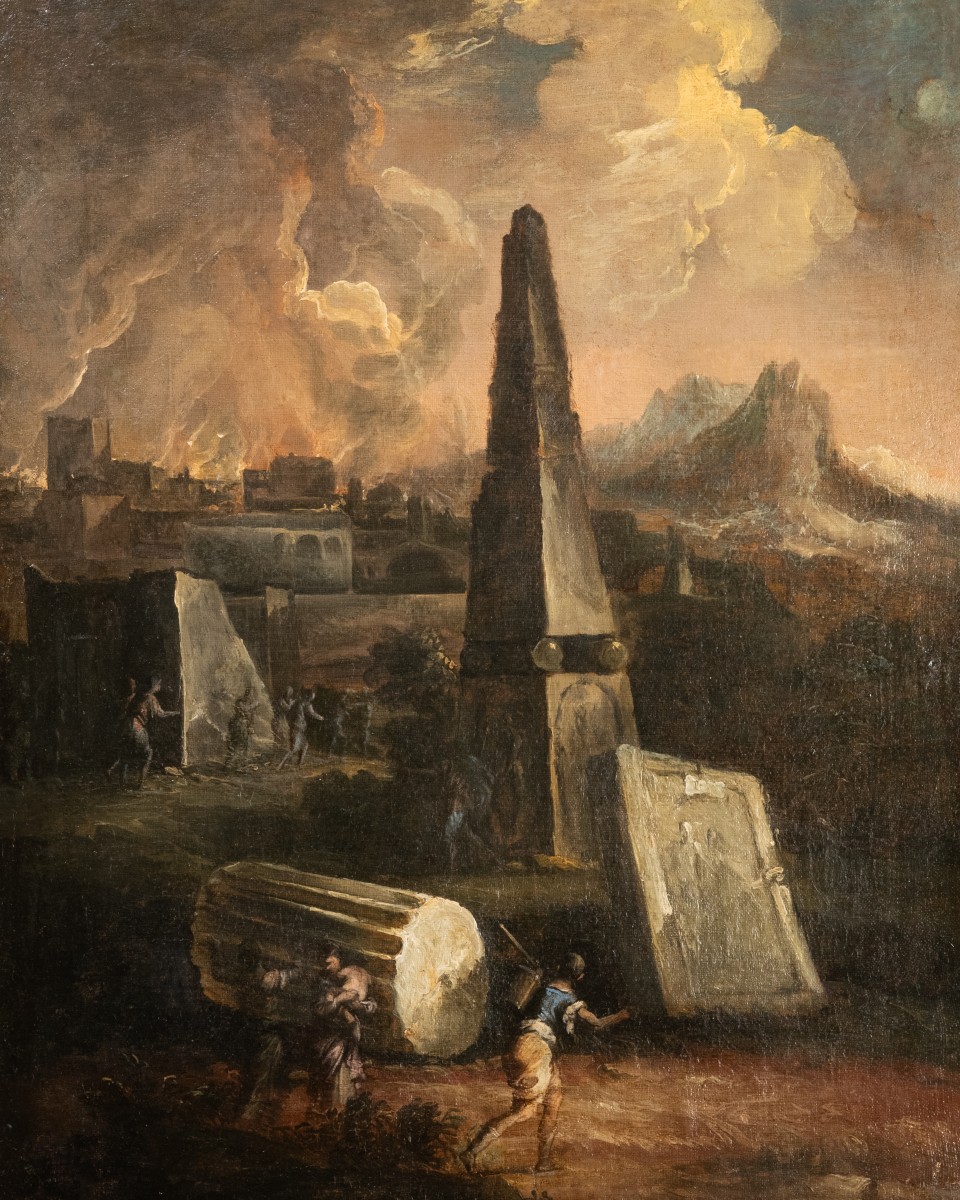
This painting belongs to the tradition of imaginary ruin landscapes that became highly fashionable at the end of the seventeenth century, at the dawn of the first archaeological discoveries of ancient sites. The composition depicts a devastated antique landscape dominated at its center by an obelisk rising like a solitary vestige. Around it lie collapsed architectural fragments — broken columns, overturned stelae, and monumental stone blocks — which structure the foreground and lead the eye toward a distant city partially engulfed in dramatic light.
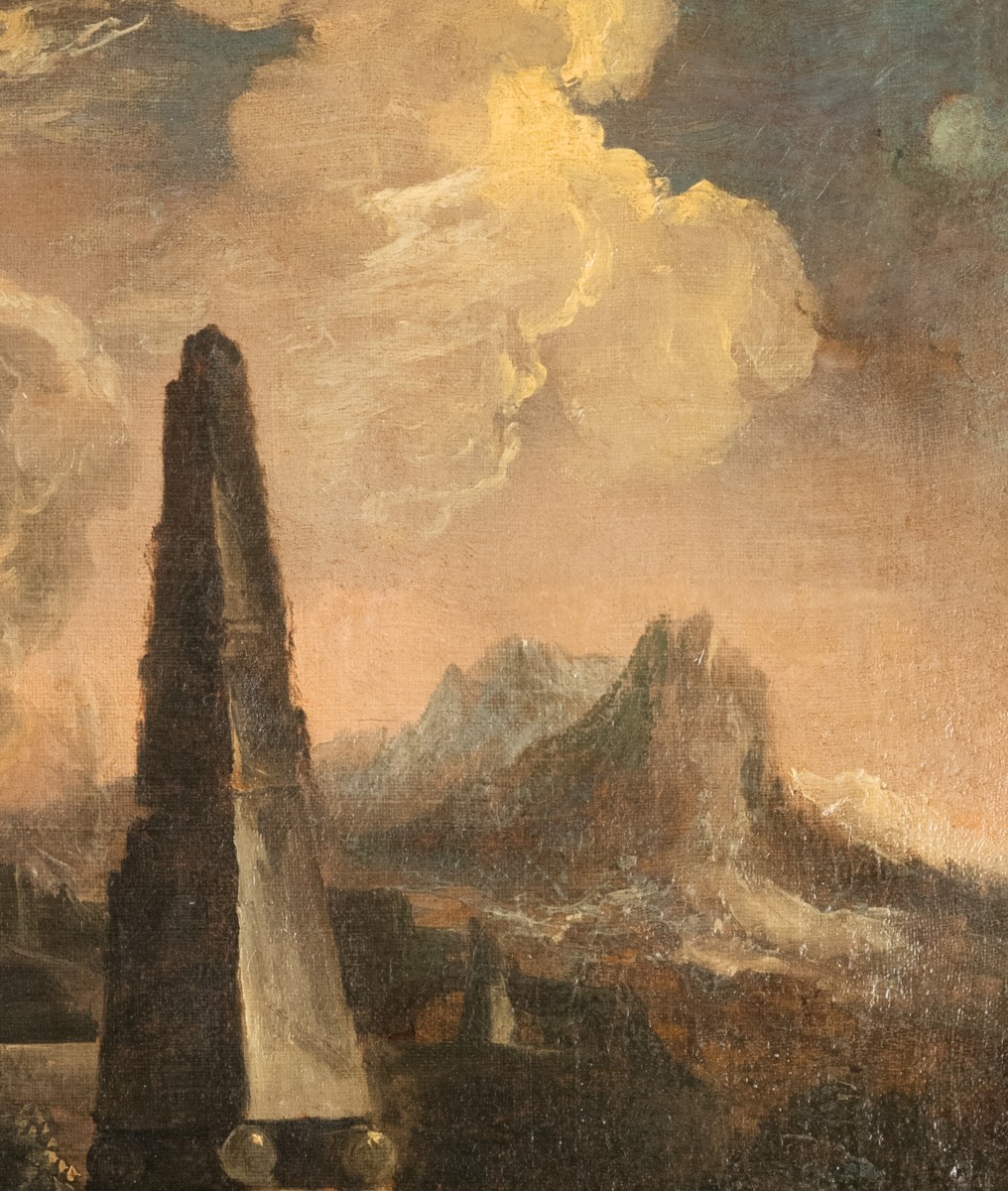
The background opens onto a mountainous landscape with almost volcanic accents, beneath a turbulent sky where thick clouds mingle with effects of smoke and golden light. This unstable and theatrical atmosphere is characteristic of Neapolitan painting in the second half of the seventeenth century, deeply marked by the presence of Mount Vesuvius and by a Baroque sensibility drawn to grandiose visions. The light filtering through the clouds contrasts with the dark shadowed areas, lending the scene a striking dramatic intensity.
The stones and architectural elements are rendered with a dense and vibrant materiality. Small figures appear among the ruins, moving through the vestiges and emphasizing through their scale the grandeur of the ancient world. This theme echoes the works of Salvator Rosa and the tradition of architectural capricci.