Offered by Brozzetti Antichità
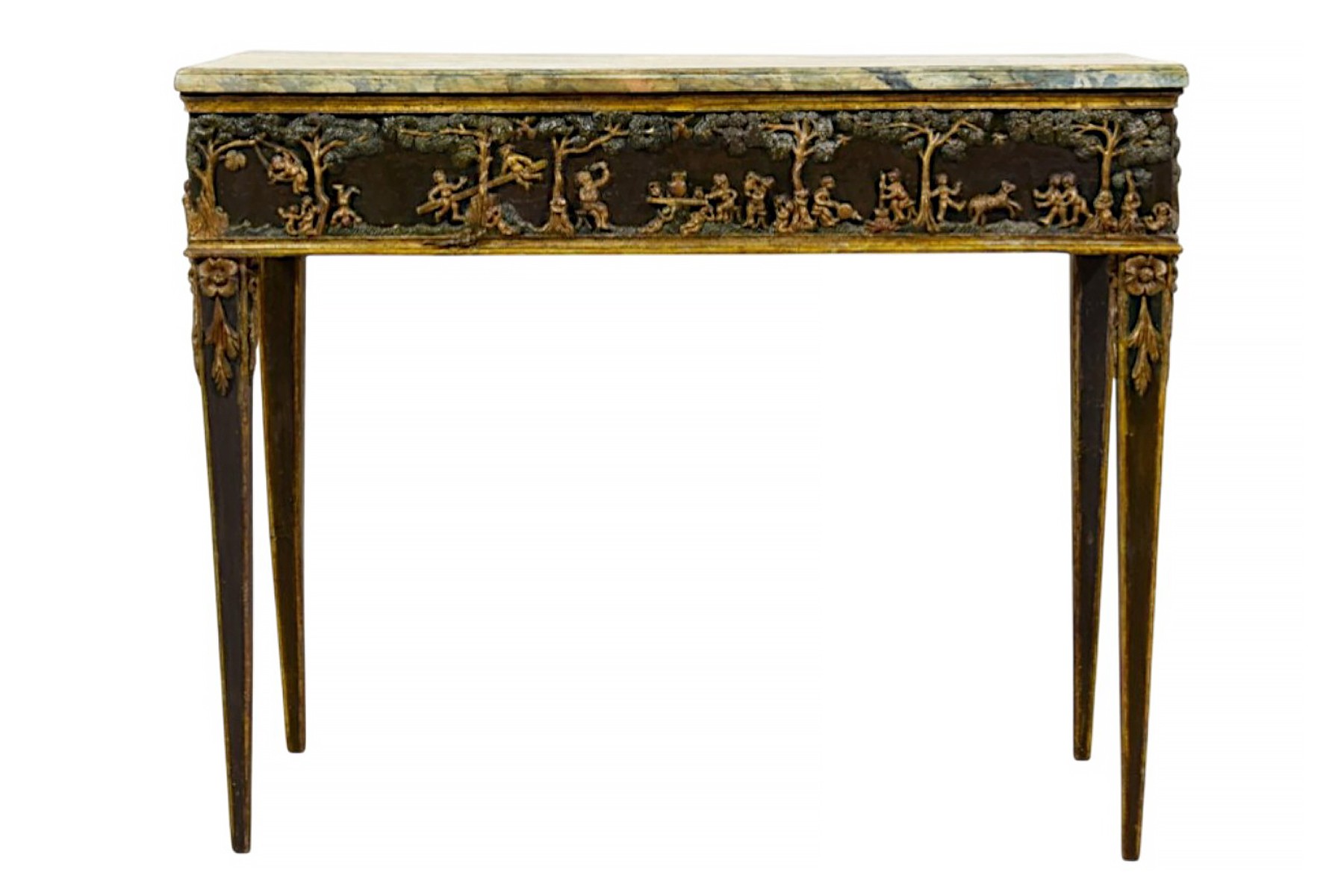
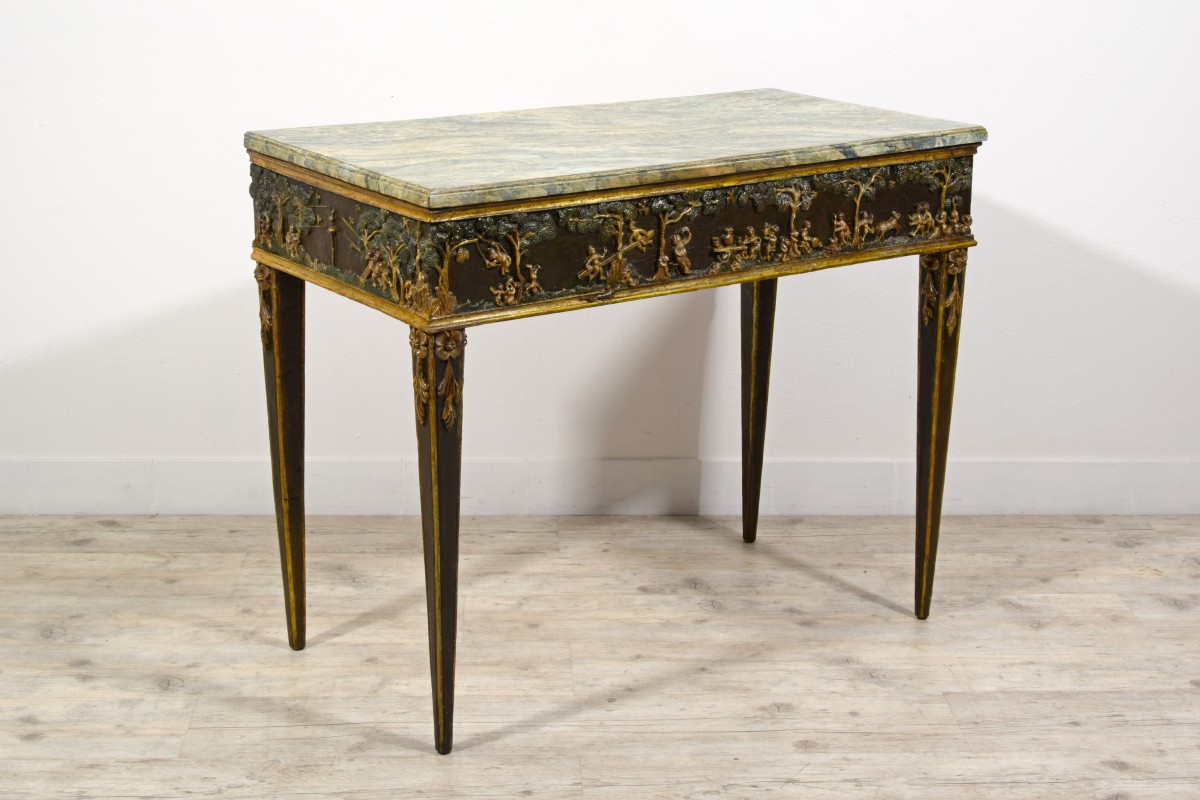
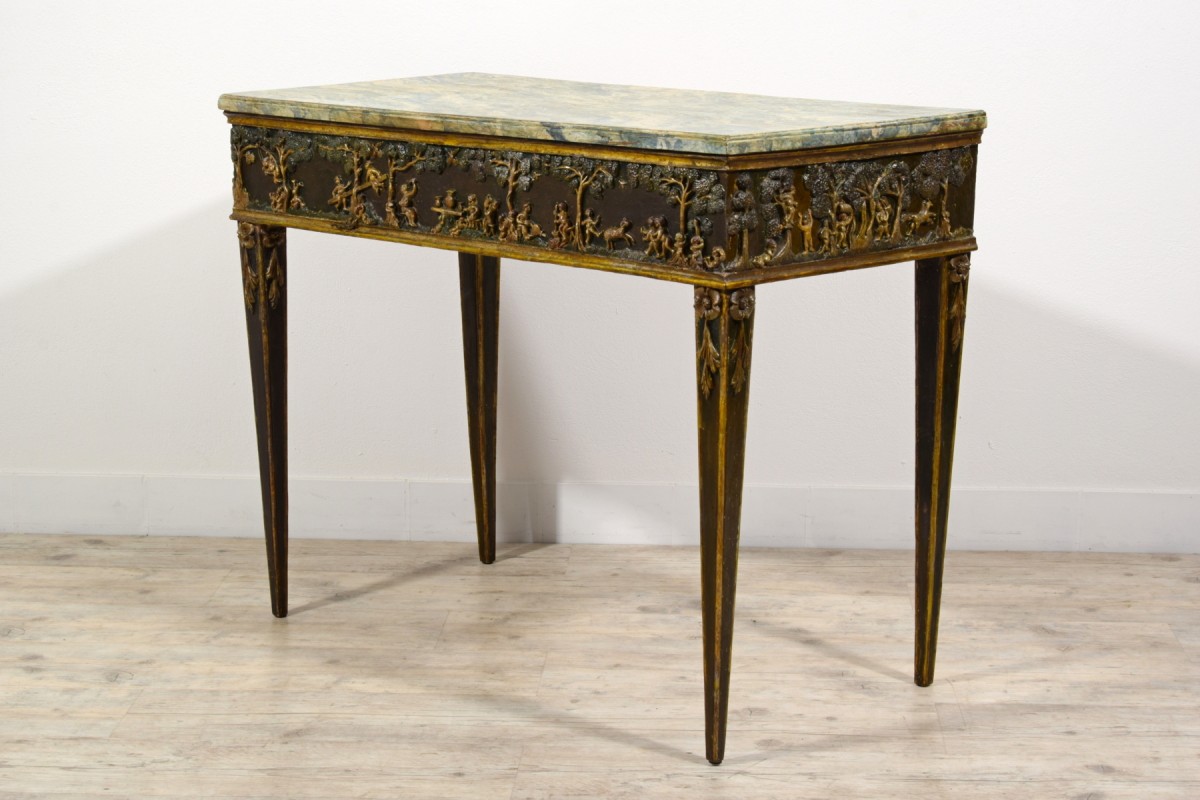
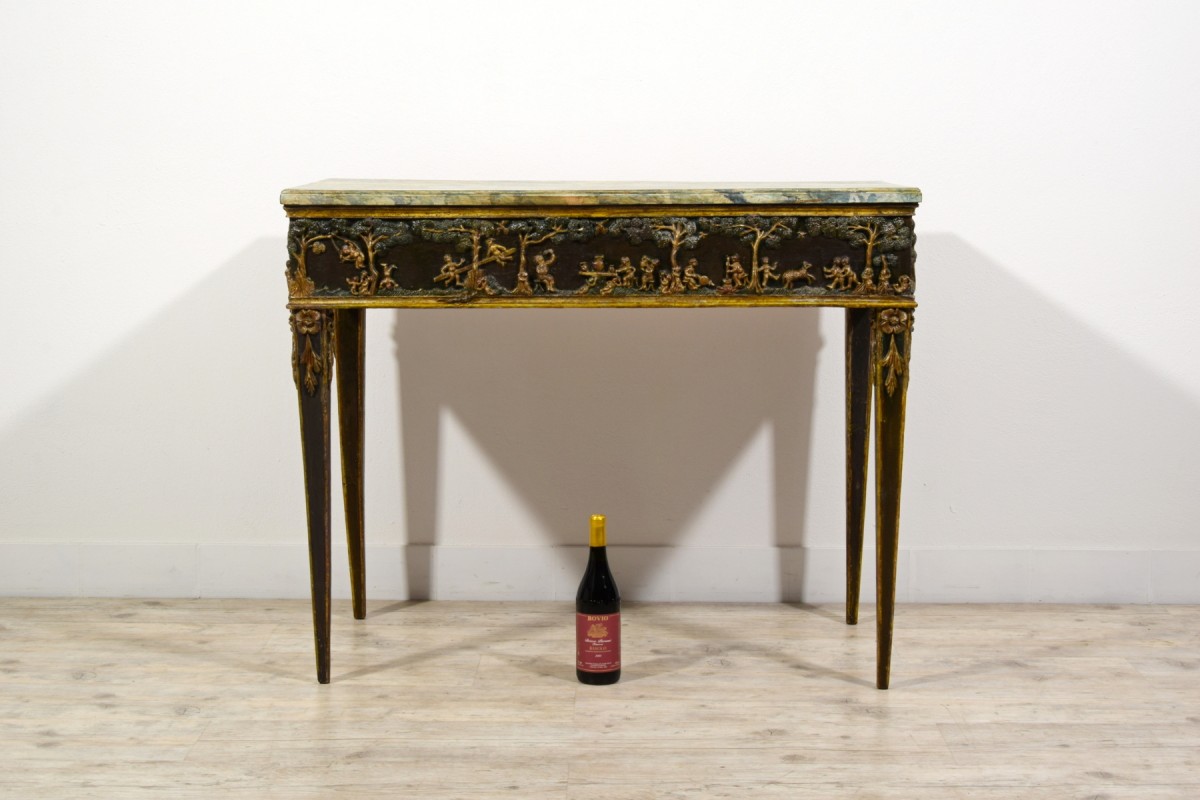
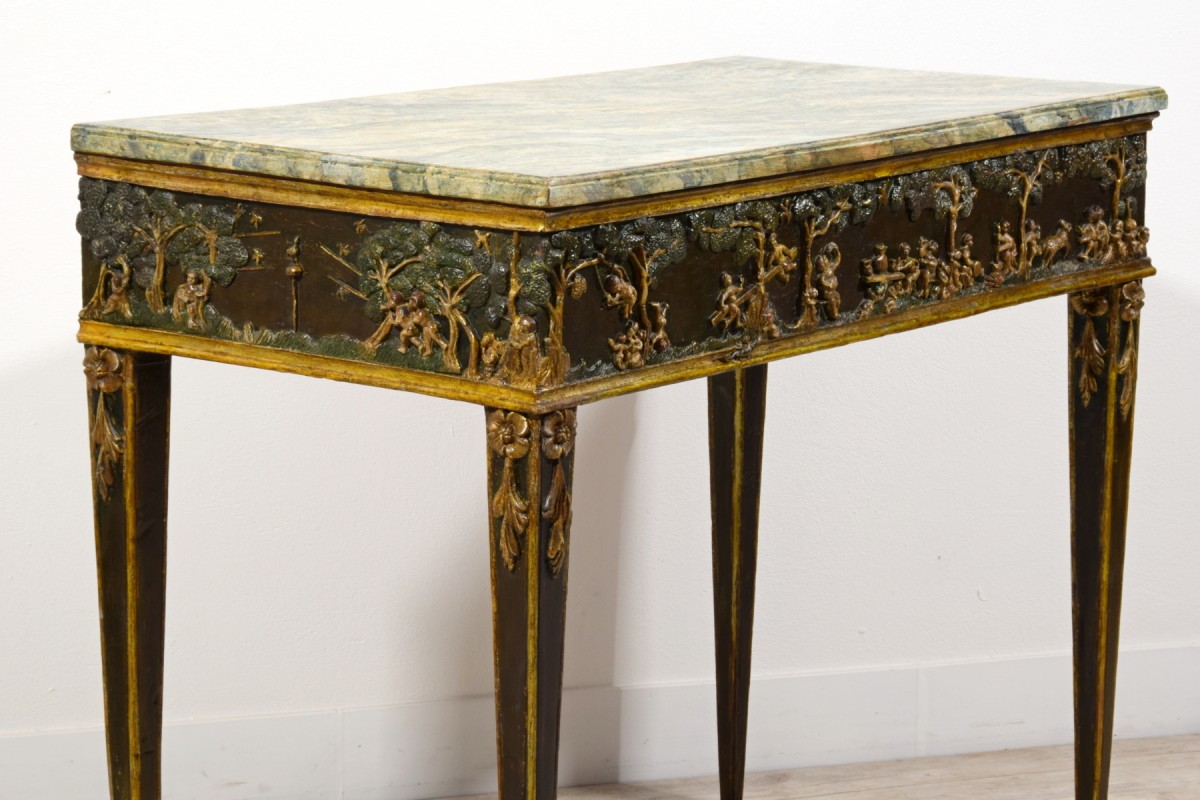

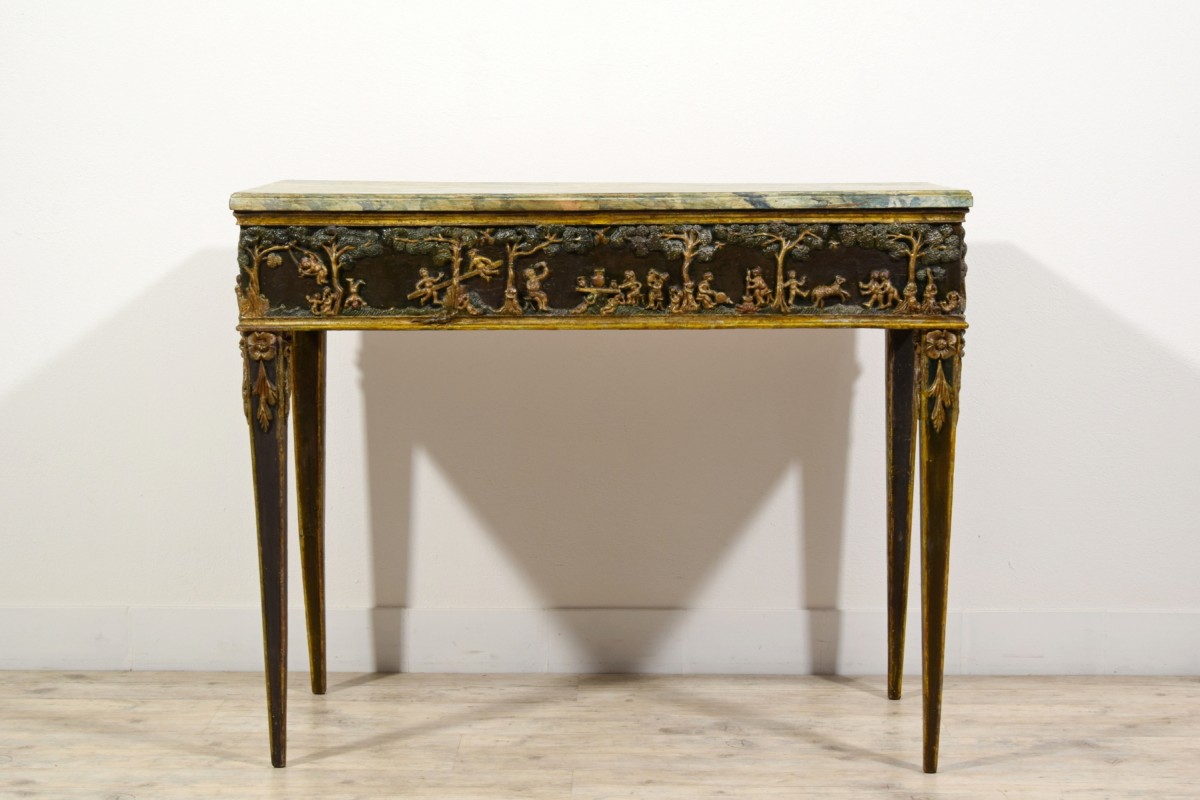
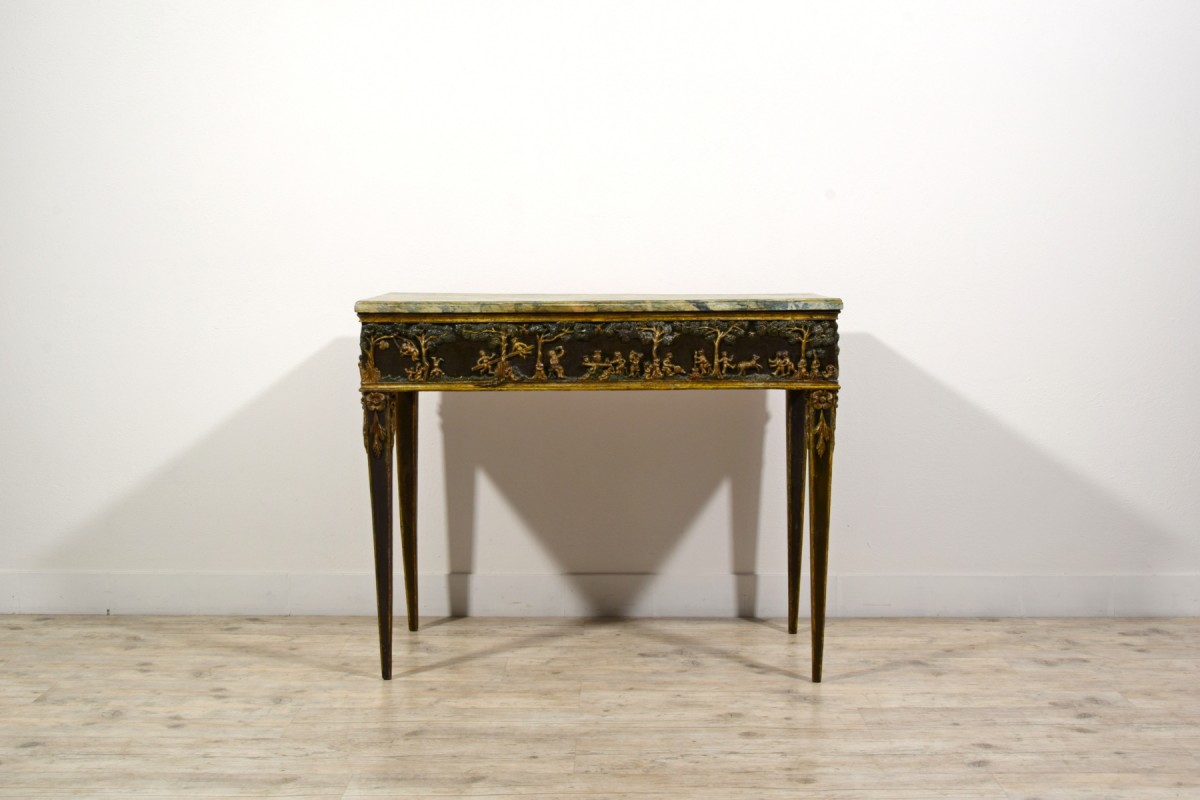
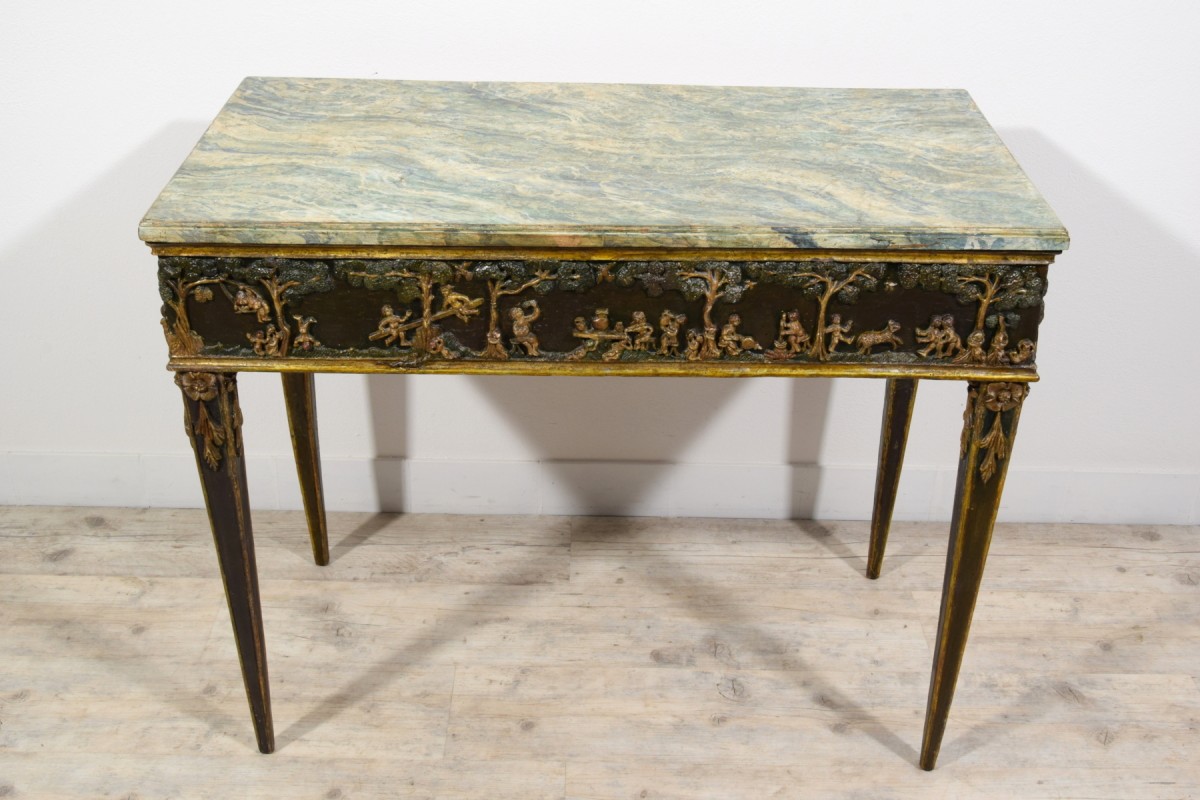
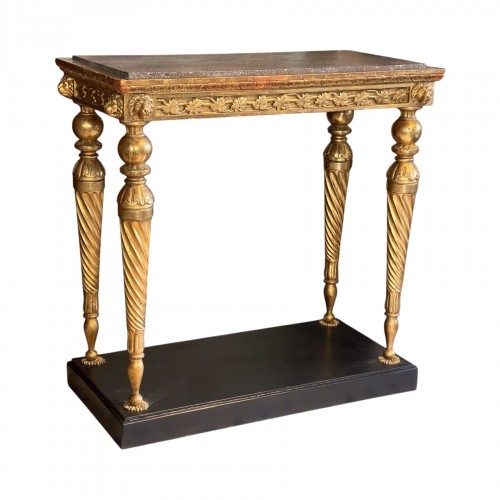
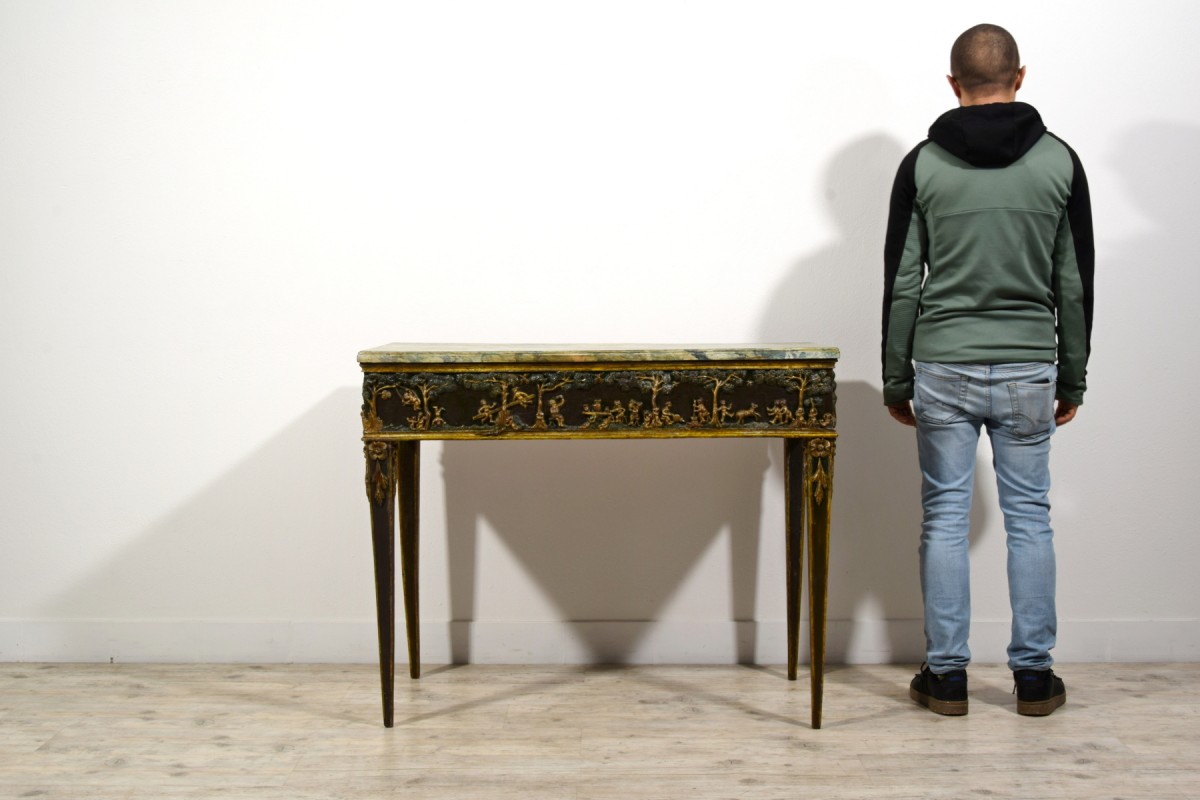
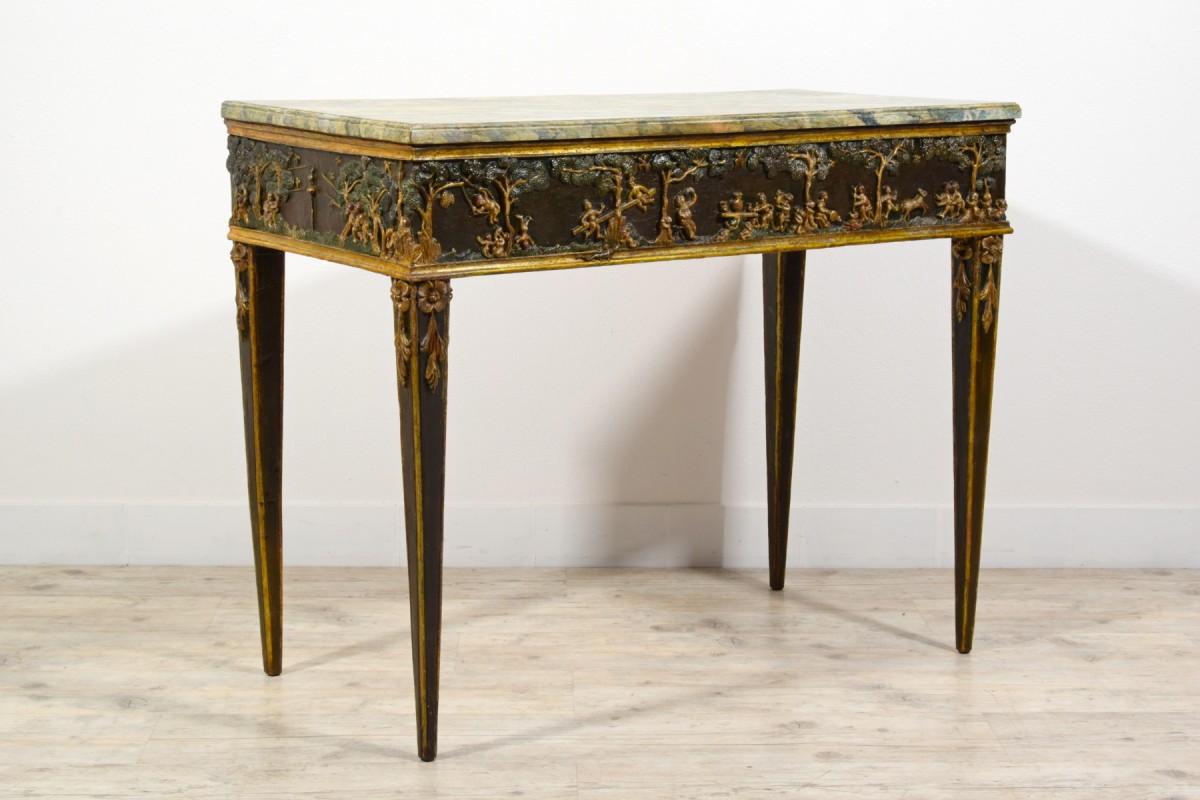
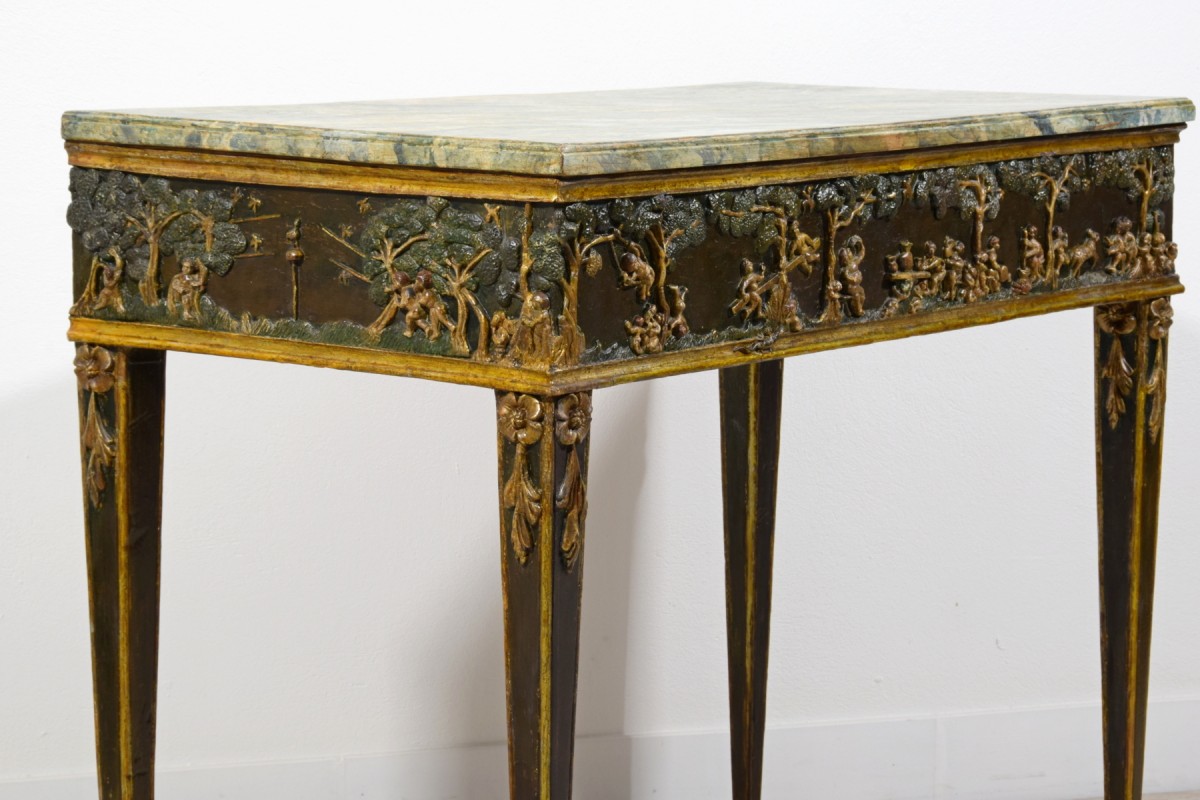
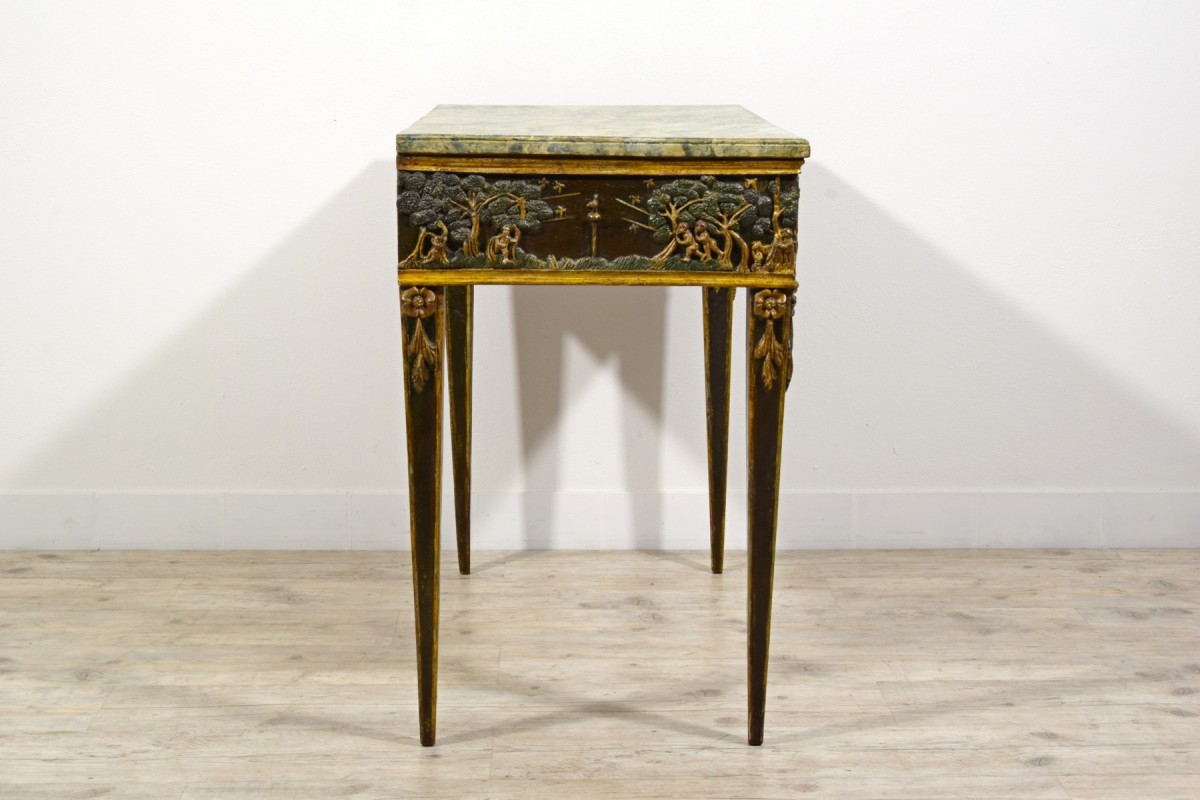
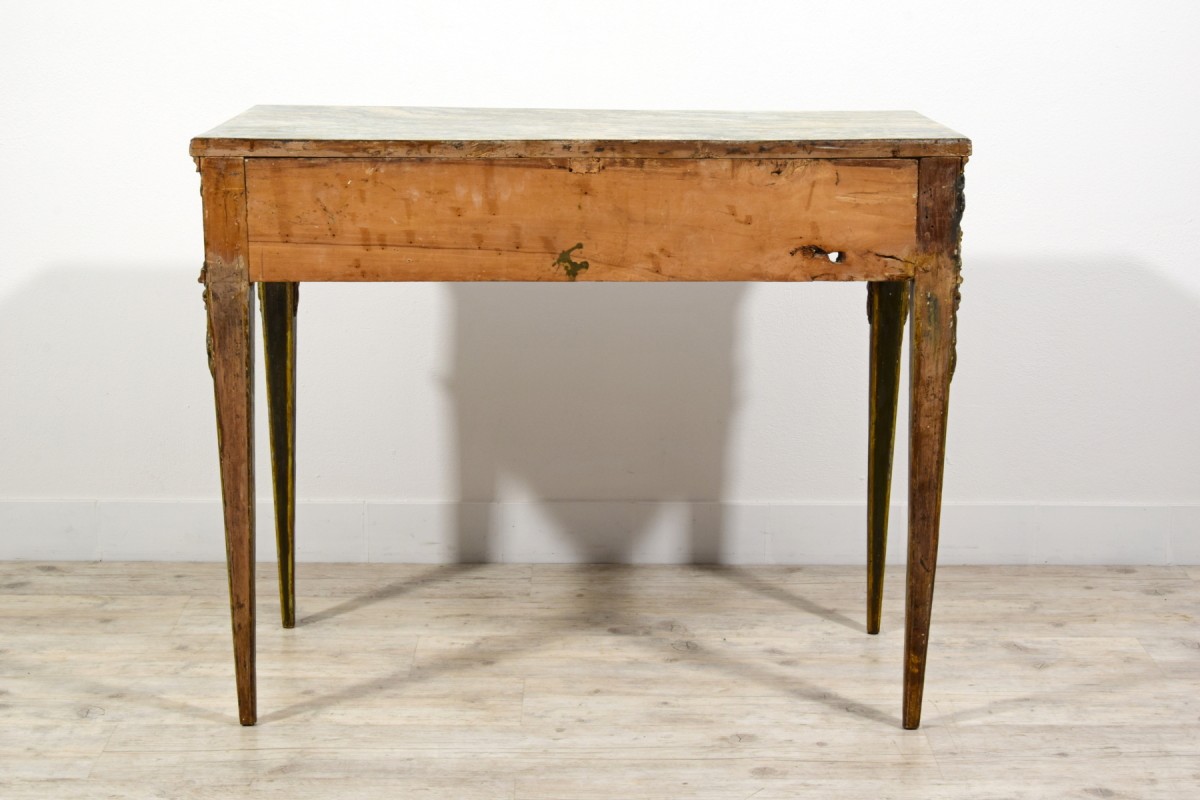
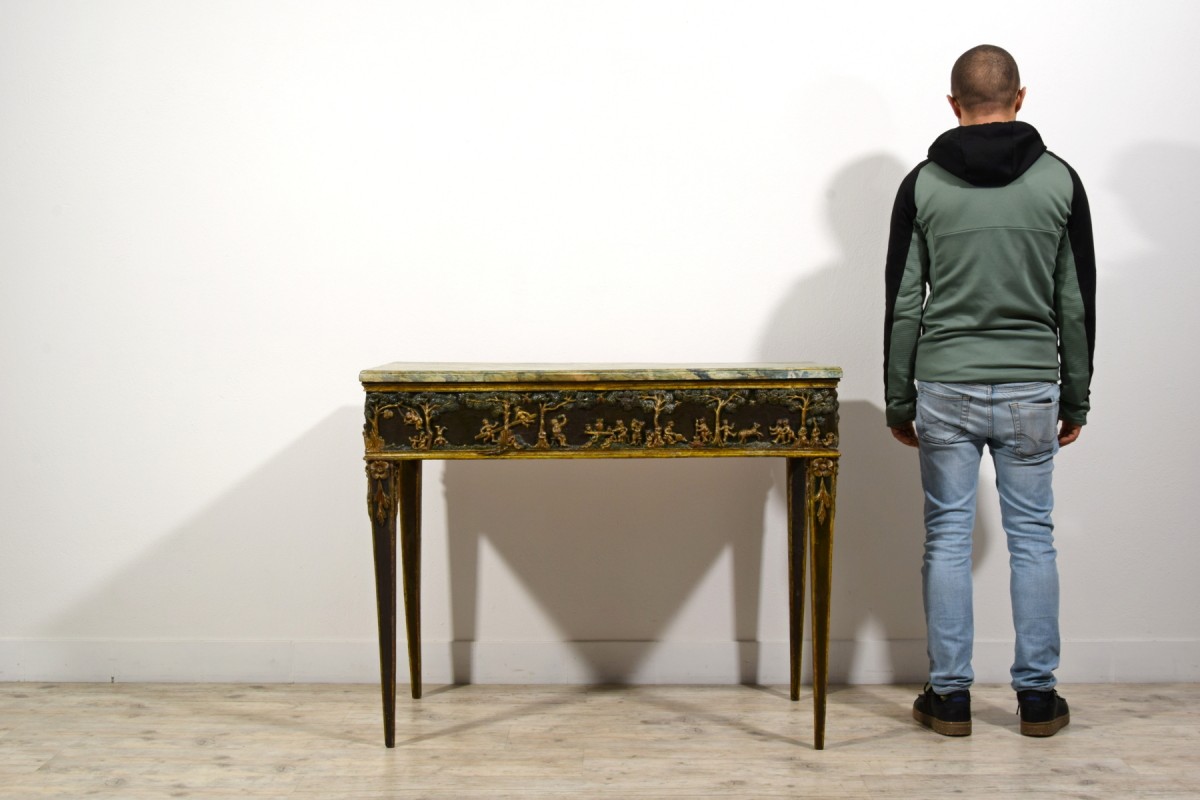
This rare Tuscan Neoclassical console table, dating from the late 18th century, stands out for its unique raised decoration, making it a one-of-a-kind example of refined craftsmanship.
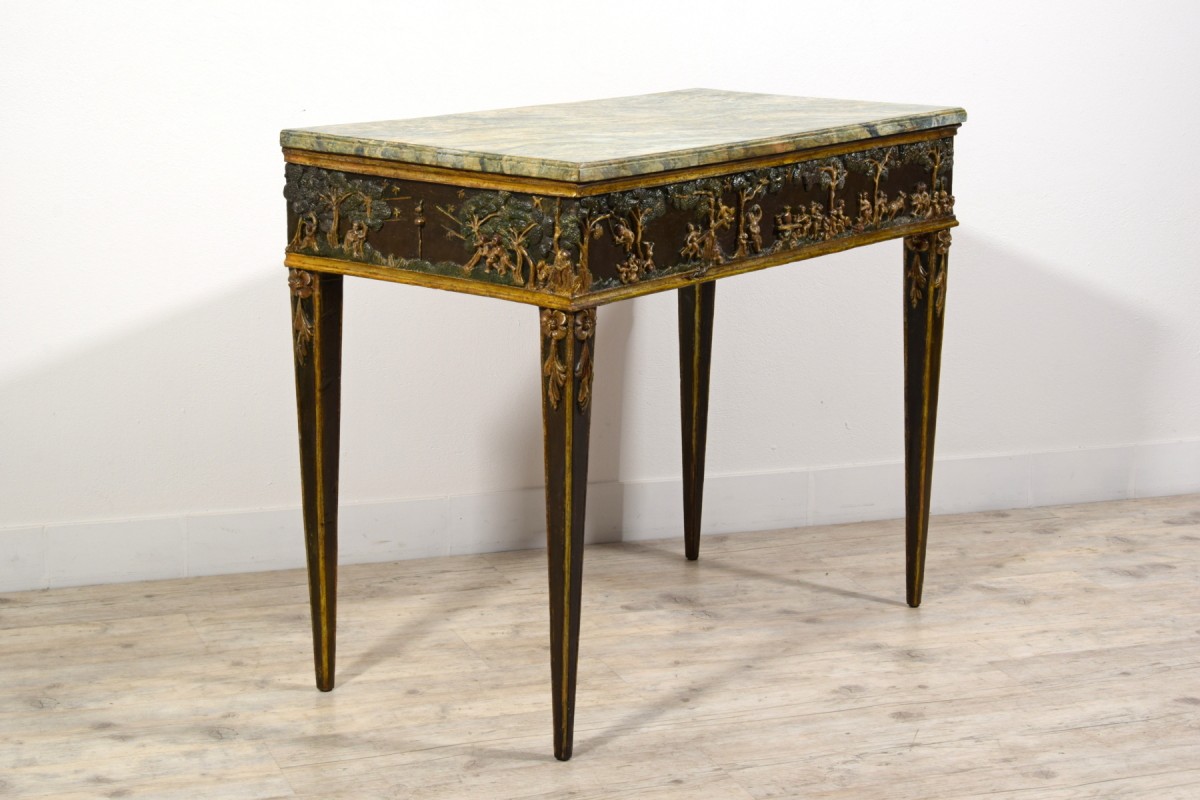
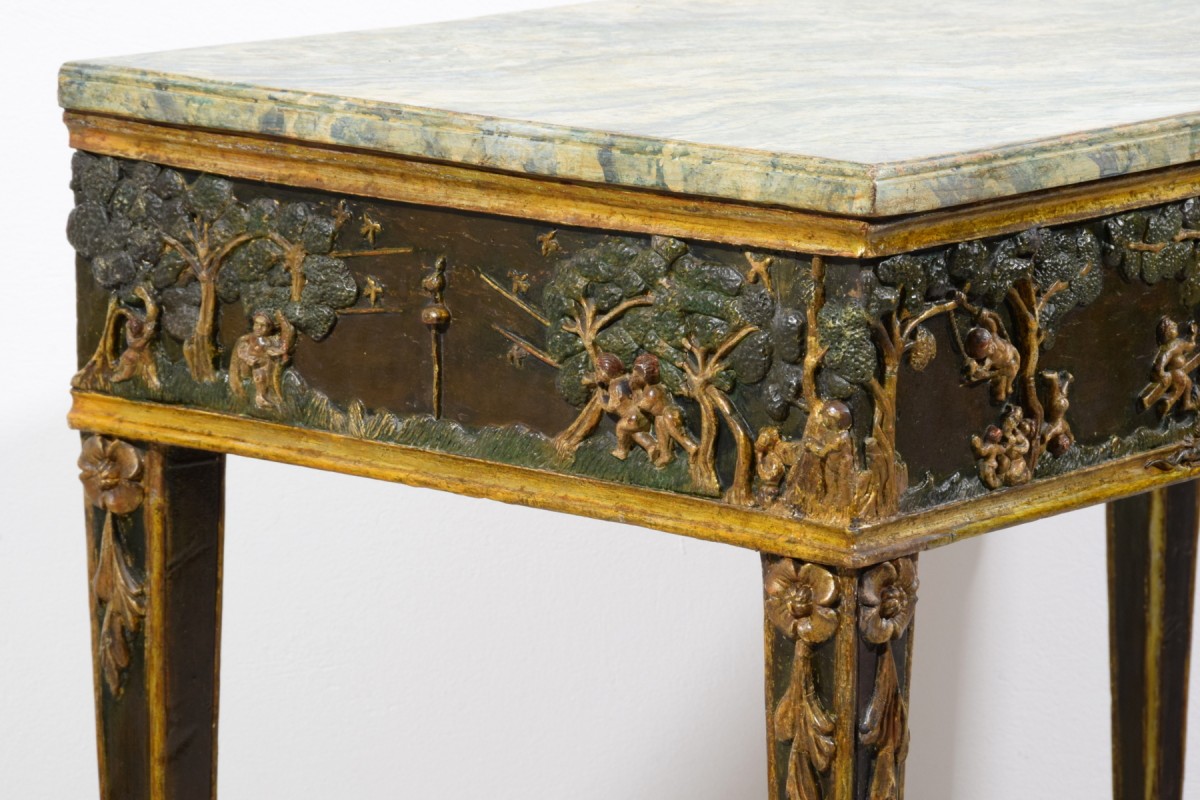
Its slender and elegant structure rests on four tapered legs, lacquered in dark shades of green and earth tones, finely highlighted with mecca gilding and embellished with raised pastiglia floral motifs, also gilt in mecca.
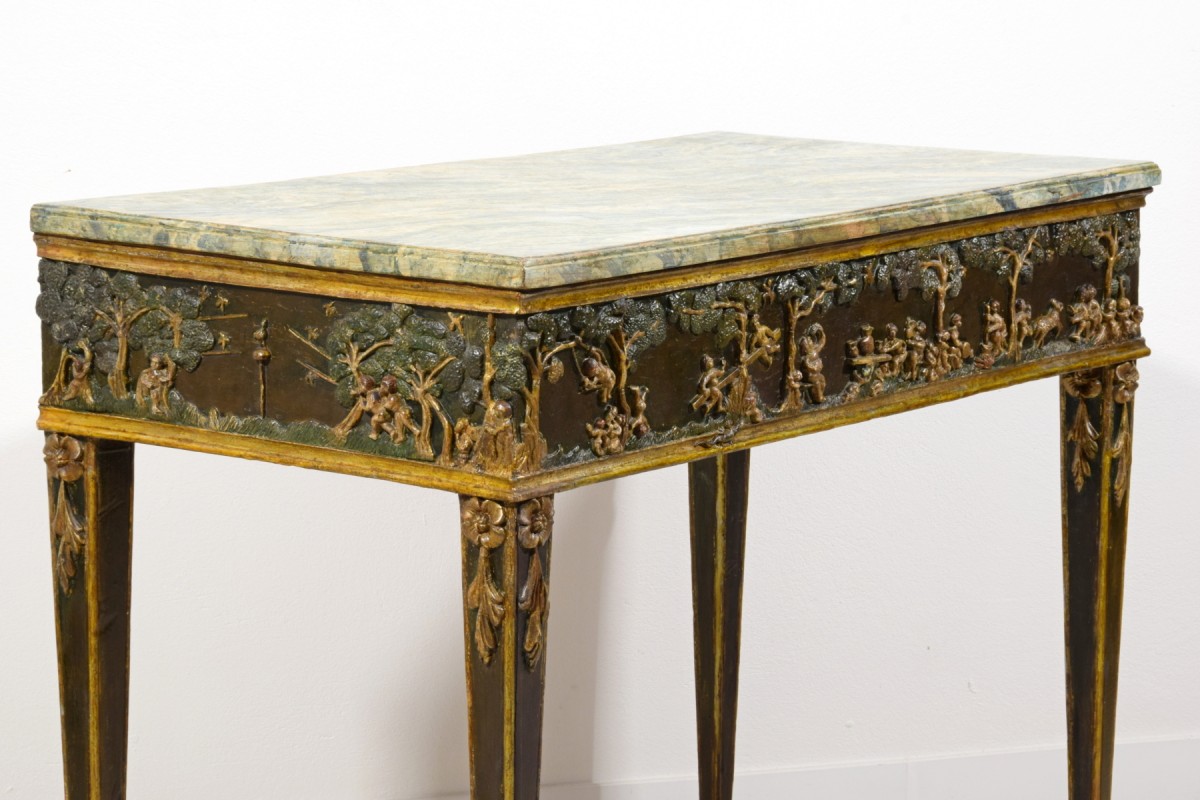
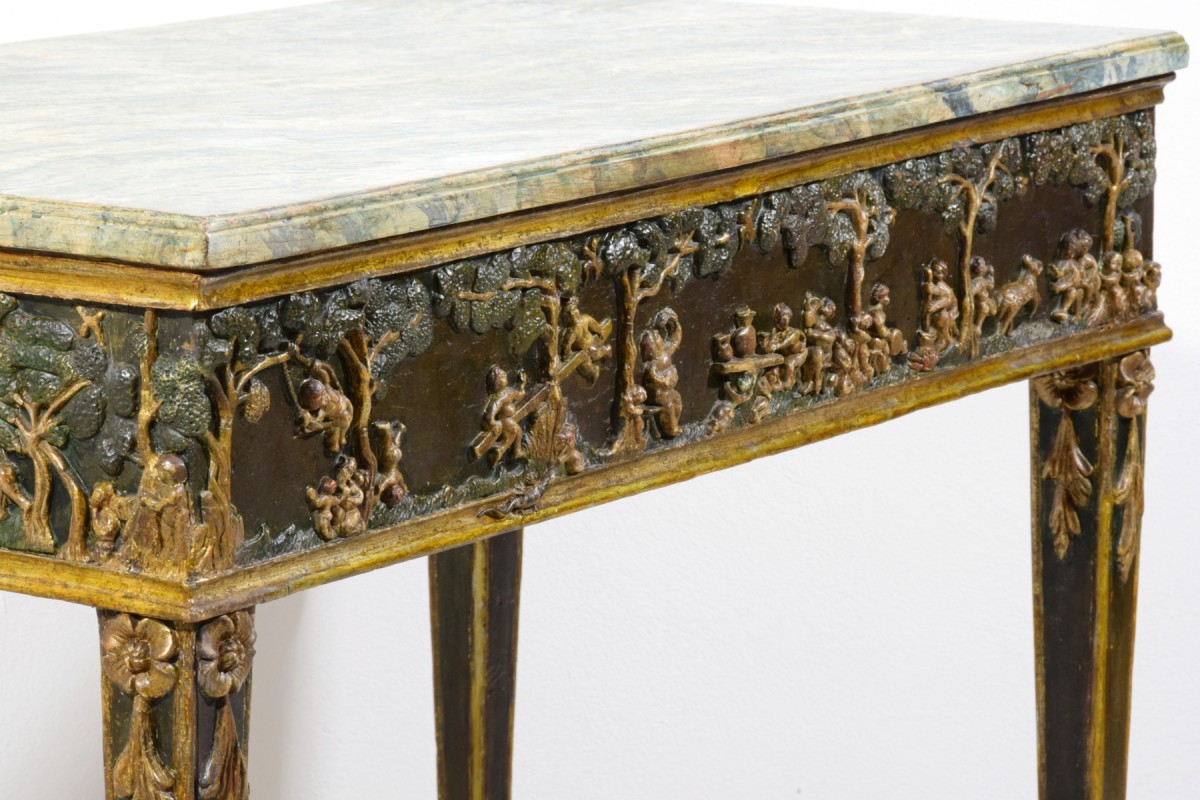
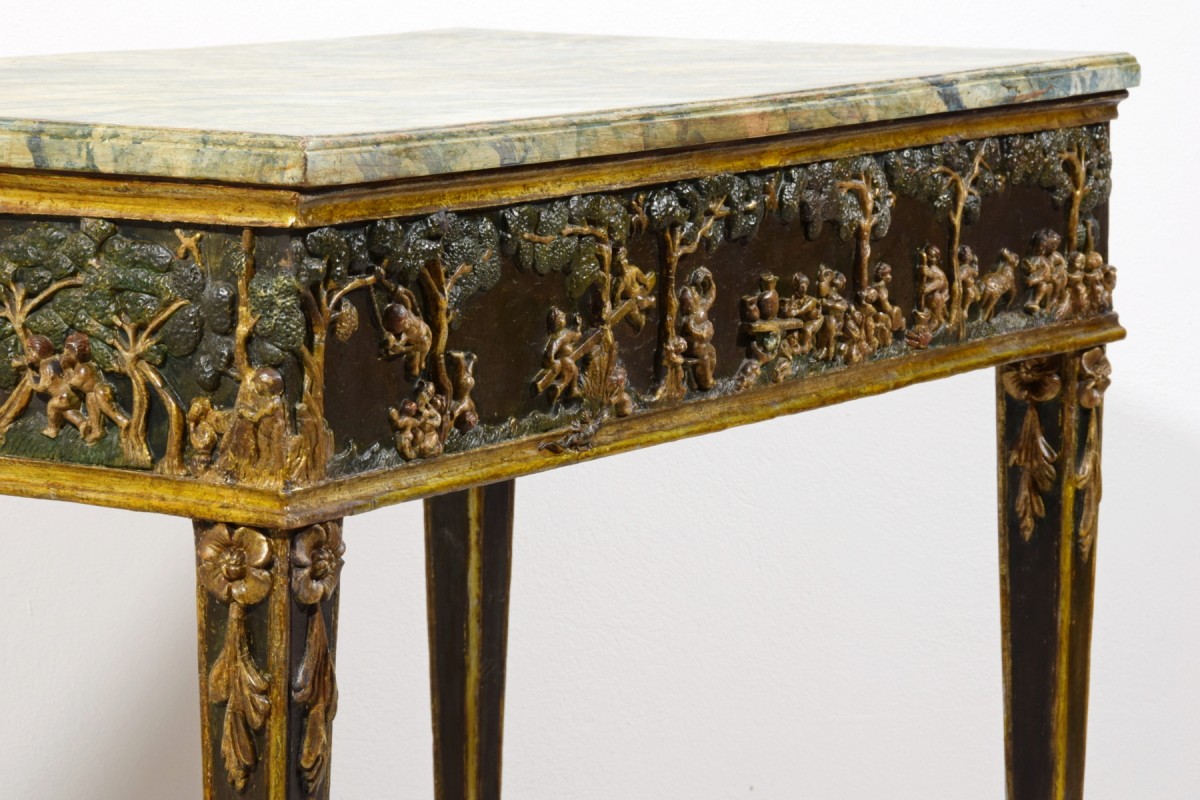
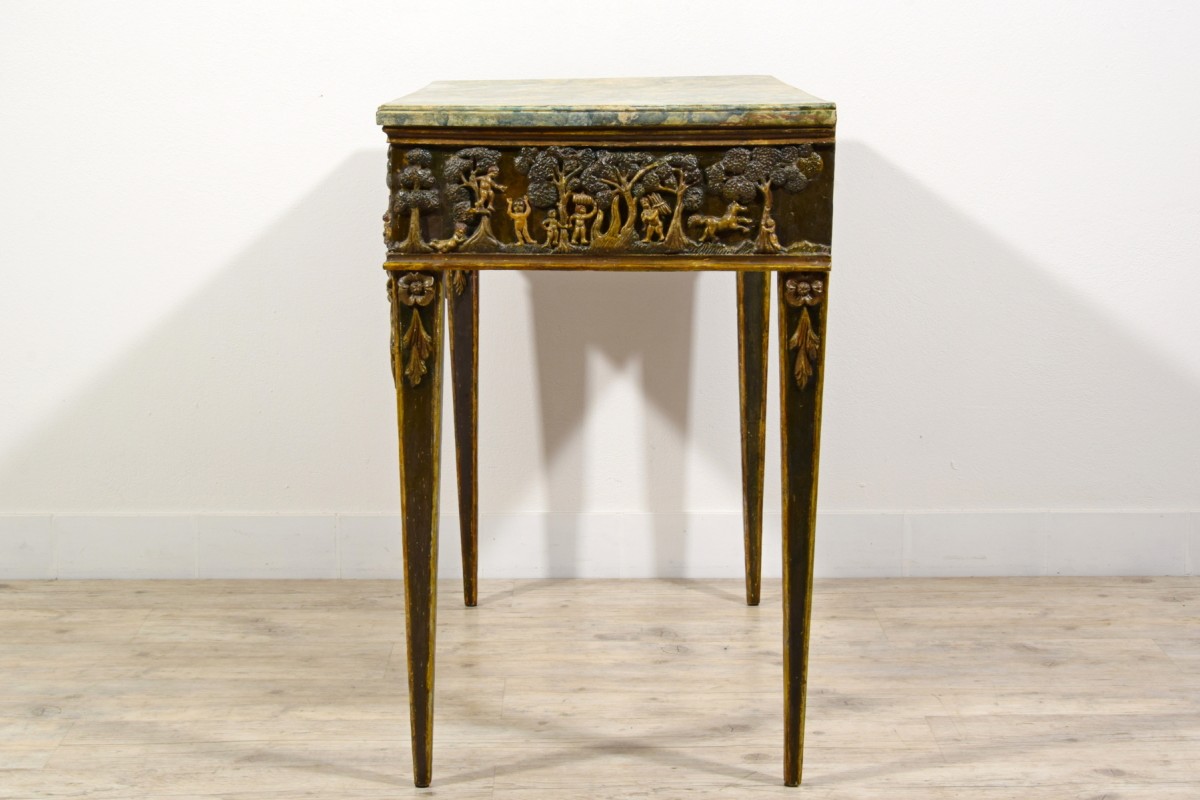
The broad apron below the top — the true artistic focus of the piece — is richly decorated on three sides with high-relief pastiglia friezes. These depict, in polychrome and mecca gilding, a lively drolerie: a narrative sequence animated by tiny figures, animals — including a horse and birds — rustic scenes, and fantastic creatures rendered with a witty and cultivated spirit. The motifs unfold like a miniature theatrical scene, highly collectible for its originality.
A particularly distinctive feature is the presence of a gecko (or lizard) that seems to emerge from the gilt border of the frieze, intentionally breaking its symmetry and adding a playful touch. This detail, together with the refined modeling, highlights the artist’s creative individuality, confirming the piece’s uniqueness and non-serial nature. Among the scenes, one can observe putti at play — swinging, resting, handling birds, or gathering fruit.
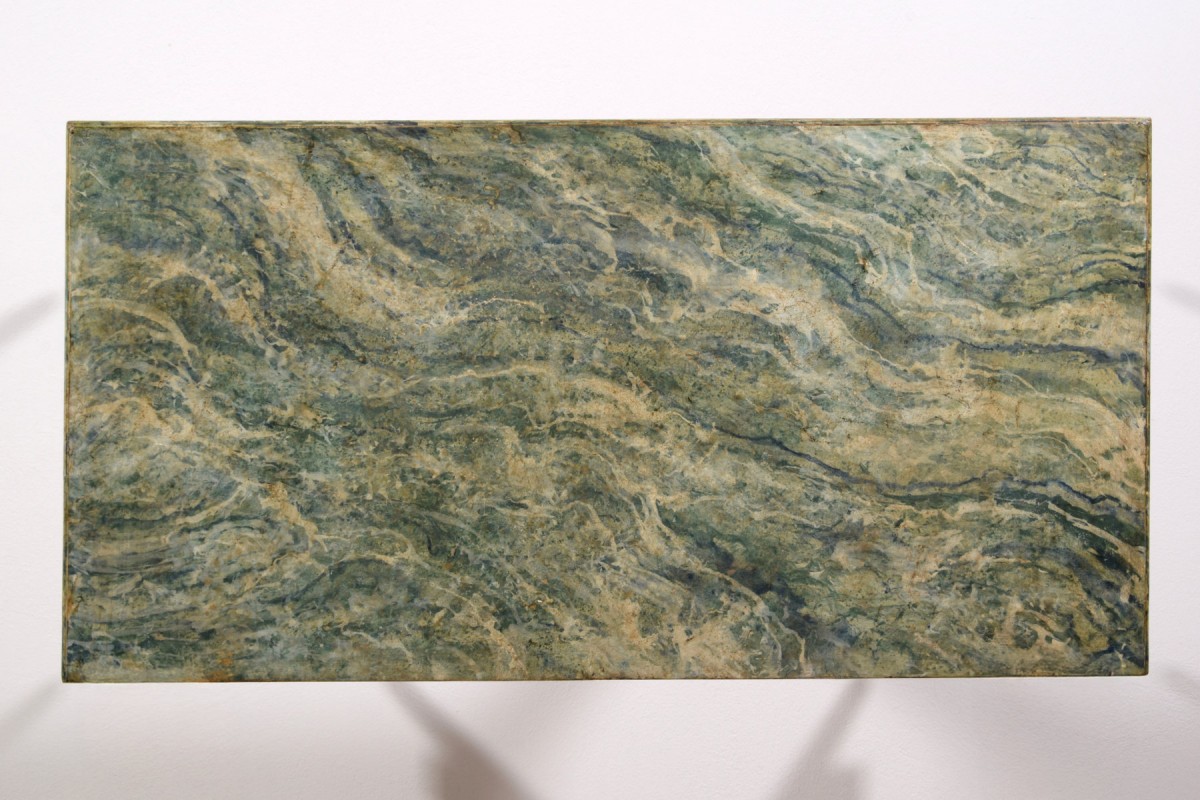
The rectangular top, with molded edge, is painted in imitation of “Serpentino marino” marble, featuring animated veining carried out with remarkable painterly skill and harmonious color balance.
The palette, combining deep greens and warm earth tones, enhances the golden reliefs and lends the ensemble an elegance that is both austere and lively.
A work of great charm and rarity, distinguished by its iconographic originality and pastiglia ornamentation, this console perfectly serves as a focal piece in an entrance hall, salon, or contemporary interior seeking a refined historic accent that is both decorative and sophisticated.
The mecca is a type of gilding performed on silver leaf so that it assumed the appearance and preciousness of the gold leaf. The mecca is a paint from the ancient recipe that was jealously guarded in the shops. It involves the use of sandracca rubber and gutta rubber in alcohol, dragon blood and other ingredients that, in a mixture of them, contribute to the different chromatic elements of mecca.