Offered by Dei Bardi Art
REQUEST INFORMATION

Sculptures and works of art from the Middle Ages and the Renaissance
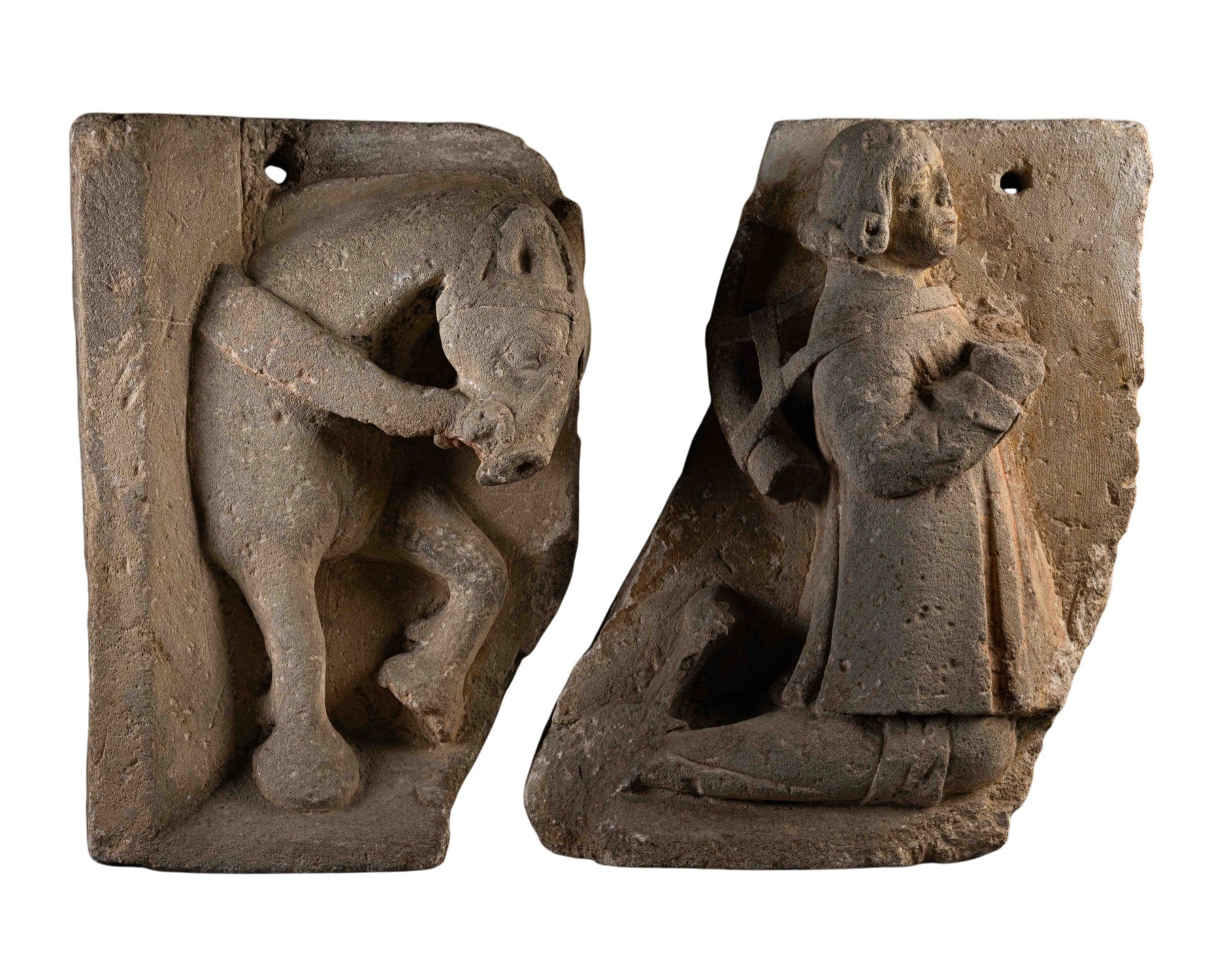
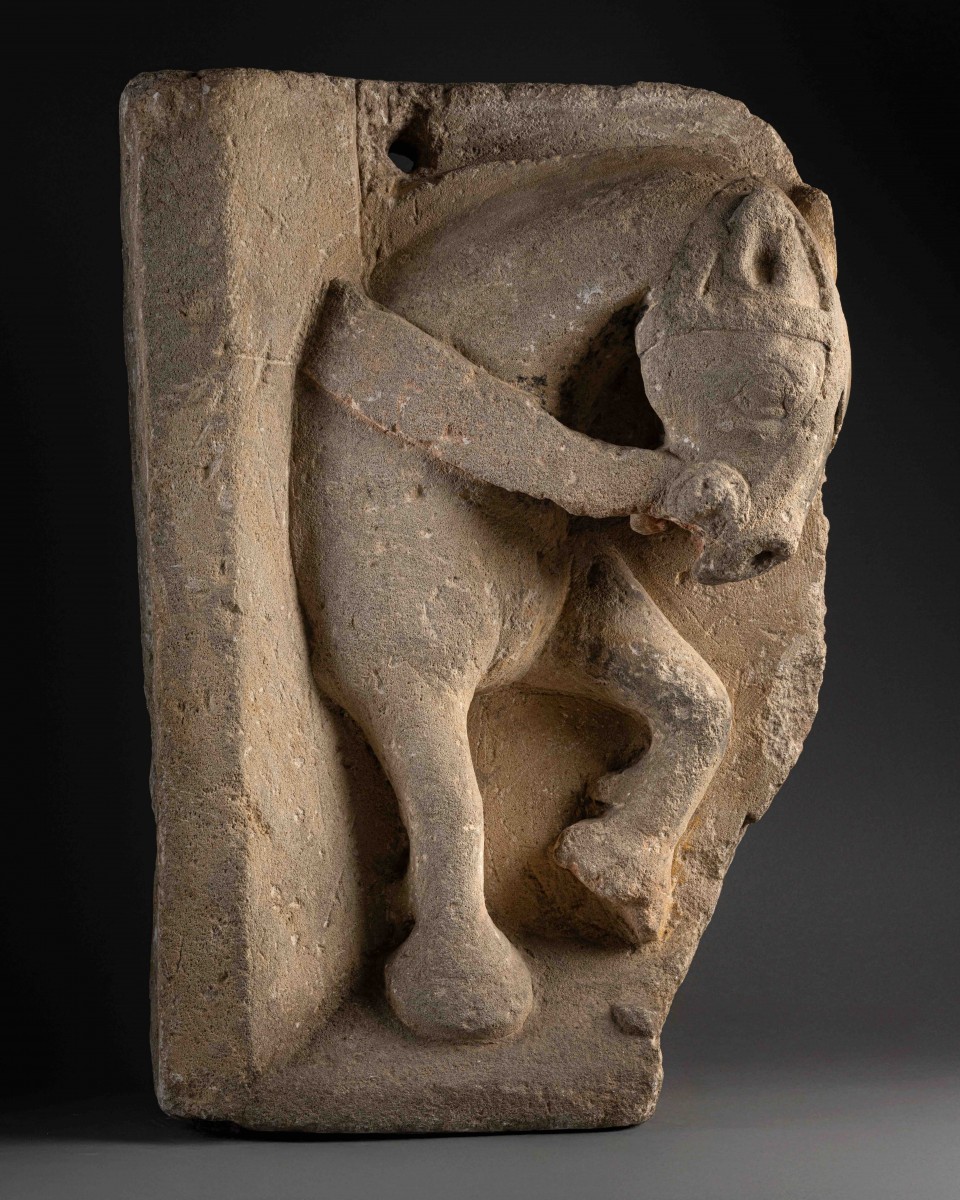
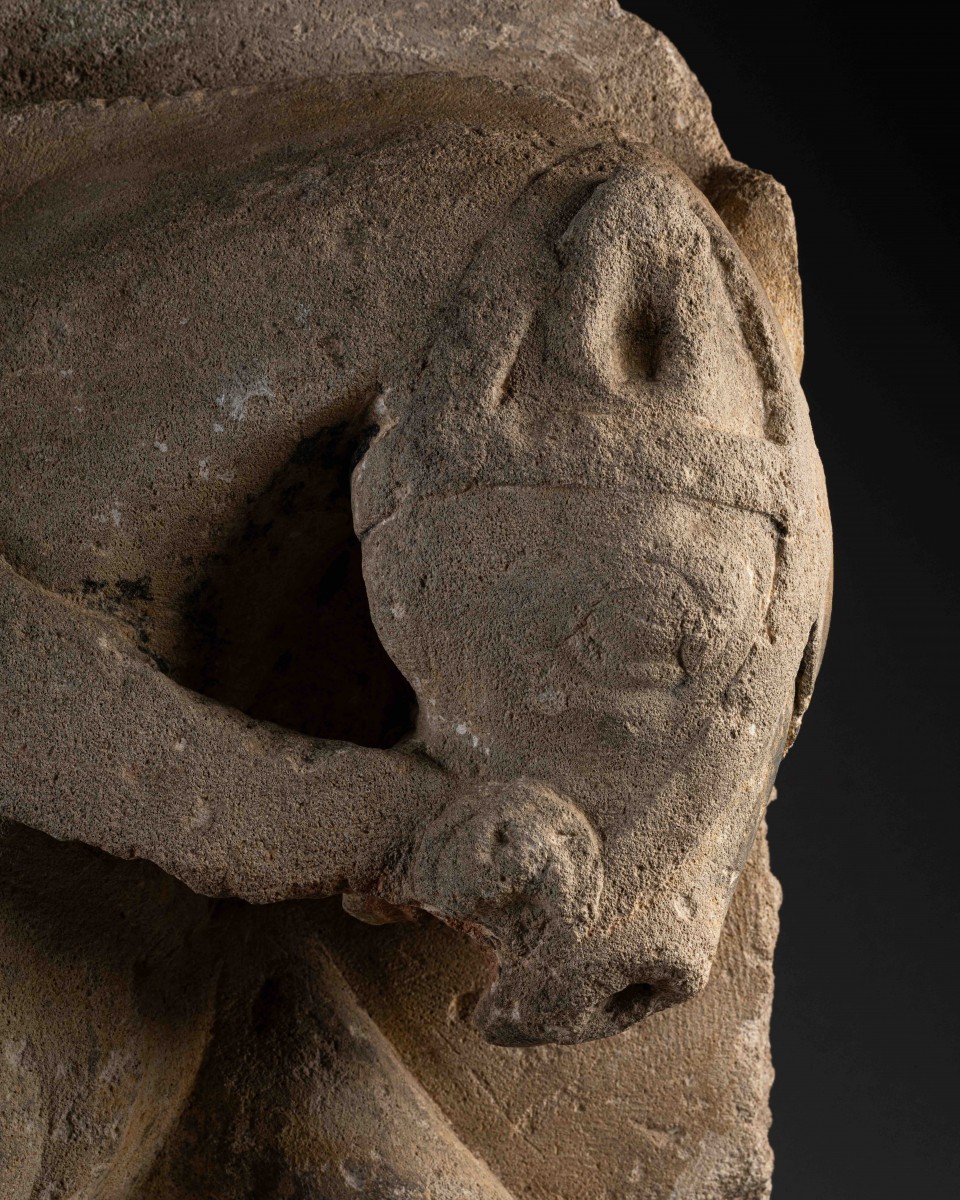
Fragments from a Large Relief of Saint Hubert and the Stag?
Northern France, c. 1400–1420
Limestone
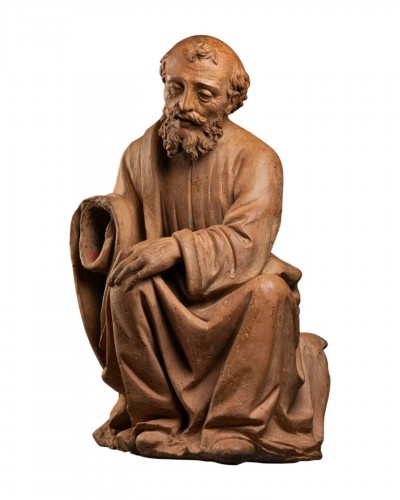
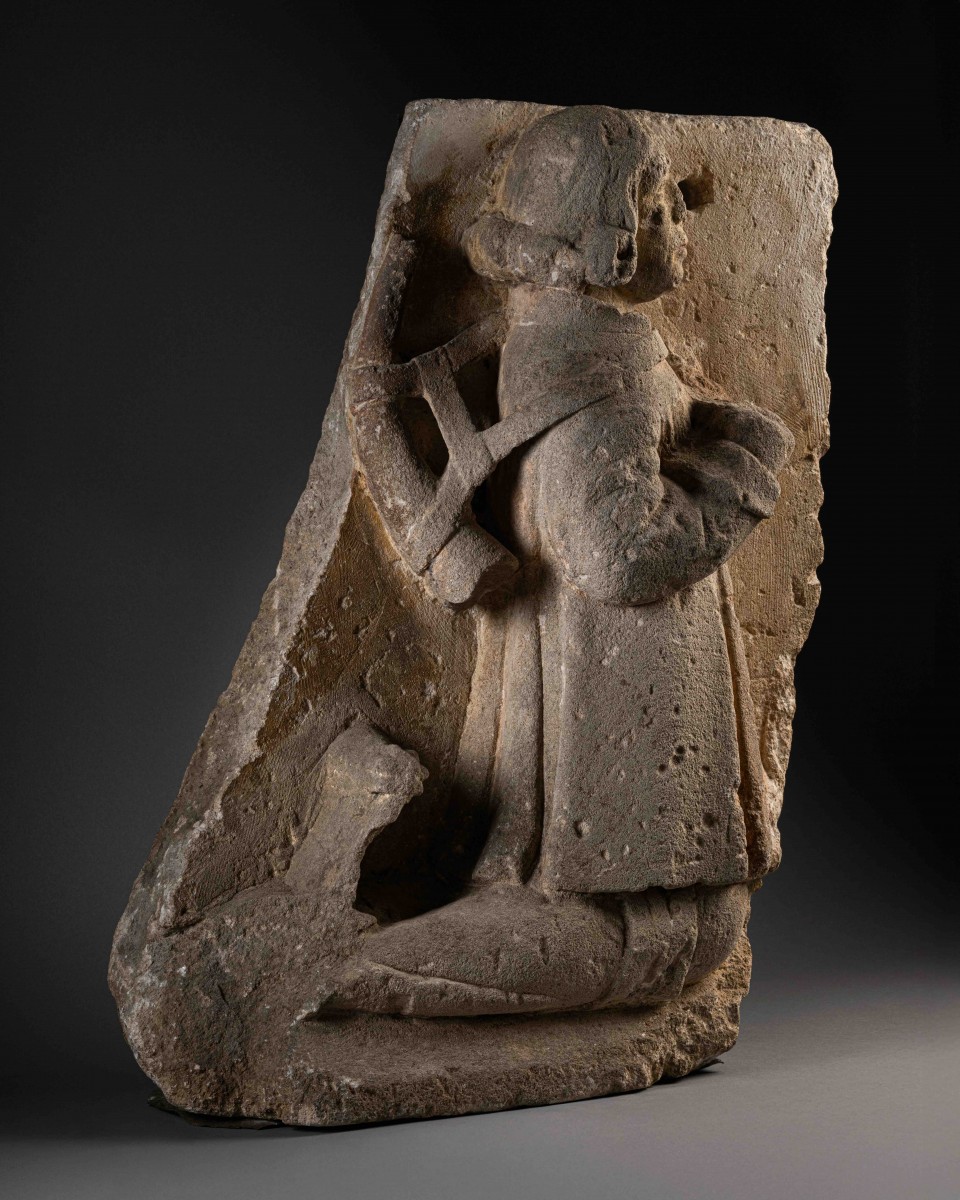
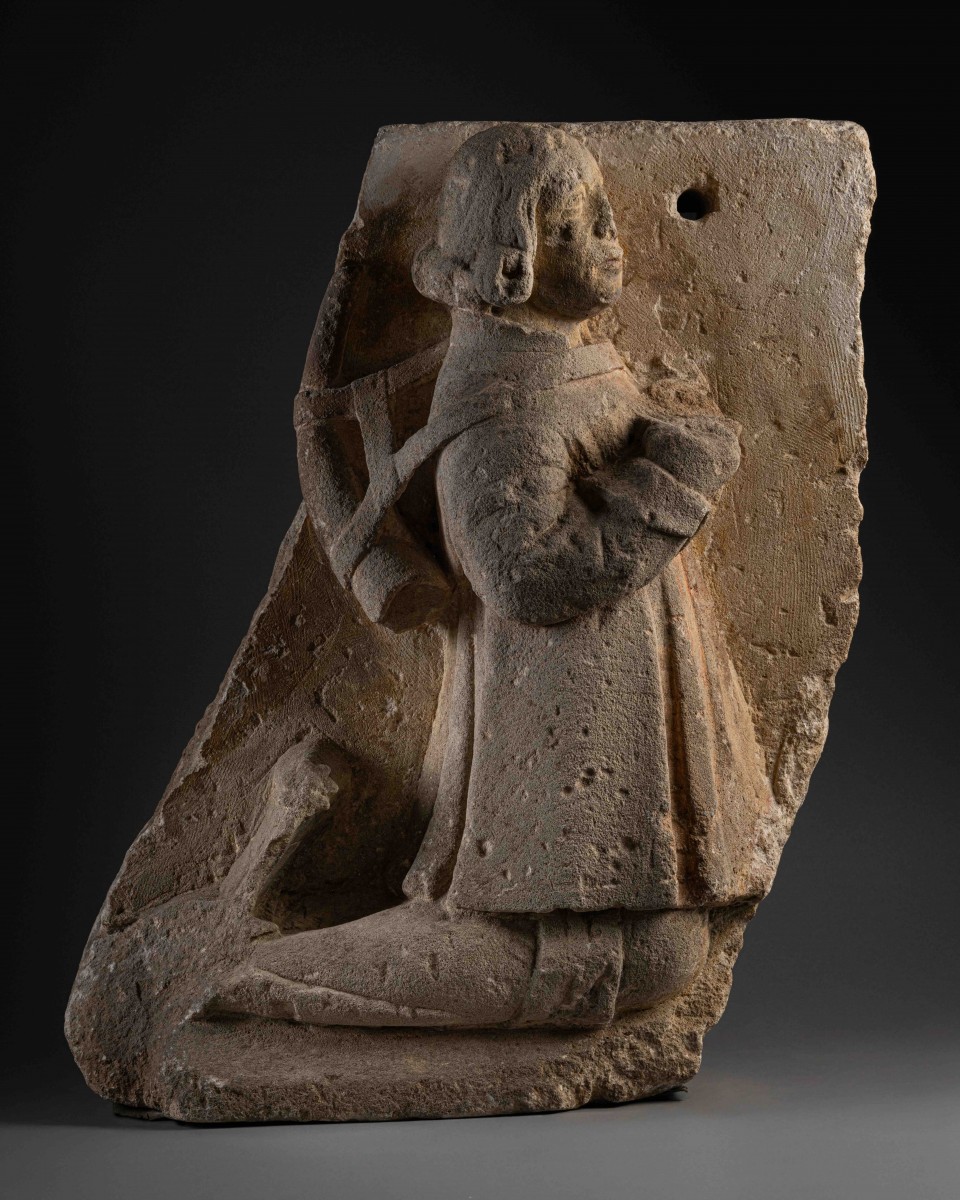
These finely carved fragments—showing a richly harnessed horse and a kneeling nobleman—once formed part of a relief depicting the vision of Saint Hubert and the Stag. Executed in the late Gothic style of Northern France or the Low Countries, they display notable precision of detail: the hunter’s aristocratic attire, complete with oliphant, marks his noble rank, while the bridled and saddled horse evokes the splendour of late medieval courtly hunting.
The figure’s pageboy hairstyle, straight fringe, and rounded contour, together with his knee-length belted tunic, long sleeves, and raised collar, correspond to fashions of the late 14th and early 15th century, supporting a date of around 1400–1420.
According to legend, Hubert, son of a Frankish noble, encountered a stag bearing a radiant crucifix between its antlers while hunting on Good Friday—a vision that prompted his conversion and eventual appointment as Bishop of Liège. Widely venerated throughout medieval Europe, he became the patron saint of hunters, archers, and forest workers.
Though rooted in hagiographic tradition, such reliefs were often produced for secular settings—castle chapels or great halls—where the image of the kneeling hunter conveyed ideals of humility, virtue, and the moral discipline of aristocratic life.
Comparable examples include the wooden relief in the Museum Boijmans Van Beuningen, which echoes the positioning of the horse and Hubert, and the early sixteenth-century relief of the subject in the Metropolitan Museum of Art.