Offered by Sérignan Antiquités
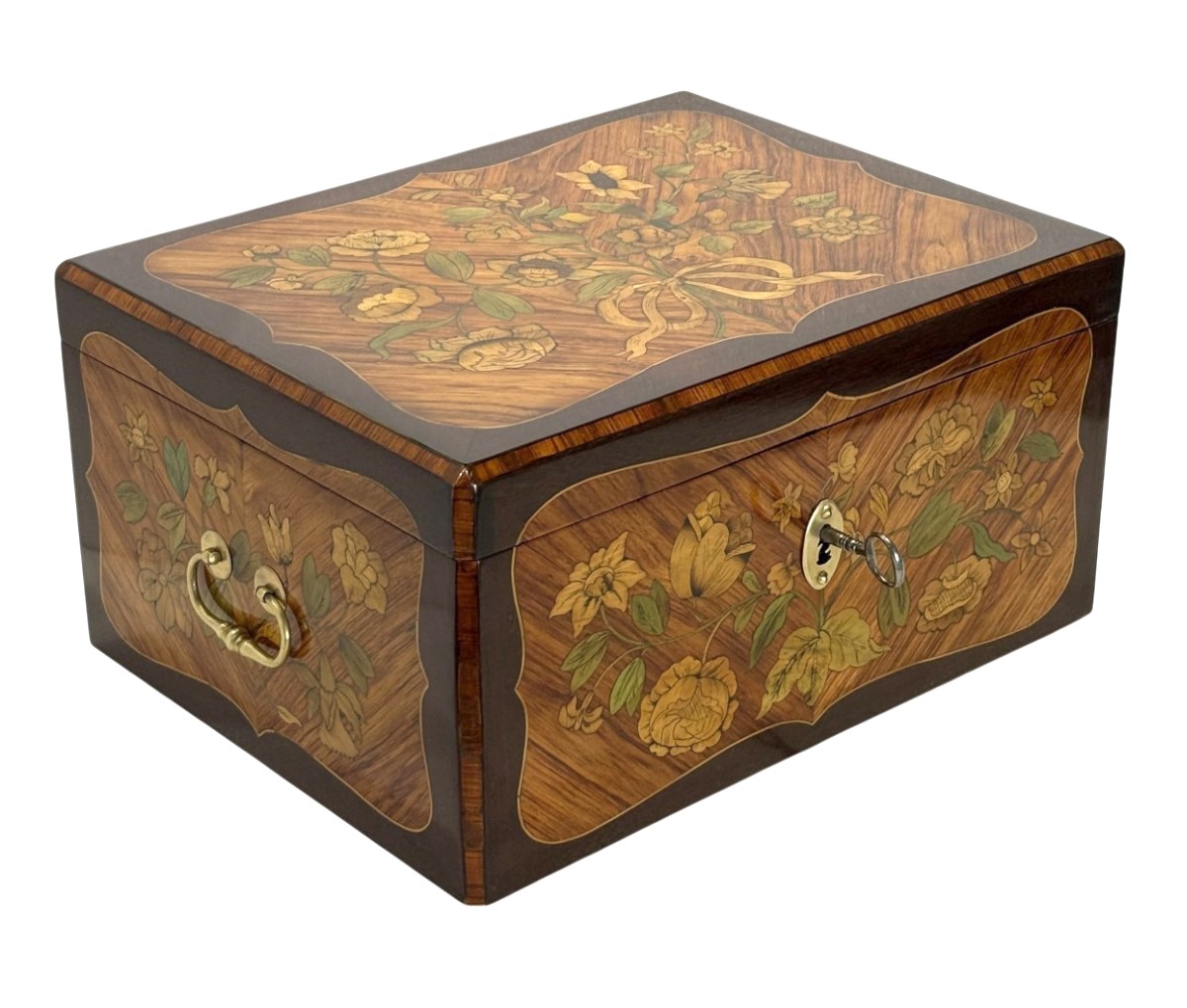
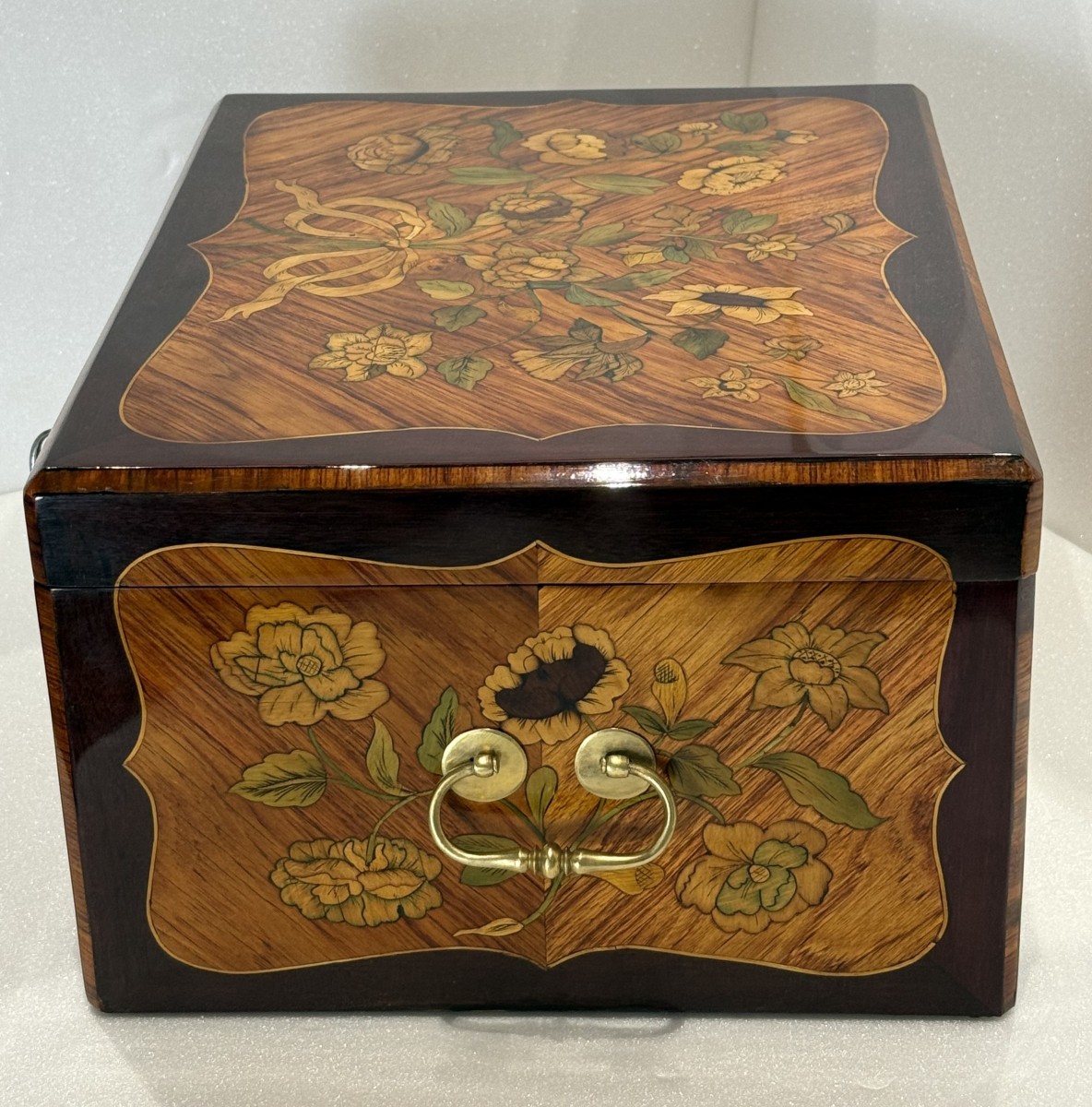
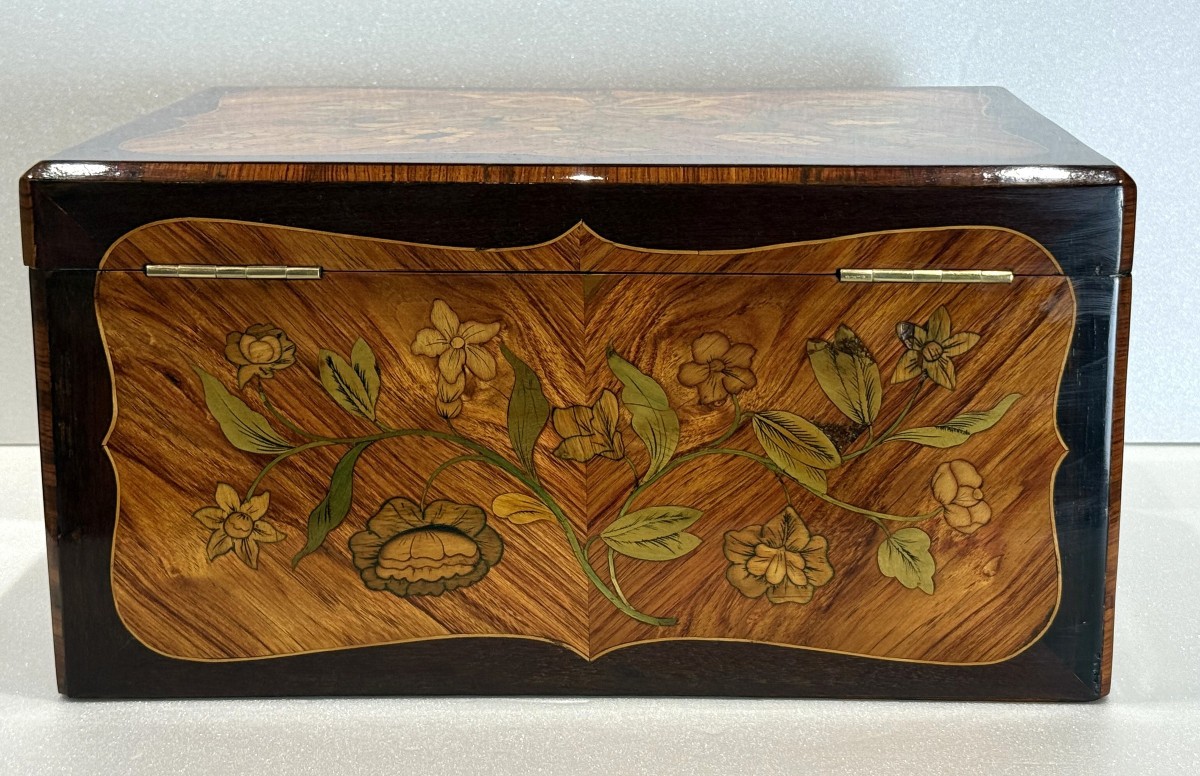
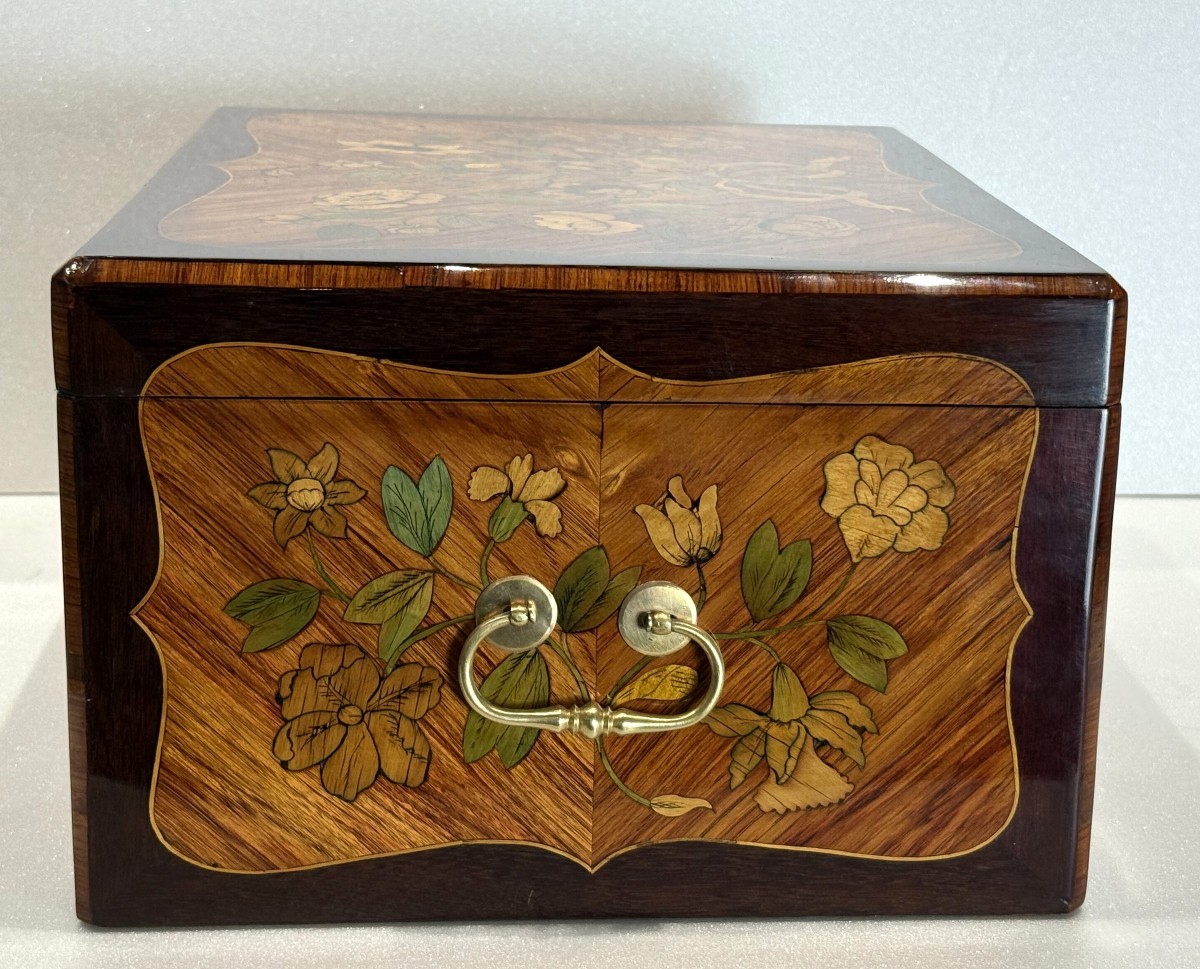
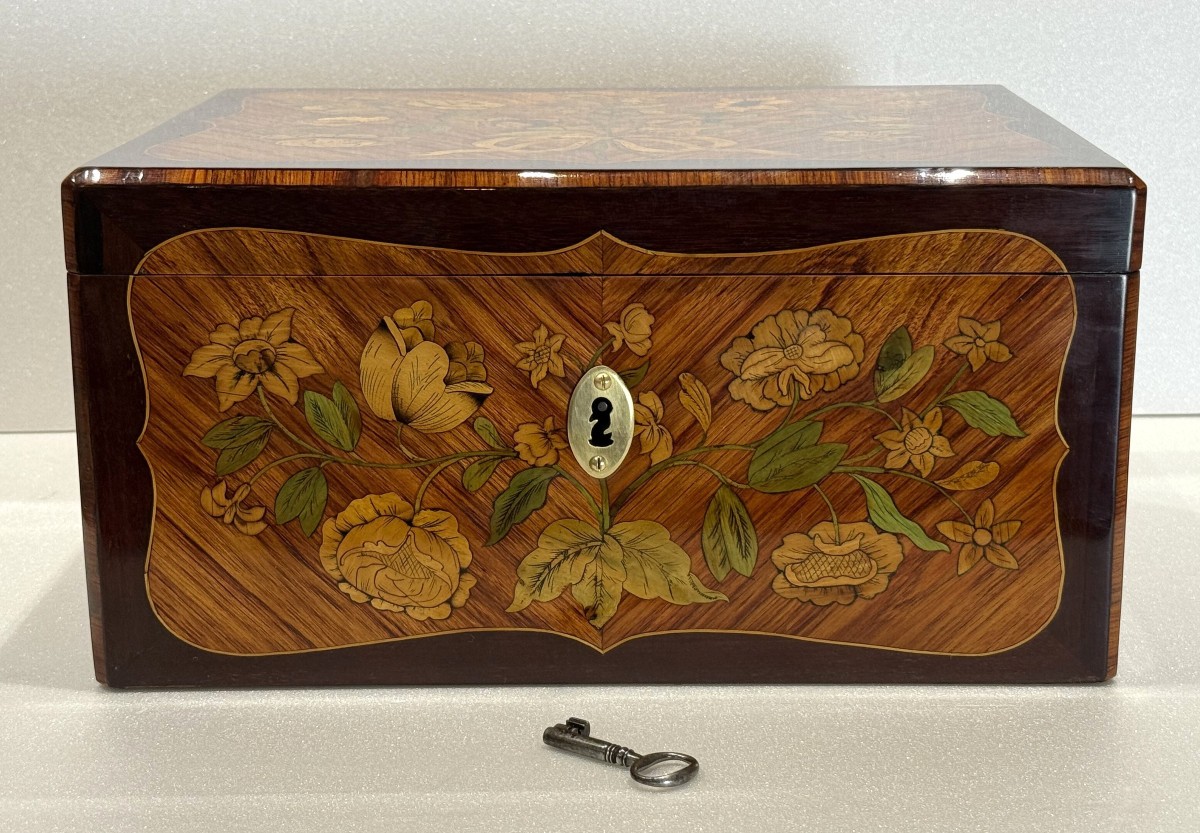

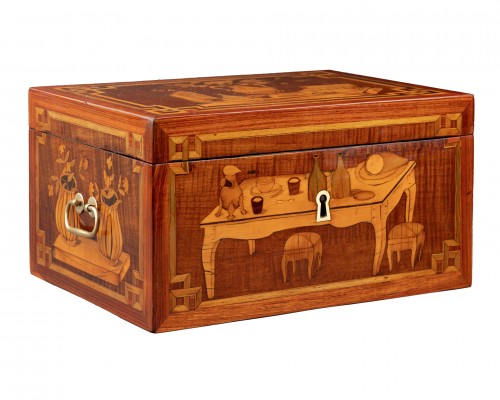
Ean-François Oeben (1721-1763), Transition period casket.
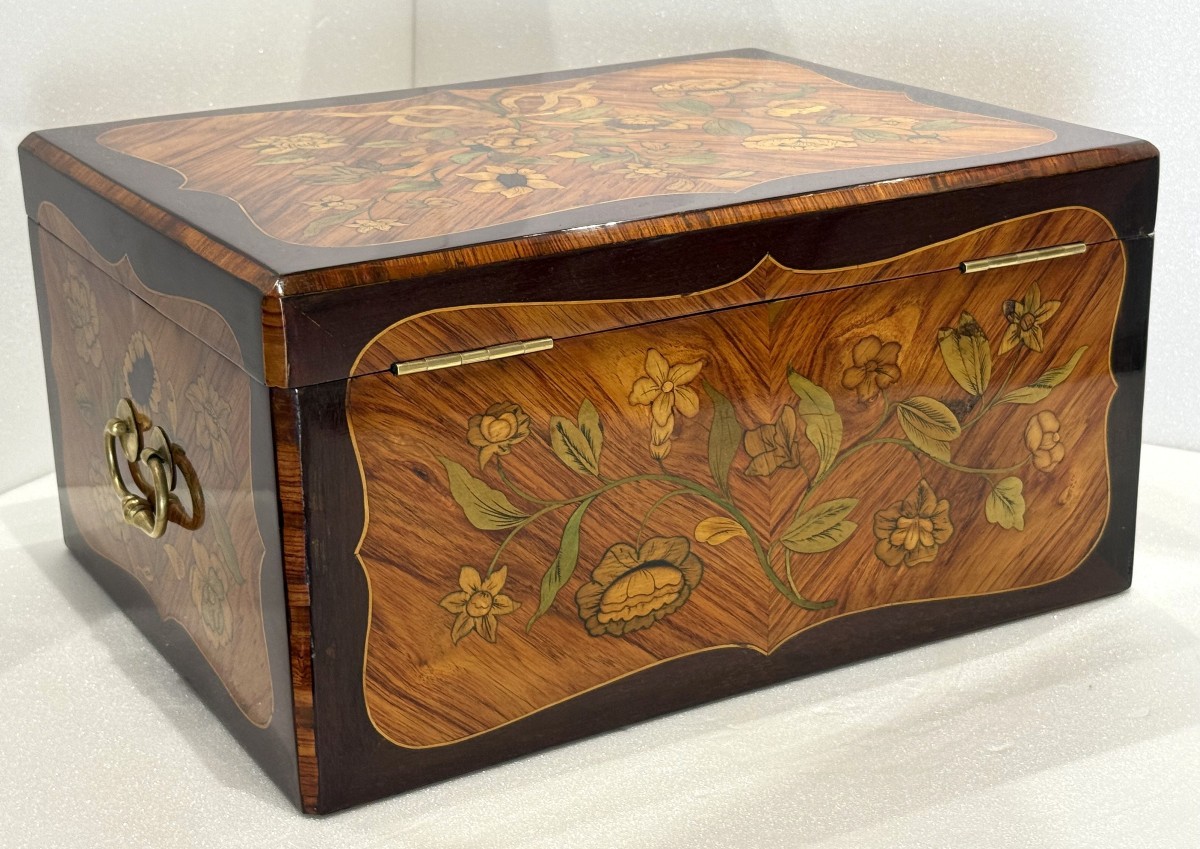
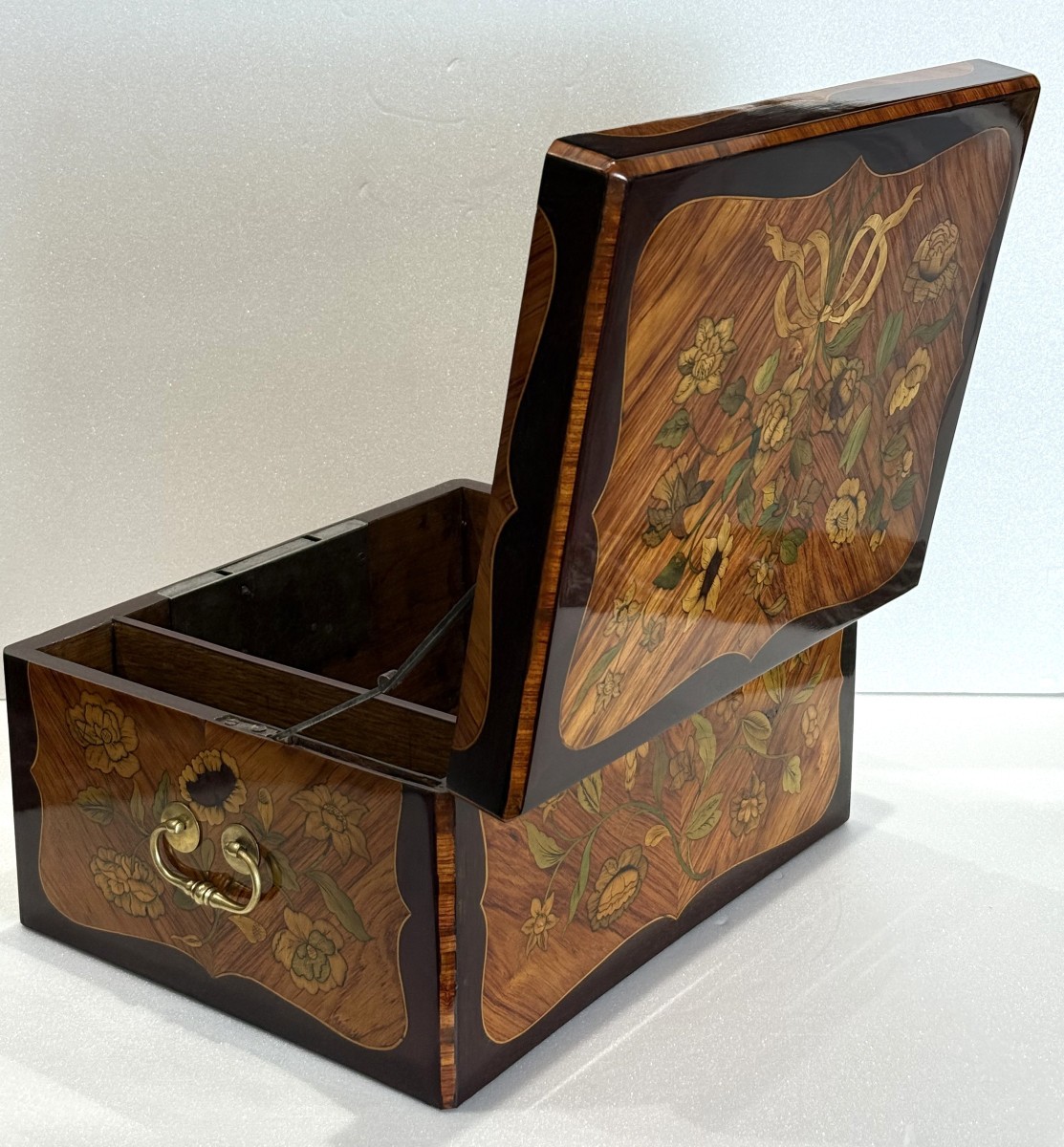
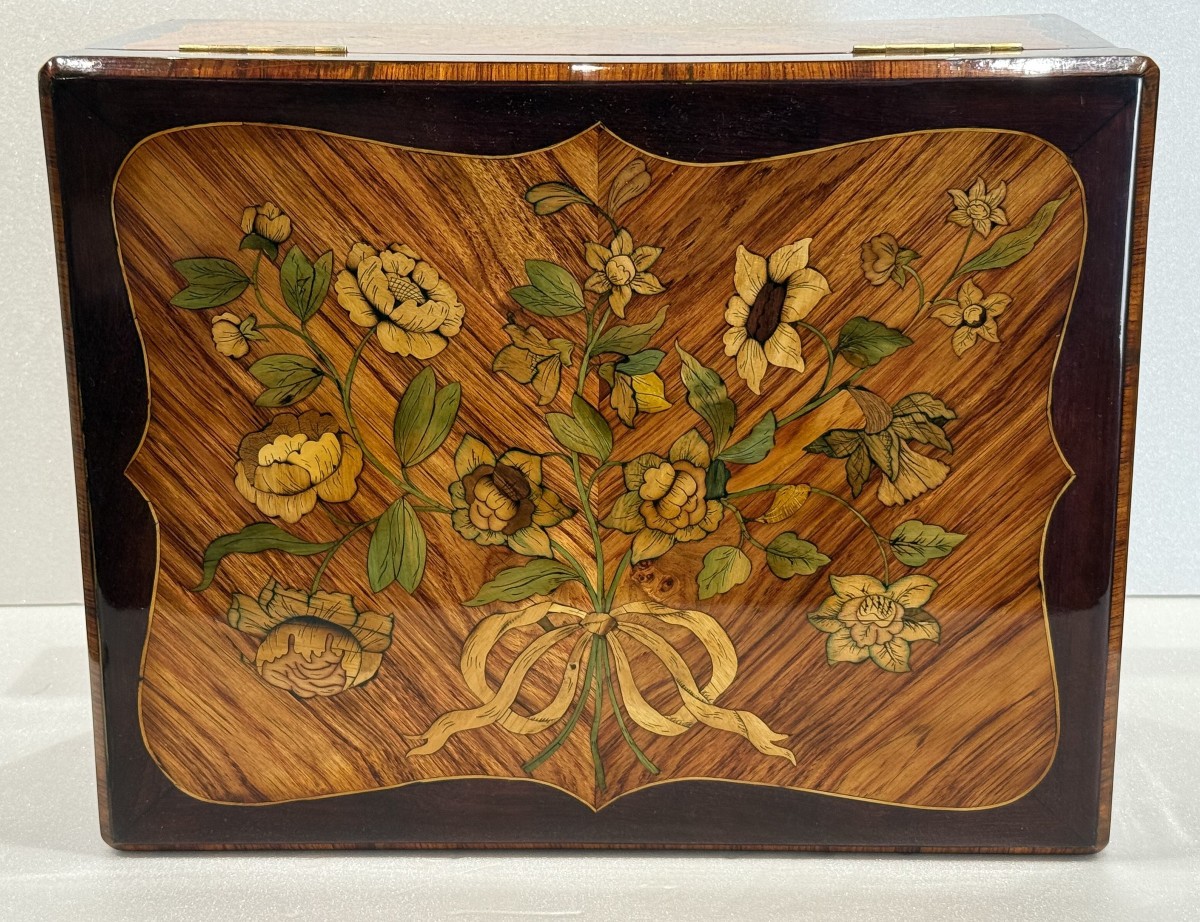
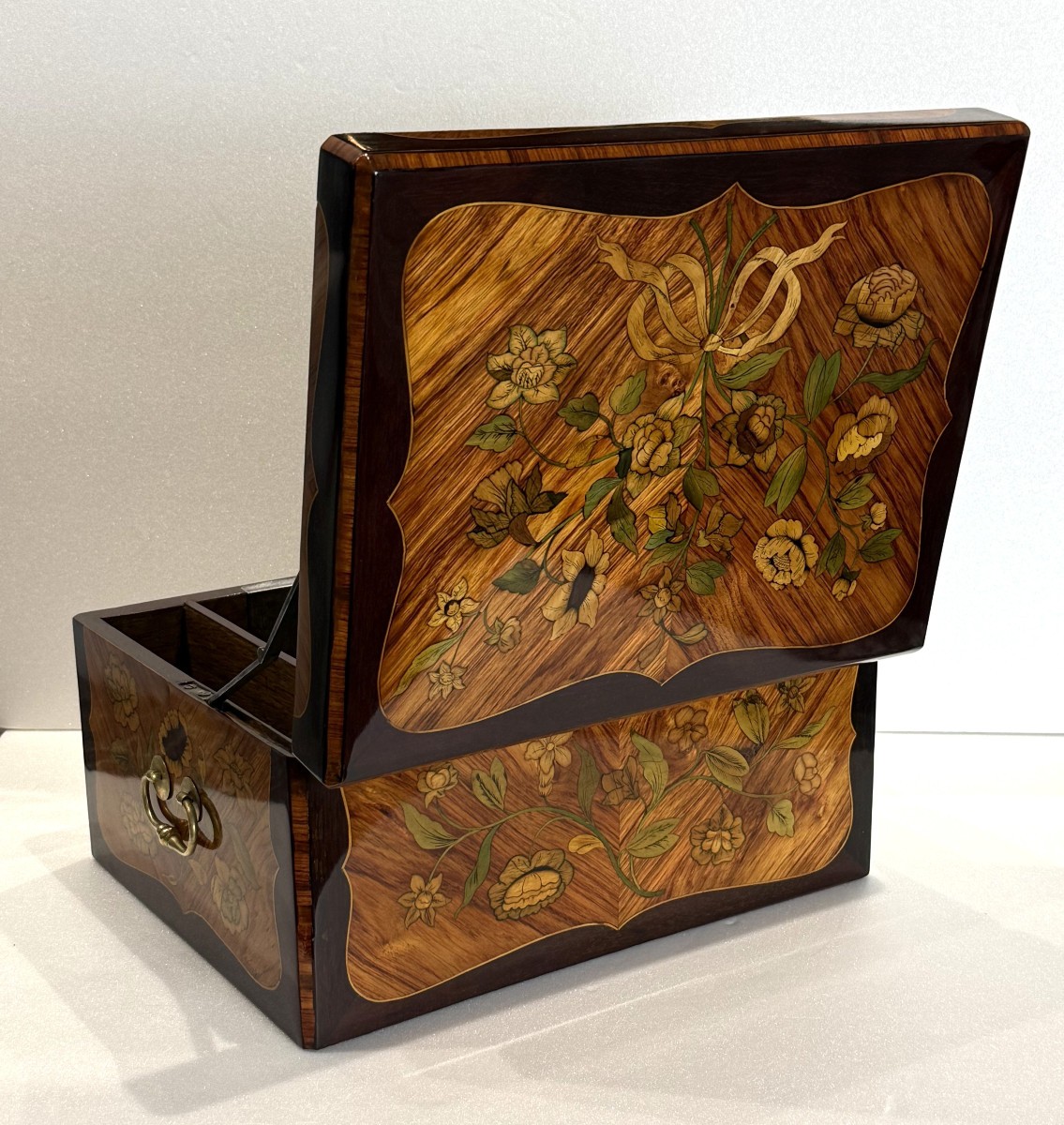
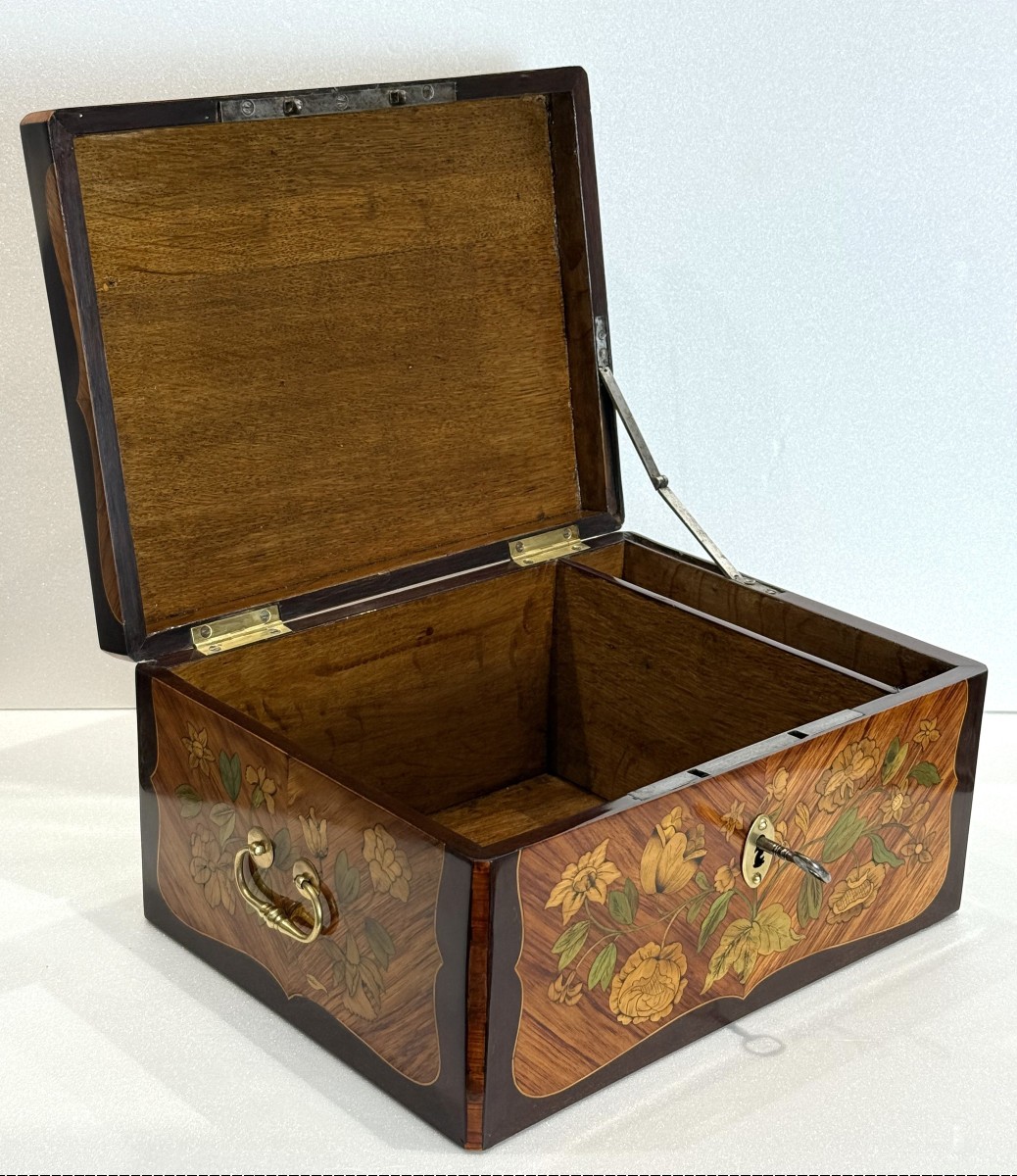
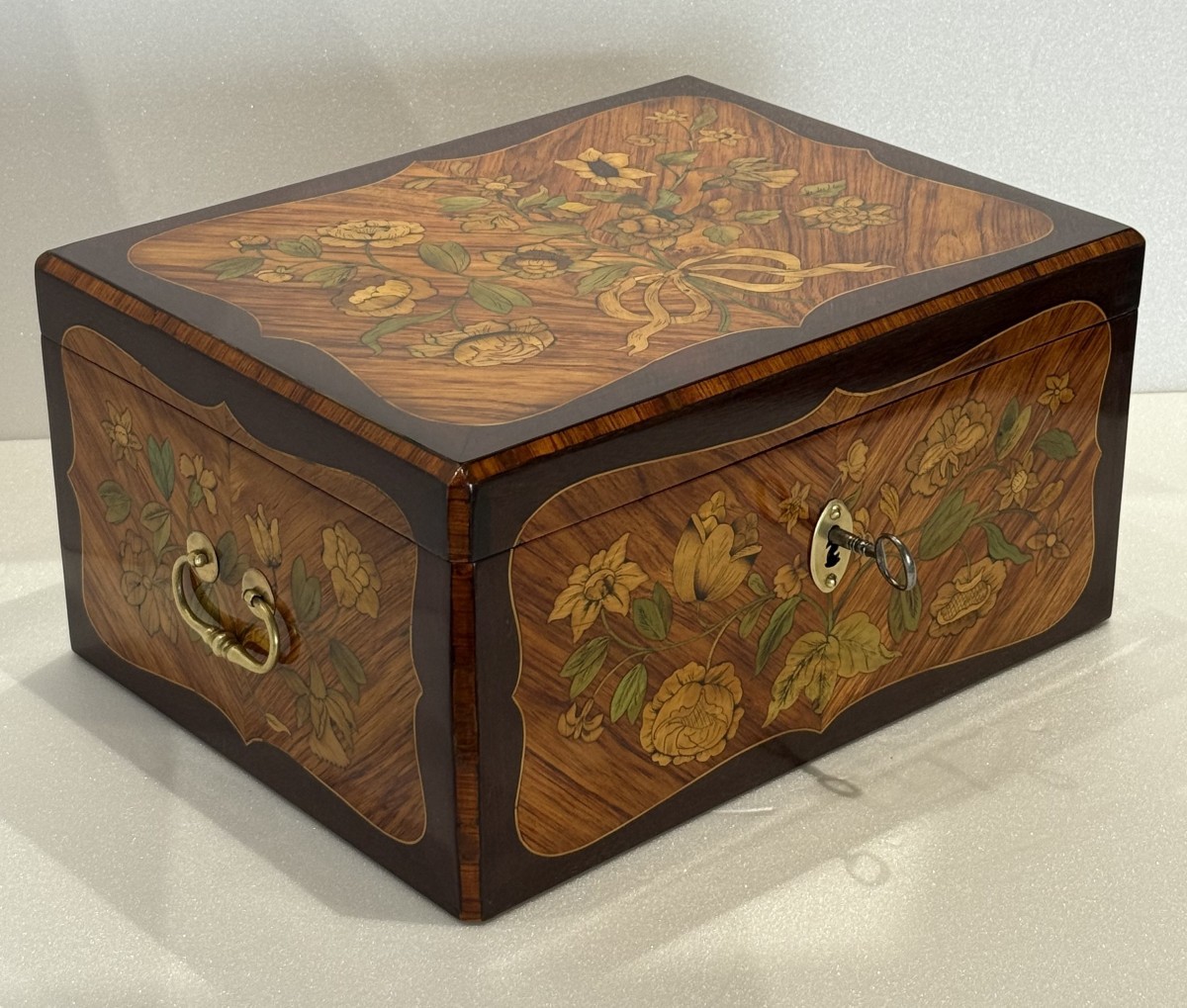
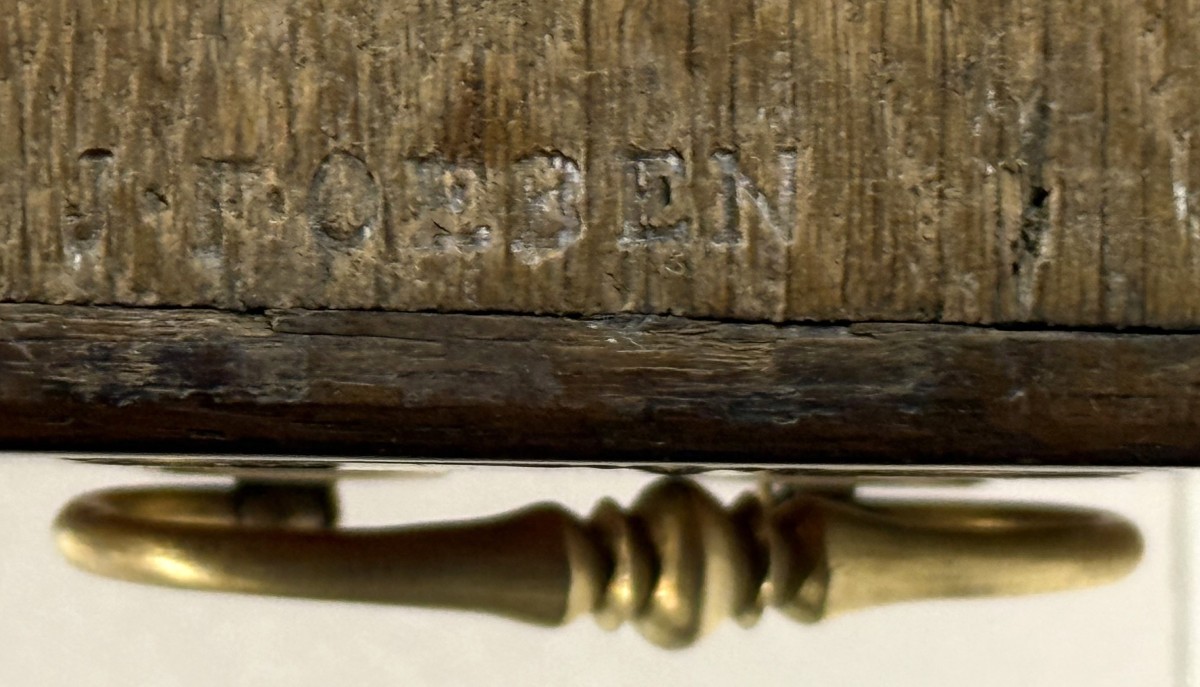
Jean-François Oeben (1721-1763), cabinetmaker to the King; an important casket inlaid on all its visible sides with naturalistic floral bouquets of barberry, boxwood, and hornbeam on a Tulipe wood ground bordered with polylobed boxwood fillets with amaranth buttresses; all on an oak frame. It is worth noting that the floral bouquet on the top is embellished with a flowing ribbon of striking effect. Drop handles on either side of the casket facilitate its transport. The top lifts, hinged by two small hinges, assisted by a hinged stay set into recesses on its right side; under the lid and the edge of the body. The casket is secured by a lock with a lever handle in perfect working order. Jean-François Oeben's stamp, "JFOEBEN," is struck on the underside of the box. The JF OEBEN stamp allows us to precisely date this box to between 1761 and 1762, since Oeben spent most of his career outside the rules of the cabinetmakers' guild, working in privileged enclosures, first at the Gobelins Manufactory, then at the Arsenal, where he was exempt from the formality of stamping his work. However, towards the end of his life, for the needs of his business, he felt the need to join this guild and obtained his master craftsman's certificate in 1761, two years before his death. Dimensions: width 37.7 cm – depth 29.8 cm – height 19.4 cm. Upon Boulle's death in 1754, the Marquis de Marigny, Superintendent of the King's Buildings and brother of Madame de Pompadour, offered him the position of cabinetmaker to the King at the Gobelins Manufactory. His reputation grew, and his workshop specialized in high-quality floral marquetry, like our casket, and in mechanical furniture, as Oeben was a brilliant mechanic. He made numerous deliveries to the Crown Furniture Repository and, in 1759, obtained a certificate as supplier to the royal households. Oeben spent most of his career outside the rules of the cabinetmakers' guild, working in privileged enclosures, first at the Gobelins Manufactory, then at the Arsenal, where he was exempt from the formality of stamping his work. Yet, towards the end of his life, for the needs of his business, he felt the need to join this guild and obtained his master craftsman's certificate in 1761, two years before his death, having received the commission for the King's desk (1760), which crowned his career. Dimensions: width 37.7cm – depth 29.8cm – height 19.4cm. Jean-François OEBEN (1721-1763): Of Flemish origin, arriving in Paris in the 1740s, he seems to embody the entire Transition period and is considered one of the most talented cabinetmakers of the second half of the 18th century. Quickly established in the prestigious workshop of the last Boulle son, within the Louvre galleries themselves, he was appointed in 1754 as the King's privileged cabinetmaker at the Gobelins Manufactory. A protégé of the Marquise de Pompadour, his original furniture is characterized by high-quality craftsmanship, robust and masculine lines, and a remarkable balance that sets it apart from the preceding period. While he favored working with mahogany and satinwood, which he veneered in large sheets, it is above all his geometric and floral marquetry that best demonstrates his virtuosity. He also developed a large number of mechanisms for his so-called "transformable" furniture. Having received the title of Supplier to the Royal Households, he worked for the King and Queen. He influenced many cabinetmakers after him. After his death, his widow continued his workshop, which she later entrusted to Riesener.
Delevery information :
General conditions of sale and delivery: The price indicated on the ad includes the delivery throughout the metropolitan France. For Germany, Belgium, Italy or Spain contact us for a quote. For the United States, Europe outside the EU or the rest of the world contact us for a quote but the import taxes applicable in each country remain at your expense. The packing and the follow-up of the transport are insured by ourselves or by professional carriers specialized in works of art.