Offered by ClassicArtworks Stockholm
REQUEST INFORMATION

Old Master Paintings and 19-20th-Century Scandinavian Arts
Fritz Reusing (1874–1956) Germany
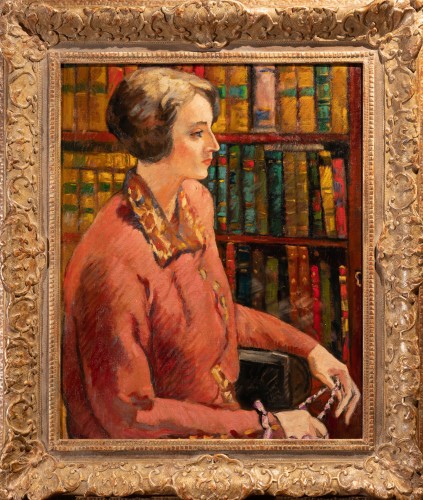
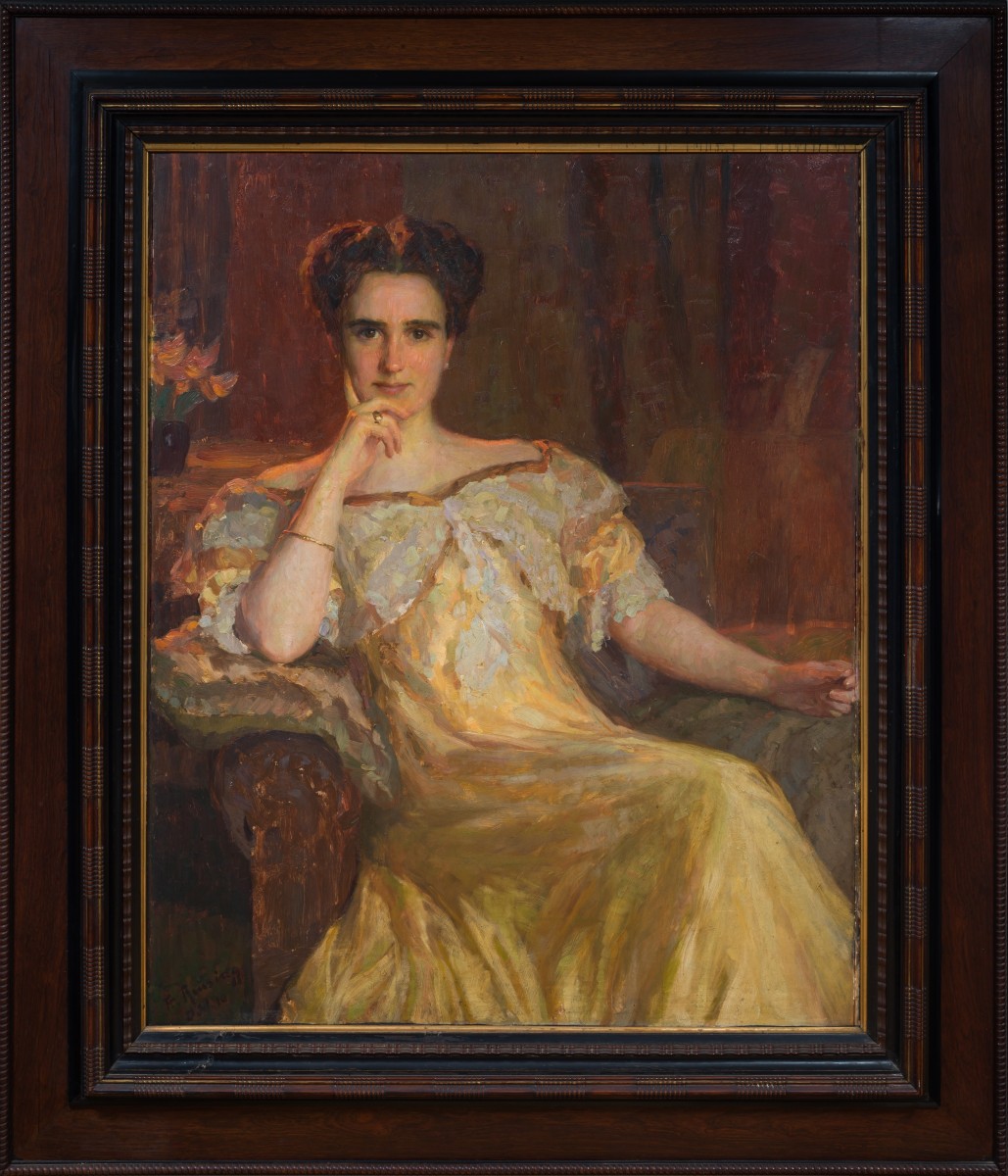
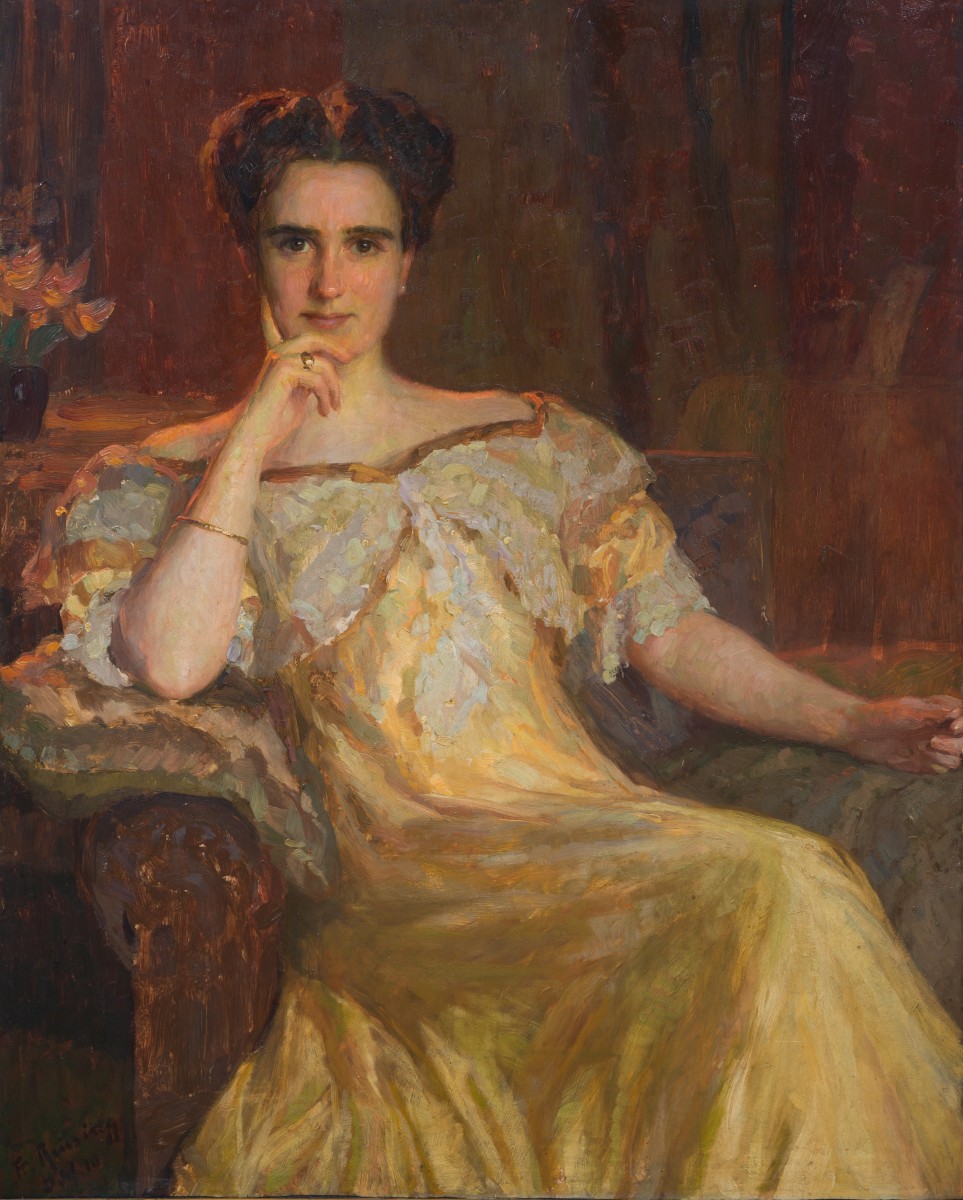
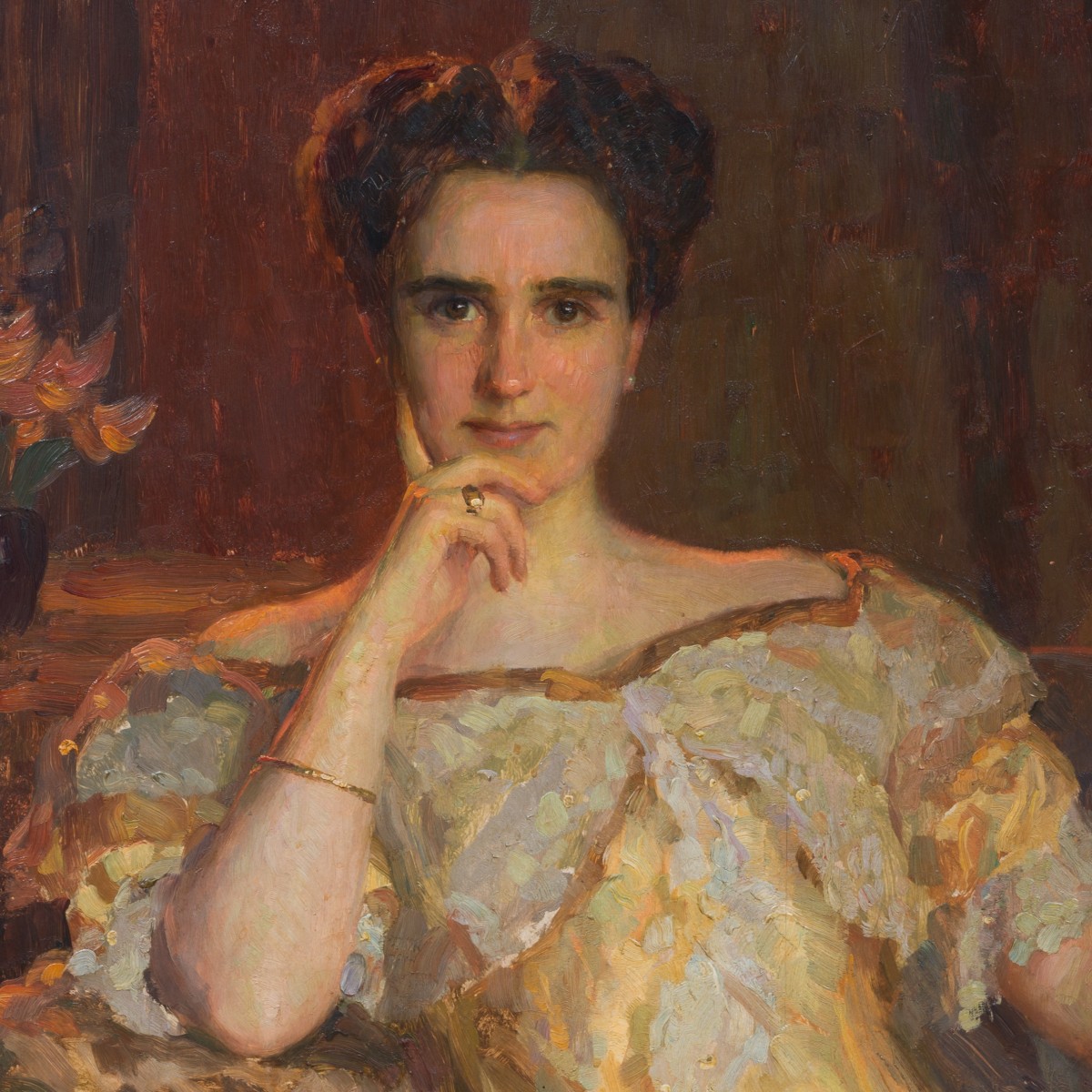
Portrait of a Lady in a Golden Dress, 1910
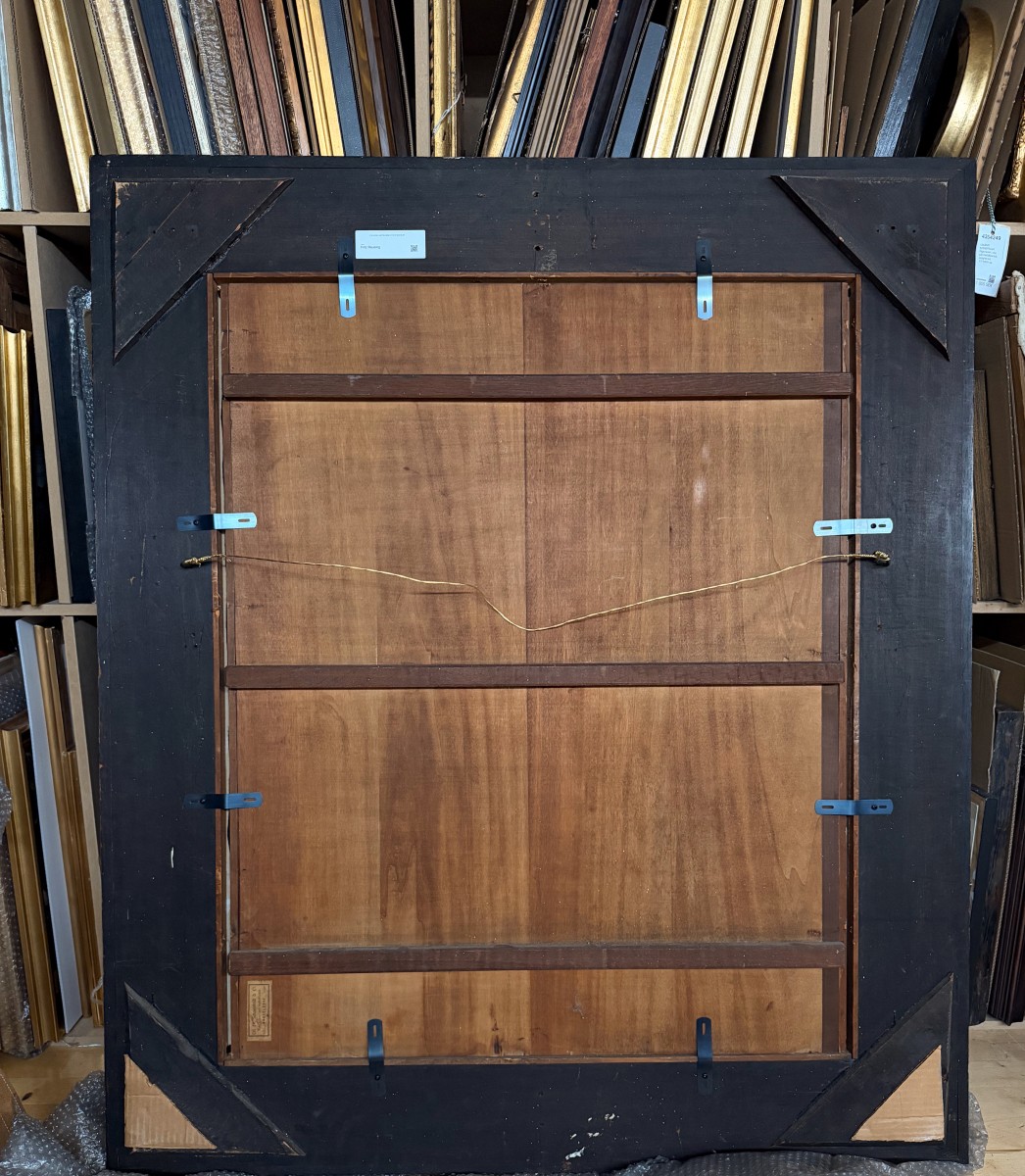
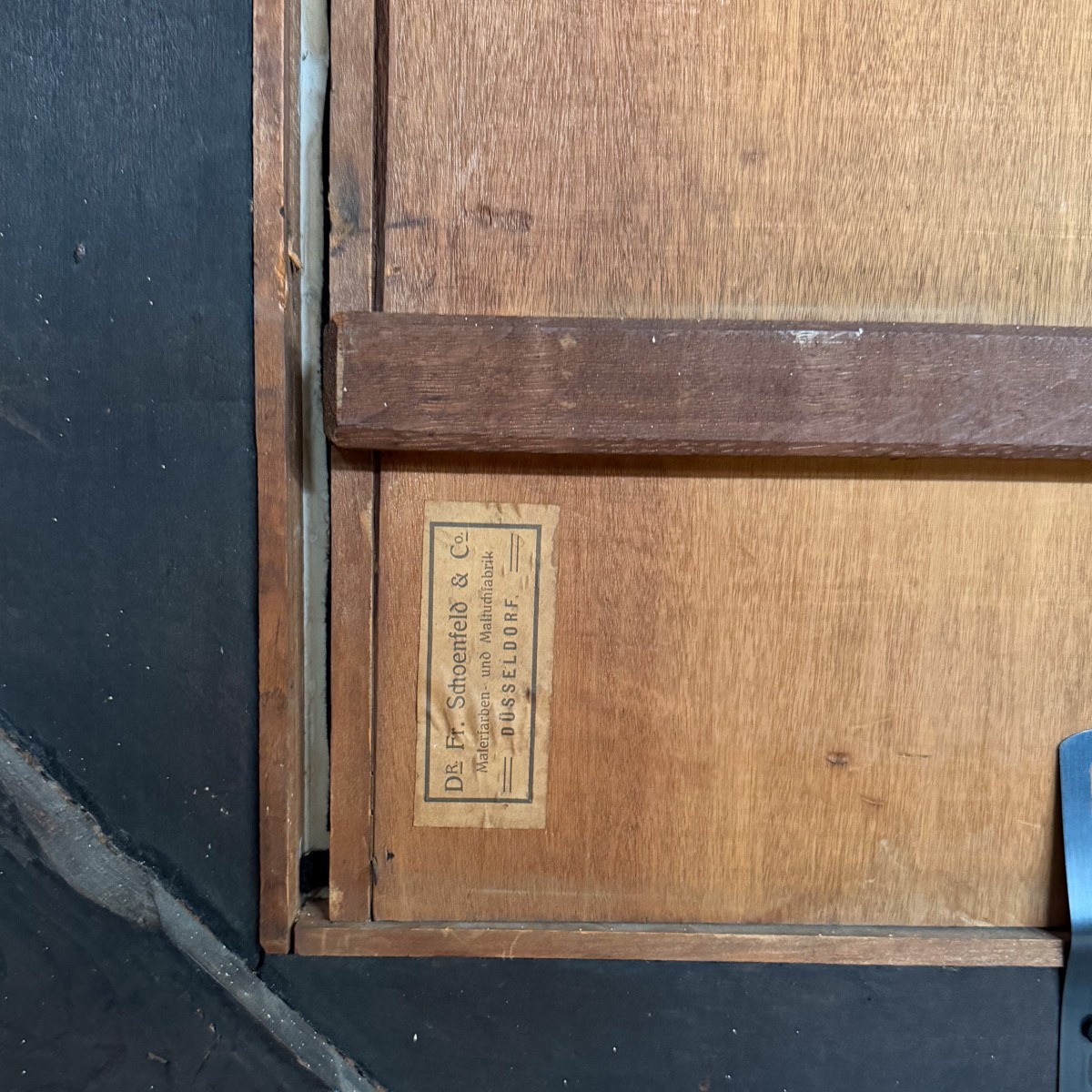
oil on wood panel (Dr. Fr. Schoenfeld & Co)
signed and dated F. Reusing Ddf 10
unframed 99 × 79 cm (approx. 39 × 31 in)
framed 132 × 113 cm (approx. 52 × 44.5 in)
Provenance:
Private collection, Norrköping, Sweden.
Essay:
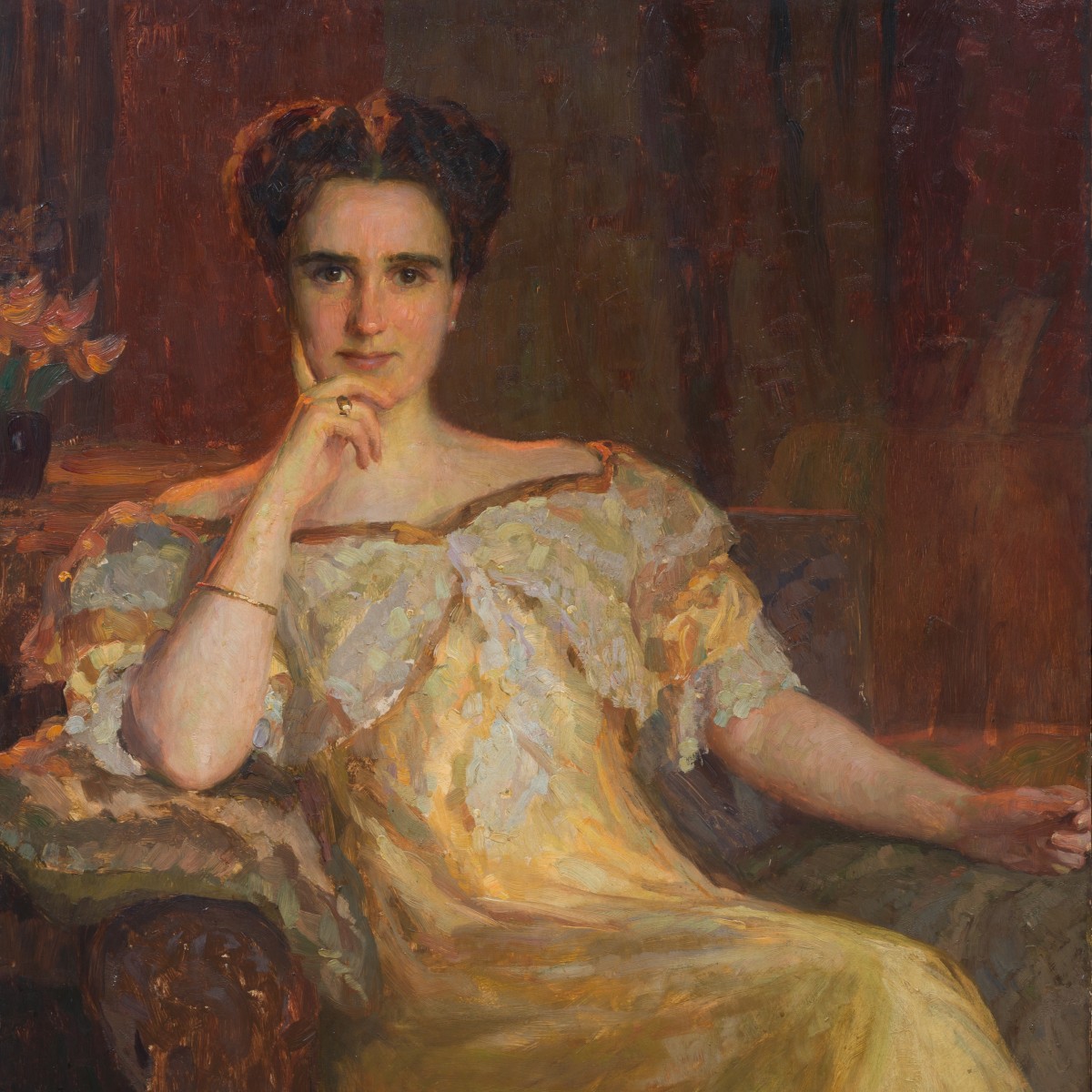
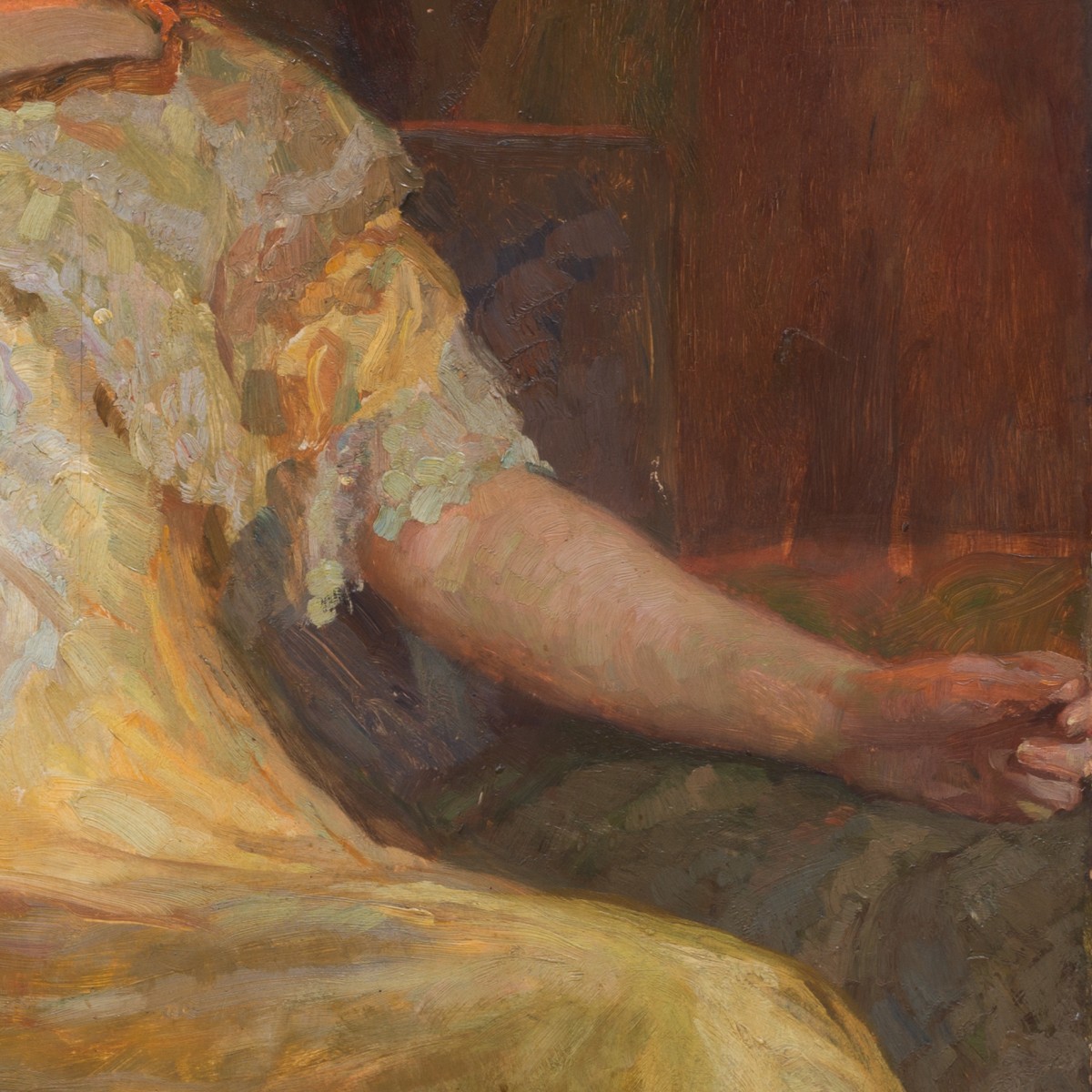
Executed in Düsseldorf in 1910, this portrait depicts a woman seated in a refined interior, wearing a sumptuous golden-yellow gown that shimmers in the light. A dramatic sidelight illuminates her from one side, causing the rich fabric of her dress to glow warmly and casting soft shadows across the scene. The textured folds of her flowing gown are rendered with meticulous detail, capturing the play of light on the silk-like material and giving it an almost luminous quality. Her pose is relaxed yet dignified, she sits with poised elegance, hands gently at rest, as she gazes thoughtfully into the distance. This thoughtful, slightly off-to-the-side gaze, combined with her serene expression, imbues the painting with a sense of introspection and quiet confidence.
Reusing’s masterful handling of light and shadow is on full display here. The strong lateral lighting not only highlights the subject’s face and upper body, but also creates depth and dimension, accentuating the contours of her figure and the luxurious drapery of her gown. Subtle highlights dance along the golden dress’s folds and edges, while gentle shadows provide contrast, modeling the form without obscuring detail. The background is composed of warm muted tones, perhaps a suggestion of elegant furnishings or paneling, which remain softly out of focus. This warm, refined interior backdrop complements the golden hue of the dress while remaining understated. It serves to enhance the sitter’s presence without drawing attention away from her. The overall mood of the portrait is one of understated luxury and grace. The interplay of the radiant gown, the soft illumination, and the sitter’s calm, reflective demeanor creates a quietly elegant atmosphere. This careful balance of a luminous subject against a harmonious background is a hallmark of Reusing’s portraiture, which often ennobles the sitter with an environment of subtle sophistication.
The Artist
Fritz Reusing (1874–1956) was a distinguished German portrait painter and a leading figure of the Düsseldorf school of art in the early 20th century. Born Richard Friedrich Reusing in Mülheim am Rhein, he trained at the prestigious Düsseldorf Academy of Art and spent the majority of his career in Düsseldorf. Reusing became known as one of the last great exponents of the city’s 19th-century academic painting tradition, even as modernist trends began to emerge. He specialized in portraiture, and his style combined academic realism with a touch of romanticism, a “romantic yet naturalistic” approach inherited from the Düsseldorf School. His paintings are characterized by confident, lively brushwork and rich color palettes, balanced by a keen eye for natural detail. Reusing had a particular talent for capturing the personality and dignity of his sitters. Each portrait was thoughtfully composed to reflect the subject’s character, often incorporating tailored backgrounds that conveyed an atmosphere of refinement and complimented the figure. This dedication to portraying his subjects in the best light made his work especially appealing to prominent clients of his time.
Reusing’s career was marked by both critical acclaim and a prestigious clientele. In 1901, at the age of 26, he earned a gold medal at the International Art Exhibition in Munich for a portrait of “Mira” (the daughter of fellow artist Karl Rudolf Sohn), a testament to his skill even in his early years. As his reputation grew, he was commissioned to paint many notable figures of the era, from scientists and composers to industrialists and nobility. It is recorded that he painted luminaries such as the physicist Albert Einstein, composer Richard Strauss, and members of the German imperial family, among others. He also produced grand portraits of military officers and statesmen, especially during the World War I era, capturing both the likeness and the stature of these individuals. Despite receiving invitations and work from cities like Berlin, Munich, Paris, and beyond, Reusing remained based in Düsseldorf throughout his life. He was deeply involved in the city’s artistic community: he joined the Malkasten artists’ association in the late 1890s, exhibited in major art shows (including the Great Berlin Art Exhibition of 1911), and in 1918 was appointed an honorary member of the Düsseldorf Academy (where he later led a class in portrait painting as a professor). Reusing’s enduring connection to Düsseldorf is evident, not only in his lifelong residence and contributions there, but even in the city’s recognition of him (a street in the Düsseldorf area of Haan was later named in his honor). Today, Fritz Reusing is remembered for his elegant, lifelike portraits that bridged the gap between 19th-century academic art and the changing tastes of the 20th century, preserving the grand portrait tradition of the Düsseldorf school with his own blend of realism and subtle artistry.
Condition: The painting is in a very good condition, with bright, well-preserved colors. UV light examination images are available upon request. The wood panel support is flat and stable. The frame is in very good condition as well, displaying only minor wear and an age-appropriate patina.
Find out more on http://www.classicartworks.com
Delevery information :
We offer free worldwide shipping, and all paintings are sent in custom-built wooden crates for the highest level of security for our customers.