Offered by Galerie Magdeleine
REQUEST INFORMATION

Paintings and drawings from the 17th to the 19th century
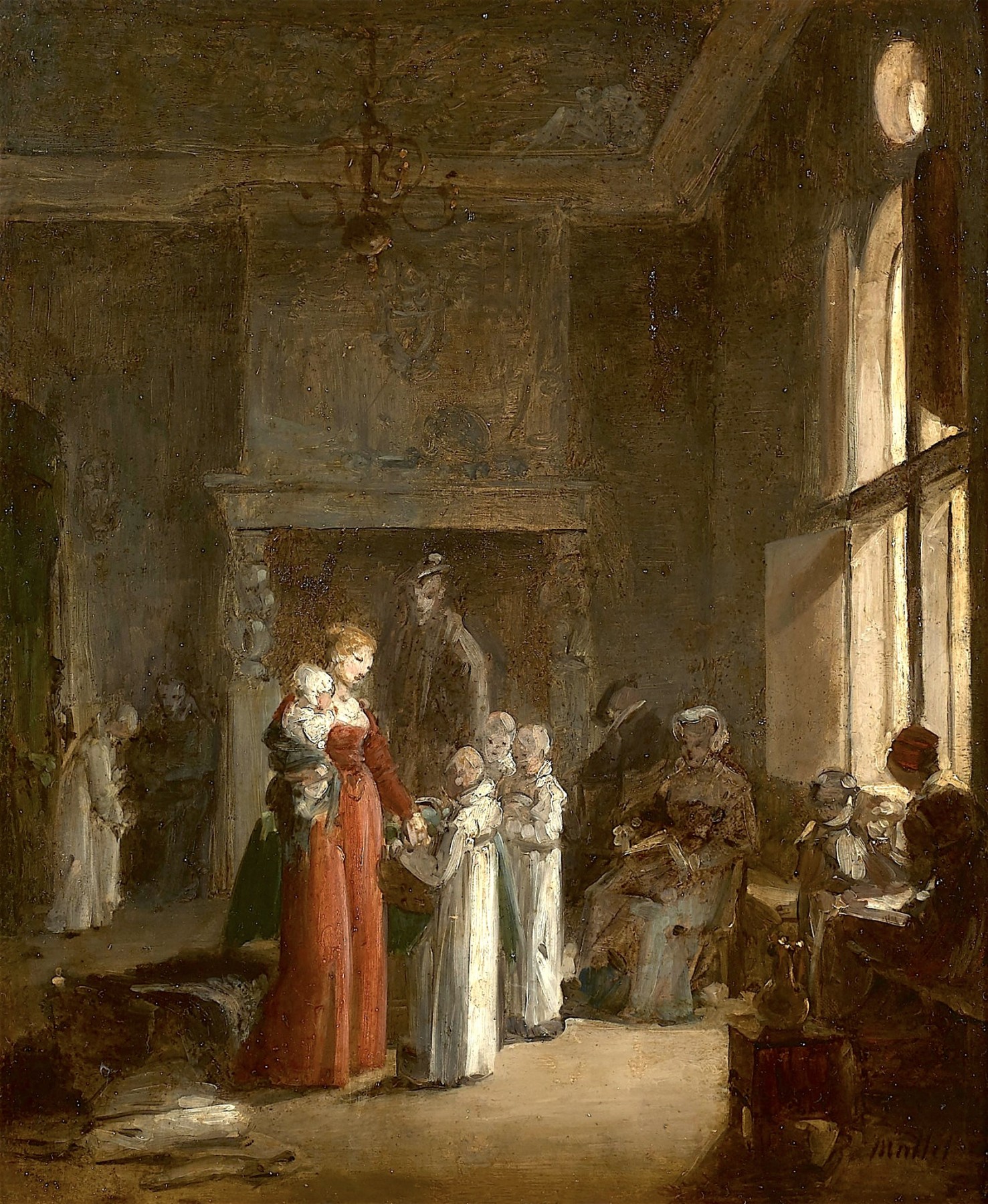
Jean-Baptiste MALLET (Grasse, 1759 – Paris, 1835).
Sketch.
The Obol.
Circa 1824.
Oil on panel.
Signed lower right “Mallet.”
H: 11.4 in; W: 8.7 in.
Documented in the exhibition catalog entitled Jean-Baptiste Mallet, la route du bonheur (Jean-Baptiste Mallet, the road to happiness), presented at the Jean-Honoré Fragonard Museum from June 4 to October 12, 2022, and written by Carole Blumenfeld.
At the center of this Dutch-inspired, almost monochrome oil on panel painting with its shades of brown, a woman dressed in red stands out for her actions: she is giving alms, and her attire is a sign of her social status.
Known for his gallant genre scenes in gouache during the Ancien Régime, Jean Baptiste Mallet took up oil painting at the beginning of the Directoire.
Even more than Drölling or Bilcocq, Mallet looked to the Dutch painters of the Golden Age, as evidenced by one of his first panels in the genre, Une scène hollandaise (A Dutch Scene), which became part of the prestigious collection of the Duchess of Berry.
Our sketch of L'Obole echoes the main characteristics of the artist's Dutch corpus. However, while the chandelier in particular remains a reproduction of Ter Borch's work, the fireplace reminds art lovers of the marble fireplace created by Boizot based on a model by Ange Jacques Gabriel for Madame du Barry's salon in Fontainebleau in 1782.
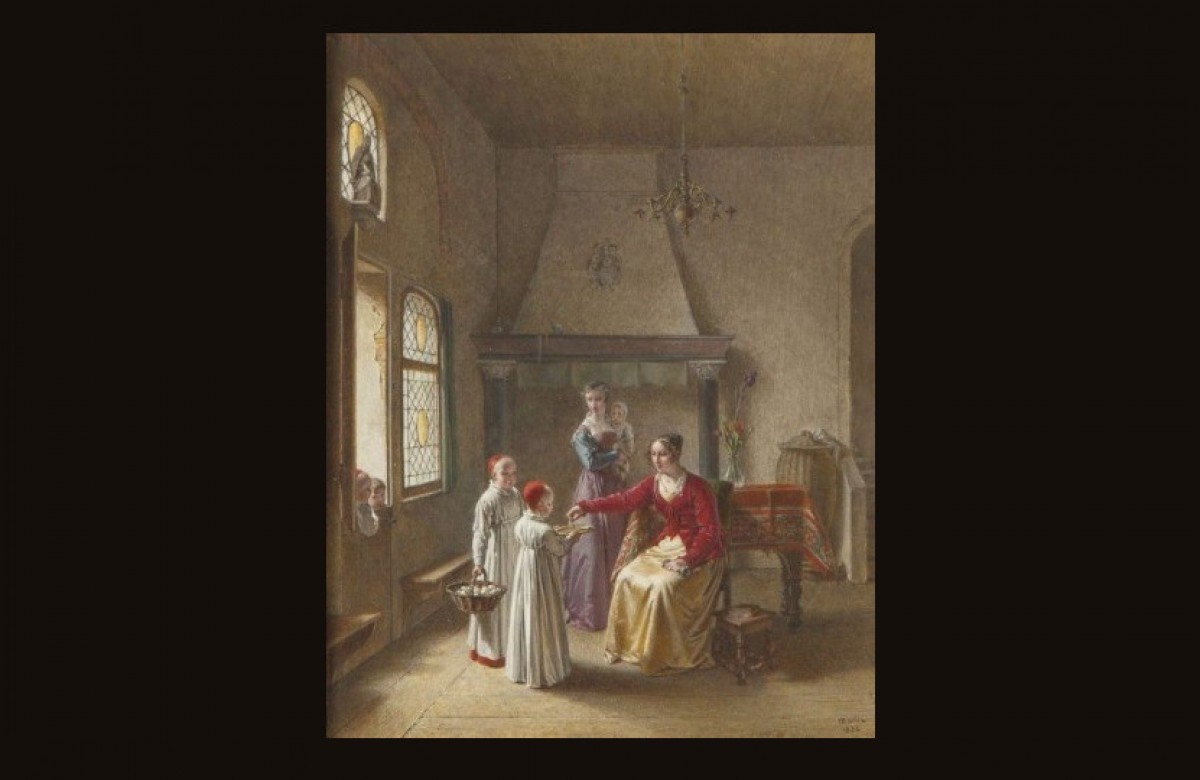
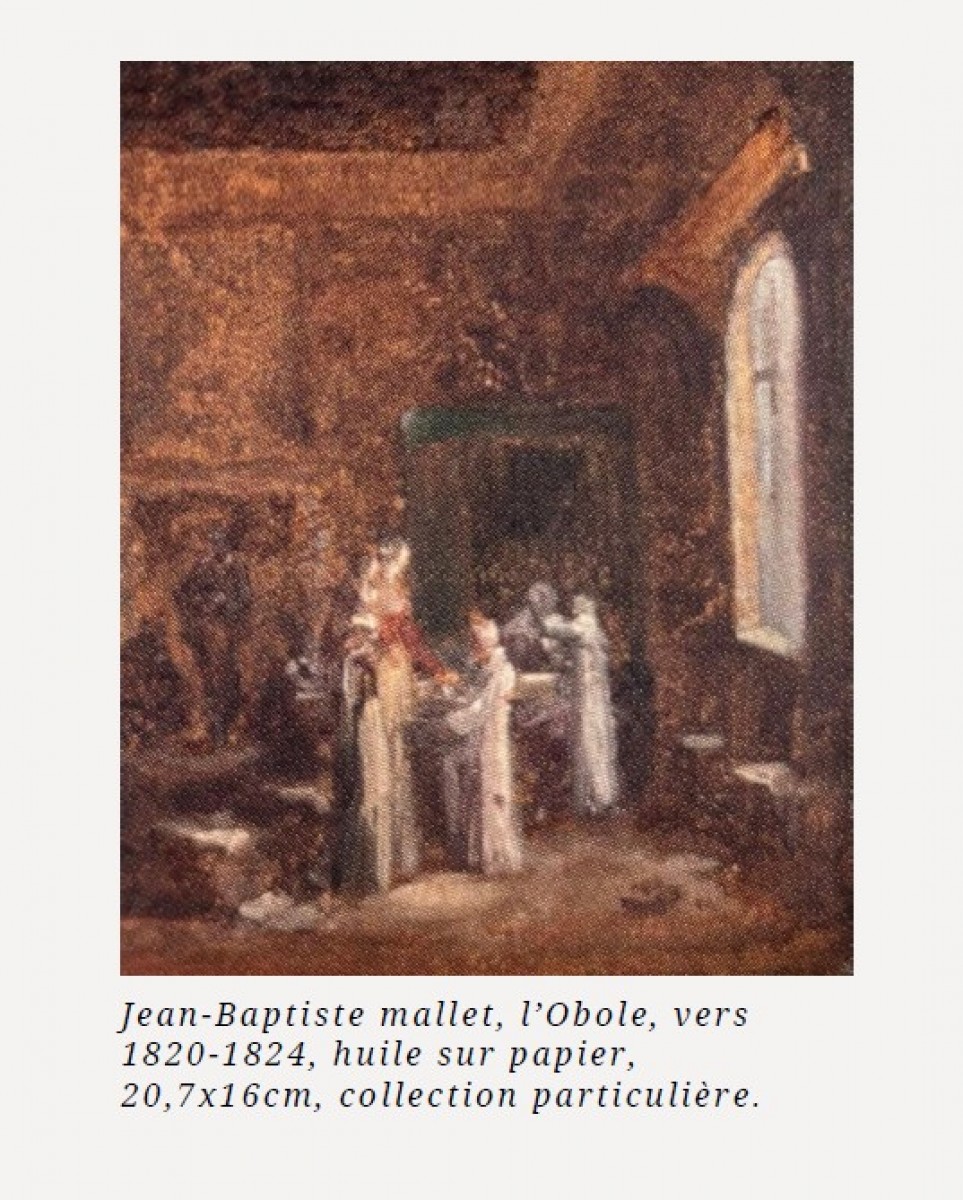
In addition to our painting, the artist treated the theme of the Obol at least twice more: in another sketch, this time on paper, probably predating ours, and in a gouache dated 1824 [1].
Illustrations: Jean-Baptiste Mallet, The Obol, 1824, watercolor on paper, 24x18cm, private collection.